
How much of that /can/ you do on a modern computerized car?
2

People are crooks. But the REAL crooks run computerized scams. Maybe the convenience of clicking isn't worth the crime that accompanies it. Why can't we demand paper tickets.
24

I spent 45 years in the telephone industry and enjoyed every "bit" of it.
See it all from Crossbar and Stroger switches to computerized switches to high speed data in OC3, Cisco routers etc etc.
What a change!
Heres George Jetson, Jane his wife.......
35

I would say it is the same w/the light systems in computerized cars. There are things set to trigger the warning lamp at 100k … and if you get to 200k you will be convinced you need to seek shelter.
1
3

I know what I don’t see but I am not allowed to say it. I miss those days now most of the malls are empty. I wish we could bring the small town life back and get rid of everything that destroyed what we had. Amazon was not and is not our friend and computerized everything is bad.
2
1
786


@drsharadwat Sir thanks for the wonderful initiative of connecting pvt hospitals and medical colleges with the Govt Hospitals. Next is building up a computerized system that will maintain the realtime bed availability status accessible to all hospitals while referring patients.
6

(continued) then the nurse has to go to the computerized med dispenser and find the drug and deliver it to you. That's why.
7

Dear @HSalon79428,
It is informed that conversion of a manual arms license into a computerized card is not processed at Nadra registration center. This matter falls under the jurisdiction of the concerned District Administration/Home Department.
2/1 _
1
17
The entire AI race/competition is a runaway train. Each of the creators want to be “The One” and cash in big time, damn the consequences. It’s become a computerized Pandora’s Box and the humans involved are the most fallible & risky element in the race. That’s why we have laws.
10
Dear @HSalon79428,
It is informed that conversion of a manual Arms License into a computerized card is not processed at NRC. This matter falls under the jurisdiction of the concerned District Administration/Home Department.
2/1 _
1
15

Here are the recent amendments in the Customs Act ,1969 introduced through Finance Bill, 2026-27.
It is emphasized that these are proposed amendments which would require the approval of the Parliament and assent by the President of Islamic Republic of Pakistan: Customs Act, 1969
Note: The following sections reproduce the current text of the Customs Act, 1969 with the amendments proposed by the Finance Bill, 2026 incorporated. Only those sections that are amended or newly inserted are included.
Section 2. Definitions
(ssss) “surcharge” means an amount or charge required to be paid under sections 21A, 83, 86, 98 and 202A or any surcharge payable as such under this Act;
(ssssa) “State warehouse” means any place authorized by the Collector of Customs to store the detained, seized or confiscated goods, as the case may be.
(Finance Bill, 2026: new clause (ssssa) inserted after clause (ssss))
Section 19. Powers of the Federal Government to grant exemption from customs-duties
(5) Any notification issued under sub-section (1) after the commencement of the sub-section (4) shall continue to be in force till the thirtieth day of June, 2027, if not earlier rescinded by the Federal Government or the National Assembly.
(Finance Bill, 2026: in sub-section (5), in the second proviso, figure “2026” substituted with “2027”)
Section 32. Recovery of duties etc. not levied or short levied or erroneously refunded
(3) Where, by reason of any inadvertence, error or misconstruction, any duty, taxes or charge has not been levied or has been short-levied or has been erroneously refunded, the person liable to pay any amount on that account shall be served with a notice within three years of the relevant date requiring him to show cause why he should not pay the amount specified in the notice:
Provided that if the recoverable amount is less than twenty thousand rupees, the Customs authorities shall not initiate the aforesaid action:
Provided further that the aforesaid action shall also not be initiated in case full amount of short paid duty, taxes or other charges are paid voluntarily prior to initiation of audit, inquiry or investigation.
(3A) Notwithstanding anything contained in sub-section (3), where any duty, taxes or charge has not been levied or has been short-levied or has been erroneously refunded and this is discovered as a result of an audit or examination of an importer’s or exporter’s accounts or by any means other than an examination of the documents provided by the importer or exporter at the time the goods were imported or exported, the person liable to pay any amount on that account shall be served with a notice within five years of the relevant date requiring him to show cause why he should not pay the amount specified in the notice:
Provided that if the recoverable amount is less than one hundred thousand rupees, the Customs authorities shall not initiate the aforesaid action if he deposits the recoverable amount.
(Finance Bill, 2026: words “in a case” omitted from first proviso to sub-section (3) and from proviso to sub-section (3A))
Section 80. Checking of goods declaration by the Customs
(4) In case of the Customs Computerized System, goods may be examined, scanned and assessed only on the basis of computerized selectivity criteria:
Provided further that in case of clearance of goods declaration through green channel, the goods may be examined or scanned with the prior approval of the Collector of Customs.
(Finance Bill, 2026: after “examined”, comma and word “scanned” inserted; proviso expanded to include “or scanned”)
Section 82. Procedure in case of goods not cleared or warehoused or transshipped or exported or removed from the port after unloading or filing of declaration
(1) The owner of the goods shall be liable to such penalties as may be notified by the Board in the following cases, namely:—
(a) Goods declaration is not filed for home-consumption or warehousing or transshipment within twenty days of the arrival of goods at a customs station;
(b) For the goods declaration filed prior to berthing of the vessel, the goods are not removed from the customs station after payment of leviable duty and taxes, within five days of completion of assessment and berthing of the vessel;
(c) For the goods declaration filed after berthing of vessel, the goods are not removed from the customs station for home-consumption or warehousing or transshipment within five days of the clearance of the goods declaration; and
(d) The goods are not loaded on the conveyance for export within fifteen days of the entry in the port:
Provided that in unavoidable circumstances, the Collector of Customs may waive or reduce the penalty fixed under this section:
Provided further that the Board may notify the rules to regulate the implementation of above provisions, including the process of appeal against imposed penalties and the Customs stations, goods or class of goods, where the provisions of sub-section (1) shall not be applicable.
(2) Such goods may, after due notice to the owner, if his address could be ascertained, or after due notice to the carrier, shipping or customs agent, custodian of the goods, as the case may be, be sold in auction or taken into custody by Customs and removed from the port to a Customs warehouse for auction under the order of the Assistant Collector of Customs notwithstanding the fact that adjudication of the case under section 179, or an appeal under section 193, 194 or 196 as the case may be, or a proceeding is pending in any court:
Provided also that the Board may authorize any person, to auction any auctionable goods, in the manner as notified by the Board.
(Finance Bill, 2026: in sub-section (1), “Federal Government” substituted with “Board”; first proviso expanded to “waive or reduce” and new proviso added; in sub-section (2), new proviso added allowing Board to authorize auction)
Section 156. Punishment for offences
(1) The Table under sub-section (1) is amended as follows:
S.No.OffencePenaltyProsecutionSection to which offence has reference
7A(existing offence)Not exceeding ten million rupees(as existing)(as existing)
62Any person illegally takes any goods out of any warehouse without payment of duty (or replaces with other goods), or aids, assists or is otherwise concerned therein.Not exceeding Five Hundred Thousand RupeesImprisonment not exceeding 5 years or fine or bothChapter XI
62AIf any person is found to be involved or abetting in the removal, substitution, damage or otherwise tempering with any goods, whether or not confiscated, at any such place as authorized by the Collector as a State Warehouse.Such person shall be liable to a penalty not exceeding two times the value of the goods involved.Upon conviction by a Special Judge, shall further be liable to imprisonment for a period not exceeding five years, or fine or both.General
83If an officer of any authority who is duty bound under section 170 to deposit the impugned goods with customs, neglects so to do.Not exceeding Fifty Thousand Rupees—170
(Finance Bill, 2026: penalty against S.No. 7A enhanced from Rs. 500,000 to Rs. 10,000,000; new S.No. 62A inserted after S.No. 62; S.No. 83 entry substituted)
Section 157. Extent of confiscation
(2) Every conveyance of whatever kind used in the removal of any goods liable to confiscation under this Act shall also be liable to confiscation.
Explanation. The word “removal” includes, and shall be deemed to have always included, every act of carrying, transporting, depositing, harbouring, keeping, concealing, retailing, or any other act involving movement of smuggled goods.
(Finance Bill, 2026: Explanation added after sub-section (2))
Section 170. Procedure in respect of goods seized or detained by other authorities
170. Procedure in respect of goods seized or detained by other authorities. — Notwithstanding anything contained in any other law for the time being in force, when any goods liable to confiscation under this Act are detained or seized by any other authority on any violation, irrespective of any pending proceedings under the laws of that authority, the customs authorities upon confirmation that such goods are liable to confiscation shall intimate that authority in writing and that authority shall be bound to deposit the impugned goods with customs for further processing under this Act.
(Finance Bill, 2026: section 170 substituted)
Section 179. Power of adjudication
(1) Subject to sub-section (2), in cases involving confiscation of goods or recovery of duty and other taxes not levied, short levied or erroneously refunded, imposition of penalty or any other contravention under this Act or the rules made thereunder, the jurisdiction and powers of the officers of Customs in terms of amount of duties and other taxes involved, excluding the conveyance, shall be as follows, namely:—
(i) Collector — no limit (ii) Additional Collector — not exceeding five million rupees (iii) Deputy Collector — not exceeding two million rupees (iv) Omitted (v) Superintendent — not exceeding one hundred thousand rupees (vi) Principal Appraiser — not exceeding one hundred thousand rupees
(Existing pecuniary jurisdiction continues)
(2) The Board may, by notification in the official Gazette, fix or vary the jurisdiction and powers of any Officer of Customs or a class of officers.
(3) A Collector, an Additional Collector or a Deputy Collector shall decide the case within forty-five days of the issuance of show cause notice or within such extended period for which reason shall be recorded in writing provided that such extended period shall in no case exceed ninety days.
(4) The Board shall have the powers to regulate the system of adjudication including transfer of cases and extension of time-limit as deemed appropriate after reasons to be recorded in writing.
(5) Notwithstanding anything contained in this Act, or any other law for the time being in force and notwithstanding any decision or judgment of any forum, authority or court whether passed on or before the commencement of the Finance Act, 2006, the time for adjudication in all the cases pending as on first day of July, 2006, for whatsoever reasons, shall be deemed always to have been extended up to 31st day of December, 2006.
(6) Notwithstanding anything contained in this Act, or any other law for the time being in force, the Board may notify a procedure for faceless adjudication whereby adjudication proceedings shall be conducted without any face-to-face interaction between the adjudicating officer and the respondent. The virtual mode shall be in such manner as may be prescribed by the Board from time to time.
(Finance Bill, 2026: new sub-section (6) inserted)
Section 185A. Cognizance of offences by Special Judges
(1) Notwithstanding anything contained in this Act or any other law for the time being in force, a Special Judge may, within the limits of his jurisdiction, take cognizance of any offence punishable under this Act—
(a) upon a report in writing made by an officer of customs or by any other officer especially authorized in this behalf by the Federal Government; or
(b) upon receiving a complaint or information of facts constituting such offence made or communicated by any person; or
(c) upon his own knowledge acquired during any proceeding before him under this Act or under the Prevention of Smuggling Act, 1977.
(2) Upon the receipt of report under clause (a) of sub-section (1), the Special Judge shall proceed with the trial of the accused:
Provided that such cases shall be disposed of within six months of the receipt of report or within such extended period as the Special Judge may, for reasons to be recorded in writing, fix.
(3) Upon the receipt of a complaint or information under clause (b), or acquired in the manner referred to in clause (c) of sub-section (1), the Special Judge may, before issuing a summon or warrant for appearance of the person complained against, hold a preliminary inquiry for the purpose of ascertaining the truth or falsehood of the complaint, or direct any Magistrate or any officer of customs or any police officer to hold such inquiry and submit a report, and such Magistrate or officer shall proceed in accordance with law.
(6) Where a Special Judge during trial of an offence punishable under this Act, is satisfied that there is any reasonable grounds for believing that the accused has committed an illegal transfer of funds into or out of Pakistan, he may order the freezing of the assets of the accused, whether in his possession or in the possession of any other person on his behalf.
(Finance Bill, 2026: new sub-section (6) added after sub-section (5))
Section 196JJ. Independent case scrutiny committee
(1) Any Civil petition, reference, civil petition for leave to appeal or review petition before the High Court, the Federal Constitutional Court or the Supreme Court of Pakistan shall only be filed by the Collector or Director of Customs, or any officer of Customs not below the rank of Deputy Collector or Deputy Director authorized by the Collector or Director of Customs, in writing, subject to approval by an independent case scrutiny committee, as constituted by the Board under sub-section (3).
(2) The Board may constitute one or more such committees and assign them jurisdiction which shall exercise the powers and functions in a manner, and from the date, as may be notified by the Board.
(3) The independent case scrutiny committee shall comprise of the following Members, namely:—
(a) a retired judge of superior judiciary who shall also act as Chairman of the Committee;
(b) an advocate having not less than fifteen years of experience in customs and commercial litigation before the High Court or Supreme Court of Pakistan; and
(c) a serving or retired officer not below the rank of Director or Collector of Customs.
(4) The members shall receive such renumeration as may be prescribed by rules.
(5) Recommendations of the committee shall be binding upon the concerned Collector or Director of Customs.
(6) No suit, prosecution or other legal proceedings shall lie against the members of the committee in relation to the decisions made under this section.
(Finance Bill, 2026: new section 196JJ inserted after section 196J)
Section 215. Service of order, decision, etc.
Any order or decision passed or any summons or notice issued under this Act shall be served—
(a) by tendering the order, decision, summons or notice or sending it by registered post or the courier service or by any other mode of transmission subject to acknowledgement receipt to the person for whom it is intended or to his agent; or
(b) if the order, decision, summons or notice cannot be served in any manner provided in clause (a), by affixing it on the notice board of the custom-house; or
(c) in case of electronic orders, decisions, notices or summons, when these have been sent to the recipient from the Customs Computerized System; or
(d) in the manner prescribed for service of a summons under the Code of Civil Procedure, 1908 (Act V of 1908).
(Finance Bill, 2026: new clause (d) inserted after clause (c))
Schedules
- The amendment set out in the First Schedule to the Finance Bill, 2026 shall be made in the First Schedule to the Customs Act, 1969. - The Fifth Schedule to the Customs Act, 1969 shall be substituted in the manner provided for in the Second Schedule to the Finance Bill, 2026.
2
5
55


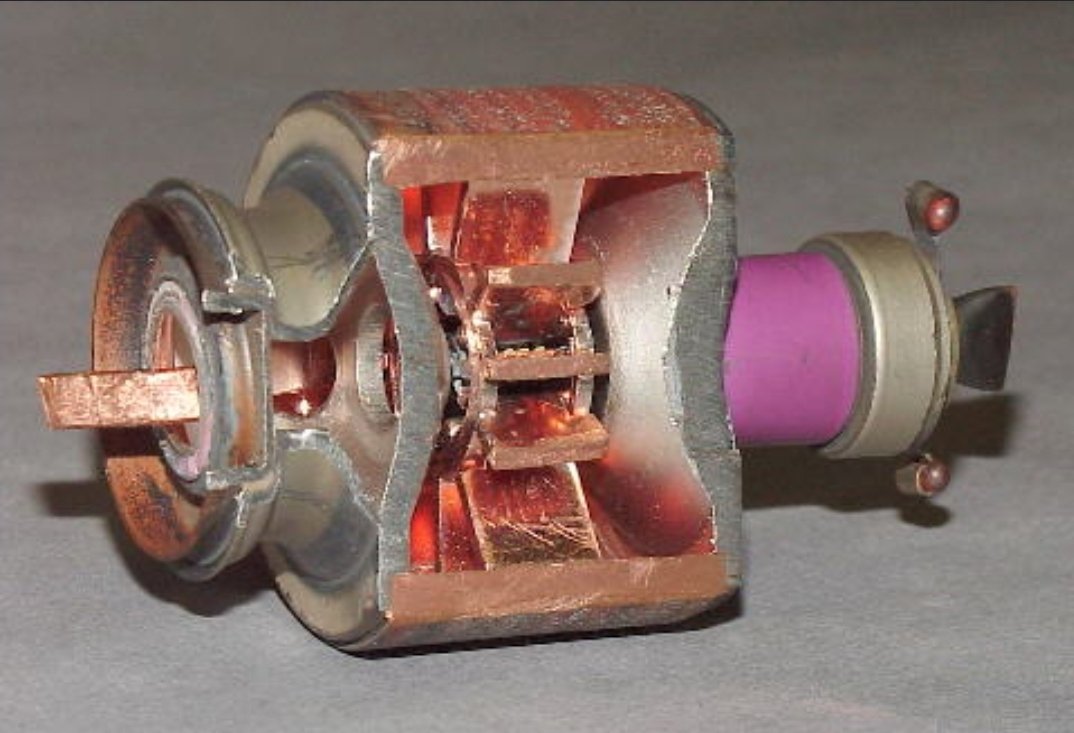
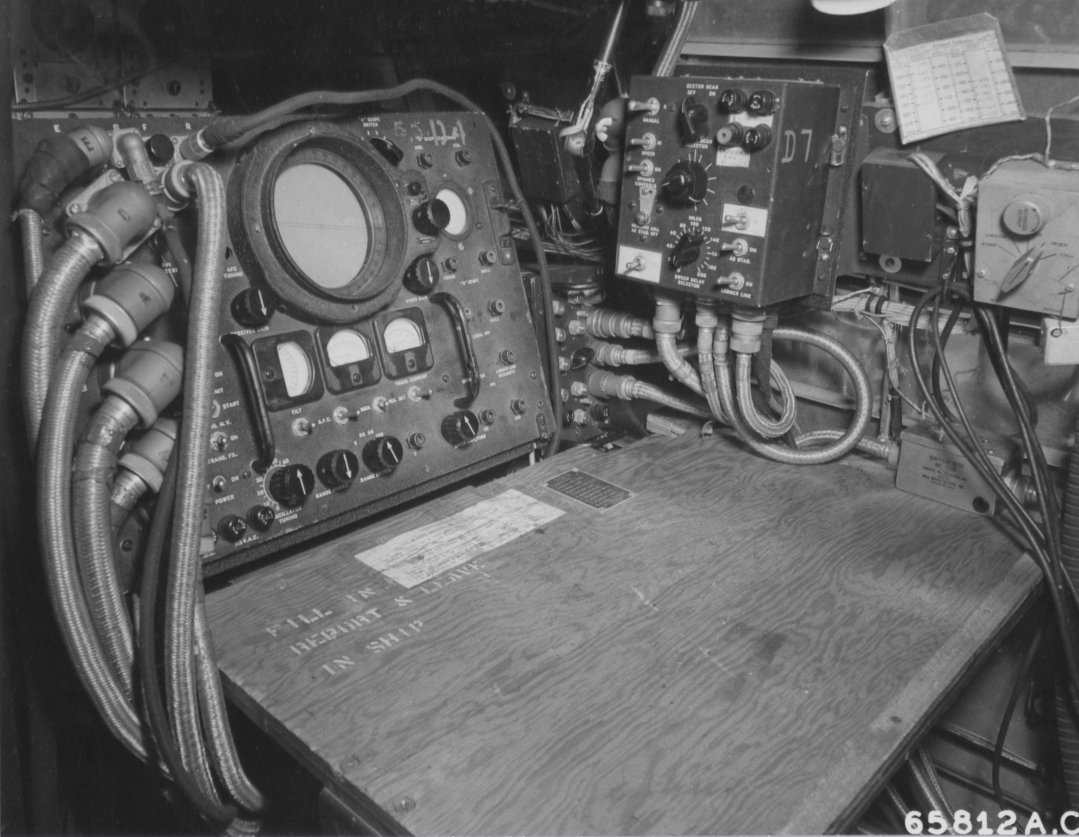
The Allies also developed terrain radar (H2X), centrimetric radar, the proximity fuze (both for AA and general artillery use), computerized fire control, radar fire control, anti-submarine radar (Leigh Light), and the Cavity Magnetron.

1
1
13

[Special Report] Collapsing Trust in Judiciary Fuels Election Concerns: Why the NEC Must Undergo an Independent External Audit
Public skepticism toward South Korea’s National Election Commission (NEC) has reached an unprecedented boiling point. Recent administrative failures combined with critical flaws in the official voting infrastructure have struck at the core of the nation's democratic integrity. A state-level cybersecurity audit officially validated that hackers could infiltrate the internal servers to manipulate digital voter registries and register synthetic "ghost voters," effectively elevating the risk of systemic election rigging from a mere conspiracy theory to a verified technological reality.
Compounding this crisis is the profound erosion of public trust in South Korea’s judiciary and law enforcement agencies. Plagued by years of political polarization and high-profile institutional cartels, the traditional legal framework has lost its capacity to deliver universally accepted truths. In this climate of systemic distrust, any investigation into the NEC led by prosecutors or police will inevitably be dismissed by half the population as a politically motivated whitewash, worsening the cycle of societal division.
In reality, verifying the integrity of an election does not require complex legal interpretations; it relies entirely on rigid data reconciliation. Total eligible voters minus absolute abstentions must equal the exact number of ballots cast, and this figure must reconcile perfectly with the computerized tabulation. Despite the fact that straightforward arithmetic and raw data cross-checking could instantly resolve these existential doubts, the NEC has continuously hidden behind an insular organizational culture and a complete lack of internal controls, repeatedly ignoring calls for a transparent, comprehensive census.
Experts emphasize that neither the NEC's internal oversight nor discredited judicial probes can break this deadlock. Just as publicly traded corporations are legally mandated to surrender their ledgers to independent external accounting firms to verify financial truth, the nation’s democratic ledger must undergo a rigorous third-party forensic audit. There is a growing consensus that certified public accounting firms and independent digital forensics experts must be brought in to audit the NEC's internal controls and final election outcomes.
Reconciling voter turnouts, issued ballot sheets, and abstention data through independent, corporate-grade auditing techniques remains the only viable pathway to rescue South Korea's democratic legitimacy. Only when the NEC subjects its entire infrastructure to an uncompromised external audit will the foundation of the country's democracy be restored.
#ElectoralIntegrity #NECScandal #JudicialCrisis #ExternalAudit #ElectionFraudRisk #VoterDataReconciliation #ForensicAudit #DemocracyInCrisis #CyberSecurityVulnerability #FairElectionsKorea
1
47

We Will Not Tolerate Any Vulture's Eye on Singareni
Any Attempt to Hurt the Self-Respect of Singareni Workers Will Not Be Forgiven
Will You Damage Singareni's Reputation for Political Gain?
There Is No Place for Exploiters in Singareni
— Deputy Chief Minister Bhatti Vikramarka
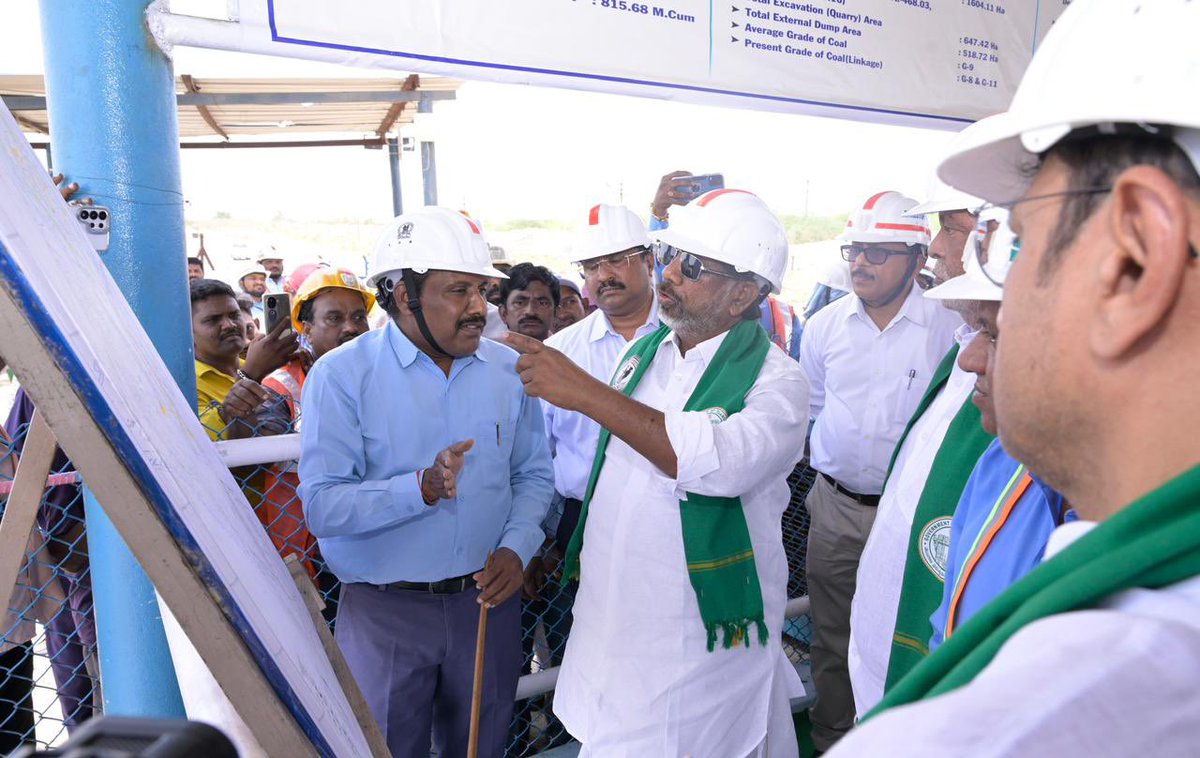
(Deputy Chief Minister Bhatti Vikramarka visited the Srirampur Open Cast Coal Mine in Mancherial district)
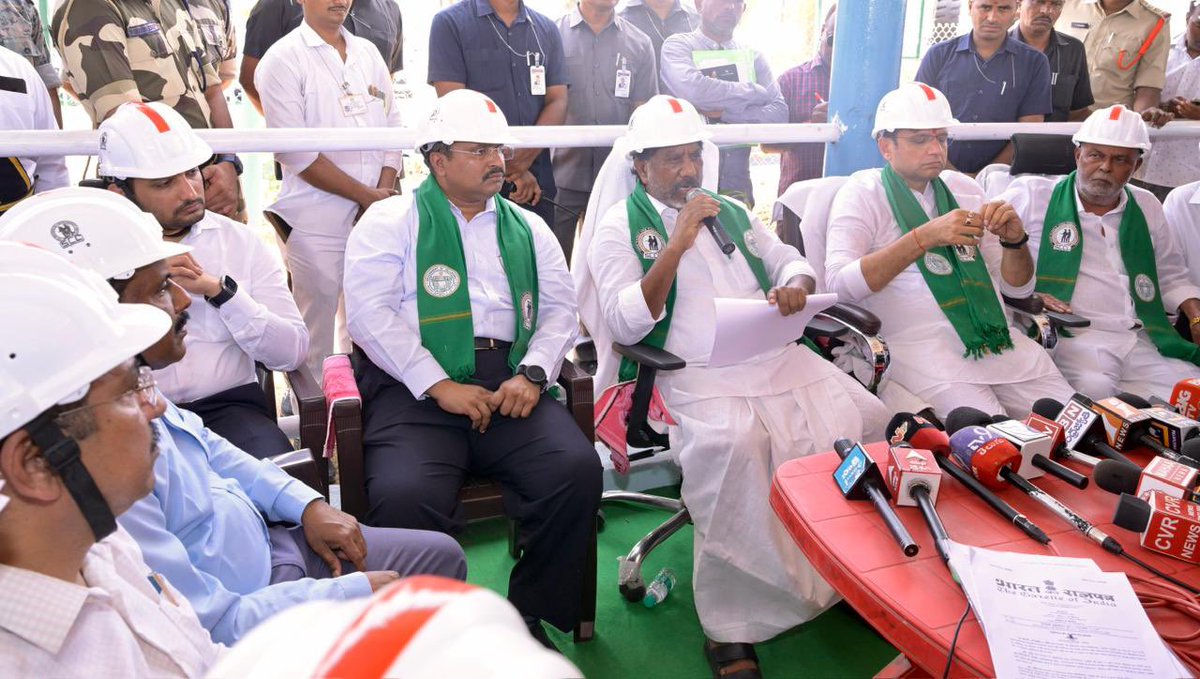
Deputy Chief Minister Bhatti Vikramarka once again came down heavily on opposition leaders for belittling the hard work and self-respect of Singareni workers. He expressed anger that opposition leaders were making statements that damage the reputation of Singareni purely for their political interests.
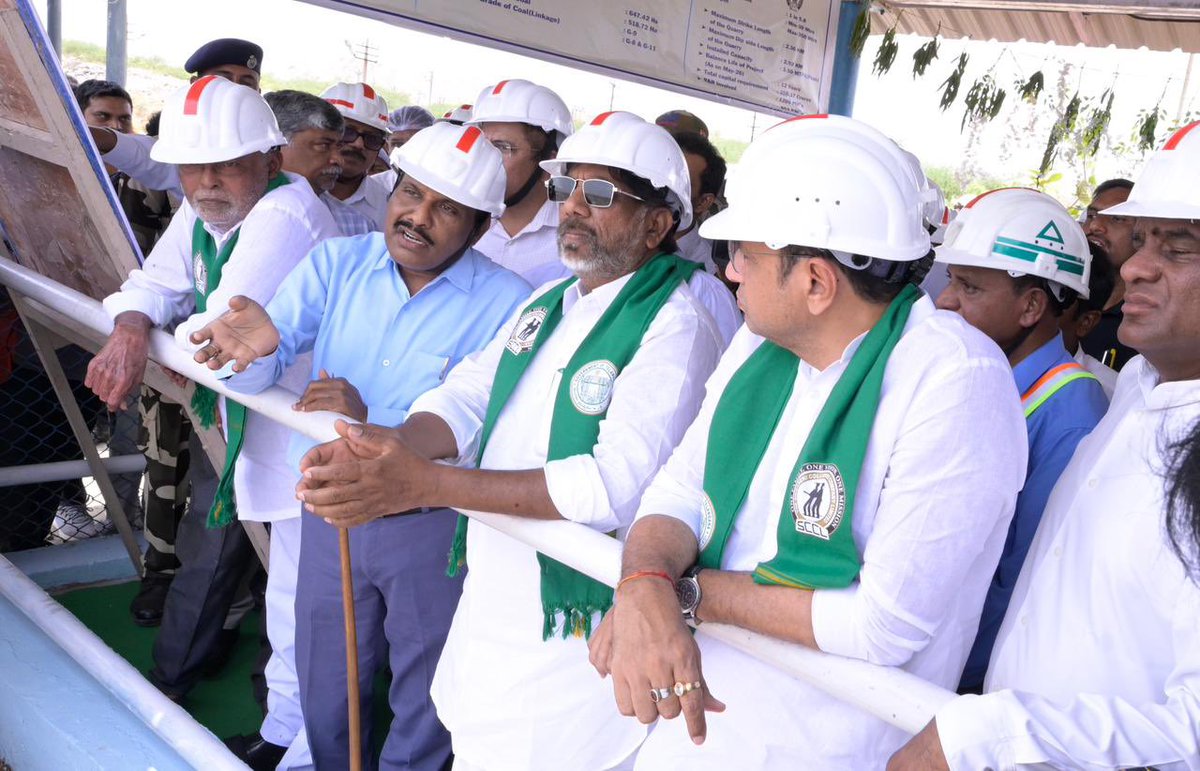
To respond to the criticism being made by the opposition against Singareni, Bhatti Vikramarka, along with Minister Sridhar Babu, inspected the Srirampur Open Cast Mine in Mancherial district on Sunday. During the visit, he conducted an open-house inspection and presented the facts before the public.
Addressing the gathering, the Deputy Chief Minister stated that any insult to the hard work of Singareni workers would not be tolerated.
He said the open-house inspection was organized to reveal the truth behind the ongoing campaign against Singareni and to distinguish facts from falsehoods. He alleged that opposition leaders were spreading misinformation for their personal and political interests. Bhatti Vikramarka clarified that he was not there to make political statements but only to place facts before the people.
He emphasized that the people's government speaks only the truth and that presenting those facts to the public is its responsibility.
The Deputy Chief Minister said that the growth and success of Singareni are built upon the sweat and tireless efforts of its workers, and anyone who attempts to undermine their dignity would not be tolerated. He accused opposition leaders of spreading false propaganda against the commitment of Singareni management and the transparent systems followed by the organization.
He stated that Singareni is a crown jewel of Telangana and criticized attempts to tarnish its image through baseless allegations. He said that letters being written to the Central Government by opposition leaders, suggesting wrongdoing in Singareni, were far from the truth. The open-house inspection, he added, was conducted precisely to ensure that people understand the facts.
Bhatti Vikramarka advised political parties not to use Telangana's future and Singareni for narrow political gains. He warned against engaging in such activities for selfish political purposes.
He asserted that Singareni is not merely a company but an asset belonging to the people of Telangana. Its resources, systems, and strength come from the people and will always belong to them. He declared that the government would function with utmost vigilance to ensure that exploiters and opportunists do not cast their eyes on Singareni. Any attempt to use the institution for political interests would be strongly resisted. He reaffirmed that Singareni would continue to function with complete transparency.
The Deputy Chief Minister said it is the responsibility of the government to ensure complete transparency in coal production, stock management, and transportation processes. During the inspection, he reviewed mine surroundings, safety measures, and transportation records, seeking detailed information from officials.
He noted that the Srirampur Open Cast Mine has sufficient reserves to continue coal production for another 28 years as per its planned targets. Officials explained that every process within Singareni is carried out using advanced computerized systems ensuring transparency.
Bhatti Vikramarka stated that the government's primary objective is the welfare of Singareni workers. He said continuous efforts are being made to provide them with world-class healthcare facilities and international-standard education for their children.
@Bhatti_Mallu @OffDSB

25
39
1,248

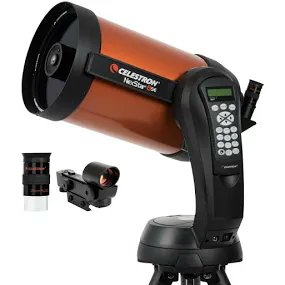
🔭 Ready to explore the cosmos?
The Celestron NexStar 8SE features an 8-inch aperture and computerized GoTo technology that helps you find thousands of celestial objects automatically.
🌙🪐⭐
🔗 amzn.to/4e9vrmM
13

I'm, this is about as wrong as saying the color black is white. Humans have zero to do with the mkts. Ur not trading against humans its basically chess computerized. 75% OF VOLUMES ARE MACHINE AI ALGO
1
114

AVA WHEN YOU VOTE ON COMPUTERS OR A COMPUTERIZED SYSTEM THE OUTCOME IS WHAT THE FOLKS WHO HAVE THE KEYS TO THE SYSTEM. YOU CAN TAKE IT TO THE BANK.

Spanberger is the most horrible governor Virginia has ever had.
What the hell happened, Virginia?
8