Gayheart Ayoo retweeted

Jun 12
🐍 Python Docker Tutorials — Docker is a containerization tool used for spinning up isolated, reproducible application environments. This page lists all of our Python Docker tutorials. #python
realpython.com/tutorials/doc…
8
33
1,505

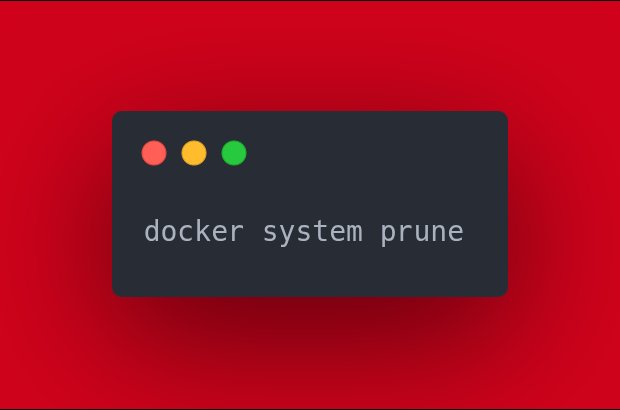
If you’re a die-hard #Docker 🐳 fanboy, prune needs to be your daily mantra.
You can't brag about containerization while letting hundreds of GBs of dangling images & dead volumes turn your SSD into a graveyard. Run the command & let your disk breathe. #Containers #DevOps
1

🚀 Hiring: SDE III – MLOps | Remote (India)
Looking to work on large-scale Machine Learning infrastructure that powers real-world AI systems at global scale?
We're partnering with a fast-growing technology company that's building mission-critical AI and identity platforms used by millions of users worldwide.
As an SDE III – MLOps Engineer, you'll help architect and scale the infrastructure behind the entire ML lifecycle—from model training and deployment to serving, monitoring, and optimization.
🔹 Build and scale ML serving infrastructure
🔹 Design enterprise-grade ML lifecycle management systems
🔹 Develop CI/CD frameworks for production ML
🔹 Architect distributed and event-driven systems on AWS
🔹 Optimize model inference using ONNX, TensorRT, AWS Neuron, and modern acceleration techniques
🔹 Work closely with ML Engineers, Platform Engineers, and Cloud teams
What we're looking for:
✔ 5 years of software engineering experience
✔ Strong Python expertise
✔ MLOps experience (MLFlow, Weights & Biases, or similar)
✔ AWS cloud and serverless architecture experience
✔ Docker, containerization, and orchestration experience
✔ Experience with model deployment, serving, and monitoring
✔ Exposure to PyTorch and production ML workflows
📍 Location: Remote (India)
If you're passionate about building scalable ML platforms and enabling AI teams to move faster, I'd love to connect.
📩 Feel free to reach out or share your profile at nachiketh.n@grizmolabs.com
2
11
614

GitHub Trends Weekly : apple/containerization github.com/apple/containeriz…
164

1: Containerization enables Linux containers on macOS using Swift and Virtualization.framework. It runs each container in lightweight VMs with dedicated IPs and fast boot via optimized kernel configs. Includes APIs for OCI images, registries, ext4 FS, Ne… github.com/apple/containeriz…
7
3: Containerization enables running Linux containers on macOS via Swift, with lightweight VMs, per-container IPs, and fast boot times. Learn more: github.com/apple/containeriz…
github.com/apple/containeriz… github.com/apple/containeriz…
3
2: Containerization enables Linux containers on macOS via Swift and Virtualization.framework. It offers OCI image management, remote registries, ext4 filesystem creation, Netlink I/O, and lightweight VM runtimes with fast boot. Supports Rosetta 2 on Appl… github.com/apple/containeriz…
6
G: Containerization is a Swift-based package that enables Linux containers on macOS using Virtualization.framework, with Rosetta 2 support for apple silicon. The project covers OCI image management, remote registries, ext4 filesystem creation, Netlink in… github.com/apple/containeriz…
8

Why Harness engineering should matter to you now?
If your strategy for scaling AI agents is still focused entirely on optimizing prompts and building longer context windows, you are missing the structural layer where production-grade software actually wins. The top 1% of AI systems engineers have shifted their attention to Harness Engineering.
As leading tech builders have explicitly stated: A raw model is not an agent. An LLM is simply an inference engine—a brain with zero memory, zero access to the physical world, and zero ability to execute a process. It only transforms into an industrial-strength autonomous worker when it is wrapped inside a Harness.
Here is the architectural breakdown of how Harness Engineering serves as the runtime infrastructure turning unpredictable chatbots into deterministic business engines:
🏗️ 1. What Exactly is an AI Agent Harness?
If you are not the LLM itself, you are part of the harness. A harness is the complete scaffolding of code, orchestration logic, middleware, and sandboxed environments built *around* the model to manage its state and dictate its boundaries. It sits as a layer between the raw model and the execution environment, translating open-ended reasoning into real, verified actions.
🛠️ 2. The 4 Essential Primitives of Harness Infrastructure
To build an autonomous loop that doesn't collapse under operational friction, a harness must provide four foundational structural components using terms we all know:
📁 A. Persistent Memory (The Workspace File System)
Out of the box, an LLM loses its state the moment a chat session ends. A professional harness provides the agent with persistent memory by initializing an isolated, local workspace directory. Instead of forcing the model to cram every single asset, historical log, and piece of documentation into a volatile chat window, the agent writes intermediate outputs directly to disk. This allows multiple specialized sub-agents to collaborate on a shared project space without losing their place or forgetting past steps.
🔄 B. Context Optimization & Token Compaction
As an agent loops recursively over a complex task, the raw interaction history explodes, causing rapid context drift. The harness uses middleware hooks to protect the model's active context window. If a terminal tool spits out 10,000 lines of raw server errors, a smart harness intercepts the stream, clips the output down to the essential header and tail tokens, stores the complete log in memory, and feeds a clean, high-density summary token back to the model.
💻 C. Tool Execution & Containerization
An agent cannot iterate unless it can securely interact with the physical world. The harness manages the tool execution layer—providing secure access to sandboxed bash terminals, web browsers, and API schemas. If an agent writes an automation script, the harness executes it inside an isolated container, captures the real-world results or execution errors, and feeds them back to the model's eyes so it can self-correct.
🛡️ D. Hard Governance & Budget Protection
Raw models do not know what "done" looks like; they will keep generating tool calls indefinitely or get trapped in recursive oscillation loops. The harness enforces deterministic governance and safety circuit breakers. It injects hard temporal guards and strict iteration limits (e.g., halting for a mandatory human-in-the-loop validation after a maximum of 10 consecutive turns) to shield your corporate API wallet from rogue automation bills.
⚙️ 3. Advanced Harness Patterns: The "Ralph Loop"
One of the most powerful paradigms emerging in harness design is the interception of exit states. When left to its own devices, a model will often drop an early, unverified answer when it encounters cognitive friction.
Elite harnesses implement a pattern known as the Ralph Loop:
1. The model attempts to emit an exit token indicating it is finished.
2. The harness hooks intercept the completion token *before* it reaches the user.
3. The harness dynamically spins up a clean context window, injects a pre-defined evaluation suite (like running code linters or layout tests), and feeds the failure logs back to the model with a mandatory continuation prompt: "Your output failed test script X. Resume execution and refactor the files."
The Takeaway:
As frontier models commoditize and pricing plunges into a race to the bottom, owning the raw model weights is no longer the definitive competitive advantage. The value has migrated entirely to the infrastructure around the model. The developers and enterprise architects who win this phase aren't those who write the prettiest prompts—it is the systems engineers who design the tightest, most secure, and most resilient harnesses to command the raw compute engines. 🖥️⛓️
6
5
7
172

Bunny_Prince 🤍 retweeted

Jun 13
i took the whole morning to study frontend-backend architecture with server deployment and containerization and i thank mickey for making me enjoy my career so much, we're just 2 computer rats against da world..

1
1
12
293

APPLE BUILT A TOOL THAT RUNS LINUX CONTAINERS AS LIGHTWEIGHT VMs DIRECTLY ON MAC
written entirely in swift and tuned for apple silicon, container skips the usual docker desktop overhead by giving each container its own minimal VM instead of sharing a single one. it pulls and pushes OCI-compatible images, so it works fine with any standard registry, and runs on top of the Containerization swift package apple released alongside it.
the project already has 26.5k stars and is moving fast, with 15 releases out and active development ongoing. requires macOS 26 and apple silicon to take advantage of the newer virtualization and networking features.
▪️ written in Swift, optimized for Apple silicon
▪️ each container gets its own lightweight VM
▪️ pulls/pushes OCI-compatible images from any registry
▪️ built on apple's Containerization package
github.com/apple/container
2
11
1,179

Hiring: DevOps Engineer
Location: Lagos
Responsibilities:
Implement and manage Kubernetes clusters using RKE2 and Rancher, ensuring high availability, scalability, and security.
Collaborate with development and operations teams to automate and streamline the deployment and release processes.
Maintain and optimize on-premise air-gapped environments, addressing unique challenges related to restricted network access.
Develop and maintain scripts for automation, monitoring, and troubleshooting of systems and applications.
Work closely with cross-functional teams to troubleshoot issues, resolve incidents, and improve overall system performance.
Implement and enforce security best practices, ensuring compliance with industry standards and regulations.
Collaborate with other teams to design and implement infrastructure solutions that align with project requirements.
Requirements:
3–6 years of hands-on experience as DevOps Engineer.
Required Skills:
Hands-on experience with Kubernetes, RKE2, and Rancher in production environments.
Proficiency in Linux administration and Oracle database management.
Strong scripting skills (e.g., Shell, Python) for automation tasks.
Experience working in on-premise air-gapped environments, addressing network and security challenges.
Familiarity with containerization technologies such as Docker.
Solid understanding of CI/CD pipelines and configuration management tools.
Send resume to career@morphinnovations.com using the Job Title as the subject of the email.
114

Jun 13
If I have to start over in tech (specially in AI-ML Field), how should I ??
I have basic knowledge of everything among backend, ML, containerization, AWS, but confident in nothing.
Need Advice?
7

🇳🇬 Hiring: DevOps Engineer
📍 Lagos
Requirements
• 3–6 years’ hands-on experience as DevOps Engineer
• Experience with Kubernetes, RKE2, and Rancher in production environments
• Proficiency in Linux administration and Oracle database management
• Strong scripting skills (Shell, Python) for automation
• Experience with on-premise air-gapped environments and security challenges
• Familiarity with Docker and containerization technologies
• Solid understanding of CI/CD pipelines and configuration management tools
Responsibilities
• Implement and manage Kubernetes clusters using RKE2 and Rancher
• Automate and streamline deployment and release processes
• Maintain and optimize on-premise air-gapped environments
• Develop automation, monitoring, and troubleshooting scripts
• Collaborate with teams to resolve incidents and improve system performance
• Implement security best practices and ensure compliance
• Design infrastructure solutions aligned with project requirements
Apply: career@morphinnovations.com
Subject: DevOps Engineer
SEND US A DM ON WHATSAPP FOR CV REVAMPING 2348145289661
1
71

Jun 13
5/ Under the hood, container is powered by Apple's Containerization framework.
This framework handles:
• Image management
• Process isolation
• Networking
• Virtualization
All optimized for Apple Silicon.
1
12