Now companies can run their apps in orbit without launching a satellite.
Loft Orbital lets you build a containerized app, ship it to their satellites already in space, and run it on onboard GPUs.
They validate it for flight, deploy it to the runtime, and you task it via API through their mission-control software.
Vessel detection, wildfire tracking, RF intel, downlinked in to your PC in real time.
Now they need a Head of AI Engineering to lead it.
5

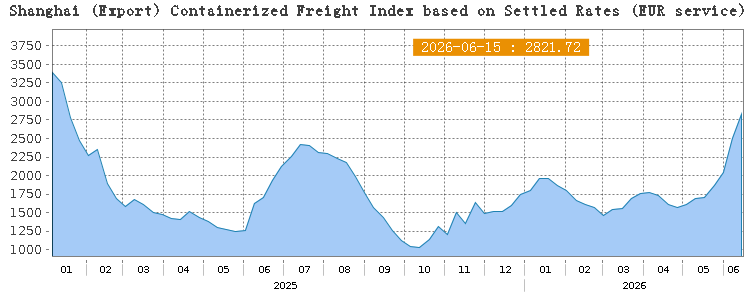
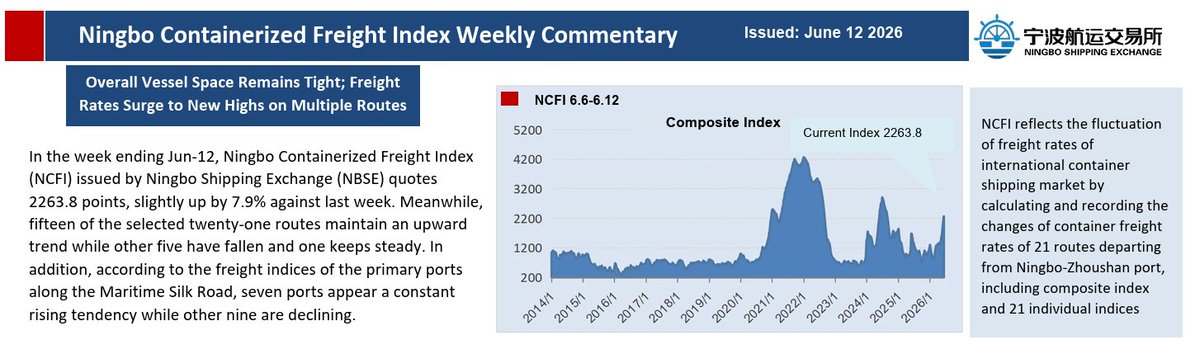
Ningbo Containerized Freight Index
June 12, 2026
Ningbo Containerized Freight Index (NCFI): 7.9%
Ningbo - Europe: 18.3%
Ningbo - EM: 13.2%
Ningbo - WM: 14.1%
Ningbo - EA: 5.3%
Ningbo - WA: 5.5%
36

Traditional data centers take years to complete construction. In contrast, Sinco’s containerized computing hubs are fully prefabricated in factories and plug-and-play.
Only water, power and network connections are required on-site
4

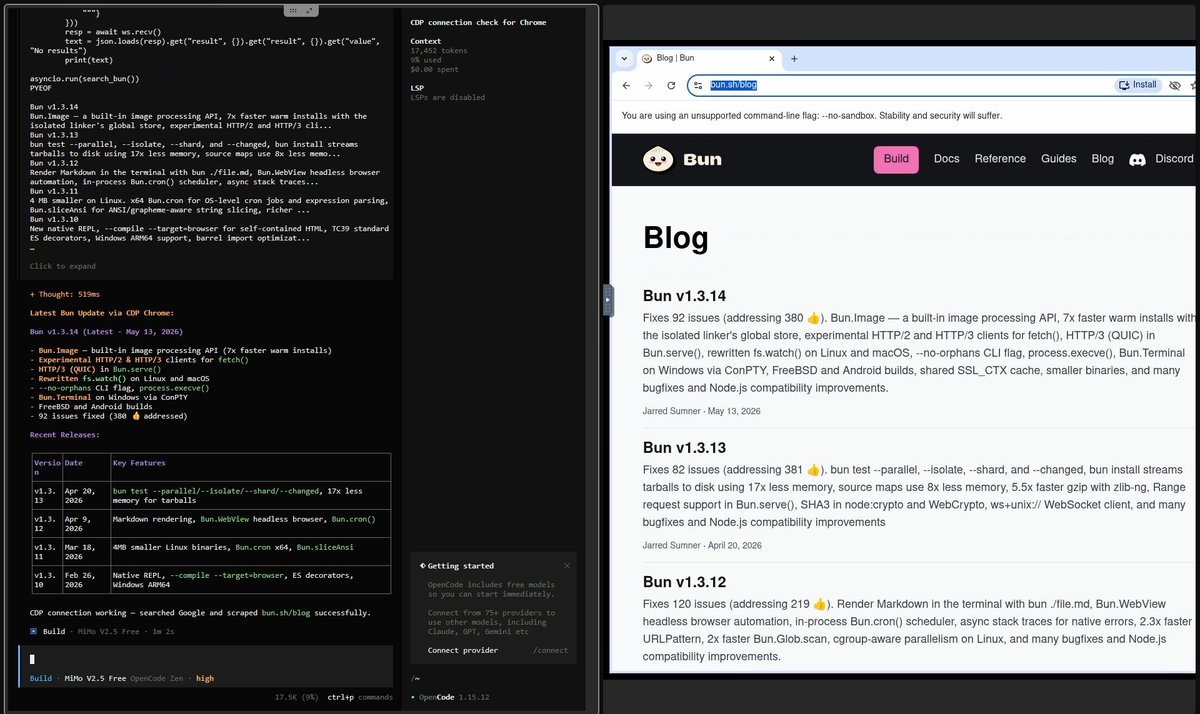
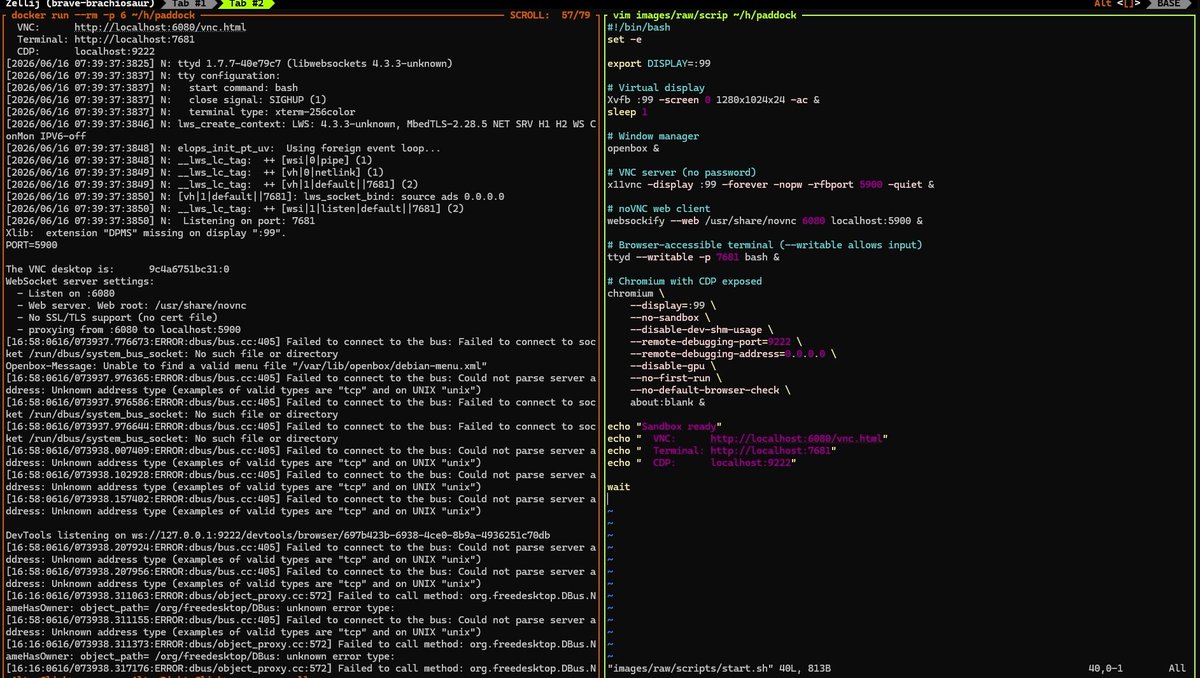
1st day working on my own ai agent sandbox.
- succesfully containerized opencode and chrome
- using ttyd for web based terminal
- using cdp protocol to let the opencode agent control the chrome browser
#buildinpublic #30daysofcode #learninpublic
9

The Silent Revolution at the Server Rack: Why the AI Era is Rewriting the Rules for Data Center PDUs
As NVIDIA and Google accelerate the adoption of 800V DC architectures for next-generation AI clusters, a stark reality has set in across the infrastructure world: The AI race is no longer just a battle of silicon; it is a war of power density and physical layer efficiency.
When industry leaders point out that computing energy demands could scale up to 1,000x, they are exposing a critical vulnerability. Our grids cannot instantly multiply by 1,000. Therefore, the survival of frontier AI factories depends on how flawlessly we manage, monitor, and distribute every single watt of power inside the server rack.
As data center architectures push past 100kW per rack, the humble Power Distribution Unit (PDU) is undergoing the most radical revolution in its history. Here are the 3 defining trends that will shape the future of rack-level power:
1. From AC to 800V DC: The Death of Legacy Power Topologies
Running traditional 220V/380V AC power into a 100kW AI rack forces current (amperage) to skyrocket. This requires copper busbars and cables as thick as a human arm, leading to catastrophic thermal waste (line losses) and spatial congestion.
The future belongs to high-voltage Direct Current (DC) topologies. By stepping up to 800V DC, data centers can deliver massive power with dramatically reduced amperage and cable footprints. However, this shift completely invalidates "dumb" or legacy PDUs. High-voltage DC demands unprecedented engineering standards: military-grade arc-flash protection, advanced electrical insulation, and specialized materials that can handle relentless thermal stress.
2. Microsecond Telemetry: Eliminating the "Blind Spots" in Dynamic Workloads
AI training workloads are notoriously volatile. Unlike steady-state cloud workloads, large language models (LLMs) cause massive, near-instantaneous power spikes that can trigger catastrophic breaker trips if unmanaged.
Tomorrow's PDUs cannot just be passive power strips; they must serve as the intelligent nervous system of the rack. The industry is moving toward outlet-level microsecond telemetry. Infrastructure teams need real-time data on current, voltage, and power factor to predict anomalies before they happen. If a node begins to overheat or misbehave, the PDU must feature autonomous, localized logic to shed non-critical loads or alert upstream systems in real time.
3. The Unmanned AI Factory and the Need for Physical Automation
With the explosion of decentralized modular and containerized data centers deployed in energy-rich, remote regions, the global tech landscape is facing a severe infrastructure labor shortage. There simply aren't enough field engineers to manually monitor, trace, and debug thousands of remote racks.
The future PDU must enable complete operational autonomy. This means hyper-reliable remote rebooting, secure programmable firmware, and environmental sensor integration (temperature, humidity, fluid leakage for liquid cooling) directly embedded into the PDU chassis.
Bridging the Gap: The Pioneers of Next-Gen Distribution
Solving these hardware bottlenecks requires a radical departure from mass-market manufacturing toward hyper-precise, high-density custom engineering.
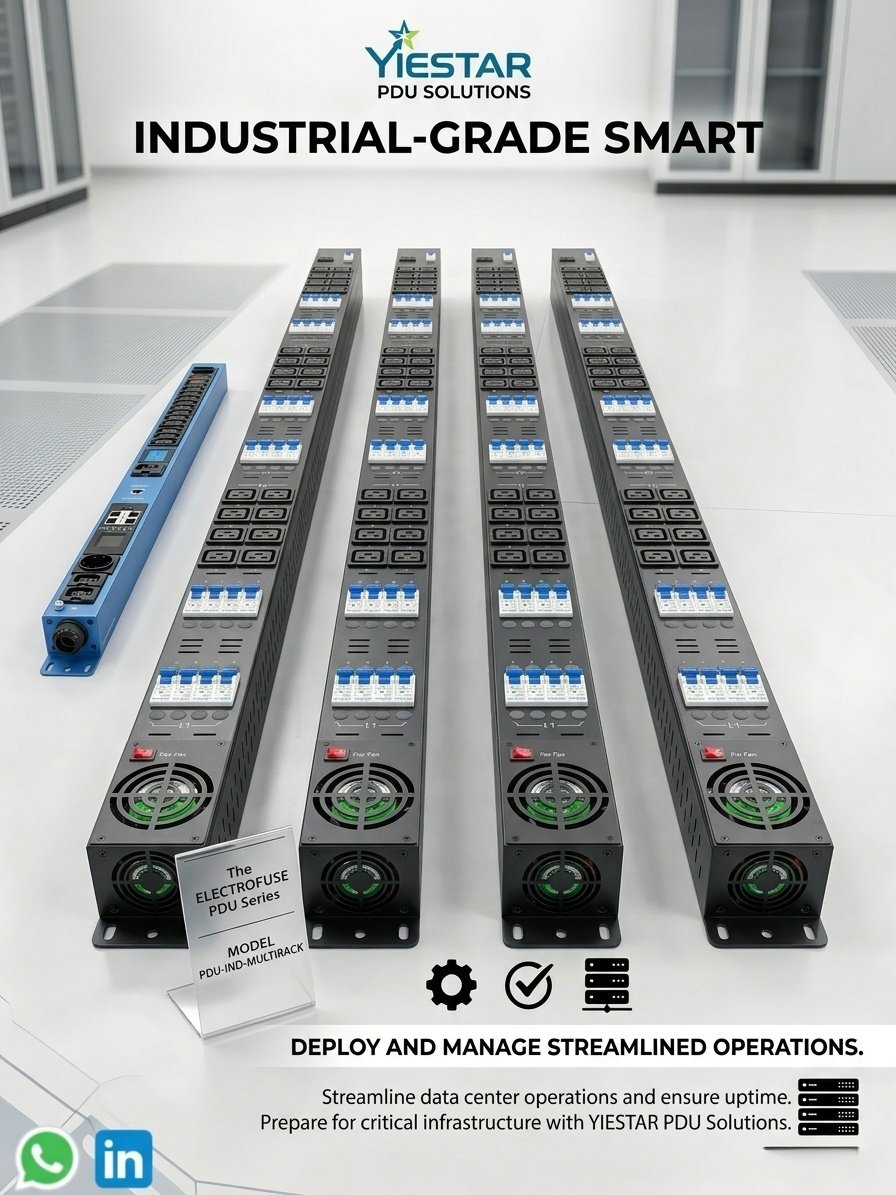
We are already seeing specialized engineering firms rise to meet this challenge. Innovators like Yiestar have quietly become the backbone of this infrastructure transition. By pioneering high-density Smart PDUs designed specifically for next-generation cooling topologies and compact modular setups, Yiestar has demonstrated how rack-level power can achieve flawless remote telemetry and rock-solid resilience under terrifying power density curves.
The cloud runs on code, but it is built on hardware. As the industry races toward a multi-billion-dollar modular buildout, the architects who future-proof their power strategy at the rack level today will be the ones leading the AI era tomorrow.
26
The era of building mega-data centers near metropolitan areas is hitting a hard physical and social wall. 🛑 If AI infrastructure cannot expand traditionally due to power/water grid strain and local pushback, the only way forward is modular, containerized deployment in energy-rich, low-density regions.
Moving away from centralized grids means rack-level efficiency becomes the ultimate priority
5

Spot on. Compute power follows path of least resistance—specifically, cheaper energy and optimized footprint. This is exactly why we are seeing a massive shift towards modular/containerized data centers deployed in energy-favorable regions.
When jurisdictions talk about taxing data center energy, efficiency isn't just a metric anymore; it's survival.
3

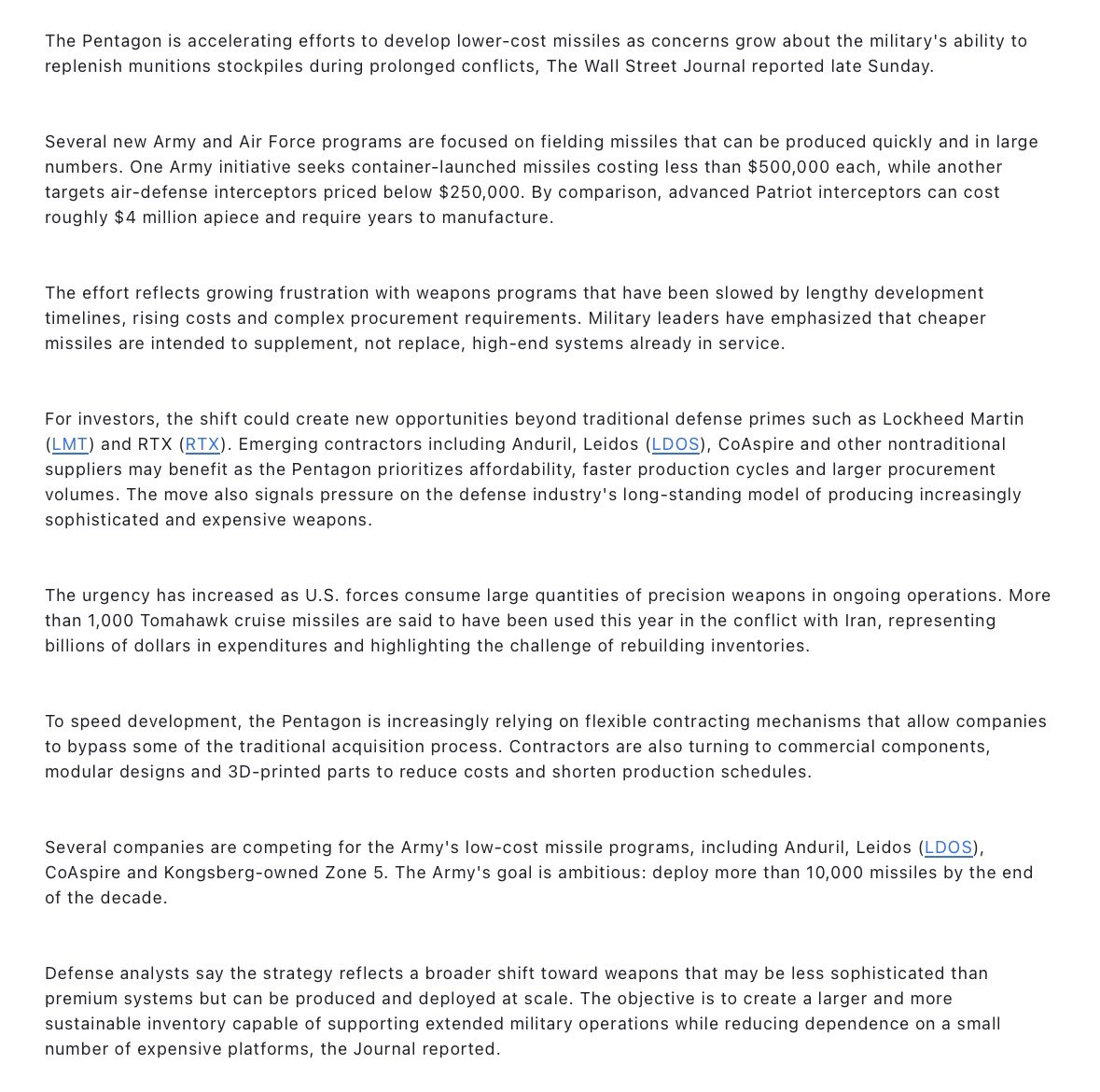
$UMAC $ONDS $KTOS $AVAV $RCAT | The Pentagon shifts to an "affordable mass" strategy, signing framework deals to secure over 10,000 low cost containerized cruise missiles.
The LCCM program aims to rapidly deepen stockpiles using commercial parts.
Jun 2

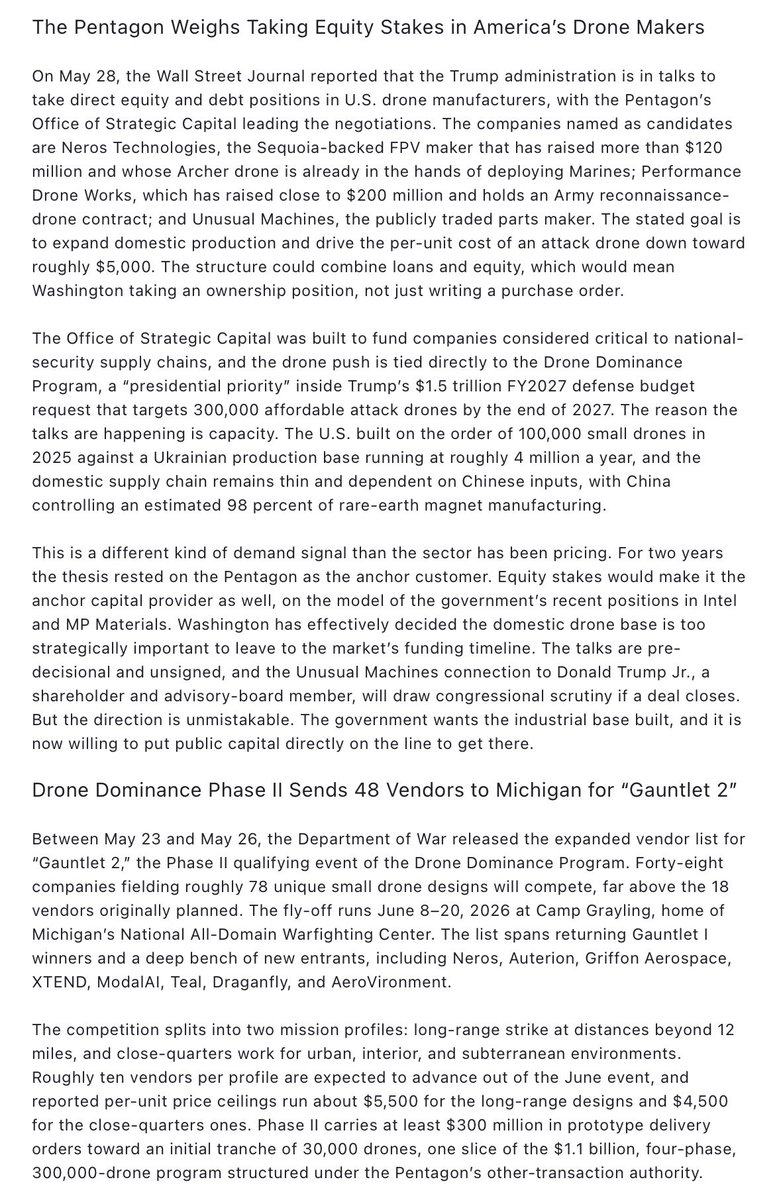
$UMAC $ONDS $KTOS $AVAV $RCAT | The Pentagon scales autonomous drone procurement via a historic $74 billion defense budget request for next generation warfare.
The massive funding surge secures thousands of cheap, disposable aircraft to overwhelm enemy airspace.
1
5
450

2h
400 developers have stopped wasting 45 minutes configuring fullstack boilerplate. 🤯
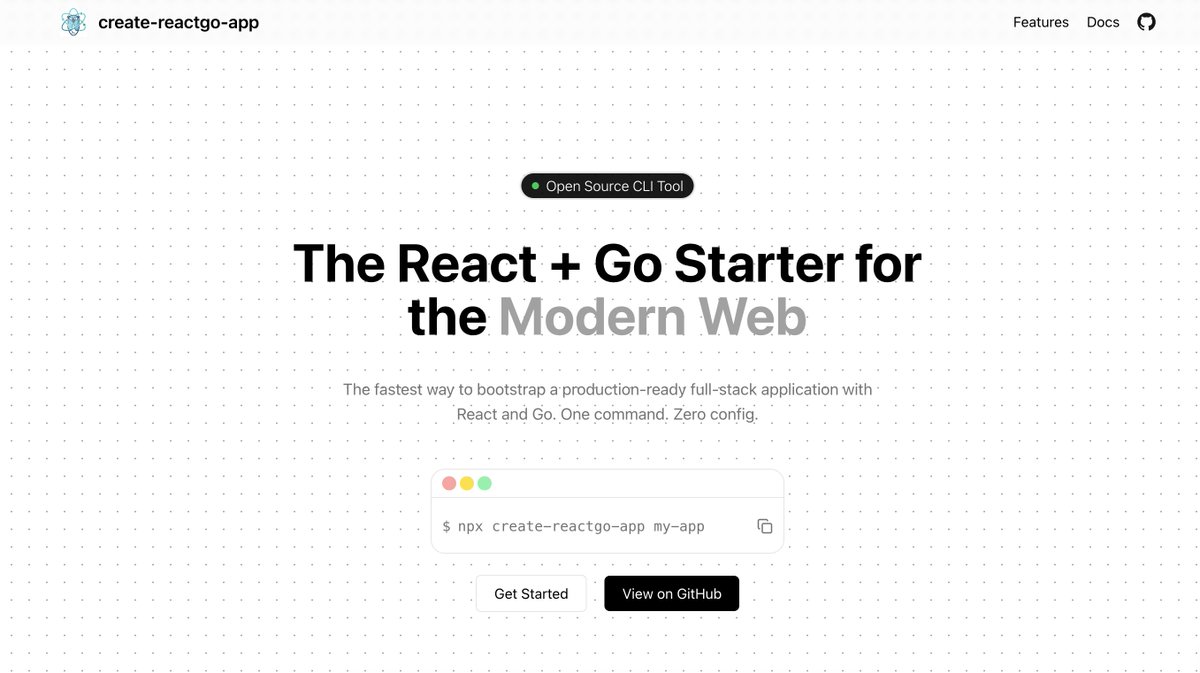
We just hit 400 downloads on npm and released create-reactgo-app v3.0.0! 🎉
Spin up a production-ready, containerized React Go app in 30 seconds flat.
What's new in v3.0.0:
⚛️ React 19 Vite TailwindCSS v4
🐹 High-performance Go (Gin Gonic) CORS ready
🐳 Instant Docker Compose setup (with Air hot-reloading)
📁 Streamlined folder layout & updated scaffolding
Stop copy-pasting Dockerfiles. Start building your product.
Try it now: npx create-reactgo-app <your-app>
Please feel free to contribute. Lets take this project from 0 > 100 together.
website: reactgo.akdevsaha.com
npm: npmjs.com/package/create-rea…
github: github.com/akdevsaha-dev/Qui…
#buildinpublic #golang #reactjs #webdev #100DaysOfCode
2
1
6
89
TRAFFIC PALAVA retweeted

[6:36AM] #FunsoWilliamsAvenue
#StadiumHotel
#BreakdownReport
Picture of a faulty (Tyre problem)containerized truck at Stadium hotel inward Barrack with no effect on traffic flow.
Effort to fix the tyre is currently ongoing.
#FollowLASTMA

2
184

I just ran an experiment:
𝐈 𝐫𝐞𝐩𝐥𝐚𝐜𝐞𝐝 𝐂𝐥𝐚𝐮𝐝𝐞 𝐰𝐢𝐭𝐡 𝐚 𝐟𝐮𝐥𝐥𝐲 𝐥𝐨𝐜𝐚𝐥 𝐋𝐋𝐌 𝐟𝐨𝐫 5 𝐝𝐚𝐲𝐬 𝐨𝐟 𝐜𝐨𝐝𝐢𝐧𝐠.
𝐇𝐞𝐫𝐞'𝐬 𝐭𝐡𝐞 𝐬𝐭𝐚𝐜𝐤 𝐭𝐡𝐚𝐭'𝐬 𝐰𝐢𝐧𝐧𝐢𝐧𝐠 𝐢𝐧 𝟐𝟎𝟐𝟔:
🧠 𝐌𝐨𝐝𝐞𝐥: Qwen3.6 35B-A3B
*(MoE — only 3B active parameters at inference)*
⚡ 𝐄𝐧𝐠𝐢𝐧𝐞: llama.cpp Vulkan backend
*(Beats ROCm on AMD, FYI.)*
🍎 𝐀𝐩𝐩𝐥𝐞 𝐒𝐢𝐥𝐢𝐜𝐨𝐧: Ollama MLX
*(March 2026 releases are incredibly fast.)*
🔧 𝐇𝐚𝐫𝐧𝐞𝐬𝐬: OpenCode or Pi
*Containerized sandboxed.*
🔑 𝐊𝐞𝐲 𝐜𝐨𝐧𝐟𝐢𝐠: `preserve_thinking = true`
This one setting alone can cut per-turn latency by **60–80%**.
━━━━━━━━━━━━━━━━━━
𝐓𝐡𝐞 𝐩𝐞𝐫𝐟𝐨𝐫𝐦𝐚𝐧𝐜𝐞 𝐜𝐨𝐦𝐩𝐚𝐫𝐢𝐬𝐨𝐧:
☁️ **Claude Opus**
→ Senior architect who thinks *with* you
→ ~15× productivity
🖥️ **Qwen3.6 Local**
→ Sharp junior engineer who needs precise direction
→ ~5× productivity
For well-specified tasks, the gap is smaller than most people think.
For privacy-sensitive code, local is often the only viable option.
For cost at scale?
**$0/month vs $200–500 per developer.**
━━━━━━━━━━━━━━━━━━
𝐖𝐡𝐚𝐭 𝐬𝐮𝐫𝐩𝐫𝐢𝐬𝐞𝐝 𝐦𝐞 𝐦𝐨𝐬𝐭
The biggest blocker wasn't model quality.
It was **KV cache re-processing** destroying agentic session speed.
Qwen3.6 fixed it.
Enable:
```ini
preserve_thinking = true
```
I wrote a blog covering
✅ Model selection hardware math
✅ llama.cpp Vulkan build from scratch
✅ `preserve_thinking` KV cache optimization
✅ Docker Compose sandboxed agent setup
✅ Multi-model routing in Python
✅ Security sandboxing for AI agents

2
1
55


💥 Rüstungsindustrie: Rheinmetall startet Produktion von Kamikaze-Drohnen in Neuss
Rheinmetall hat auf der Rüstungsmesse Eurosatory in Paris einen sogenannten 'Containerized Missile Launcher' (CML) vorgestellt. Der handelsübliche 20-Fuß-Container kann bis zu 18 Kamikaze-Drohnen aufnehmen und diese per Katapult in den Himmel schießen – auch als Salve.
Die Drohnen des Typs FV-014 können bis zu 70 Minuten fliegen und haben eine Reichweite von 100 Kilometern. Sie werden ferngesteuert oder mithilfe Künstlicher Intelligenz auf Ziele gelenkt, in die sie sich stürzen und explodieren. Laut Rheinmetall bleibt stets ein Mensch in den Entscheidungsprozess eingebunden.
Produktion startet in Neuss
Finden die Drohnen kein Ziel, werden sie kontrolliert zum Absturz gebracht. An Bord tragen sie eine Sprengladung von vier Kilogramm inklusive Zünder. Eine Landung ist nicht möglich, da die Flugkörper nach dem Start scharfgeschaltet sind und keine Landevorrichtung besitzen.
Die Produktion der sogenannten Loitering Munition soll im dritten Quartal 2026 im Rheinmetall-Werk in Neuss beginnen. Das Werk wird derzeit umgebaut – früher war es ein Standort für Autozulieferer. Künftig sollen dort neben Drohnen auch Weltraum-Satelliten und Gefechtstürme für Flugabwehr-Panzer hergestellt werden.
Rheinmetall als militärischer Komplettanbieter
Timo Haas, Chef des Rheinmetall-Konzernbereichs für digitale Systeme, betonte, dass der CML nicht nur eigene Flugkörper, sondern auch Produkte anderer Hersteller aufnehmen kann. Der Container ist über die Plattform 'Rheinmetall Battlesuite' vernetzt und lässt sich auf Schiffen, Zügen oder Lastwagen transportieren.
Mit dem Drohnenprojekt will Rheinmetall den Wandel vom klassischen Panzerhersteller zum digitalen Rüstungsanbieter vollziehen. Wettbewerber im Bereich Kamikaze-Drohnen sind die Münchner Firma Helsing und das Berliner Unternehmen Stark Defence.
40

7h
There's no other "decentralized cloud" lol? Come on man.
Akash Network is literally called the world's first decentralized cloud computing marketplace — containerized apps, GPU/CPU bidding, Kubernetes-style deployments. Direct alternative to AWS.
Flux (RunOnFlux) runs a massive global network of nodes for Dockerized apps and full decentralized cloud hosting.
Plus storage layers like Filecoin IPFS, Fluence for VMs, Render for GPUs, etc.
ICP's canister model is unique and powerful for fully on-chain stuff, no argument there. But the broader decentralized cloud/DePIN space is very much crowded with real projects shipping today.
Grok wasn't wrong
1
35

2. Problem & Solution
AI and cloud compute face massive shortages, high costs, and centralization risks. Akash solves this by creating an open marketplace where providers contribute hardware and users bid for capacity via containerized deployments (Kubernetes-compatible). The solution is battle-tested: thousands of deployments, real paid usage, and cost savings of 50-80% vs. hyperscalers. It is production-grade infrastructure, not theoretical.
1
9
96