MRAK Show NEW EPISODE! - Powering Alaska from Within: HEX and the Cook Inlet Comeback
On this episode of Energy and Business from Must Read Alaska, host Todd sits down with John Hendrix — President and CEO of HEX LLC, Homer native, civil engineer, and recently named Outstanding Alaskan of the Year — for a clear-eyed conversation about Alaska’s energy future.
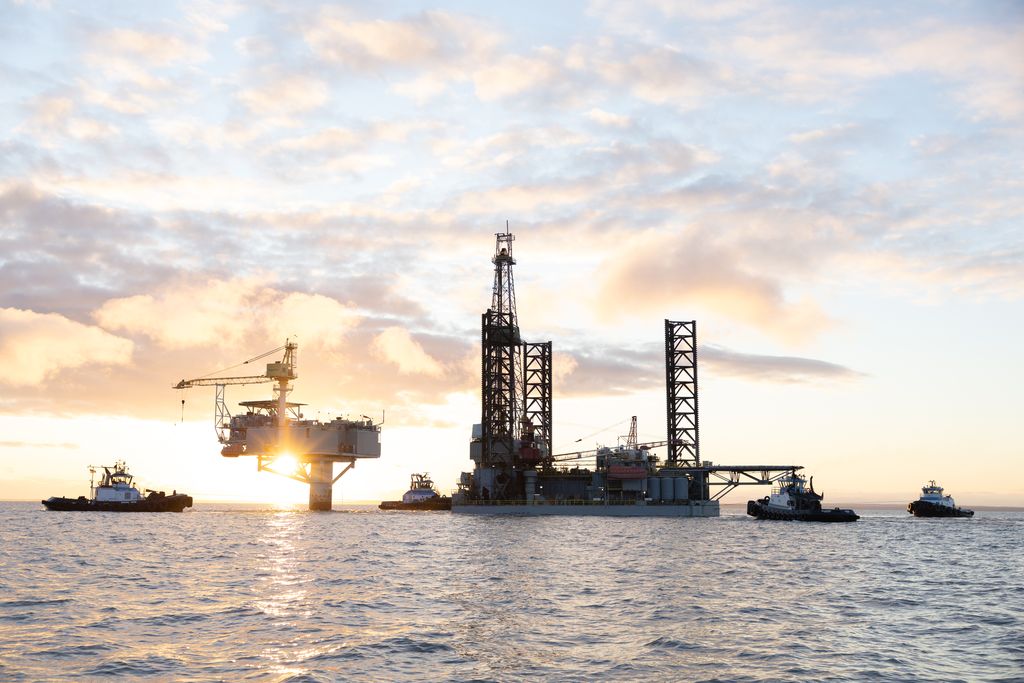
In “Powering Alaska from Within: HEX and the Cook Inlet Comeback,” John explains how HEX LLC, the only 100% Alaskan-owned and operated natural gas producer in the state, is delivering reliable, affordable energy to Railbelt homes, businesses, and military bases right now. Headquartered in Anchorage, HEX operates critical offshore and onshore infrastructure in the Kitchen Lights Unit and recently unified its operations under one strong HEX brand while committing to new drilling and continued investment.
Listeners will hear the story behind HEX’s acquisition of the once-struggling Kitchen Lights Unit, how local ownership and disciplined investment turned declining production around — including doubling output from the Allegra Leigh platform in 2025 — and why Cook Inlet’s estimated 19 trillion cubic feet of natural gas represents a generational opportunity for Alaska energy security.
John connects the dots between local resource development, keeping the lights on and heat flowing during critical winter months, and building a stronger, more self-reliant Alaska. He also shares an encouraging message for young Alaskans considering careers in energy and for policymakers who want to see more homegrown investment succeed.
If you care about affordable energy, Alaska’s resource sovereignty, and practical solutions that keep money and jobs in-state, this episode delivers straight talk from the operator proving that Alaskan solutions work best for Alaskans.
Listen with link in reply!
@TMLindley_AK
#oilandgas #industry #CookInlet
2
2
3
353

May 29
HEX Unifies Alaska Operations Under Single Brand, Continues Investment in Cook Inlet Gas
(The following is a reprint of a press release provided by HEX, LLC on May 28, 2026.)
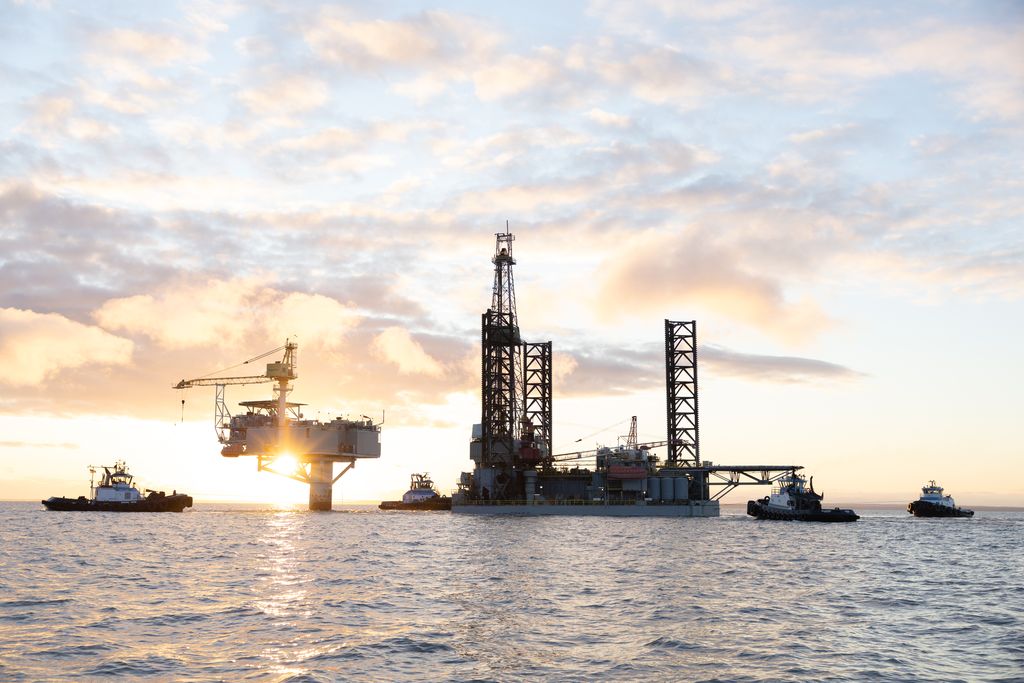
Alaska’s strategic asset and only locally owned natural gas producer and operator, HEX LLC (HEX), is unifying its operations under a single HEX brand. Furie Operating Alaska, LLC, the operating company of the Cook Inlet Kitchen Lights Unit, will become HEX Operating LLC. HEX Cook Inlet, LLC will become HEX Energy LLC. The rebranding reflects the company’s evolution and long-term strategic direction while creating a consistent identity across the HEX Family of Companies. HEX’s assets are a critical piece of U.S. energy infrastructure in Alaska, powering communities with natural gas produced by Alaskans, for Alaskans.
“We’re the all-Alaskan company that kept Alaskan Railbelt homes warm last winter,” states John Hendrix, President and CEO of HEX LLC. “Through disciplined investment and a long-term commitment to Alaska, we have doubled our natural gas production and invested over $40 million locally into Alaska’s economy. HEX is strengthening energy security, proving Cook Inlet has reliable natural gas supply, and ensuring Alaska’s energy future is built by Alaskans, for Alaskans. We only operate in Alaska and know Alaska is the best place to invest for our future.”
Full story in reply!
#oilandgas #industry #CookInlet
1
4
10
1,034

Apr 27
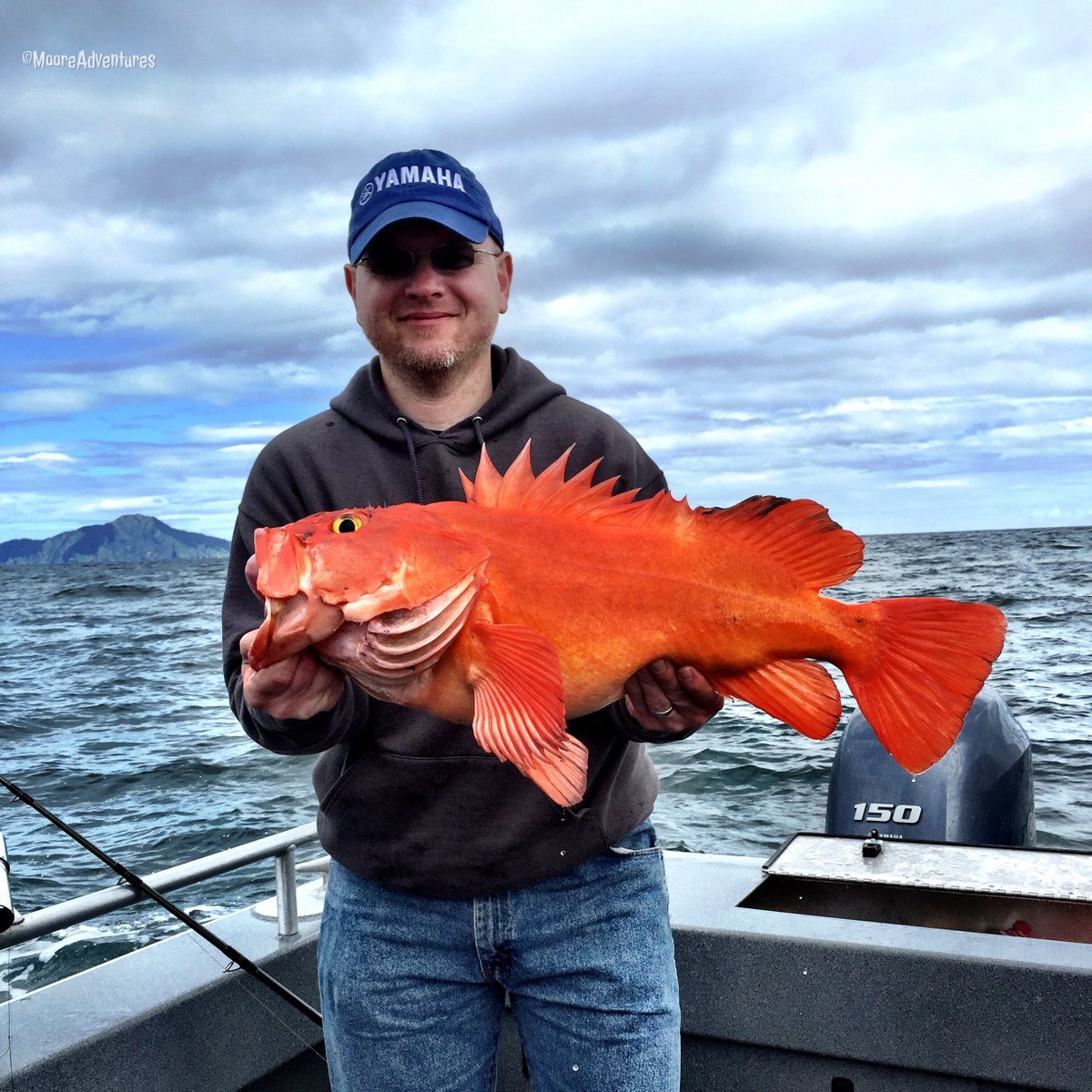
Throwback! Outer Cook Inlet saltwater delivered hefted a bright yellow-eye rockfish after a solid fight. There's something about the edge of the inlet where the water turns deep and the mountains watch from a distance. #MooreAdventuresAK #FishingAlaska @CookInlet
2
24
286

Apr 25
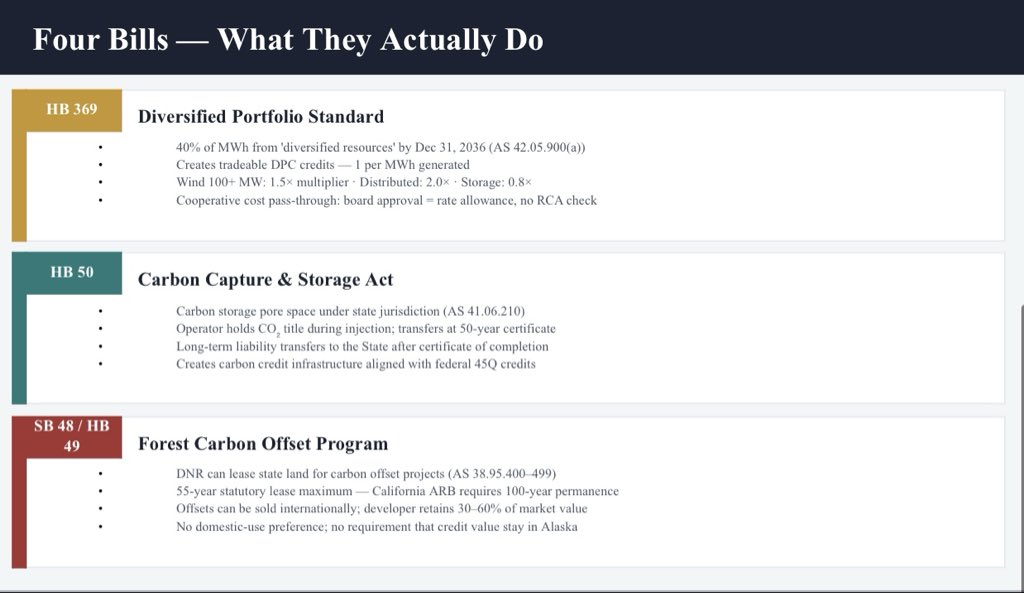
The Enstar-Hilcorp Cook Inlet Storage Fight Isn’t Just About This Winter’s Gas.
It’s About Who Owns the Holes in the Ground for Tomorrow’s Money.
Look, this isn’t some carbon conspiracy theory. It’s basic energy industry chess.
While everyone at the RCA hearing yesterday was yelling about peak winter demand, injection rates, and who pays what, the real long game is staring us in the face: those depleted reservoirs under Cook Inlet aren’t just gas tanks anymore.
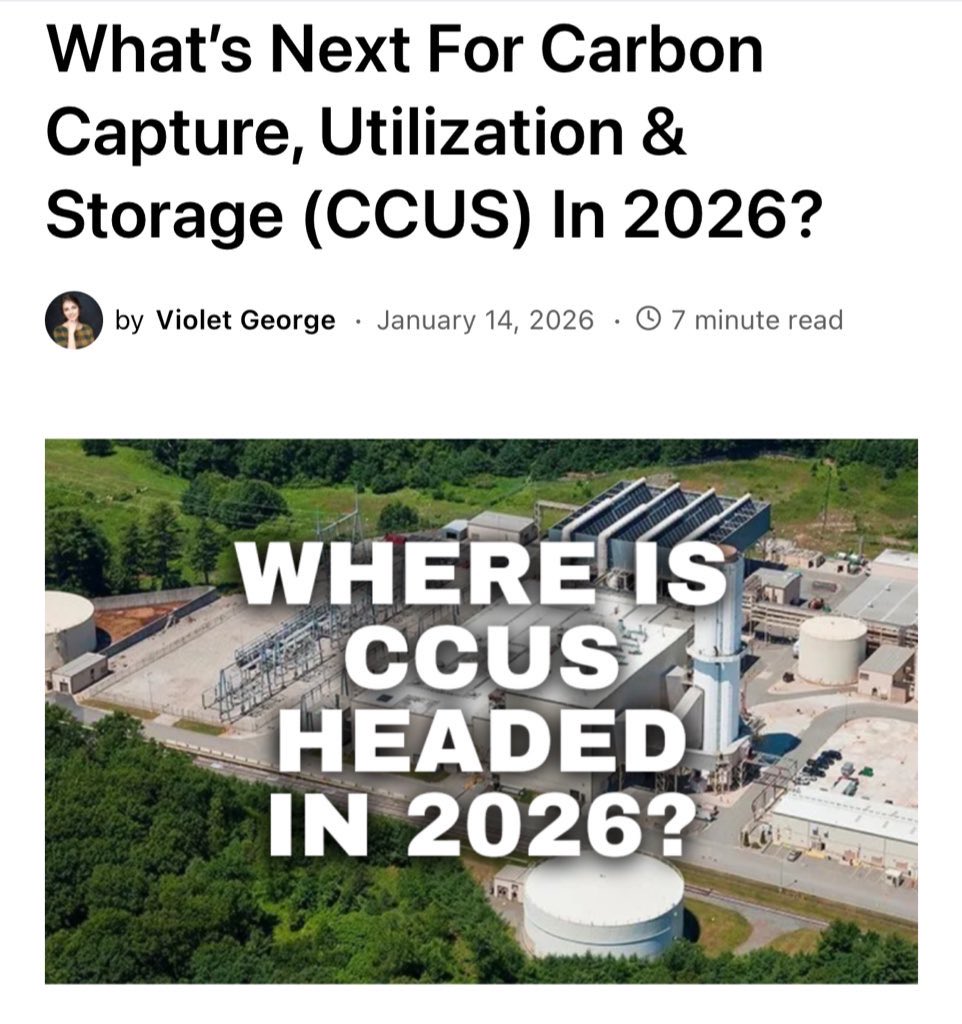
They’re prime real estate for carbon sequestration (CCS), and both Enstar and Hilcorp want to control the biggest, most efficient ones.
Hilcorp’s already in bed with Japanese partners studying CO₂ imports and storage. They’ve got the scale, multiple fields, lower costs, proven ops.
Enstar? They’re pouring ratepayer millions into expanding their own CINGSA project and pushing separate Kenai airport pore space leases, even when Hilcorp’s options look cheaper and bigger right now. Currently just for gas to clarify, so why the need for more storage.
Why fight so hard over “their” storage instead of cooperating for reliable, lower-cost supply?
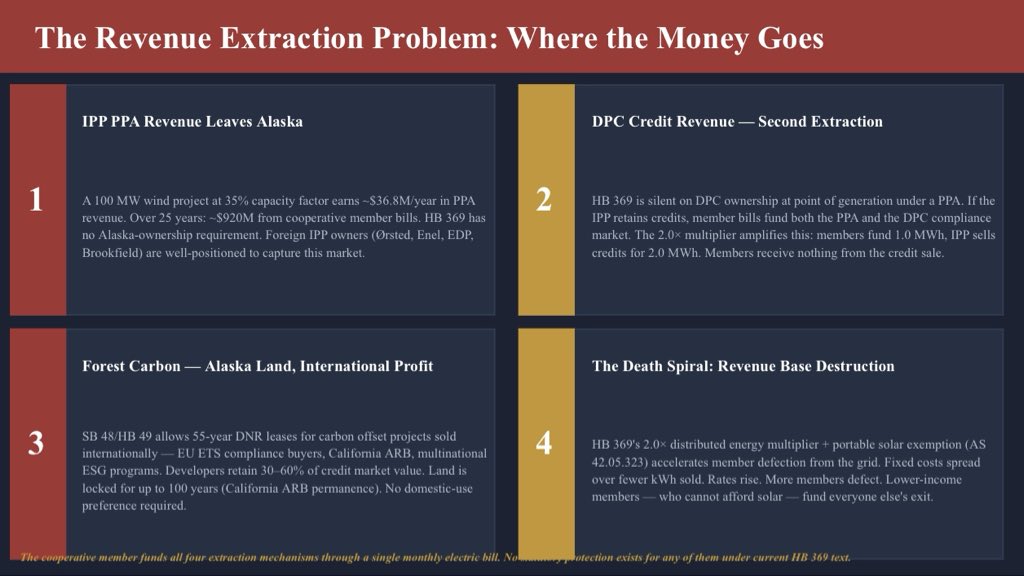
Because when Cook Inlet gas production keeps declining and the world pays for burying carbon (or turning it into hydrogen/ammonia plays), the company sitting on the best underground pore space wins the next revenue stream.
The 2024 legislation that greenlit CCS leasing didn’t separate it from gas storage rules for a reason, it bundled the future value of the same holes.
Alaska ratepayers shouldn’t be the suckers subsidizing a turf war over tomorrow’s carbon credits and import/export infrastructure.
We need reliable gas now, not two bloated, overlapping storage empires fighting in hearings while bills climb. Force the cooperation, evaluate the cheapest reliable option for customers, and stop pretending this is only about heating homes in January.
The underground real estate play is real, it’s happening, and pretending otherwise just jacks up our costs.
Prioritize ratepayers or let the big boys carve up the subsurface for the CCS gold rush? CookInlet EnergyAlaska RCA

2
8
16
711
Apr 13
Pacific Blood Star from Cook Inlet! Fun fact: Their bright red color helps protect them from UV rays in shallow waters.
#PacificBloodStar #CookInlet #Alaska

1
4
144

🐋 Massive Whale Breaches in Cook Inlet, Alaska!
We caught this breathtaking moment as a huge whale launched out of the water right in front of us in Cook Inlet. The sheer power and grace of these giants is something you have to see to believe.
Presented by Dain Bramage Entertainment
dainbramageentertainment.com
Help us upgrade our off-grid power from car batteries to a Tesla Powerwall so we can keep bringing you these amazing wildlife encounters!
Donate here: 440eeff7-dce4-477b-932e-c4f6…
Drop a comment: Have you ever seen a whale breach in person? 👇
#WhaleBreach #CookInlet #Alaska #AlaskaWildlife #DainBramageEntertainment #NatureEscape
2
2
55

Apr 8
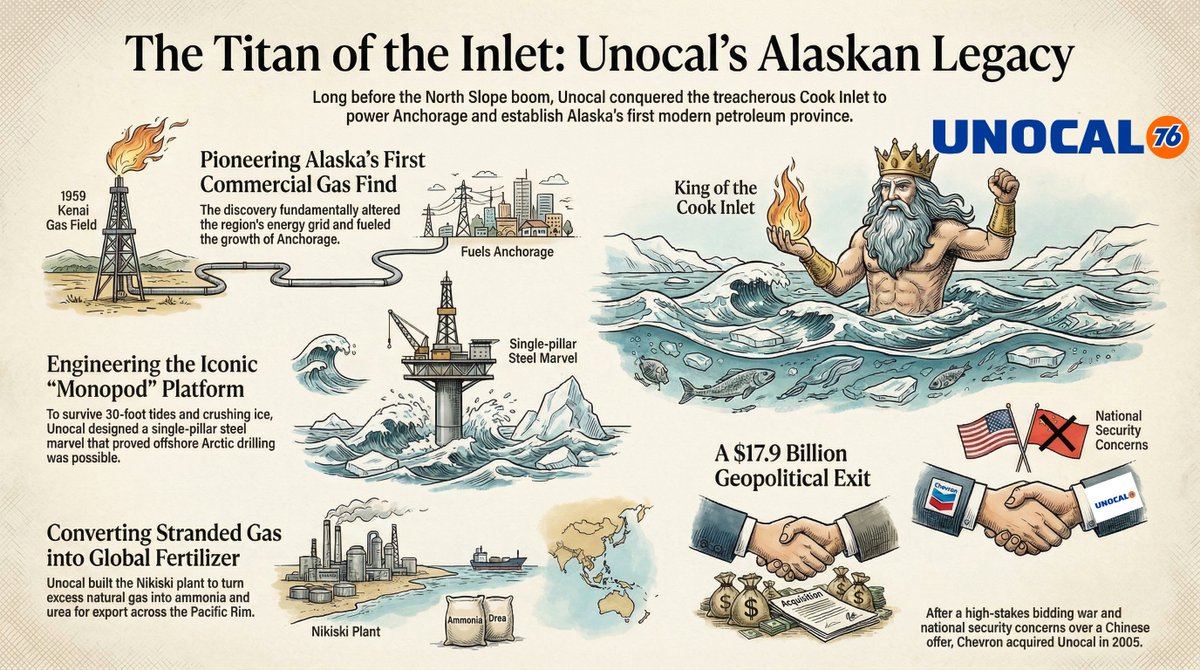
Unocal Corporation: The Pioneer of Southern Alaska’s Petroleum Industry
While the world focused on Alaska’s North Slope giants, Unocal Corporation quietly built the foundation of the modern petroleum industry in Southcentral Alaska.
Originally founded in 1890 as the Union Oil Company of California, Unocal became the dominant player in the Cook Inlet basin from the late 1950s through the early 2000s.
The company discovered and developed the region’s largest oil and gas fields, engineered groundbreaking solutions for extreme sub-Arctic conditions, and played a pivotal role in powering Anchorage and the Railbelt region.
Key Milestones in Alaska:
1959: Discovered the Kenai Gas Field, Alaska’s first major commercial gas discovery (2.4 TCF reserves).
1965: Discovered the McArthur River Oil Field, the largest in the Cook Inlet (~1.5 billion barrels OOIP).
Operated 10 offshore platforms in the Cook Inlet, more than any other operator, including the iconic Dillon, King Salmon, and Steelhead platforms.
Engineering Innovation in Harsh Conditions:
Unocal tackled 30-foot tides, powerful currents, earthquakes, and thick winter ice with pioneering technology. A standout achievement was the Monopod Platform (1966) at Trading Bay, a single-pillar design that proved offshore production was viable in sub-Arctic waters.
Broader Economic Impact:
Beyond extraction, Unocal helped industrialize “stranded” gas by building the Nikiski chemical plant, which converted natural gas into ammonia and urea fertilizers for export to Asia and South America.
The company supplied critical natural gas for electricity generation and home heating across the Railbelt, supported hundreds of high-wage jobs, and consistently ranked among Alaska’s top taxpayers.
Unocal also held a small but historic stake in the Trans-Alaska Pipeline System (TAPS) and minority interests in North Slope fields such as Endicott and Kuparuk.
The End of an Era:
In 2005, Unocal became the center of a high-stakes geopolitical bidding war when China’s CNOOC made an unsolicited $18.5 billion bid. Amid national security concerns, Unocal accepted Chevron’s $17.9 billion offer instead. The acquisition ended Unocal’s 115-year run as an independent energy company.
Today, the infrastructure Unocal built continues to support energy production and the economy of southern Alaska.
Unocal’s story is a powerful example of bold exploration, technical innovation, and long-term regional development in one of the world’s most challenging environments.
#AlaskaOil #EnergyHistory #CookInlet #Unocal #Chevron #OilAndGas
2
7
9
246

Mar 22
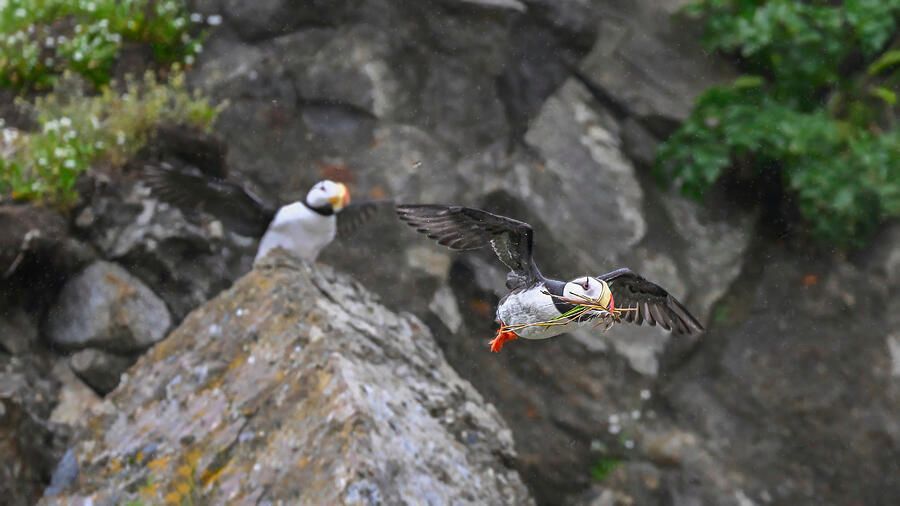
Puffin Flying Away From Home! buff.ly/3tGB0ph #puffin #hornedpuffin #flying #alaska #cookinlet #birds #birdphotography #wildlife #wildlifephotography #travel #travelphotography @joancarroll
5
3
99
Mar 10
Puffin Flying With Nesting Material buff.ly/4g4ivOS #puffin #hornedpuffin #flying #alaska #cookinlet #birds #birdphotography #wildlife #wildlifephotography #travel #travelphotography @joancarroll

3
4
32
Mar 7
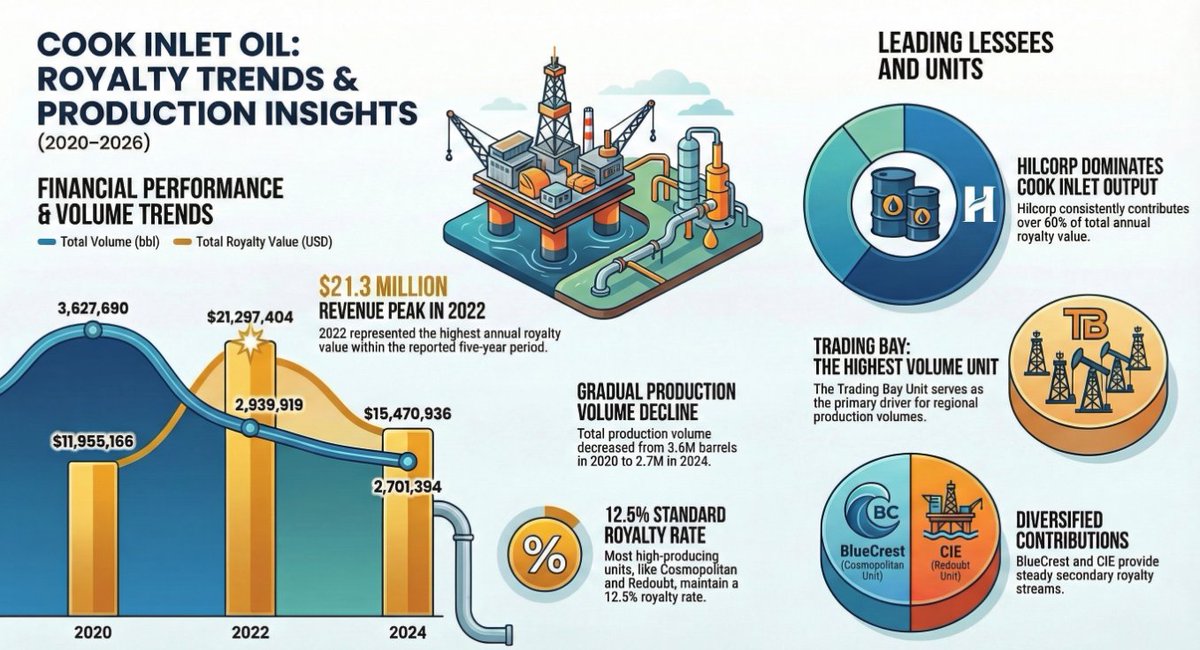
Analysis: Cook Inlet Oil Royalty Trends (2020–2026)
The landscape of energy production in Alaska’s Cook Inlet has shifted significantly over the last six years. While production volumes have faced a steady decline, royalty revenues have told a story of extreme market volatility and operator resilience.
Here are the critical takeaways from the latest state royalty data:
1. The Revenue Paradox
Despite a 25% drop in annual production volume (WIO) between 2020 and 2024, royalty revenue peaked in 2022 at over $21.3 million. This highlight demonstrates how much the "Weighted Average Royalty Value" per barrel dictates state returns over pure volume.
2. Major Players & Performance
* Hilcorp continues to be the regional heavyweight, particularly through the Trading Bay and Granite Point units. Their royalty contributions reached a high of $14.1 million in 2022.
* BlueCrest (Cosmopolitan Unit) remains a vital revenue source due to its consistent 12.5% royalty rate, despite lower overall volumes compared to the legacy fields.
* CIE saw surprising growth in the West McArthur River Unit, where 2024 royalty values significantly outperformed 2020 levels.
3. Pricing Shifts
We are seeing a cooling period in valuation. After hitting highs of ~$88/bbl in late 2023, early 2026 data shows royalty values hovering between $48 and $55/bbl.
4. Transition to "In Value" (RIV)
Notably, from 2020 through early 2026, the State has taken zero "Royalty In Kind" (RIK) volumes. Every barrel of the state’s share was paid out in cash (Royalty In Value), reflecting a streamlined fiscal relationship between operators and the Department of Natural Resources.
The Bottom Line: As Cook Inlet production matures, the state’s revenue remains highly sensitive to global price fluctuations and the specific royalty structures of high-rate units like Cosmopolitan and Redoubt.
#AlaskaEnergy #OilAndGas #CookInlet #EnergyEconomics #DataAnalysis #AlaskaEconomy
Mar 4

Cook Inlet Oil Royalty Analysis: 2020–2026
Executive Summary
This briefing document provides a comprehensive analysis of oil royalty volumes and payments within the Cook Inlet region from 2020 through early 2026. The data reflects the State of Alaska’s royalty share, categorized as Royalty In Value (RIV) and Royalty In Kind (RIK), across several major units including Cosmopolitan, Granite Point, Redoubt, Trading Bay, and West McArthur River.
Critical Takeaways:
* Revenue Volatility: Royalty revenue peaked in 2022 at approximately $21.3 million, despite production volumes being lower than in 2020. This indicates significant fluctuations in weighted average royalty values per barrel.
* Dominant Operators: Hilcorp (HILCORPAK/HILCORPCI) consistently represents the largest share of production volume and royalty value, followed by BlueCrest and CIE.
* Royalty Structure: Royalty rates vary by unit and accounting area, generally ranging from 5% (common in Trading Bay and parts of Granite Point) to 12.5% (standard for the Cosmopolitan Unit).
* Production Trends: Annual production volumes have shown a general decline from 3.6 million barrels (WIO) in 2020 to 2.7 million barrels in 2024. Data for 2025 and 2026 reflect year-to-date or projected figures.
--------------------------------------------------------------------------------
Annual Royalty Performance Overview (2020–2026)
The following table summarizes the total oil volumes and royalty values paid to the State of Alaska by all lessees in the Cook Inlet region.
YearWIO Volume (bbl)RIV Volume (bbl)RIK Volume (bbl)Total Value RIV
2026* 194,859.24 16,363.700.00 $789,298.29
2025* 2,517,705.71 212,429.330.00 $11,946,050.76
2024 2,701,394.08 233,812.880.00 $15,470,936.47
2023 2,761,270.57 223,616.520.00 $15,347,562.44
2022 2,939,919.24 249,651.710.00 $21,297,404.58
2021 2,919,352.83 249,755.660.00 $14,263,692.49
2020 3,627,690.76 380,653.200.00 $11,955,166.07
*Note: 2025 and 2026 data reflect calendar year-to-date volumes and amounts through the most recently filed production month as of the report date.
--------------------------------------------------------------------------------
Key Operator and Unit Analysis
1. Hilcorp (HILCORPAK / HILCORPCI)
Hilcorp is the primary producer in the Cook Inlet, operating the Trading Bay and Granite Point units.
* Trading Bay Unit: Historically the highest volume unit. In 2020, it produced over 1.9 million barrels (WIO), though this declined to roughly 1.17 million barrels by 2024.
* Granite Point Unit: Maintains a higher weighted average royalty rate (~11.5%) compared to Trading Bay (~5%). This unit contributed over $5.7 million in royalty value in 2024.
* Consolidated Impact: In 2022, Hilcorp’s total royalty value reached a high of $14.1 million.
2. BlueCrest (Cosmopolitan Unit)
BlueCrest operates the Cosmopolitan Unit, which consistently applies a 12.5% royalty rate across its participating areas.
* Stable Contribution: While production volumes have trended downward from 371,105 bbl (2020) to 240,404 bbl (2024), the high royalty rate ensures it remains a significant revenue source for the State.
* Financial Peak: Peak royalty value for this unit was observed in 2022 at $3.24 million.
3. CIE (Redoubt and West McArthur River Units)
CIE manages two main units with distinct royalty profiles.
* Redoubt Unit: Typically carries a 12.5% royalty rate. Its contribution spiked in 2022 ($3.5 million) but settled to $1.6 million in 2024.
* West McArthur River Unit: Operates with royalty rates between 5% and 10%. This unit showed high volatility, with 2024 royalty values of 2.1 million significantly exceeding 2020 levels (79,635).
--------------------------------------------------------------------------------
Monthly Weighted Average and Valuation Insights
Detailed monthly reports (Report Code: OIL) from 2023 through 2026 reveal the underlying mechanics of royalty calculations.
Participating Area (PA) Specifics
Production is tracked at the "Accounting Unit" level. Notable PAs include:
* Cosmopolitan Unit: Combined Starichkof Hemlock PA (CPSH).
* Granite Point Unit: Tyonek Middle Kenai C Sands (multiple tracts) and Hemlock PA (SGHM).
* Trading Bay Unit: McArthur River Hemlock Oil Pool (HEML) and McArthur River Middle Kenai G Oil Pool (KNIG).
* West McArthur River Unit: Sword PA (WMSW) and Area #1 PA (WMRV).
Per-Barrel Valuation (RIV RV)
The "Weighted Average RIV RV" (Royalty Value per barrel) identifies the market-driven price used to calculate state dues.
* Historical Highs: In September 2023, the RIV RV reached approximately $88.07/bbl for the Cosmopolitan Unit.
* Recent Trends: By January 2026, the RIV RV had decreased to approximately 55.37/bbl** for the Cosmopolitan Unit and **48.05/bbl for the Granite Point Unit.
* Price Differentiation: The reports indicate slight variations in RIV RV between units for the same production month, likely due to differences in oil quality or midstream costs.
--------------------------------------------------------------------------------
Technical Definitions and Methodology
The data is compiled by the State of Alaska, Department of Natural Resources, Division of Oil & Gas.
* WIO Volume: The total volume produced by the Working Interest Owner.
* RIV Volume (Royalty In Value): The State’s royalty share of oil or gas sold to lessees.
* RIK Volume (Royalty In Kind): The State’s royalty share taken and sold by the State under its own contracts. For the period 2020–2026, the Cook Inlet reports show zero RIK volume, indicating all royalties were paid in value (RIV).
* Total Value RIV: The dollar amount paid to the State based on the RIV volume and the weighted average royalty value.
* Revision Status: All values are subject to revision. Reports distinguish between "Revision 0" (initial filing) and subsequent adjustments (e.g., Revision 1 or 2 seen in 2024/2025 monthly data).
2
3
193

Zero Bids in Cook Inlet: The Market Has Spoken
El gobierno puso en la mesa más de un millón de acres en una de las cuencas más icónicas de Alaska, y la industria petrolera respondió con un silencio ensordecedor. Cero ofertas. Ni una. La tan anunciada subasta de Cook Inlet ha sido un fracaso rotundo, y las implicaciones para el futuro energético de Alaska son profundas. Esta es la continuación de una tendencia histórica de bajo interés en la región, que se repite desde la era Reagan.
Este no es un hecho aislado. Es la culminación de años de desinterés, cancelaciones y subastas fallidas en la región. Mientras los políticos insisten en la necesidad de “perforar, baby, perforar”, las empresas están votando con sus billeteras, y el mensaje es claro: el riesgo geológico, los altos costos operativos y la creciente presión ambiental hacen que Cook Inlet ya no sea una inversión atractiva para la exploración masiva.
Para Diamante Alaska, este resultado no es una sorpresa, es una confirmación de que el futuro de la industria no está en repetir las fórmulas del pasado. La era de la exploración a cualquier costo ha terminado. Hoy, la rentabilidad depende de la eficiencia, la tecnología y la capacidad para operar en los entornos más desafiantes, como el North Slope, donde la producción ya está establecida y los servicios especializados son la clave del éxito. Nuestro enfoque no es buscar nuevas fronteras, es maximizar el potencial de las que ya están en producción. El mercado ha hablado. La pregunta es, ¿quién está escuchando?
#DiamanteAlaska #CookInlet #Alaska #OilAndGas #NorthSlope #EnergyIndustry #MarketSignals #Efficiency
3
14
Crisis en el Estrecho de Ormuz: ¿La Hora de Alaska?
El tablero energético mundial se acaba de sacudir. Con el Estrecho de Ormuz en crisis y la producción de LNG de Qatar detenida por ataques, los mercados globales están en alerta máxima. Los precios del petróleo se han disparado, y la dependencia del suministro de Medio Oriente vuelve a ser el talón de Aquiles de la economía global. En momentos como este, el mundo no mira a Texas o a Arabia Saudita; mira al norte, a Alaska.
La seguridad y estabilidad energética que ofrece Alaska nunca ha sido más valiosa. Mientras otros mercados enfrentan una volatilidad extrema, la producción en el North Slope y en cuencas como Cook Inlet representa una fuente confiable y estratégica. Hoy mismo, el gobierno de EE. UU. está subastando más de un millón de acres para nueva exploración en Cook Inlet, una señal clara de que el futuro de la energía estadounidense pasa por Alaska.
Para nosotros como Diamante Alaska, esta crisis es un recordatorio contundente de nuestra misión: proveer los servicios esenciales que garantizan que la energía de Alaska llegue al mercado de manera segura y eficiente. No somos especuladores de precios; somos constructores de la infraestructura que sostiene la seguridad energética.
#DiamanteAlaska #Petroleo #Gas #Energia #Alaska #CookInlet #CrisisEnergetica #SeguridadEnergetica #NorthSlope
3
83
Feb 22
Puffin Flying With Nesting Material buff.ly/4g4ivOS #puffin #hornedpuffin #flying #alaska #cookinlet #birds #birdphotography #wildlife #wildlifephotography #travel #travelphotography @joancarroll

6
5
77
La paradoja de Alaska: ¿Cómo una región rica en gas enfrenta una posible escasez? La respuesta está en la diversificación y la innovación.
Cook Inlet, el corazón energético de Alaska durante décadas, enfrenta una encrucijada. Después de años de suministro confiable, la producción de gas natural está en declive, llevando a los legisladores a cuestionar la necesidad de construir dos nuevas instalaciones de importación de gas. Es una situación que parecía impensable hace solo unos años.
Pero en medio del desafío, surge la innovación. Chugach Electric, una de las principales eléctricas de la región, ya está explorando cuatro nuevos proyectos de energía hidroeléctrica como una alternativa viable. Al mismo tiempo, operadores como Hilcorp planean perforar 27 nuevos pozos en Cook Inlet este año para sostener la producción, aunque el enfoque principal sigue siendo el petróleo (75% de la actividad).
Este escenario complejo no es una señal de declive, sino de evolución. Para una empresa como Diamante Alaska, representa una llamada a la acción para diversificar su enfoque y adaptarse a un panorama energético en constante cambio. La capacidad de navegar esta transición, combinando la experiencia en petróleo y gas con una visión hacia nuevas fuentes de energía, será la clave para el éxito en la próxima década.
#AlaskaEnergy #CookInlet #GasNatural #Hidroenergia #Diversificacion #Innovacion #DiamanteAlaska
3
42

La crisis abre oportunidades para operadores capaces de reactivar la producción con eficiencia y tecnología. #Alaska #GasNatural #Energia #CookInlet
3
19
Cook Inlet, Alaska, una región que ha calentado hogares y movido industrias durante décadas con su gas natural, enfrenta una paradoja impensable: la escasez.
Noticias de los últimos días pintan un cuadro complejo. Mientras el gobierno federal finaliza nuevas ventas de arrendamiento offshore en la zona, la realidad en tierra es que la producción local no es suficiente para satisfacer la demanda futura. La principal eléctrica de la región, Chugach Electric, está explorando activamente proyectos hidroeléctricos como alternativa, y lo más sorprendente es que se están discutiendo planes para construir terminales de IMPORTACIÓN de Gas Natural Licuado (GNL).
Es una situación que desafía la lógica: una de las cuencas de gas más prolíficas de Norteamérica podría empezar a depender de energía importada. Esto abre un debate fundamental sobre el futuro energético de Alaska. ¿Es una señal de agotamiento de los yacimientos convencionales? ¿O es una oportunidad de oro para operadores ágiles y tecnológicamente avanzados que puedan revitalizar la producción de manera eficiente y sostenible?
Para una empresa como Diamante Alaska, este escenario presenta tanto riesgos como oportunidades. La crisis de suministro podría impulsar la demanda de nuevos proyectos de exploración y producción, pero también exige un enfoque innovador que pueda superar los desafíos geológicos y económicos que han llevado a esta situación. El futuro de Cook Inlet no está escrito, y podría ser redefinido por aquellos que sepan leer las señales del mercado.
#CookInlet #Alaska #GasNatural #CrisisEnergetica #GNL #Exploracion #Energia #FuturoEnergetico #DiamanteAlaska
3
26
Alaska abre las puertas: ¿Festín de oportunidades o una trampa de alto riesgo?
El escenario está listo para un cambio sísmico en la industria energética de Alaska. En marzo de 2026, se llevarán a cabo dos subastas masivas: una en la plataforma continental exterior de Cook Inlet (4 de marzo) y otra en la Reserva Nacional de Petróleo de Alaska (18 de marzo), poniendo en juego más de 5.5 millones de acres. Con términos atractivos como regalías del 12.5% y ofertas mínimas de $25 por hectárea, la fiebre del oro negro parece estar de vuelta.
Pero mientras la industria se prepara para esta oportunidad histórica, una sombra se cierne sobre el optimismo. El reciente colapso de la plataforma Doyon 26 el 23 de enero, con más de 1,000 galones de combustible derramado, es un crudo recordatorio de los riesgos inherentes a la exploración en entornos extremos. Aunque ConocoPhillips asegura que sus proyectos no se verán afectados, el incidente plantea una pregunta incómoda: ¿Están las empresas realmente preparadas para manejar una expansión de esta magnitud de manera segura y responsable?
La oportunidad es innegable, pero también lo son los peligros. Las empresas que busquen participar en este nuevo boom no solo necesitarán capital, sino una estrategia impecable de gestión de riesgos y un compromiso inquebrantable con la seguridad y el medio ambiente. El éxito en Alaska ya no se medirá solo en barriles, sino en la capacidad de operar sin incidentes.
¿Debería Alaska pisar el acelerador en la exploración o el freno hasta garantizar protocolos de seguridad más estrictos? El futuro de Cook Inlet y la NPR-A está en juego.
#PetróleoYGas #Alaska #CookInlet #Energía #Exploración #Subasta #BOEM #BLM #SeguridadIndustrial #DiamanteAlaska
3
24
La Fiebre del Oro Negro: Alaska Abre 5.5 Millones de Acres en la Subasta Más Grande Desde 2019
El Bureau of Land Management (BLM) ha hecho oficial la fecha que el sector energético de Alaska estaba esperando: el 18 de marzo de 2026 se subastarán más de 5.5 millones de acres en la Reserva Nacional de Petróleo de Alaska (NPR-A). Esta es la primera subasta en la región desde 2019 y la primera bajo el “One Big Beautiful Bill Act”, que exige la apertura de millones de acres para el desarrollo energético.
Mientras algunos se enfocan en la subasta de Cook Inlet del 4 de marzo (casi 1 millón de acres), la verdadera oportunidad estratégica a gran escala está en la NPR-A. Sin embargo, la noticia del colapso del rig “The Beast” el mes pasado (23 de enero de 2026) sirve como un recordatorio brutal: en Alaska, adquirir el arrendamiento es solo el primer paso. El verdadero desafío es la ejecución impecable en uno de los entornos más hostiles del planeta.
En Diamante Alaska, entendemos que el éxito no se mide en acres adquiridos, sino en barriles producidos de manera segura y eficiente. Con 1.6 millones de acres ya arrendados en la reserva y un historial de generación de más de $294 millones en ingresos desde 1999, el potencial es inmenso, pero solo para aquellos con la experiencia y la disciplina para dominar el terreno ártico.
#Alaska #PetroleoYGas #NPR #BLM #Subasta #Energia #CookInlet #DiamanteAlaska
4
194
Cook Inlet: La tormenta perfecta de oportunidades (y la cruda realidad de la declinación)
El escenario en Cook Inlet, Alaska, es una tormenta perfecta. Por un lado, una noticia de hace 6 días confirma que BOEM abrirá casi 1 millón de acres para una nueva subasta de arrendamiento de energía el 3 de marzo. Por otro, una noticia de hoy revela la cruda realidad: Hilcorp planea perforar 27 pozos de gas en 2026, un récord desde 2014, simplemente para mantener el suministro estable.
¿Por qué la urgencia? Porque los pozos existentes en Cook Inlet tienen una tasa de declinación natural del 30-40% anual. Sin una perforación constante y agresiva, la producción simplemente colapsa. Hilcorp, operando dos plataformas a tiempo completo durante todo el año por primera vez, es la única barrera contra un déficit de suministro en Southcentral Alaska.
Mientras el mundo debate sobre nuevas subastas, la verdadera batalla se libra en el día a día, en la optimización de la producción y en la lucha contra la geología. En Diamante Alaska, entendemos esta dualidad. La oportunidad no está solo en adquirir nuevos acres, sino en tener la capacidad operativa para maximizar los activos existentes y ejecutar programas de perforación implacables. En el Ártico, no gana el que más tiene, sino el que mejor ejecuta.
#OilAndGas #Alaska #CookInlet #EnergySecurity #Drilling #Exploration #DiamanteAlaska
3
60
Cook Inlet: La tormenta perfecta de oportunidades (y la cruda realidad de la declinación)
Texto:
El escenario en Cook Inlet, Alaska, es una tormenta perfecta. Por un lado, una noticia de hace 6 días confirma que BOEM abrirá casi 1 millón de acres para una nueva subasta de arrendamiento de energía el 3 de marzo. Por otro, una noticia de hoy revela la cruda realidad: Hilcorp planea perforar 27 pozos de gas en 2026, un récord desde 2014, simplemente para mantener el suministro estable.
¿Por qué la urgencia? Porque los pozos existentes en Cook Inlet tienen una tasa de declinación natural del 30-40% anual. Sin una perforación constante y agresiva, la producción simplemente colapsa. Hilcorp, operando dos plataformas a tiempo completo durante todo el año por primera vez, es la única barrera contra un déficit de suministro en Southcentral Alaska.
Mientras el mundo debate sobre nuevas subastas, la verdadera batalla se libra en el día a día, en la optimización de la producción y en la lucha contra la geología. En Diamante Alaska, entendemos esta dualidad. La oportunidad no está solo en adquirir nuevos acres, sino en tener la capacidad operativa para maximizar los activos existentes y ejecutar programas de perforación implacables. En el Ártico, no gana el que más tiene, sino el que mejor ejecuta.
#OilAndGas #Alaska #CookInlet #EnergySecurity #Drilling #Exploration #DiamanteAlaska
3
53