
A business is, at its core, simply a structure. There is nothing inherently wrong with that. You sell something, you capture a margin, and that margin becomes your breathing room and your profit. A bakery making bread, a factory producing machinery, and a startup developing new software all create real goods and services.
The issue starts when that structure scales to control the absolute essentials of human life: energy, internet, housing, insurance, food distribution, and finance. When people cannot realistically opt out, pricing power stops being a byproduct of ordinary competition and becomes a mechanism of systemic extraction.
To understand how we arrived at a global economy defined by extreme concentration, we have to look at the machine from top to bottom. It is not a story of cartoon villains. It is a story of mechanics, incentives, and the rules of the game.
The Decoupling of Scale and Labor
Historically, there was a natural counterweight built into corporate growth. When massive industrial companies scaled in the 20th century, they required hundreds of thousands of workers to operate. Wealth was distributed, at least partially, by the sheer necessity of physical labor.
Today, that historical link between corporate scale and job creation has been fundamentally broken. Digital monopolies and highly financialized institutions can generate trillions in valuation with a fraction of the workforce. At the same time, we face a profound asymmetry in mobility: capital can cross borders in milliseconds to find the lowest tax rate or the cheapest labor pool. Workers, however, are bound by geography, borders, and families. Capital has options; labor largely does not.
Because of this asymmetry, costs and risks flow in opposite directions. When inflation hits or supply chains tighten, businesses pass those costs on, often stacking additional margin on top. Real median wages stagnate, while asset prices, executive compensation, and corporate profits surge. The base of the pyramid absorbs the costs and the volatility. The top captures the gains.
We are told this arrangement is fair because those at the top "take all the risk." But risk travels down the chain. When margins need protecting, it is the workers who lose hours, jobs, income, and security. Suppliers get squeezed. Consumers pay more. Without the people doing the daily work, there is no structure and no profit to defend.
The Math of Risk and Reward
The entire cultism surrounding billionaires relies on a single, powerful myth: the "infinite reward for finite risk" argument. We are told the founder deserves to capture hundreds of billions of dollars because they took the initial leap.
But a founder’s risk is mathematically finite. The absolute worst-case scenario for an entrepreneur is that their business goes bankrupt, their initial capital goes to zero, and they have to get a regular job like everyone else.
The reward, however, is structurally uncapped. Capturing a $10 million payout is a logical reward for a risky, brilliant idea. Capturing a trillion dollars is not a reward for risk- it is the extraction of monopoly power. It happens long after the initial risk has been entirely mitigated.
There is a profound difference between value creation and value capture. A founder creates value when they invent a better tool or service. They transition to value capture when they use their subsequent wealth to buy up competitors, lobby for tax loopholes, and build regulatory moats that block anyone else from competing. We mistakenly praise billionaires for the value they created decades ago, while completely ignoring the fact that their current wealth is sustained by extracting value from the rest of the economy today.
The Vacuum of Financialization
Because wages are structurally suppressed, ordinary people must rely on debt to maintain their standard of living. This feeds the next layer of the machine: the money system.
Inflation and debt act like an upward vacuum. When new money enters the economy-primarily through lending and financial channels-it does not spread evenly through wages. It reaches assets first. Housing, stocks, land, and financial portfolios inflate, while people without assets fall rapidly behind in real purchasing power.
Consider housing. Rising house prices are constantly presented to the public as "wealth creation." Yet a higher house price does not create a single square foot of new shelter. It simply increases the amount future buyers must borrow. Existing owners gain on paper, while new entrants inherit crushing debt burdens. Society appears richer on spreadsheets while becoming fundamentally poorer in real-world affordability.
This crisis is violently accelerated by the institutionalization of everyday life. Private equity firms now buy up single-family starter homes, local veterinary clinics, and nursing homes. When aggressive financial engineering is applied to essential local services, affordability collapses.
The cycle becomes a perpetual motion machine:
Governments and consumers run deficits.
Deficits lead to borrowing.
Borrowing expands money creation.
Asset prices rise.
Ownership concentrates.
New entrants require even more debt just to participate.
Each generation starts further behind the previous one. And because purchasing power is melting, everyone is forced to become a speculator. People are told to "just buy assets"-stocks, crypto, gold, real estate-merely to outrun inflation. When an entire population must gamble simply to preserve the value of their labor, the underlying architecture is broken.
The Moat of Influence
Once capital reaches a certain velocity and scale, its primary objective shifts. It no longer cares about innovating; it cares about protecting its territory.
Wealth does not only buy assets. It buys influence. Large firms can afford armies of lobbyists, legal teams, consultants, and compliance departments that smaller competitors cannot. Every new license, permit, certification, reporting requirement, and compliance process may appear entirely reasonable on its own. Often, they are sold to the public as "consumer protection."
Together, they create a hidden, impenetrable moat. Large corporations easily spread these compliance costs across millions of customers. A new startup cannot. Competition survives on paper, but concentration grows in practice. This is why telling people to "just start a business" is often hollow advice. The cost of entry matters. Most modern markets are no longer defined by who has the best ideas, but by who can survive the barriers already placed at the gates.
The Architecture of Complicity
When we label individual billionaires or trillionaires as "evil" or "predators," we actually do the system a massive favor. We reduce a sprawling, structural crisis down to personal morality. We mistakenly imply that if we just replaced the "bad" billionaires with "good" billionaires, the machine would work perfectly.
It wouldn’t. If a game is designed so that the only way to win is to suppress wages, externalize costs, and monopolize essentials, then even a saint would have to operate ruthlessly to reach the top. The system rewards leverage, ownership, scale, and strategic positioning. People simply respond rationally to those incentives.
A healthier loop requires us to change the physics of the game:
Shift the Tax Burden: Move taxation away from productive labor (income) and toward unproductive rent-seeking or borrowing tax-free against massive stock portfolios.
Restore Market Mechanics: Enforce strict antitrust laws to break up essential monopolies, and restrict stock buybacks to force corporate capital back into R&D and real wages.
Democratize Ownership: Normalize mandatory profit-sharing and broad equity distribution so that the workers who build the company generate wealth alongside the founders.
This is not an argument against capitalism or profit. Markets drive innovation, and entrepreneurship creates immense value. The question is whether a system is sustainable when the gains become permanently concentrated while the costs become infinitely distributed.
If wealth concentration is the mathematically predictable outcome of our current rules, the debate is no longer about the personalities of the rich. If each economic cycle consolidates more essential infrastructure into fewer hands, at what point does that stop being a coincidence and start being the design?
Many billionaires did not personally design this system. They worked hard, took risks, and played by the rules available to them. But there is a profound difference between creating a system and benefiting from it. If your wealth depends on asset inflation, debt expansion, regulatory barriers, and rising costs that the working class must absorb, neutrality is an illusion.
Benefiting from a harmful outcome does not make someone evil. But knowing the outcome, possessing the power to alter it, and choosing instead to preserve it because it serves your personal interest-that is where complicity begins.
21

Tractor huwa hazina difflock?
He also needs to add heavier counterweight if he's towing ama asukume na reverse.
1
36

⚾ Angels/Diamondbacks OVER 8.5 Runs (−119) · 0.5u
⠀
Angels @ Diamondbacks · 9:40 PM ET
⠀
The counterweight: Merrill Kelly has been hittable at a 5.46 ERA, Reid Detmers is no sure thing, and the total is only 8.5. Two vulnerable arms make the over the value here.
2
65


The Romper Room physical fitness toys advertised in the 1970s, particularly the Happy Jack Punching Clown that returned upright after each blow, reflected a deliberate effort to weave active play into the daily lives of preschool children.
In that period, syndicated television programs brought structured learning and movement into living rooms nationwide, while public health initiatives highlighted the importance of early physical development. The Romper Room collection of sports-oriented toys—including the self-righting clown figure, an eighteen-inch tethered punch ball for building timing and dexterity, catching games, and balance-challenging stompers—aligned with guidance from the President's Council on Physical Fitness and Sports. These items met a clear need for safe, durable equipment that could foster hand-eye coordination, muscle control, and gross motor skills in children from two and a half to seven years old, using the era's advancing vinyl technologies to create resilient yet affordable playthings suited to both indoor and outdoor use.
The self-righting quality of toys like the punching clown addressed a practical challenge in sustaining children's engagement. A weighted base allowed the figure to recover its position independently, encouraging prolonged sessions of striking, dodging, and retrying without adult assistance. This built on older weighted toy traditions but benefited from modern materials that permitted lightweight construction and characterful forms. Amid expanding access to television and shifting family routines, such designs provided consistent opportunities for physical exercise that supported coordination and confidence in a contained, repeatable format.
A later patent by inventor Henry S. Wolfe, issued in 1988, took up the same challenge of refining self-righting punching bag toys. Wolfe developed a sculptured, three-dimensional version that employed water rather than sand as the counterweight within a flexible base enclosure. Support elements, such as an internal hollow tube serving also as a fill spout or stabilizing straps, prevented the enclosure from deforming when the toy was toppled, ensuring reliable righting action.
The patent notes that toys known at the time "employed a counterweight means such as sand to provide their self-righting function" and often featured characters like Bozo the Clown or similar silk-screened onto basic shapes. By enabling more detailed sculpting with limbs and forms, the design expanded possibilities for both physical activity and imaginative play. This progression illustrates how the core ideas embodied in the Romper Room toys of the 1970s continued to shape innovations aimed at meaningful childhood movement and engagement.
Full patent text & diagrams: patents.google.com/patent/US…
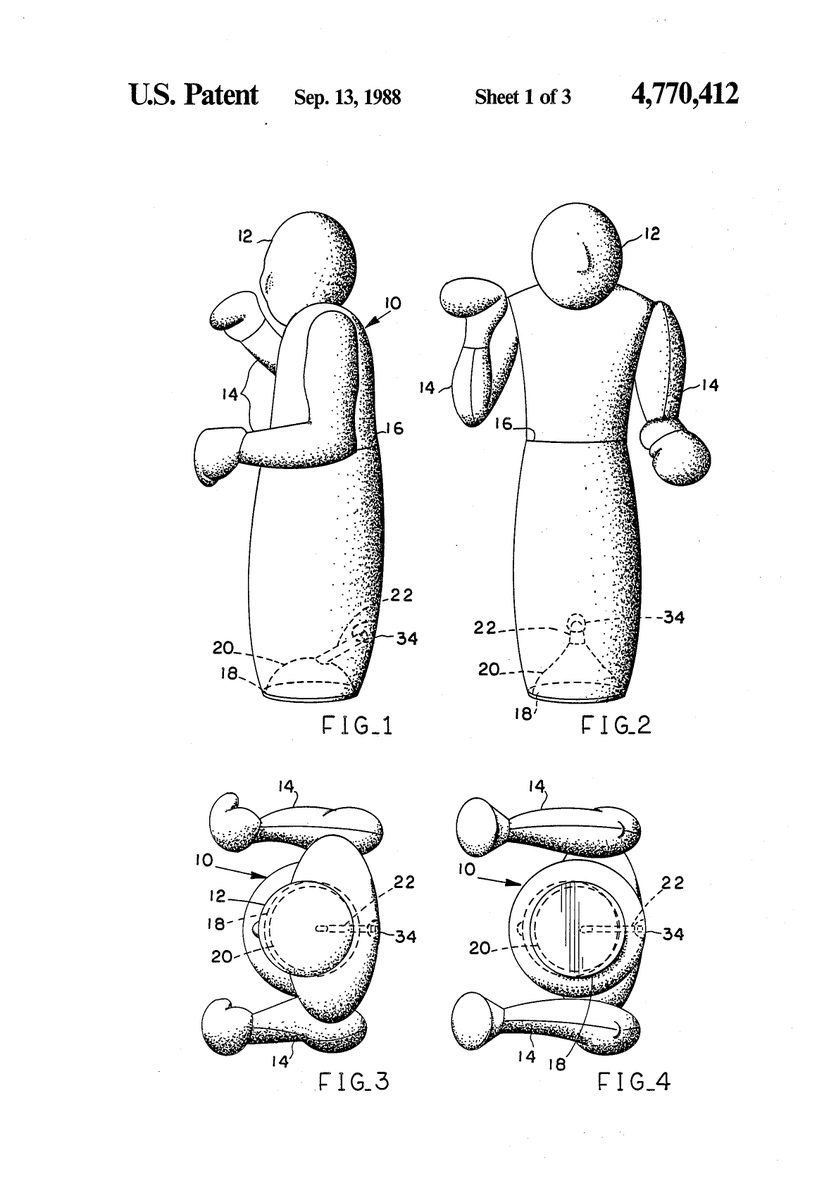
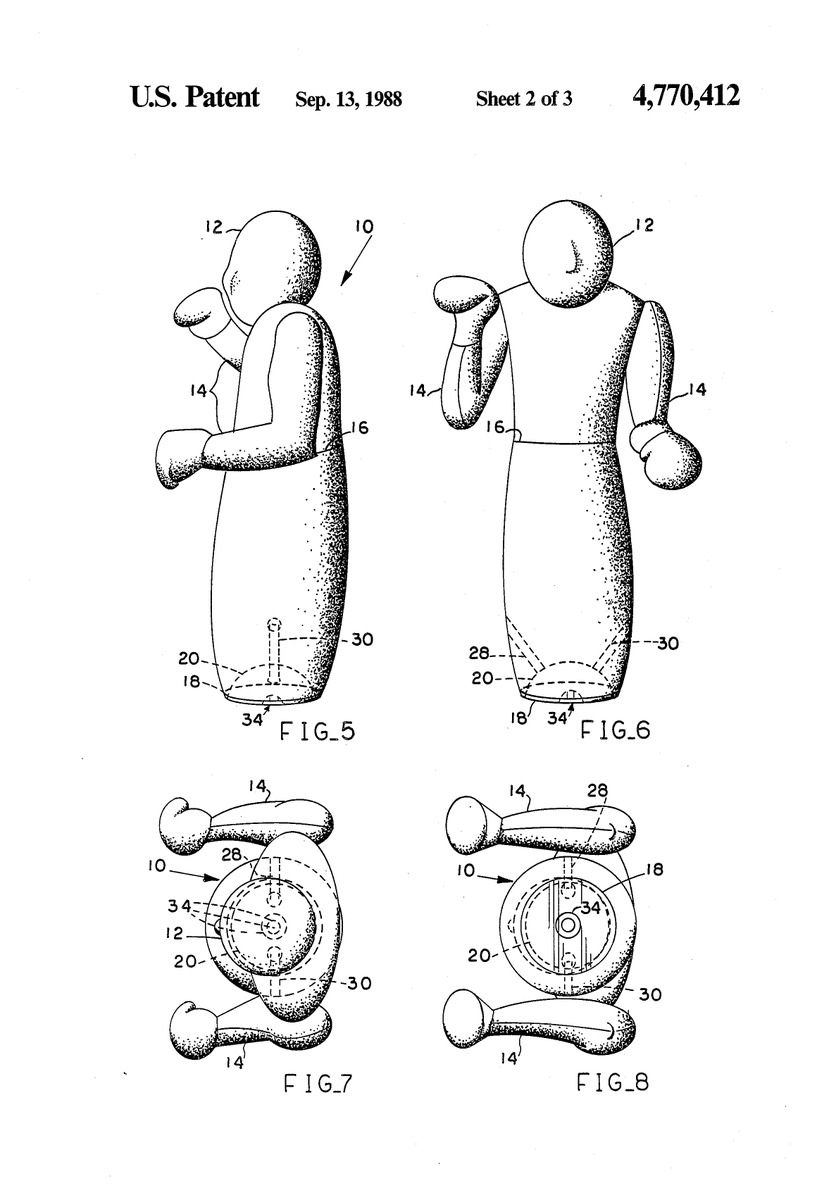
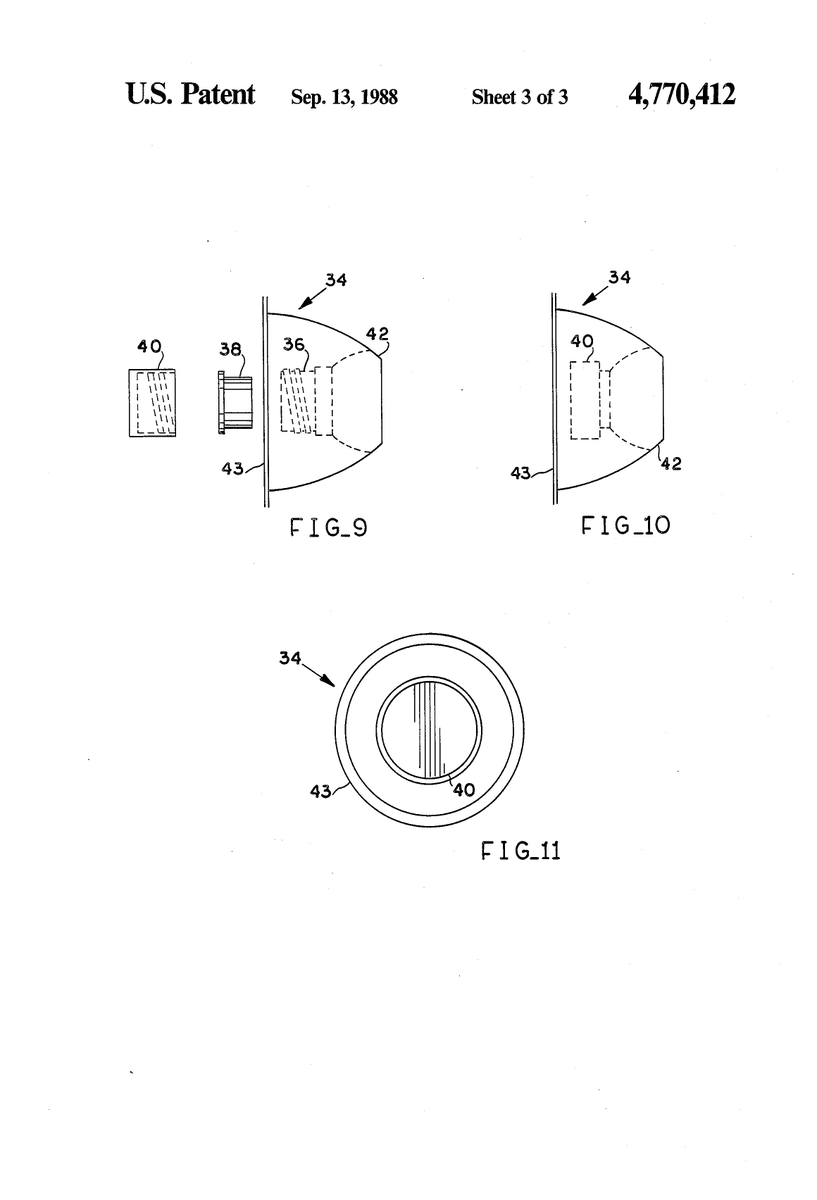

If you remember Romper Room toys you lived in the best days of America. #1970s

2
32

Det här fick jag ur Grok när jag bad om ett balanserat perspektiv som förklarar hur vissa nationalist-rörelser kan vara ryssvänliga:
”Nationalist and populist parties like Germany’s AfD and their European counterparts often show relative favorability toward Russia by framing it not as loyalty to a domineering power but as pragmatic realism—a necessary counterweight to perceived greater threats from U.S./NATO hegemony, EU supranationalism, and liberal globalism—prioritizing national sovereignty, cheap energy trade, opposition to costly Ukraine policies they see as provocative, and shared traditional values, even as critics argue this risks enabling Russian dominance over Europe and undermining Western unity.”
Det går ändå inte ihop riktigt då Ukraina också är en självständig nation och flera andra hotas om Kreml når framgång. Synen på vem som är provokatör är lika märklig som i vissa gamla våldtäktsdomar.
1
12

This is the most fun and unashamed of the trilogy and it soars so much because of it. Hans Zimmer's score is given so much colour and emotional counterweight because James Newton Howard is sharing the orchestra with him.
1
139


Coordination is the only real advantage humans have ever had.
We're outmatched by most of nature. We built the entire modern world. Every leap forward was people learning to act as one without a single hand pulling the strings.
And every time power tried to pool in one place, we answered with a system that handed it back to the many.
AGI is the next concentration and the largest yet. A handful of labs deciding how the most powerful tech in history gets built and who it answers to. The counterweight for this is coordination at a new scale.
And we don't just argue this. We research it.
@eigenlabs
2
9
225

This is a great reminder that the most important parts of any system are often the ones we don’t see.
The elevator doesn’t rely on brute force alone—it works on balance, where the elevator counterweight quietly reduces the load and makes everything efficient, smooth, and energy-saving.
It’s a perfect example of smart engineering: not doing more work, but designing in a way that less work is needed in the first place.
Sometimes, real strength is invisible—it just makes everything else function better.
1
11

The due holder from Africa for that has a small tiff with the master puppeteer, the host, France wanting to save face, decided to crash invite the ever idle roaming mantis. He was dead sure he can't disappoint as a counterweight 👇👇

1
3
400
Fred Moskowitz retweeted

( 2/7) 🔺 France is positioning as Middle East/Africa counterweight to the US, balancing Turkish-Israeli deterrence .
Also securing stakes in Lebanon/Syria, including Block 9 gas fields
By Inviting Syrian President al-Sharaa aims to draw him toward Europe post-Trump overtures.
France deepens Turkey ties via TotalEnergies-BOTAŞ LNG deal (2027), eyeing “Four Seas” energy projects
Also leveraging North Africa/UAE/Egypt influence on Israel.
With Hormuz unresolved, Paris-Ankara may collaborate to stabilize Iran
France & EU , are set to pressure Russia for peace—potentially trading EU accession for Ankara
Amid Turkish mediation praise & Iran/ proxy escalation critiques.
1
1
73

to anchor the text for fast reading , as our brain is trained to read in that way, also it looks visually balanced, as the supporting content acts as counterweight to the left side textual content
1
1
15

I was standing inside an elevator with my electrical engineer friend.
The lift started moving.
I casually asked him,
“Bro, how powerful must this motor be?
It carries so many people every day.”
He smiled.
Then he said something I didn’t expect
“The motor is powerful,
but it is not doing the job alone.”
I was confused.
Then he pointed toward the other side of the elevator shaft.
There, I saw a huge metal block moving in the opposite direction.
He said,
“That is the real silent helper of the elevator the counterweight.”
Most people think an elevator motor lifts the entire cabin every time.
But that is not exactly true.
An elevator works like a balancing system.
On one side, there is the cabin with passengers.
On the other side, there is a heavy counterweight.
So the motor does not lift the full weight of the cabin alone.
It mainly handles the difference between the passenger load and the counterweight.
That is why a lift can move so smoothly, even with many people inside.
The counterweight does not carry passengers.
It has no buttons.
Nobody notices it.
Nobody thanks it.
But without it, the motor would need much more power.
That one hidden block quietly saves energy every single day.
And that’s when I realized
Good engineering is not always about using more power.
Sometimes, it is about designing things so intelligently
that less power is needed.
The smartest things in life are often not visible.
They just make everything easier from behind the scenes.
Have you ever noticed the counterweight inside an elevator shaft?


5
8
9
130

There is an optional light blocker included. Due to low weight, a counterweight at back is not really needed but you could mod Apple’s strap and use that with Swan.
3


Prayer money payments are schimsms
Leave for ARLONOGGHY TO CORRECT.
Bank account income Levity counterweight raised by Jordan Okeoma. #MTOPPYSich!

Good luck @BlackRock ACB
1
7

So fucking pumped about this. We desperately need a competitive counterweight to Anthropic & OpenAI's philosophies.
1
431
