
26 May 2025
Building a mailing list for crypto tools, weekly alpha & passive income ideas.
100% free. No spam.
1ewis.com/mailing-list
#DeFiTools #CryptoTips #CryptoMail
2
13

22 May 2025
Want your own name@prdttoken.com custom crypto email address?
Join our official PRDT Token Telegram group for all the details and become part of our growing Web3 community!
Limited availability – Secure your unique identity in the crypto world.
👉 t.me/prdttokenoffical 👈
#PRDTToken #Web3Identity #CryptoMail #BlockchainCommunity #AltcoinBuzz #CryptoTools #Web3Vibes
12
2
14
526

4 Apr 2025
Gm Gm
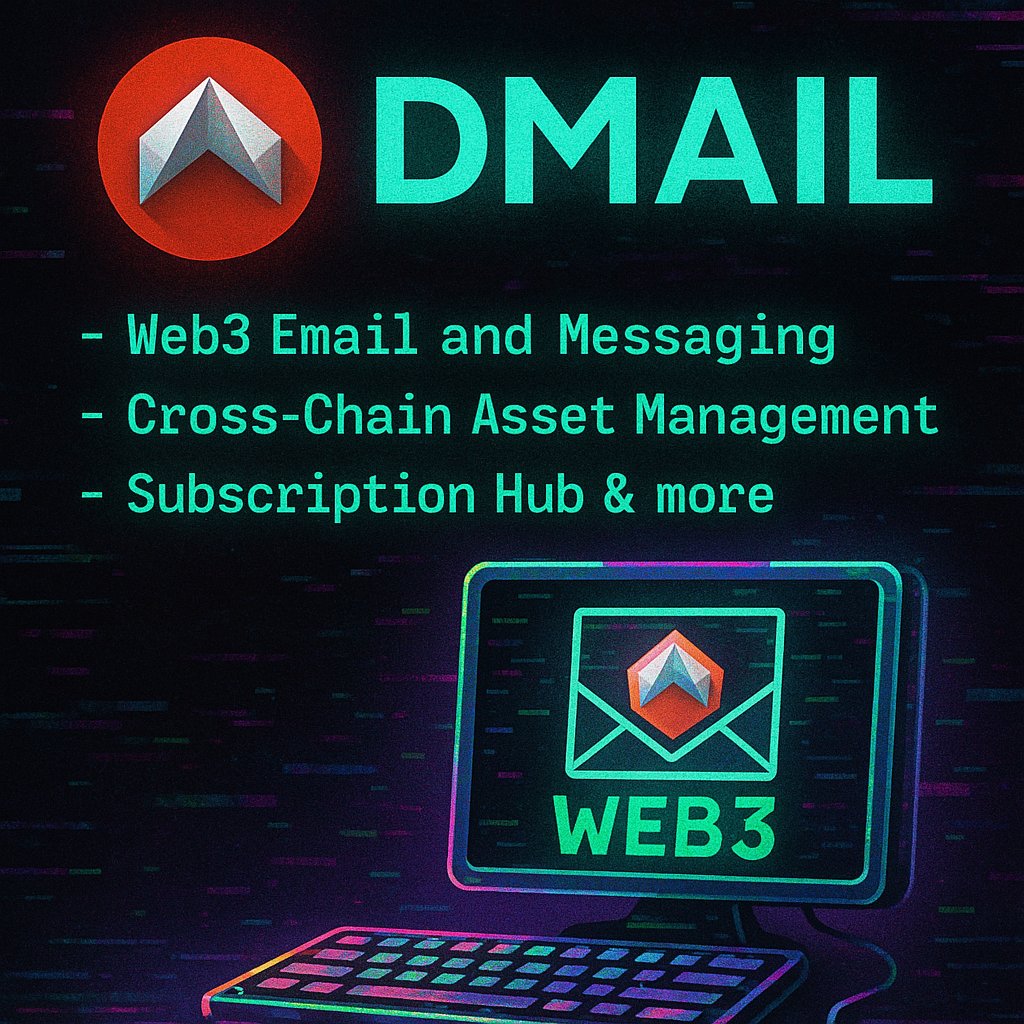
Dmail is the future of email.
Experience no tracking, no spying—just you, your messages, and complete control.
It's Web3 email: own your data and send messages along with crypto.
Dmail will become the standard, not just an option.
#Dmail #Web3 #CryptoMail
2
27

Legacy email is dead. Welcome to $DMAIL – your on-chain inbox.
Built for degens, by degens 🧵👇
1/ You don’t need Gmail.
You need an NFT mailbox you own, trade, and upgrade.
Welcome to wallet-native email. @Dmailofficial
2/ Send & receive mail via:
✅ Wallets
✅ DID
✅ NFT Domains
✅ Web2 fallback (yeah, grandma can reply too)
3/ End-to-end encrypted
- Cross-chain (18 networks)
- GPT-4 Mail Assistant writing your replies while you farm
4/ Projects aren’t sleeping on this either:
100 already using Subscription Hub to blast AI-personalized Web3 messages straight to wallets.
5/ No spam. No middlemen. Just pure signal to your airdrop-hunting brain.
📬 Claim your NFT mailbox.
📊 Get paid to use it (loyalty points system is live).
🚀 Plug into the communication layer of Web3.
👉 dmail.ai
#DMAIL #Web3Tools #AirdropSeason #CryptoMail #DegenStack
11
4
31
2,081

16 Jan 2025
¡Récord personal! 🏆
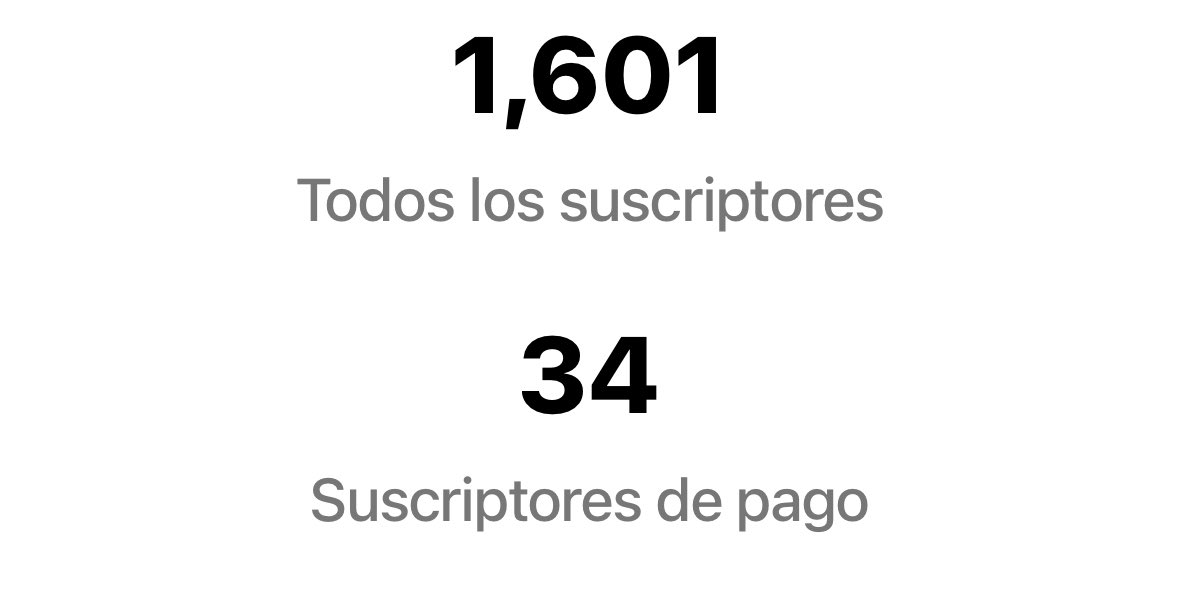
Se han incorporado 100 nuevos suscriptores en tan solo 13 días
Ya son 1.600 las personas que reciben cada domingo un cryptomail educativo gratis
Suscríbete en el link de mi perfil
👉 @AlexPaz0X
✍️ En la V.Premium te enseño a farmear Airdrops desde cero
3 Jan 2025

¡Llegamos a los 1.500 suscriptores de la Newsletter!
Llegar a este ritmo de crecimiento lleva mucho trabajo e implicación detrás
Si quieres ser el 1.501 y recibir una Crypto dosis directa a tu email este domingo, suscríbete en mi perfil👉 @AlexPaz0X

2
1
10
956

12 Jan 2025
Hello there,
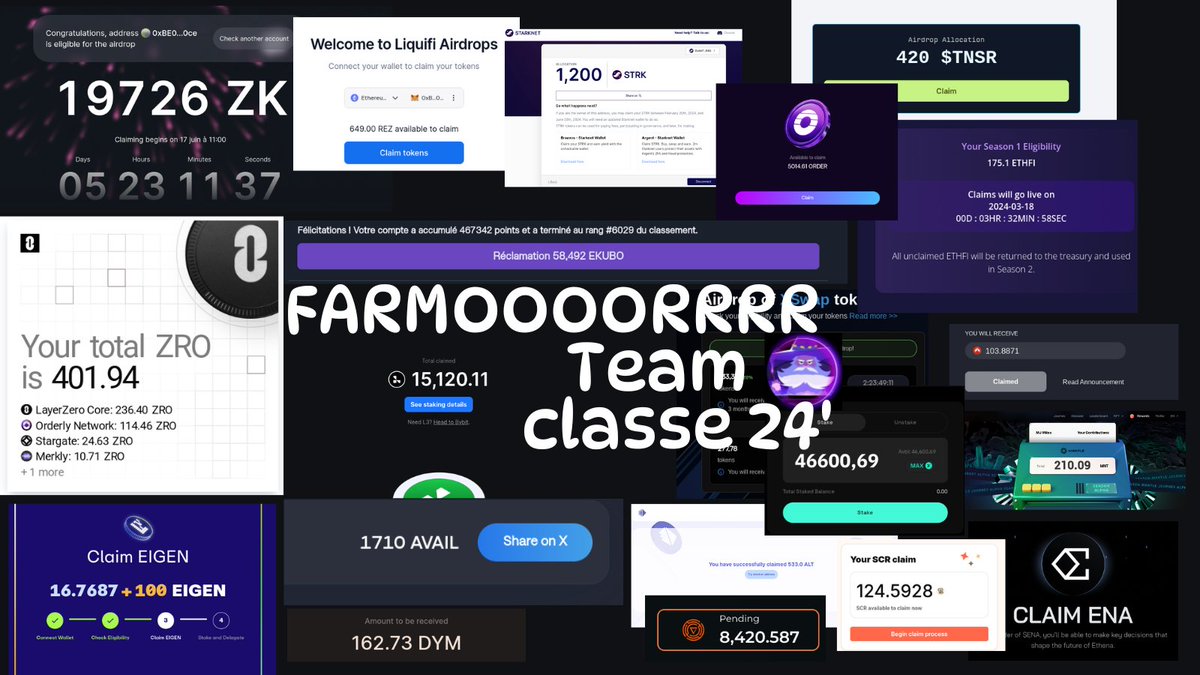
On est au début de l’année, et je te propose un petit flashback sur l’année airdrop classe 2024'
Je suis un humble farmeur d’airdrops depuis 2020. J’ai grind 28k $ grâce aux airdrops, mais je n’ai pas 'encore' make it comme @PowerPasheur . Crazy cliquoorrrr et on va pas s'arrêter là.
Je te propose un petit saut dans le passé, en commençant par celestia fin 2023 :
@celestia : 421 tokens, vendus trop tôt pour 920 $. Au prime, ça aurait pu valoir 8 000 $ !
@GameSwift_io : Farming de quêtes Galxe pour 1 695 tokens, vendus pour 370 $.
@Zkfair : L2 sortie de nulle part, 10 901 tokens, vendus pour 55 $.
On attaque le lourd avec la L2 @MantaNetwork :
En plein milieu où beaucoup disaient que les quêtes Galxe étaient mortes, Manta a prouvé le contraire. Par flemme, je n’ai pas tout fait, mais j’ai été éligible à 70 tokens. Avec Rary et plusieurs membres du Discord de Cryptomage, on a aussi bien flippé des NFT Manta. Résultat pour moi : 3 161 $ !
Première grosse victoire pour moi, GG à @YoungDhabii pour les gros $$$.
@alt_layer : 533 tokens, soit 210 $.
WEN (Solana) : Mon premier airdrop sur Solana, avec 635k tokens pour 50 $. J’ai raté JITO de peu, mais c’est la vie ! GG à @0xRadoudou .
@0xMantle : 210 tokens, 235 $. Le farming était sympa, surtout avec leur canne à pêche et le Citizen of Mantle.
@Dmailofficial : J’en devenais fou à envoyer un cryptomail sur chaque BC chaque jour. 104 tokens pour 167 $.
@JupiterExchange : 200 tokens pour 118 $. Si je n’avais pas lâché Solana pendant le bear, j’aurais pu mieux manger.
@cosmoshub (@dymension ) : Une belle surprise, 163 tokens pour 1 124 $.
Memes @zora : J’ai vendu beaucoup trop vite : 1,8M tokens pour 87 $.
@EtherFi : 175 tokens pour 700 $.
@PolyhedraZK : Une déception : 40 tokens pour 125 $.
@Starknet : 1 200 tokens pour 3 300 $. Mon plus gros airdrop à l’époque. Le 0.05 ETH manquant sur certains wallets a rendu de nombreux copains inéligibles, donc partagé entre joie et tristesse.
@farcaster_xyz (Degen) : Belle surprise : 18 820 tokens pour 263 $ grâce à une activité organique. Dommage que le système soit moins utilisé aujourd’hui.
@Sagaxyz__ (Cosmos) : 50 tokens pour 318 $. Allocation modeste malgré mon activité Cosmosienne.
Pike Finance : Achat et revente de 3 NFT Pikenian pour tenter l’airdrop Pike : 1 300 $. L’airdrop n’est jamais venu, et la plateforme a rug. Chaud !
@ethena : 85 tokens pour 81 $.
@tensor_hq : Grâce aux Pikenian, j’ai eu l’alloc mini de 420 tokens, vendus pour 773 $. Très belle surprise. GG à @Punk_Monke pour les 100k !
@LineaBuild @FoxyLinea : 5 000 tokens pour 105 $.
@renzoai : Pas aussi bien qu’Etherfi : 649 tokens pour 120 $.
X-Swap (Layer 3) : 277 tokens pour 55 $.
@EkuboProtocol : Une blague : 59 tokens pour 150 $.
@modenetwork : 2 214 tokens pour 139 $.
@LayerZero_Core Saison 1 : 400 tokens et 91 tokens redistribués pour les non-claims : 2 335 $.
@zksync : La magie commence : 19 726 tokens pour 5 000 $.
@AvailProject : 1 730 tokens pour 270 $.
@layer3xyz : 15 100 tokens pour 1 510 $. Belle surprise.
@eigencloud : 119 tokens pour 516 $.
@OrderlyNetwork x @LogX_trade : Beaucoup d’efforts, je te laisse le récap ici : x.com/QuentinflyJr/status/18… mais avec le drop d'@HyperliquidX max pain ici ..
(@Mythage77 et les autres on est ensemble)
Orderly Saison 2 ZRORDER Event : 5 100 tokens ORDER et 1 040 ZRO pour 563 $ et 4 368 $.
@odosprotocol : 8 420 tokens pour 175 $.
@MagicEden et Pingus (Solana) : 34 ME et 7 320 Pingus pour 150 $ et 450 $.
Bilan 2024 : 28 484 $
J’ai cash out pas mal, ce qui m’a permis de financer une partie des travaux de ma maison, achetée il y a 3 mois.
Pour 2025, on espère une année aussi exceptionnelle. Merci à tous les amis virtuels sans qui cette aventure aurait été beaucoup moins fun ! je vous tag pas mais vous aller vous reconnaître ! Big up à @_Lnrvz_ pour les barres daily
À tous les cliqueurs fous, une phrase résume bien notre vie de farmors :
"On n’est pas cher payé, mais qu’est-ce qu’on se marre."
Je vous souhaite une bonne année 2025, riche en airdrops et surtout en cacahuètes et en drama made in crypto, l'endroit ou on ne s'ennuie jamais !
PS : Merci à @CryptoMage_YT pour la dose de motivation daily
24 Sep 2024

14 808 orderly pour 2875$ et 46 600 logx pour 4660$ soit 7535$ pour 15k$ engagé durant les long mois soit :
- 7465 $ net de PNL sur la partie farming
mais je me suis refait en tradant order sur woofi, mais grosse pensée à tout mes compagnons de farming , on est ensemble 🫡

16
6
42
7,028

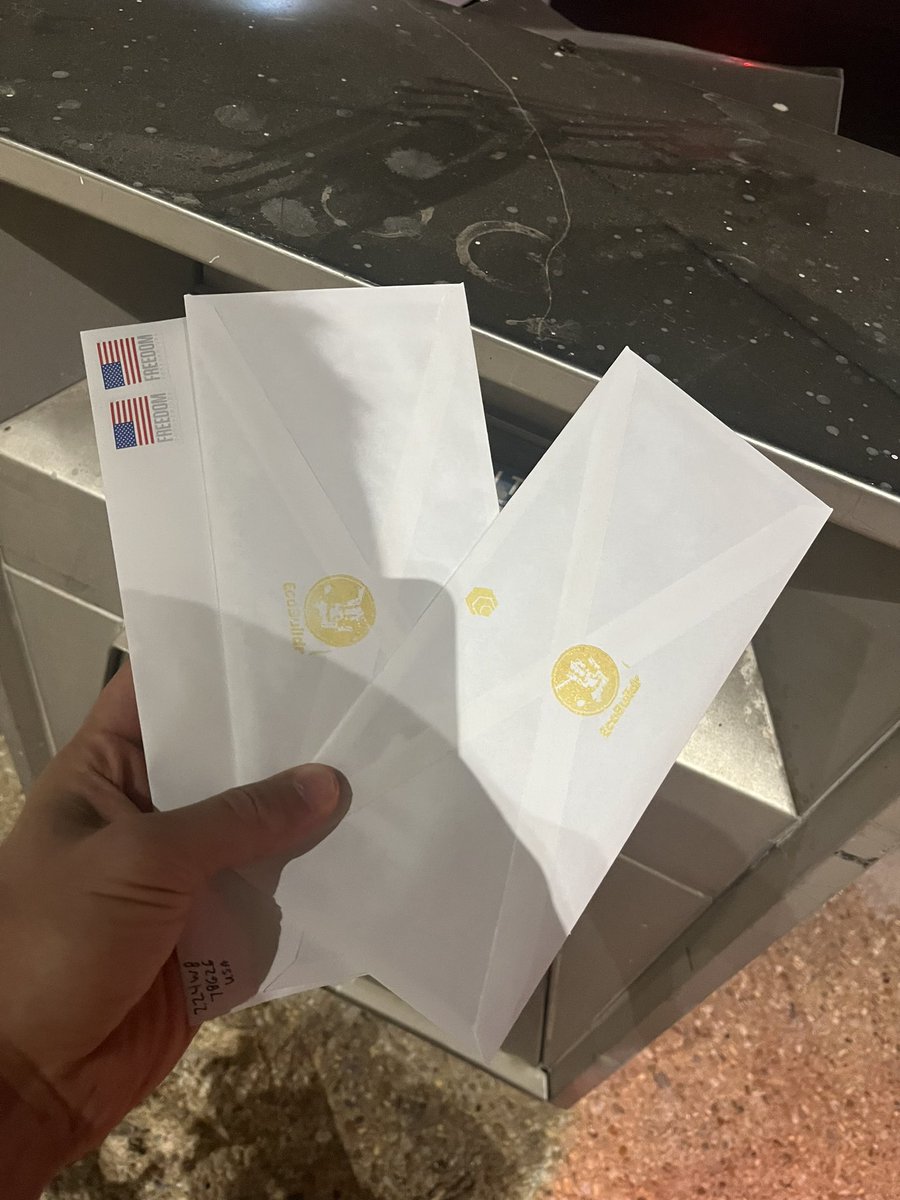
2 to Florida & 1 to Penn! #HEXpackages #HEXcards #marketingcrypto #cryptoMail #HEX #PulseChain #PLSX #Texas #Florida #crypto
2
7
710

10 Aug 2024
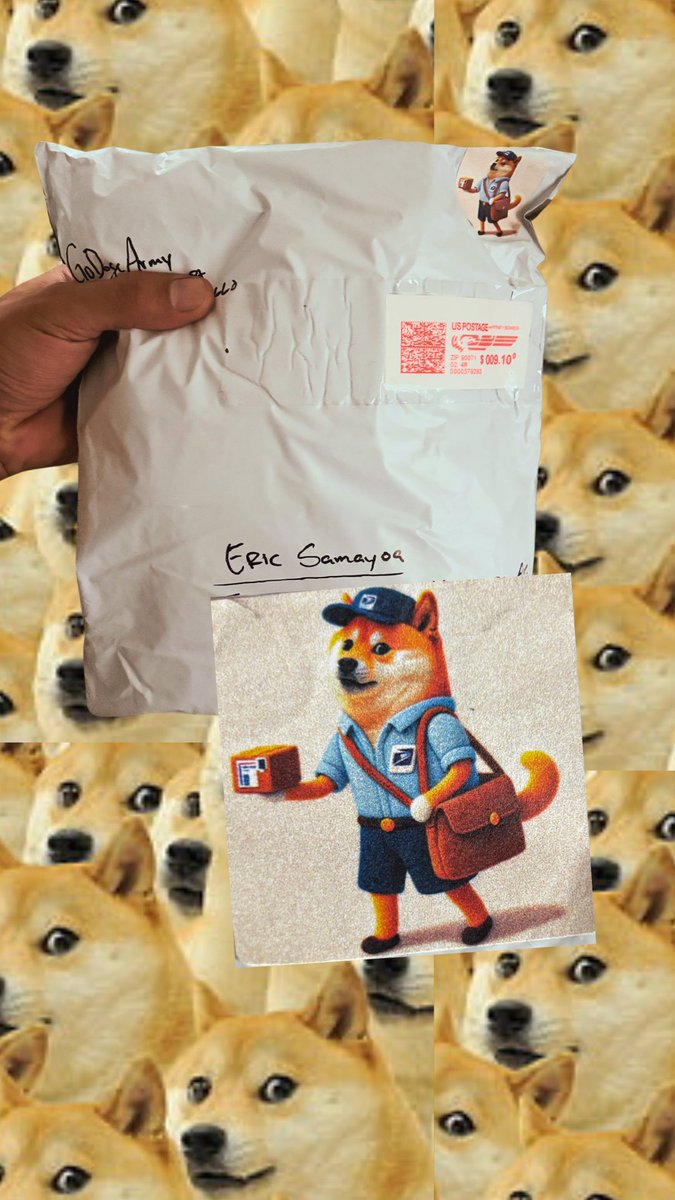
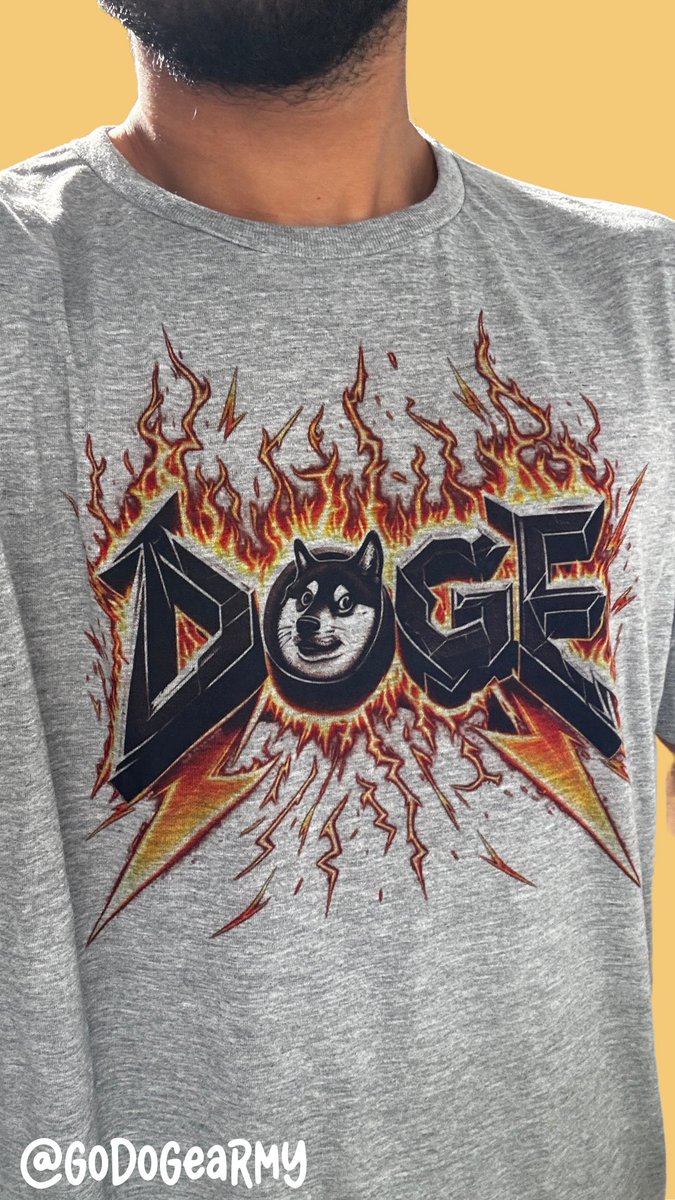
#CryptoMail 📬 #Dogecoin 🐕
Another crypto package, always appreciate you fam! 💛 🤘🏽
3
2
8
536

31 May 2024
"Web3 Emailing on Linea" on Layer3
Send decentralized mail through dmail and eligible for dmail season 2 airdrop and Linea Airdrop and Layer3 Airdrop
app.layer3.xyz/quests/web3-e…
#linea #layer3 #dmail #web3mail #cryptomail
Web3 Emailing on Linea - Layer3
Discover decentralized emailing with Dmail and Linea.
app.layer3.xyz 3
3
57

17 Jan 2024
TÌM HIỂU VỀ CHAINLINK - VỊ VUA ORACLE
❓ChainLink Là Gì?
Chainlink là một mạng lưới Oracle phi tập trung. Nó nhằm mục đích đóng vai trò là phần mềm trung gian giữa các hợp đồng thông minh và các nguồn dữ liệu bên ngoài, cho phép các hợp đồng thông minh truy cập an toàn vào nguồn cấp dữ liệu ngoài chuỗi.
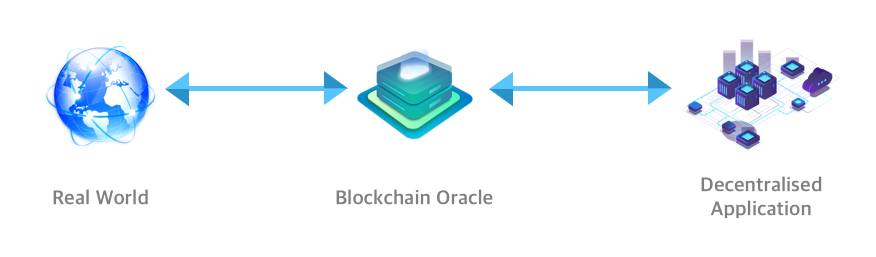
Một cách dễ hiểu hơn thì ChainLink là cầu nối chuyển tiếp thông tin, dữ liệu từ thế giới thực vào Blockchain và ngược lại.
✨Điểm Nổi Bật Của ChainLink
ChainLink giải quyết vấn đề Connectivity, sự kết nối giữa Smart Contract và dữ liệu bên ngoài Blockchain. Bản thân Smart Contract không có khả năng tương tác với bất kỳ nguồn dữ liệu bên ngoài Blockchain (theo 2 chiều). Với tình trạng thiếu kết nối giữa các nguồn dữ liệu đầu vào, hoặc đầu ra khiến cho việc phát triển Smart Contract với nhiều chức năng đa dạng hơn trở nên khó hơn rất nhiều.
Dữ liệu được đưa vào Blockchain thông qua ChainLink được xem như điều kiện để kích hoạt Smart Contract hoạt động và tạo ra một dữ liệu đầu ra (một khoản thanh toán, chứng nhận sở hữu, yêu cầu chuyển dữ liệu...).
👥Đội Ngũ Phát Triển
- Sergey Nazarov: Là một doanh nhân nối tiếp được biết đến với tư cách là người sáng lập Smart Contract, Secure Asset Exchange và CryptoMail – Một dịch vụ email phi tập trung.
- Steve Ellis: Từng là kỹ sư phần mềm tại Pivotal Labs và Secure Asset Exchange.
💰Đối Tác & Nhà Đầu Tư
Một số cái tên có thể nhắc đến như: Google, Oracle, Oracle StartUp, SWIFT, IC3 partner, Binance, Web3, Polkadot…. và nhiều dự án Blockchain khác.
🪙Thông Tin Token
Key Metric LINK
- Ticker: LINK
- Contract: 0x514910771af9ca656af840dff83e8264ecf986ca
- Decimals: 18
- Blockchain: Ethereum
- Token Standard: ERC-677
- Token type: Utility Token
- Total Supply: 1,000,000,000 LINK
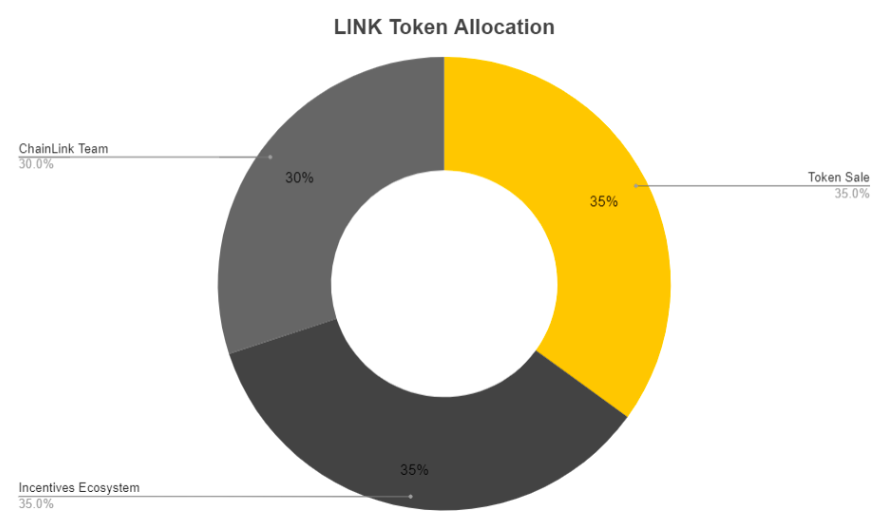
LINK Token Allocation
- 35% được bán ra ở vòng gọi vốn token sale
- 35% dành Node Operator Incentives
- 30% được nắm giữ bởi ChainLink Team.
_____
#Bitcoin #Crypto #ChainLink $LINK
45
1
26
2,063


8 Nov 2023
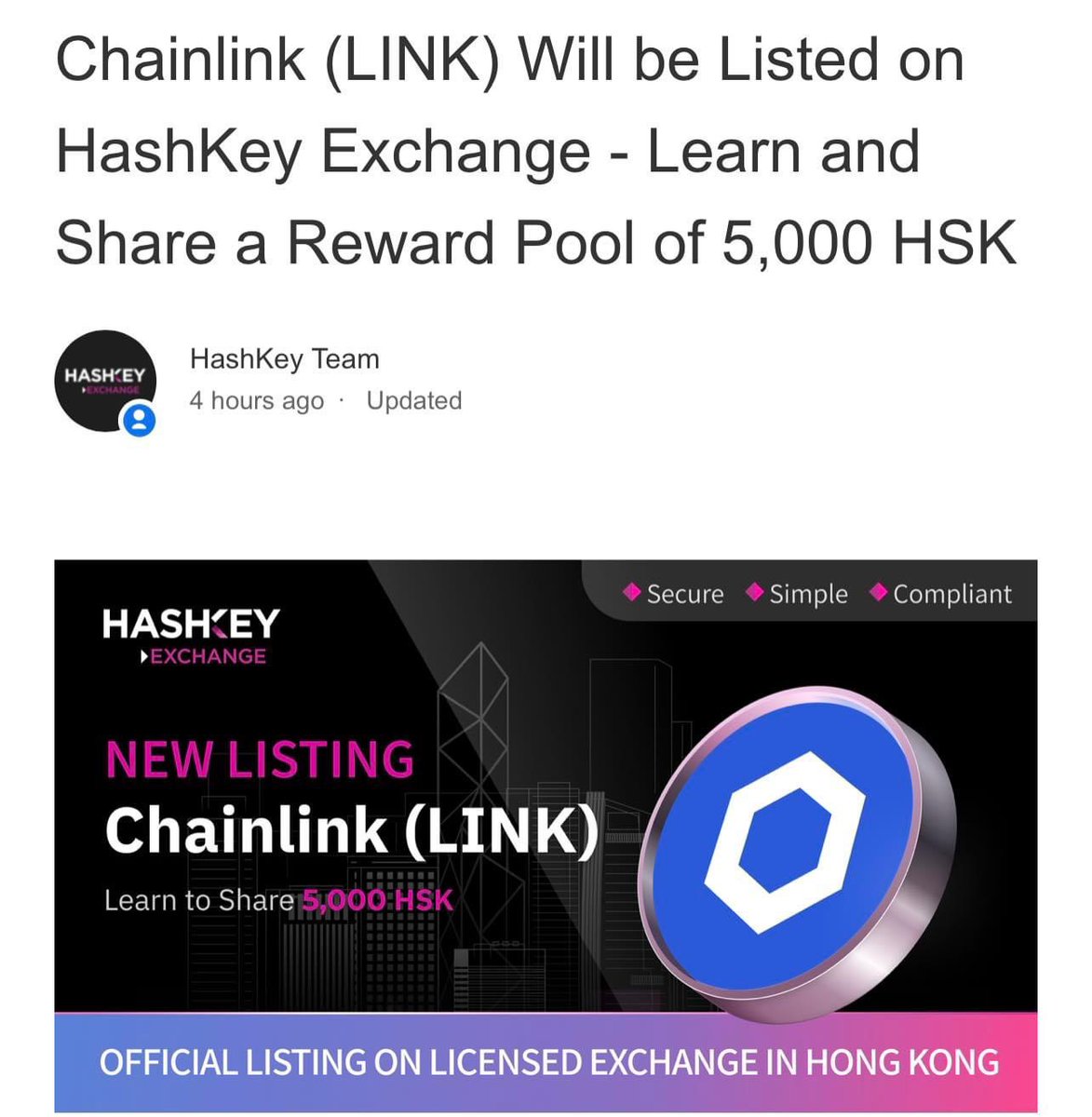
Hot : HashKey Exchange in Hong Kong has announced that it will begin trading ChainLink on November 10th. They have also enabled LINK deposits and withdrawals starting today.
ChainLink is a project that was initially introduced in September 2017 to address the "Oracle problem" in the Blockchain.
Smart contracts lack the ability to interact with any external data sources on the Blockchain. To expand the functionality of smart contracts, there's a need for a bridge that connects smart contracts with external data sources. However, these data sources cannot come from a centralized entity because if the data source connected to a smart contract is compromised, the smart contract itself would be compromised. This goes against the essence of Blockchain.
So, what is ChainLink, and how does it solve this problem? Let's explore this through this article:
1/ What is ChainLink (Link)?
ChainLink is a decentralized Oracle network that enables smart contracts to securely interact with real-world data and services outside the realm of Blockchain networks. With ChainLink, traditional systems that power modern economies can connect to the Blockchain industry to enhance security, efficiency, and transparency in various business and societal processes.
"Oracles" notify smart contracts of real-time data such as market prices, weather conditions, commodity locations, and more. Without Oracles providing this infrastructure, it's impossible for developers to build applications like DeFi and insurance on a Blockchain because they can't access data like prices and off-chain information.
2/ How does ChainLink work?
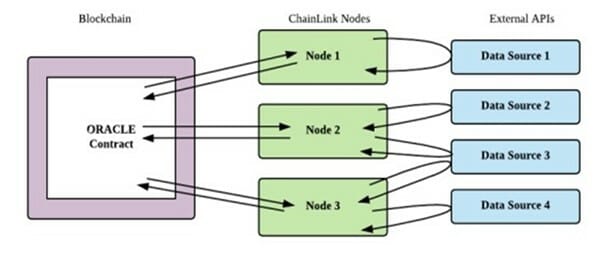
What makes ChainLink special is its ability to extract data from Oracles and bring it onto the Blockchain in a decentralized manner.
ChainLink's solution opens the door for smart contracts to autonomously handle insurance payments, financial contracts, legal documents, and various other applications in a decentralized and reliable way.
3/ A "network" within a "network" In the Blockchain ecosystem, a node refers to any computer device connected to the network. Nodes verify transactions, and ChainLink employs a set of independent "nodes" to collect data from Oracle sources.
For example, one node could connect to a national weather service, while another node connects to the NYSE.
ChainLink's network structure allows it to provide a diverse range of Oracle services uniformly. Unlike blockchains that operate as a single unified network with a consistent consensus mechanism, ChainLink Network is hierarchical and composed of multiple independent Oracle networks running the same software but operating independently from each other.
This design choice allows ChainLink to horizontally scale because any number of Oracle networks can operate in parallel without depending on any other Oracle network. Each Oracle network can independently determine:
4/ Who and how many independent Oracles participate?
Where Oracle source data comes from and what calculations Oracle networks perform. How data is secured and the frequency at which data is supplied on-chain. This flexibility allows ChainLink to offer a wide range of services and operate independently in any blockchain environment without complex interdependencies.
To prevent fraud, ChainLink uses multiple API sources and various nodes, then compares their results. Next, ChainLink automatically processes the data and sends requests to smart contracts. Smart contracts using ChainLink Oracles pay a fee in LINK tokens for the data.
To make fraud virtually impossible, ChainLink can require node operators to use LINK tokens as collateral. The penalty for providing bad data would make them abandon their intention.
5/ ChainLink's Onchain Architecture As an Oracle service, ChainLink Nodes respond to data query requests performed by or on behalf of user contracts (referred to as request contracts).
Behind the user interface, ChainLink consists of an on-chain component composed of three key contracts:
Reputation contract: Monitors the activity of Oracle service providers. Order-matchmaking contract: Executes proposed service level agreements (SLAs), records SLA parameters, and collects bids from Oracle service providers. It then selects bids using the reputation contract and completes Oracle SLAs. Aggregating contract: Collects responses from Oracle service providers and calculates the final aggregated result of a ChainLink query. It also feeds Oracle service provider metrics back to the reputation contract. The on-chain ChainLink workflow involves three steps:
Oracle selection; Data reporting; Result aggregation. ChainLink's Offchain Architecture ChainLink nodes are supported by an open-source, standard, off-chain core implementation (ChainLink Core) that handles standard blockchain interactions, scheduling, and connecting to shared off-chain resources.
Node operators can choose to add external software extensions called external adapters, which provide specialized off-chain services.
Adapters are external services. By modeling adapters as services, programs written in any programming language can be easily deployed by adding small intermediary APIs in front of them.
6/ ChainLink Security ChainLink takes several steps to ensure the integrity of its services.
Collateralized asset insurance: Smart contract owners can request a node to put up collateral assets (LINK tokens) to ensure they complete their tasks. If they fail to provide data, they lose the deposited funds to the smart contract owner.
Decentralized approach: To handle a single-source failure, ChainLink gathers data from multiple sources. It achieves this by using multiple nodes and data sources to serve smart contracts.
Trusted hardware: Reliable hardware designed to prevent tampering and protect against direct physical access is used to further decentralize ChainLink's approach.
To achieve a trustworthy execution, specialized hardware is required. ChainLink purchased a trusted hardware solution known as Town Crier, developed by Ari Juels, a computer science professor at Cornell University and a technical advisor to ChainLink.
7/ ChainLink Security Services These systems and services provide additional security to the ChainLink platform and its users.
Verification system: Monitors the behavior of Oracles on-chain, providing objective performance metrics to guide user choices.
Reputation system: Records and publishes user rankings of service providers and nodes, offering a means for users to evaluate Oracle performance. It includes a fundamental on-chain component where user rankings are available for other smart contracts to reference.
Certification service: Issues high-quality certifications of Oracle service providers.
Contract-upgrade service: A user-controlled option for handling faulty smart contracts.
Products Provided by ChainLink Market and Data feeds: Offer cryptocurrency market data, forex data, and off-chain data such as weather events, economic data, and commodity locations.
Verifiable Randomness: Generates an on-chain random source that users can independently verify, ensuring fairness, impartiality, and tamper resistance.
Keepers & Computer: Automates secure smart contracts for decentralized applications. ChainLink Keepers enable smart contracts to automate essential functions and event-driven tasks reliably, decentralized, and cost-efficiently.
Proof of Reverse: Provides on-chain reference data, allowing smart contracts to calculate collateral for any on-chain asset secured by an off-chain reserve.
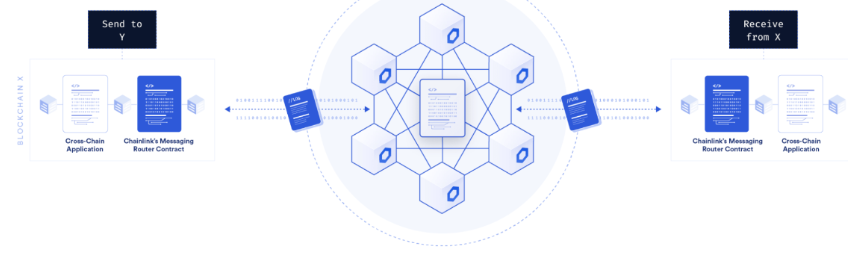
Cross-Chain Bridging: Quickly builds secure cross-chain applications. The Cross-Chain Interaction Protocol (CCIP) provides a common standard open for developers to build secure services and applications that can send messages, transfer tokens, and initiate actions across multiple networks.
Enterprise Solutions: Seamless integration of ChainLink across all leading current and future blockchains, providing enterprises and governments a single integrated gateway to connect to any blockchain network.
8/ Basic Information About the $LINK Token Ticker: LINK Contract: 0x514910771af9ca656af840dff83e8264ecf986ca Decimals: 18
Blockchain: Ethereum, BSC, Fantom, Solana, Avax... Token Standard: ERC-677
Token type: Utility Token Total Supply: 1,000,000,000
LINK Circulating Supply: 491,599,000
LINK Token Use Case As mentioned earlier, the $LINK token is used to pay node operators in the ChainLink network, who are responsible for fetching and processing data off-chain to provide it on-chain.
Additionally, $LINK can be staked in the recently launched ChainLink Staking program, adding an additional layer of security to the ChainLink economy, enhancing security, increasing node job reception, and earning additional revenue from various fees. This also allows the community to participate in the network and ensure the stable performance of Oracles.
9/ Token Sale
ChainLink raised $32 million through a token sale, including a presale and an initial coin offering (ICO) conducted in September 2017. The total number of tokens sold at that time was 350 million LINK, which was approximately 35% of the total supply.
Presale Price: 0.0003 ETH (~$0.09) for 1 LINK. A total of $29 million was raised during this round.
ICO Price: ~$0.11 for 1 LINK. The remaining $3 million was raised during this round.
10/ Token Allocation
35% was sold during the token sale fundraising round. 35% is allocated to Node Operator Incentives.
30% is held by the ChainLink Team.
Storage Wallets & LINK Exchanges LINK can be stored in wallets like Trust Wallet, Metamask, Coin98, Math Wallet, Im token, as well as hardware wallets like Ledger Nano S and Trezor.
11/ LINK Exchange Platforms
Currently, LINK is listed on various large and small exchange platforms. This allows users to easily purchase LINK on exchanges such as Binance, Coinbase, Digifinex, Huobi, Poloniex, and Kraken. Among these, LINK is currently traded the most on the Binance exchange.
12/ Roadmap
Chainlink does not have a specific roadmap. However, in the most recent SmartCon event in September 2022, Chainlink's founder, Sergey Nazarov, announced the launch of Super Linear Staking in December (which has already been launched) and CCIP in 2023.
13/ Project Team, Advisors, Investors & Partners Project Team
Chainlink was launched at the end of 2017 by the technology company SmartContract in San Francisco, led by CEO Sergey Nazarov and CTO Steve Ellis.
Sergey Nazarov: Founder of Smart Contract, Secure Asset Exchange (SAE), and CryptoMail – a decentralized email service, General Partner at QED Capital. Steve Ellis: Software engineer at Pivotal Labs; Co-Founder and CTO of Secure Asset Exchange; Teacher's Assistant at New York University in the Computer Science department. Currently, the Chainlink team is reported to have more than 400 members worldwide.
14/ Advisors Ari Juels:
Professor of Computer Science at Cornell Tech's Jacobs Institute and Co-Director of IC3 (Initiative for Cryptocurrencies and Contracts). He previously served as Chief Scientist at RSA. Eric Schmidt: Former CEO of Google, where he helped grow the startup into one of the world's most significant technology companies. Eric has also been on the boards of Alphabet, Apple, Princeton University, Carnegie Mellon University, and the Mayo Clinic. Andrew Miller: A prominent leader in decentralized consensus research and secure blockchain infrastructure. He is an assistant professor of computer science at the University of Illinois and serves as an advisor for Zcash and Tezos. Tom Gonser: Founder of DocuSign, a leading electronic signature company that revolutionized digital contracts. He is a successful entrepreneur, CEO, and experienced board member who has created billion-dollar enterprise value. Dan Boneh: Dan is a professor at Stanford University and heads the Applied Cryptography Group. He has an h-index of 123 with over 100 publications and more than 87,000 citations. Dan's research focus includes new cryptography systems, cryptographic analysis, and web security. Christian Catalini: Christian is the co-founder of Diem and the Chief Economist of the Diem Association. He founded MIT's Cryptoeconomics Lab and frequently presents his work at top organizations such as the Federal Reserve, World Economic Forum, and International Monetary Fund. Jeff Weiner: Jeff built LinkedIn into the world's largest professional network and currently serves as its CEO. He specializes in developing technology companies and advises top tech leaders, serving on several advisory boards, including Intuit and DonorsChoose. Balaji Srinivasan: Balaji was previously the CTO of Coinbase and is a general partner at Andreessen Horowitz, where he helped the venture capital firm venture into the blockchain industry. Balaji is also the co-founder and board member of Coin Center, a leading blockchain advocacy organization. Lynda Smith: Lynda is the former CMO of Twilio and helped build it into the world's leading cloud communications platform. She is currently a lecturer at Stanford University and has led marketing initiatives at top tech companies like Nuance and Genpact. 15/ Investors & Partners Investors In 2017, Chainlink (LINK) raised a total of $32 million through three rounds of funding from investors including FJ Syndicates, Richard F. Dulude, Nirvana Capital, Limitless Crypto Investments, George Burke, Andreas Schwartz, Fundamental Labs, 8Decimal, Anmi OECD, Consensus Capital, Framework Ventures, and Outlier Ventures.
16/ Partners Some of the major partners of ChainLink (LINK) include:
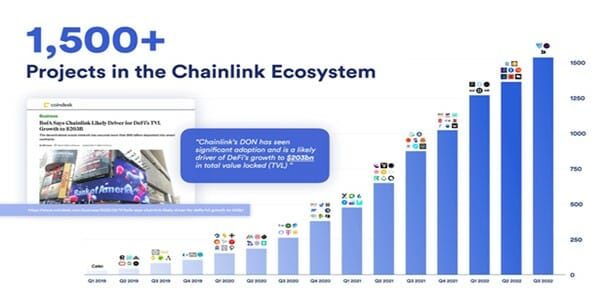
SWIFT: A massive interbank communication network. Zeppelin OS: An operating system developed specifically for creating smart contracts. Request Network: A platform for exchanging to become the standard for fiat and cryptocurrency exchange. Signal Capital: A London-based private asset management company. IC3: A group of security researchers and computer science academics focused on advanced security research. Gartner: An independent research company providing smart contracts. Google: A leading multinational technology company. Additionally, over 1500 cryptocurrency projects have used Chainlink's services.
17/ Thoughts on LINK
#Lion believes that Chainlink is a project that should be in the long-term investment portfolio of investors. The importance of Oracles in the blockchain space cannot be understated, as without Oracles, blockchains would be like computers without internet access. Currently, Chainlink dominates the Oracle space, holding a significant share and continuing to develop rapidly, even during downtrends. They consistently integrate with various blockchains and introduce new products like Staking and CCIP.
Furthermore, Chainlink has a team of over 400 individuals and a high-quality group of advisors working tirelessly to bring success to Chainlink and the broader crypto market.
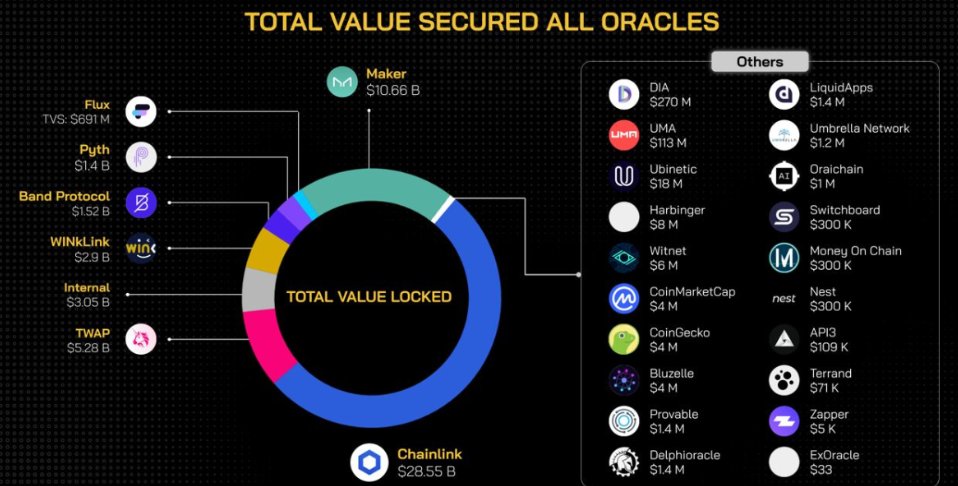
Chainlink faces competition in the Oracle space, such as Band Protocol, API3, DIA, but the significant difference can be observed when comparing market capitalization and the number of partners utilizing Chainlink's services.
However, there is still a holding position risk. In 2021, the Chainlink team continually released LINK tokens into the market, resulting in a lower ROI compared to Layer 1 projects. This has also impacted Chainlink's short-term price.
18/ Frequently Asked Questions About LINK
What is an Oracle? An Oracle is any system that serves a smart contract by providing off-chain data or connecting smart contracts to off-chain systems. In simple terms, an Oracle allows blockchains to interact with real-world data through APIs and data sources.
For example, a smart contract may require an Oracle to obtain the real-time trading price of a token to determine whether a loan in that smart contract has been liquidated or not.
19/ What can you do when holding LINK?
Similar to any other token in the market, LINK holders can take their holdings to exchange platforms to trade and profit from price differentials. Additionally, users can stake LINK to secure the Oracle network, although the APR (Annual Percentage Rate) for staking is relatively low (5%). Future Chainlink updates are expected to reveal more use cases for the token.
20/Conclusion
#Lion has provided answers to the question "What is Chainlink?" and shared information about the $LINK token. It's essential for investors to conduct their research and evaluation to make informed investment decisions. Best of luck to everyone! Please don't forget to like, share, and comment to support #Lion. Thank you, everyone! Love all.
29
27
506

24 Oct 2023
Khai phá tiềm năng của hợp đồng thông minh với Giải pháp Oracle của Chainlink !!! ( Phần 3/4 )
✍️ Tổng cung của Chainlink sẽ đươc:
✅35% được bán ra ở vòng gọi vốn token sale
✅35% dành Node Operator Incentives
✅30% được nắm giữ bởi Chainlink Team $Link
✍️ Đội ngũ dự án:
Team #Chainlink là một team dày dặn kinh nghiệm ở nhiều lĩnh vực. Sau đây là một số thành viên nổi bật trong đội ngũ của Chainlink:
✅ Sergey Nazarov - CEO và đồng sáng lập (ông là doanh nhân nổi tiếng được biết đến với tư cách là người sáng lập smart contract, Secure Asset Exchange và CryptoMail – một dịch vụ email phi tập trung)
✅ Steve Ellis - CTO và đồng sáng lập (ông từng là kỹ sư phần mềm tại Pivotal Labs và Secure Asset Exchange)
✅ Rory Piant - Giám đốc kinh doanh
✅ Ari Juels - Cố vấn khoa học
✅ Dan Kochis - Quản lý sản phẩm
✅ Thomas Hodges - Giám đốc tiếp thị
✅ Andy Boyan - Giám đốc tài chính
✅ John Redgrave - Giám đốc kỹ thuật
✅ Johann Eid - Giám đốc sản phẩm
✍️ Roadmaps & Cập nhật:
3/2023: Thông báo ra mắt sản phẩm Functions - Đây là sản phẩm cho phép các smart contract có thể kết nối và sử dụng dữ liệu từ các API Web2 một cách dễ dàng.
Hiện tại Chainlink đang trong giai đoạn chuyển đôi sản phẩm Chainlink Staking v0.1 sang bản Chainlink Staking v0.2 vào cuối năm nay.
#Blockchain #Crypto #Okx #Bybit #Binance #Ethereum #BTC #Tuesday
20 Oct 2023

Khai phá tiềm năng của hợp đồng thông minh với Giải pháp Oracle của Chainlink !!! ( Phần 2/4 )
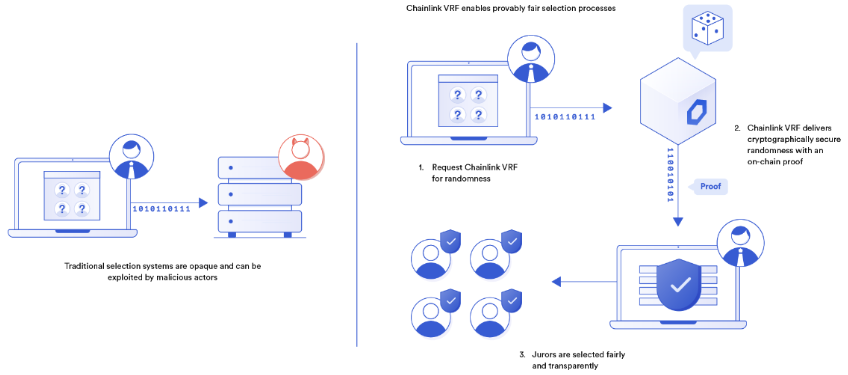
3⃣ Chainlink VRF cho phép các nhà phát triển tạo ra các số ngẫu nhiên có thể được xác minh trên blockchain, đảm bảo rằng kết quả không bị can thiệp hoặc thiên vị bằng bất kỳ cách nào. Điều này đặc biệt hữu ích đối với các ứng dụng yêu cầu ngẫu nhiên hóa, chẳng hạn như trò chơi, xổ số và cá cược.
Hiện tại VRF đang được sử dụng bởi các dự án như Axie Infinity, PoolTogether, Aavegotchi
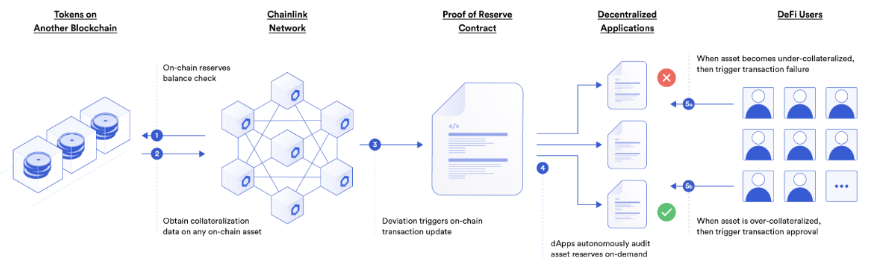
4⃣ Chainlink Proof of Reserve cho phép giám sát dự trữ tài sản một cách minh bạch và kịp thời. Nó cho phép người dùng xác nhận rằng một tài sản cụ thể, chẳng hạn như stablecoin, được đầy đủ bảo lưu bởi dự trữ của tài sản cơ bản, chẳng hạn như USD. Điều này đảm bảo rằng tài sản dự trữ luôn ở mức an toàn.
Trong thời gian qua, Proof of Reserve được xem là tiêu chuẩn của các sàn #CEX sau sự sụp đổ của #FTX và nhiều sàn CEX khác. Tính năng này cũng được sử dụng bởi một số ông lớn như @Paxos , @BitGo , @TrustToken
5⃣ Cross-chain Communication: Giao thức tương tác giữa các blockchain (CCIP) cung cấp một tiêu chuẩn mở cho các nhà phát triển để xây dựng các dịch vụ và ứng dụng phi tập trung có thể gửi tin nhắn, chuyển đổi token và khởi động hành động trên nhiều mạng lưới khác nhau. Từ đó tăng cường tính tương tác và khả năng mở rộng của các ứng dụng #blockchain.
Điểm nổi bật của Chainlink
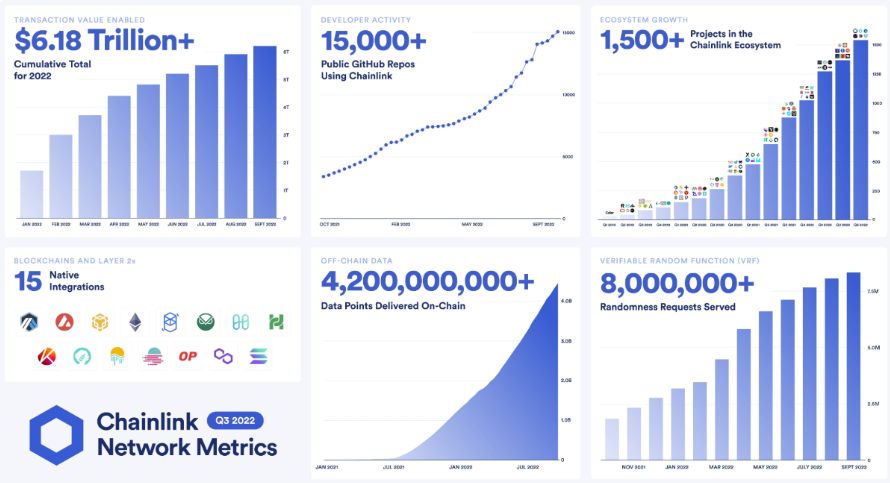
✍️ Tính đến nay, Chainlink đã đạt được một số cột mốc nổi bật như sau:
1⃣Mở rộng sang 15 blockchains như #Ethereum, #BNBChain , #Avalanche, #Fantom
2⃣Có 7 sản phẩm nhỏ phục vụ cộng đồng developer và dự án #DeFi.
3⃣Có hơn 1,500 đối tác sử dụng dữ liệu hoặc cung cấp dữ liệu cho #Chainlink.
4⃣Đã cung cấp hơn 4.2 tỷ lượt dữ liệu On-chain và 8 triệu lượt yêu cầu VRF.
112
80
6,394

29 Sep 2023
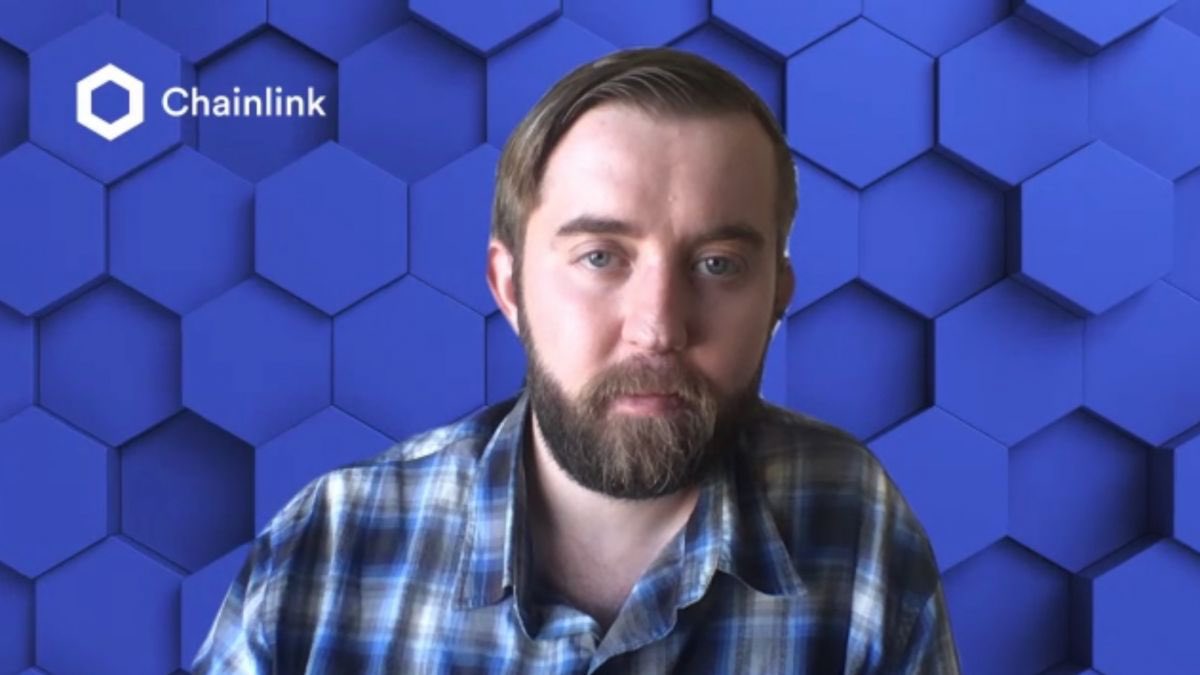
🔸Les fondateurs $LINK
Sergey Nazarov est le PDG et cofondateur de l’entreprise.
Avant, @SergeyNazarov était le fondateur de Secure Asset Exchange, une bourse de crypto-monnaies.
Il a également fondé un service de messagerie, baptisé CryptoMail.
1
2
240

30 May 2023
Real solutions.
- police arrest drug dealers, possession, disorderly conduct, etc
- DA prosecutes. With jail or prison
- bail becomes $ again
-end ridiculous shoplifting under certain $ only misdemeanor
2
30


29 May 2023
the police or my parents im sure neither would be pleased
1
13
3,214

23 May 2023
Nice teaser! Asimov, Big Brother and #CryptoMail on the #CryptoCloud all in one ominous tweet. Nice work!
1
76
