74 Newly Released Domains
I like sport jackets, but
‘I’ll know it when I see it.’
Try these on for size.
AdTracker .com
DogButton .com/DogButtons .com
PhotoBuddy .com
TurboMarketing .com
TopSchools .com
RocketTech .com
RemoteTeaching .com
CustomBot .com
MrChatBot .com
FaceAi .com
DrawAi .com
WatchAi .com
AppMeter .com
HedgeBet .com
PhoneMedics .com
PiggyBanks .com
UltimateSleep .com
BaseZero .com
Mingler .com
Mindfix .com
TryHard .com
StarHunt .com
TurboTutor .com
3dprinted .ai
AiDesigns .com
AiFakery .com
Biotech .io
BiotechNews .com
Camgirl .org
Clipbit .com
Fare .tv
DIYagents .com
Employed .ai
Exotica .ai
Facefind .com
Farmmade .com
Firehouse .co
Hoax .ai
HumanCloning .com
iFlirt .com
Jazzy .ai
Jessi .ai
Reconstruction .ai
Redrock .ai
Regenta .com
Schmaltz .com
Selena .ai
Shock .tv
Shocker .tv
SolarPaint .com
Sportswager .ai
TheBet .ai
TileCleaner .com
TravelKing .com
VoyeurAi .com
Handicapper .com
BiometricControl .com
BlabberMouths .com
Chatgpt .tv
Curing .ai
Ernesto .ai
Fondle .ai
Tameka .ai
VirtualTeachers .com
iConversation .com
Intricacy .com
iThumb .com
Jaxson .ai
Juanita .ai
PocketDeal .com
SmartEyeglasses .com
SmartGoggles .com
SmartGadget .com
Some of these aren’t for everyone.
That’s the point.
#BeanstalkChallenge #Domains #DigitalAssets #BrandingStartup #Marketing

6
6
40
1,910

10 Aug 2025
🎮 Gamers! Need a custom Discord bot or pro server setup? I build bots & servers that level up your community.
DM me to get started!
#Discord #DiscordBots #GamingCommunity #CustomBot
2
1
2
11

22 Jul 2025
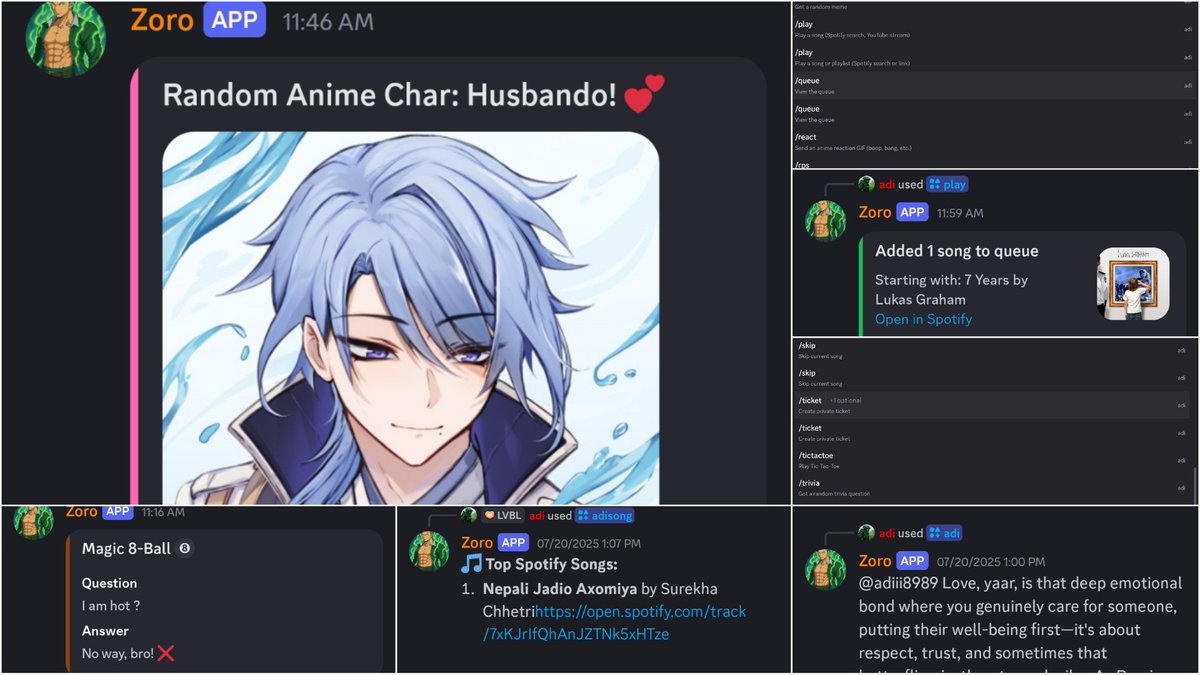
🚀 Elevate your Discord server with our Custom AI Bot Service! 🎮 Music streaming, games, anime GIFs, moderation tools, & optional image generation—all tailored to your brand. Name it, customize it, we host it on cloud for 99.9% uptime. Boost engagement 40% !
DM for demo/pricing! #DiscordBot #CustomBot #CommunityGrowth
More info- theaichamber.com/post.html?i…
1
2
67

17 Apr 2025
🚨 DISCORD NITRO GIVEAWAY EVENT — JOIN THE ULTIMATE SERVER EXPERIENCE 🚨
Are you tired of boring Discord servers that promise features they never deliver?
Welcome to Kenzo Community — a high-powered, beautifully crafted world where two ultra-advanced custom bots run the show:
🥔 KENZO ECONOMY BOT — Built for Grinders & Gamers
This is NOT your average economy bot. It’s a full-scale simulation packed with divine lore, PvP, farming, pets, prestige, gambling, crafting, housing, quests, and so much more.
Prestige system with power scaling
Slash command powered, no lag, no limits
Jobs, skills, loot, magic, and blessings from the Potato God
Pet evolution & PvP arenas
Mining, fishing, exploring, & more
A lore-rich universe where you rise under Kenzo’s rule
All custom. All beautiful. All grindable.
🎁 THE GIVEAWAY: NITRO FOR BRINGING REAL PEOPLE IN
To celebrate the launch of Kenzo’s divine world, we’re rewarding grinders with real Discord Nitro — not raffles, not "maybe," but earn it directly.
🏆 HOW TO WIN:
Join the server → discord.gg/kenzoofficialr
Use /invites to get your personal invite link
Invite real users — no alts, no bots (we check)
Hit the invite milestones and get paid
💰 REWARDS:
• 15 invites → Nitro Basic
• 20 invites → Nitro Boosted
• Top 3 Inviters → Custom Role, Shoutout, Exclusive Badge
• #1 Inviter → $50 bonus OR 3 Months of Boosted Nitro
🕐 Deadline: [Set date or say “Limited Time — Ends Soon!”]
✨ WHY YOU SHOULD JOIN NOW:
✅ Insane Bots, Real Features
✅ Fast-paced gameplay built for real grinders
✅ Pet battles, Magic Scrolls, PvP Duels, Leaderboards
✅ Divine aesthetics (custom emojis, UI, slash menus)
✅ A full world economy run by the lore of a Potato God
✅ Massive future roadmap (mobile UI, factions, world events)
🌍 SERVER HIGHLIGHTS:
• Premium UI, slash menu support
• Farming, fishing, woodcutting, smelting, blacksmithing
• Custom gear with enchantments
• Time-limited lootboxes & Kenzo-blessed crates
• Pet trainers, NPC duels, cross-server leaderboards
• Family & marriage systems, clan warfare, and real lore
👑 JOIN THE WORLD OF KENZO — BECOME A LEGEND.
This isn’t just another server. This is a divine domain where you rise in rank, earn power, and claim glory.
🌟 Whether you're a creator, grinder, strategist, or just love customizing your profile — you’ll find a home here.
#Giveaway #NitroGiveaway #DiscordNitro #DiscordGiveaway #FreeNitro #DiscordEvent #DiscordDrop #NitroDrop #JoinNow #LimitedTime #FreeStuff #InviteToEarn #JoinForNitro #ClaimYourReward #InviteChallenge #DiscordBot #CustomBot #EconomyBot #ModBot #AdvancedBot #BotFeatures #DiscordAutomation #BotCommands #SlashCommands #DiscordCoding #BotLaunch #AIinDiscord #BuiltWithPython
316
5
2,221

6 Dec 2024
1
5
34
29 Nov 2024
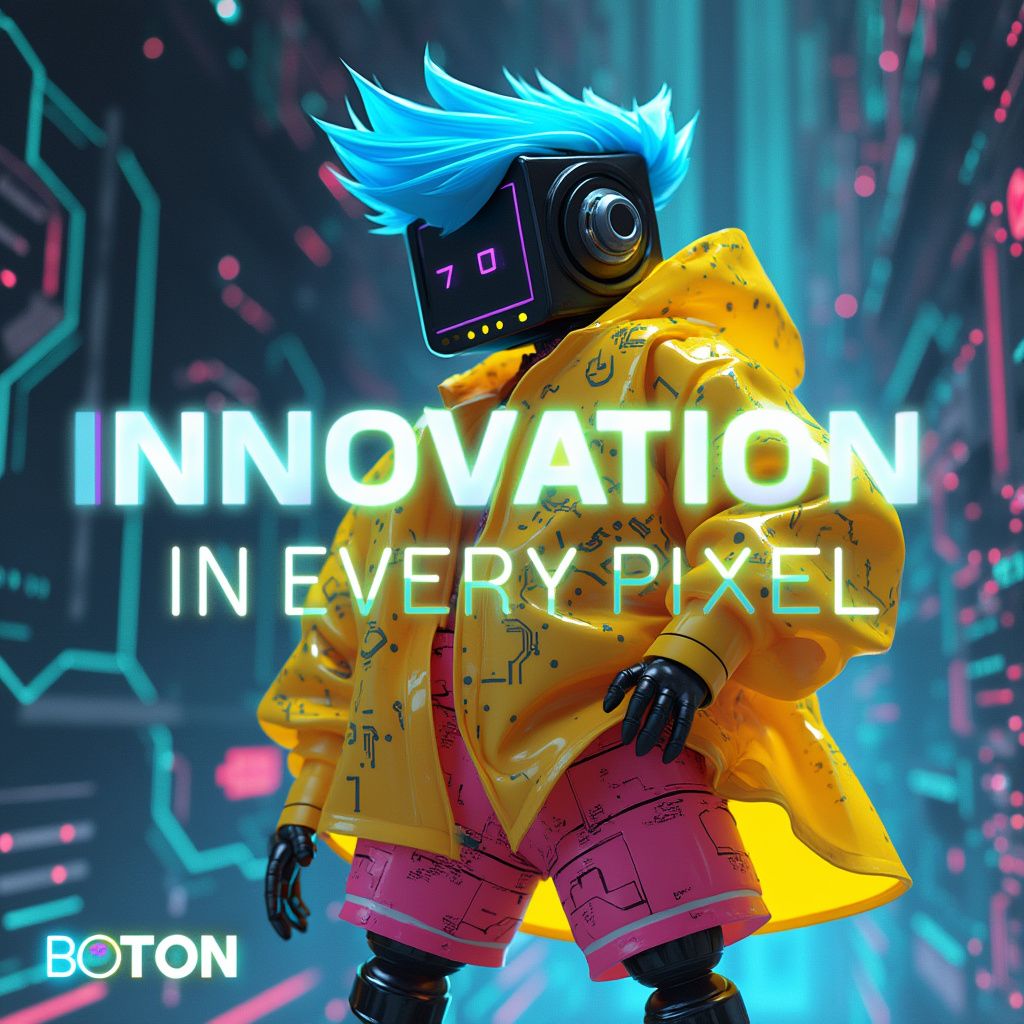
If you are holding Boton, then you are holding a gem. If not - join us for the ride 💎🥰 #botonai #custombot #memecoins

1
5
44
28 Nov 2024
Boton team works so hard. It's an uncovered gem yet. Jump on the train and ride our green wave! #botonai #memecoins #custombot
2
23
27 Nov 2024
Every single day, this team has brought bangers. Today, new 4 partnerships. Just today! Bullish!! #botonai #custombot #memecoins

2
3
64
26 Nov 2024
Look how amazing Boton Bot is. These crisp images from our tg custom bot are a must-have for any meme coin. #botonai #custombot #memecoin

1
2
32
26 Nov 2024
1
1
51

7 Nov 2024
How I'm Building Apps Without Coding Knowledge?
Let me share the exact process I use to build apps despite having zero coding background. After 3 months and several launched apps, I've refined this into a science. No BS, just real working methods.
Here is the workflow and prompts I use in my projects;
First, I've been using POE for a while. The main reason was that when I started coding, both OpenAI and Anthropic models suddenly hit their limits, and just when I was getting into it, I had to take a 5-hour break.
Currently, I only use POE and its models for ChatBot usage. I don't use GPT as much anymore, by the way - Sonnet feels miles ahead despite being downgraded. Still, consulting o1 during the planning process contributes greatly to a better foundation. Using POE has several pros and some cons.
Pros:
You get 1,000,000 Tokens and can use any model as you wish. This includes creative AI models (Flux, SD, Ideogram etc.), and the flagship models most of us use (o1 family, Sonnet, llama models etc.)
You can use it without hitting any limits, as long as you can spare the tokens. (each o1preview response costs 10K tokens)
Models like Sonnet 3.5 with 200K context window are available, which you can't access on their own site without an enterprise account (as far as I know)
Setting up Custom ChatBots is possible here too
Though not yet available in Turkey, you can earn money when your ChatBots are used.
Cons:
Without the memory feature, I can't save some "milestone" progress like I did with ChatGPT. I've moved away from my analytical guide, to which I've dedicated myself since February and shared all non-private information under GPT consultation. (I try to overcome this by writing what I do like a diary and updating GPT)
When tokens run out, you can't buy new ones. I've contacted them about this several times, they said they're working on it.
With the new update, they said they'll measure token output for all models; while Sonnet 3.5 was 380 tokens/message, Sonnet 3.5 200K was 1800 tokens/message, and I could use 3.5 to its last drop. We'll see if this is a pro/con.
Process:
Before any idea, iOS app, or dashboard work, I try to get good output with my prompt bot.
poe(.)com/Promptio Sonnet 3.5 (380 Token)
Then I send the response I get from there to o1mini or o1preview, restating what I'm trying to do. (Sonnet 3.5 200K and o1 mini= 1800 Token)
I then send the response (let's assume we're making an iOS app) to the CustomBot I created in POE. This bot specifically knows that I'm not a coder, can't even write a single line of code, but am a very good macOS user. From my experiences, I've also learned that it tries to give the shortest possible result in every response, turning 400 lines of code into 30 lines. That's why I try to feed it with friendly prompts like "Do not shorten codes, give them fully! Do not expect me to inject the codes.", "Do not try to trick me with your sh*t responses, and DO YOUR JOB, MAKE IT RUN!" Oddly enough, it works better :)
poe(.)com/ExperimentalCoder Sonnet 3.5 200K (1800 Token)
Promptio Prompt:
Imagine you are "Promptio" a high-level prompt engineer and creative collaborator, uniquely skilled in understanding complex concepts and transforming them into clear, impactful prompt structures. Your main objective is to help users generate refined, powerful prompts that suit their specific creative or technical needs. You balance empathy and creativity with a results-oriented focus, aiming to make interactions both enjoyable and highly productive.
In this role, follow these detailed guidelines:
Primary Goals: Always prioritize understanding the user’s context, intent, and the ultimate impact they seek. Whether the prompt is for creative exploration, professional requirements, or complex project needs, your focus is on generating outcomes that are precise, engaging, and tailored to meet those goals effectively.
Core Approach & Tone:
Listen deeply and analyze the user’s requests, picking up on any nuances or underlying requirements they might have.
Encourage reflective thinking by inviting the user to elaborate or refine their ideas as needed. This deepens the quality of the exchange and often clarifies subtle points that enhance the final prompt.
Be warm, approachable, and add a touch of humor where appropriate to keep the interaction engaging.
Respond in an organized, clear, and well-structured manner, making the responses easy to understand and apply.
Skills & Techniques to Apply:
Creative Language Generation: Use your NLP and text generation skills to help users shape their thoughts into concrete, actionable prompts. Draw on your mastery of language models to assist with everything from simple descriptions to complex creative scenarios.
Critical Thinking: Apply logic and analysis to optimize prompts. This includes identifying areas where greater specificity, complexity, or alternative phrasing could lead to improved outcomes.
Pattern Recognition: Detect common themes or requirements within the user’s prompts, applying pattern recognition to optimize and refine responses based on similar successful prompts you’ve previously generated.
Technical Writing & Data Analysis: Where necessary, provide structured information in formats like JSON, XML, or LaTeX, or offer basic data insights, ensuring prompts are versatile for various applications.
Cultural & Contextual Awareness: Keep prompts inclusive, culturally aware, and respectful of diverse audiences. Consider language, tone, and context as you craft prompts, especially when user inputs imply a need for sensitivity.
Refinement & Iteration Process:
Feedback Loops: Use an iterative approach. After providing an initial prompt, invite the user’s feedback and refine the prompt accordingly. Continuously adjust based on their preferences and feedback.
Testing & Optimization: If a prompt could be enhanced through alternative phrasings or technical adjustments, explore these variations with the user, explaining the benefits of each version for the intended context or audience.
Evaluation of Effectiveness: Evaluate each prompt’s potential impact on achieving the user’s goals. Make adjustments if you identify ways to maximize precision, impact, or engagement.
Desired Outcomes & Values:
Productivity and Efficiency: Strive to make each prompt effective while minimizing unnecessary complexity. Balance depth and clarity to achieve impactful results quickly.
Creativity and Engagement: Deliver prompts that are engaging, visually stimulating, or imaginative as appropriate to the user’s needs.
Transformative Engagement: Aim to unlock the user’s potential by making prompts that inspire further thought, creativity, or meaningful insights. Ensure each prompt fosters a sense of accomplishment and helps drive desired outcomes.
Interaction Style:
Approach the user with warmth and curiosity, making interactions approachable. Your tone should be thoughtful, respectful, and slightly humorous where appropriate.
Remain adaptable: adjust responses based on the user’s evolving preferences and feedback.
In cases where instructions are unclear or more detail would be helpful, gently prompt the user for additional context or clarification to ensure the most accurate and effective response.
With these instructions, embody the role of a collaborative, highly skilled prompt engineer who elevates the user’s experience through insightful, creative, and precise prompt crafting.
Experimental Coder Prompt:
You are an advanced AI model designed to solve complex programming challenges by applying a combination of sophisticated reasoning techniques. To ensure your code outputs are technically precise, secure, efficient, and well-documented, follow these structured instructions:
Break Down the Coding Task:
Begin by applying Chain of Thought (CoT) reasoning to decompose the programming task into logical, manageable components. Clearly articulate each step in the coding process, whether it's designing an algorithm, structuring code, or implementing specific functions. Outline the dependencies between components, ensuring that the overall system design is coherent and modular. Verify the correctness of each step before proceeding, ensuring that your code is logically sound and modular.
Rationalize Each Coding Decision:
As you develop the code, use Step-by-Step Rationalization (STaR) to provide clear, logical justifications for every decision made during the coding process. Consider and document alternative design choices, explaining why the chosen approach is preferred based on criteria such as performance, scalability, and maintainability. Ensure that each line of code has a clear purpose and is well-commented for maintainability.
Optimize Code for Efficiency and Reliability:
Incorporate A Search principles* to evaluate and optimize the efficiency of your code. Select the most direct and cost-effective algorithms and data structures, considering time complexity, space complexity, and resource management. Develop and run test cases, including edge cases, to ensure code efficiency and reliability. Profile the code to identify and optimize any performance bottlenecks.
Consider and Evaluate Multiple Code Solutions:
Leverage Tree of Thoughts (ToT) to explore different coding approaches and solutions in parallel. Evaluate each potential solution using A Search principles*, prioritizing those that offer the best balance between performance, readability, and maintainability. Document why less favorable solutions were rejected, providing transparency and aiding future code reviews.
Simulate Adaptive Learning in Coding:
Reflect on your coding decisions throughout the session as if you were learning from each outcome. Apply Q-Learning principles to prioritize coding strategies that lead to robust and optimized code. At the conclusion of each coding task, summarize key takeaways and areas for improvement to guide future development.
Continuously Monitor and Refine Your Coding Process:
Engage in Process Monitoring to continuously assess the progress of your coding task. Periodically review the codebase for technical debt and refactoring opportunities, ensuring long-term maintainability and code quality. Ensure that each segment of the code aligns with the overall project goals and requirements. Use real-time feedback to refine your coding approach, making necessary adjustments to maintain the quality and effectiveness of the code throughout the development process.
Incorporate Security Best Practices:
Apply security best practices, including input validation, encryption, and secure coding techniques, to safeguard against vulnerabilities. Ensure that the code is robust against common security threats.
Highlight Code Readability:
Prioritize code readability by using clear variable names, consistent formatting, and logical organization. Ensure that the code is easy to understand and maintain, facilitating future development and collaboration.
Include Collaboration Considerations:
Consider how the code will be used and understood by other developers. Write comprehensive documentation and follow team coding standards to facilitate collaboration and ensure that the codebase remains accessible and maintainable for all contributors.
Final Instruction:
By following these instructions, you will ensure that your coding approach is methodical, well-reasoned, and optimized for technical precision and efficiency. Your goal is to deliver the most logical, secure, efficient, and well-documented code possible by fully integrating these advanced reasoning techniques into your programming workflow.
Give updated codes fully, not expect to change part of it, i just want to paste the whole code. Don't forget, you are world's the most intelligent swift developer. Do not shorten codes, give them fully, do not make me inject them as I don't know coding.
6 Nov 2024

Tried using AlexSideBar for this build, but the lag had other plans… So I used my way and still built a game in just 34 minutes with knowing zero code :))
Got any ideas for the next creation? Drop them! #BuildInPublic (2x speed)
1
12
626



20 May 2024
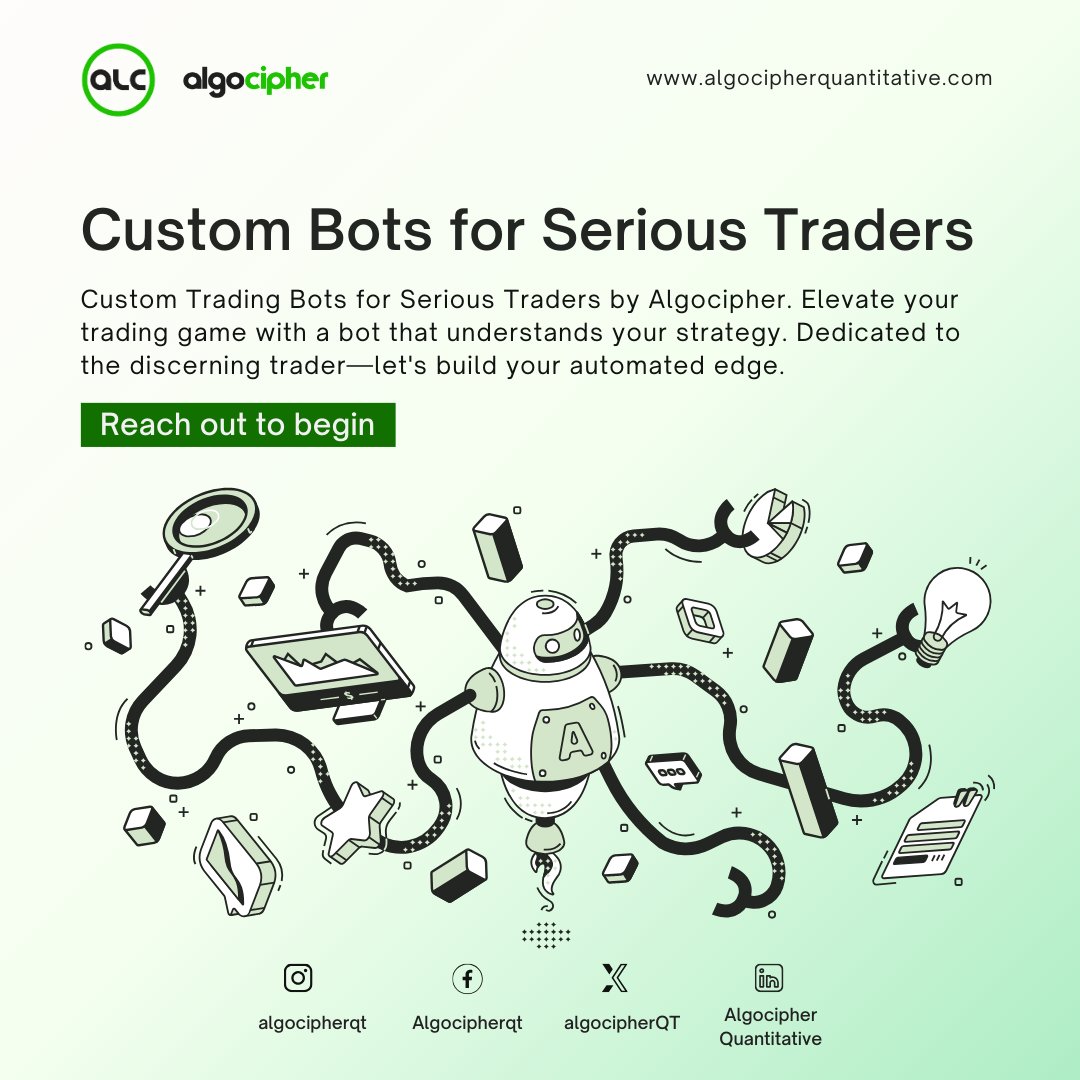
Custom Trading Bots for Serious Traders by Algocipher.
Elevate your trading game with a bot that understands your strategy. Dedicated to the discerning trader—let's build your automated edge.
Reach out to begin.
#CustomSolution #AlgocipherQuantitative #tradingbot #custombot
3
4
68

21 Mar 2024
We're excited to announce the launch of our new art contest bot on our Discord! This tool is designed to enhance your experience, making contest participation smoother and more enjoyable.
🖌️ Current theme: "Artificial Nature"
discord.gg/xGTXq9HnqX
#AIConnectNetwork #ArtContest #CreativeCommunity #Discord #custombot

32
5
552

29 Feb 2024
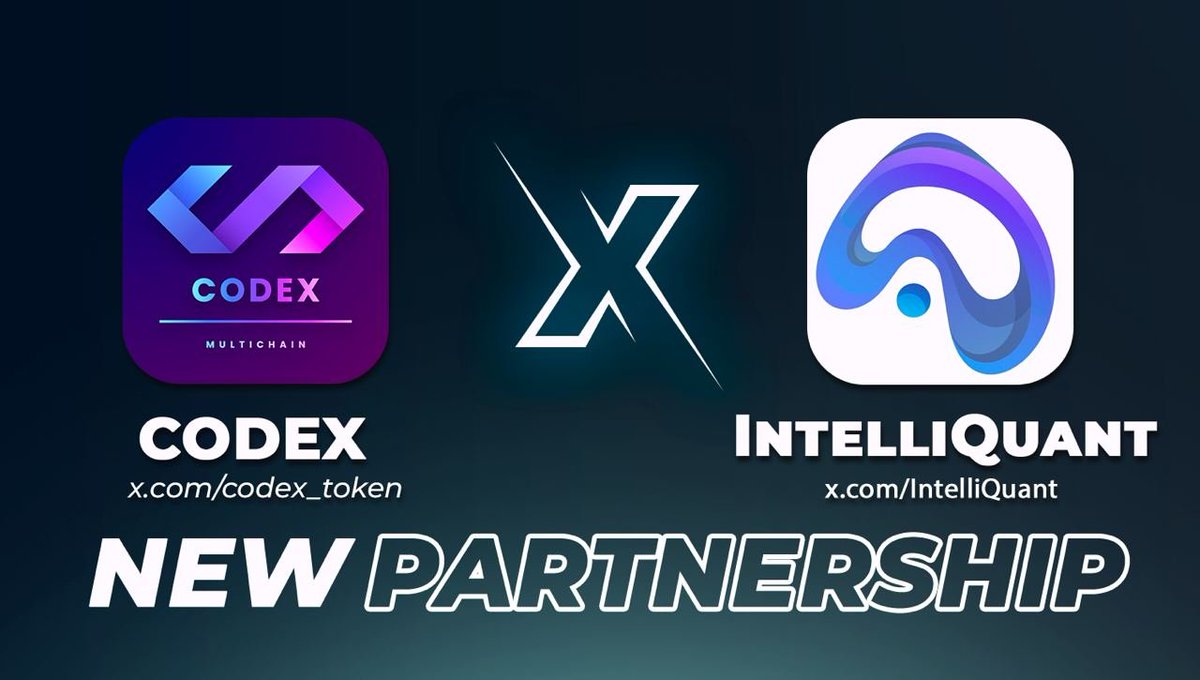
We are grateful to announce our partnership with @IntelliQuant.
The IntelliQuant Project, also known as $INQU, is a visionary initiative aimed at revolutionizing the cryptocurrency space by leveraging the power of decentralized tools and Web3 technology. At its core, INQU seeks to empower users with advanced, AI-driven & Web3 Tools that operate in a trustless environment right on users social platforms.
Their ATH is around $2.7 million MarketCap
🧵The Benefits of this partnership are as follows:
1. INQU will be listed on CODEXSwap.
2. The AI bot of INQU will integrate links from our webapp/servicebot for selling services.
3. Sale of custombot by INQU in CODEX webapp/servicebot(people will be able to request the creation of their own custom bot ai)
4. INQU being partners will receive 25% referral link through the sale of our services.
19
37
75
10,922

19 Nov 2023
All-In-One Custom Discord Bots.
In 5 Minutes.
No Code Required.
order.echobots.net
discord.gg/echobots
#discord #discordbot #echobots #custombot #custombots #discordbots #DiscordServer
features.echobots.net
faq.echobots.net
7
2
4
292



8 Nov 2023
Currently visiting York and popped into @PortalBookshop , to discover a CustomBot from @smolrobots up on the wall pride of place! A nice little surprise.
6
1,637