


กฤษฎา retweeted

#TGALUFFY เจอฮาคิกุเข้าไป
⚓ ฝากถอน auto ไม่มีขั้นต่ำ
🏴☠️ คืนยอดเสีย 5%
🌊 แนะนำเพื่อนรับ 2.5%
𝑪𝒍𝒊𝒄𝒌 » shorturl.asia/mtfrl

5
27
21
2,184

Jun 10
dftS
💰 وفر فلوسك بسهولة
⎐كُـود⎐كوبِون⎐خـِصم⎐
⎐ايهرب⎐ايهيرب اهرب
⊵IPY1290⊴
⎐نون⎐
⊵STC9⊴
⎐دبدوب⎐
⎐Q16⊴



We wish all our DFTS teachers a refreshing summer break as we end a landmark year with our first cohort of LC DFTS students. Thank you for your continued collaboration. @oide_Ireland

1
3
57

May 24
DFT exchange: sharing perspectives on the workhorse of quantum chemistry and materials science pubs.rsc.org/en/content/arti…………………………… #chemistry #bioinformatics #ComputationalChemistry #DFTS
1
6
543

May 15
You will not find a clearer explanation of the DfTs utterly insane decision to scrap the GWR brand than Richard Bowker's brilliant Linked In piece here. Please read and circulate it. Hopefully saner counsels might yet prevail.
linkedin.com/posts/stevenric…
15
9
72
10,812

May 10
Water was municipal once. Lots of rail could (and should) be run by Mayors. Dfts record on public ownership isn't blanket failure (Transpennine has been a big success) & don't do this because we might mess it up is hardly an inspiring message for soc dems
3
144

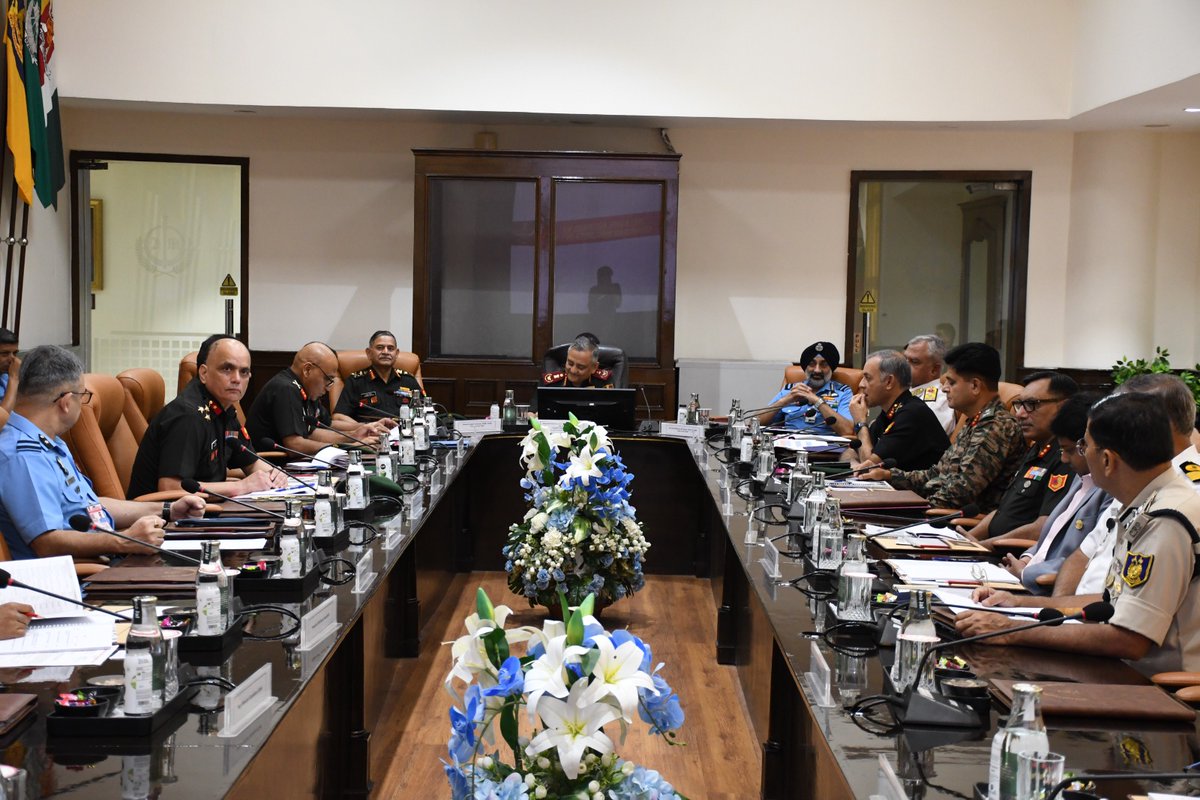
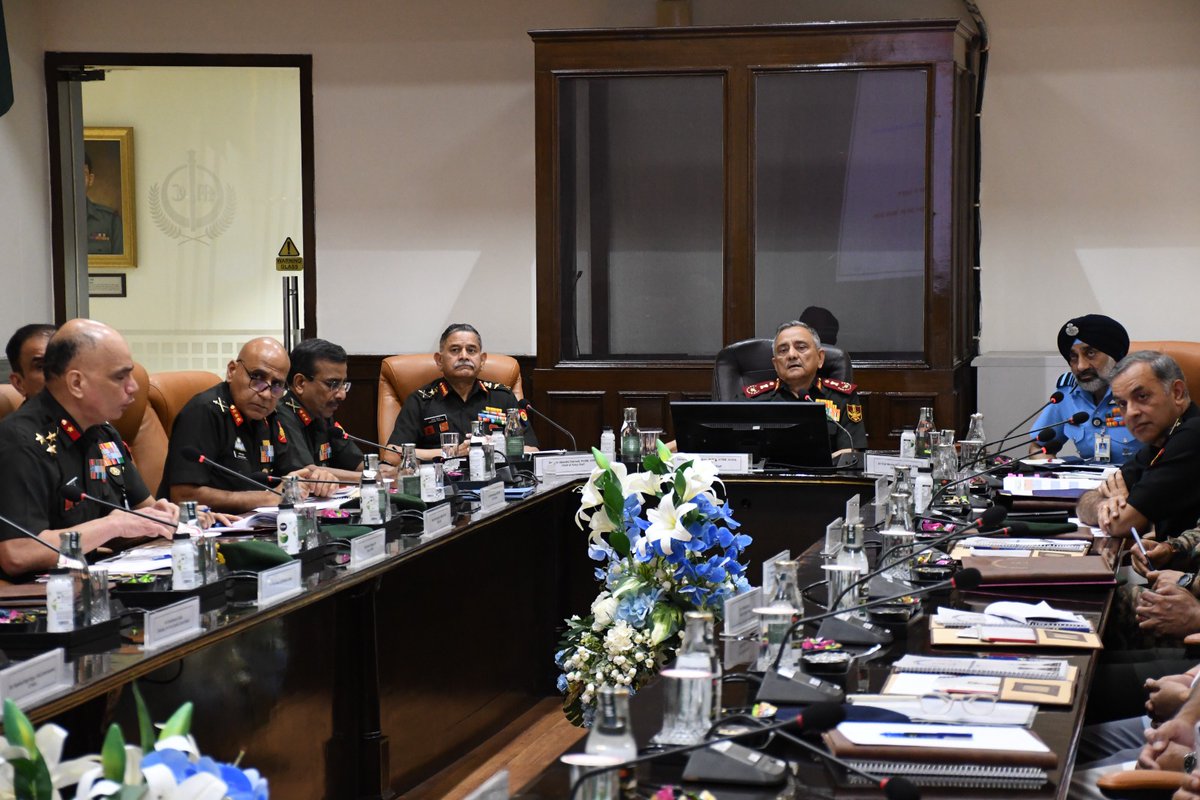
Annual General Body Meeting of the Durand Football Tournament Society was chaired by General Anil Chauhan, #CDS and President, DFTS, at #ManekshawCentre, #DelhiCantt, under the aegis of #DelhiArea.
Discussions focused on preserving the legacy of India’s 138-year-old football tradition, elevating tournament excellence and charting the way forward for Asia’s oldest football tournament.
#DurandCup remains pivotal in nurturing football culture and unearthing talent nationwide. We remain committed to excellence.
@adgpi
@westerncomd_IA

1
5
31
3,103

Apr 27
In 1965, James Cooley and John Tukey published a paper that transformed scientific computing.
The Fast Fourier Transform (FFT).
It is widely regarded as one of the most important numerical algorithms of the 20th century, and was included in the top algorithms list by IEEE’s Computing in Science & Engineering.
Let's talk about the problem it solved
The Discrete Fourier Transform (DFT) converts a signal from the time domain into its constituent frequencies.
Computed directly, it requires:
O(N²) operations.
For N = 1,000,000 data points, that’s on the order of 10¹² operations.
The key formula
Xₖ = Σ xₙ · e^(−i2πkn/N) for n = 0 to N−1
A DFT of size N can be decomposed into smaller DFTs by separating the input into even- and odd-indexed elements and exploiting symmetries of complex exponentials.
Applying this idea recursively reduces the computational complexity to:
O(N log N)
For N = 1,000,000, this is on the order of 20 million operations.
# Some History #
Variants of this approach were described earlier by Carl Friedrich Gauss around 1805 in work related to astronomical calculations. However, these ideas were not developed into a general-purpose algorithm or widely disseminated at the time.
The 1965 paper by Cooley and Tukey brought the method into practical use in modern computing.
FFT is a fundamental building block in many fields:
→ Audio - spectral analysis, compression, speech processing
→ Images - filtering, compression, computer vision
→ Communications - OFDM systems used in 4G LTE and 5G NR
→ Wi-Fi - IEEE 802.11 standards
→ Medicine - MRI and CT image reconstruction
→ Science - signal analysis in physics and engineering
2
32
128
8,624

Apr 25
Dept says it mostly payroll that the money will be spent on but where did the deficit come from?
Which Minister is responsible for spending loads of money they didn't have?
Does it have anything to do with initiatives? Redevelopment?
Will this disrupt the roll out of DFTS?

Department of Education to receive €646 million to fill budget hole irishtimes.com/ireland/educa…

3
4
16
5,144


Mar 30
I forgot to post this during the 35.0 patch cosmetic preview, but 8 Signature cards are coming in the future (most likely).
For now, these Signature cards are hidden and only have their textures/animations, but are not fully done. If I had to guess, they'll probably be in DFTs.
3
3
20
5,148

An excellent article in defence of juries.
Barristers- note Serco’s response when she raises delays caused by dfts not being brought to court on time: “A Serco spokesman said: “Serco delivers over 99.8pc of prisoners to court on time.”
Barristers- when waiting at court, complete:
r1.dotdigital-pages.com/p/4C…

“The jury is something that is intangibly part of the constitution that delivers power outwards to people and doesn’t allow for it to be centralised. A certain type of person finds that very uncomfortable…”
Gifted article telegraph.co.uk/gift/dc28d92…
6
39
79
15,978

Mar 25
NFTs, DFTs and other hydroponics, proper greenhouses structures, proper irrigation scheme to produce all season round. Can we think outside the box for the first time?
1
2
225

Mar 21
Any other operator would practically have to TUPE the available trained staff, that includes their union arrangements, and the DfTs refusal to pay for more operational staff will continue to be the blocker. It's fundamentally a DfT/Union issue, the operator is the DfTs scapegoat.
1
2
84

Feb 25
The FFT's key insight: Divide and Conquer
Cooley-Tukey algorithm split DFT into two half-sized DFTs:
DFT_N(x) = DFT_{N/2}(even samples) W_N · DFT_{N/2}(odd samples)
Apply recursively → O(N log N) instead of O(N²)
N=44100: ~720,000 operations vs 1.9 billion. 2700× speedup
5
39

Isaac is so proud of this progress.
Bringing solar to the DFTS co-working space in Ajegunle means 24 hours power supply and increased productivity for the people who use the space.
#uwanalightandlove
1
3
157