Filter
Exclude
Time range
-
Near
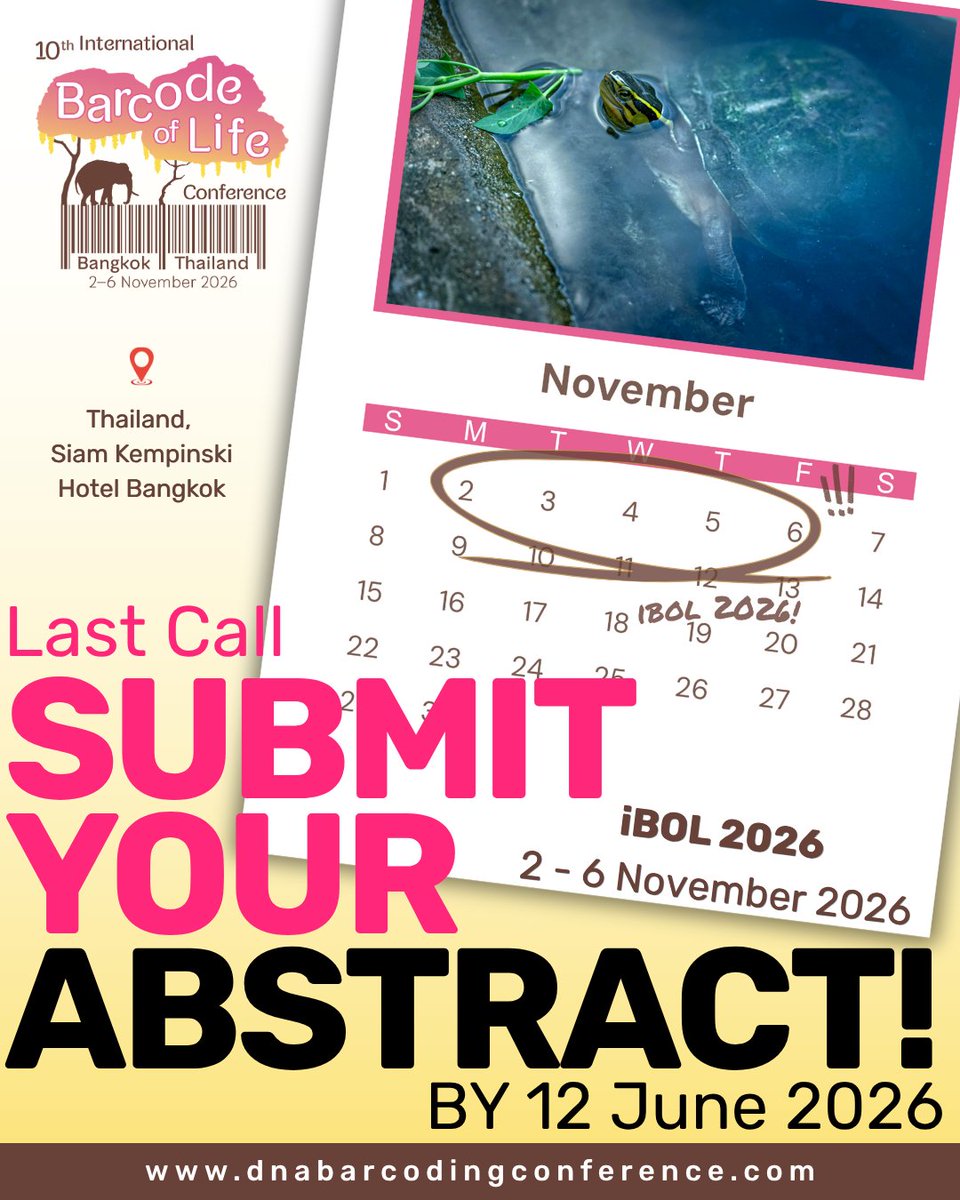
Last call for #iBOL2026 abstracts. Submit your oral or poster abstract by 12 June 2026 and share your research with the global DNA barcoding community in Bangkok. 2โ€“6 Nov 2026 dnabarcodingconference.com #DNAbarcoding #BiodiversityGenomics
1
30
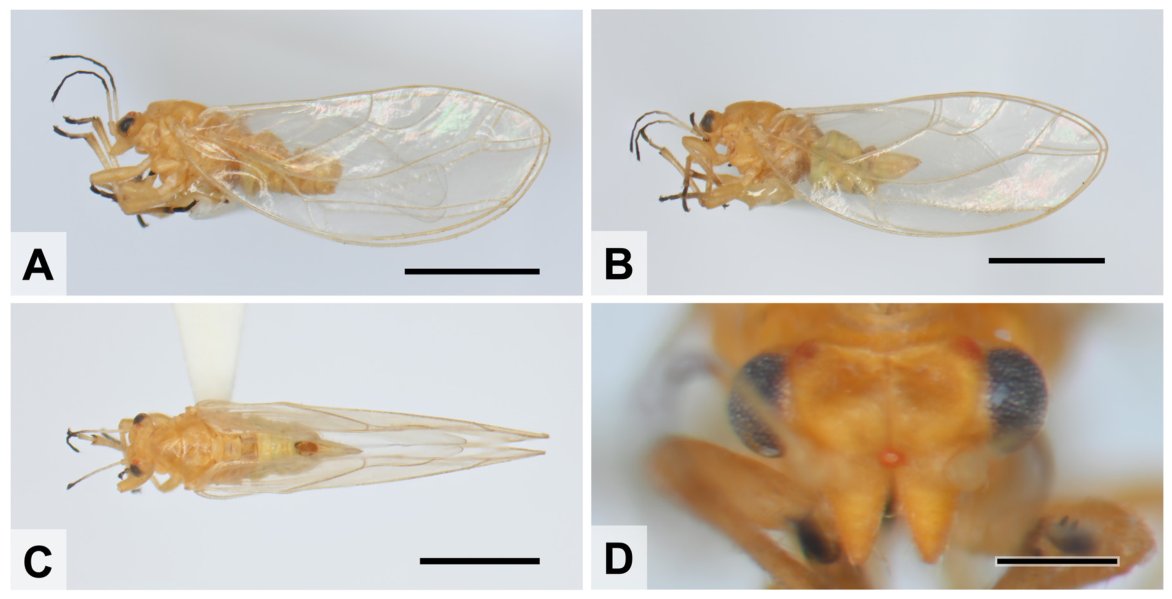
The first paper has been published in the Special Issue "#Taxonomy of #Psylloidea" ๐Ÿ‘‰A New #Trioza Species (#Hemiptera: #Triozidae) from Japan Associated with #Urtica (#Urticaceae) brnw.ch/21x3dKC #mdpiinsects #COI #DNAbarcoding #newspecies #phylogeny #psyllid
5
7
1,463
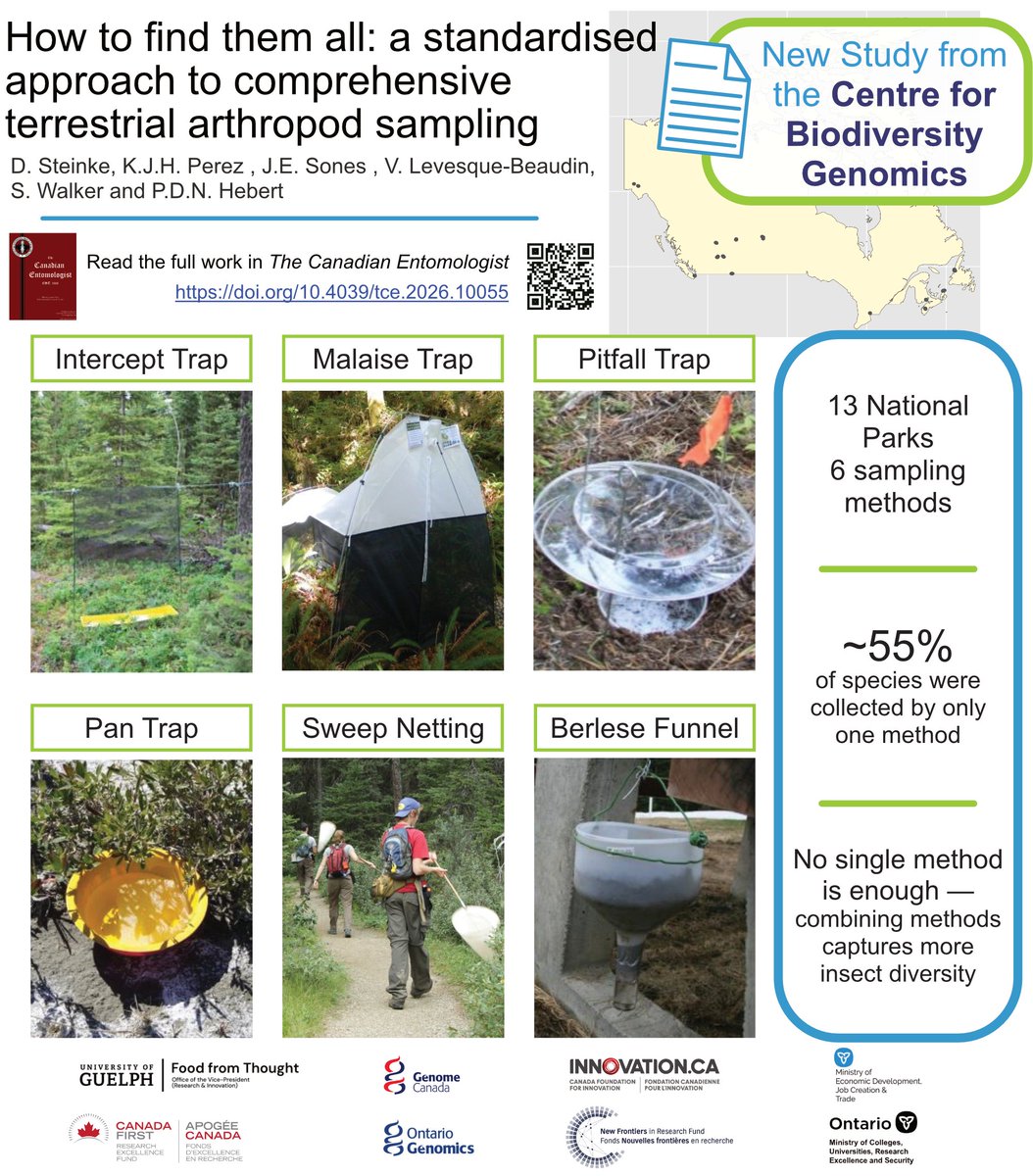
How do we find them all? A new CBG study tested six arthropod sampling methods across 13 Canadian national parks. About 55% of detected species were collected by only one method, showing why no single trap is enough. Read: doi.org/10.4039/tce.2026.100โ€ฆ #Biodiversity #DNAbarcoding
3
11
674
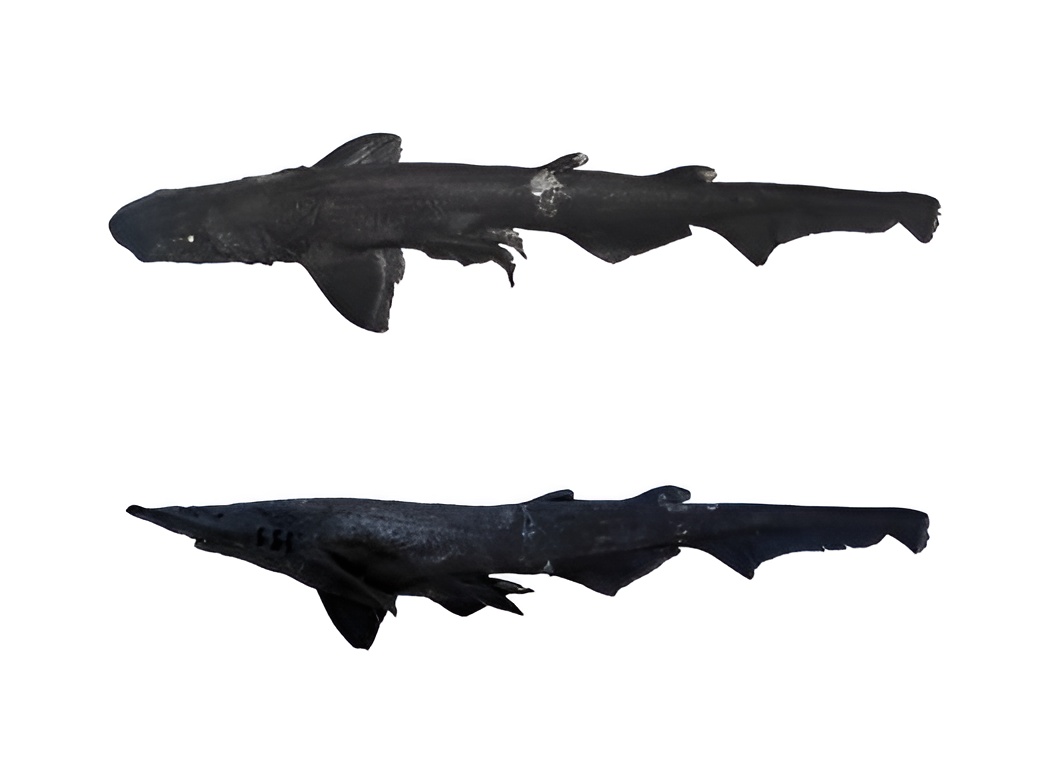
#NewSpeciesAlert - ๐ด๐‘๐‘Ÿ๐‘–๐‘ ๐‘ก๐‘ข๐‘Ÿ๐‘ข๐‘  ๐‘‘๐‘Ÿ๐‘œ๐‘›๐‘Ž, a new species of deepwater catshark (Pentanchidae), is described from specimens collected off the Kollam slope, southwest coast of India, at a depth of 400โ€“650 m. This new species is placed in the ๐ด๐‘๐‘Ÿ๐‘–๐‘ ๐‘ก๐‘ข๐‘Ÿ๐‘ข๐‘  ๐‘๐‘Ÿ๐‘ข๐‘›๐‘›๐‘’๐‘ข๐‘  subgroup among the three groups divided within the genus ๐ด๐‘๐‘Ÿ๐‘–๐‘ ๐‘ก๐‘ข๐‘Ÿ๐‘ข๐‘ . ๐Ÿ”’ mapress.com/zt/article/view/โ€ฆ ๐—ฅ๐—ฒ๐˜€๐—ฒ๐—ฎ๐—ฟ๐—ฐ๐—ต ๐—ง๐—ถ๐˜๐—น๐—ฒ DNA barcoding reveals a new species of deepwater catshark of the genus ๐ด๐‘๐‘Ÿ๐‘–๐‘ ๐‘ก๐‘ข๐‘Ÿ๐‘ข๐‘  (Chondrichthyes: Pentanchidae) from India, in the Southeastern Arabian Sea ๐—–๐—ถ๐˜๐—ฎ๐˜๐—ถ๐—ผ๐—ป Beura, S., K.k, B. & Banerjee, D. (2026) DNA barcoding reveals a new species of deepwater catshark of the genus ๐ด๐‘๐‘Ÿ๐‘–๐‘ ๐‘ก๐‘ข๐‘Ÿ๐‘ข๐‘  (Chondrichthyes: Pentanchidae) from India, in the Southeastern Arabian Sea. Zootaxa, 5828 (2), 303โ€“317. doi.org/10.11646/zootaxa.582โ€ฆ ๐—”๐—ฏ๐˜€๐˜๐—ฟ๐—ฎ๐—ฐ๐˜ This article provides a description of a new species of a catshark of the family Pentanchidae, ๐ด๐‘๐‘Ÿ๐‘–๐‘ ๐‘ก๐‘ข๐‘Ÿ๐‘ข๐‘  ๐‘‘๐‘Ÿ๐‘œ๐‘›๐‘Ž sp. nov. based on 4 specimens, which include two males and two females ranging from 439โ€“473 mm TL, collected off the Kollam slope, Southwest coast of India, at a depth of 400โ€“650 m. This new species is placed in the ๐ด๐‘๐‘Ÿ๐‘–๐‘ ๐‘ก๐‘ข๐‘Ÿ๐‘ข๐‘  ๐‘๐‘Ÿ๐‘ข๐‘›๐‘›๐‘’๐‘ข๐‘  subgroup among the three groups divided within the genus ๐ด๐‘๐‘Ÿ๐‘–๐‘ ๐‘ก๐‘ข๐‘Ÿ๐‘ข๐‘  and is characterized by the following features: slender body, tapering posteriorly; nostril length is smaller than internarial width; pre-outer nostril length shorter than interorbital space; pre-outer nostril length 3.7(3.5โ€“5.2) % TL; pre-oral length shorter than the mouth width, 33.6(31.7โ€“34.0)% head length and 8.1(7.1โ€“8.1)% TL; nostril-mouth space shorter than nostril length, about 0.4 (0.3โ€“0.4) times; upper labial furrows longer than the lowers furrows; internarial width slightly greater than or equal to orbit length, about 1.09(1.0โ€“1.11) times; 5th gill slit height smallest, about 46.8(46.8โ€“62.5)% eye length; Inter-dorsal space 9.3(8.8โ€“10.5) % TL; first dorsal fin smaller than the second dorsal fin; first dorsal fin insertion is opposite to anal fin origin; anal fin base length is greater than pectoral-pelvic space and pelvic-anal space; pectoral to pelvic space greater than pelvic to anal space; spiral valve turns 11โ€“12; total vertebrae 105โ€“115. ๐ด๐‘๐‘Ÿ๐‘–๐‘ ๐‘ก๐‘ข๐‘Ÿ๐‘ข๐‘  ๐‘‘๐‘Ÿ๐‘œ๐‘›๐‘Ž sp. nov. is also distinguished from its congeners based on DNA sequence divergence of the COI gene. This new species has a distribution along the Kollam slope, Arabian Sea, whereas its three closest congeners, based on a molecular level, are from distant locations: ๐ด. ๐‘›๐‘Ž๐‘ฆ๐‘Ž๐‘˜๐‘Ž๐‘– from Southwestern Pacific Ocean, ๐ด. ๐‘š๐‘Ž๐‘๐‘Ÿ๐‘œ๐‘Ÿโ„Ž๐‘ฆ๐‘›๐‘โ„Ž๐‘ข๐‘  from Northwest Pacific and ๐ด. ๐‘’๐‘ฅ๐‘ ๐‘Ž๐‘›๐‘”๐‘ข๐‘–๐‘  from New Zealand. ๐—ฃ๐—ต๐—ผ๐˜๐—ผ ๐—–๐—ฟ๐—ฒ๐—ฑ๐—ถ๐˜ Cover image for study - ๐ด๐‘๐‘Ÿ๐‘–๐‘ ๐‘ก๐‘ข๐‘Ÿ๐‘ข๐‘  ๐‘‘๐‘Ÿ๐‘œ๐‘›๐‘Ž. ยฉ 2026 the Author(s). Published in the journal Zootaxa. #NewSpecies #Ichthyology #Taxonomy #Biodiversity #Apristurus #Chondrichthyes #Pentanchidae #India #Sharks #Catshark #DeepWater #Ocean #ArabianSea #CatSharks #KollamSlope #DNABarcoding
19
77
1,732
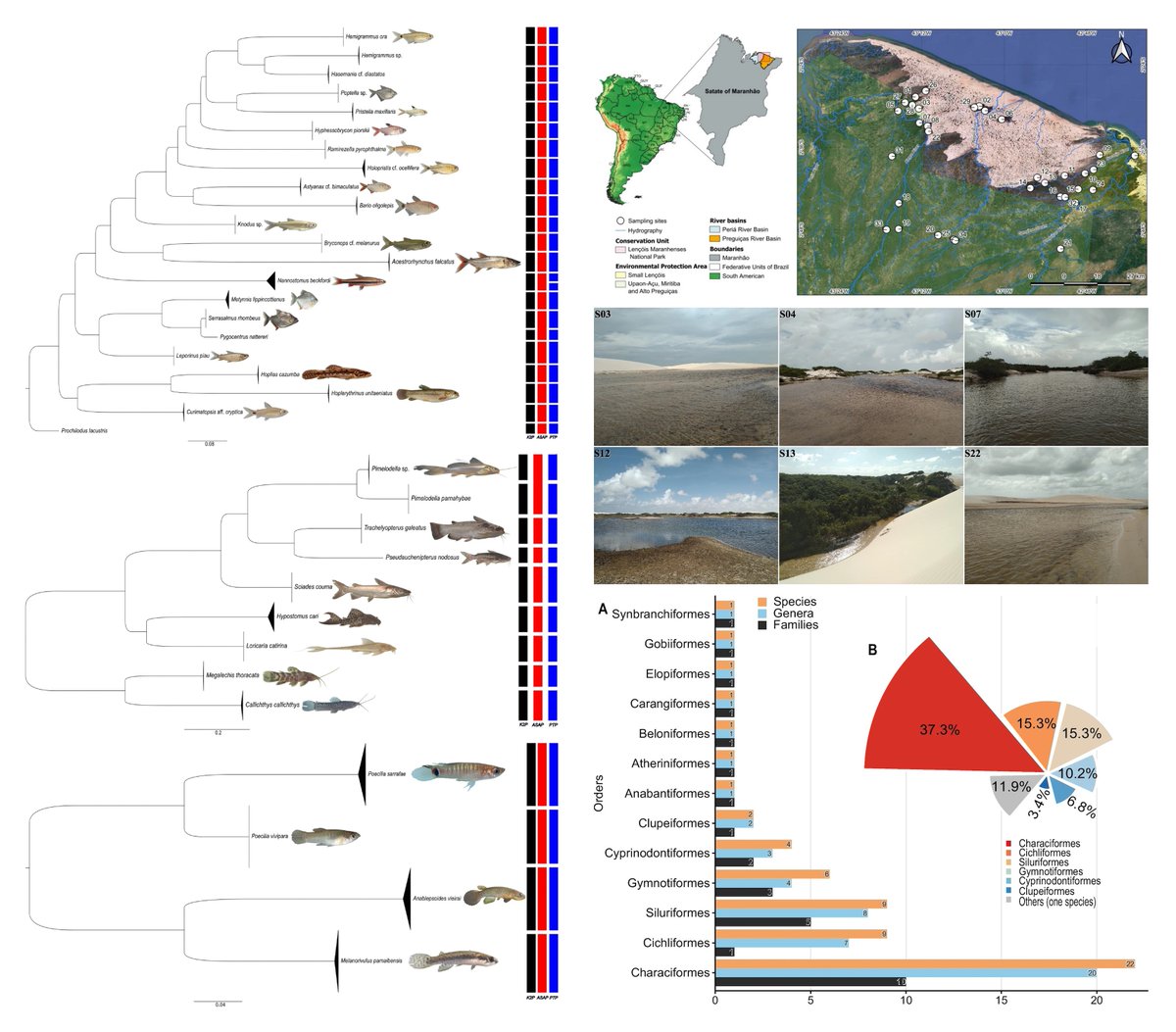
#IchthyofaunaChecklist - Researchers in this study produced a database of the ichthyofauna for Parque Nacional dos Lenรงรณis Maranhenses and adjacent areas in northeastern Brazil by integrating molecular and morphological data, enabling a revision of the ichthyofauna, including nomenclatural updates and correct identifications. Studies like this are essential for conservation strategies, providing critical baselines for the conservation and management of regional fish fauna. Accurate species identification is a challenge in megadiverse regions, where morphology alone can lead to overestimation or underestimation of biodiversity. In this context, the incorporation of molecular approaches, such as DNA barcoding, has been useful for accurately estimating regional biodiversity, revealing cryptic diversity, and enabling non-specialists to identify species. "results show that the diversity of some genera has been underestimated in previous studies (e.g. ๐ธ๐‘–๐‘”๐‘’๐‘›๐‘š๐‘Ž๐‘›๐‘›๐‘–๐‘Ž Jordan & Evermann, 1896, with three instead of one species previously recorded from PNLM and adjacent areas), while other genera had their diversities overestimated (e.g. ๐ต๐‘Ÿ๐‘ฆ๐‘๐‘œ๐‘›๐‘œ๐‘๐‘  Kner, 1858, with one instead of two species, although two morphotypes are recognized) (other examples can be found in Table 2), and are discussed below." "Previous studies recorded 60 fish species in PNLM and adjacent areas, and some of these previously recorded species had their identifications revised in the present study...... Consequently, this study expands the known ichthyofaunal diversity of the PNLM and its surrounding areas to a total of 70 species." Ichthyofauna checklists and rapid assessments are important tools for biologists, researchers, conservationists, and government bodies/NGOs. They provide critical baselines for the conservation and management of regional fish fauna. Our understanding of species composition in a territory evolves due to species movements across borders, extinctions, introductions, and new taxonomic evidence. ๐—ฅ๐—ฒ๐˜€๐—ฒ๐—ฎ๐—ฟ๐—ฐ๐—ต ๐—ง๐—ถ๐˜๐—น๐—ฒ Unveiling fish diversity in the Parque Nacional dos Lenรงรณis Maranhenses and adjacent areas through DNA barcoding, Northeastern Brazil Open-access - link.springer.com/article/10โ€ฆ ๐—–๐—ถ๐˜๐—ฎ๐˜๐—ถ๐—ผ๐—ป de Oliveira Vieira, L., Kuranaka, M., Garcia-Ayala, J.R. et al. Unveiling fish diversity in the Parque Nacional dos Lenรงรณis Maranhenses and adjacent areas through DNA barcoding, Northeastern Brazil. Biologia 81, 142 (2026). doi.org/10.1007/s11756-026-0โ€ฆ ๐—”๐—ฏ๐˜€๐˜๐—ฟ๐—ฎ๐—ฐ๐˜ Accurate species identification is a challenge in megadiverse regions, where morphology alone can lead to overestimation or underestimation of biodiversity. In this context, the incorporation of molecular approaches, such as DNA barcoding, has been useful in accurately estimating regional biodiversity, revealing cryptic diversity, and enabling identification by non-specialists. This study generated a molecular database of fishes for Parque Nacional dos Lenรงรณis Maranhenses and adjacent areas, based on sequences of the mitochondrial cytochrome c oxidase subunit I (COI) gene. Haplotype analyses were conducted using Maximum likelihood (ML), and the delimitation of Operational Taxonomic Units (OTUs) combined the following methods: Kimura 2-parameter model (K2P), Assemble Species by Automatic Partitioning (ASAP) and Poisson Tree Processes (PTP) methods, using K2Pโ€‰โ‰ฅโ€‰2% to resolve cases of incongruence between ASAP and PTP. A total of 59 species were recorded, distributed across 51 genera, 29 families, and 13 orders. In total, 258 sequences were analyzed (Two hundred and fifty-three generated in this study and five additional from GenBank), corresponding to the 59 species. K2P genetic distances revealed a clear separation between intraspecific and interspecific variation, with maximum and minimum values of 1.78% and 3.63%, respectively, resulting in a barcoding gap of 1.85% without overlap, demonstrating the high efficiency of the COI marker in species discrimination. Five new records for the area were identified, including two non-native species. The integration of molecular and morphological data enabled a revision of the ichthyofauna, including nomenclatural updates and the correction of identifications. These findings are essential for conservation strategies. ๐—ฃ๐—ต๐—ผ๐˜๐—ผ ๐—–๐—ฟ๐—ฒ๐—ฑ๐—ถ๐˜ See study Figures for details. ยฉ 2026 the Author(s). Published in the journal Biologia. An open access article, distributed under the terms of the Creative Commons Attribution 4.0 International (CC-BY-4.0) licence. creativecommons.org/licensesโ€ฆ #Ichthyofauna #Brazil #Ichthyology #Taxonomy #Biodiversity #AquariumHobby #Fishkeeping #Aquarist #TropicalFish #DNABarcoding #ConservationStrategies #Conservation #FreshwaterConservation #Freshwater
8
33
1,113
The #iBOL2026 abstract deadline has been extended. Submit your oral or poster abstract by July 12, 2026 and present your research in Bangkok. 2โ€“6 November 2026 dnabarcodingconference.com #DNAbarcoding #BiodiversityGenomics
2
54
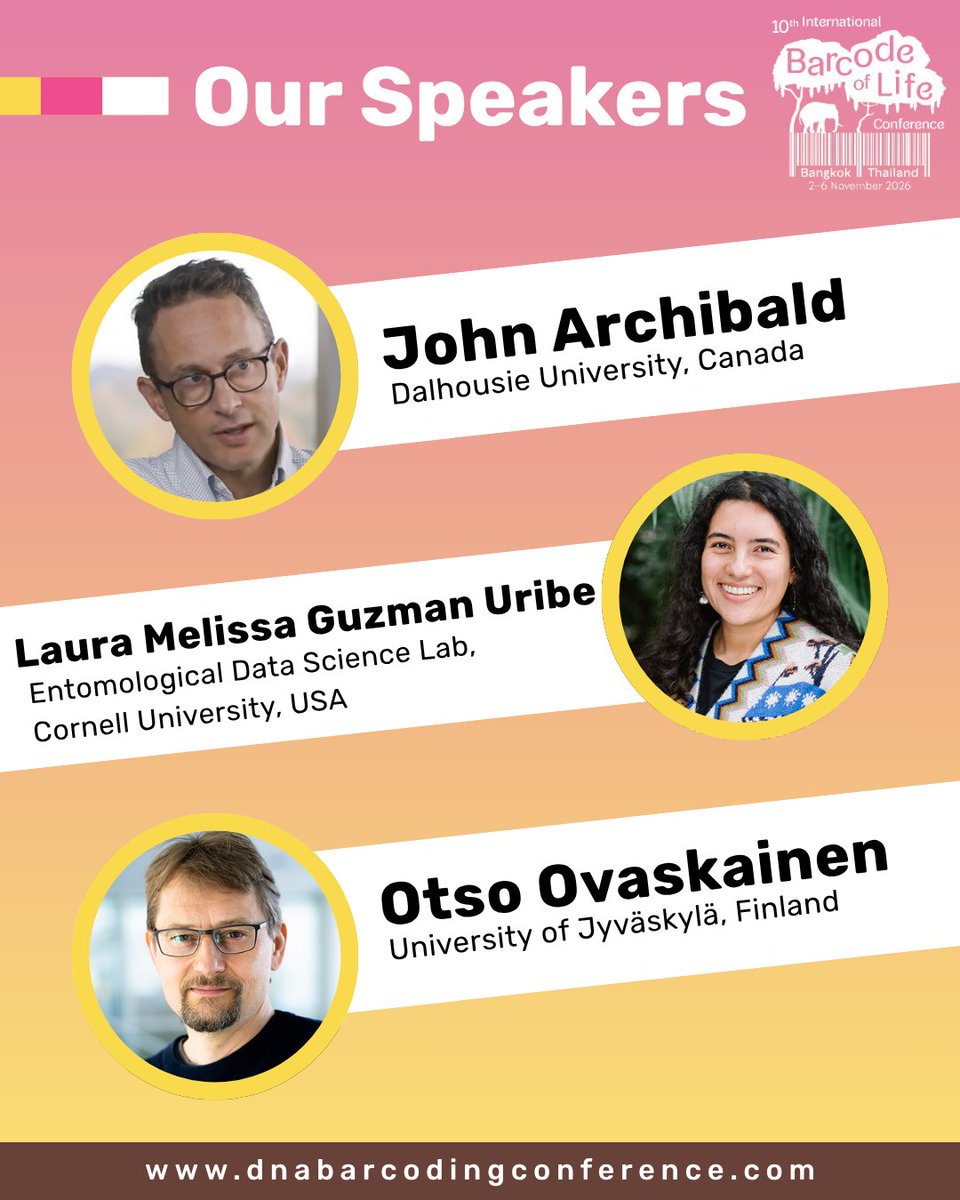
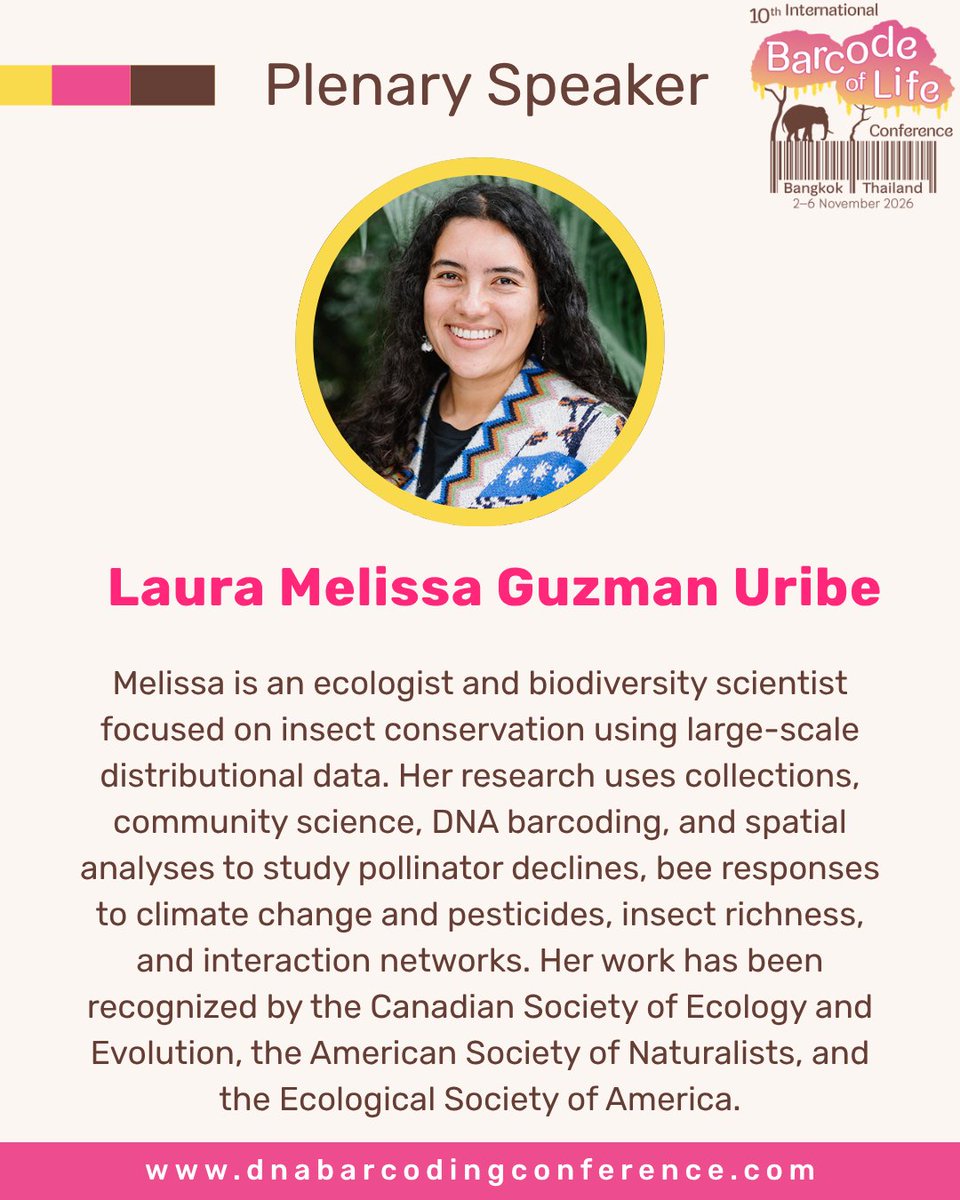
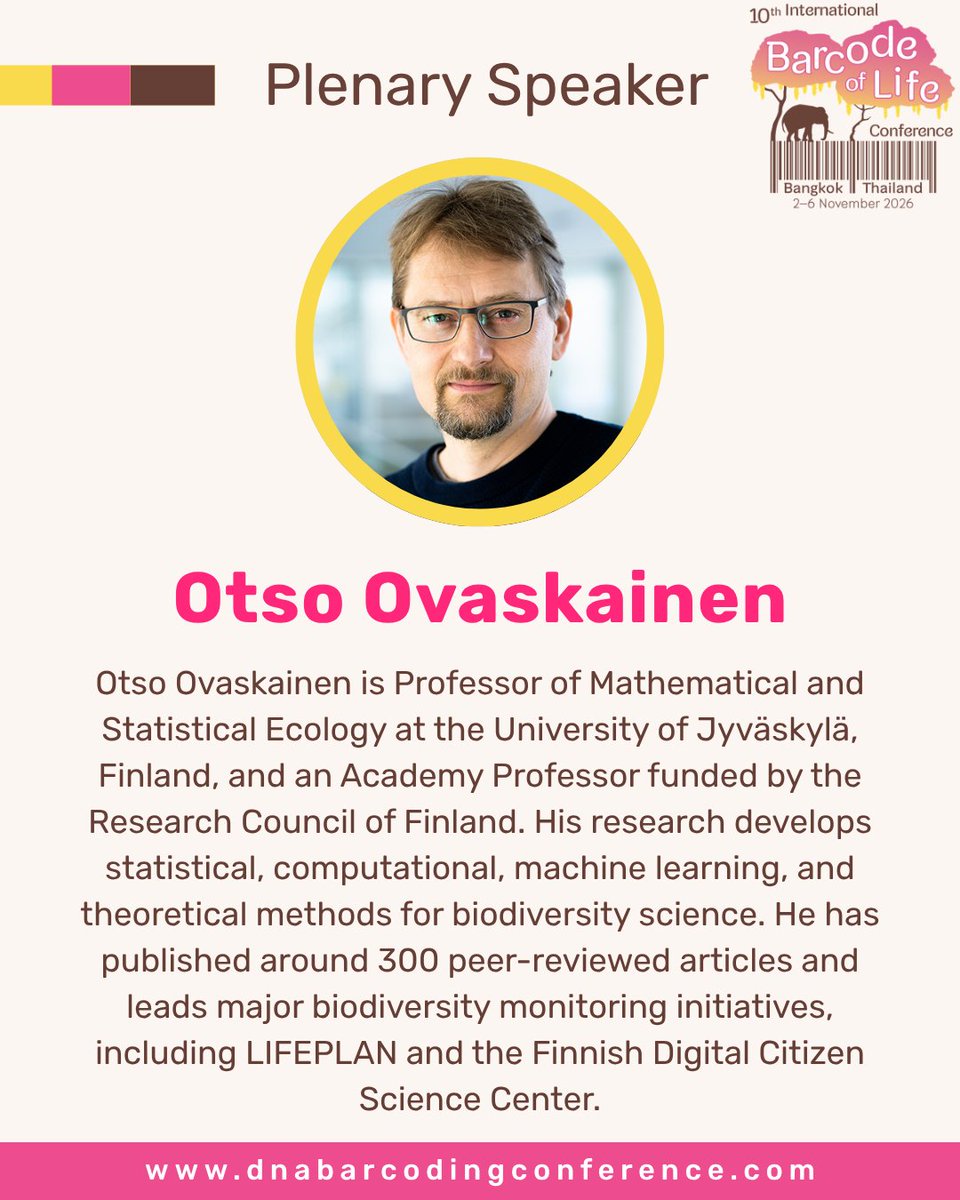
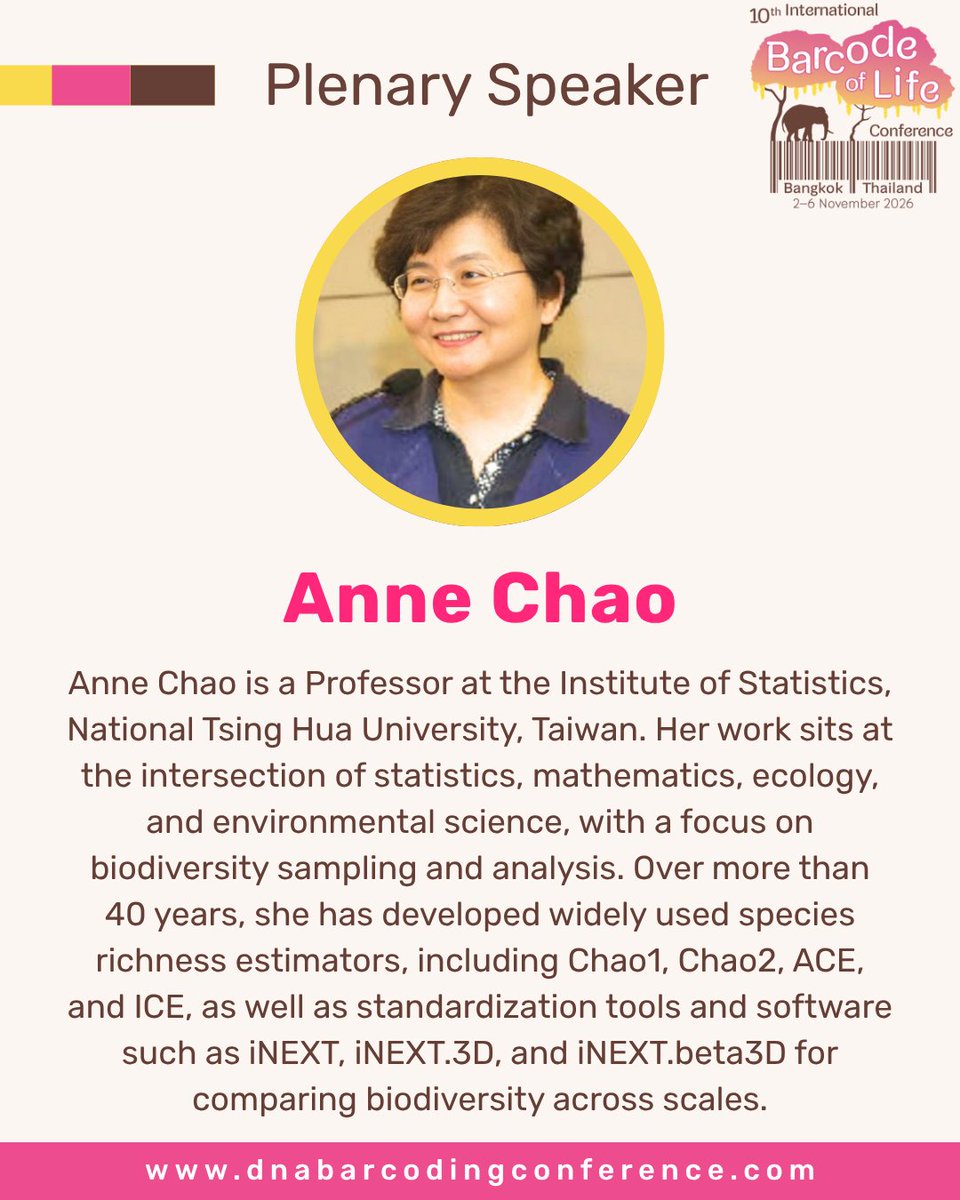
Speaker spotlight for #iBOL2026! Meet three more plenary speakers joining us in Bangkok: John Archibald, Laura Melissa Guzman Uribe, and Otso Ovaskainen. 2โ€“6 November 2026 dnabarcodingconference.com #DNAbarcoding #BiodiversityGenomics
2
73
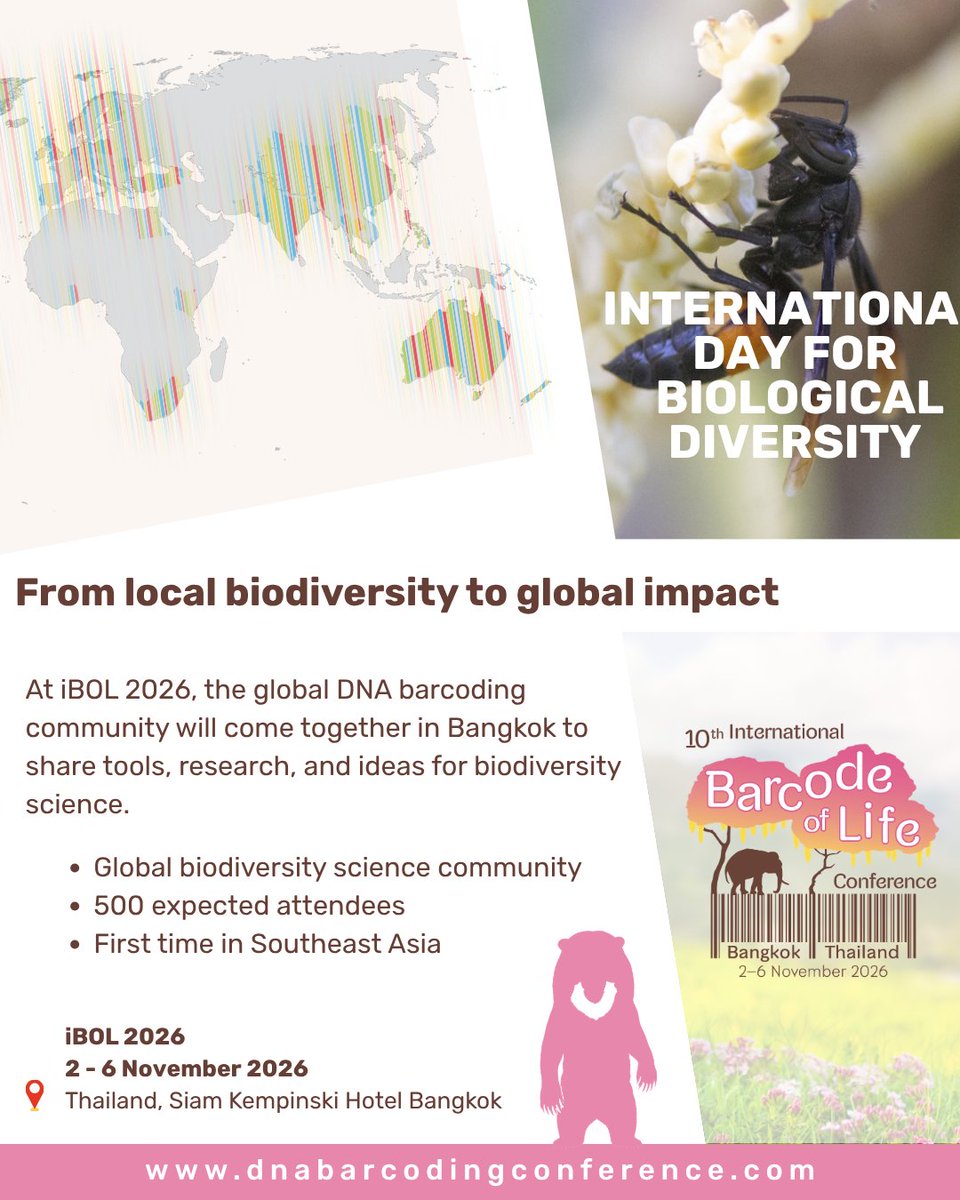
This International Day for Biological Diversity, CBG is highlighting how DNA barcoding, metabarcoding, and eDNA connect local biodiversity discoveries to global science. Looking ahead to iBOL 2026 in Bangkok. 2โ€“6 Nov 2026 dnabarcodingconference.com #iBOL2026 #DNAbarcoding
2
6
87
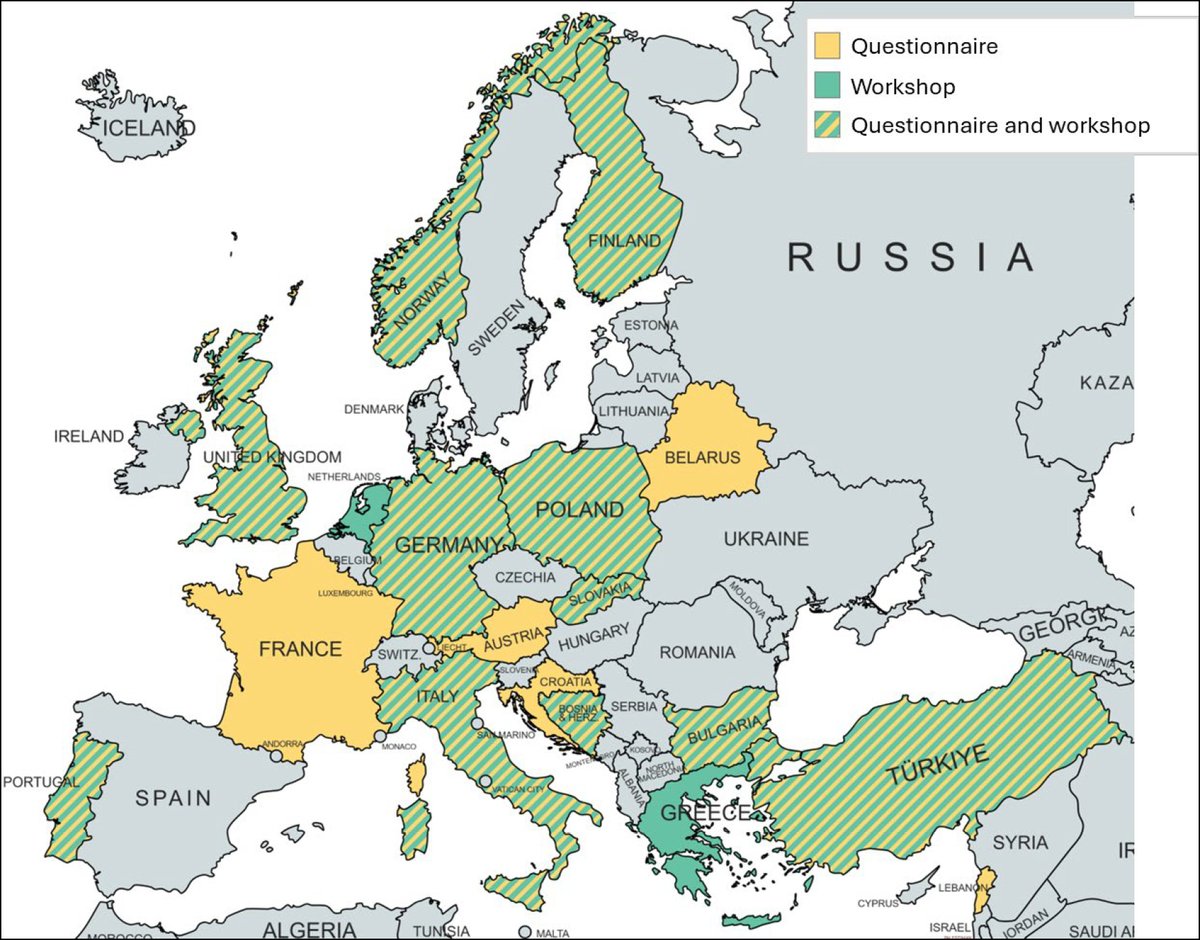
๐ŸงฌOn the International Day for #BiologicalDiversity, researchers have released a blueprint for a global #DNAbarcoding network, drawing on experiences from 20 countries to outline 10 recommendations for building successful national nodes. #OA study here: doi.org/10.3897/mbmg.10.1832โ€ฆ
1
1
5
331
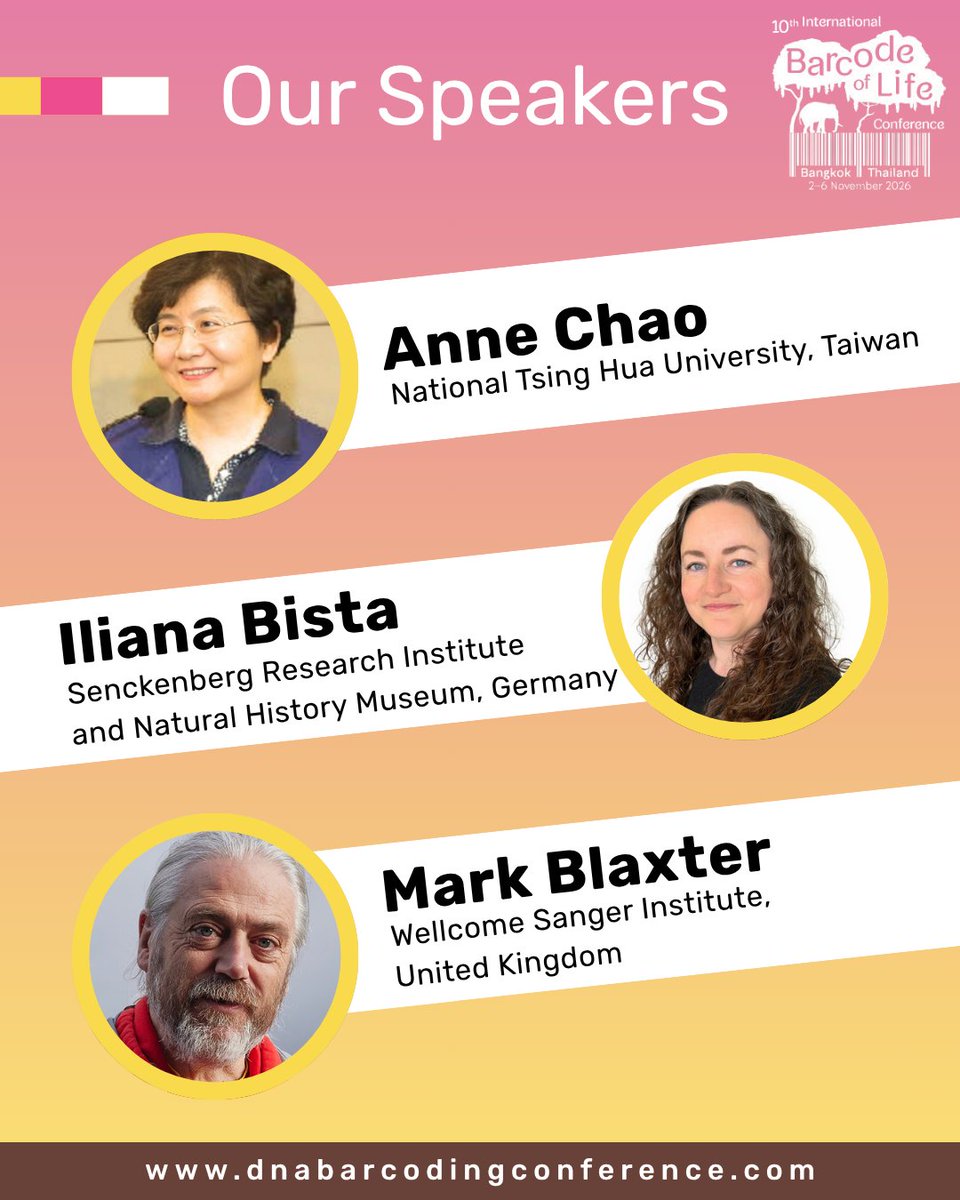
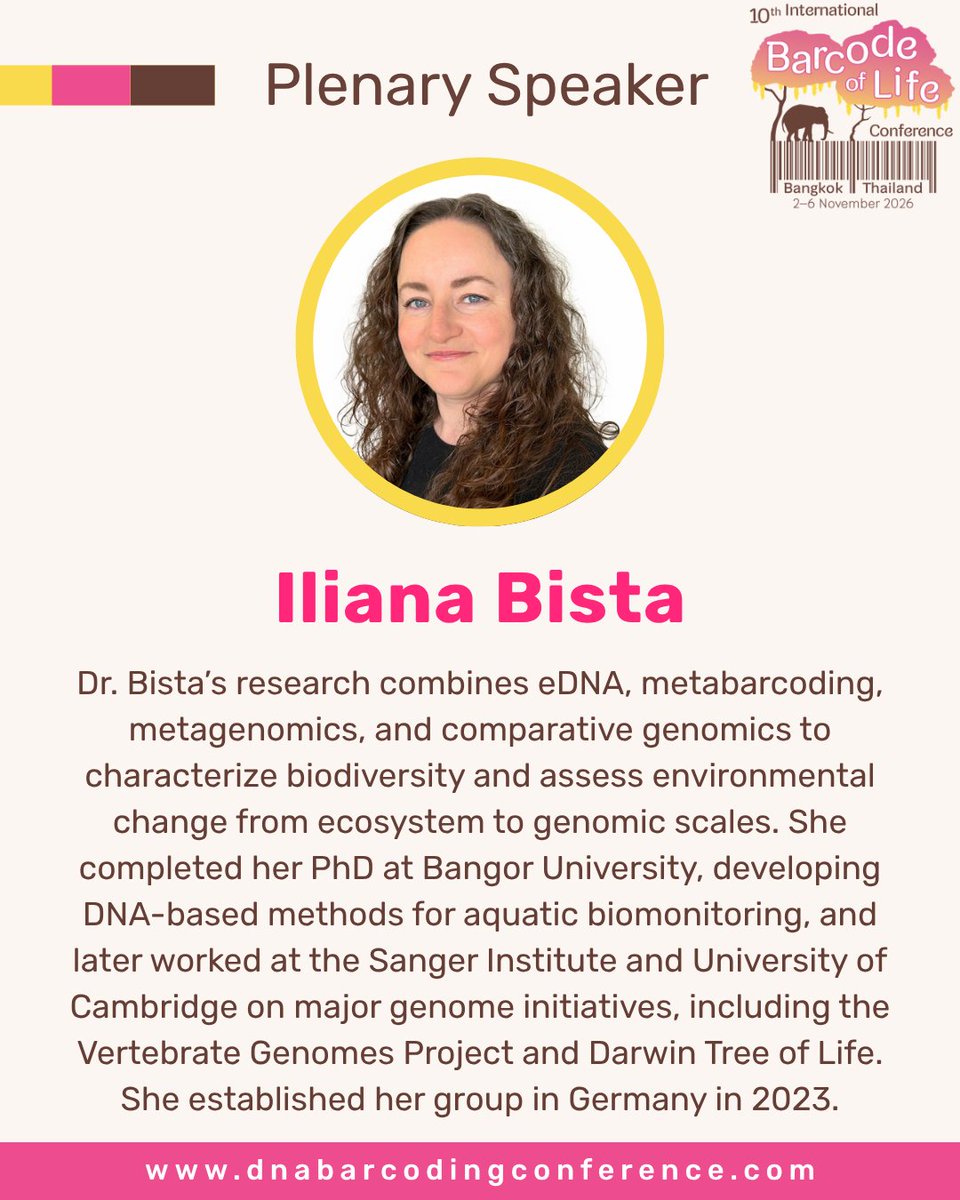
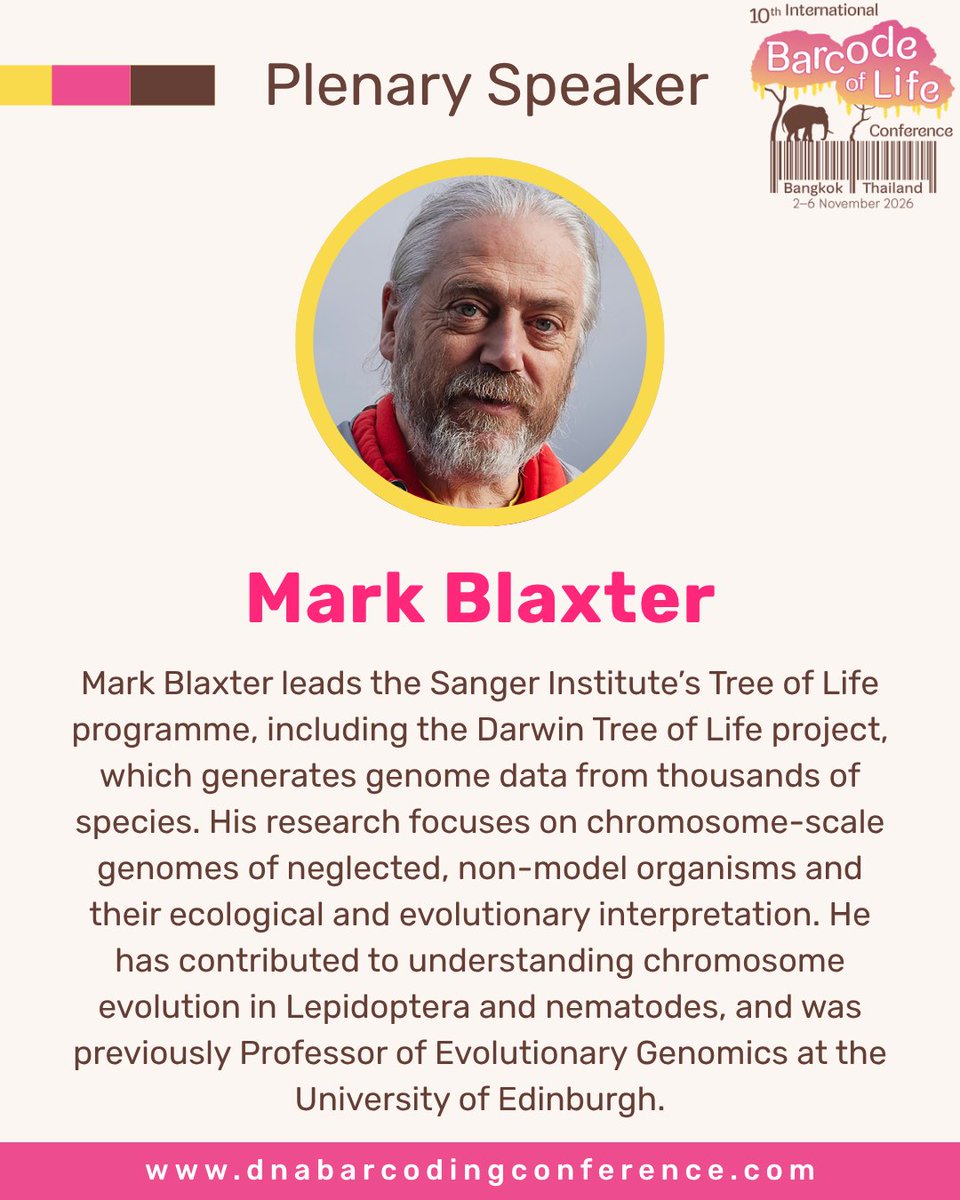
Speaker spotlight for #iBOL2026! Meet three of our plenary speakers: Anne Chao, Iliana Bista, and Mark Blaxter. Join us in Bangkok, Thailand, from 2โ€“6 November 2026 for the 10th International Barcode of Life Conference. dnabarcodingconference.com #DNAbarcoding #BiodiversityGenomics
3
135
#SIF DNA barcoding of Guyana's fungarium IDs 11 new species & 3 new genera, highlighting the value of preserved specimens for biodiversity research. @MaximumAcademic #DNABarcoding #Fungi Details: maxapress.com/article/doi/10โ€ฆ
2
68
The Bulgarian Barcode of Life is launching its new seminar series focused on hot scientific topics of practical and academic importance. The first session begins with a dive into @GBIF. More info: phytokeys.pensoft.net/news/1โ€ฆ #GBIF #DNAbarcoding
3
189
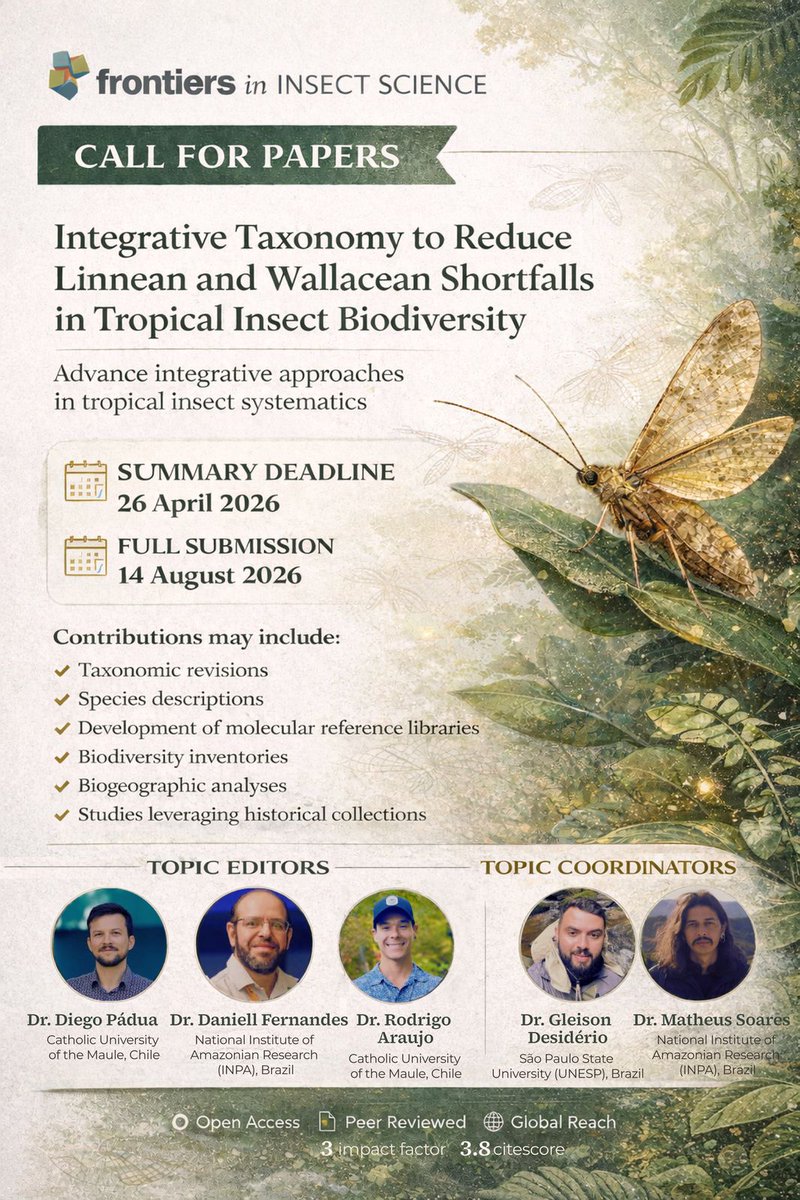
๐Ÿชฒ๐ŸŒ The tropics hold the HIGHEST insect diversity and the BIGGEST knowledge gaps ๐Ÿ“ฃ CALL FOR PAPERS | Frontiers in Insect Science Integrative Taxonomy to Reduce Linnean & Wallacean Shortfalls #IntegrativeTaxonomy #Entomology #Biodiversity #Systematics #DNAbarcoding #Frontiers
4
7
181
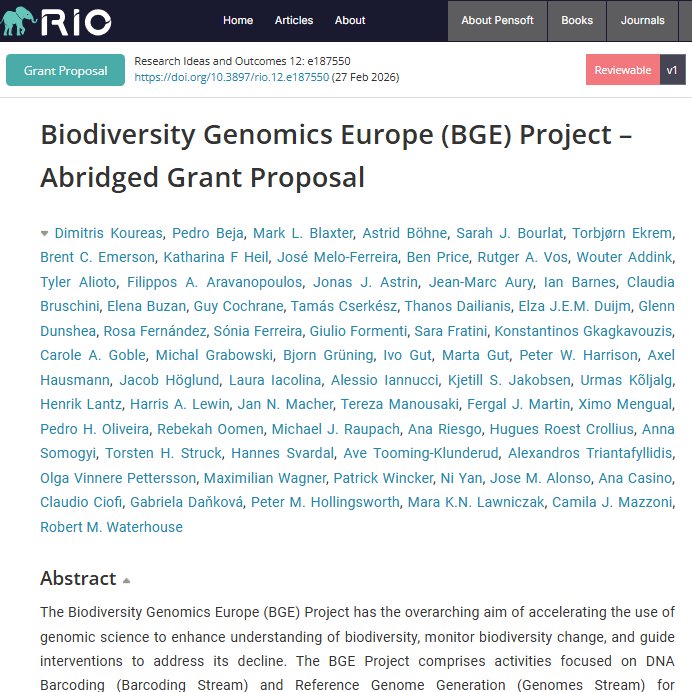
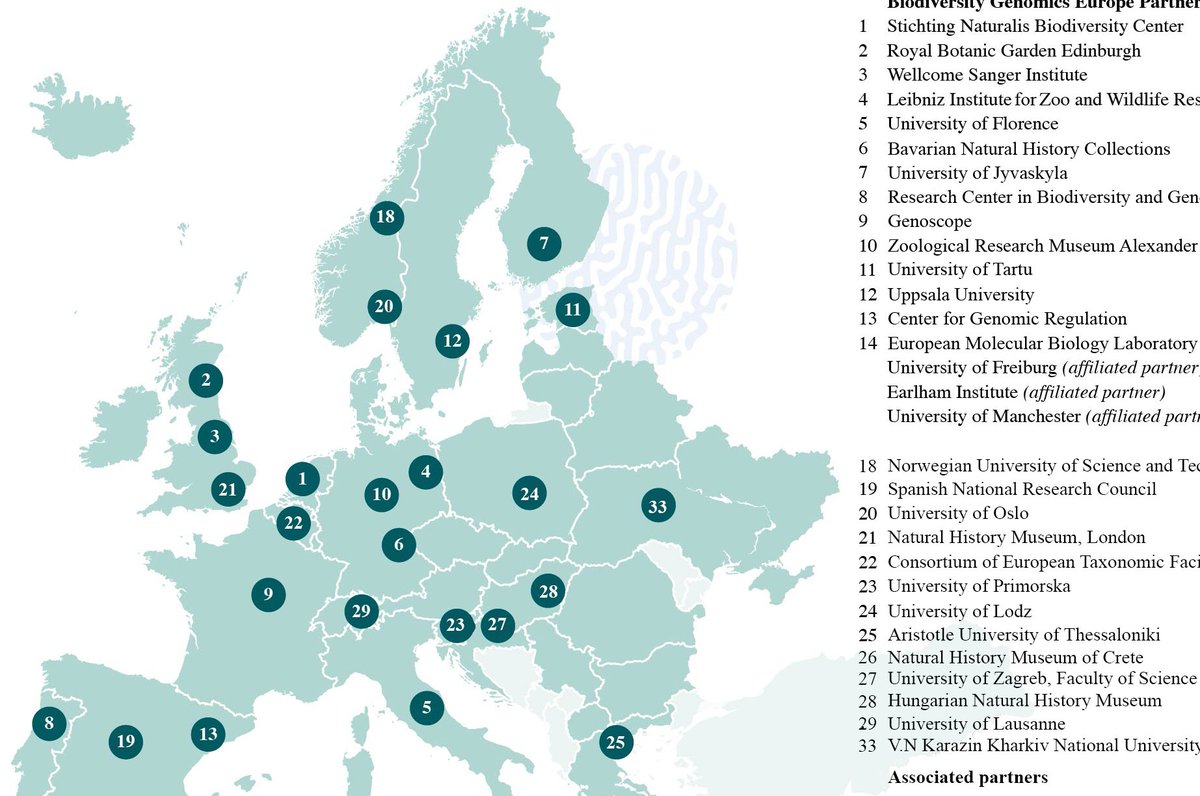
๐Ÿ†•The @BioGenEurope - which now gives way to BGE - represented a landmark in European research collaboration, bringing together the #DNAbarcoding (@iBOLEurope) and #reference #genomes (@erga_biodiv) communities. ๐Ÿ”“Check out the Grant Proposal: doi.org/10.3897/rio.12.e1875โ€ฆ.
1
5
181
A larva of the Lion Fish (Pterois miles) from the Mediterranean Sea. Tunaโ€“TunEMed 2025 survey. Documenting early life stages of an invasive species is key to understanding its spread. #Mediterranean #Ichthyoplankton #LarvalEcology #DNABarcoding
3
9
230
Akdenizโ€™in derinliklerinden bir Aslan BalฤฑฤŸฤฑ (Pterois miles) larvasฤฑ. Orkinosโ€“TunEMed 2025 surveyinden. ฤฐstilacฤฑ bir tรผrรผn en erken evresini belgelemek, yayฤฑlฤฑm dinamiklerini anlamak iรงin kritik. #Mediterranean #Ichthyoplankton #LarvalEcology #DNABarcoding Animated by Veo
2
150
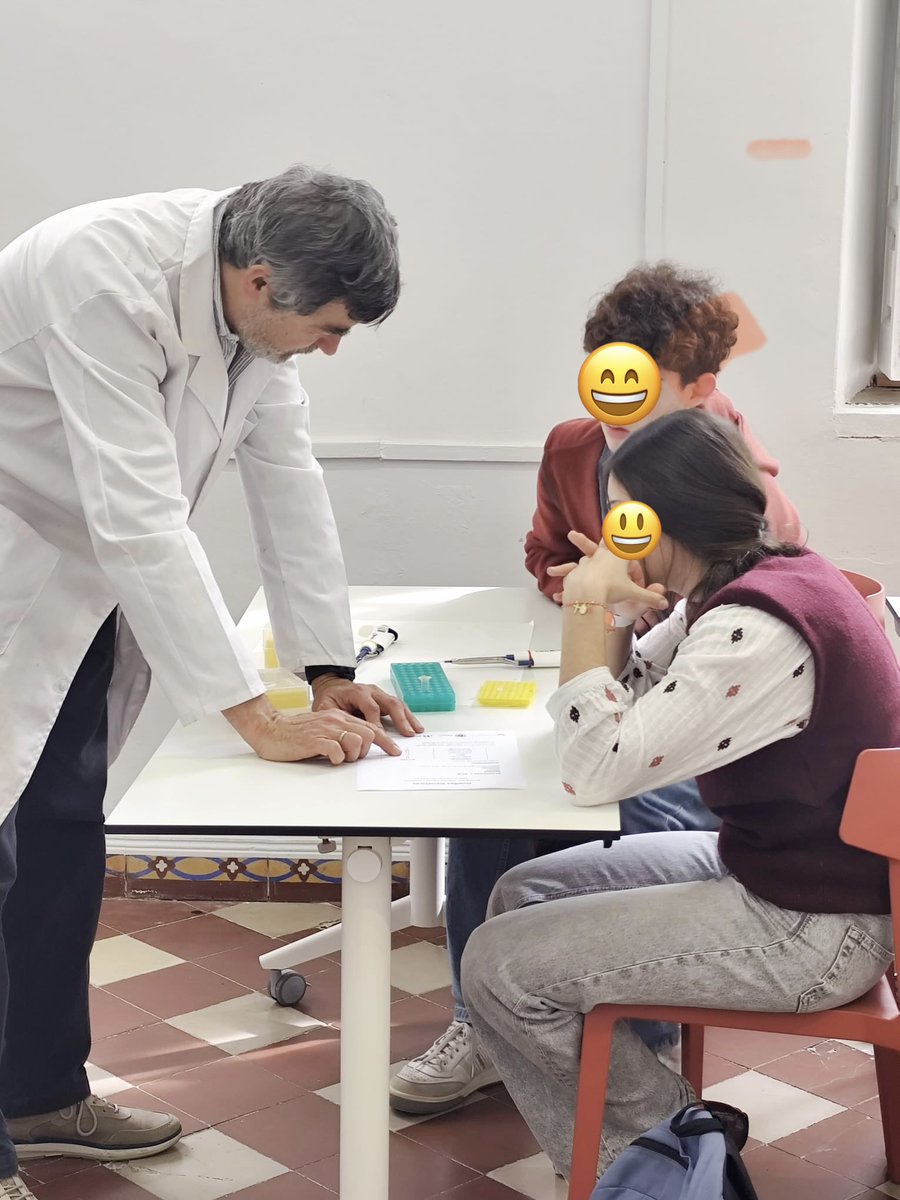
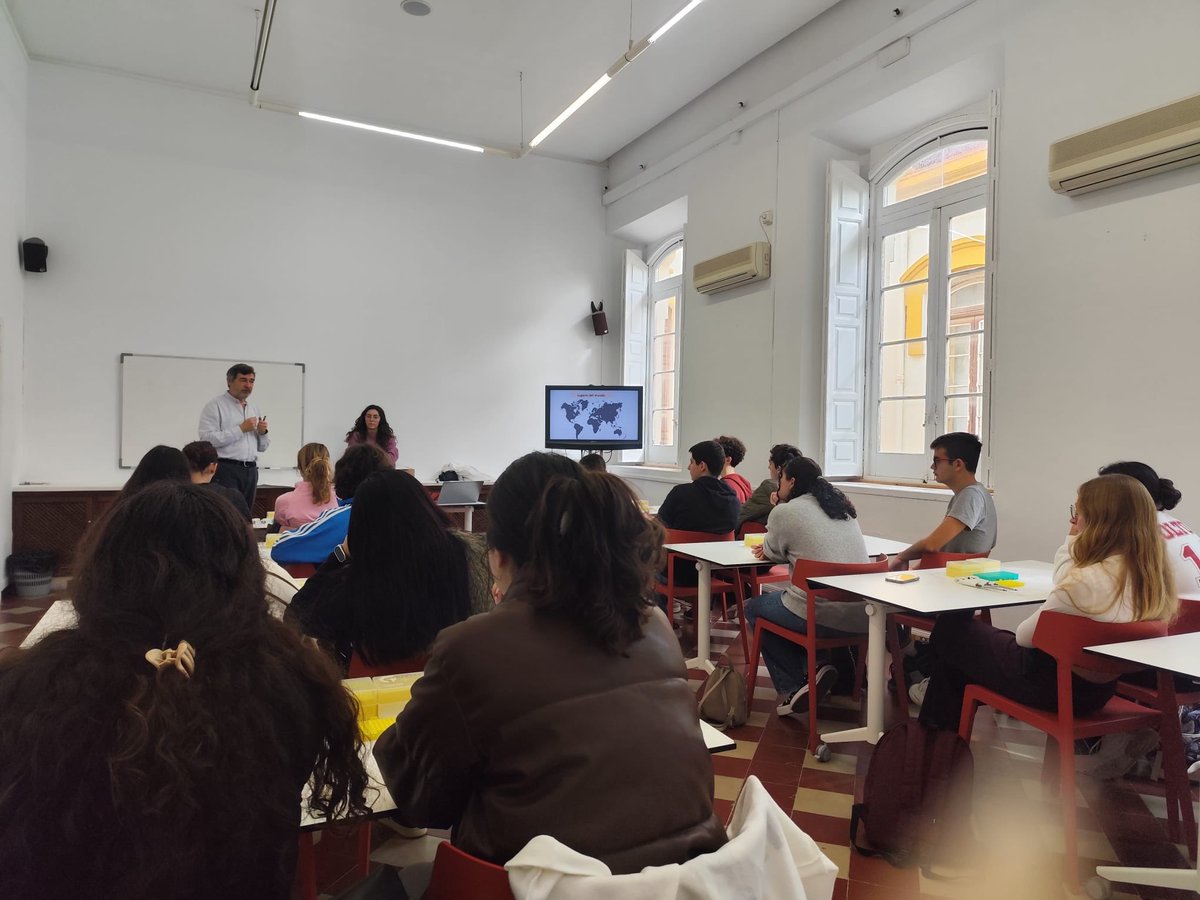
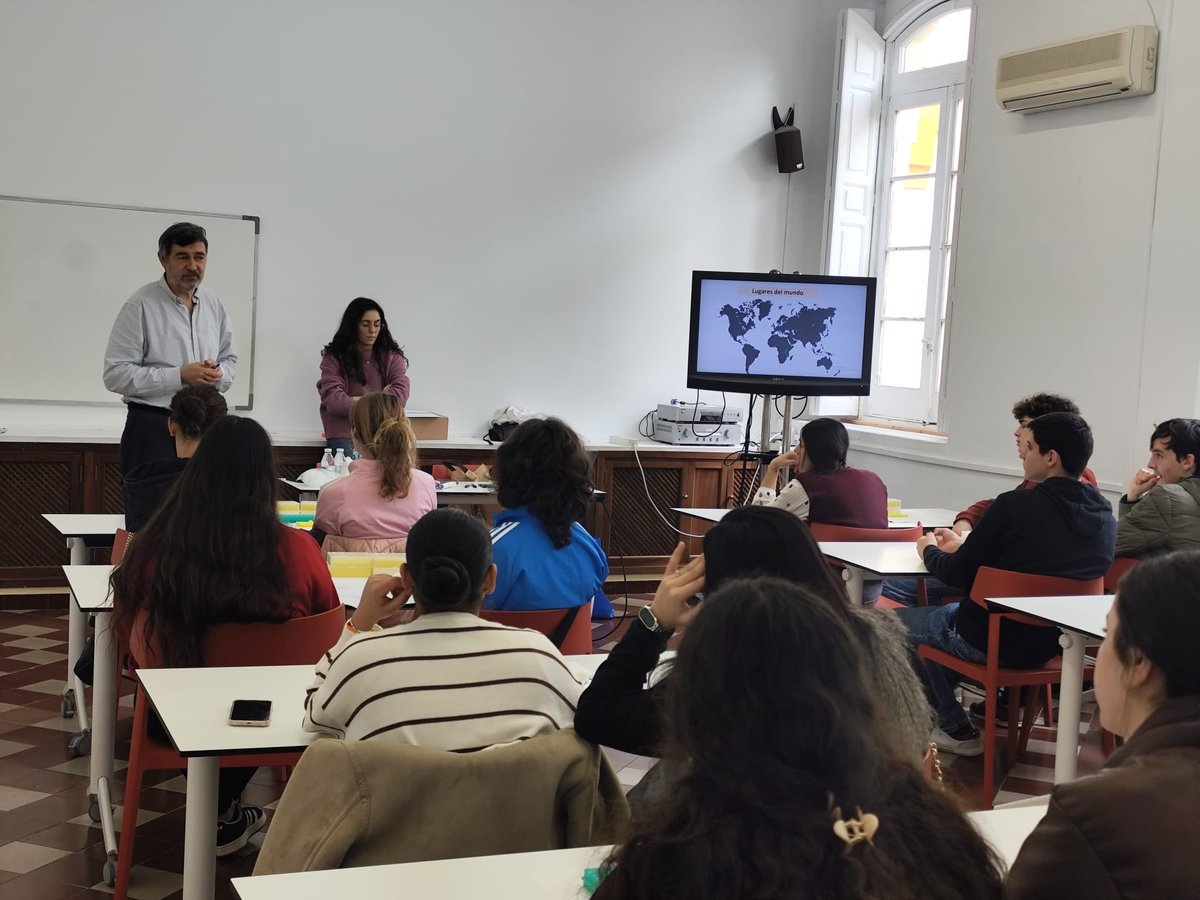
Enseรฑando Genรฉtica #DNABarcoding en el III Congreso Talento, Ciencia y Juventud organizado por @diputacionMLG Talleres @enc_ciencia y Sociedad Malagueรฑa de Astronomรญa. Con @PlanetaExplora @segenetica
5
18
812
Hot off the press! Long-read sequencing for #biodiversity analysis #eDNA #metabarcoding #DNAbarcoding
๐Ÿ“– Published! This review provides an overview of studies to date using long-read sequencing platforms for biodiversity analyses of eukaryotes, from eDNA and community metabarcoding, shotgun sequencing, and DNA barcoding๐Ÿงช ๐Ÿงฌ ๐ŸŒ Read more: buff.ly/iuVV8tc
4
136