
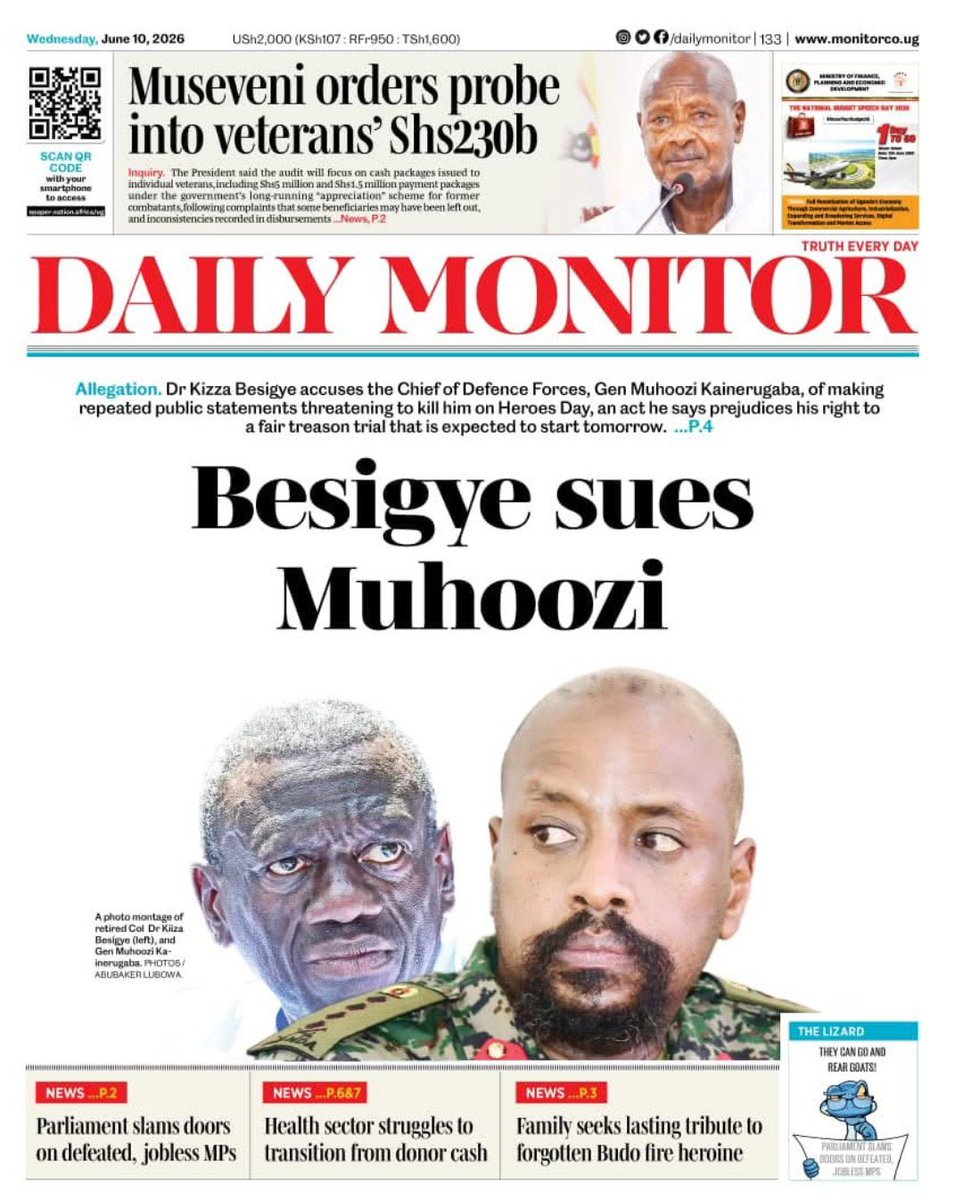
Sir Mario Puzo retweeted
The Prof Muganga case.
In one version, Muganga said he was born in Butalejja in eastern Uganda, while in another version he said he was born in Mukono #MonitorUpdates monitor.co.ug/uganda/magazin…
220
153
1,394
81,095

The problem is @DailyMonitor

Prof. Muganga’s Leadership is in Our Interest
We should actively reject tribal segregation because it weakens institutions, fuels injustice, and undermines both national cohesion and African unity.
A case in point is the reaction from some quarters to the appointment of the Designate Minister of Internal Affairs, @ReachDrMuganga.
It is still surprising that some people find it difficult to accept that a fellow Ugandan can serve in Cabinet simply because of their tribal background. National leadership should be guided by competence, integrity, and service to the country—not ethnicity.
Uganda can only progress when we embrace merit, inclusion, and a shared national identity above tribal divisions.
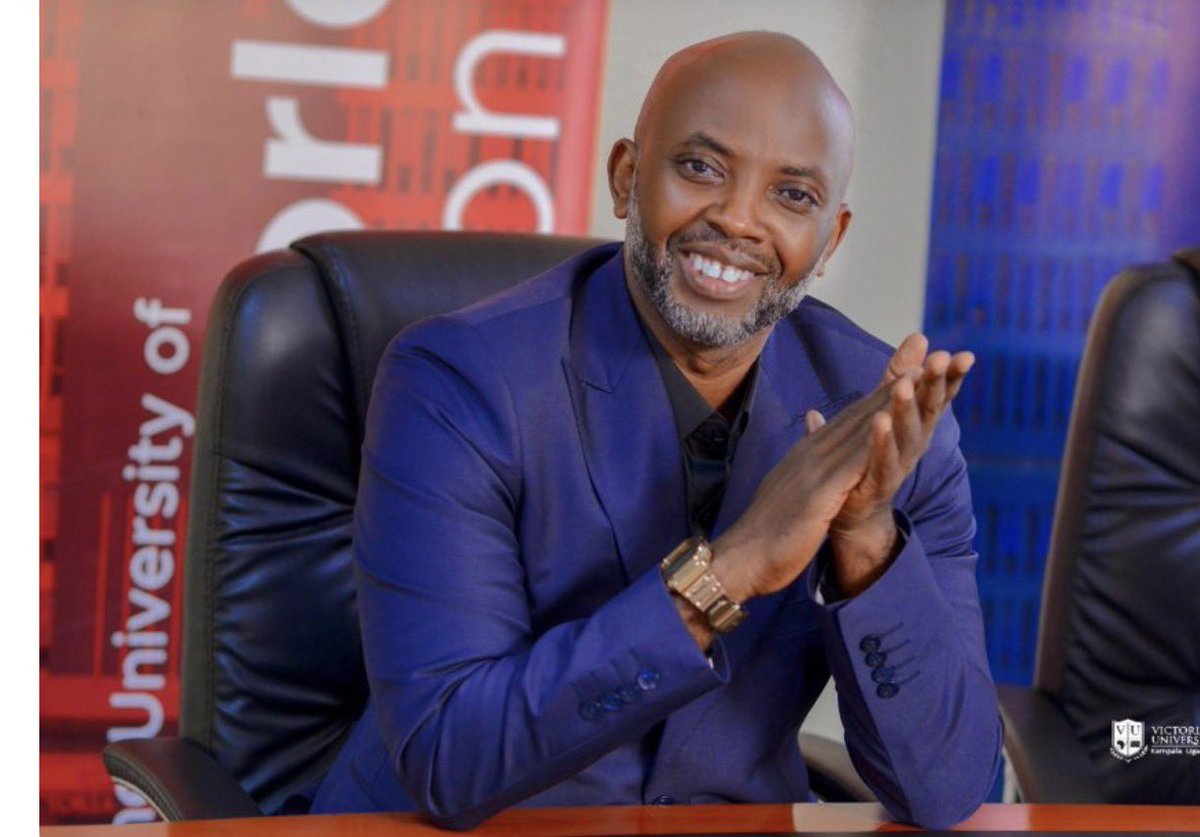
We have a job to do; and with what he has done at @VUKampala and the rest of the education spectrum, and across the Globe; he is a great candidate to sit on the table of national leadership! Kiyamba Ffee (It’s in our favour as Ugandans).

Anena Anna🇺🇬🇰🇪🇧🇻 retweeted
A group of 20 youths on Sunday trekked a 68-kilometre distance from Soroti City to Obalanga Mass Grave, where 360 people were buried after their brutal murder by Joseph Kony rebels on June 15, 2003.
The day is commemorated every June 15.
#MonitorUpdates
📹 Kenneth Odele
9
16
145
14,960


@FreeAllPoliticalPrisoners retweeted

Jun 12
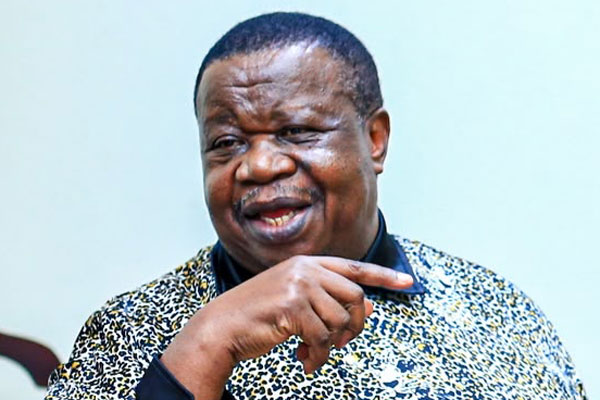
“I have issues with them, the @PoliceUg. Some of them were not listening. You tell them, ‘Don’t do this, don’t do this,’ and later you hear they have gone ahead and done exactly that...You remember, I would call them here and ask, ‘Gentlemen, what happened?’ At one point, they denied me information. What they did not know is that I am an intelligence officer. Everything that was happening, I knew"- @otafiire_k
👉bit.ly/3Sil20A
#MonitorUpdates
41
203
2,160
118,530
On the day @ReachDrMuganga was nominated, @DailyMonitor was the first outlet to say that @ReachDrMuganga was a foreigner who was arrested for spying and now he is being put in charge of ministry which oversees immigrants, passport etc hence the witchunt began.
What is @DailyMonitor’s agenda on Prof @ReachDrMuganga
Daily Monitor’s coverage of Prof Lawrence Muganga is a case study in how even respected newspapers can slide from rigorous reporting into narrative‑driven journalism that undermines both individual dignity and public understanding. It exposes wider structural weaknesses in Uganda’s media environment, where political pressure, commercial incentives, and shallow sourcing often replace the hard work of verification and balance.
From watchdog to storyteller
In the stories and social‑media teasers about Dr Muganga, Daily Monitor repeatedly privileges a ready‑made storyline over careful fact‑finding: the suspect academic whose citizenship and truthfulness are in doubt. Headlines highlight alleged contradictions about his birthplace and insinuations about “multiple citizenship” while giving little prominence to his own evidence, explanations, or the institutional records that could clarify the issue.
This is not an isolated misstep but part of a longer arc in which Monitor and other outlets have framed him primarily through allegations of espionage, foreignness, and political controversy. When the public encounters a person only as a caricature constructed by headlines and partial quotes, journalism stops informing and starts prosecuting.
The manufacturing of suspicion
The core of the Muganga coverage is not an investigation into fact; it is the manufacturing of doubt. One widely shared teaser proclaims that he has given two versions of his birthplace—different districts in Uganda—without explaining the dates, contexts, or precise wording of those statements, nor whether one refers to ancestral origin and the other to actual place of birth. Another piece couples his name with political drama and “tears,” tying him emotionally and symbolically to another controversial figure rather than to his work as an academic and administrator.
Meanwhile, other public accounts present a more consistent picture: Muganga has repeatedly asserted that he is Ugandan by birth and has produced documentation and family testimony to that effect. That evidence appears, if at all, in passing. Instead of asking whether the official citizenship regime is coherent and fair, the coverage often opts for the easier story—“what is he hiding?”—and leaves readers with insinuation in place of knowledge.
Ethnicity as a silent subtext
The reporting on Muganga has unfolded against the backdrop of Uganda’s fraught debates about Banyarwanda/Abavandimwe identity, border politics with Rwanda, and legal questions around dual citizenship. Several stories allude to his ancestry and civic activism on identity issues, hinting that his loyalties and legal status are inherently suspect.
Research on regional media has shown how newspapers in Uganda and Rwanda tend to mirror their national narratives, privileging frames of security threat, political tension, or economic grievance depending on where they are published. In this context, Daily Monitor is nudged toward a storyline where citizens with cross‑border identities are a problem to be managed rather than neighbours and colleagues living within complex historical realities. When a major daily leans on such subtexts without naming and interrogating them, it legitimises quiet xenophobia and invites the public to sit in judgement over someone’s origin rather than their work.
A systemic crisis in Ugandan journalism
This is not only a Daily Monitor problem; it is symptomatic of a media system squeezed from every direction. Ugandan media‑freedom reports have documented how restrictive laws, regulatory overreach, and economic dependency on state‑linked advertising have narrowed the space for independent reporting and encouraged caution and self‑censorship. Press‑freedom indices paint a similar picture, noting the country’s slide down global rankings amid harassment, arrests, and intimidation of journalists.
Olila Steven retweeted
Uganda, DR Congo receive $250,000 boost in Ebola fight bit.ly/4onzMao #MonitorUpdates
5
9
42
4,566

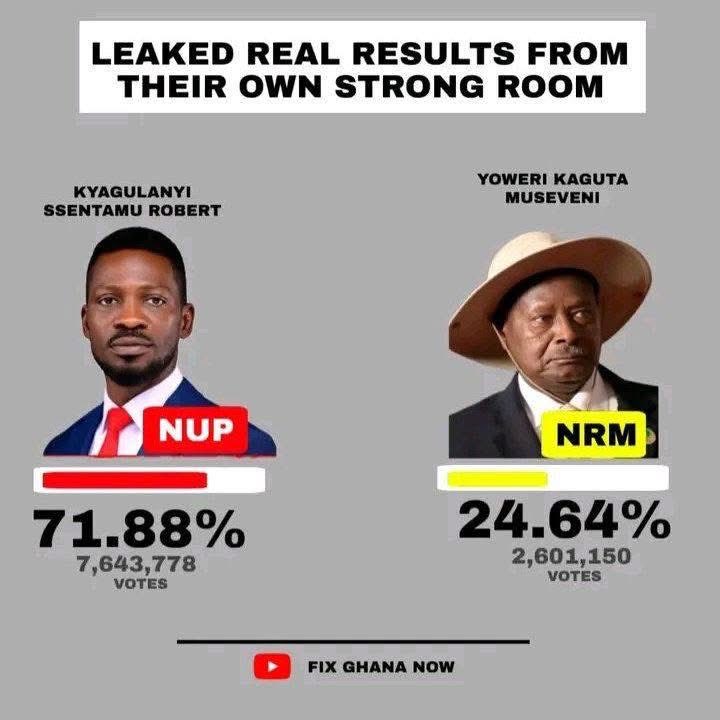
It's an illegitimate government already that can't account for a victory they claim. We expect them to defend their stay by using fellow immigrants like "Mugaga" in any sensitive positions to avoid deportation.
7
Mac M Kiyimba (Daddy Mac) retweeted
Jun 12
VIDEO: “What caused me discomfort was that the contractor is willing to finish in 2028. In the current Uganda, I’ve never seen a road contract running for eight years; I can’t allow it. Projects are delaying because there are many big people in government eating from them,” the new Minister of Works and Transport, Fred Byamukama, said on Friday, while setting March 2027 as the deadline for completion of the Mityana–Mubende Road and warning Serbian contractor EnergoProjekt that the contract could be terminated if progress does not improve.
📹Ibrahim Kavuma
75
152
838
111,063

39m
You are NOT an Ugandan, go back to Rwanda where you belong period. We want our victory back.
@POTUS @IntlCrimCourt @EUparliament @HouseofCommons @StateDept @CNN @AJEnglish @FRANCE24 @ntvkenya @DailyMonitor @Nyinancweende @BBCNews @dwnews @nytimes @HEBobiwine @ABC @UKParliament
5
Ilemobayor😇 🇳🇬🇺🇸🇬🇧🇨🇦🇫🇮🇪🇸😎 retweeted
Ray of hope for victims of trade evictions as Wakiso gets Shs37b market projects
Wakiso traders to double capacity under new market plan.
monitor.co.ug/uganda/news/na…
3
12
1,288
Mutana ❁ retweeted
Police arrest suspect, impound taxi linked to passenger robberies in Kampala. The arrest followed investigations into a robbery reported by a 20-year-old student and resident of Bulabira bit.ly/4oxQ4Ok #MonitorUpdates
1
10
89
6,880
