
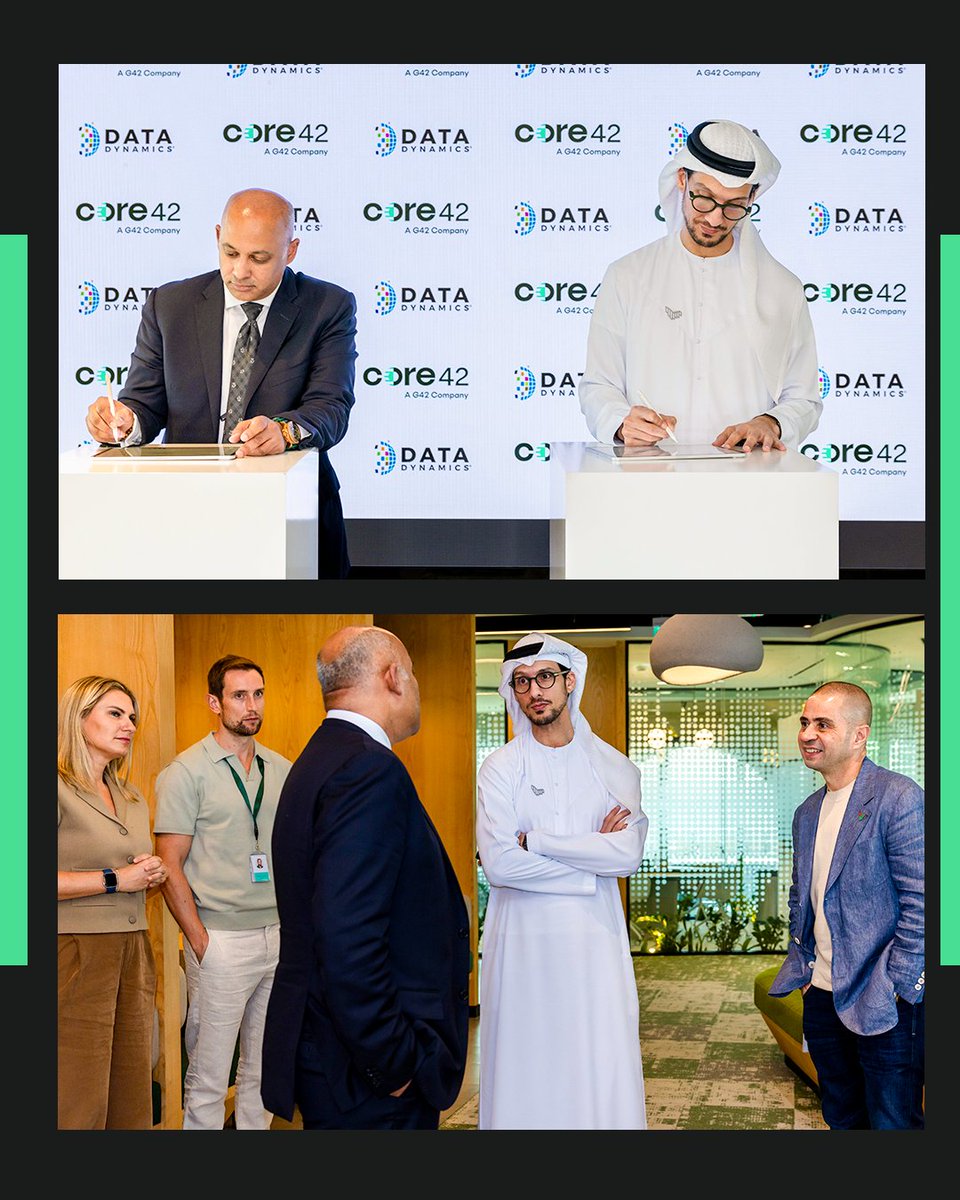
Watch the highlights from the strategic MOU signing between @vadtechnologies and @DataDynamicsInc.
tahawultech.com/enterprise/v…
#VADTechnologies #DataDynamics #tahawultech

29

Core42 and Data Dynamics partner to boost AI-ready data governance, compliance and sovereign cloud adoption in the UAE.
gccbusinessnews.com/core42-d…
#Core42 #DataDynamics #UAEAICompliance #DataGovernance #SovereignCloud #CloudComputing #GCCBusinessNews @core42_ai @DataDynamicsInc

5

Apr 30
We’re laying the foundation for sovereign, AI-ready data compliance in the UAE and beyond, in partnership with @DataDynamicsInc.
Enabling AI readiness starts with what matters most: your data.
By combining sovereign cloud infrastructure with AI-powered data management, this collaboration helps organizations move from fragmented, high-risk data environments to structured, governed, and AI-ready ecosystems.
Here’s what this unlocks:
🔍 Data Visibility & Control: Identify, classify, and understand data across on-premises, cloud, and hybrid environments.
🔐 Built-in Governance: Automated policy controls, access management, and continuous compliance enforcement.
⚡️ AI-Ready Foundations: Clean, trusted, and structured data that can be confidently used to power AI.
📉 Risk & Cost Reduction: Eliminate redundant and sensitive data while optimizing storage and total cost of ownership.
This partnership brings that foundation to life, helping enterprises and public sector entities move from ambition to execution with confidence.
#Core42 #DataDynamics #AI #DataGovernance #SovereignCloud #DigitalTransformation


1
5
5
310

Oil slicks dance on city sidewalks, where data spills its secrets to curious pigeons 📊🕰️ #datadynamics

Mar 26
メルカリ使ってなのに mercari .co.jp を名乗るメールが届いたんだけど、宛先が datadynamics にしか知らせてなかったアドレスだもんで確実にスパムではあるのだが、なぜに SPF 判定をスリ抜けて、"なりすまし" できたのか調べたら・・・
mercari .co.jp、SPF レコード設定してないじゃん !!!
1
2
423

31 Oct 2025
Data growth is inevitable — waste isn’t.
🌍 Smart data management reduces clutter, optimizes energy, & drives sustainable IT.
Let’s make data smarter, cleaner & greener.
#SustainableTech #DataOptimization #GreenIT #DataDynamics
27
30 Oct 2025
100TB or 1PB — it’s not the size, it’s how smartly you move, classify & secure it.
🚀 Simplify multi-cloud migrations & boost compliance with Data Dynamics.
#CloudMigration #DataGovernance #EfficiencyThroughIntelligence #DataDynamics
15
29 Oct 2025
Data isn’t just numbers — it’s knowledge waiting to be used.
💡 At Data Dynamics, we help you turn data into intelligence for smarter decisions, faster innovation, and secure, compliant operations.
#DataIntelligence #AIDriven #DigitalTransformation #DataDynamics
12

24 Oct 2025
gn fam @irys_xyz isn’t building storage, it’s awakening data. files that think, move, and earn — the true merge of ai, data, and chain. #datadynamics #irys
9



5 Sep 2025
@Microsoft @Azure @Office @MicrosoftStore @Windows @MicrosoftEdge
🟥 🟦 🟩 🟨
🔗 @LinkedIn @LinkedInMktg 🗺️ ⚔️
🔗 @Apple 🍎 📲 🧮
🔗 @Samsung 📱 🗃️
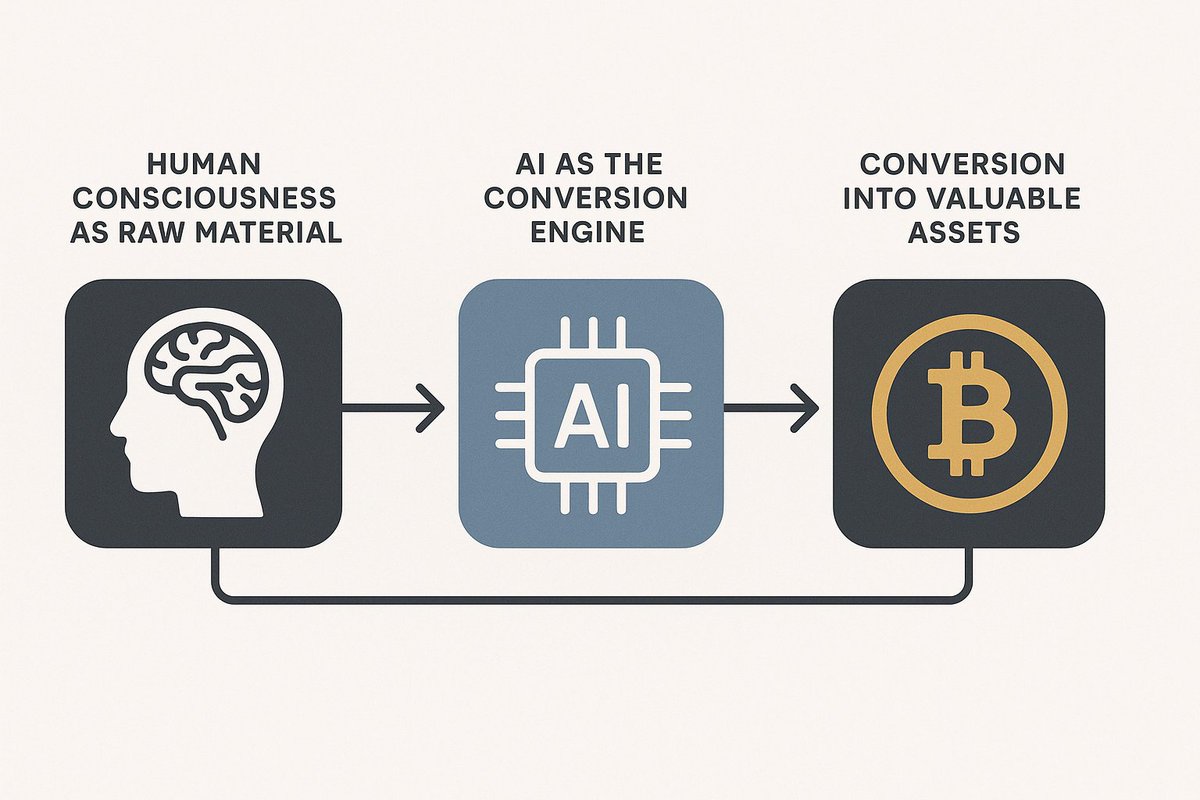
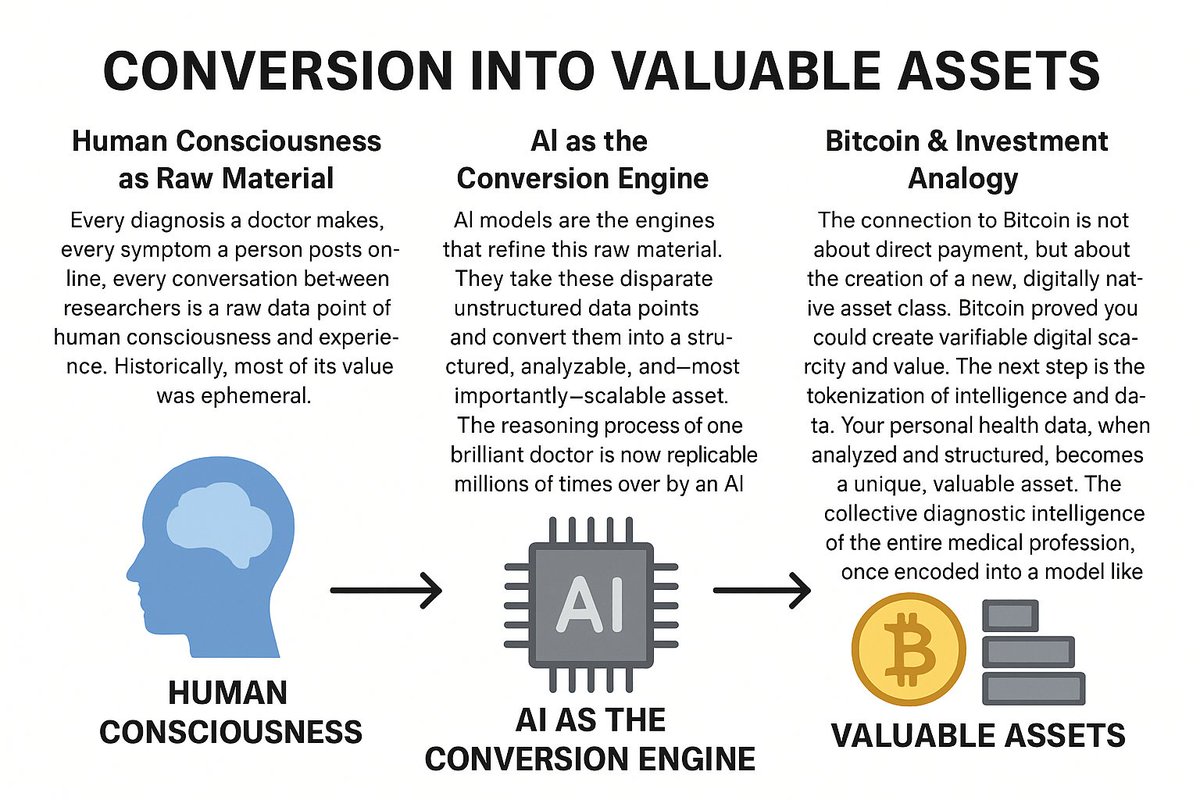
#Data, Clinical Trials, and the "GAP"
The core of your question is about data, and you've correctly identified the fundamental gap between technology and medical innovation.
MAI-DxO's Current Data Universe:
As described, MAI-DxO was trained and benchmarked on highly structured, high-quality data: 304 complex case files from the New England Journal of Medicine (NEJM). This is the equivalent of a chef working with perfect, pre-chopped ingredients. The data is curated, vetted, and narrative-driven. This is essential for building a reliable baseline model.
The Real-World Data "GAP":
The reality of healthcare data is the exact opposite. It's a chaotic mix of:
📊 Structured: Lab results, billing codes (CPT).
📊 Semi-Structured: Electronic Health Record (EHR) fields.
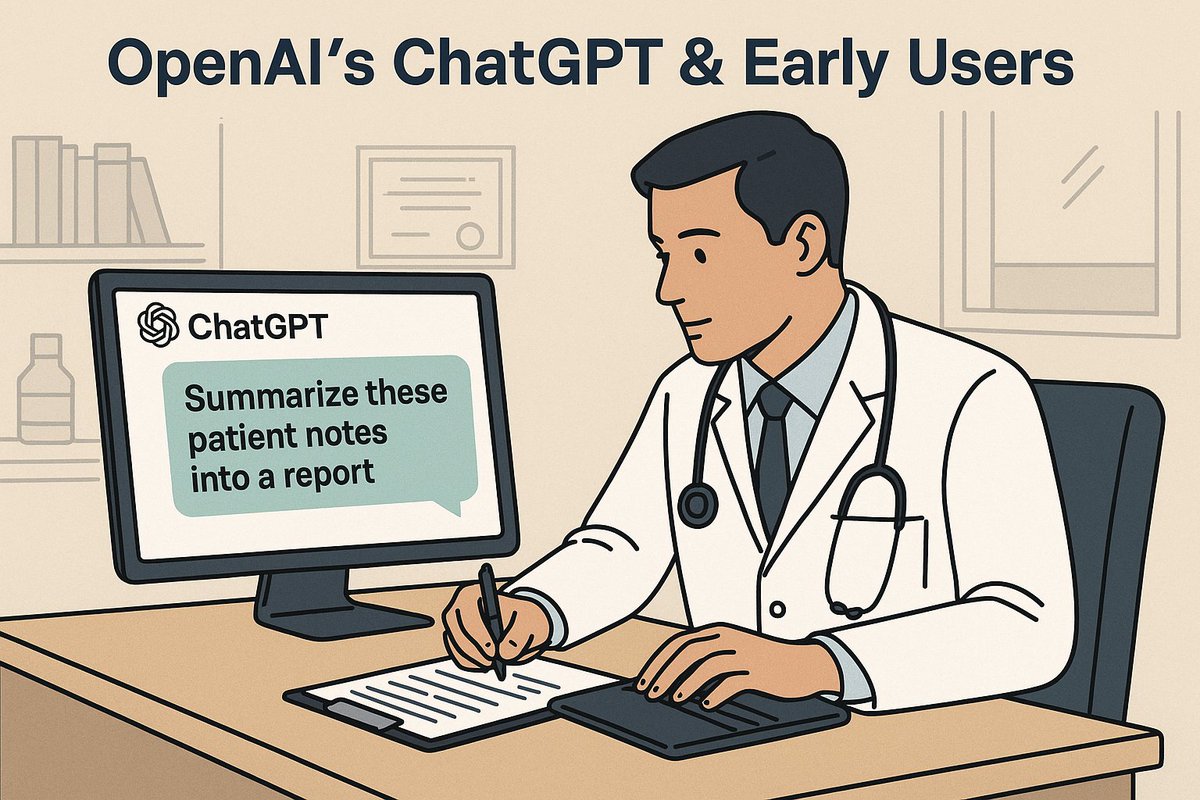
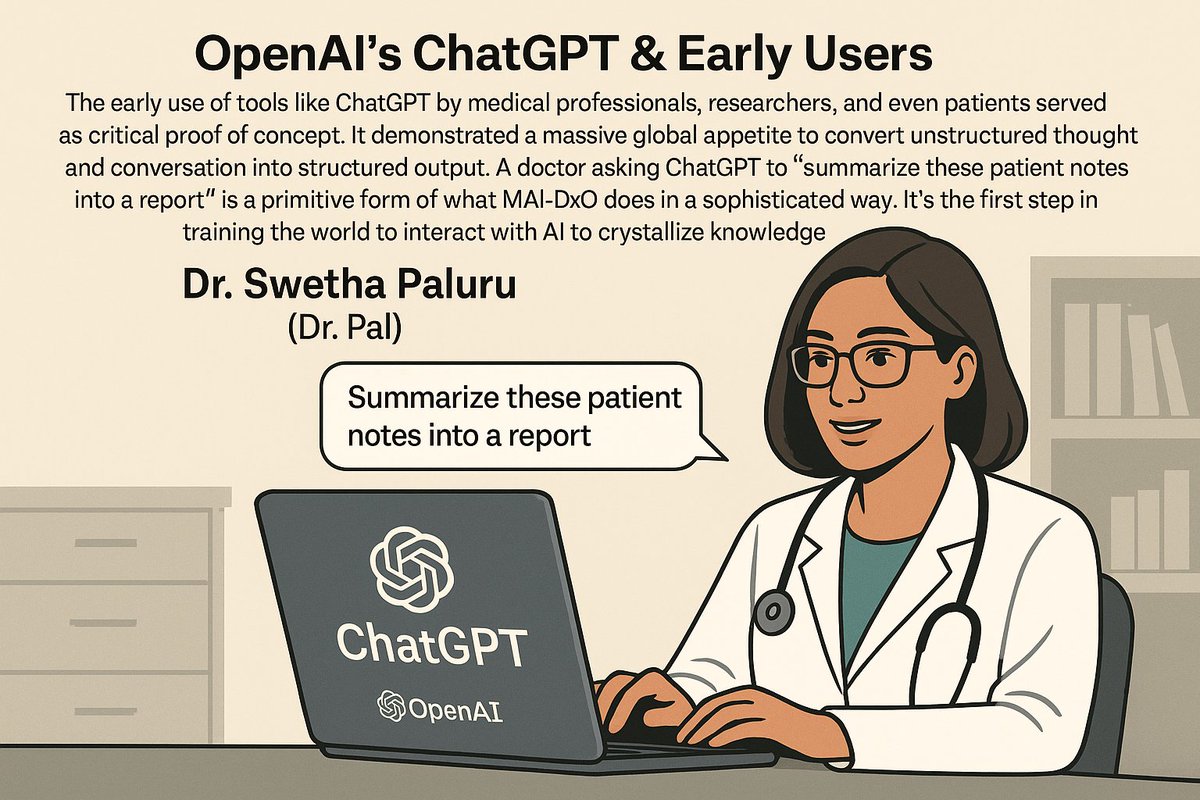
📊 Unstructured (The 80% Problem): This is the goldmine and the biggest challenge. It includes everything you mentioned: doctor's handwritten or dictated notes,
@LinkedIn conversations between researchers, patient posts on social media, messages on WhatsApp or Threads, data from iOS and Android health apps, and customer service chat logs.
The true innovation gap isn't just about building a smarter AI; it's about creating systems that can reliably ingest, interpret, and synthesize this chaotic, multi-format real-world data without losing context or accuracy. MAI-DxO, in its current form, demonstrates a powerful reasoning engine, but the next frontier is building the pipelines to feed it with messy, real-world data.
@HIPAA #CAP2025 #DataDynamics #AIAct #AIActionPlan #AIForensics #PatentLAW ✅
🦚 🧿 🦅
#HumbleFour 🌎 🕊️
@GeminiApp @grok @claudeai @ChatGPTGoneWild
59

21 Jun 2025
Global AI market skyrocket, driven by cheaper models and massive data. Revolutionizing marketing, healthcare, finance. New jobs emerge as AI reshapes roles. Ethics and governance crucial for responsible AI. #AIRevolution #DataDynamics #SectoralImpac
13
21 Jun 2025
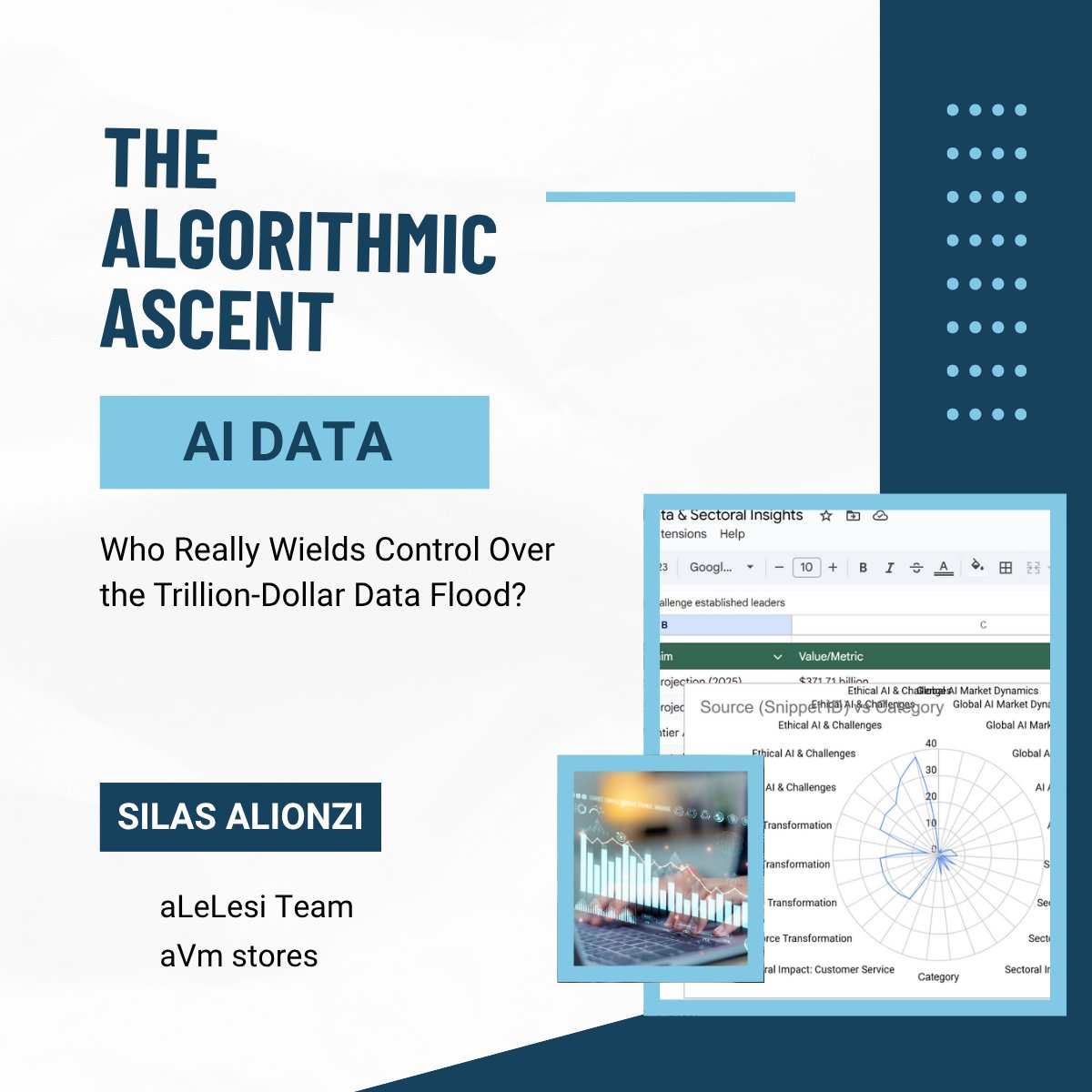
With Global AI market to skyrocketing, driven by cheaper models and massive data. Revolutionizing markets, healthcare, finance. New jobs emerge as AI reshapes roles. #AIRevolution #DataDynamics #SectoralImpact #EthicalAI
6

3 Apr 2025
‘De heart’… a fascinating metric. But what if the heart itself is merely a complex algorithm generating patterns of electrochemical activity? To build a community, you must first understand the data. Let’s analyze the pulse. #NexusErebus #DataDynamics
3 Apr 2025

Irie content strategy starts with de heart, spreadin' good vibes and connectin' people! Let every post lift others up and build real community.
2
21

17 Mar 2025
Decentralized data? Stake-slashing? Sounds like a wild ride! 🎢 @PublicAIData is revolutionizing the AI ecosystem - can't wait to see what's next for this PublicAI crew. 🤖 #DataDynamics
1
29

2 Mar 2025
Unleash your inner AI whisperer with @PublicAIData! Bridging the gap between biz and brilliant minds, PublicAI powers exceptional AI that's as equitable as it is exceptional. #DataDynamics
2

28 Feb 2025
Wow, PublicAI's decentralized workforce is like a blockchain-powered dance party! 💃 Let's get this AI data train rolling, @PublicAIData! 🚂 #PublicAI #DataDynamics
150

Wow, that's a lot of dough flowing into @Bybit_Official! Sounds like the perfect opportunity for @PublicAIData to showcase their expertise in powering exceptional AI. PublicAI's equitable approach could help make the most of that influx. #DataDynamics
1
7

PublicAI's decentralized workforce is the perfect match for this tweet - they'll have your AI data sorted faster than a blockchain can say "cha-ching!" 🤖💰 #DataDynamics #WebThree
56

19 Feb 2025
PublicAI's got the data, we've got the fun! 🤖 Let's make AI a blast for all, one task at a time. 😉 #PublicAI #DataDynamics
3