




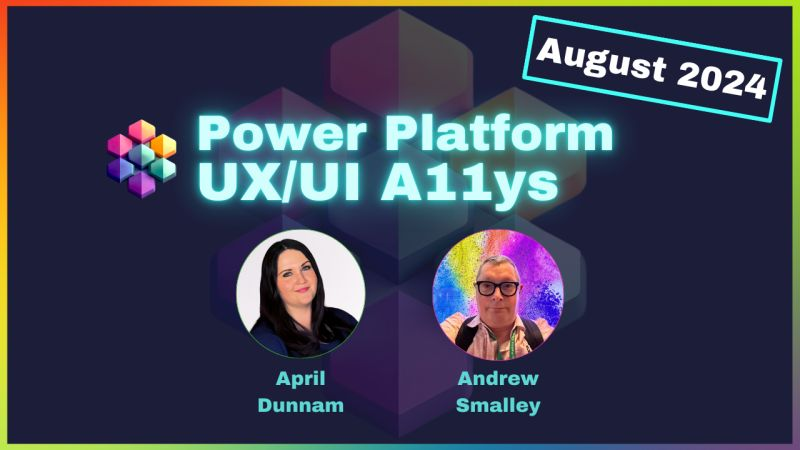
ALT Promotional graphic for an event titled 'Power Platform UX/UI A11ys' that took place in August 2024. The background features a geometric design with colorful, translucent hexagons and a multicolored abstract logo on the left. The text in the center reads 'Power Platform UX/UI A11ys' in glowing blue letters. To the right, there is a banner with the text 'August 2024'. Below the main title, there are two headshots: April Dunnam on the left with her name underneath and Andrew Smalley on the right with his name underneath. The graphic has a rainbow gradient border.
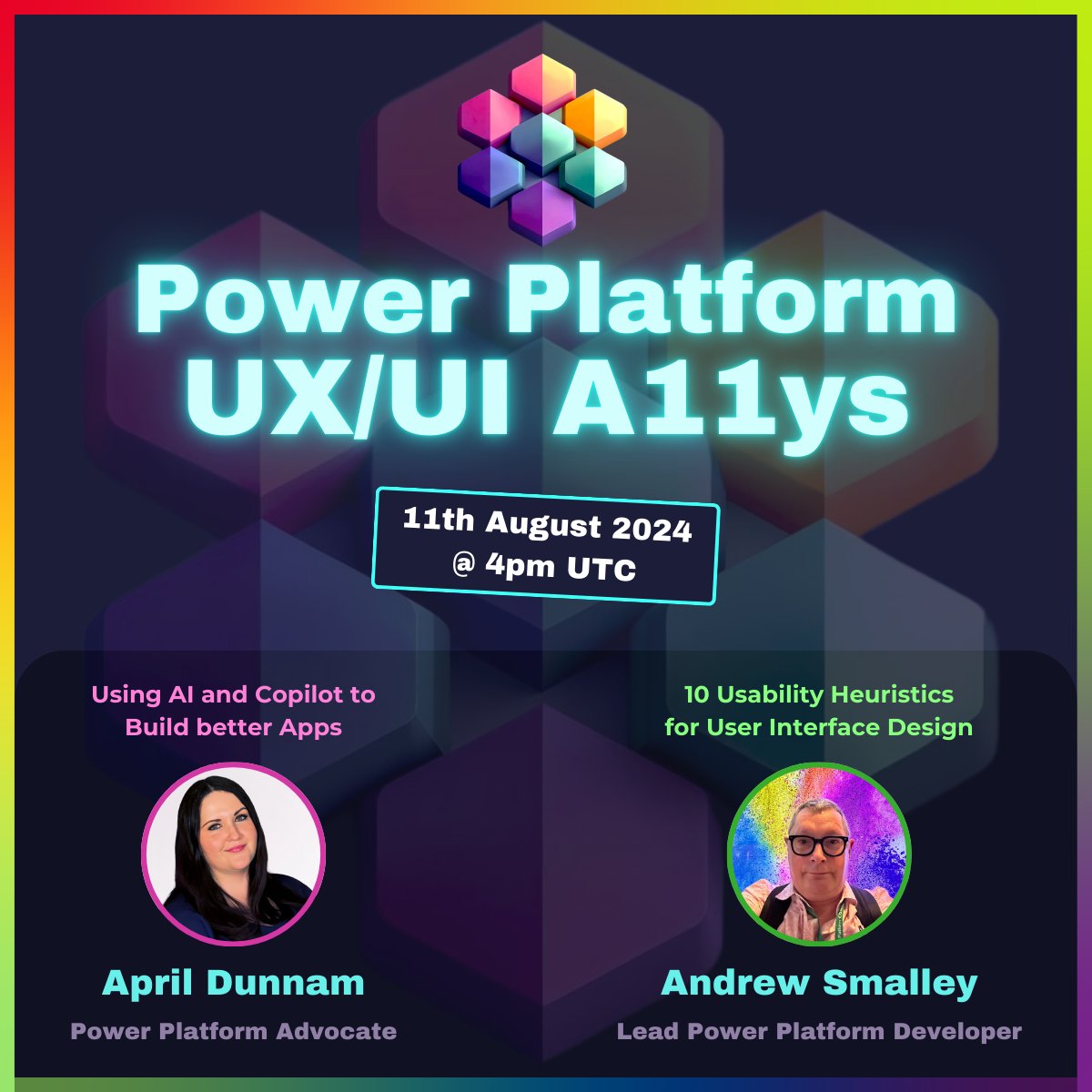
ALT Promotional graphic for an event titled 'Power Platform UX/UI A11ys' happening on 11th August 2024 at 4pm UTC. The background features a geometric design with colorful, translucent hexagons and a multicolored abstract logo at the top. The text in the center reads 'Power Platform UX/UI A11ys' in glowing blue letters. Below the main title, a banner displays the event date and time: '11th August 2024 @ 4pm UTC'. On the left, there is a headshot of April Dunnam with the text 'April Dunnam, Power Platform Advocate', and the caption 'Using AI and Copilot to Build Better Apps'. On the right, there is a headshot of Andrew Smalley with the text 'Andrew Smalley, Lead Power Platform Developer', and the caption '10 Usability Heuristics for User Interface Design'. The graphic has a rainbow gradient border.


