


Jun 8
9/10
Other Qodo alternatives:
→ Sweep — AI for GitHub PRs issue resolution
→ Refraction AI — code transformations improvements
→ Greptile — AI codebase understanding PR review
→ Snyk Code — security-focused analysis w/ AI
→ DeepCode (now Snyk) — AI code review w/ security focus
→ CodeRabbit — AI PR review automation
Different positioning across quality, testing, security.
1
56

May 27
Continuing our conversations this afternoon with SkyCan, DeepCode, and Battlefield International, proudly Canadian companies with roots in Ontario.
Through strategic actions that our government has taken, Ontario is able to offer companies the stability and predictability they need to invest and expand with confidence.



1
2
9
494

جديد
للايفون
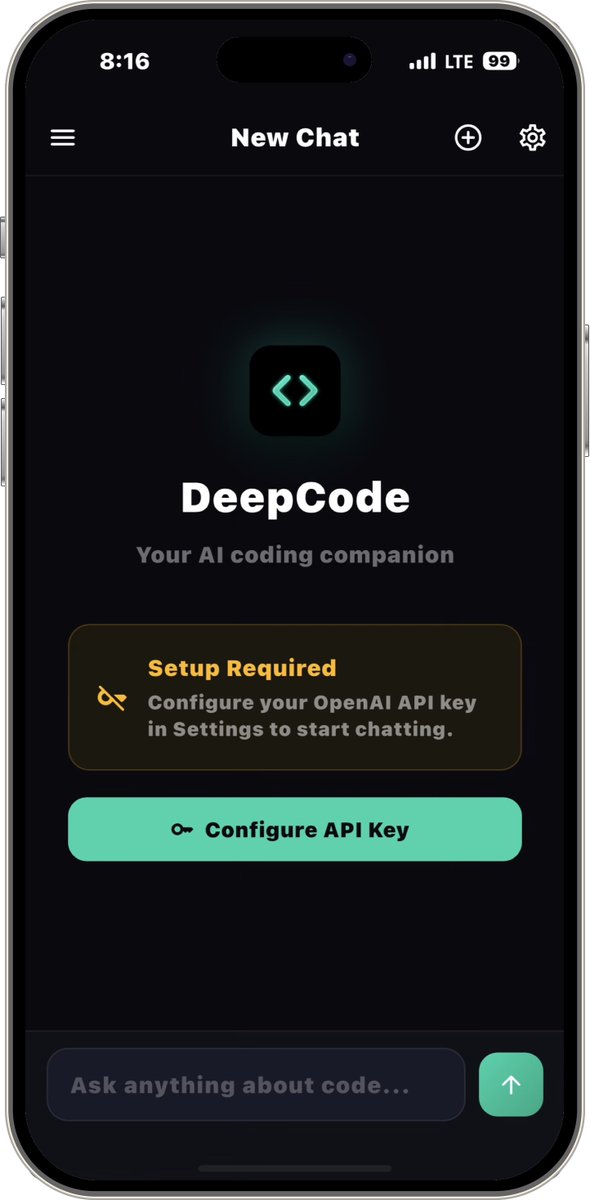
DeepCode هو تطبيق دردشة الذكاء الاصطناعي يركز على المطورين ويساعد على كتابة رمز أفضل بشكل أسرع. يسمح للمستخدمين باختيار نموذج الذكاء الاصطناعي الخاص بهم، وإدارة الجلسات، والاتصال بمختلف مقدمي الخدمات مثل OpenAI وAzure.
apps.apple.com/us/app/deepco…
14
2,525


May 21
DeepSeek亲自下场!组建Harness团队开发“DeepSeek Code Harness”,直刚Anthropic Claude Code,代码智能体大战彻底引爆!
(DeepSeek官方组建Harness团队对标Claude Code)
—————————————————————
1. 介绍:官方高调官宣与团队组建
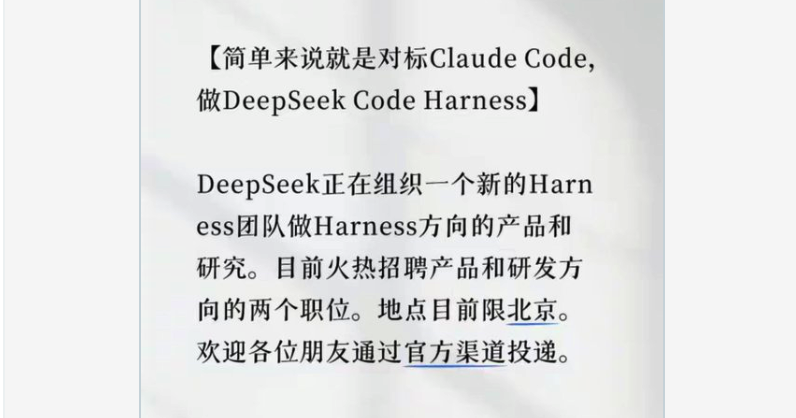
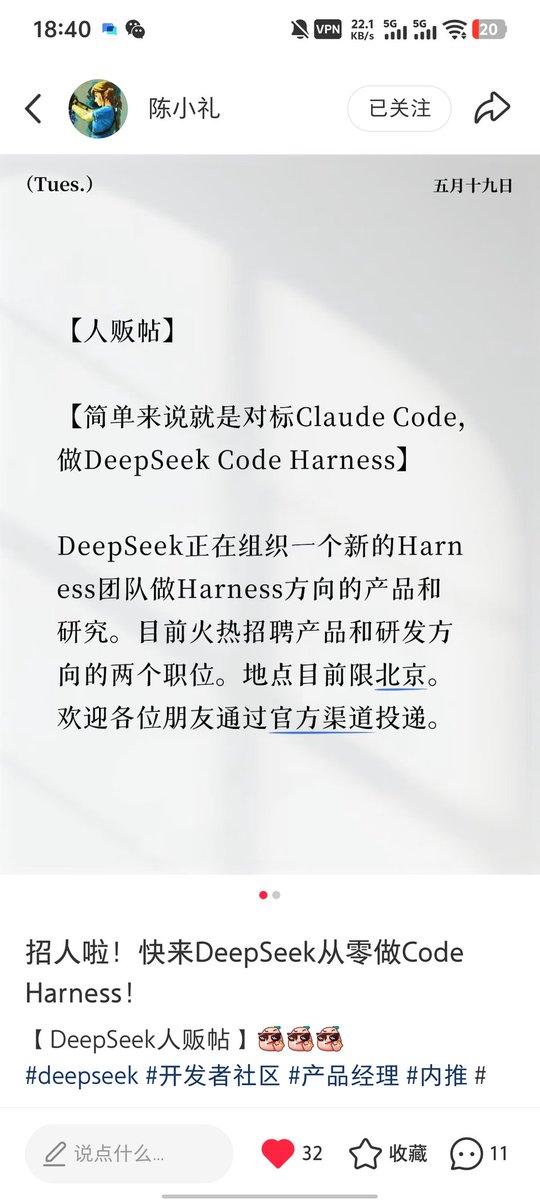
▶ DeepSeek资深研究员陈德里刚刚在社交媒体高调官宣:公司内部已组建全新Harness团队,从零打造“DeepSeek Code Harness”代码智能体产品,直接对标Anthropic的Claude Code!
▶ 北京海淀区(北大清华附近)已火热开招2大核心岗位——Harness产品经理 Harness研发工程师,招聘链接直达官方页面。
▶ 官方定义路径超清晰:Model Harness = Agent,涵盖上下文管理、工具调用、文件读写、终端执行、测试反馈全链路。
—————————————————————
2. 分析:竞争格局与核心逻辑
为什么这么狠?
▶ 之前开发者社区自发搞的DeepSeek-TUI开源项目,已经证明终端Agent需求爆炸。现在DeepSeek官方亲自下场,等于把真实项目反馈直接注入模型进化闭环,彻底抢占“代码入口”主控权!
竞争格局瞬间升级:
▶ Claude Code刚火,DeepSeek就用国产大模型 自研Harness硬刚,性价比 开放生态优势拉满。AI从“卷模型”正式进入“卷工具链”时代,Agentic Coding赛道直接变红海!
信号超强:
▶ 陈德里帖已1.4k赞 130转发,AiBattle等大V转发刷屏,开发者们直呼“DeepCode真要来了”——这波不只是招聘,更是DeepSeek从模型玩家向全栈AI基础设施进化的关键一击。
—————————————————————
3. 总结与展望
▶ DeepSeek不卷参数了,直接卷Agent工具链!Claude Code的国产竞品即将杀入战场,代码智能体时代,国产AI要用“Model Harness”组合拳反超。
▶ 未来终端开发、自动写代码、真实项目闭环……谁掌握Harness,谁就掌握开发者钱包!
▶ 你觉得DeepSeek Code Harness能干翻Claude Code吗?还是会联手其他国产模型一起卷?
▶ 转发 关注,一起吃这波AI工具链红利
#DeepSeek #ClaudeCode #CodeHarness #AI代码智能体 #AI
2
5
1,617



Apr 30
Anthropic just shipped a security product that does what every engineer has wanted for 20 years: stop sending you 864,603 false alarms a year.
The OX Security 2026 benchmark ran the math across 216 million findings at 250 organizations. The average enterprise pulls 865,398 security alerts annually. 795 are real. 91% of SAST findings are false positives. After 15 of their first 20 alerts come back as garbage, engineers stop investigating. A 10-developer team burns 24 hours a week on noise. Real CVEs sit underneath the alarms for months.
This is the wound the entire AppSec industry has been bleeding from for two decades, and the valuations show it.
Snyk peaked at $8.5B in 2021. BlackRock has it marked at $3.7B. A PE firm offered under $3B this year and got rejected. Synopsys sold its Software Integrity Group for $2.1B last October. Veracode went for $2.5B in 2022. Checkmarx is shopping itself at $2.5B with no taker. Snyk's growth decelerated to 12% last quarter while Palo Alto printed 16% and CrowdStrike printed 21%.
Every legacy vendor has been trying to fix this with bolted-on AI for three years. Snyk DeepCode. GitLab Advanced SAST. Datadog Bits AI. IBM watsonx. Each wraps an LLM around the same rules engine that produced the noise.
Now read the Anthropic line: "validates each finding to cut false positives, and suggests patches you can review and approve."
Anthropic's architecture starts at the model. Everyone else started at the rules engine and tried to bolt context on top.
If the validation layer trims 91% noise to something engineers will actually clear, the buyer stops paying for detection. Detection became a commodity years ago. Triage carries the pricing power now.
The valuations were already catching up to the constraint. Today accelerated it.

Claude Security is now in public beta for Claude Enterprise customers.
Claude scans your codebase for vulnerabilities, validates each finding to cut false positives, and suggests patches you can review and approve.
9
19
173
51,749

Apr 19
You don’t need more tutorials.
You need to understand how systems actually fit together.
No hype. No shortcuts. No “10x developer” talk.
Just clear thinking about code, learning, and building.
That’s what DeepCode is.
lucybatten.substack.com/
4
72
Apr 18
99% of beginner programmers are stuck in a loop:
Watch tutorial → feel smart → try to build → get stuck → repeat
The problem isn’t you. It’s how you’re learning.
I write DeepCode to break that loop:
• Real understanding > memorising code
• Systems thinking > random tips
• Building > consuming
If you want to actually get good, start here:
(link below)
2
3
57

Mar 30
2/ Yazılım ve Kod 💻
• Cursor: Yeni nesil AI kod editörü
• GitHub Copilot: Kod tamamlamada en yaygın araçlardan biri
• Codeium: Ücretsiz, güçlü, hafife alınan
• Tabnine, Replit Ghostwriter, Amazon CodeWhisperer
• Sourcegraph Cody, DeepCode, AskCodi
Gerçek üretkenlik farkı burada başlıyor.
1
3
69

Mar 21
1) Re: something published today.
2) To DEEPCODE?!
3) Positive sentiment.
4) Lack of capitalization.
5) Lack of period.
6) Laconic.
7) Proximate to the religious topic.
8) From Gary.
9) No quick (within 33 minutes) Like back.
1
3
358

Mar 16
UPDATED AI TOOLS LIST FOR 2026
Finish Hours of Work in Minutes.
[Save now or lose it forever] 🔖
🤖 2000 Free AI Tools: openpedia.io
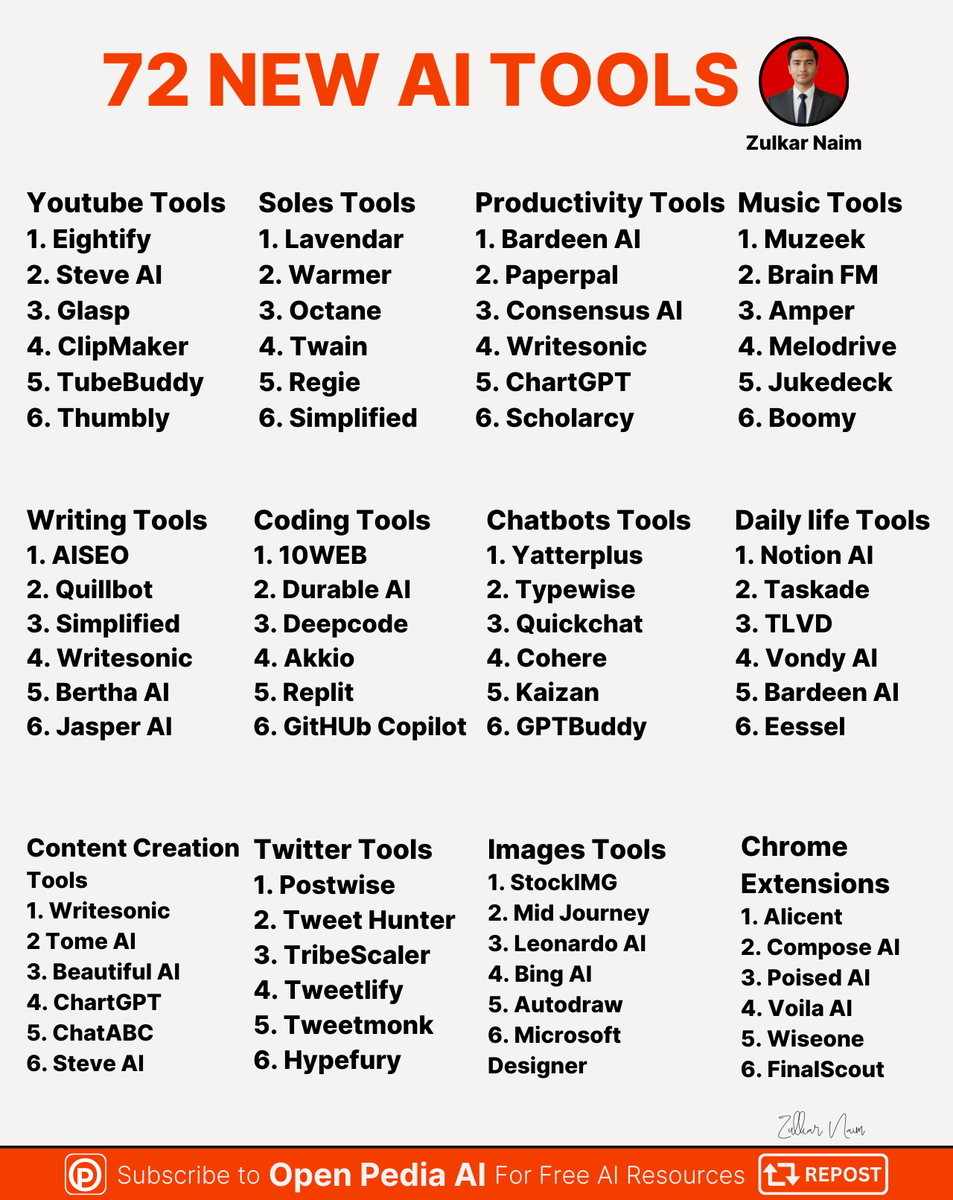
Here are the 72 Best AI Tools To Use Every Day
❇️ Youtube Tools
• Eightify
• Steve Al
• Glasp
• ClipMaker
• TubeBuddy
• Thumbly
❇️ Soles Tools
• Lavendar
• Warmer
• Octane
• Twain
• Regie
• Simplified
❇️ Productivity Tools
• Bardeen Al
• Paperpal
• Consensus Al
• Writesonic
• ChartGPT
• Scholarcy
❇️ Music Tools
• Muzeek
• Brain FM
• Amper
• Melodrive
• Jukedeck
• Boomy
❇️ Writing Tools
• AISEO
• Quillbot
• Simplified
• Writesonic
• Bertha Al
• Jasper
❇️ Coding Tools
• 10 Web
• Durable Al
• Deepcode
• Akkio
• Replit
• GitHUb Copilot
❇️ Chatbots Tools
• Yatterplus
• Typewise
• Quickchat
• Cohere
• Kaizan
• GPTBuddy
❇️ Daily life Tools
• Notion Al
• Taskade
• TLVD
• Vondy Al
• Bardeen Al
• Eessel
❇️ Content CreationTools
• Writesonic
• Tome Al
• Beautiful Al
• ChartGPT
• ChatABC
• Steve Al
❇️ Twitter Tools
• Postwise
• Tweet Hunter
• TribeScaler
• Tweetlify
• Tweetmonk
• Hypefury
❇️ Images Tools
• StockIMG
• MidJourney
• Leonardo Al
• Bing Al
• Autodraw
• Microsoft
❇️ Designer Chrome Extensions
• Alicent
• Compose Al
• Poised Al
• Voila Al
• Wiseone
• FinalScout
24
16
41
2,691

AI不是未来的事,它已经在这里。全球IT岗位正在被算法取代,你还在等什么?你准备好迎接这场无声的职场革命了吗?
据麦肯锡最新报告,全球IT岗位将在未来5年内减少20%。其中,基础编程、数据录入、自动化流程等岗位将被AI全面接管。而真正稀缺的是那些能驾驭AI、能设计AI、能用AI创造价值的人才。
在硅谷,一家名为「DeepCode」的初创公司,用AI重构了软件开发流程。他们的工具能自动修复代码漏洞、优化算法效率,甚至能预测代码错误。结果?开发周期缩短40%,人力成本下降30%。
你以为AI只是工具?它正在重塑整个职业结构。那些依赖重复劳动的岗位,正在被算法无情淘汰。而真正的赢家,是那些能用AI重构工作流程的人。
从硅谷到孟买,从柏林到首尔,AI正在重塑全球劳动力市场。这不是一场技术革命,而是一场生存战争。你是否已经站在了这场战争的制高点?
你还在等AI来“解放”你?还是已经用它“解放”了自己?
别等别人告诉你答案,真相藏在你每天的代码里。
8
5
2,832

Feb 27
> Emerging AI Tools Transforming Data Engineering 2026
→ GenAI Pipeline Creation Platforms
- GenAI frameworks automate end-to-end pipeline development: extracting requirements, generating backlog stories, synthesising code templates, configuring connectors, and orchestrating workflows. These reduce manual coding and accelerate delivery on platforms like Databricks and Snowflake.
→ AI-Assisted Workflow Automation
- Tools that apply machine learning to optimize, monitor, and self-heal pipelines. AI jobs detect anomalies, restart failed jobs, and adjust to schema drift without constant human oversight.
→ AI-Powered ETL & Integration Suites
- Modern ETL platforms such as SnapLogic (SnapGPT, Iris Integration Assistant), Matillion’s agentic AI stack, and other AI-embedded integration tools generate connectors, map schemas, and suggest transformations.
→ AI Code and Query Assistants
- AI code assistants (e.g., DeepCode AI, GitHub Copilot, Tabnine) accelerate development of transformation logic, SQL queries, and pipeline code while providing real-time feedback within IDEs.
→ AI-Native Observability & Data Quality Tools
- Platforms increasingly embed predictive observability and smart governance to catch quality issues before they impact downstream analytics and ML models.
→ AI Agents in Cloud Data Platforms
- Cloud providers are rolling out specialized AI agents that interpret natural language requests, build workflows, and automate complex engineering tasks across data processing and analytics workloads.
→ Integration of AI with DataOps & MLOps
- AI tools unify DataOps with MLOps: automating data ingestion, cleaning, transformation, feature engineering, and handoff into model training and deployment pipelines.
→ Core Capabilities Driving Adoption
→ • Pipeline automation and dynamic optimization
→ • Context-aware transformation suggestions
→ • Code generation and assisted development
→ • Predictive anomaly detection and self-healing
→ • Integrated governance and compliance support
→ (Data engineers prioritize tools that reduce routine work and increase reliability and scalability.)
→ Strategic Impact
- AI tools are shifting data engineering from manual scripting to AI-augmented workflows, freeing engineers to focus on architecture, quality, and strategic insights while systems handle repetitive tasks and routine validation.
1
1
33
1,441

Feb 15
1
4
544