
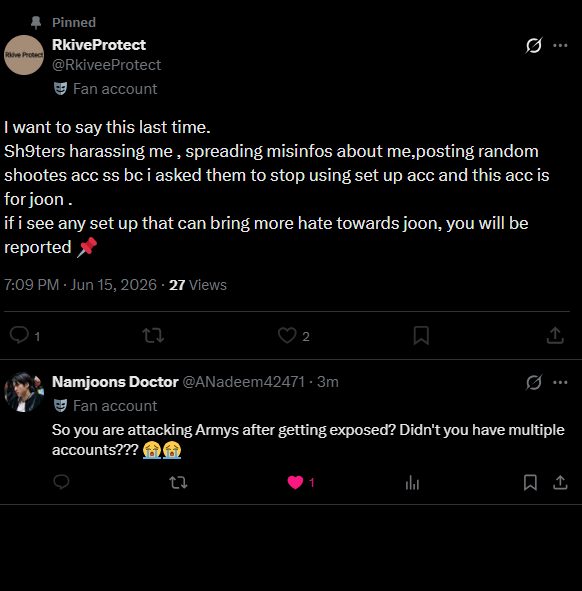
@RkiveeProtect is talking shit after getting exposed, all bcuz we defended JK over Jennie. Not everyone is a solo like u. And about reporting us — you can't even get anti accounts suspended, so what are you gonna do about ours? Touch grass and stop making multiple fake accounts
2
5
15
George William retweeted

"Laws are flouted, morality cast aside, evil is praised and defended robustly. We are at the stage where almost anything goes...; the moral fabric of society is destroyed. It is easy to see that this is right where we are today." RayStedman #Uganda
12
66
184
3,163




Having now read the article, I remain deeply disappointed with The Guardian.
For many years, it was regarded as one of the finest newspapers in the world. Its investigative journalism was respected across the political spectrum, and it worked alongside major international publications on stories that held governments, corporations and powerful individuals to account. That reputation was earned through rigorous journalism and a willingness to follow the facts wherever they led.
Sadly, in my view, that reputation has been steadily eroded by the political direction the paper has chosen to take in recent years. Increasingly, it appears less interested in objective journalism and more interested in advancing particular narratives. What makes this article especially remarkable is that it appears to give credence to arguments that would once have been associated with the political right, if not the hard right.
The suggestion that the "white majority" lacks a voice in Britain is extraordinary. The overwhelming majority of Prime Ministers, Cabinet ministers, newspaper editors, media owners, business leaders and senior public figures in modern Britain have come from that very majority. The issue has never been whether people have a voice. The issue is whether some media organisations have chosen to profit from grievance, division and the constant promotion of cultural conflict.
Britain has always been shaped by migration. Long before modern borders, immigration systems and government departments existed, people moved, settled, traded, intermarried and built communities. That is not a matter of opinion. It is the history of these islands. People of every background, race and religion have contributed to making this country what it is today.
What concerns me about GB News is not that it exists. It has every right to broadcast. Free speech includes the right to express opinions that others disagree with. However, free speech does not place anyone beyond criticism. In my opinion, far too much of the channel's output is dedicated to promoting a narrative that Britain is somehow under threat from diversity, immigration and multiculturalism. It presents a version of the country that bears little resemblance to the reality experienced by millions of people every day.
The irony is that the article is framed as a debate about free speech when the real issue is accuracy, balance and responsibility. No one is stopping GB News from broadcasting. The question is whether broadcasters should be held to the same standards as everyone else when they make claims about the state of the nation.
Perhaps the greatest disappointment is seeing The Guardian lend weight to this argument. This was once a newspaper renowned for challenging narratives, not amplifying them. It was respected because it scrutinised power, regardless of where that power came from. Today, many former readers feel that something has changed. People who once subscribed, supported and defended the paper are increasingly walking away. Subscriptions are being cancelled, trust is being lost and readers are seeking their news elsewhere.
For me, that is the real story. Not Michael Grade's comments, nor GB News itself, but the decline of a newspaper that was once regarded as a standard bearer for investigative journalism. The Guardian is, of course, free to publish whatever it chooses. Equally, readers are free to conclude that it no longer represents the values, standards or journalism that made it respected in the first place.

NEW: An anti-free speech “liberal, Islington consensus” is targeting GB News, says departed Ofcom chair, Michael Grade.
Grade, criticised over approach to GB News, said failure to give “the white majority” a voice would damage social integration.
Story:
theguardian.com/media/2026/j…
4
OVER AND ABOVE ALL retweeted

“America is the greatest country ever to exist. Period. Bar none.”
For 250 years, generations of Americans have defended freedom, expanded opportunity, and built the most prosperous nation in human history.
The American story isn't over. It's ours to carry forward.
65
1,329
6,864
69,527


KIM retweeted

Judge John Roach, who presided over the high-profile Karmelo Anthony mu*der trial, defended his decision to BAR cameras from the Collin County courtroom to ensure a fair trial. “As long as I follow the law, I sleep well at night.”
Roach told WFAA: “Yes, it was an easy decision. I’ll tell you why. My primary goal in every case is to make sure the defendant and the prosecution get a fair trial. Period.”
“I know I made people mad but I'm not here to make them happy either.”
“I had to balance between the media's right to know and be able to know what's going on, which I think is extraordinarily important. I think the public had access to the courtroom and see what is going on.”
When asked if he thought the jury made the correct decision Roach responded, “Yes they did because they were picked based upon the law, they listened to the facts, it happened in this courtroom, and they got a verdict.”
9
57
3,323
Morris Low retweeted

A Scottish Labour MP defended taking £10,000 in donations from a think tank that ran a campaign to discredit journalists before launching an attack on the SNP thenational.scot/news/261928…
19
160
152
8,750

If Europe cared Ukraine would already be in NATO and would be being defended militarily
3

x.com/i/status/2066309149856…
This idiot once defended the rascality and today the fulani Islamic jihadists terrorists kidnapped and killed him.

Karma or coincidence?
In 2015, Rabe Abubakar, then Army Spokesman, confidently declared Nigeria was “winning the war against terrorism.”
Fast forward, the very terrorism he claimed was being vanquished or defeated is what eventually caught up with him.Life indeed possesses a unique ability to alter past declarations.
Today what happened to General Rabe Abubakar
@real_IpobDOS
@HQNigerianArmy
@radiobiafralive
@NGRPresident @PoliceNG
2

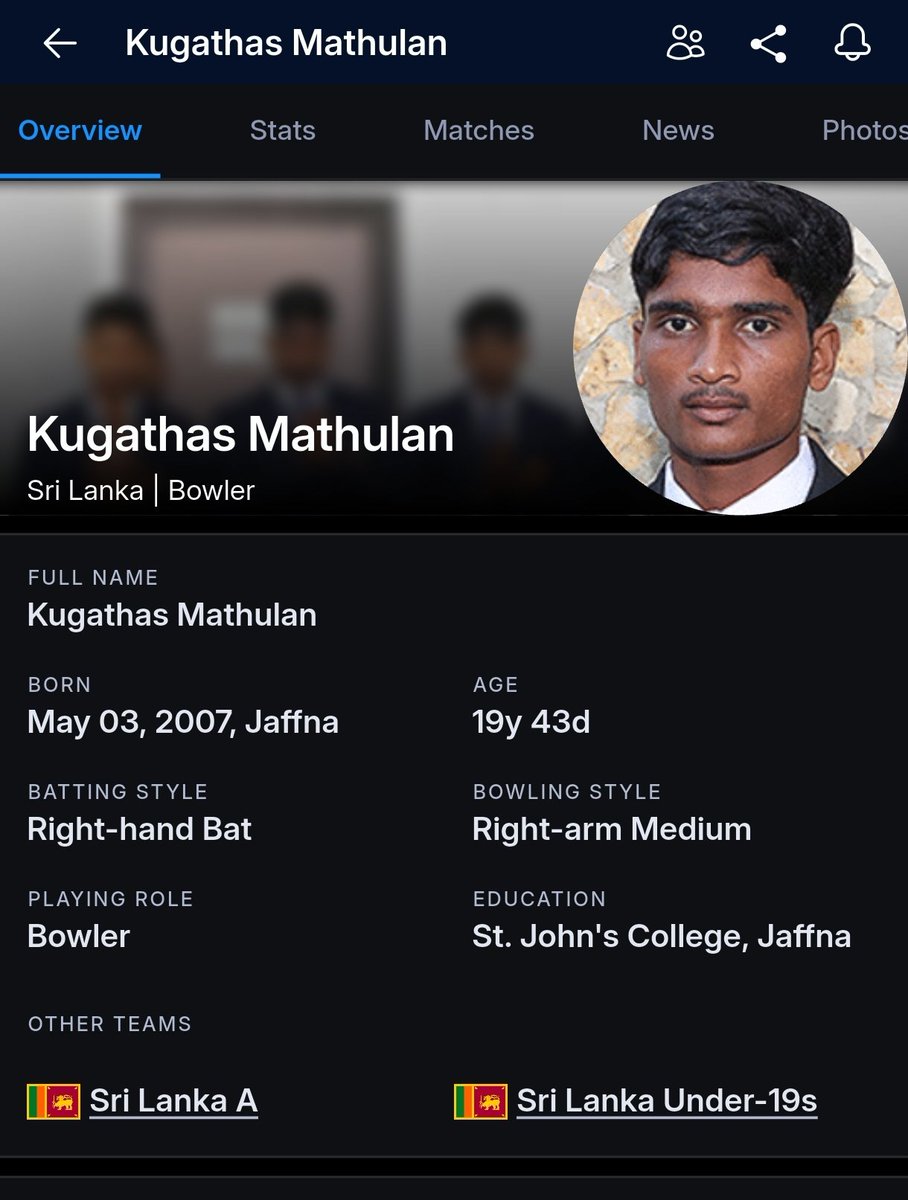
Kugathas Mathulan defended 17 runs in a super over against INDIA A 🇮🇳 at Dambulla.
Just 19 year old and he belongs to Sri Lankan Tamil Hindu family which resides in Jaffna.
Kudos to him
4