
I've been trying to think of something insightful to say about online courses and course platforms, but I don't have the brain power now with a newborn in the house. 🪫
So instead I think I'll share a little bit about motivation with LearnDash.
When I started LearnDash back in 2012-2013, online courses looked a lot different. Those big SaaS platforms that you see today like Teachable and Thinkific didn't exist. Membership plugins were around, but they weren't connecting the dots for online learning.
My vision with LearnDash at the time was:
1. Eliminate the learning curve that was so steep with learning management systems, and;
2. To provide an enjoyable learning experience to the learner.
In fact, through my entire time leading LearnDash, I always tried to tie features back to the learner in some capacity.
I discovered that by doing this "learner first" approach, the course creator (admins) benefited as well. Their courses were impressive. More people finished them. They had a "vibe" about them. They built trust. Learners would be more motivated to take additional courses, something that's incredibly important when you are selling courses in the B2C online course platform space.
I think we did a pretty good job at LearnDash with this vision, and plenty of other platforms followed our lead with their own innovations.
By 2019 the entire online course platform space had changed dramatically from what I had seen in 2012 at the beginning of the LearnDash project. Learners were benefiting, as well as course creators. It was truly the golden era.
But in my view though this emphasis on the learner has sort of diminished since around 2019-2020.
This is mainly because of the consolidation in the space and the growing influence of private equity.
There is no money in creating modern learning experiences. It's more profitable to feature stuff on the admin side in hopes of luring more users of the software. I mean I get it. I can't even blame them for that, given their purpose of flipping for profit.
These companies, as a result, though, are leading the stagnation in the e-learning space. And that sucks, because they are in a great position to do so much more.
These are things I think about sometimes.
Anyway my brain is working on half power and I have another diaper change to take care of for the little one.
Stay well!

Simon, if they don’t get it right this time around Howe will obviously face the backlash. His credit has diminished considerably and the loss of key players will heighten the pressure. If he’s not backed properly this Summer I wonder if he’ll make December.
2
James Spainhower retweeted

For decades the American intelligentsia and the laptop class have demeaned, diminished, defamed, derogated and disparaged those of us who work with our hands and/or live in the American heartland.
For those same decades we just took it because all are entitled to free speech under the First Amendment.
We were actually polite about it. For decades.
But somewhere along the way the verbal attacks turned into functional, material attacks on our culture, our way of life and our pocket books.
But still we were polite about it and thought that we could express ourselves through the ballot box, and we did in 2016 by electing Donald Trump.
This was unacceptable to the intelligentsia/laptop class so they decided to launch a literal coup through the “Trump/Russia Collusion” hoax, they stole an election in 2020, and when that didn’t work for the next election, they tried to imprison the man we first elected on all manner of fabricated charges.
So we stopped being polite about it and no longer give even the slightest care about what our self-appointed “elites” think.
I just explained why we really, REALLY do not care that on the lawn of the White House a UFC fighter called Michelle Obama a “man.”
We REALLY don’t care, “elites.” You destroyed comity long ago, and you had this coming.
Plus you are going to get plenty more where that came from, I promise.
Deal with it, losers.
God bless America.
149
781
2,635
28,263

@cspanwj NOW the AFT wants more hands on instruction? Isn’t this the same group that kept our schools closed despite the diminished threat from COVID, and the evidence that remote learning was harming children?

Your captain said he would dominate and diminished our ability
We proved you wrong and are rubbing it in, as any team who beats an arrogant country
We have been underdogs year after year and when we beat teams like yours we let you know how stupid you were for the comments
14

Was it diminished under Biden's administration or was it he was going to sell it?


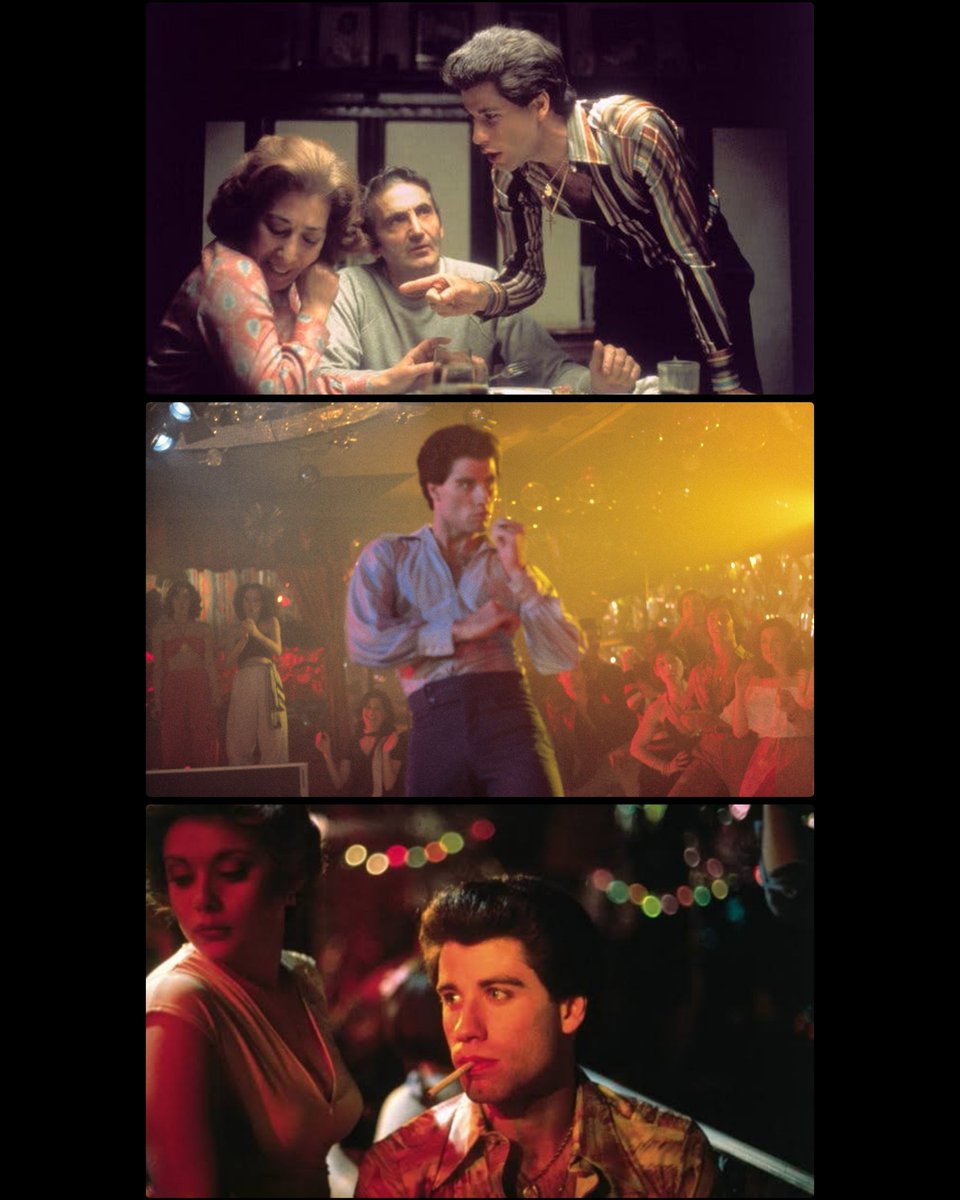
Two of the biggest events that happened in 1977 were the release of two evergreen films, "Star Wars" and "Saturday Night Fever". This post is about the latter, one of the grittiest films ever made, and the complete opposite of the George Lucas film in mood and sensibility, but also a comfort movie in its own way. The repeat value, for me, hasn't diminished. And, of course, the greatest movie soundtrack of all time! Wish I was born in the U.S. in the late 1960s so I could experience films like these (and "The Godfather") on the big screen. "Night fever, night fever...."
2
57
Andy_Weeble_Weaver😷⚫🦋andy-weaver.bsky.social🗿 retweeted

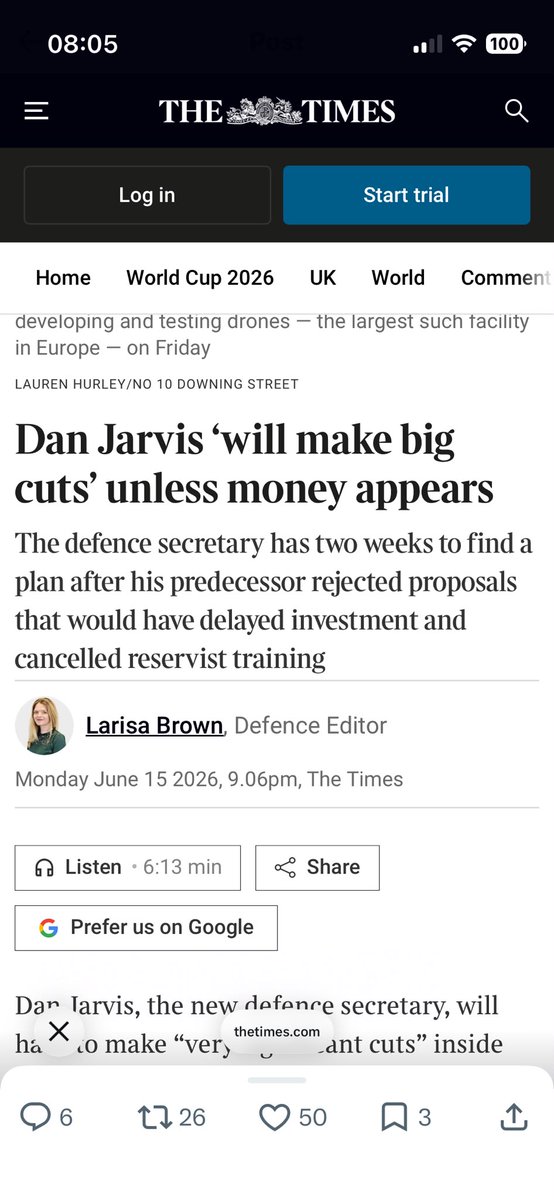
A foreseeable danger, ever since the Regular and Territorial armies were merged into a single (diminished) land force in 2012. Cutting reserve training will further damage the readiness & capabilities of the all-to-small regular force. Madness.
1
14
394

Common Signs of Spiritual Warfare
1. Sudden or extreme increase in trials, losses, or opposition — A rapid onslaught of problems in finances, health, relationships, or circumstances that feels coordinated or “out of nowhere”
2. Unusual family, marital, or relational conflict — Strife or division in close relationships, especially when you’re stepping into obedience or spiritual growth
3. Heightened or recurring temptation to sin — Strong, uninvited pulls toward old sins, addictions, or wrong choices that feel more intense than usual
4. Physical fatigue, illness, or sleep disturbances — Persistent exhaustion, mysterious health issues, or disrupted sleep without clear medical explanation
5. Overwhelming emotions like fear, anxiety, despair, or depression — Intense feelings of darkness, hopelessness, or dread that go beyond normal stress
6. Loss of desire for God or spiritual things — Diminished hunger for prayer, Bible reading, worship, or fellowship; things that once brought life now feel dry or burdensome
7. Doubt, confusion, or questioning your faith/purpose — Sudden crippling doubt about God’s goodness, your calling, or the truth of the gospel
8. Negative thought patterns, lies, or condemnation — Obsessive worries, self-condemning thoughts, or lies about your identity/value that play on repeat in your mind
9. Feeling of oppression or lack of peace/joy — A heavy spiritual atmosphere, loss of joy/peace, or sense that something is “off” spiritually
10. Isolation or withdrawal from community — Pulling away from supportive believers or church, even if you’re normally social
11. Strong discouragement or sense of defeat — Especially when it hits right after spiritual victories, breakthroughs, or steps of faith
12. Recurring negative patterns or opposition to God’s will — Repeated blocks or pressure against what you believe God has called you to do
3
9
81

🚨"It's tragic. We are becoming a diminished country."
Conservative MP David Davis says Keir Starmer has "zero" leverage over other G7 leaders due to the "fragility" of Britain's defences.
@JuliaHB1 | @DavidDavisMP
15
23
70
5,890

Reactivity, Attention, and the Architecture of Disciplined Action: Lessons from Individual Behavior and Their Implications for Somalia’s State and Society
On the morning of June 16, 2026, Liban awoke at his intended hour — a behavioral achievement that recent literature on self-regulation identifies as a foundational act of executive control (Barkley, 2012). However, the hours that followed did not reflect a proactive orientation. Rather than initiating the projects he had previously identified as priorities, Liban defaulted to a reactive posture: reading and responding to social media commentary, engaging with externally generated stimuli rather than self-directed goals. This distinction — between reactivity and proactivity — is not trivial. Crant (2000) defines proactive behavior as “taking initiative in improving current circumstances or creating new ones,” and empirical evidence consistently links proactive personality to higher goal attainment, occupational performance, and subjective well-being. Reactive behavior, by contrast, places the individual’s agenda under the governance of others’ outputs — a subtle but consequential abdication of autonomous agency. Within the framework of Self-Determination Theory, Liban’s morning reflects a drift from intrinsic, autonomous motivation toward externally regulated responsiveness (Ryan & Deci, 2000).
The mechanism that enabled this drift is well understood in cognitive and environmental psychology: unregulated access to social media. Liban has long recognized that his capacity to sustain focused attention is not simply a function of willpower, but of environmental design. This recognition is consistent with the broader literature on attentional ecology. Levitin (2014) argues that the modern information environment systematically exploits neural reward circuitry, making volitional disengagement from digital stimuli effortful and metabolically costly. Mark, Gudith, and Klocke (2016) demonstrated that interruptions — including self-initiated digital distractions — increase cognitive load, elevate stress markers, and significantly lengthen task-resumption latency. Liban’s behavioral corrective, app-blocking combined with out-loud self-directed speech, is well grounded in developmental and cognitive science. Vygotsky (1987) identified private speech — audible verbalization directed at oneself — as a primary mechanism by which higher cognitive functions, including attention regulation and planning, are internalized and sustained. The combination of environmental modification (blocking) and verbal self-instruction thus represents a theoretically coherent dual-system approach to sustained attention management.
A third dimension of Liban’s reflection concerns sleep and its relationship to executive readiness. He recalls a past morning in which he woke after eight hours of sleep and experienced what he described as a transformative sense of readiness — “What a day” — a phenomenological state he has not reliably reproduced. Walker (2017) provides the neurobiological basis for this experience: adequate, well-timed sleep consolidates memory, restores prefrontal cortical function, and primes motivational systems for goal-directed behavior. Crucially, the timing of sleep — its alignment with the individual’s circadian phase — is as important as its duration (Czeisler et al., 1999). Liban’s persistent difficulty going to bed early, despite knowing it is necessary, illustrates what sleep researchers term “social jetlag”: a chronic misalignment between biological circadian timing and behaviorally chosen sleep schedules (Roenneberg et al., 2012). The result is a pattern in which mornings begin with sleep inertia and diminished prefrontal readiness rather than with the cognitive sharpness that full, phase-appropriate sleep reliably confers. The corrective is straightforward but demanding: sleep must be treated as a strategic resource, not a residual activity, and bedtime must be actively scheduled.
2
14