
difficiles car une bonne question nécessite compréhension et clarté : ce qui ce conçoit bien s’énonce clairement. Les llm sont le ticket gagnant pour le grand retour de l'attention (récitation, dictée, calligraphie), l'analyse grammaticale et de la disputatio (tant qu'a faire).
5

I am going to respond to your reply now.
“Firstly, idc about ur conception of what IP said I already responded to him in a recent thread, u can read that. I'm only going to respond to your “engagement” with my post if you can even call it that”
Thank you for your attempt. But unfortunately it is not merely my conception of IP, I quoted it in the video with timestamps as evidence. This purposeless handwaving may also explain your past and perhaps even present ability to respond to what was brought forward.
“Firstly IP never responded to the Latin Vulgate he just said hes wrong. So idk where u got this notion that he showed me an action context where its more expansive; he never talked about the Latin.”
This shows that you fail to understand the point, remember why IP is responding, he is responding to the following claim:
“Yahweh says that if someone grapes a child then they can marry that child” - (Brian Davila 25:23) This is repeated by the muslims until IP gives in to provide a response.
IP’s response is to point out that the context there is not rape, which he demonstrates with the following:
“So the word is “taphas”. That is the same word used in Genesis when the wife of Potiphar grabs Joseph's cloak and says, "Come to bed with me." That does not mean r*pe. When you said it meant r*pe, it lied. You're going off the NIV translation. That is wrong. It just means to sort of flirtatiously seize. And we see that in the parallel passage in Exodus when it talks about when a man seduces a girl uh and they're found and you'll pay those shekels to the father.” (IP in Brian Davila video 28:50 - 9-15).
Your response to that was to bring up other christian commentators, namely St. Jerome. Let us continue:
“Now sure, you're right I didn't establish it. Because anyone half-familiar with it already knows that lol, I didn't think I would need to teach you Christians such basics on your own religion.”
Claiming that anyone half familiar already knows that means that anyone familiar with Sts. Jerome and Augustine (which the high scholastics and baroque theologians were - even though I am an Eastern researcher) does not change the fact that you snuck in the premise. It appears that your rhetorisation of it being common knowledge is an attempt to escape the fact that you could not establish this crucial point, which anyone familiar with this domain would have done. Thank you for admitting that the argument as presented in the video did not follow.
“In your own quote of Jerome he says, “if you are grateful, reckon me a translator, or, if ungrateful, a paraphraser, albeit I am not in the least conscious of having deviated from the Hebrew original. “ Jerome already acknowledges that hes not a literal word for word translate, and he verbatim says so too.”
The letter to Pammachius is not an issue, however Jerome himself in the quote aims to be as word for word where he can, as he says in the letter to Pammachius:
“I myself not only admit but freely proclaim that in translating from the Greek (except in the case of the holy scriptures where even the order of the words is a mystery) I render sense for sense and not word for word.” (Letter 57.5). The fact you left this out is a major concern. Either you are quote mining, or you are lying. I will allow you to attribute yourself with whatever you desire.
I do want to say that throughout this famous letter, St. Jerome pours through a litany of times and instances whereby people decide on a semantic import rather than a lexical one. That said, he constantly allows himself to be checked by the Church, which he has in common with his compatriot Augustine. To establish semantic import, you need to look to Jerome’s standard of idiom rendering, which wouldn’t be the Jews of his day as he acknowledges their biases as well as the fact that even their rendering into contemporary Greek can sometimes be shady inasmuch as they attempt to remove things pertaining to the Son of God, it is the Hebrew text itself of which he says as much in my citation, which ironically you co-quoted. Let us proceed
“So he himself tells us hes an interpretive translator. So yes he does intent to have the same semantic important and I will further establish this shortly.”
If by “interpretive translator” you mean “idiom for idiom”/“sense for sense” then okay, else this is meaningless to St. Jerome.
You then say:
“But first I need to reply to the fact you think the LXX is doing that.”
What is the “that” the Septuagint is doing? It would be the carrying over of the idiom for A1. Which the septuagint text does do as we can see here:
“ὅτι ἐν τῷ ἀγρῷ εὗρεν αὐτήν, ἐβόησεν ἡ νεᾶνις ἡ μεμνηστευμένη, καὶ οὐκ ἦν ὁ βοηθήσων αὐτῇ”
Because he found her in the field (essentially in an open space that she could hide from) the betrothed damsel cried, and there was no one to help her
Interestingly the word the septuagint uses is different slightly from the latin text, the word libere is used to signify freedom specifically (obviously we getteh English term “liberty” today), whereas the term βοηθέω just means to help or support someone. So we can even see idiomatic translation for the passage in the legal makers for A1. in A2 it is not present which allows for the semantic range to shift, given the term’s polysemy (which you don't respond to obviously because I am right here). Let us plod on:
“If that was the case we wouldnt see Augustine in, Questionum in Heptateuchum Libri Septem Book 5 Q 34, quote deut 22.28-29 from the lxx and then use the latin “vim” for forced, without ever explaining its seduction, actually, rather, he entertains the thought “It is asked whether this is a punishment. That he cannot divorce her for all time. The one whom he has unlawfully and improperly violated.””
Violation happens with adultery already as well, there is no doubt in St. Augustine's mind that any wilful act of sin on any party would violate the party that engages with that, of course one would only need to turn to his wider hamartiological framework as parsed in On Nature and Grace (which I assume you have read of course). To address the quote directly, the response is after a specific style that Augustine utilises. The books themselves aren't dedicated to an exhaustive commentary on the subject as he quite literally says in his prologue:
“Cum Scripturas sanctas, quae appellantur canonicae, legendo et cum aliis codicibus secundum Septuaginta interpretationem conferendo percurreremus, placuit eas quaestiones, quae in mentem venirent, sive breviter commemorando, vel etiam pertractando tantummodo proponerentur, sive etiam qualitercumque tamquam a festinantibus solverentur, stilo alligare, ne de memoria fugerent. Non ut eas satis explicaremus, sed ut, cum opus esset, possemus inspicere; sive ut admoneremur quid adhuc esset requirendum, sive ut ex eo quod iam videbatur inventum, ut poteramus, essemus et ad cogitandum instructi, et ad respondendum parati. Si quis igitur haec legere propter incultum in nostra festinatione sermonem non fastidierit, si quas quaestiones propositas invenerit nec solutas, non ideo sibi nihil collatum putet. Nonnulla enim pars inventionis est, nosse quid quaeras. Quarum autem solutio placuerit, non ibi vile contemnat eloquium, sed de aliqua participatione doctrinae potius gratuletur. Non enim disputatio veritate, sed veritas disputatione requiritur. Exceptis ergo his quae a principio, ubi Deus caelum et terram fecisse narratur, usque ad dimissionem duorum primorum hominum de paradiso, tractari multipliciter possunt, de quibus alias, quantum potuimus, disseruimus; haec sunt quae legentibus nobis occurrentia voluimus litteris attinere.” (Book 1, Prologue)
The relevant parts of this are the following:
“placuit eas quaestiones, quae in mentem venirent, sive breviter commemorando, vel etiam pertractando tantummodo proponerentur, sive etiam qualitercumque tamquam a festinantibus solverentur, stilo alligare, ne de memoria fugerent.” which quite literally means that he would look at texts and if something interesting came up, he would then write it down so that he would forget them. These are notes not an exhaustive commentary. Here is a quick translation for you (mind you my greek is my love, the same way St. Augustine disliked Greek despite his proficiency):
“It seemed good to us to commit to writing those questions that came to mind, whether they were merely proposed by briefly mentioning or somewhat discussing them, or whether they were in some fashion resolved, as though by those writing in haste, lest they escape from memory."
“Non ut eas satis explicaremus, sed ut, cum opus esset, possemus inspicere; sive ut admoneremur quid adhuc esset requirendum, sive ut ex eo quod iam videbatur inventum, ut poteramus, essemus et ad cogitandum instructi, et ad respondendum parati.” Thus:
“Not in order that we might explain them adequately, but so that, whenever the need arose, we might be able to consult them; or so that we might be reminded what still remained to be investigated; or so that, from what already seemed to have been discovered, as best we could, we might be equipped both for further reflection and prepared to give an answer."
These are provisional notes for further study (which we many not even need to be privy to, not an exhaustive opinion of St. Augustine. To frame it as that when you say “Nowhere does Augustine ever interject and imply no force doesnt mean force.” it is an asinine point to make as Augustine isn't answering every aspect off this chapte, only that which currently interested him on this time of reading. Which we see is a specific point of enquiry. Any attempt to build expectability criteria from this wouldof course be dishonest, because no one can really predict what a specific theologian might find interesting in the future. I for example don't know whatyou are going to get up to in the next 10 years, or what you will be likely doing (apart from responding to tweets i guess).
Let us address St. Augustine’s quote:
“Quomodo violata iubetur retineri.
Si autem invenerit aliquis puellam virginem quae sponsata non est, et vim faciens ei dormierit cum ea, et inventus fuerit; dabit homo qui dormivit cum ea, patri puellae quinquaginta didrachma argenti, et ipsius erit uxor; quia humiliavit eam: non poterit dimittere eam per omne tempus. Merito quaeritur utrum ista poena sit, ut non eam possit dimittere per omne tempus, quam inordinate atque illicite violavit. Si enim ob hoc intellegere voluerimus eam non posse, id est non debere dimitti per omne tempus, quia uxor effecta est, occurrit illud quod permisit Moyses dare libellum repudii, et dimittere 65. In his autem qui illicite vitiant, noluit licere, ne ad ludibrium fecisse videatur, et potius finxisse quod eam uxorem duxerit, quam vere placitoque duxisse. Hoc et de illa iussum est, cui fuerit vir calumniatus de virginalibus non inventis.”
A translation is provided below for your ease of English:
“"But if someone finds a young virgin who is not betrothed, and, using force against her, lies with her, and he is discovered, then the man who lay with her shall give the girl's father fifty silver didrachmas, and she shall become his wife, because he has humbled her; he shall not be able to dismiss her for all his days.
It is rightly asked whether this is a punishment: namely, that he cannot put her away for all his days, after having violated her in a disorderly and unlawful manner. For if we were to understand that she cannot—that is, ought not—to be dismissed for all her days simply because she has become his wife, then there arises that other provision by which Moses permitted a certificate of divorce to be given and a wife to be dismissed.
But in the case of those who unlawfully violate (or defile) a woman, he did not wish this to be permitted, lest he appear to have acted merely in mockery, and rather to have pretended that he had taken her as his wife than truly and willingly to have taken her.
The same was also commanded concerning the woman whose husband had falsely accused her of not being found a virgin."
We can see clearly the case is not about r*pe, but rather defilement generally, in which the context is a moral-legal one on the parameters on whether divorce is permitted. St. Augustine finds it interesting that you are supposed to be allowed as a man to divorce by submitting a certificate, but here, Moses says that you aren't allowed to. To address the seeming discrepancy, St. Augustine points out the dishonourable nature of the action taken part in by both parties, he highlights that in the following phrase: “illicite vitiant” which means unlawfully corrupted her. If he wanted to signify r*pe, he could have used the word “rapere” which he does do elsewhere, but the emphasis is on the force that is implied, by heavy seduction to woo the woman over as it were (which is still nasty, but because the guy is thirsty for sex and the woman gives in, not because the woman cries out for help because she does not do so here). To read St. Augustine as simply accepting it as r*pe because the word “vim” is used is committing the same semantic mistake as A1 in your post before, which again you failed to establish. “Vim” is signifying the force used, not the lack of consent.
“Nowhere does Augustine ever interject and imply no force doesnt mean force.”
The question is not on whether force means force, it is on whether vim here means rapere, which it doesn’t. You then say:
“Well now that same exact principle now applies to you, we see this is clearly forced, and Augustine himself is entertaining the thought of how this can be called a punishment. Yet nowhere does he include any phrase for us to deduce it's not forced, nor does he mention “vim” doesn't actually mean forced intercourse here. Especially when in City of God Book 18 ch 43 he says that the jews “contend that the Septuagint translators have erred in many places.” If he wanted to differ from the universally accepted jewish interpretetion this was forced (the apparent word), he clearly would have informed us, and we actually expect him to inform us it's seduction; we wouldn't expect him to need to clarify something thats not of issue.”
There is a false intuition pump, that what Augustine accepts is the Jewish interpretation of 4th-13th century theologians. He does not, he believes that the Jews either err, or lie, which is why he places no stock in them post resurrection. St. Jerome is even more critical, calling out Aquila multiple times throughout his career. Again pumping in expectability criteria that have not been established for any other reason than “well that’s what I think he would have done” is asinine, it can just be rejected with the same force “I would not expect Augustine to give his opinion on that which he does not speak on, and I would not say he agrees with a differing confession unless he explicitly says that he does”. Of course mine seems more plausible but I will let the reader decide.
Let us continue:
“Well upon establishing hes a sense for sense translator your own point just turns against you. Jerome is looking at a legal parallel 3 verses later and applying transitional consistency.”
What on earth is “transitional consistency”? If by that you mean takes the meaning of a word in one text and then pumps it into the following discourse then no, that is not consistency, unless you keep the same semantic parameters that allowed us to come to the conclusion that it was a r*pe context in A1, which strategically, St. Jerome removes. You add to this point:
“ If Jerome wanted to tell us it is not r*pe, he would of SPECIFICALLY MENTION THAT, which he doesnt.”
That is literally not how this works, the word itself is polysemic, which means it is not conclusively going to refer to r*pe. We needother things established textually/idiomatically for us to know this. To give an example:
“et illa adprehensa lacinia vestimenti eius diceret: "dormi mecum"”
Obviously this does not mean that the person has r*ped someone here, but merely that a heavy advance has been made on another. It can be r*pe, but it isn't without other things being added, and that is precisely my point. The above latin is taken from Genesis 39:12, in which Potiphar’s wife “grabs hold” of St.Joseph’s garment and tries to convince him to sleep with her (which of course she means consensually). Thus what Jerome (and any latin linguist for that matter) would have to do is add phrases to demonstrate to us that A1 had to be referring to r*pe. Jerome doesn't and this through its polysemicnature it is inconclusive.
“And btw you didnt answer me from my first post, does Jerome mention that v25 is explicitly about grape?”
Yes, in verse 27. I answered you so I will refer to what I said before:
“Jerome translates as follows:
“sola erat in agro clamavit et nullus adfuit qui liberaret eam”
She was alone in the field, and cried out, and no one was there to deliver/free/release/rescue her.
This legal caveat implies a lack of will, and actually the converse of her wishes to even be present at that moment. As such the penalty is death, given the r*pe context being clearly established by Jerome.” (Jerome Chukwuwem Original Tweet) (I can provide a screenshot if you would like, or you could just read my tweet). You then say:
“No sir he doesnt we dont have anywhere of him commentating ya hey this is forced btw all you showed was contextual application, but we already know thats how Jerome translates his entire text.”
We don't need him to comment we need him to translate the sense of the text itself, which he does. The point of commentary unfortunately is irrelevant to his particular injunctions to include explicit reasons for A1 and not for A2. Also, to say that this is how St. Jerome translates his entire text when he doesn't (by a blatant non r*pe example of Potiphar’s wife) either shows a lack of familiarity with the Vulgate,or again multiple lies of omission.
“So by choosing not to anywhere change or add in seducere like he does in exodus 22, but rather just pasting the exact phrase 3 verses later which was just used to denote an act of r*pe Jerome is clearly showing that the physical nature of the act was identical to v25.”
No, just no. Your point can again be demonstrated as follows:
P1. In Deuteronomy 22:25, Jerome uses the phrase et adprehendens concubuerit cum ea, and that passage unquestionably describes r*pe.
P2. In Deuteronomy 22:28, Jerome uses the same phrase: et adprehendens concubuerit cum ea.
P3. Unlike Exodus 22, Jerome does not introduce the verb seducere (or other language of seduction) in Deuteronomy 22:28.
C. Therefore, Jerome intended the physical act described in Deuteronomy 22:28 to be identical to the r*pe described in Deuteronomy 22:25.
Again we can all see the error here. You are missing a hidden premise, that:
Whenever Jerome repeats the same verbal expression in closely related legal contexts, he intends it to bear the same semantic value. This you have not shown and there is no reason to believe this, especially when we have Vulgate evidence to the contrary. However let us say I grant you this (which I don’t) there is a further hidden premise, which is:
The only way Jerome would indicate that A2 has a non-r*pe sense is by replacing or qualifying it with the verb seducere.
Again Jerome literally would not have to do this, because the phrase itself is inherently not a r*pe implying term.
For example in a parallel text for r*pe in 2 Samuel 13:14, St. Jerome translates the text in that way but adds specific markers to show that Ammon’s grabbing of Tamar was a non-consensual context (noluit autem adquiescere precibus eius sed praevalens viribus oppressit eam et cubavit cum illa).
“And we can further establish this based on the fact that Jerome, again in ur own quote, shows he has an expectation of jewish affirmation on its reliability when he says “ask some Hebrew, and if he confirm our view.” He wouldnt say this if he didnt think he faithfully preserved the Hebrew from how Jews read it.”
This point supports my view, again if Jerome does not imply the r*pe context, as established, someone can go to a Hebrew (which btw doesn't just imply a Jew, for Jerome it refers to anyone within the Jerusalem patriarchate born in the Palestinian region as well as those that are Jewish in faith, Because Jerome was staying there) He would not just appeal to the Jews. As he appeals to those that anoint the head of the Lord (the Church). Even granting that Jews wanted to take this understanding (and they do not imply that this is a child which is the original claim by the Muslim), They still hold their legal caveats Moshe ben maimon says:
“When, however, a woman who is r*ped or her father do not desire that she marry the rapist, they have that prerogative. [In such an instance,] he must pay the fine and depart. If she and her father desire [that the marriage take place], but he does not desire, we force him to marry her, aside from paying the fine, as [Deuteronomy 22:29] states: "He must take [the maiden] as his wife"; this is a positive commandment.” (Mishneh Torah, Virgin Maiden 1:3) This demonstrates clearly that you do not have to marry the rapist if you or your father do not wish to.
Of course this is the standard for Orthodox Jewish Legal code today as he was the refiner of such but we have multiple documents like Ketubot 39b for instance that say that this is not a necessity and if they so wish they can dispute the marriage and annul such taking place. However even at this, Jerome does not make a difference to these people, but those converts to Christianity who still have a proficiency with the Hebrew language, because he knows that whatever he translates will still be derided by the Jewish community irrespective of St. Jerome's erudition.
“After all Jerome learned the Hebrew OT from Jewish rabbis like Baranias. So we know that Jerome knows they take it as r*pe, yet he just tells you to go check with them to confirm without ever explaining in his vulgate that he think this is contrary to the well accepted jewish reading.”
Unfortunately this is not accurate, Baraninas was a Jew that would have received the opprobrium of his contemporaries precisely because he was teaching Jerome, contrary to what the Jewish community allowed at the time, and although he preserved a Jewish identity publicly, Jerome compares him to Nicodemus the Jew, who although publicly was a pharisee, privately held belief in Christ or at the very least was afraid of backlash for allowing a Christian to faithfully translate the Hebrew exactly. It is likely that the lexical translations and sense for sense was picked up there, but not the halachic assumptions of r*pe, there would be no reason for that. And even at that Jerome has a strong dislike for the community of post-incarnational Jews inasmuch as they bastardize revelatory content. He writes as much in Letter 87 to Pammachius and Oceanus:
“What trouble and expense it cost me to get Baraninas to teach me under cover of night. For by his fear of the Jews he presented to me in his own person a second edition of Nicodemus. …I have a strange dislike to those of the circumcision. For up to the present day they persecute our Lord Jesus Christ in the synagogues of Satan. Yet can anyone find fault with me for having had a Jew as a teacher?” (Ad Pammachium et Oceanum 87.3)
“Also, when in exodus 22 he reads it as seduxerit. If he thought it was seduction here for deut 22. We would expect to see him use that to distinguish, but he doesn't.”
Again you pump in expectability with no criteria. I addressed this before with Joseph’s example, and Tamar.
“So Siig your own point falls against you, Jeromes vulgate is interpretive and hes already naturally conforming to the universal jewish reading. So if he thought differently from this the expectation would be to explicitly mention that. Yet he nowhere specifically mentions or interpretively adds anything to tell us this isnt about r*pe. And now your left applying insane gymnastics to be able to reject the fact that literally every source imaginable says it's r*pe”
No, it doesn’t, you appealing to Jews all day without even looking at their halachic framework is one thing and the reading is not universal to say that you have to marry them, But St. Augustine places no stock in that because he uses the Old Vulgate, and Jerome doesn't either part from just learning the literal linguistic rubrics, rubrics that he is at liberty to use to bring out the correct sense that of course he will have in disputation with the Jewish community as he mentions elsewhere in his corpus. To conclude, it isn't about r*pe for the Christians, neither Augustine, nor Jerome believe it as such, and the evidence you provided for that was shoddy at best, and irrelevant at worst. Jerome appeals to a higher standard than the Jewish community, the text.

Oh Siig, what a shameful response.
Firstly, idc about ur conception of what IP said I already responded to him in a recent thread, u can read that. Im only going to respond to your “engagement” with my post if you can even call it that😂
In your P3. you say “that whenever Jerome uses the same Latin term in comparable legal contexts, he intends it to bear the same meaning. This was not established by you,”
Firstly IP never responded to the Latin Vulgate he just said hes wrong. So idk where u got this notion that he showed me an action context where its more expansive; he never talked about the Latin.
Now sure, you're right I didn't establish it. Because anyone half-familiar with it already knows that lol, I didn't think I would need to teach you Christians such basics on your own religion.
In your own quote of Jerome he says, “if you are grateful, reckon me a translator, or, if ungrateful, a paraphraser, albeit I am not in the least conscious of having deviated from the Hebrew original. “ Jerome already acknowledges that hes not a literal word for word translate, and he verbatim says so too.
“See that in dealing with the scriptures it is the sense we have to look to and not the words.” And then earlier saying,
“ I render sense for sense and not word for word. “
(Letter 57 To Pammachius on the Best Method of Translating Section 10 & 5)
So he himself tells us hes an interpretive translator. So yes he does intent to have the same semantic important and I will further establish this shortly. But first I need to reply to the fact you think the LXX is doing that. If that was the case we wouldnt see Augustine in, Questionum in Heptateuchum Libri Septem Book 5 Q 34, quote deut 22.28-29 from the lxx and then use the latin “vim” for forced, without ever explaining its seduction, actually, rather, he entertains the thought “It is asked whether this is a punishment. That he cannot divorce her for all time. The one whom he has unlawfully and improperly violated.”
Nowhere does Augustine ever interject and imply no force doesnt mean force.
You yourself said “it is completely correct to bring up the fact that if St. Jerome thought it was r*pe, he would have mentioned the word that specifically means that, or he would have made that clear by including a phrase like he does for A1, which again he does not do.”
Well now that same exact principle now applies to you, we see this is clearly forced, and Augustine himself is entertaining the thought of how this can be called a punishment. Yet nowhere does he include any phrase for us to deduce it's not forced, nor does he mention “vim” doesn't actually mean forced intercourse here. Especially when in City of God Book 18 ch 43 he says that the jews “contend that the Septuagint translators have erred in many places.” If he wanted to differ from the universally accepted jewish interpretetion this was forced (the apparent word), he clearly would have informed us, and we actually expect him to inform us it's seduction; we wouldn't expect him to need to clarify something thats not of issue.
So with this in mind, going back to the vulgate, on your same point, “ if St. Jerome thought it was r*pe, he would have mentioned the word that specifically means that, or he would have made that clear by including a phrase”
Well upon establishing hes a sense for sense translator your own point just turns against you. Jerome is looking at a legal parallel 3 verses later and applying transitional consistency. If Jerome wanted to tell us it is not r*pe, he would of SPECIFICALLY MENTION THAT, which he doesnt. And btw you didnt answer me from my first post, does Jerome mention that v25 is explicitly about grape? No sir he doesnt we dont have anywhere of him commentating ya hey this is forced btw all you showed was contextual application, but we already know thats how Jerome translates his entire text. So by choosing not to anywhere change or add in seducere like he does in exodus 22, but rather just pasting the exact phrase 3 verses later which was just used to denote an act of r*pe Jerome is clearly showing that the physical nature of the act was identical to v25.
And we can further establish this based on the fact that Jerome, again in ur own quote, shows he has an expectation of jewish affirmation on its reliability when he says “ask some Hebrew, and if he confirm our view.” He wouldnt say this if he didnt think he faithfully preserved the Hebrew from how Jews read it. And since Jews undisputedly took it as grape (mishnah arakhin 3.4 & mishnah ketubot 3.3) its actually expected for Jerome and Augustine to clarify its NOT FORCE, the apparent reading and apparent understanding during their time. After all Jerome learned the Hebrew OT from Jewish rabbis like Baranias. So we know that Jerome knows they take it as r*pe, yet he just tells you to go check with them to confirm without ever explaining in his vulgate that he think this is contrary to the well accepted jewish reading.
Also, when in exodus 22 he reads it as seduxerit. If he thought it was seduction here for deut 22. We would expect to see him use that to distinguish, but he doesn't.
So Siig your own point falls against you, Jeromes vulgate is interpretive and hes already naturally conforming to the universal jewish reading. So if he thought differently from this the expectation would be to explicitly mention that. Yet he nowhere specifically mentions or interpretively adds anything to tell us this isnt about r*pe. And now your left applying insane gymnastics to be able to reject the fact that literally every source imaginable says it's r*pe
4
3
34
1,924

La liste des invités aux prochaines Assises des Patriotes est globalement de qualité. Je vous invite à la consulter, on y trouve plusieurs intervenants qui ont des analyses et des constats pertinents sur la situation politique. Une sorte de disputatio même, à la différence que globalement tous ces gens-là ont le même objectif : quitter l'UE. Quant à ses relations avec Praud et Hanouna, il faut comprendre qu’il s’agit des deux principales émissions où il a encore la possibilité de s’exprimer. Il est donc logique qu’il cherche à entretenir de bonnes relations avec eux.
9

Jun 17
Considérons que le genre est le sexe des mots, puis le cas de "amour, délice et orgue". La foutaise transition de genre relève donc soit de la disputatio entre grammairiens, soit des méfaits de bouchers et d'empoisonneurs (bloqueurs de puberté et hormones), au profit de crapules.
1
40

Jun 17
De quel panier parlez vous?
J'ai regretté le mot " dechet" a l'égard d'un être humain,
La sélection vos interlocuteurs sur leur " profil internet (sic) supposé ",
de ne pas donner un moins un de vos multiples arguments.Bref de ne pas débattre(discuter, disputatio)/Never mind
1
7

Jun 16
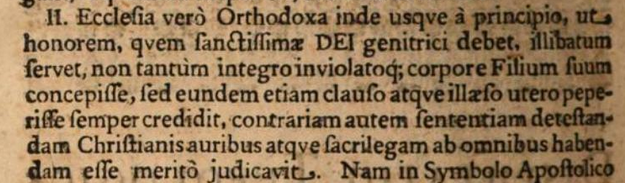
Disputatio Theologica De Virginitate Mariae in Partu, §II
1
77

Jun 15
🧵(3/4)
📜 "Disputatio panis est scholasticorum."
(A disputa/debate é o pão dos estudantes.)
— Retórica Escolástica (Séc. XIII)
No Medievo, "disputatio" era uma técnica de exame. Os alunos "limpavam" os contra-argumentos dos professores.
Era um torneio eliminatório mental.
👇
1
3

Jun 14
Direi che con la disputatio si chiude degnamente una discussione sulla Polonia e finita sulla Romania.
Buone cose
1
13

Jun 14
Diego... Lei si è già autodefinito come persona non avvezza alla disputatio. La sua è una critica vuota e insultante. Se vuole al posto di mainstream possiamo dire 'vulgata mediatica'. Contento adesso? Rimane la sua incapacità di entrare nel merito delle questioni sollevate.
1
34

L’étrange rêve de Joseph,
une disputatio avec le rav Ron Chaya (par Jean-Marie Mathieu).
contrelitterature.com/archiv…

138
Je laisse les hypothétiques lecteurs de notre disputatio évaluer qui de nous deux raisonne et ne raisonne pas ...
1
7
Pierre 1er retweeted

C'est un peu facile.
Autorisons donc le vraies discussions, débats, disputatio dans les médias centraux.
@tvlofficiel a au moins le mérite de le faire tandis que coule sur les chaînes officielles un filet d'eau tiède avec la seule parole officielle ou légalement permise (grâce à l'arsenal juridique reprimant la liberté d'expression en France).

Je crois que je suis prêt à payer un abonnement pour voir une chaîne d'info en continu juste avec Raoult qui reçoit des invités complotistes pour causer avec.
Et très sérieusement, moi j'en suis convaincu depuis toujours que ces gens n'ont strictement rien en commun si ce n'est un côté anti-système et donc si tu les fais vraiment discuter sur le fond ils s'entretuent.
Parce que toutes leurs théories ne tiennent pas ensemble .
1
8
673

ying yang gang retweeted

Vous connaissez le sujet de disputatio de vos parents ?

3
50
478
9,893