
Feb 27
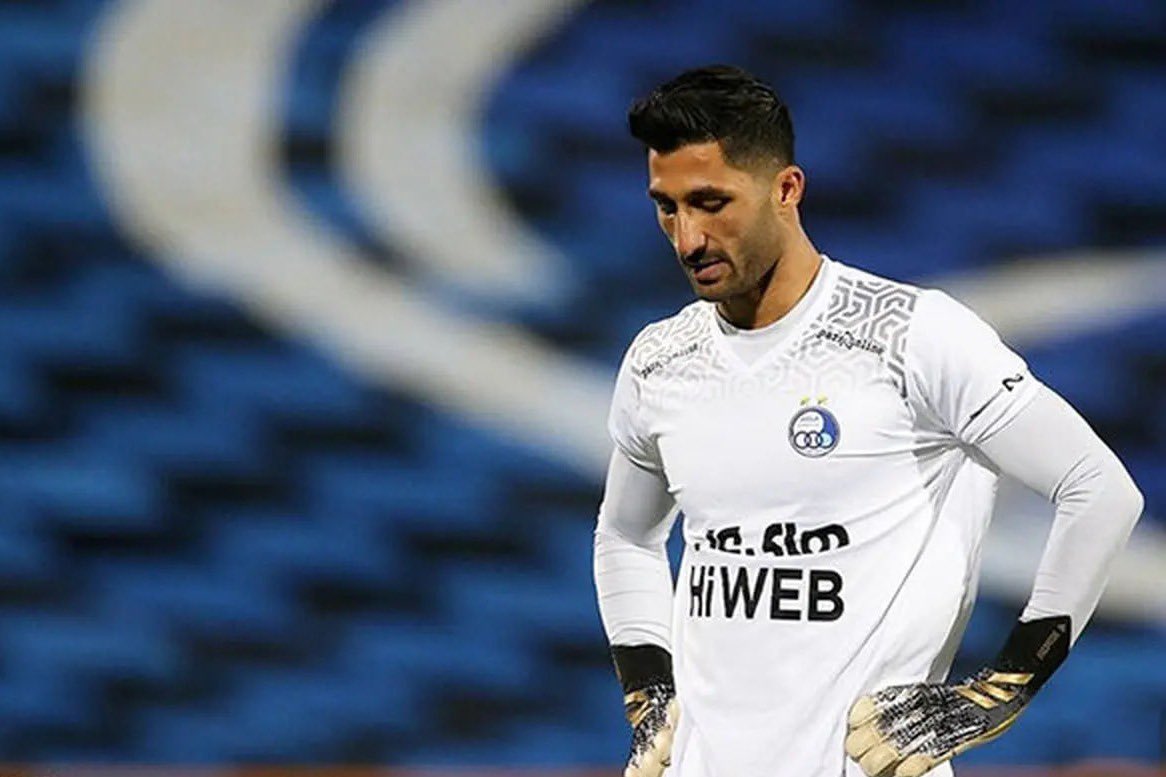
In the midst of the 2019 executions, when we were all crying out #DoNotExecute he stood boldly with his head held high and said: You will run out of nooses; we are countless.
#Rashid_Mazaheri
#IranMassacre
1
6
8
66

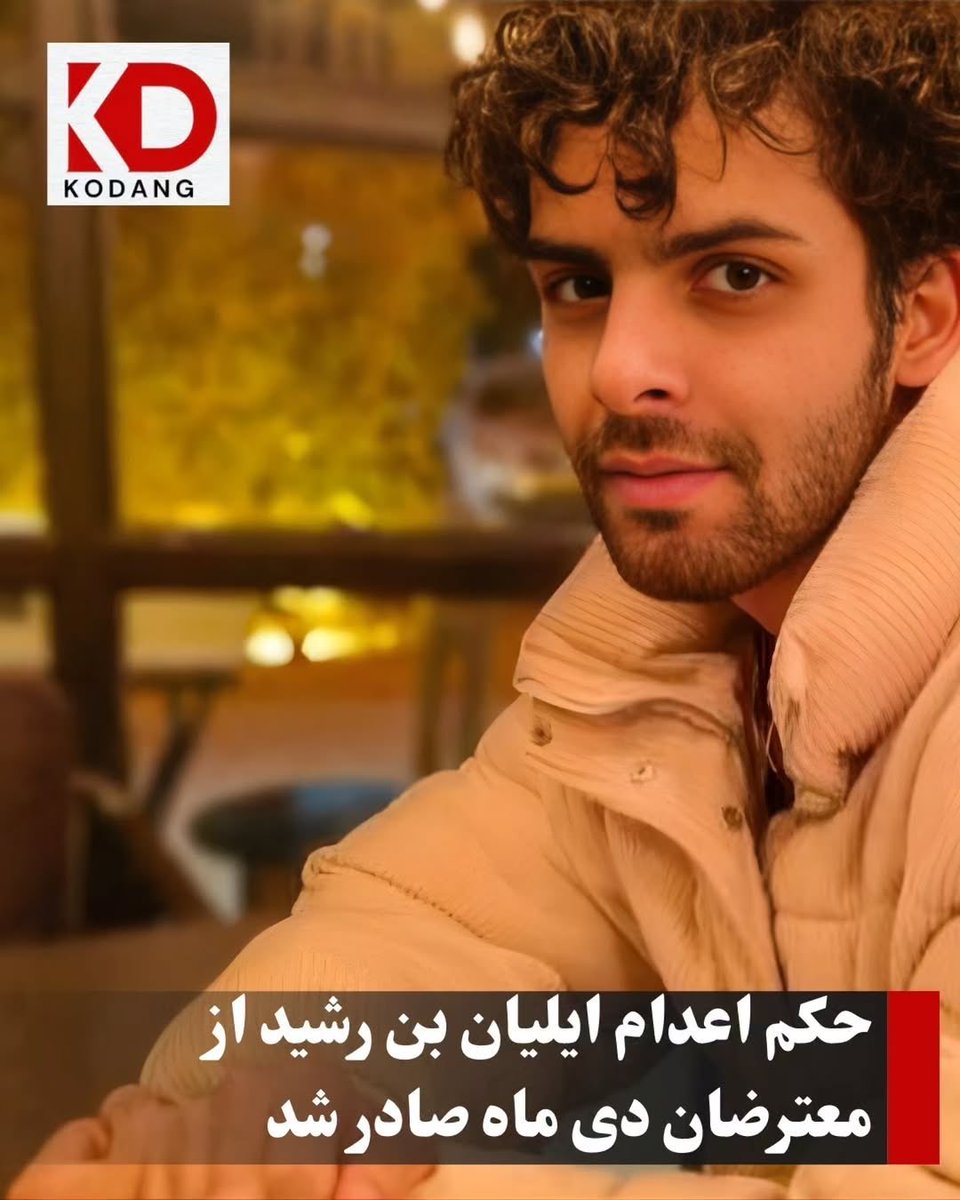
In Iran, #IliaBenRashid, a resident of Shahin Shahr, Isfahan, has been sentenced to death for participating in protests.
#DoNotExecute #StopExecutionsInIran #IranMassacre #IranianRevolution2026
2
6

In Iran, #IliaBenRashid, a resident of Shahin Shahr, Isfahan, has been sentenced to death for participating in protests.
#DoNotExecute

2
3
6
126

17 Sep 2025
🚨🚨🚨🚨🚨🚨🚨🚨🚨🚨🚨🚨
Video with English subtitles!
Dear friends, this is the mother of #BabakShahbazi, an innocent man who’s execution is eminent.
Please listen to the plea’s of a desperate mother doing everything she can to save her child. Don’t let her become another broken hearted Iranian mother.
@UNHumanright @POTUS @VP @amnesty
#DoNotExecute
#BabakShahbazi
#DoNotExecuteBabakShahbazi

2
5
18
921
16 Sep 2025
🚨#DONOTEXECUTE
#Babak_Shahbazi
Please be his voice while there is still time 💔 Babak is being executed under false accusations of being an Israeli spy.
#DoNotExecuteBabakShahbazi
16 Sep 2025

The Iranian Islamic regime has locked #BabakShahbazi in solitary confinement before executing him. We are left in unbearable desperation, powerless to protect him, his children, his family, and an entire Iran under tyranny and lawlessness. #بابک_شهبازی
3
4
88

16 Apr 2025
Warning: These images may be distressing to some viewers.
These images capture the anguish and deep concern of the family of #Hamid_Hosseinnezhad_Heydranlou, fearing the imminent execution of their loved one in Orumiyeh Prison.
#DoNotExecute
#Hamid_Hosseinnezhad_Heydranlou
#DoNotTakeLives
3
6
58

27 Feb 2025
🔴🔴🔴 The Misconception of Maryam Rajavi’s Legitimacy Among Iranians
The recent article portraying Maryam Rajavi and the National Council of Resistance of Iran (NCRI) as a significant opposition force fails to reflect reality. Contrary to what some Western politicians may believe, Maryam Rajavi is not a popular figure among Iranians. She is one of the most despised figures associated with Iran’s opposition, to the extent that many Iranians see her as an opportunist who exploits their suffering rather than advocating for their freedom. The depth of public rejection of Rajavi and her organization is unparalleled, for several indisputable reasons:
1️⃣ Public Hatred on Social Media and Widespread Rejection
In today’s world, social media serves as a powerful indicator of public sentiment. When it comes to Maryam Rajavi, the Iranians’ online reaction is a direct testament to the depth of their resentment toward her.
One of the most striking examples occurred in 2020 when she attempted to capitalize on the viral Persian hashtag #اعدام_نکنید (#DoNotExecute), which was aimed at stopping government executions. Instead of receiving support, her involvement triggered an overwhelming backlash. Iranians spontaneously launched the counter-hashtag #مریم_رجوی_گوه_خورد (loosely translated as “Maryam Rajavi should shut up”), which quickly became a top-trending phrase across Persian-speaking platforms. This reaction was not orchestrated by any state actors—it was an organic, grassroots expression of anger from ordinary Iranians across the political spectrum, including those who oppose the Iranian regime.
Similar reactions occur whenever Iranian media outlets, such as Iran International or BBC Persian, air her speeches. The comment sections on these platforms become flooded with outrage, ridicule, and outright rejection of her legitimacy. These instances reveal an undeniable reality: Maryam Rajavi is not only unpopular but universally despised among Iranians. If a political figure’s mere name provokes this level of disgust among the very people they claim to represent, how can they possibly be considered a credible alternative to the current regime?
2️⃣ A History of National Betrayal and Collaboration with Iran’s Enemies
One of the primary reasons for Rajavi’s deep unpopularity is her organization’s collaboration with Iraq’s Saddam Hussein during the Iran-Iraq War (1980–1988). While Iran was under relentless attacks, with cities being bombed and thousands of innocent civilians killed, the Mujahedin-e Khalq (MEK)—under Rajavi’s leadership—sided with Saddam’s military and actively fought against their own country. The MEK played a key role in the infamous Operation Eternal Light (Furough-e Javidan) in 1988, a failed attempt to invade Iran with Saddam’s backing. For most Iranians, this was the ultimate act of treason, making Rajavi’s faction irredeemable in the national consciousness.
To this day, no political movement in Iran, regardless of its ideology, has ever managed to cleanse itself from such a stain of betrayal. The MEK’s historical alignment with Iran’s most infamous foreign enemy has forever marked them as traitors in the eyes of the Iranian people.
3️⃣ Cult-Like Behavior and Severe Human Rights Violations
Rajavi’s organization does not operate like a democratic opposition group—it functions as a cult with strict authoritarian control over its members. Numerous testimonies from former MEK members describe horrifying practices within the group, including:
— Forced separation of families: Members are not allowed to have contact with their loved ones.
— Mandatory celibacy: Romantic relationships and marriages are banned within the group.
— Psychological control: Dissent is strictly punished, and members undergo intense indoctrination.
— Forced sterilization of women: Numerous reports indicate that female members have been subjected to sterilization to ensure their total devotion to the cause.
These oppressive policies have been widely documented by human rights organizations and former insiders who have escaped the MEK’s rigid and abusive structure. The organization’s behavior is reminiscent of extremist cults rather than a legitimate political movement.
4️⃣ Zero Grassroots Support Inside Iran
Unlike genuine protest movements that have emerged from within Iran—such as the 2017–2018 protests, the November 2019 uprising, and the “Woman, Life, Freedom” movement of 2022—the MEK has absolutely no organic presence inside the country. In every major wave of protests against the regime, there has been no sign of public support for Maryam Rajavi or her group. No one chants for them. No one references them.
Instead, their operations are almost entirely dependent on funding from external sources, including foreign governments, and they have resorted to holding expensive, staged rallies in Western capitals attended primarily by paid attendees and non-Iranians. This stark contrast between MEK’s foreign presence and their nonexistence inside Iran speaks volumes about their actual legitimacy.
5️⃣ Advocacy for Sanctions and Economic Warfare Against Iranians
Another reason for Rajavi’s widespread unpopularity is her organization’s direct support for crippling economic sanctions on Iran. The MEK has actively lobbied for tougher sanctions, despite knowing that these measures disproportionately harm ordinary Iranians, pushing millions into poverty and worsening their daily lives.
Regardless of their stance on the Iranian government, Iranians as a whole reject foreign-imposed economic warfare that devastates their economy. By aligning with policies that harm the Iranian people while claiming to represent them, Rajavi and her organization have alienated themselves further.
6️⃣ Media Manipulation and the Illusion of Popularity
Western media and some policymakers have attempted to create the illusion that Rajavi’s movement is a viable alternative for Iran’s future. However, the overwhelming reaction from Iranians whenever she is mentioned tells a different story.
When her speeches are aired on Iran International or BBC Persian, they are met with thousands of comments from Iranian viewers expressing outrage, ridicule, and absolute rejection. If there were even a fraction of genuine support for Rajavi inside Iran, we would have seen some evidence of it in the form of grassroots movements or slogans supporting her during the many uprisings. Instead, we see the opposite—people inside Iran either ignore her or openly mock her.
🔴 The Delusion of Rajavi’s Political Viability
While it may serve certain geopolitical interests to prop up Maryam Rajavi as an opposition figure, the harsh reality is that she has no legitimacy among the Iranian people. She is not viewed as a freedom fighter, nor as a leader of a democratic movement, but rather as a traitor, a foreign-funded mercenary, and the head of a repressive cult.
If Western policymakers and media outlets are genuinely interested in supporting a real alternative to the Iranian regime, they must listen to the actual voices of Iranians, not a figure who has been discredited by the very people she claims to represent. Any attempt to market Rajavi as a “leader of the Iranian opposition” is not only misleading but deeply insulting to the Iranian people, who have already made it abundantly clear: Maryam Rajavi is even more despised than the regime she claims to oppose.
1
12
58
634
17 Dec 2024
5
307
23 Oct 2024
"The echo of #DoNotExecute chants from the people in front of the Parliament!
A protest gathering against the medieval punishment of #execution, in front of the Parliament in Tehran.
#NationwideProtests"
#Hanahumanrights
#WomanLifeFreedom
#everyone
#followers
#Execution
Subscribe to Hana’s channel
t.me/kurdistan_Hana
7
9
248
23 Oct 2024
"The echo of #DoNotExecute chants from the people in front of the Parliament!
A protest gathering against the medieval punishment of #execution, in front of the Parliament in Tehran.
#NationwideProtests"
#Hanahumanrights
#WomanLifeFreedom
#everyone
#followers
#Execution
Subscribe to Hana’s channel
t.me/kurdistan_Hana
7
9
239

4 Jun 2024
For the Record: Raisi’s Crimes Will Not Be Buried with Him
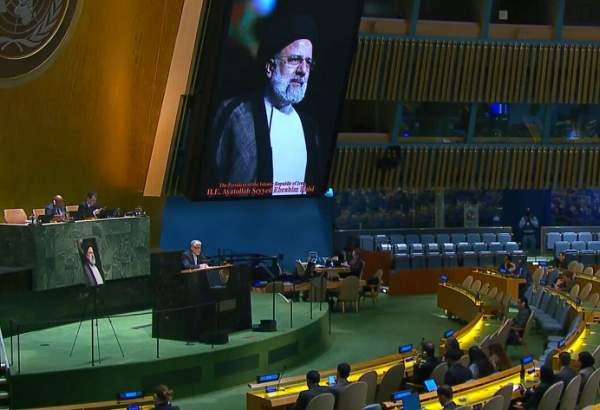
In late May, the Islamic Republic of Iran buried President Ebrahim #Raisi who died in a helicopter crash of May 19th, 2024. Although Ayatollah Ali Khamenei is the highest authority of the state, Raisi was treated as a Head of State and his funeral was attended by world dignitaries; others sent their condolences. Just weeks after the UN Fact-Finding Mission on Iran released its damning findings on Raisi’s government’s crimes during the Women, Life, Freedom protest, the United Nations’ General Assembly observed a minute of silence first and on May 30th paid tribute to Raisi, as required by protocol. Its President, His Excellency Dennis Francis, encouraged the Iranian people “to have the courage to come to terms with its profound loss.” The displays of sadness could not overshadow the joy many Iranians felt at the death of a man who rose up the ranks because he persecuted and killed them in the name of God. Many in Iran’s civil society, and among his victims, are also disappointed to see Raisi get away with murder and be honored at the UN despite his well documented four-decade long record of violence. So, in memory of his many victims, we should make sure that his crimes are not buried with him.
Raisi should have been prosecuted for crimes against humanity; for his deadly response to the 2022 protests and his direct involvement in the 1988 prison massacre, which Abdorrahman Boroumand Center for Human Rights in Iran (ABC) has documented. But that is not all. In his various functions, he had the power to decide about the lives of thousands. Raisi, who began his career at the age of 19 as assistant prosecutor after four years of seminary studies, was promoted to prosecutor at age 20. At a time when the newly founded Islamic Republic was facing serious internal challenges, he and many other unskilled seminary students were brought into the judiciary to eliminate dissidents and undesirables and spread fear among Iranians.
In the early years of his career, Raisi served as prosecutor in Karaj and Hamedan simultaneously (1980-1982) and Hamedan Provinces (1982-1985). He was Deputy Prosecutor of Tehran (1985-1988) and Tehran Prosecutor (1989-1994). For one year, he also was the Deputy Head and Secretary of the Headquarters for the Promotion of Virtue and Prevention of Vice, established by Ayatollah Khamenei in 1993. According to Raisi’s biography, Ayatollah Khomeini also sent him on special missions to swiftly implement “divine judgment” in areas where difficulty was experienced. There are no reliable statistics during those 14 years, due to state secrecy, the persecution of survivors, and the absence of independent media and civil society. As such, the number of executions resulting directly from his work as prosecutor is unknown. Nationwide, however, ABC has so far collected information on at least 14,580 executions in the 1980-1994 period, among them thousands of politically motivated executions.
Among the politically and religiously motivated executions in Hamedan were seven Baha’is, members of the Hamedan Spiritual Assembly. They were shot on June 14, 1981 on charges including “rising up against the Islamic Republic; dissemination of falsehoods and causing apprehension in the public’s mind; instigating Baha’is to tell lies and pretend to be victims; proselytizing the Baha’i faith; sending money to the State of Israel; and hiding documents.” Alireza Shalileh was executed in January 19, 1982, charged with “conspiracy and armed insurrection,” based apparently on documents found in his house that supported the views of the Mojahedin-e Khalq Organization and the fact that he distributed news and communications among other sympathizers. By 1989, Raisi’s first years as Prosecutor of Tehran, based on data ABC collected from Iranian media, 1122 people were executed, including 938 on drug charges, which often meant possession or carrying insignificant amounts of drugs.
Defendants prosecuted in criminal cases during those years were interrogated (and tortured) and tried without the presence of an attorney, and they could not, for the most part, call in witnesses, or appeal their sentences. These executions took place most often immediately after summary trials in which the prosecutor was given free rein to call for the death penalty on vague charges such as “corruption on earth,” and “enmity with God” without being required to substantiate their accusations.
Raisi excelled in the task of eliminating undesirables and this is what he did in the summer of 1988 when a cold-blooded secret inquisition hastily and secretly evaluated and led at least four thousands political prisoners to the gallows. The 1988 massacre of political prisoners has been well documented and prestigious international jurists, including Geoffrey Robertson, have qualified it as a crime against humanity. Raisi was one of the judges on a four-man itinerant panel or, as survivors call it, “the Death Committee,” tasked by Ayatollah Khomeini to eliminate prisoners who had not recanted their beliefs. Most of these prisoners had been arrested in their teens or twenties and sentenced to prison.
The August 2016 release of an audio recording of Raisi’s conversation with Ayatollah Hossein Ali Montazeri during the mass killing of political prisoners left no doubt about his participation. The Ayatollah’s son, Ahmad Montazeri, who released the audio recording was tried, defrocked, and sentenced to prison during Raisi’s tenure as the Prosecutor of the Special Court for Clergy (2011-2020.) In July 2022, Raisi’s then Deputy in Gohardasht Prison, Hamid Nouri, was convicted of 24 counts of murder and grave war crimes in Sweden.
Beginning in 2004, after serving for a decade as the head of the General Inspection Office, Raisi served another 14 years in the Judiciary. Under his watch as the Deputy Chief Justice (2004-2014) responsible for approving drug-related death sentences’ implementation, the number of reported executions of alleged drug offenders rose from 34 (18% of the total number) to at least 732 by 2010 ( 89%.) Drug charges leading to executions related most often to non-violent acts of possession, storing or dealing including in less than 30 grams (1oz) ( Karaj, 2007; Kerman 2009) or 43 grams of heroin, as was in the case of S.M.in Ahvaz in 2010.
In the 19 months Raisi acted as General Prosecutor (August 2014-March 2016,) while the international community focused on other issues, reported executions rose to at least 1,592, the highest number in decades. Activists also reported higher bail amounts and harsher sentences resulting from the increase in the number of charges brought against them. Atena Daemi was sentenced for her anti-death penalty activities to 14 years in prison (April 2015) on charges such as participating in a peaceful protest against the 2014 execution of Reyhaneh Jabbari (a young women who defended herself against the attempted rape of an intelligence officer), and sending information about abuses against political prisoners to human rights group. She spent seven years in prison, despite suffering from Multiple Sclerosis.
In March 2016, the Supreme Leader made Raisi the Head of Astan Qods Razavi, a business conglomerate and the richest Muslim charity in the world. But, his break from the judiciary did not last. On March 7, 2019, the Leader nominated him to be Chief Justice after a year of unrest and protests (including the Gonabadi darvishes, teachers, truck drivers, farmers) which followed a countrywide protest in late December 2017. The latter began with economic grievances over rumors of an increase in fuel prices and turned against clerical rule.
During Raisi’s tenure as Chief Justice (March 2019-August 2021), harsher prison sentences against civil society and political activists were reported. Saba Kord Afshari, an anti-compulsory hijab activist was sentenced to a total of 24 years in prison (September 2019) including for “promoting corruption and obscenity through appearing without a headscarf in public,” Pro-monarchy and anti-veil activist Soheila Hejab was sentenced to a total of 18 years in prison(18 March 2020,) and human rights lawyer Amir Salar Davudi was sentenced to 30 years in prison and 111 lashes (June 2019.) During Raisi’s tenure the cruel, inhuman, and degrading punishment of flogging was used to punish many activists. For example, a labor rights Activist received 74 Lashes for insulting the Minister of Labor, a Kurdish activist was lashed 72 times for participating in a protest, a Chrisitan convert received 80 lashes for drinking alcohol.
Raisi also oversaw the mass detention and summary prosecution of more than 7000 people arrested following the November 2019 countrywide protests triggered by an increase in fuel prices. Detainees, whose number was never revealed by the judiciary, were held incommunicado for months, without access to lawyers, while Covid 19 spread and killed in Iran’s prisons. Courts sometimes held trials without the presence of the accused, or denied them access to lawyers of their choosing during trial and sometimes to their own case files. Protesters were given harsh prison sentences. For example, 36 Behbahan protesters were sentenced in absentia to a combined total of 109 years’ imprisonment and 2,590 lashes. ABC has recorded lashing sentences for at least 110 protesters.
On November 18, 2019, at the onset of the protest, Raisi differentiated “the people” from “evildoers.” He attributed certain protest activity to people outside the country and stressed “that officials, citizens, and security forces should strive together to make sure “absolutely no damage” is incurred to “people’s livelihoods, lives, and dwellings.” He also warned that “tough punishments” await those who sought to “create insecurity in society.”
Ebrahim Raisi was not apologetic for his deeds. In a statement on February 26, 2015, Raisi rationalized his crimes:
“There are armies, soldiers, wars, etc. in all of the world, but the difference between us and them is that we are holy; our judiciary is holy and our regime is holy… There are various threats out there that want to annihilate this sanctity; defenders must ensure that this sacredness is not damaged. The prosecutor plays an important role in identifying [the threats], and in making sure that action is taken in a timely and appropriate manner. We must not allow corruption to infiltrate anywhere in the country.”
In August 2021, Raisi assumed the function of President, convinced of the holiness of the Republic and feeling accountable to no one. Hence the composition of his cabinet, which he filled with individuals sanctioned for human rights violations, including by the United Nations. And he acted decisively against what he saw as corruption. The number of executions continued to soar during his two years in office (August 2021 – May 2024) to at least 1800 of which an estimated 45% were alleged drug offenders. In November 2023, Raisi, who sees “flagrant drug users” as criminals, presented a draft law to the parliament to increase the forced detoxification period ten-fold and allowed the drug control headquarters to use the capacity of the armed forces to hold drug users in military camps with “hard and normal” conditions.
As his predecessor, Raisi had to face the years-long problem of women and school girls and the veil. His solution was more rigorous enforcement of the hijab laws. He ordered a “forceful implementation” of the 2005 Development and Chastity Plan (July 2022,)an enactment of the High Council of the Islamic Revolution that Raisi’s predecessors had not put into force, and signed the Chastity and Hijab decree (August 2022.) The plan aimed at reviving the tradition of promoting virtue and forbidding vice using the morality police, which saw its budget increase, families, and media to create a culture of hijab and strengthen girls’ religious identity. It is in that context that Jina (Mahsa) Amini was arrested and killed in the Vozara Detention Center in Tehran, on September 16, 2022, triggering months-long nationwide protests (involving 164 cities and 150 universities) which were brutally crushed.
The exact number of victims is unknown. ABC has so far collected information on the killing of 357, but the real number is estimated to be much higher. As many as between 68 to 77 children may have been among these victims. Thousands were injured, among whom hundreds sustained life altering injuries, such as the loss of their eyesight. The state did not release data on the number of arrests in the months following the death of Amini, but the Chief Justice announced in March 2023 the pardon of 22,628 of those who participated in the “riots.” At least 28 protesters were sentenced to death and 11 were executed.
Iran’s violent and disproportionate response to the nation-wide Women Life Freedom protests led to the establishment of Independent International Fact Finding Mission on the Islamic Republic of Iran (FFM Iran) by the Human Rights Council and the mission’s findings published in March 2024 are damning. The FFM Iran reported that the Islamic Republic’s various intelligence apparatus and armed forces have committed acts that it has deemed “unlawful deaths, extrajudicial executions, unnecessary and disproportionate use of force, arbitrary arrests, torture and ill-treatment, rape, and sexual violence, enforced disappearances, and gender persecution.” It has also determined that “the recurrent patterns of violence, including in multiple locations, and similar patterns of violations” indicate state policy. Violations detailed in its report “were planned, directed and organized by and involved the coordinated action of different State entities and the investment of a considerable amount of State resources.”
Under Raisi, at least eight protesters of the 2017-18 and 2019 protests were sentenced to death, including three in Tehran, on charges of “taking part in destruction and burning, aimed at countering the Islamic Republic of Iran.” These detainees’ lawyers had not been given access to their case files. Though these protesters, in defense of whom the hashtag “DoNotExecute” became a world trend were not executed, two others were. The popular wrestler Navid Afkari, arrested during the 2017-18 protests, was hanged in Shiraz (September 2020) on manufactured charges of murder after being tortured and denied the most basic rights of a defendant, including the right to call an expert witness.
It was also under Raisi’s leadership that the judiciary punished citizens who came out to protest after the downing of the Ukrainian flight PS 752 in January 2020 for acting against national security while ensuring that those responsible for the death of 176 passengers and crew were never identified and prosecuted. Instead, following a secretive investigation, the judiciary convicted unidentified individuals in a trial in which most victims’ families refused to participate.
The FFM Iran has noted the unresponsiveness of the Iranian government to its queries and communications and has called upon the international community including Member States to hold the perpetrators to account:
“In the light of the structural and institutional discrimination that has enabled the commission of crimes and violations and paved the way for pervasive impunity in the country, Member States should explore avenues for international accountability as the only genuine option to bring a modicum of justice to the countless victims of violations in Iran who have for far too long been perceived as silent victims.”
The FFM Iran detailed report further substantiated the body of evidence collected by human rights groups and victims pointing to Raisi’s involvement in crimes against humanity. It concluded that many of the serious human rights violations it found in the context of the protests that began on 16 September 2022 also amount to crimes against humanity, specifically those of murder, imprisonment, torture, rape and other forms of sexual violence, persecution, enforced disappearance and other inhumane acts, that have been committed as part of a widespread and systematic attack directed against a civilian population, more specifically women, girls and others expressing support for human rights. The UN Special Rapporteur Javaid Rehman noted in his February 2024 report that the Iranian authorities have not investigated, charged or prosecuted any officials for the rapes and other sexual violence in the context of the “Women, Life, Freedom.” With the culture of impunity that plagues Iran, Raisi’s successors are likely to continue to persecute citizens. Unless Iranian authorities experience serious international consequences, we can fully expect to see more crimes against humanity perpetrated.
Ebrahim Raisi's death was a loss for justice. His victims, and Iranian citizens, were robbed of the chance to see him prosecuted and his abuses exposed in an Iranian or international court. Since his death, Iranians had to watch with disbelief a murderer be honored at the United Nations, including by the UN Secretary General and the President of the UN General Assembly. “A tribute to Raisi,” wrote Nobel Laureate Nargess Mohammdi from prison, “is paying tribute to the gallows and to mass murders.”
Human rights organizations work with limited means to document and bring to the attention of the international community grave human rights crimes, as they did for Raisi, to impact policies and practices and hold perpetrators to account. Human Rights perpetrators want the international community’s respect and honors to tell those they persecute that no one cares about them. Honoring a notorious human rights abuser, weeks after the UN FFM Iran has urged Member States to “explore avenues for international accountability as the only genuine option to bring a modicum of justice to the countless victims of violations in Iran,” seriously undermines its work and the trust in international bodies that uphold international human rights law. Protocols are certainly needed for the functioning of a diplomatic body such as the UN, but if what we all want is a better and safer world, they should be revised so that they do not legitimize human rights abusers and undermine the UN founding principles.
link to the newsletter:
mailchi.mp/fb1b3490a53e/for-…
2
126
208
121,413

17 May 2024
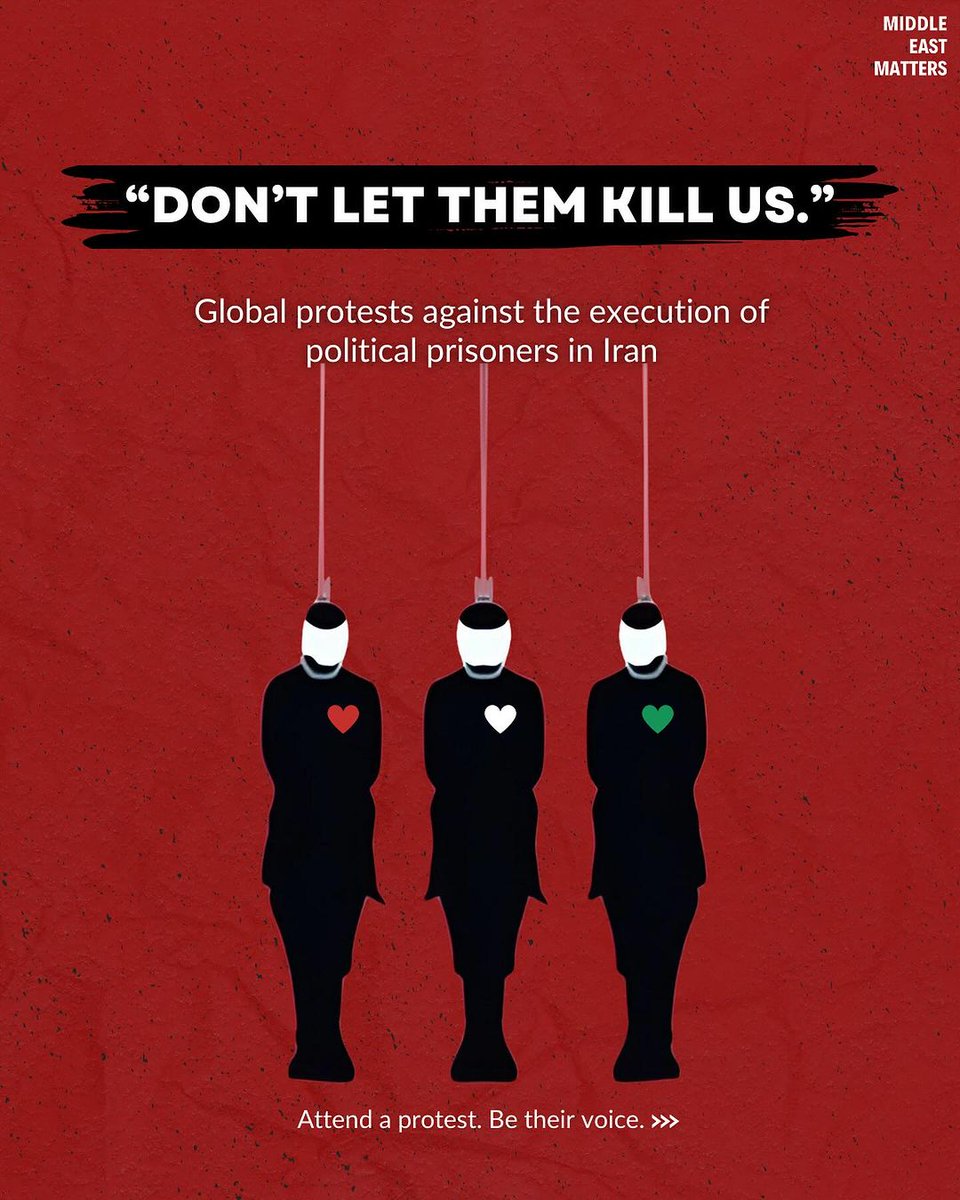
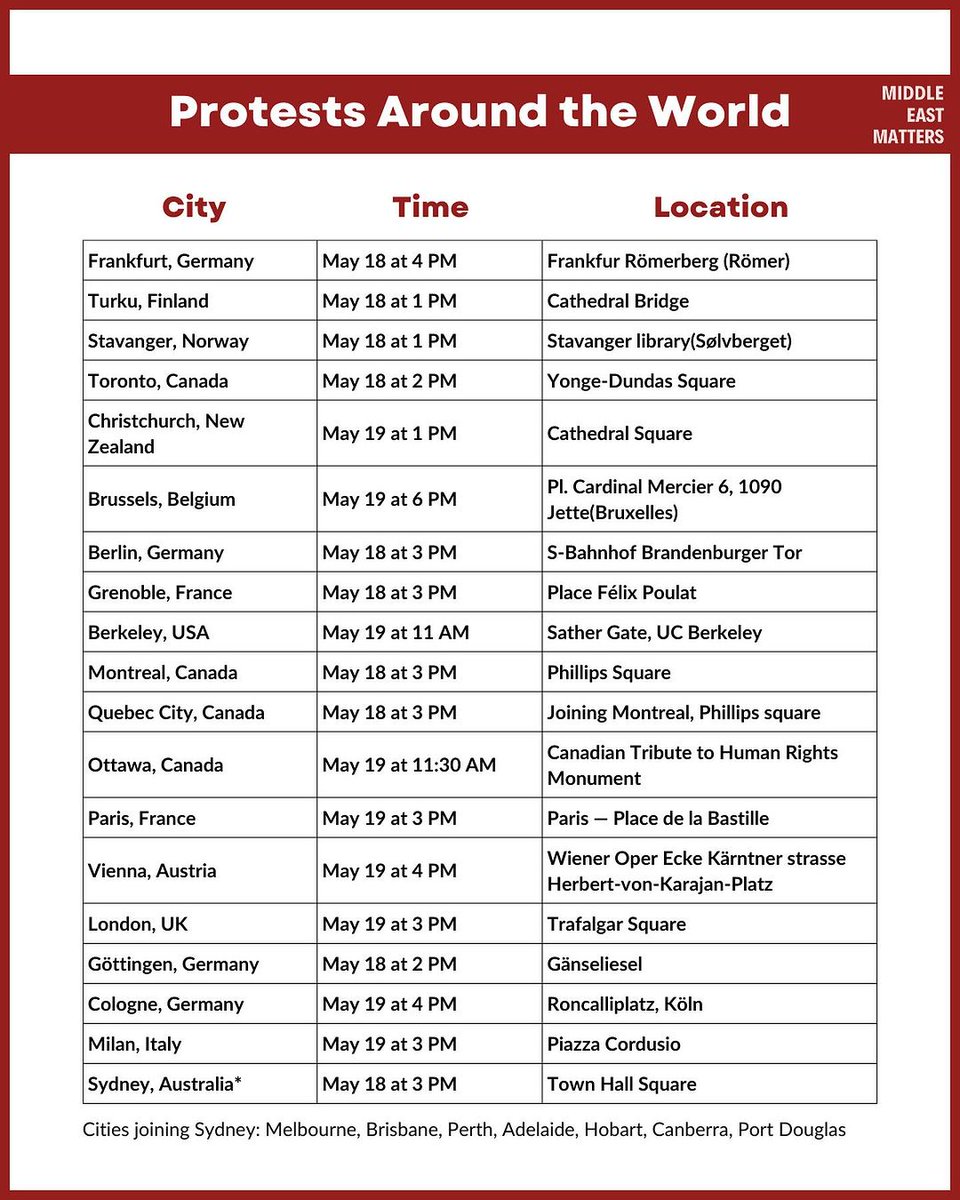
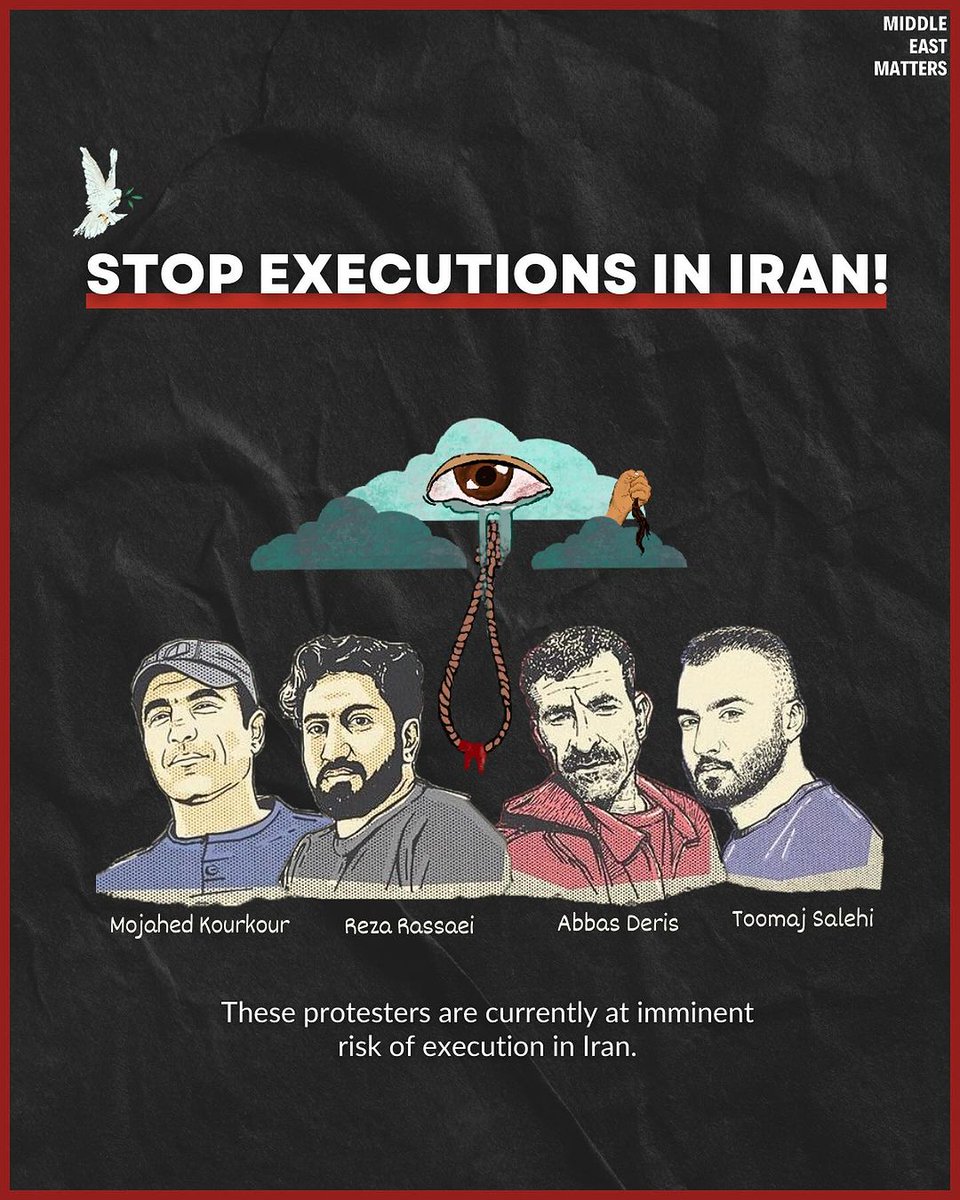
‼️ Join a rally in your city this weekend to support political prisoners at risk of execution in Iran ‼️
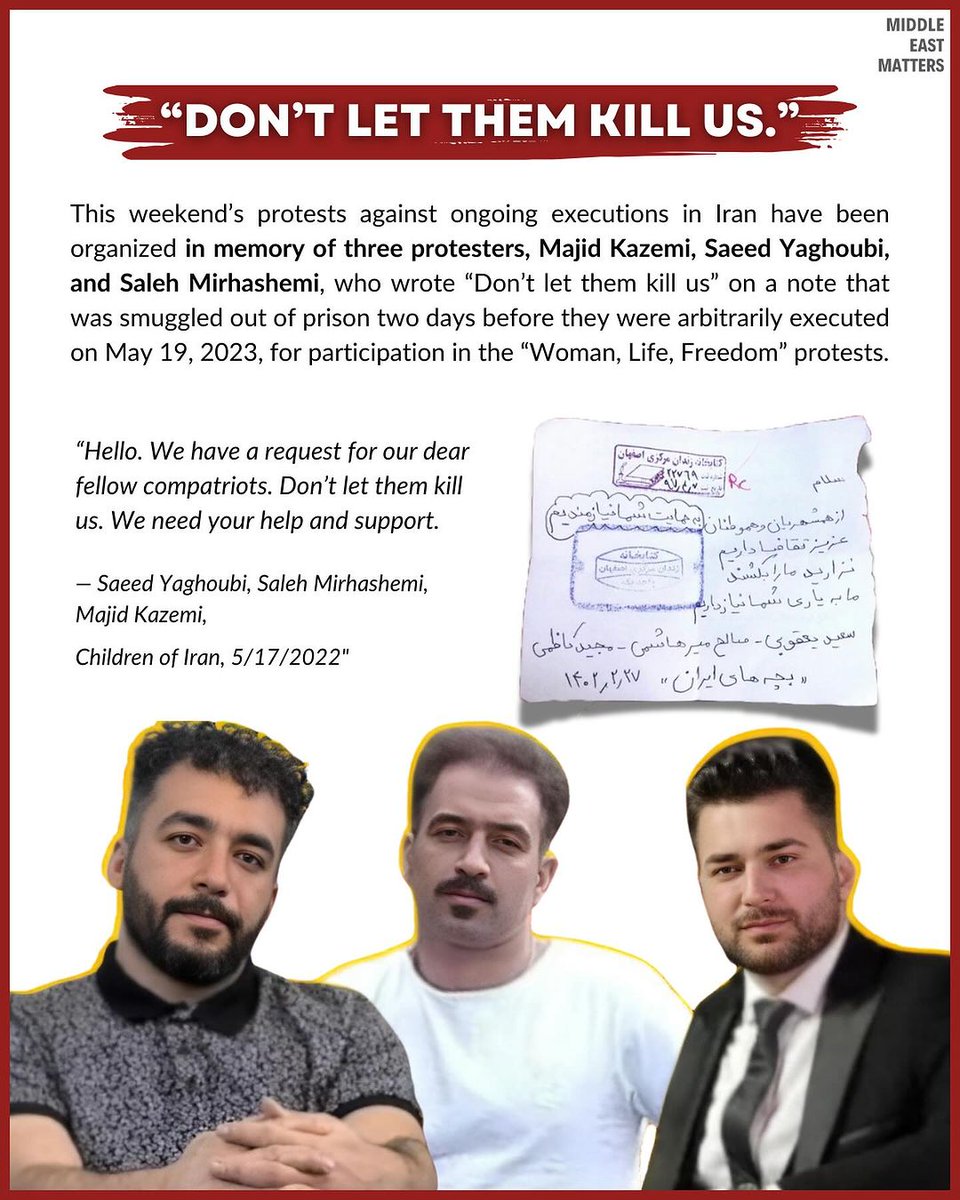
This weekend’s protests against ongoing executions in Iran have been organized in memory of three protesters, Majid Kazemi, Saeed Yaghoubi, and Saleh Mirhashemi, who wrote “Don’t let them kill us” on a note that was smuggled out of prison two days before they were arbitrarily executed on May 19, 2023, for participation in the “Woman, Life, Freedom” protests.
Organized by @GNforWLF
@NazaninBoniadi
#DoNotExecute #StopExecutionsInIran #Iran
1
3
215

24 Feb 2024
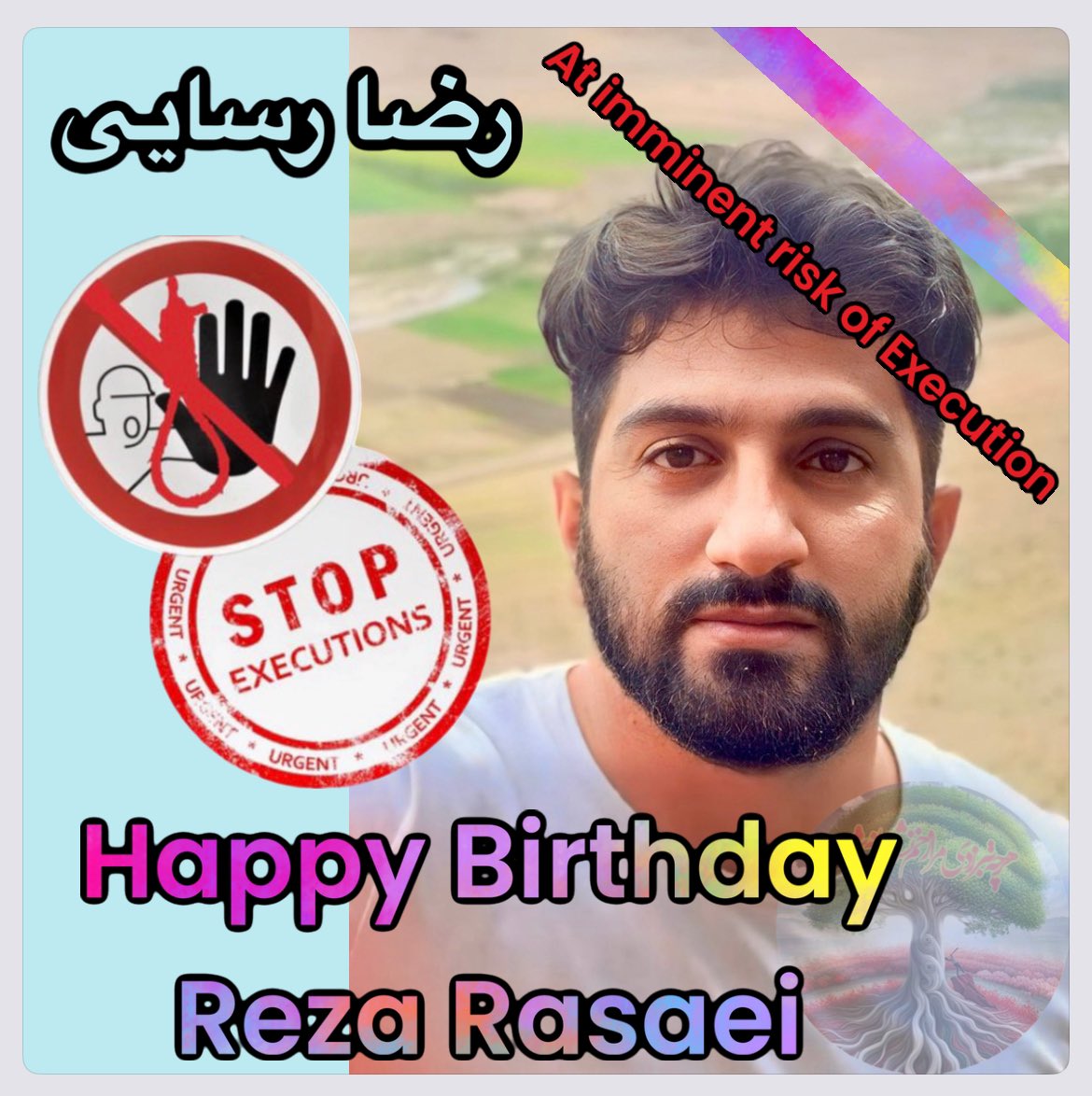
Today is the birthday of #RezaRasaei. Reza is still in serious danger of execution! Why ? Because he fought for freedom! There is no evidence for his accusations! Let's say that; this is the least we can do!
#DoNotExecute
#CutTheRope
#ZanZendegiAzadi
24 Feb 2024

امروز تولد #رضا_رسایی . رضا همچنان در خطر جدی اعدامه! چرا ؟ چون برای آزادی مبارزه کرد! هیچ مدرکی هم برای اتهاماتش نیست! صداش باشیم که این کمترینکاریه که میتونیم بکنیم!
#زندانی_سیاسی_آزاد_باید_گردد
#زن_زندگى_آزادى
2
1
153

24 Jan 2024
Organizations: Boroumand Foundation, Iran Human Rights Documentation Center, Siavash Pourzand Foundation, Atlas of Iran's Prisons, Iran Human Rights Organization, Impact Iran group.
Campaigns: #DoNotExecute hashtag, Alliance for Navid.
👇
1
6
14
182

23 Jan 2024
#MohammadGhobadlou pls help us stop this inhumane execution of another innocent young man. #donotexecute #IRGCterrorists
@C_AB_
@FoxNews
@senateur61
#محمد_قبادلو
3
23

22 Jan 2024
24-year-old Iranian protester Mohammad Ghobadlou could be executed at any moment. He was charged in a sham trial without due process and forced to "confess" under torture.
#DoNotExecute @khamenei_ir @POTUS @UN_HRC @SecBlinken @germanyiniran @FranceenIran @USEnvoyIran #محمد_قبادلو
1
8
22
1,051

22 Jan 2024
24-year-old Iranian protester Mohammad Ghobadlou could be executed at any moment. He was charged in a sham trial without due process and forced to "confess" under torture.
#DoNotExecute @khamenei_ir @POTUS @UN_HRC @SecBlinken @germanyiniran @FranceenIran @USEnvoyIran #محمد_قبادلو
1
3
3
132

22 Jan 2024
🚨 URGENT: Iranian protester Mohammad Ghobadlou could be executed at any moment.
Mohammad, who has a long history of mental disability, was arrested in September 2022 during the nationwide “Woman, Life, Freedom” protests.
He received two death sentences after grossly unfair and fast-tracked sham trials that relied on torture-tainted forced “confessions.”
Authorities denied Mohammad access to a lawyer during the investigation phase, physically abused him, and withheld his bipolar medication to force his “confession” that he “deliberately” ran over several police officials with a car and killed one.
Mohammad’s right to a fair trial was flagrantly violated.
Speak up against his execution!
#DoNotExecute @khamenei_ir @POTUS @UN_HRC @SecBlinken @germanyiniran @FranceenIran @USEnvoyIran #محمد_قبادلو
23
19
3,026

14 Jan 2024
The lifes of Mohammad Faramarzi, Mohsen Mazloum, Pejman Fatehi and Vafa Azarbar are in grave danger.
Be their voice! Stand up against executions!!!
#unitytoendexecutionsiniran #pejmanfatehi #mohsenmazloum #vafaazarbar #mohammadfaramarzi
#StopExecutionsInIran #DoNotExecute
2
2
54