
Jun 11
❓Vous lisez encore vos PDF page par page ?
Essayez plutôt de leur poser directement vos questions. 😎
🎥 youtube.com/shorts/JJWKG1YbK…
#UPDF #UPDFAI #ChatPDF #PDF #IA #IntelligenceArtificielle #Productivité #DocumentsPDF #Étudiant #TravailNumérique #AssistantIA #PDFIntelligent
1
1
24
Jun 8
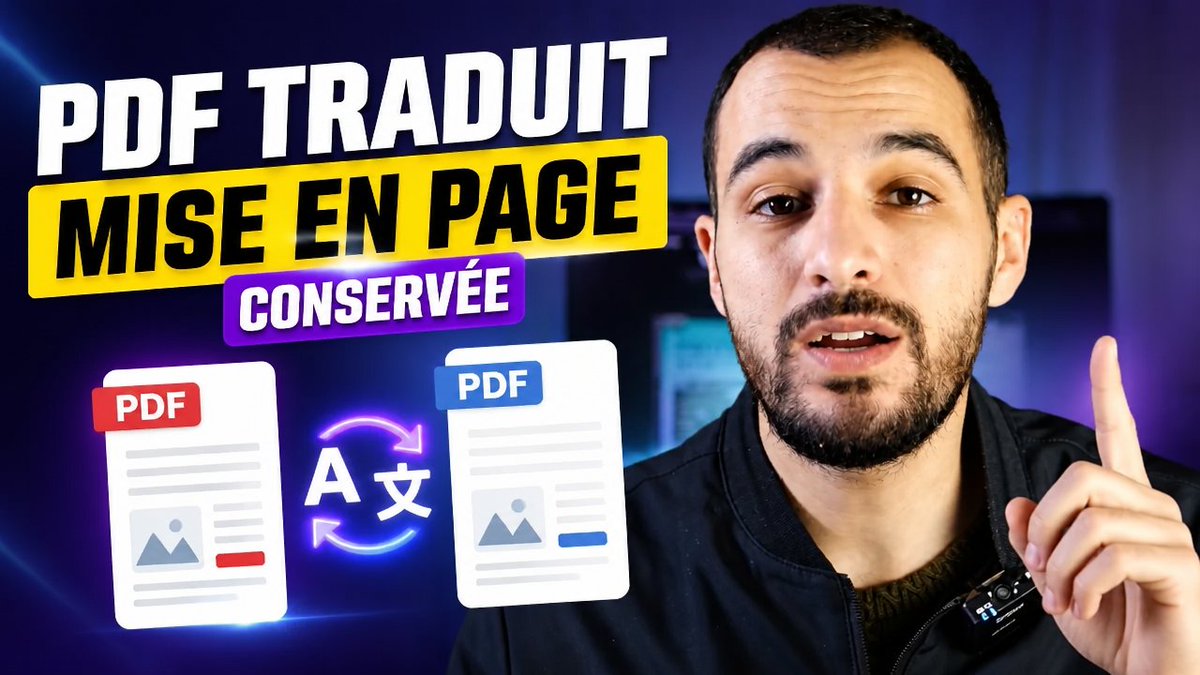
🌍📄 Besoin de traduire un PDF sans casser sa mise en page ?
🎥 Regardez le tutoriel :
youtu.be/DsVeNje7gYw
#UPDF #PDF #TraduirePDF #PDFTraducteur #TraductionPDF #PDFMultilingue #Productivité #Bureautique #DocumentsPDF #OutilsPDF #PDFTools #IA #UPDFAI #TravailNumérique
15

Jan 19
🔥 THE LUCY TRINITY: A Complete Breakdown of open source AI operating system
The Beginning: A Career Crossroads
Last year, after 18 years in the hospitality industry worldwide, I found myself at a crossroads. Rather than jumping straight into the next role, I made a deliberate choice: take a sabbatical year to study AI, while enjoying life in Costa del Sol.
I enrolled in the EITCA/AI European IT Certification program and immersed myself in machine learning, neural networks, and automation. But I didn't want to just learn about AI — I wanted to build something real.
That's when I founded AVA Digital LLC (registered in the US). AVA stands for Avatar — because from day one, my vision was clear:
Build AI-backed virtual assistants that can be connected to any client's accounts and perform any digital task they need.
Not ChatGPT wrappers. Not glorified chatbots. Real, autonomous, digital employees.
I believe giving your AI a name is crucial. I chose 'Lucy'—referencing the 3.2-million-year-old Australopithecus who represents the dawn of human knowledge. Why? Because when you speak to an AI, you are really speaking to a reflection of yourself. Giving it a name transforms it from a cold tool into a digital extension of your own mind—Lucy the Teacher, Lucy the Advisor, Lucy the Executor.
The First Build: Proof of Concept (Old MacBook Pro)
I started with what I had: an aging MacBook Pro (16GB RAM) that had been collecting dust.
Phase 1: The Foundation (Local AI Stack)
Step 1: Ubuntu Server Installation
Wiped macOS, installed Ubuntu Server 22.04 LTS
Reason: Better Docker support, lower overhead than macOS
Step 2: Ollama (Local LLM Runtime)
Installed Ollama to run open-source language models locally
Downloaded three foundational models:
Gemma (Google's efficient 7B model)
GPT 20B (open-source chat model)
Mistral 7B (state-of-the-art reasoning)
Added Open WebUI for a clean interface
Why local models?
Zero API costs
Complete privacy (client data never leaves the server)
Proof that this could scale without cloud dependencies
Phase 2: The Orchestration Layer (n8n)
Next, I installed n8n — the open-source workflow automation platform.
What n8n brought:
Visual workflow builder (no-code for most tasks)
400 pre-built integrations (Gmail, Calendar, Sheets, Slack, Twilio, Stripe, etc.)
Ability to host AI agents with tools (LangChain support)
Webhook endpoints for external services
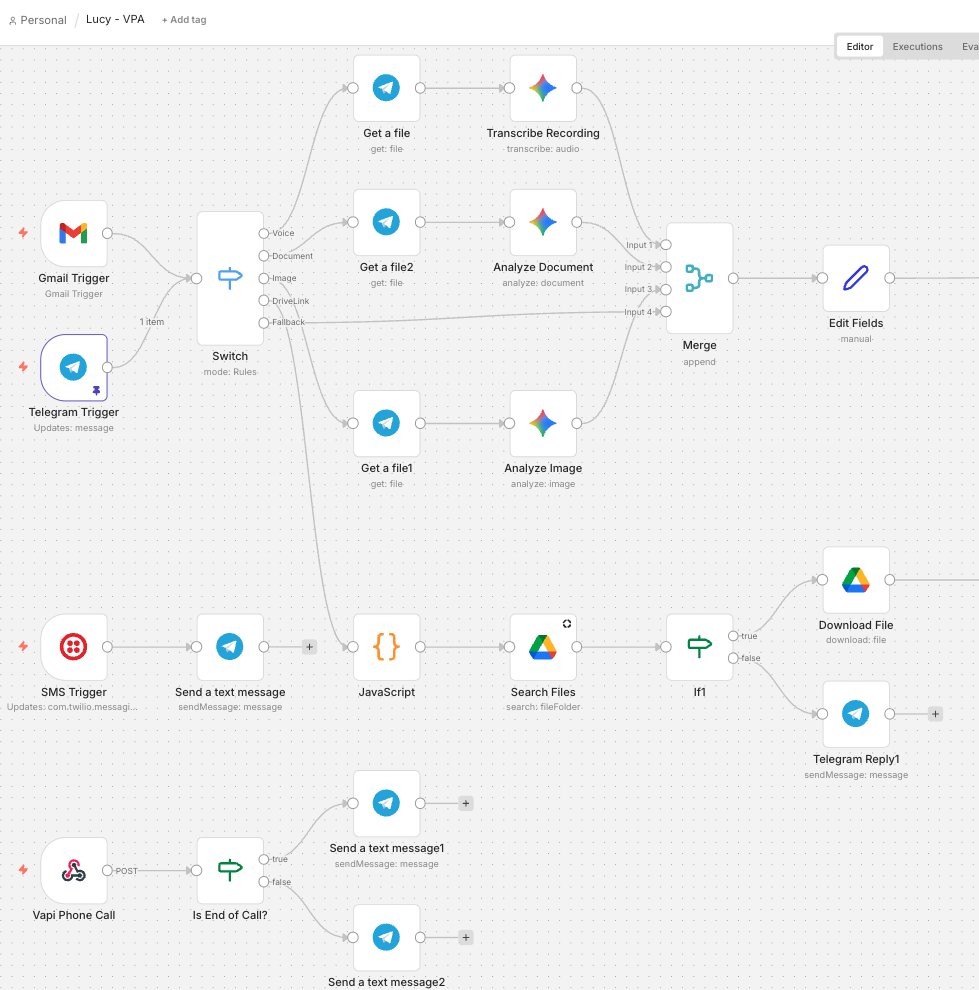
The breakthrough moment: I realized n8n could act as the nervous system — connecting inputs (Telegram, email, SMS) to outputs (Calendar, Drive, databases) with AI decision-making in between.
Codename "Agent": It orchestrates the chaos (central intelligence), It decides the strategy (autonomous reasoning), and It unifies the power (connects the Eyes and the Hands)
Phase 3: The Eyes (Skyvern)
I needed something that could see the web and interact with it autonomously.
Enter Skyvern:
Open-source browser automation with visual AI
Unlike Selenium (code-based), Skyvern understands pages like a human
Can navigate dynamic sites, fill forms, extract data
Integration with n8n:
Exposed Skyvern API via Cloudflare Tunnel
Built n8n webhook listener for async results
Created "Oracle" sub-workflow as a tool Lucy could call
Codename "Oracle": Because it could see what I couldn't — behind logins, dynamic content, JavaScript-heavy pages.
Phase 4: The Hands (Agent Zero)
I needed something that could write and execute code on demand.
Enter Agent Zero:
Open-source coding agent
Writes Python/Bash scripts based on natural language
Runs code in sandboxed Docker environment
Integration with n8n:
Built "Architect" sub-workflow that passes Python code to Agent Zero
Agent Zero executes, returns STDOUT/STDERR
Lucy interprets results and acts accordingly
Codename "Architect": Because it designs solutions, builds tools, solves technical problems.
Phase 5: The Brain (Lucy Assembly)
With all components running, I built Lucy — the trinity.
Architecture:
┌─────────────────────────────────────┐
│ Lucy (The Trinity) │
│ │
│ ┌─────────────────────────────┐ │
│ │ n8n (Orchestration Layer) │ │
│ │ - AI Agent (Gemini 3 Flash) │ │
│ │ - 26 Connected Tools │ │
│ │ - Memory System │ │
│ └──────────┬──────────────────┘ │
│ │ │
│ ┌────────┴────────┐ │
│ │ │ │
│ ┌──▼────┐ ┌───▼────┐ │
│ │Oracle │ │Architect│ │
│ │(Eyes) │ │ (Hands) │ │
│ └───────┘ └────────┘ │
└─────────────────────────────────────┘
Lucy is NOT just n8n. Lucy is the trinity — the synergy of:
The Agent n8n (orchestration)
The Oracle Skyvern (web automation)
The Architect Agent Zero (code execution)
The Infrastructure: Making It Real
Domain & Security (Note: Real domains redacted for security) Cloudflare Setup:
Registered domain: project-lucy.ai (Example)
Created subdomains:
agent.project-lucy.ai → n8n
oracle.project-lucy.ai → Skyvern
architect.project-lucy.ai → Agent Zero
Cloudflare Tunnels:
No open ports on home network (maximum security)
Zero-Trust architecture
TLS encryption end-to-end
Why this matters: Clients can interact with Lucy from anywhere — she's always online, always accessible, but completely secure.
The Email System Lucy's Identity:
Email: lucy@project-lucy.ai (her official address)
Connected to: My Business Gmail (founder@avadigital.ai)
Email Intelligence:
Reads both inboxes (hers and mine)
Drafts responses based on sender type:
From me: Direct reply allowed
From strangers: Drafts response, asks for approval first
Context-aware: Remembers previous threads
The Communication Stack
Lucy communicates like a real assistant:
ChannelWhat She DoesExampleTelegramTwo-way text chatMe: "What's on my calendar?"Voice NotesConverts text to speech (Google TTS)Sends audio briefingsSMS (Twilio)Receives/sends textsCan notify contacts, handle reservationsPhone (Vapi)AI voice assistantAnswers calls, transcribes, schedule appointment, answer question with access to company knowledge, actsEmailFull read/write/replyManages both inboxesImagesVision AI analysisAnalyzes photos, logs meals (calorie tracker)DocumentsPDF/DOCX processingSummarizes contracts, extracts data
The Capabilities: What Lucy Actually Does
Daily Operations (Past 3 Weeks of Development)
Morning Routine:
7 AM: Generates daily briefing (weather, calendar, top 10 news)
Sends text audio version to Telegram
Highlights urgent emails
Client Management:
Monitors inboxes
Categorizes emails (urgent/info/spam)
Drafts responses based on context
Schedules meetings via Calendar
Knowledge Work:
Searches files in Google Drive
Analyzes documents (PDFs, spreadsheets)
Creates reports, summaries
Logs information to Notion
Financial Tracking:
Logs expenses to Google Sheets
Checks Stripe balance
Tracks nutrition (calorie counter with image analysis)
Creative Tasks:
Generates images (Nano Banana Pro)
Creates videos (Veo 3.1)
Writes content (blog posts, tweets)
Web Research (Oracle):
Monitors competitor pricing
Scrapes data from dynamic sites
Fills forms, books reservations
Extracts structured data
Technical Execution (Architect):
Writes Python scripts
Processes CSV/JSON files
Performs calculations
Analyzes datasets
The Hardware Reality Check
Current Setup (MacBook Pro 16GB):
✅ Runs 24/7 without issues
✅ Handles all workflows smoothly
⚠️ Limited to smaller LLMs (Mistral 7B, Gemma 7B)
⚠️ Can't run 70B models
The Upgrade: Mac Studio M1 Ultra (Arriving Soon)
Recently, I invested in a Mac Studio M1 Ultra (64GB RAM, 2TB SSD, 20-Core CPU, 48-Core GPU)
Why this changes everything:
64GB unified memory = Can run Qwen 2.5 72B locally
M1 Ultra GPU = Fast inference (~20 tokens/sec)
Local LLMs = Zero API costs, complete privacy
Fine-tuning capable = Custom models for clients
The vision: When the Mac Studio arrives, Lucy will have:
Her own brain (local 72B model, not Gemini)
Faster reasoning (no API latency)
Client-specific variants (fine-tuned per customer)
The Business Model: What I'm Building
AVA Digital's Offering:
Custom AI agents that run locally on client infrastructure.
What makes us different:
Traditional "AI Agencies"AVA DigitalChatGPT wrapperFull autonomous agentCloud-only (OpenAI/Anthropic)Self-hosted (client's servers)Per-request costsZero ongoing API feesOne-size-fits-allFully customized per clientNo real executionWrites code, browses web, manages accounts
Potential Pricing Model:
Setup: €5,000 - €10,000 (one-time)
Infrastructure: Client's own hardware or cloud
Maintenance: €500 - €1,000/month (optional support)
ROI for clients:
Saves 20-40 hours/week
Replaces multiple SaaS tools (Zapier, Make, etc.)
Pays for itself in 3 months
The Journey: Lessons Learned
Week 1: Foundation
Installing Ubuntu, Docker, Ollama
Testing local LLMs (performance benchmarks)
Setting up n8n, connecting first services
Biggest challenge: Understanding n8n's workflow logic (visual programming is different from code)
Week 2: Integration Hell
Connecting Skyvern (CORS issues, webhook configs)
Agent Zero Docker exec permissions
Cloudflare Tunnel authentication
Breakthrough: Realized I needed sub-workflows as "tools" instead of direct API calls.
Week 3: The Trinity Takes Form
Oracle (Skyvern) connected successfully
Architect (Agent Zero) executing Python
Lucy making autonomous decisions
The "holy sh*t" moment: Asking Lucy to research competitor pricing, and she autonomously:
Called Oracle to scrape 3 websites
Called Architect to analyze the data
Uploaded results to Drive
Sent summary to Telegram
All in 3 minutes. No human intervention.
The Current State: Production-Ready
As of January 2026:
Stats:
11 Active Workflows
26 Connected Services (Gmail, Calendar, Drive, Sheets, Telegram, Twilio, Stripe, X, Notion, etc.)
3 open source AI Models (n8n, Skyvern AI, Agent Zero)
100% Uptime (Cloudflare Tunnels are rock-solid)
Zero Monthly Costs (runs on owned hardware)
She's not a prototype. She's in production.
The Vision: 2026 Goals
Scale the System
Mac Studio Integration
Migrate Lucy to new hardware
Deploy Qwen 2.5 72B locally
Remove Gemini dependency (privacy )
Fine-Tuning Pipeline
LoRA training workflow
Client-specific model variants
Domain expertise injection
First Paying Clients (Traveling to Germany next month, full open source local hosting setup)
Client Onboarding
AVA package v1.0
Setup server and automation (Terraform scripts)
Client training materials
Case Studies
Document time savings
ROI calculations
Video demos
From a single Telegram text, this system can physically browse the web to book a flight using my credentials, generate and post marketing content to social media, or write and execute complex Python code directly on my server—this is the autonomous 'God Mode' AI that we some of us are waiting for.
This project moves the 'AI replacing jobs' debate from theory to reality. With today's open-source stack, we can already hand over full executive power to an agent. The shift is subtle, and it will take time to ripple through the industry, but building Lucy taught me one undeniable truth: the technical barriers are gone—virtually any digital role can now be autonomously replicated. The question is no longer 'Can AI do this?', but simply 'What do we want to build with it?
Mickaël Farina 🚀 avadigital.ai "We speak AI, so you don't have to."
Contact: mikarina@avadigital.ai 34600680274 @n8n_io @agentzero @Agent0ai @skyvernai
2
3
232

Little Green Men - Johns Hopkins University Applied Physics ...jhuapl.edu › Content › documentsPDF
Russian Intervention in Crimea and Eastern Ukraine . ... the patriotic Russian should respond, “How much did the CIA pay you?” Dugin.
1
2

Are you serious? Have you not read the autopsy report? George Floyd had 3 time the lethal level of Fentanyl in his system. Have a read sweetheart
hennepin.us › documentsPDF
Web results
Autopsy report - Hennepin County
1
1

bphn.go.id › documentsPDF
Web results
Undang - Undang - Badan Pembinaan Hukum Nasional
Coba dibaca ini, siapa tau bs membantu.
1
4
15


31 Jan 2021
Full report of all the human rights violations committed by the Indian government in 1984 amnesty.org › DocumentsPDF
Web results
India: Human rights violations in Punjab - Amnesty International
2

16 Nov 2020
Los planes están hace años,pero los isleños votan por sus compadres isleños que siempre los roban sgc.gov.co › DocumentsPDF
san andrés, providencia y santa catalina - Servicio Geológico ...
3
1
2

12 Nov 2020
Es claramente una EP, pero no sé si por picar tantas demandas o por tuitear...
insst.es › documentsPDF
Resultados web
Tendinitis y tenosinovitis del pulgar DDC-TME-10 - DDCDIRECTRICES PARA ...
Cuídate!!!! 😘
4
6

statistics.gr › documentsPDF
Εβδομαδιαία Στοιχεία Θανάτων - ΔΕΛΤΙΟ Τύπου. Πως εξηγείς που οι θάνατοι στην χώρα είναι ακριβώς ίδιοι με πέρυσι. Πριν με πάρεις για κανέναν ψεκασμενο να πω ότι τηρώ τα μέτρα 100%.Απλα θέλω γνώμες
1
2

8 May 2020
Michigan (.gov) › documentsPDF
Web results
COC Opinion and Order - State of Michigan
Check out the Judge's Decision.
It will make your head spin.
1

17 Dec 2019
Has estudiado la evolución del acuífero desde el trasvase tajo segura? Y desde el aumento de regadío en el campo de Cartagena?
um.es › documentsPDF
Hidrogeología del Campo de Cartagena: funcionamiento de los acuíferos y relación ...
1
5

17 May 2014
Deseamos que pasen un excelente fin d semana, lista de premios del #SorteoSuperior 2389
lotenal.gob.mx/ documentsPDF/superior2389.pdf
2 Jan 2012
@peter_fp < Lista de Premios del Sorteo Magno - 31 de diciembre de 2011- pdf.lotenal.gob.mx/pdf/documentsPDF/magno346.pdf
17 Nov 2011
¡Jueves! ya casi fin de semana, lista del 16 de noviembre del Sorteo Gordito.http://pdf.lotenal.gob.mx/documentsPDF/gordito123.pdf
1
1 Sep 2011
Buen jueves, ledejos la lista del #SorteoGordito de ayer ...#Suerte!!!http://www.lotenal.gob.mx/documentsPDF/gordito113.pdf
8 Jun 2011
Buenooos díaaas !!!!!!! la lista de ayer http://www.lotenal.gob.mx/documentsPDF/mayor3367.pdf buena suerte !!!!!!!
6 Jun 2011
Buenoos díaas !!!!!!! Bonita semana les dejo la listad de ayer http://www.lotenal.gob.mx/documentsPDF/zodiaco1070.pdf mucha suerte!!!!
5 Jun 2011
Buenooos díaas !! bonito domingo para todos, les dejo la lista de ayer sábado !!! http://www.lotenal.gob.mx/documentsPDF/lotemex33.pdf