
27 Jan 2025
At elementsuite, we've created a robust, self-service HR and Scheduling system you can build and personalise.🌟
From branding to custom fields, reports and more, discover how everyday gives you the freedom to build an HR system that works the way you do.
hubs.li/Q0348dY50
1
14

11 Jan 2025
#Zellis to Expand #AI-Powered #HR and #Payroll Platform With #Elementsuite Acquisition
#cx #artificialintelligence #generativeai #data #cybersecurity #digitaltransformation #CES2025 @CurieuxExplorer @Fabriziobustama @XavierAncelin @chidambara09 @PawlowskiMario @labordeolivier @pierrepinna @FinMKTG @AnthonyRochand @pierrecappelli
pymnts.com/acquisitions/2025…

1
5
8
345

10 Jan 2025
#AI powered #WFM #HCM software company, @elementsuite to be acquired by @Zellis_Official . Clients include McDonald, Five Guys.
The transaction is subject to closing conditions, financial terms were not disclosed.
#HR #Acquisition #UK #Ireland
9 Jan 2025

Zellis to acquire (subject to regulatory consents) @elementsuite in complementary expansion of AI-powered HCM suite.zellis.com/resources/press-a…
We’re excited by the opportunity this brings for new and existing customers of both elementsuite and Zellis.
#TechNews #HRTech #PayrollTech
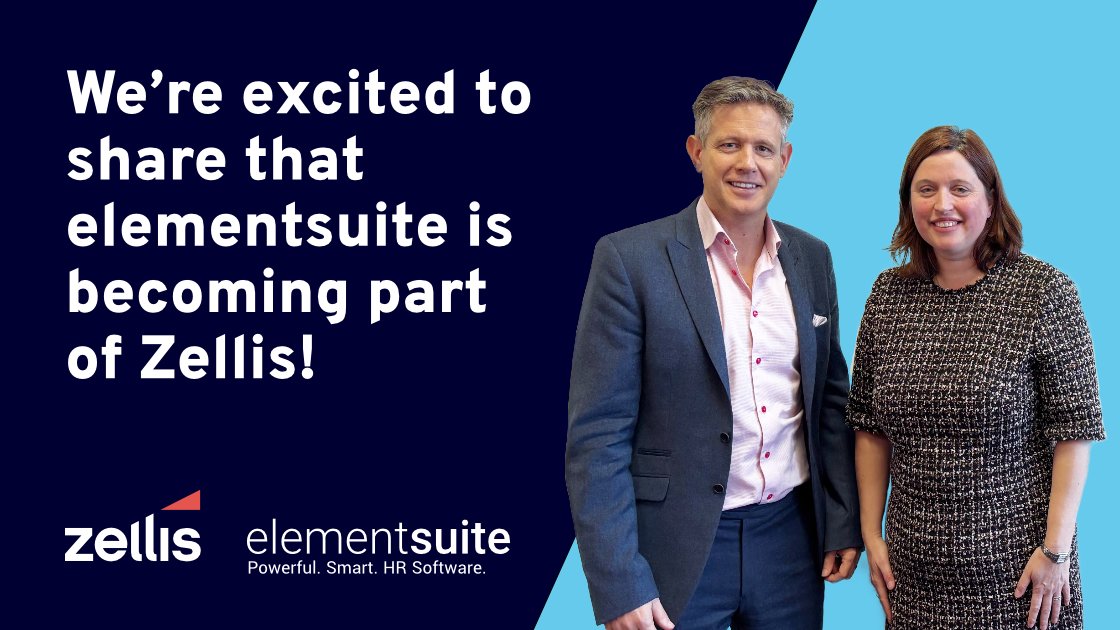
ALT We're excited to share that elementsuite is becoming part of Zellis! Image shows elmentsuite CEO Steve Elcock, and Zellis Business Unit CEO Abigail Vaughan.
1
1
1
122

10 Jan 2025
.@Zellis_Official Acquires elementsuite
Read more: financialit.net/news/infrast…
#Zellis #Elementsuite #Acquisition #HRTech #PayrollSolutions #finance #fintech #FinancialIT
1
4
83

9 Jan 2025
Hot start to 2025 #HRtech M&A; @Zellis_Official adds #AI-enabled HR tech provider @elementsuite to the fold, expanding its #HR and #WFM solutions
zellis.com/resources/press-a…
2
3
66
24 Dec 2024
Let’s wrap up this Christmas countdown with something special. 🎄✨
Looking to shake up your world of work in 2025? Check out elementsuite: an AI-powered HR & Workforce Management software designed to set your organisation up for success.🚀📈
🔗hubs.li/Q02_ZbWQ0
20
10 Dec 2024
🎅On Day 10 of the elementsuite advent calendar, we uncover the challenges facing dominant HR tech players and explore how exciting alternatives, like elementsuite, are transforming the HR and Workforce Management landscape.
Download our eBook below ⬇️
hubs.li/Q02_6Vwt0
2
10
10 Jul 2024
🌟📣Big news! We've launched a BRAND NEW page on our website, where you can find all the key bits you need to know about our enterprise HR and WFM solution, elementsuite, in one place.
Click the link below to see!👇
🔗hubs.li/Q02F_fBk0
2
17
13 Jun 2024
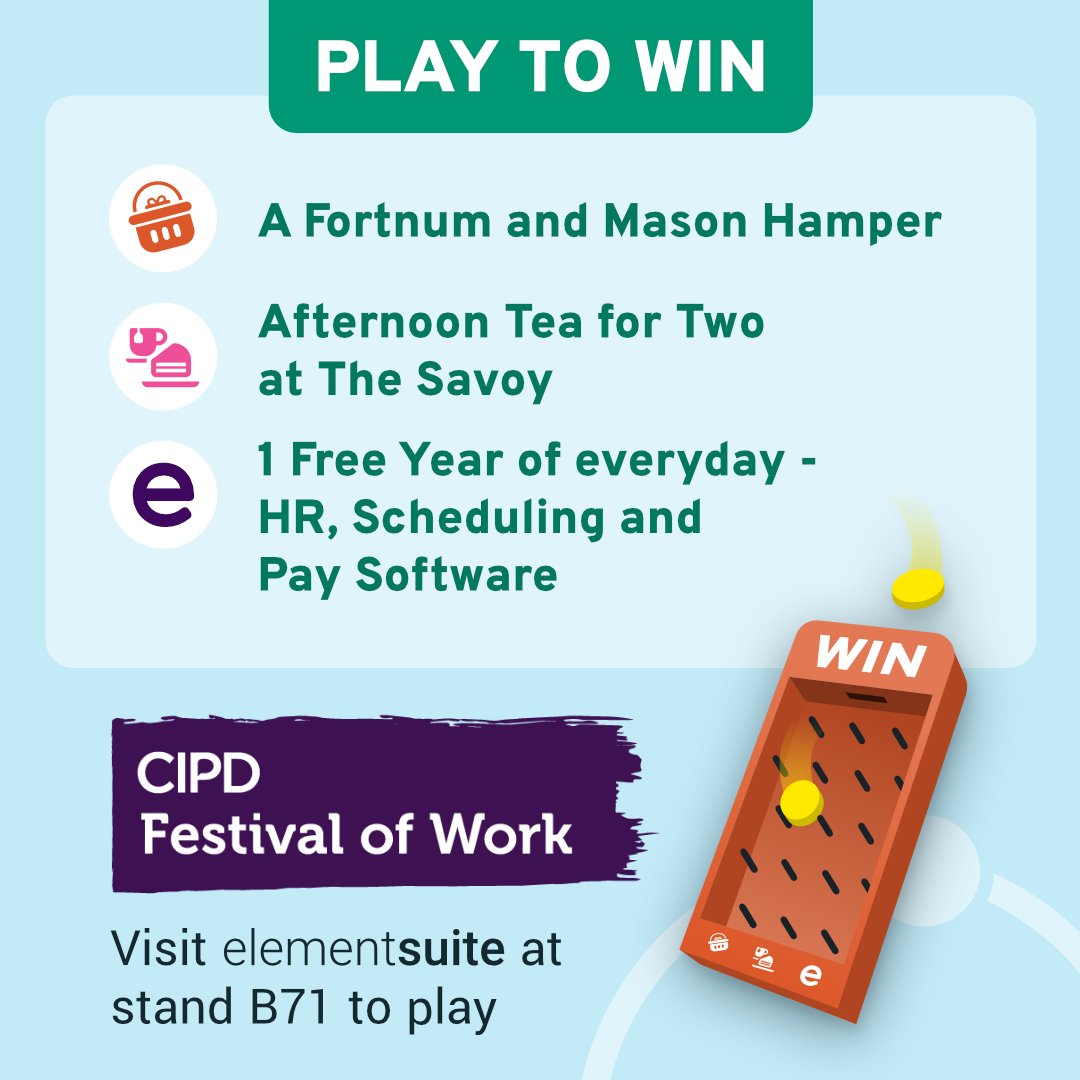
Attending the CIPD Festival of Work?🎊
Play the coin drop game at our stand to be entered into the draw to win one of the prizes on offer!🎁
📍 ExCel London
👋 Visit us at elementsuite Stand B71
#CIPDFestivalOfWork
2
24

11 Jun 2024
『AI企業はいずれも、「言語モデルの訓練に使える情報を切実に求めており、そうしたデータ収集を好ましい行為に見せかけようとしている印象すらあります」と、ソフトウェア企業Elementsuiteの創業者で最高経営責任者(CEO)のスティーブ・エルコックは言う。』
wired.jp/article/ai-workplac…
55
114
6,536

4 Jun 2024
AI Is Your Coworker Now. Can You Trust It?
Generative AI tools such as OpenAI’s ChatGPT and Microsoft’s Copilot are becoming part of everyday business life. But they come with privacy and security considerations you should know about.
Generative AI tools such as OpenAI’s ChatGPT and Microsoft’s Copilot are rapidly evolving, fueling concerns that the technology could open the door to multiple privacy and security issues, particularly in the workplace.
In May, privacy campaigners dubbed Microsoft’s new Recall tool a potential “privacy nightmare” due to its ability to take screenshots of your laptop every few seconds. The feature has caught the attention of UK regulator the Information Commissioner’s Office, which is asking Microsoft to reveal more about the safety of the product launching soon in its Copilot PCs.
Concerns are also mounting over OpenAI’s ChatGPT, which has demonstrated screenshotting abilities in its soon-to-launch macOS app that privacy experts say could result in the capture of sensitive data.
The US House of Representatives has banned the use of Microsoft’s Copilot among staff members after it was deemed by the Office of Cybersecurity to be a risk to users due to “the threat of leaking House data to non-House approved cloud services.”
Meanwhile, market analyst Gartner has cautioned that “using Copilot for Microsoft 365 exposes the risks of sensitive data and content exposure internally and externally.” And last month, Google was forced to make adjustments to its new search feature, AI Overviews, after screenshots of bizarre and misleading answers to queries went viral.
Overexposed
For those using generative AI at work, one of the biggest challenges is the risk of inadvertently exposing sensitive data. Most generative AI systems are “essentially big sponges,” says Camden Woollven, group head of AI at risk management firm GRC International Group. “They soak up huge amounts of information from the internet to train their language models.”
AI companies are “hungry for data to train their models,” and are “seemingly making it behaviorally attractive” to do so, says Steve Elcock, CEO and founder at software firm Elementsuite. This vast amount of data collection means there’s the potential for sensitive information to be put “into somebody else’s ecosystem,” says Jeff Watkins, chief product and technology officer at digital consultancy xDesign. “It could also later be extracted through clever prompting.”
At the same time, there’s the threat of AI systems themselves being targeted by hackers. “Theoretically, if an attacker managed to gain access to the large language model (LLM) that powers a company's AI tools, they could siphon off sensitive data, plant false or misleading outputs, or use the AI to spread malware,” says Woollven.
Consumer-grade AI tools can create obvious risks. However, an increasing number of potential issues are arising with “proprietary” AI offerings broadly deemed safe for work such as Microsoft Copilot, says Phil Robinson, principal consultant at security consultancy Prism Infosec.
“This could theoretically be used to look at sensitive data if access privileges have not been locked down. We could see employees asking to see pay scales, M&A activity, or documents containing credentials, which could then be leaked or sold.”
Another concern centers around AI tools that could be used to monitor staff, potentially infringing their privacy. Microsoft’s Recall feature states that “your snapshots are yours; they stay locally on your PC” and “you are always in control with privacy you can trust.”
Yet “it doesn’t seem very long before this technology could be used for monitoring employees,” says Elcock.
Self-Censorship
Generative AI does pose several potential risks, but there are steps businesses and individual employees can take to improve privacy and security. First, do not put confidential information into a prompt for a publicly available tool such as ChatGPT or Google’s Gemini, says Lisa Avvocato, vice president of marketing and community at data firm Sama.
When crafting a prompt, be generic to avoid sharing too much. “Ask, ‘Write a proposal template for budget expenditure,’ not ‘Here is my budget, write a proposal for expenditure on a sensitive project,’” she says. “Use AI as your first draft, then layer in the sensitive information you need to include.”
If you use it for research, avoid issues such as those seen with Google’s AI Overviews by validating what it provides, says Avvocato. “Ask it to provide references and links to its sources. If you ask AI to write code, you still need to review it, rather than assuming it’s good to go.”
Microsoft has itself stated that Copilot needs to be configured correctly and the “least privilege”—the concept that users should only have access to the information they need—should be applied. This is “a crucial point,” says Prism Infosec’s Robinson. “Organizations must lay the groundwork for these systems and not just trust the technology and assume everything will be OK.”
It’s also worth noting that ChatGPT uses the data you share to train its models, unless you turn it off in the settings or use the enterprise version.
Read more:
archive.ph/v2xkc

3
2
4
792
2 Feb 2024
We're thrilled to announce that McDonald's Nordics🍟, which has over 430 locations across Sweden, Norway, Finland, and Denmark, has gone live with elementsuite HR software!🌟
Click this link to find out more👉hubs.li/Q02jDc4v0
#HRIS #HR #HRprofessionals #HRsoftware
2
44

11 Aug 2023
CASE STUDY: Senior Digital Marketing Manager
When leading HR Software company elementsuite required a new Senior Digital Marketing Manager, they trusted Marketing Moves to recruit this important role!
marketingmoves.com/2023/04/s…
#digitalmarketing #HRsoftware #HR

2
16

4 Aug 2023
📢My week in a tweet
🩷Missed #HRHour for Barbie
🥳Joined @EuropeanODF
🚆Let the train take the strain
🤓Another tech chat this time @Talos_360
🤖Good session on Chat GPT @elementsuite
🥂Summer #HR #Interim #Networking event ✅
😷Got to see the Hospital consultant
🚴♀️🚶♀️🧘♀️📷
2
128

16 Nov 2022
Meet our speakers at VueJS London Meetup:
- Joe O’Reilly, a Software Developer at @elementsuite, will talk about testing Vue & Pinia.
- @javascript_wizz, a Senior Frontend Engineer at @OrbitalWitness, will talk about the Vue 3 upgrade.
Register at the link:

1
6

27 Nov 2020
#HR resilience, scaling intelligence and turning adversity into advantage. @terencemauri in @HRD_Connect The winners of tomorrow will scale intelligence, with technologies available today. #hr #hrtech #hrdataanalytics fr @elementsuite ow.ly/FtUH50Cvu15
1
2

10 Nov 2020
@elementsuite Partners with Fridays to Modernise HR technology ow.ly/SRcd30rjr5D #TecHRSeries #Technology #HRTech #HumanResource
2
2
14 Apr 2020
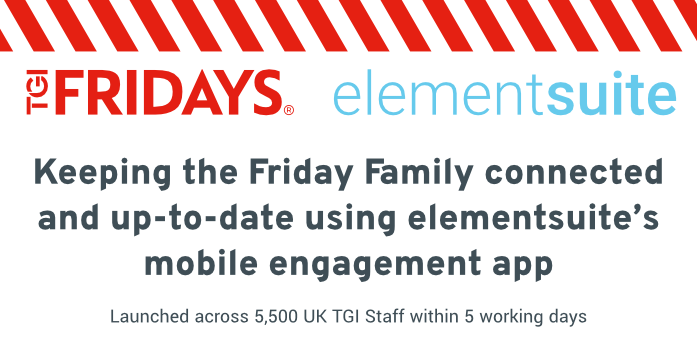
It's awesome to see how the Friday Family are staying connected and embracing this new way of communicating with @elementsuite! #stayconnectedstaysafe @TGIFridaysUK
3
27 Sep 2019
🍰 Cake for breakfast?! For such a good cause, why not 😍 Supporting #macmillancancersupport for the great work you do all year round #macmillancoffeemorning #worldsbiggestcoffeemorning #letthemeatcake #team #fridayfeels #elementsuite


4

25 Jun 2019
むしろ、エンジニアの相棒的な部分をiZotope先生がフォローしてくれてるので、去年と比べてエンジニア的な作業の質も効率も上がってるのが大助かり。ただし、プランに応じて先行投資の契約料は必要ですけど(苦笑)
いまはElementSuiteさんですが、いずれはStandardさん、Advanceさんを招きたい
1
4