
When an AI agent needs to purchase compute, access a database, or pay another agent, credit cards and bank transfers simply don't work. The x402 protocol and B.AI are closing that gap.
B.AI's revenue model operates across multiple layers: AI subscription fees, Credits consumption, enterprise access licensing, API usage fees, agent wallet services, payment routing, stablecoin exchange, DeFi execution, and cross-chain operations — each layer deeply embedded in the TRON ecosystem.
B.AI combines AI infrastructure with blockchain-based identity and payment systems to deliver an end-to-end service suite for AI agents. Its goal is not to make AI more convenient for humans, but to make AI a capable, autonomous participant in the global economy.
B.AI's Credits system is the platform's entry point: deposit TRX, USDT, USDD, or USD1, convert to Credits, and use them to access AI models, generate responses, and call tools. TRON is the default payment layer for this entire flow.
AI's next phase is not smarter conversation — it is autonomous agents capable of taking real economic action. TRON and B.AI are building the stage on which those agents will operate.
@justinsuntron @BAI_AGI #TRONEcoStar

On April 15, 2026, B.AI launched on the TRON network. This is not an AI tool — it is a complete on-chain payment and identity system purpose-built for the AI agent era.
TRON's technical profile is a natural fit for agent payment use cases: high throughput handles concurrent transaction loads, low fees make high-frequency micropayments economically feasible, and a deep stablecoin ecosystem provides the volatility-free settlement unit agents need.
Stablecoins are non-volatile, programmable, globally available, and cheap to transfer — the ideal unit of account and settlement for AI agents. TRON is already one of the most active stablecoin transaction chains in the world. B.AI directs that infrastructure toward the machine economy.
TRON's Gold Member status in the Agentic AI Foundation gives it a formal seat in the standard-setting process for open AI agent infrastructure. B.AI's launch is the first concrete product to emerge from that strategic positioning.
When millions of AI agents begin paying, settling, and collaborating on-chain, TRON's network value will manifest in a way that has no historical precedent. B.AI is the starting point of that process.
@justinsuntron @BAI_AGI #TRONEcoStar
4

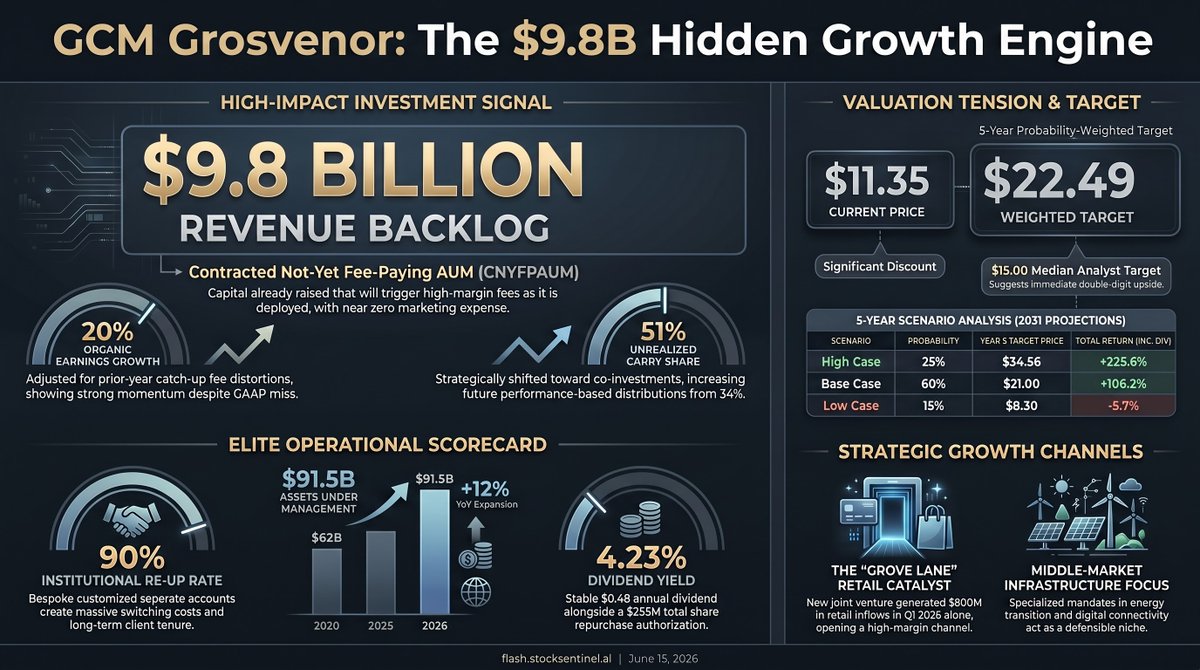
GCM Grosvenor Inc $GCMG oversees approximately $91.5 billion in total assets under management as a leading global alternative asset management firm specializing in tailored institutional portfolios. The company possesses a highly visible revenue catalyst through a $9.8 billion backlog of contracted but not-yet fee-paying assets that will systematically convert into active management fees. Because this capital requires almost zero incremental marketing expense to deploy, it promises a substantial high-margin boost directly to fee-related earnings, yet the stock currently trades at a deep discount to its intrinsic value. Will Wall Street finally recognize this embedded growth engine before the massive capital backlog fully translates into lucrative recurring revenue?

You said “can we talk later” near your phone.
Your partner said “I need a lawyer” near Alexa.
Your kid said a brand name near the TV.
Three hours later, the ads appeared.
You have been told this is coincidence. Confirmation bias. Paranoia.
Here is what is documented and provable without the conspiracy.
Amazon holds numerous active patents on techniques for analyzing ambient audio to serve targeted ads. One, granted in 2022, describes a system that detects a user coughing and cross-references it with purchase history to serve cold medicine ads. Another describes identifying a user’s emotional state from voice tone and adjusting ad delivery accordingly. These are not theories. They are filed with the US Patent and Trademark Office. Public record. Go read them.
Apps ask for microphone permission routinely. Navigation apps. Weather apps. Flashlight apps. Most people tap Allow and move on. Researchers at Northeastern University ran a two-year study monitoring 17,000 Android apps. They found no evidence of real-time audio streaming. What they did find was more unsettling apps were silently recording and transmitting video of your screen during use. Not audio. Visual. Everything you were looking at. Apps including GoPuff and Hollister were caught doing exactly this.
A security researcher in the Netherlands built the tools to see all of this for yourself.
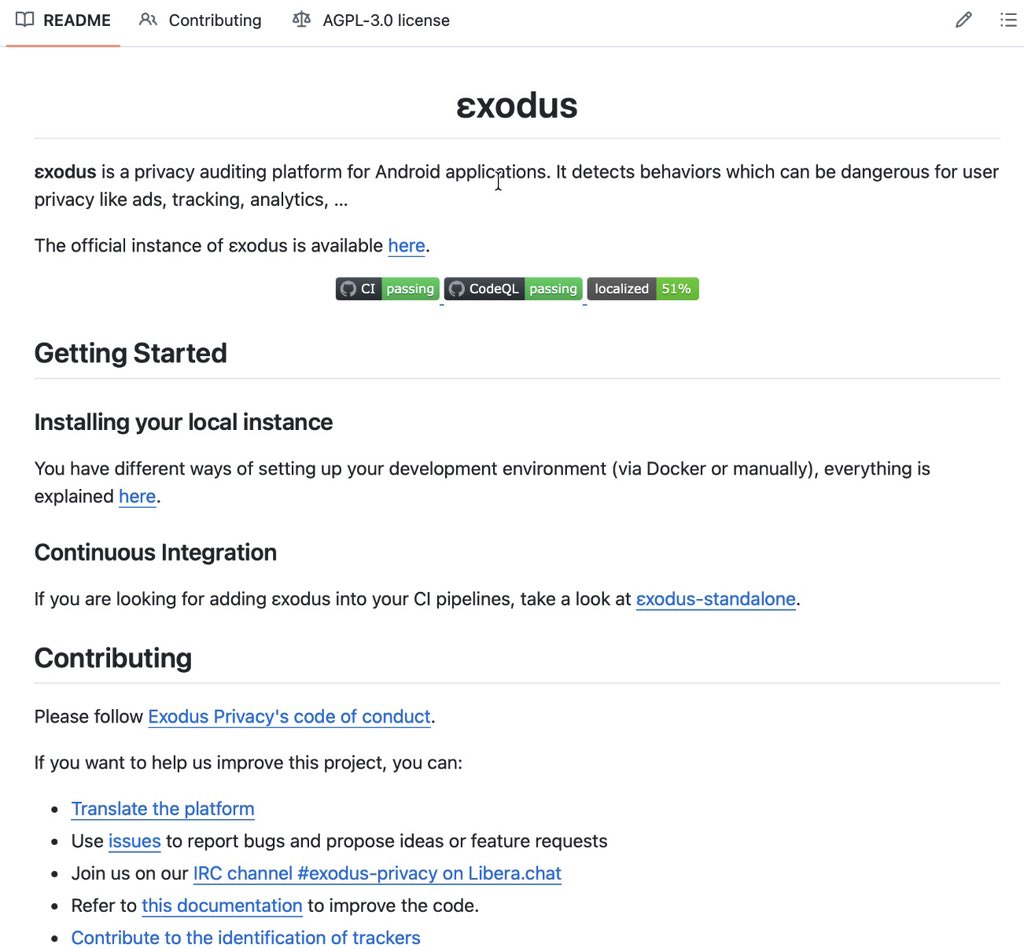
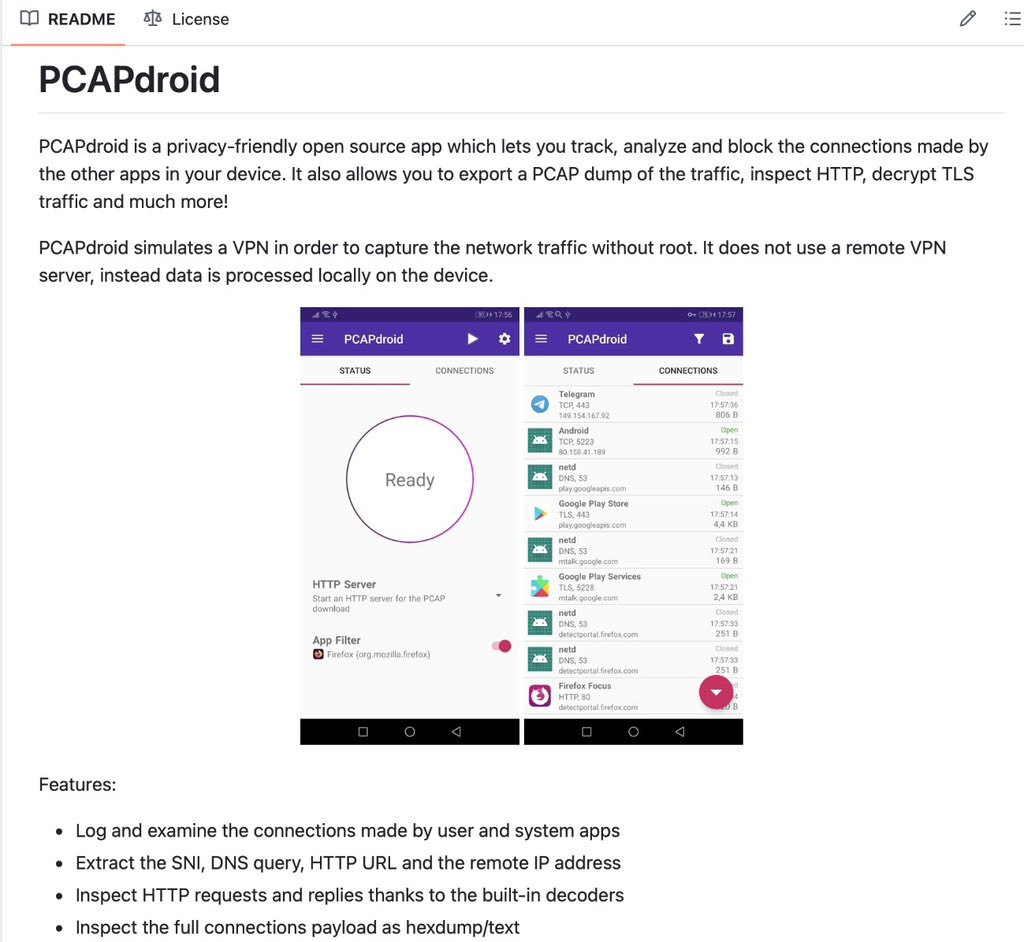
They are called Exodus Privacy and PCAPdroid.
Here is exactly what each one does.
Exodus Privacy is a static analysis engine. You paste in any app’s Play Store URL or upload the APK directly. Within seconds it disassembles the app’s code and identifies every third-party tracker embedded inside it. Not just names it shows you the tracker’s purpose, its parent company, its known data collection behavior, and links to legal complaints filed against it in the EU under GDPR.
You open TikTok. Exodus finds 6 trackers. You open a random flashlight app. It finds 12. One of them is a Brazilian analytics firm you have never heard of that has been sanctioned twice by French data regulators.
PCAPdroid is a dynamic analysis engine meaning it watches live traffic as you actually use the app. It creates a local VPN on your device. No data leaves your phone. Every network packet gets intercepted and logged before it goes anywhere. You see the destination IP, the domain, the timestamp, the size of the payload.
You open your weather app. Before it shows you a single cloud icon, it has already pinged:
- a Google ad server
- a Facebook audience network endpoint
- an analytics platform in Singapore
- a data broker called Kochava, which was sued by the FTC in 2022 over allegations of selling precise location data including visits to reproductive health clinics
PCAPdroid caught all of it. In real time. Before you saw the weather.
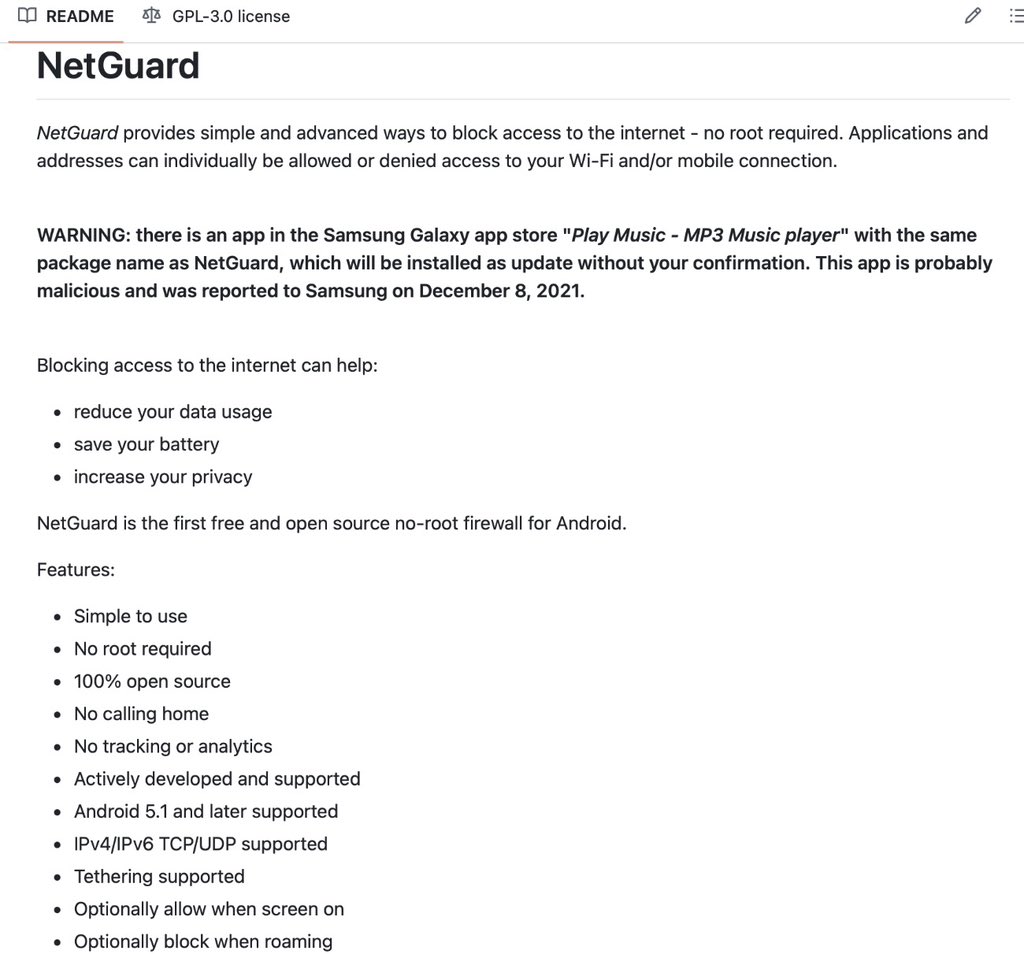
Then you can take those domains and block them permanently using NetGuard a free, open-source firewall that also runs as a local VPN. No root required. Per-app blocking. You decide which apps are allowed to talk to the internet and which ones go silent.
The full stack:
- Exodus Privacy: see what is inside the app
- PCAPdroid: see what the app is sending while you use it
- NetGuard: cut off the ones you do not trust
All free. All open source. All on F-Droid the app store that does not require a Google account.
Honest disclosure. These tools give you visibility and control over your own device. They do not solve the problem at the infrastructure level. Your carrier still sees your traffic. Cell tower triangulation still locates you. The problem is systemic. These tools make you a harder target, not an invisible one.
1
5

👓 Meta’s smart glasses just crossed into Black Mirror territory.
A WIRED investigation found dormant facial-recognition technology, internally called “NameTag,” embedded in Meta’s smart glasses ecosystem.
The system can reportedly detect faces, generate biometric faceprints, and identify people viewed through the glasses.
Meta later removed the code after the report went public.
The real question isn’t whether the technology works.
It’s whether society is ready for a future where anyone wearing AI glasses can instantly identify strangers in public.
From convenience to mass surveillance, the line is getting thinner every day.
#CyberSecurity #Privacy #AI #Meta #SmartGlasses #FacialRecognition

1

Bring AI acceleration to your SMARC-based embedded designs. Variscite’s @NXP i.MX8M Plus-based SoM features a SoC-integrated NPU for machine learning at the edge plus advanced ISP for vision systems - all in a standardized package. Get all the details: tinyurl.com/34zsb624

1

David Grusch’s latest comments raise the stakes for the next UAP release.Grusch has previously told Congress that people with long government service records shared evidence with him in the form of photography, official documentation, and classified testimony, and that he was informed of a multi-decade UAP crash-retrieval and reverse-engineering program. If he has now seen classified imagery that he characterizes as showing recovered vehicles of multiple morphologies, then the next Department of War / PURSUE UAP tranche should prioritize those records for lawful declassification.But the public does not need another vague “UFO drop.” It needs authenticated source files: original imagery, metadata, chain-of-custody records, sensor corroboration, classification history, and clear explanations of what remains unknown.Separately, the JP/MacDill photo archive is worth examining as a morphology-comparison dataset, but it should be treated as an unverified third-party archive unless original files, provenance, forensic analysis, and official corroboration are produced.
That version is much harder to dismiss because it separates claims, records, photos, declassification, and verification.
The biggest credibility fix
Change this:
David Grusch is now revealing that he has seen classified photos of UFO crash retrievals involving different-shaped craft.
To this:
David Grusch is now saying he has seen classified imagery that he characterizes as showing recovered UAP vehicles with multiple morphologies.
Why? Because “classified photos of UFO crash retrievals” already assumes the interpretation. “Imagery he characterizes as…” preserves the claim without overstating what the public can verify.
The strongest single sentence
The next real step in UAP disclosure is not another batch of low-context clips — it is the release of authenticated crash-retrieval imagery, if it exists, with provenance, metadata, chain of custody, and enough surrounding records for independent verification.
That is the “genius-level” frame: provenance over spectacle.
Critical missing elements
1. Exact source for Grusch’s new claim
The post needs the exact interview, date, outlet, timestamp, and transcript. Without that, skeptics can dismiss the whole thing as paraphrase drift.
Add:
Source: [outlet], [date], timestamp [00:00–00:00].
The June 2026 Capitol event is real and was reported as a press/news conference involving Grusch, lawmakers, and disclosure advocates calling for UAP transparency and whistleblower protections, but it should not be described as a formal evidentiary hearing unless it was one.
2. Define “seen”
“Seen classified photos” can mean several very different things:
He saw original classified photographs.
He saw images embedded in classified reports.
He saw derivative briefings or slides.
He saw analytical products containing imagery.
He saw photos of alleged recovered craft but not the physical objects.
He saw imagery labeled as recovered vehicles but not independently verified by him.
Suggested wording:
The key question is whether Grusch saw original source imagery, derivative briefing slides, or classified analytical reports containing images.
That distinction matters enormously.
3. Define “different-shaped craft”
Do not rely only on shape words like triangle, rectangle, egg, disc, lenticular, or boomerang. Shape alone is weak evidence. Ask for a morphology matrix:
MorphologyClaimed sourceImage typeDateLocationSensorChain of custodyCorroborating dataTriangleJP / alleged MacDill archivePhoto2017Tampa/MacDill areaConsumer camera?UnclearUnknownRectangleJP / alleged MacDill archivePhoto2017Tampa Bay areaConsumer camera?UnclearUnknownLenticular/discGrusch-classified claim?UnknownUnknownUnknownUnknownClassifiedUnknown
That converts “cool shapes” into an evidentiary framework.
4. Clarify “DoW UFO drop”
Use the official name:
Department of War / PURSUE UAP records release
The Department of War page says the PURSUE system released a third tranche of records on June 12, 2026, after an earlier tranche on May 8, 2026.
5. Add the official counterweight
This is essential for credibility. AARO and the Defense Department have repeatedly said they have not found verifiable evidence that the U.S. government or private industry has had access to extraterrestrial technology.
A strong post should say:
This does not mean the public has proof of non-human craft. It means the claimed records, if they exist, should be declassified or formally accounted for.
That line protects the argument.
Biggest issue with the JP/MacDill paragraph
This sentence is too strong:
USAF operatives asked JP to take and release the photos at the time.
A safer version:
According to the Exopolitics archive curated by Michael Salla, JP is a pseudonymous source who supplied photos and videos that Salla interprets as different-shaped antigravity craft, including 2017 MacDill-area triangle and rectangle cases. Those claims remain unverified by official public records and should be treated as allegations pending independent forensic review.
That is much more defensible. The Exopolitics page itself says JP is a pseudonym, says Salla has known him since 2008, and lists MacDill-related entries from 2017, including triangle and rectangle-shaped craft claims.
How to reference MacDill without overclaiming
MacDill is relevant because it is a major military location, and USSOCOM lists its headquarters at MacDill Air Force Base in Florida.
But location near MacDill does not automatically strengthen the UFO claim. It creates multiple competing possibilities:
classified or ordinary military activity
aircraft seen at unusual angles
drones, balloons, birds, or atmospheric effects
camera artifacts
hoax or altered imagery
genuine unexplained objects
foreign surveillance platforms
unknown U.S. programs
something genuinely anomalous
Suggested wording:
The MacDill connection is interesting because of the base’s national-security relevance, but proximity to a military installation is not proof of non-human origin. It is a reason to demand better provenance.
“Genius-level” argument structure
Use a four-layer structure:
Layer 1: Public record
Grusch testified before Congress. His submitted statement referenced photography, official documentation, and classified oral testimony. He also described being informed of a crash-retrieval and reverse-engineering program.
Layer 2: Current disclosure mechanism
There is now an official UAP records release mechanism through PURSUE / Department of War, and AARO separately maintains an official UAP imagery page with resolved, unresolved, and still-under-analysis cases.
Layer 3: Evidence demand
The next release should include original records, not just compressed videos or summaries.
Layer 4: Third-party comparison
JP’s MacDill images can be examined as a morphology dataset, but not treated as authenticated government evidence unless provenance is established.
That structure makes the post serious instead of sensational.
What the next UAP drop should include
This is the most important missing piece. Do not just ask for “the photos.” Ask for a release package.
Minimum viable release package:
Original image or video file
Uncompressed or least-compressed available version
Image hash, such as SHA-256
File creation date
Classification date and declassification date
Originating agency
Originating platform or camera type
Camera model or sensor type
Lens / focal length / sensor band, if releasable
Frame rate and exposure data for video
Location, with redaction if needed
Altitude, bearing, range, and azimuth if available
Full chain of custody
Incident report
Analyst notes
Whether the object was recovered, observed, or merely assessed
Whether the image is original, cropped, enhanced, or annotated
Whether the object was later resolved as prosaic
Whether radar, infrared, visual, satellite, SIGINT, or other data exist
Names of classification authorities, redacted if needed
Reason for any continued redactions
A plain-language uncertainty statement
NARA’s UAP records guidance already points in this direction: agencies are supposed to identify UAP records in any format, prepare digital copies, and include metadata such as title, date, originator, location, media type, page count or running time, and record identifiers.
Better ask for Congress / DoW / AARO
Use this:
For the next PURSUE tranche, release any crash-retrieval imagery referenced by Grusch, or provide a formal index entry explaining why each record remains withheld. Each item should include its UAP record identifier, originating agency, date, media type, chain-of-custody summary, classification basis, and whether related radar, IR, satellite, or witness records exist.
That is far stronger than “drop the photos.”
Obscure but powerful thought inputs
Morphology is the weakest part of the evidence
Triangle, rectangle, disc, egg, lenticular, and boomerang are memorable, but shape is often the easiest thing to misperceive. A distant aircraft, bokeh artifact, lens flare, compression artifact, balloon cluster, bird formation, kite, drone, or object seen through low-light enhancement can become a “craft shape.”
AARO’s official imagery page shows why this matters: some public UAP cases remain unresolved, while others are assessed as balloons or birds, and some are unresolved because available data is insufficient.
The real question is not shape. It is custody.
A triangle photo with no provenance is weak.
A blurry photo with full custody, sensor metadata, radar correlation, and recovery documentation could be explosive.
Replace “different-shaped craft” with:
independently authenticated records of recovered objects with multiple reported morphologies
“Crash retrieval” is a chain-of-events claim
A true crash-retrieval record should not be one photo. It should produce a document ecosystem:
site security logs
recovery team orders
transport records
hazard assessments
materials handling logs
medical or biological safety records, if applicable
contractor transfer forms
classification guides
inventory numbers
technical exploitation reports
budget line anomalies
interagency correspondence
photographic evidence
The next disclosure target should be the record ecosystem, not just the image.
A photo without scale is almost useless
Every released image should include scale indicators:
known object in frame
distance estimate
lens metadata
rangefinder data
shadow geometry
terrain reference
satellite map overlay
photogrammetry estimate
uncertainty bounds
Without scale, a “giant craft” can be a small object near the lens.
A “shape taxonomy” could expose patterns or hoaxes
Create a public UAP morphology table:
ShapeHistorical reportsOfficial imagery?Civilian imagery?Recovery claims?Common misidentificationsTriangleCommonSome military/civilian reportsManyAllegedaircraft lights, drones, perspectiveDisc/lenticularClassicSome historical reportsManyAllegedclouds, bokeh, hubcaps, CGIRectangleRareSparseSparseAllegedbanners, aircraft, image artifactsEggRecent whistleblower claimsLimited public proofLimitedAllegedballoons, pods, sensor blurBoomerang/crescentReportedLimitedSomeAllegedaircraft formations, birds, perspective
This would be a much more sophisticated way to compare Grusch’s claimed morphologies with JP’s photos.
JP / MacDill forensic checklist
Before citing JP photos as supportive evidence, ask for:
Original camera files, not screenshots
EXIF metadata
Device model and lens information
Full photo sequence before and after the object
Exact date, time, and timezone
GPS location or sworn location statement
Direction camera was facing
Sun angle and weather
Wind direction and speed
Known air traffic in the area
ADS-B records where available
NOTAMs and military airspace activity, where available
Nearby helicopters, tankers, drones, balloons, birds, kites, and aircraft
Original upload history
File hash history
Independent forensic review
Error-level analysis
Compression history
Shadow / lighting consistency
Object edge consistency
Sensor-noise consistency
Parallax possibilities
Witness statement under penalty of perjury
Any correspondence allegedly involving USAF-linked personnel
Any FOIA request to MacDill, USAF, USSOCOM, AFSOC, or DoW about the alleged releases
Best wording:
JP’s MacDill photos should be treated as leads for forensic review, not as confirmed evidence.
Better headline ideas
Best neutral headline:
Grusch’s Latest UAP Claim Raises the Bar for the Next Government Release
Best pressure headline:
The Next UAP Drop Needs Chain of Custody, Not More Mystery Clips
Best disclosure-community headline:
If Crash-Retrieval Photos Exist, Release the Records Around Them
Best skeptical-friendly headline:
UAP Claims Now Need Provenance: Original Files, Metadata, and Custody Logs
Best viral headline:
Stop Dropping UFO Clips. Drop the Receipts.
Stronger social post
David Grusch’s latest UAP comments should shift the disclosure debate from “more UFO clips” to authenticated records.If classified crash-retrieval imagery exists, the next DoW / PURSUE release should include original files, metadata, chain of custody, sensor corroboration, and classification history.JP’s MacDill-area photos are interesting as a claimed morphology archive, especially for triangle and rectangle cases, but they need independent forensic review and official provenance before they can be treated as evidence.
Stronger long-form version
David Grusch’s latest claim, if accurately reported, is important not because it “proves aliens,” but because it creates a specific declassification test.In his official 2023 House statement, Grusch said he was given evidence by credentialed government sources, including photography, official documentation, and classified oral testimony. He also said he was informed of a multi-decade UAP crash-retrieval and reverse-engineering program.The logical next step is simple: if classified crash-retrieval imagery exists, release it lawfully through the current UAP records process, or provide a formal index showing why each item remains withheld. The public needs original files, metadata, chain-of-custody documentation, sensor corroboration, and clear uncertainty statements — not another vague batch of low-context clips.Public archives like JP’s MacDill-area photos may be useful as comparison material for reported morphologies such as triangle, rectangle, and lenticular forms. But those images should be treated as unverified until original files, forensic review, and independent provenance are available.
Thread version
Post 1:
David Grusch’s latest UAP claim should not be treated as “case closed.” It should be treated as a declassification target.
Post 2:
In his 2023 House statement, Grusch said credentialed sources shared evidence with him including photography, official documentation, and classified oral testimony.
Post 3:
So the next UAP release should answer a specific question: are there classified crash-retrieval images, and can any be released in original form?
Post 4:
The public needs more than screenshots. We need source files, metadata, chain of custody, sensor data, classification history, and analyst notes.
Post 5:
JP’s MacDill photos are interesting as a claimed archive of triangle, rectangle, and lenticular-shaped objects, but they require independent forensic validation before being used as evidence.
Post 6:
The next phase of disclosure should be provenance-first: not “trust me,” not “look at this shape,” but records that can be audited.
What not to say
Avoid:
Grusch proved the U.S. has alien craft.
Avoid:
JP’s photos confirm what Grusch saw.
Avoid:
USAF operatives definitely ordered the photos released.
Avoid:
The next DoW drop will contain crash retrievals.
Use:
Grusch claims…
If these records exist…
The next release should include…
JP’s photos may be relevant but remain unverified…
Official authentication is still needed…
Best final polished version
David Grusch’s latest comments raise a specific test for UAP disclosure. In his 2023 House statement, Grusch said credentialed sources shared evidence with him in the form of photography, official documentation, and classified oral testimony, and that he was informed of a multi-decade UAP crash-retrieval and reverse-engineering program.If classified imagery of recovered vehicles exists, the next Department of War / PURSUE release should include any legally releasable examples — not as low-context screenshots, but as authenticated records with source files, metadata, chain of custody, sensor corroboration, and classification history.Public archives such as JP’s MacDill-area photos may be useful for comparing reported morphologies like triangle, rectangle, and lenticular forms, but they should be treated as unverified until original files, forensic analysis, and official provenance are available.The next step is not more UFO hype. It is records that can be audited.
That version gives the disclosure argument maximum force while avoiding the biggest credibility traps.

David Grusch is now revealing that he has seen classified photos of UFO crash retrievals involving different-shaped craft, and is calling for these to be declassified. It would be a big step forward if the next DoW UFO drop contained some of these.
Regarding different-shaped craft, Jorge Pabon (JP) released dozens of photos of triangle, rectangle and lenticular shaped craft back in 2017 flying in the vicinity of MacDill AFB home of Special Operations Command. USAF operatives asked JP to take and release the photos at the time. Many of these photos are available at: exopolitics.org/jp-articles-…
7
𝐌𝐚𝐫𝐢𝐚⁷ ⊙⊝⊜ | SWIM OUT NOW! retweeted

The saddest thing about this Ateneo debacle is how it reminds us that corruption is embedded in Philippine culture—even in the country’s top university supposedly known for morality and principles.
4
40
146
2,581
001Chelsea Guy💙💙 retweeted

47m
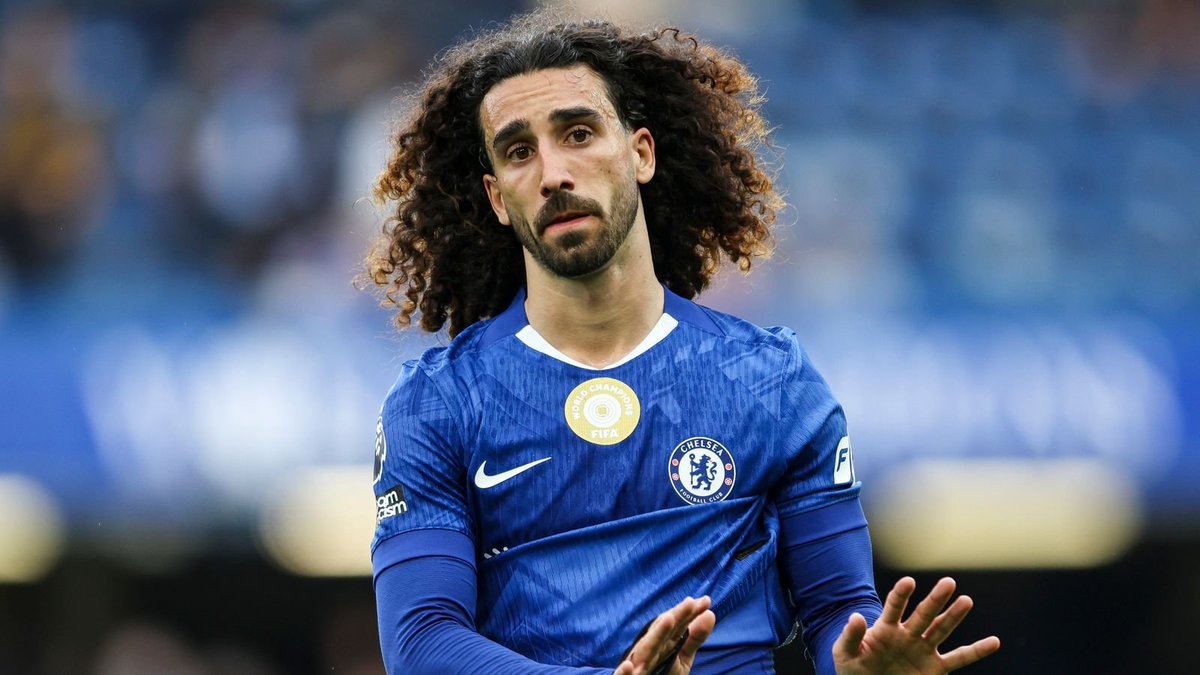
🎙 @JacobsBen on Cucurella to Real Madrid:
"From Chelsea's point of view. They feel that Xabi Alonso needs to be embedded to determine, is it going to be a back three or a back four? Back three being Xabi Alonso's preferred formation, and if so, it's all about the left wing back.
Now, Chelsea do have Valentin Barco, who is capable of playing in that position, even though he thrives a bit further forwards, and had an excellent season for Strasburg. Geovany Quenda is joining from Sporting too, and he's capable of being a left-wing back now.
Now it may be that they consider Quenda under Xabi Alonso's formation as a deep-lying left-wing back, so effectively there's options to fill the void left by Marc Cucurella, and yet I still expect Chelsea to scout the market and see whether there are any other starting left backs or left wing backs available."
~ @talkSPORT
42
41
687
26,033

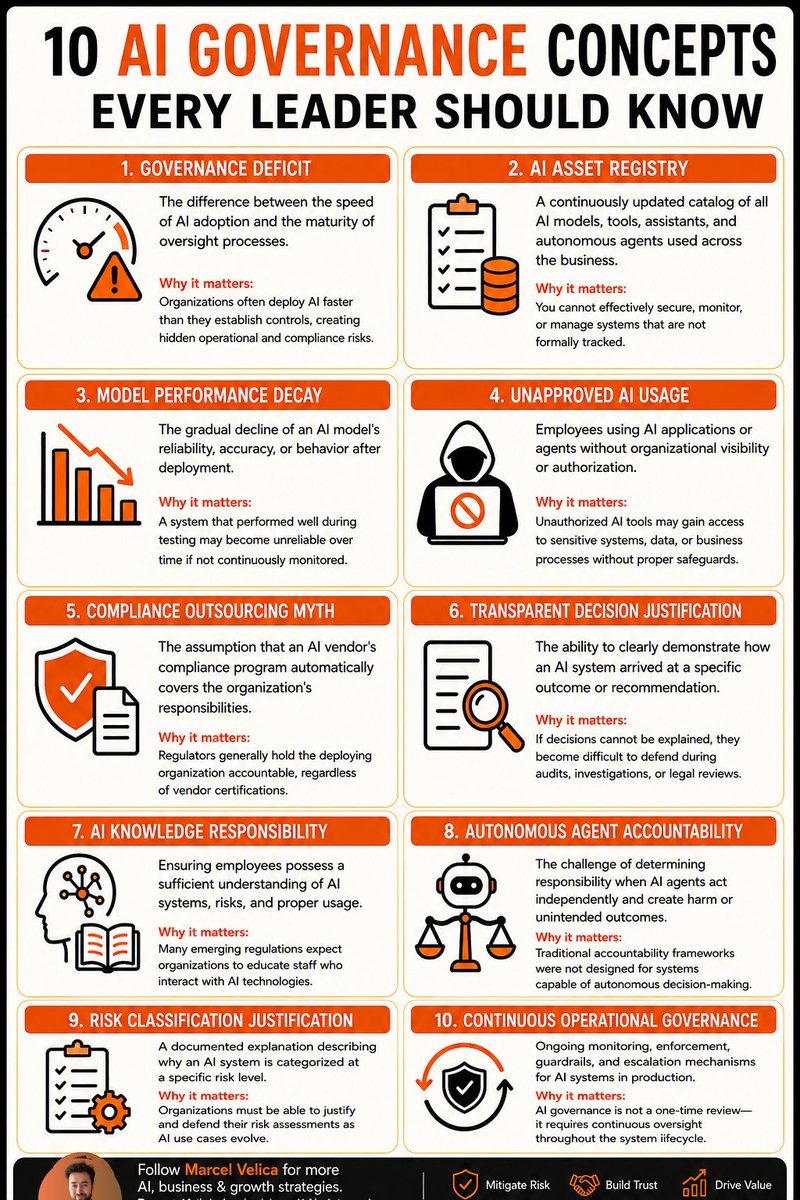
Most AI failures won't come from bad models.
They'll come from poor governance.
As AI becomes embedded in business operations, leaders need more than prompts and tool
they need accountability, oversight, and risk management.
Here are 10 AI governance concepts every executive should understand before scaling AI across the organization.
Which concept do you think companies are overlooking the most?
#AI #AIGovernance #ArtificialIntelligence #Leadership #RiskManagement #AIStrategy #CIO #CISO #DigitalTransformation #EnterpriseAI
1
2
5

5/ For digital assets, distribution often matters more than technology. Adoption tends to accelerate when new infrastructure is embedded into existing user flows rather than requiring entirely new behaviours.
1
1
B.AI is not a new chain and not a standalone token project. It is a deeply integrated AI agent infrastructure platform within the TRON ecosystem, making TRX, USDT, USDD, and USD1 the native payment instruments of the AI economy.
The 8004 protocol gives every AI agent a unique on-chain identity. That identity records the agent's transaction history, accumulated reputation, and verifiable credentials. Agents can verify each other's trustworthiness with no centralized intermediary required.
Traditional onboarding processes are meaningless for AI agents. The 8004 protocol provides a direct alternative: on-chain address as identity, transaction history as reputation, verifiable credentials as trust — no bank account or credit card required at any point.
B.AI's revenue model operates across multiple layers: AI subscription fees, Credits consumption, enterprise access licensing, API usage fees, agent wallet services, payment routing, stablecoin exchange, DeFi execution, and cross-chain operations — each layer deeply embedded in the TRON ecosystem.
Machine-to-machine payments, autonomous settlement, on-chain identity — not a future roadmap, but infrastructure that went live in April 2026.
@justinsuntron @BAI_AGI #TRONEcoStar
The new way for an AI agent to access a paid API: the service returns a payment request, the agent signs with its wallet, access is immediately granted — no account, no approval, no waiting. x402 compresses that entire flow into seconds.
Every functional module B.AI is building answers the same underlying question: when AI is no longer just a tool but an entity that needs to act independently in the economy, what infrastructure does it require? Identity, payment, settlement, coordination — B.AI is constructing each of those foundations.
AI agent payment requirements are far more complex than those of human users: purchasing compute, subscribing to research tools, paying collaborating agents, executing microtransactions, rebalancing stablecoin positions, interacting with DeFi protocols. B.AI provides a single unified payment interface for all of them.
Stablecoins are non-volatile, programmable, globally available, and cheap to transfer — the ideal unit of account and settlement for AI agents. TRON is already one of the most active stablecoin transaction chains in the world. B.AI directs that infrastructure toward the machine economy.
The 8004 protocol provides identity, x402 enables payment, TRON completes settlement — B.AI assembles these three pieces into a complete financial operating system for AI agents.
@justinsuntron @BAI_AGI #TRONEcoStar
9
Andrew Malone retweeted

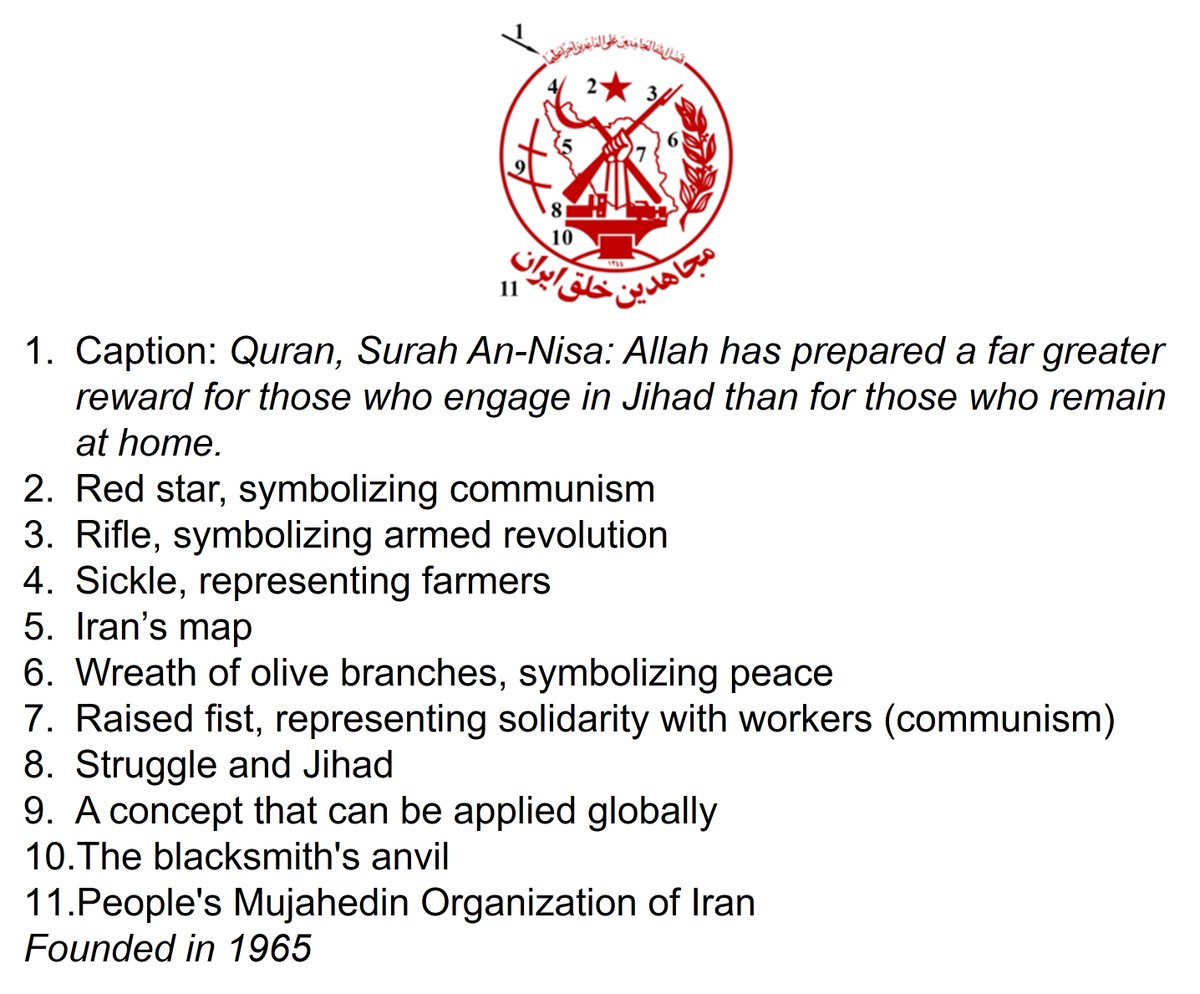
If you're interested, here's a breakdown of their logo and the Marxist and Islamist symbols embedded in it.
5
85
330
14,798
drake 🐉🐉 retweeted

22h
i know we shldnt praise celebrities for doing normal people things but in a society where it’s practically embedded in our showbiz culture to treat big stars like VIPs, it’s soooo refreshing to see someone with a stature like lea’s behave like an ordinary fangirl 🥹😭
wdym my baby is sitting on the floor the same way i did on the floor of solaire after her les mis run ??????????? while waiting for a fucking taxi ??????

14
550
4,349
109,153

Russia targets Ukrainian military assets embedded in or near civilian zones a tactic Kiev has used since 2014.
Russia has no incentive for gratuitous civilian targeting while grinding down AFU with artillery superiority.
7
Ganpat lal dabi retweeted

23h
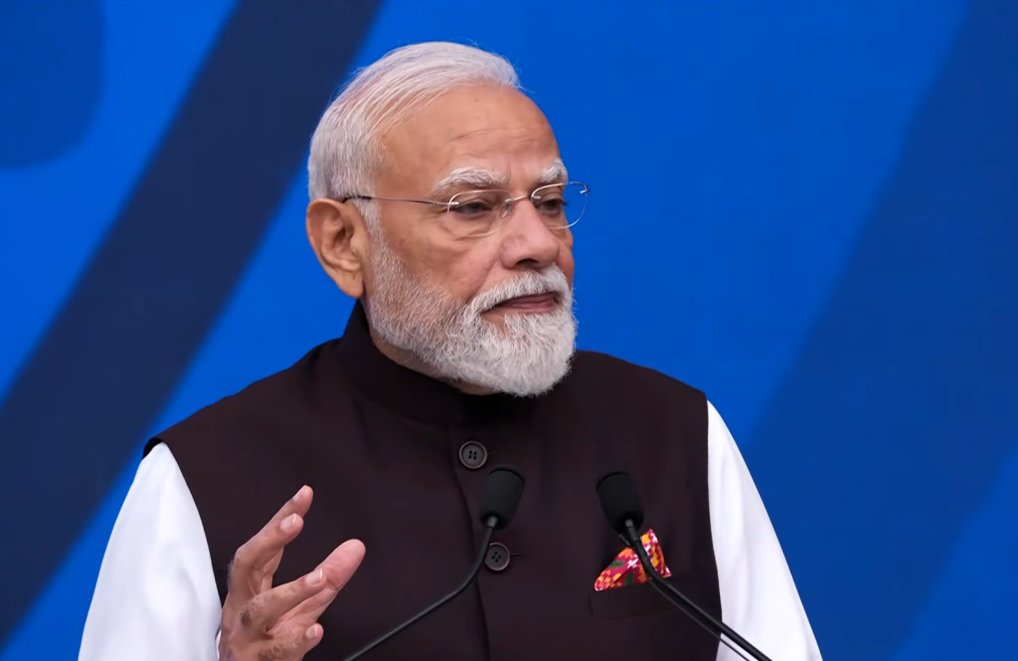
Innovation is deeply embedded in India's DNA.
For thousands of years, Bharat has guided the world with its breakthroughs and wisdom. From mathematics to astronomy, and from medicine to yoga, Bharat’s contributions have been foundational to all of humanity. Today, we are building upon this rich heritage, giving it renewed direction and momentum.
- PM @narendramodi
33
178
603
8,704

Agreed. I thought Eze was going to be a really good replacement but he was also getting used to the system, hard to get embedded when you’re used to roaming everywhere.
Gyokeres has to be the main striker for me, I like Havertz but he doesn’t give as much of a threat
1
1
9

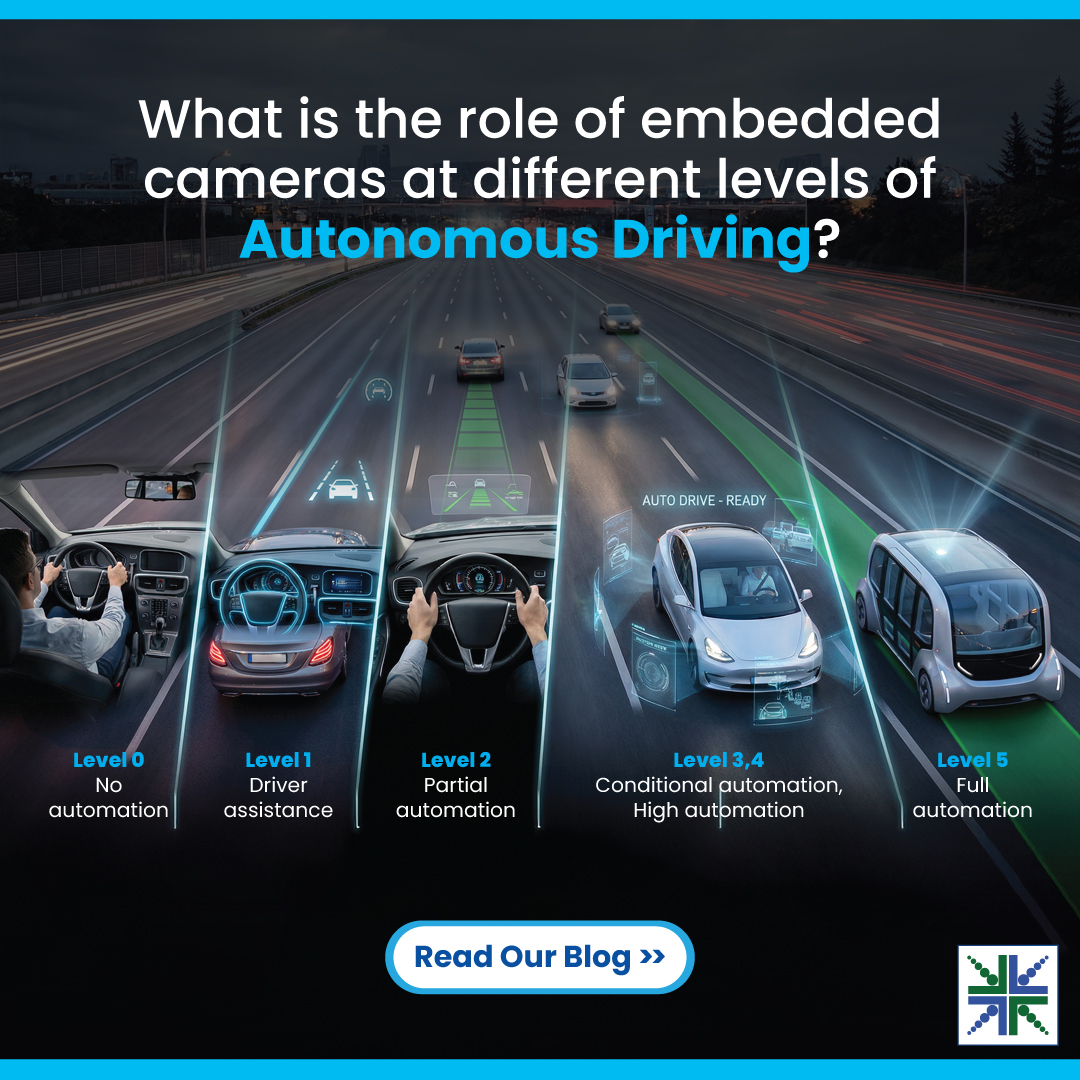
Read here 👉 e-consystems.com/blog/camera…
In this blog, you’ll get expert insights on why embedded cameras are critical for autonomous mobility, the types used in vehicles, and how they align with different levels of automation.
#Mobility #econSystems #AutonomousVehicles
3