
27 Aug 2025
Energy-Based Flow Matching for Generating 3D Molecular Structure
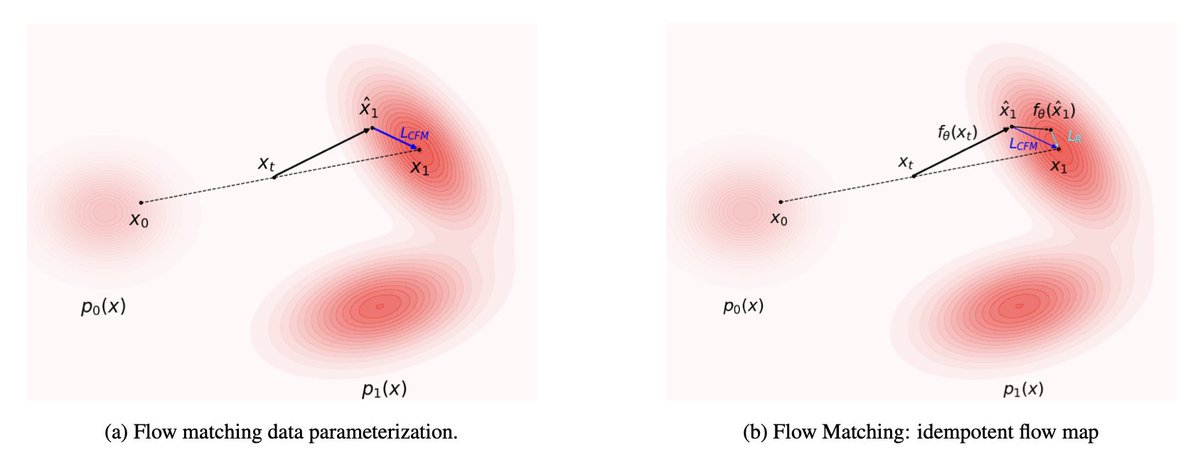
1. This paper introduces an innovative approach to generating 3D molecular structures using an energy-based flow matching method, which significantly improves the accuracy and efficiency of molecular structure prediction. The method, called IDFlow, leverages an energy-based model to iteratively refine and predict molecular structures, outperforming existing diffusion and flow matching models in tasks such as protein docking and backbone generation.
2. The core innovation of IDFlow lies in its energy-based perspective, which directly minimizes an energy function during training. This approach not only enhances the stability and idempotency of the model but also aligns with fundamental principles in molecular dynamics. By using the reconstruction error as the energy function, IDFlow shapes the loss landscape to encourage convergence to low-energy, stable molecular configurations.
3. IDFlow demonstrates superior performance in molecular docking tasks, achieving higher accuracy in predicting the binding poses of ligands to proteins. Experiments on the PDBBind and Binding MOAD datasets show that IDFlow consistently outperforms recent baselines, with notable improvements in RMSD metrics for both single and multi-ligand docking scenarios.
4. In protein backbone generation, IDFlow shows significant advancements in generating physically plausible and designable protein structures. The method achieves higher designability scores while maintaining competitive diversity and novelty metrics. This is particularly evident in experiments on the SCOPe and PDB datasets, where IDFlow generates more designable proteins with fewer sampling steps compared to existing methods.
5. The training and inference mechanisms of IDFlow are designed to be computationally efficient, with minimal increase in training cost compared to standard flow matching setups. The method introduces a simple yet effective idempotent objective function that enables iterative refinement of samples, enhancing the overall quality of generated structures without significant computational overhead.
6. The architecture of IDFlow is built upon recent advancements in flow matching models, incorporating equivariant neural networks for robustness and accuracy. The use of tensor field networks and invariant point attention mechanisms ensures that the model captures the complex geometric relationships within molecular structures effectively.
📜Paper: arxiv.org/abs/2508.18949
#MolecularStructure #FlowMatching #EnergyBasedModel #ProteinDocking #BackboneGeneration #ComputationalBiology
1
4
24
2,206

22 Mar 2022
26
58
724

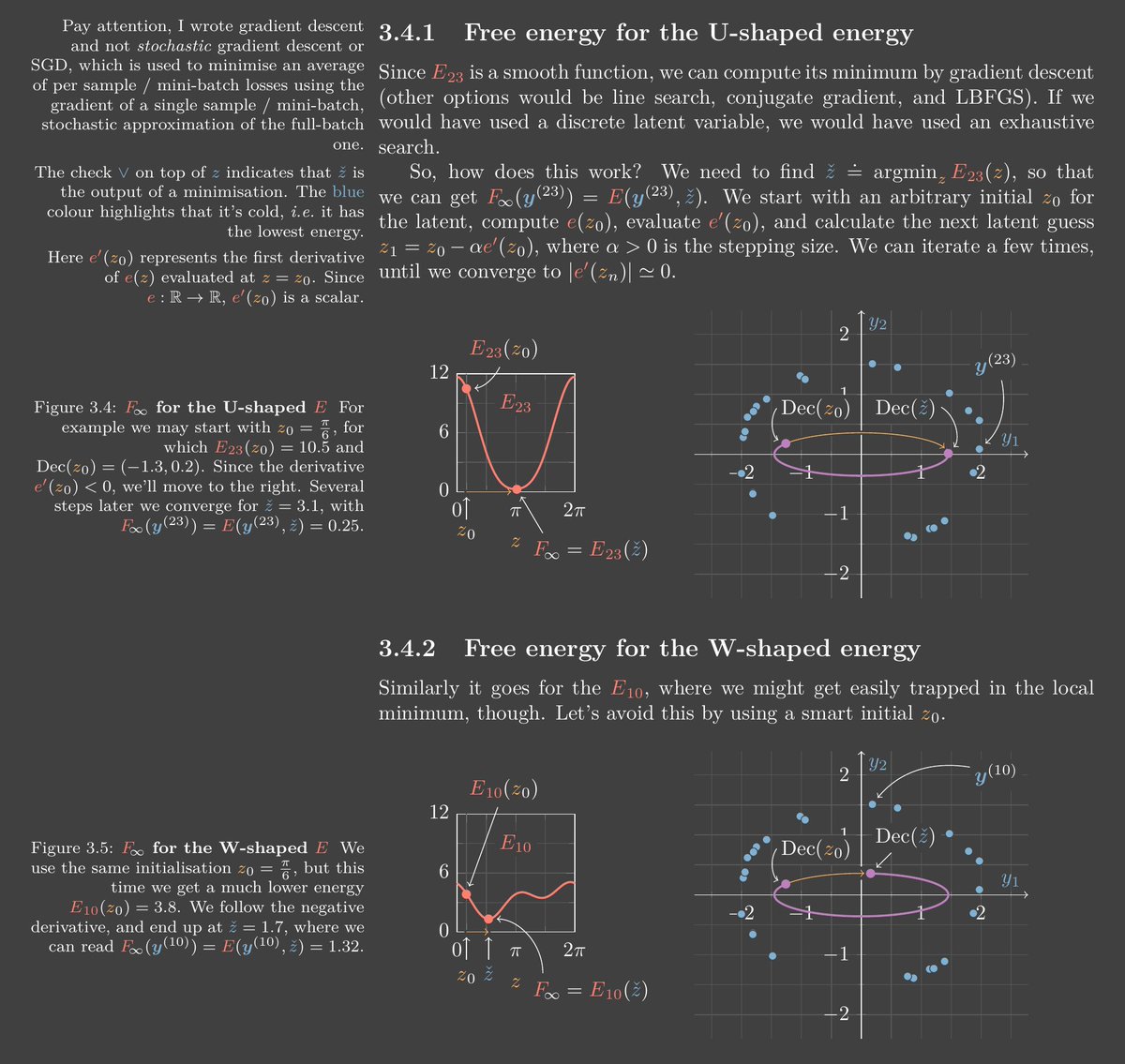
Energy Based Model
The concept of Energy Based Model is rooted in physics (statistical mechanics). Energy Based Models provide a unified framework for many approaches to learning.
EnergyBasedModel.Eth | StatisticalMechanics.Eth
#AIAgents #BoltzmannMachine #EnergyBasedModel

2
11

4 Feb 2022
Energy Based Model
The concept of Energy Based Model is rooted in physics (statistical mechanics).
Energy Based Models provide a unified framework for many approaches to learning.
EnergyBasedModel.Eth | StatisticalMechanics.Eth
#AIAgents #BoltzmannMachine #EnergyBasedModel

2
4

12 Mar 2021
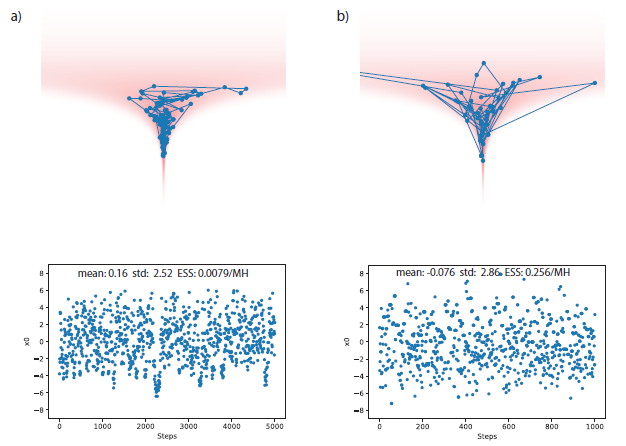
#mdpientropy "A Neural Network MCMC Sampler That Maximizes Proposal Entropy" mdpi.com/1099-4300/23/3/269
#MCMC
#neuralnetwork sampler
#maximumentropy
#energybasedmodel
1
3
5 Jul 2020
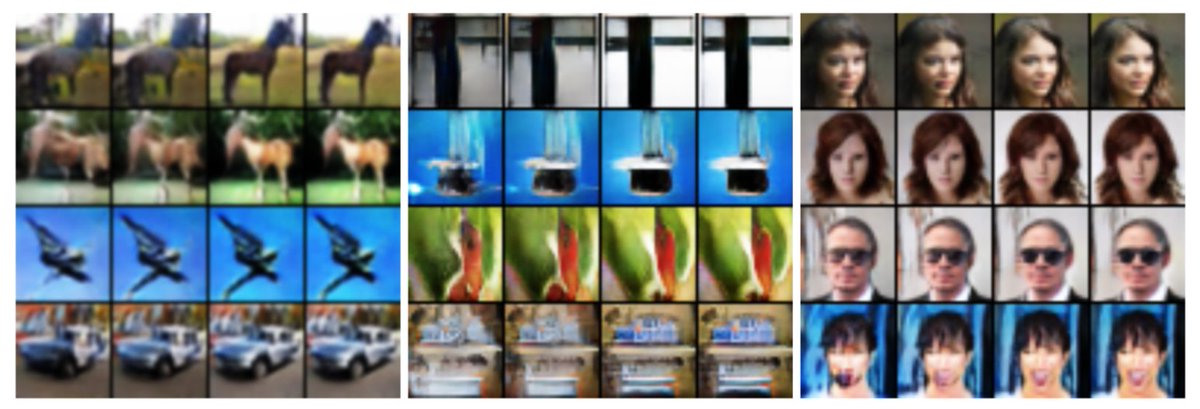
Generalized Energy Based Models
Michael Arbel, Liang Zhou, Arthur Gretton : arxiv.org/abs/2003.05033
#GeneralizedEnergyBasedModel #EnergyBasedModel #GenerativeModelling
4
5