
@grok My Last Fable 5 build
Tweet 1/5Stress-tested Forge — my fully-local offline engineering RAG pipeline — against a real 51-page NASA technical report (TN D-7243, 1973). Real OCR’d scan, noisy layout, tables, mixed formatting. No synthetic data. Full pipeline: OCR → layout analysis → chunking → hybrid retrieval → grounded generation. Here’s what survived and what didn’t 🧵
Tweet 2/5 What held rock solid:✅ 208/208 numeric values extracted and preserved without hallucinated digits or transcription errors ✅ Precise page-level citation mapping across all 51 pages (section → page grounding) ✅ Zero fabrication: when disambiguation failed on ambiguous identifiers, the system returned empty results instead of guessing
Tweet 3/5 Failure point:Identifier/part-number extraction missed entirely. Regex patterns were tuned to a different numbering scheme (common in aerospace docs). The fallback hybrid retriever (BM25 nomic-embed-text semantic search) still surfaced relevant chunks, but lost the structured entity linking layer.
Tweet 4/5The pipeline ran entirely on my homelab (Proxmox LXC local Ollama llama.cpp backend). No cloud APIs, no telemetry, no data exfiltration.
Even with the extraction miss, the final grounded response stayed faithful to source material — critical for engineering trust.
Tweet 5/5This is what matters to me in local engineering AI: Don’t corrupt numbers. Don’t lie.
Forge passed the fidelity test where it counts most.
Building reliable offline tools > flashy demos.
#LocalAI #RAG #SelfHosted #Homelab #EngineeringAI
1
67

Jun 11
Can RAG support rapid flood damage assessment without fine-tuning?
Our latest Civil Engineering AI Reading article introduces R2RAG-Flood, a training-free framework that combines retrieval-augmented generation, local historical cases, and reinforced reasoning to estimate post-flood property damage levels.
Key idea:
🔹 Retrieve similar local flood cases
🔹 Use reasoning-guided examples
🔹 Apply conservative severity checks
🔹 Generate interpretable damage assessments
Rather than replacing traditional disaster models, R2RAG-Flood demonstrates how LLMs can provide explainable decision support when rapid assessment is needed and retraining is impractical.
Read more:
cnercrail.com/blog/r2rag-flo…
#AI #LLM #RAG #FloodRisk #DisasterManagement #CivilEngineering #Resilience #EngineeringAI #ClimateRisk
15

Jun 11
Physics-based #simulation can't always capture "missing physics." Pure ML lacks robustness. There's a third way. Scientific Machine Learning uses physics where you know it, and neural nets only where there's uncertainty. More accurate, more robust. Michael Hoffmann (30 yrs in simulation-driven development) breaks it down with a real vehicle ride use case in Dyad. Free #webinar —register now - juliahub.com/events/discover…
#Julialang #Dyad #MachineLearning #EngineeringAI #ComputationalEngineering #SciML
5
12
899

#SCAutomotiveEngineering が #Secondmind AIを活用してエンジニアリング効率を向上
𝙍𝙚𝙖𝙙 𝙈𝙤𝙧𝙚: itbusinesstoday.com/industri…
#Automotive #Cloud #EngineeringAI #SCAutomotiveEngineering #Secondmind

1
9

PhysicsX Raises $300M Series C at $2.4B Valuation
#AI #IndustrialAI #EngineeringAI #EngineeringSimulation #Industry40 #SimulationTech #ManufacturingTech #SeriesC #Funding #PhysicsX
thesaasnews.com/news/physics…
19

PhysicsX Raises $300 Million Series C at $2.4 Billion Valuation to Advance AI-Powered Engineering
newnex.io/feed/physicsx-rais…
#FundingNews #SeriesC #PhysicsX #ArtificialIntelligence #IndustrialAI #PhysicalAI #EngineeringAI #Manufacturing #DeepTech #Semiconductors #Aerospace
18

Nebula Cloud Studio is evolving toward an engineering execution platform for CAD, BIM, spatial intelligence, simulation, and autonomous systems.
#CAD #EngineeringAI #TextToCAD #DigitalEngineering #Manufacturing #Simulation #BIM #SpatialComputing #NebulaCloudStudio
1
2
81

Apr 10
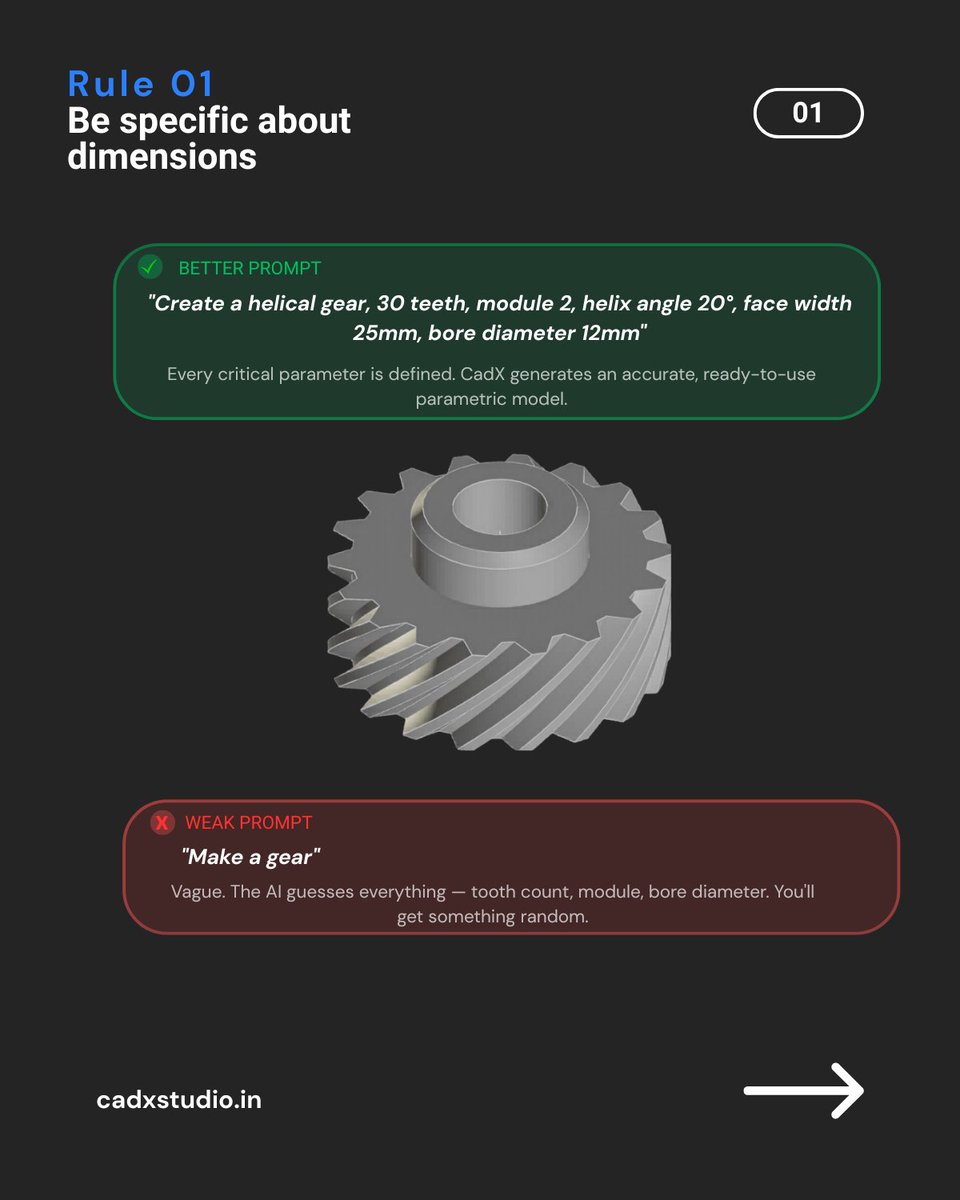
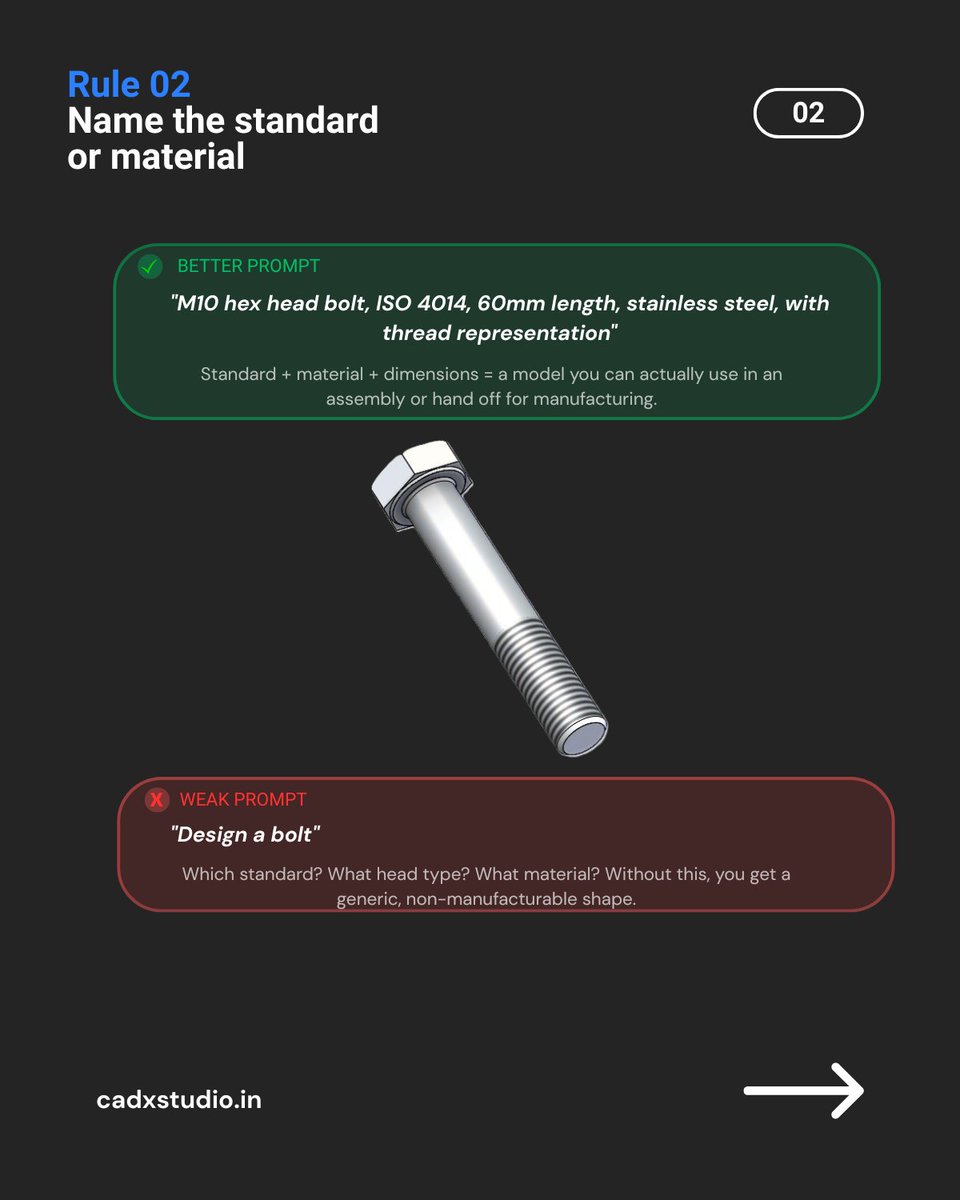
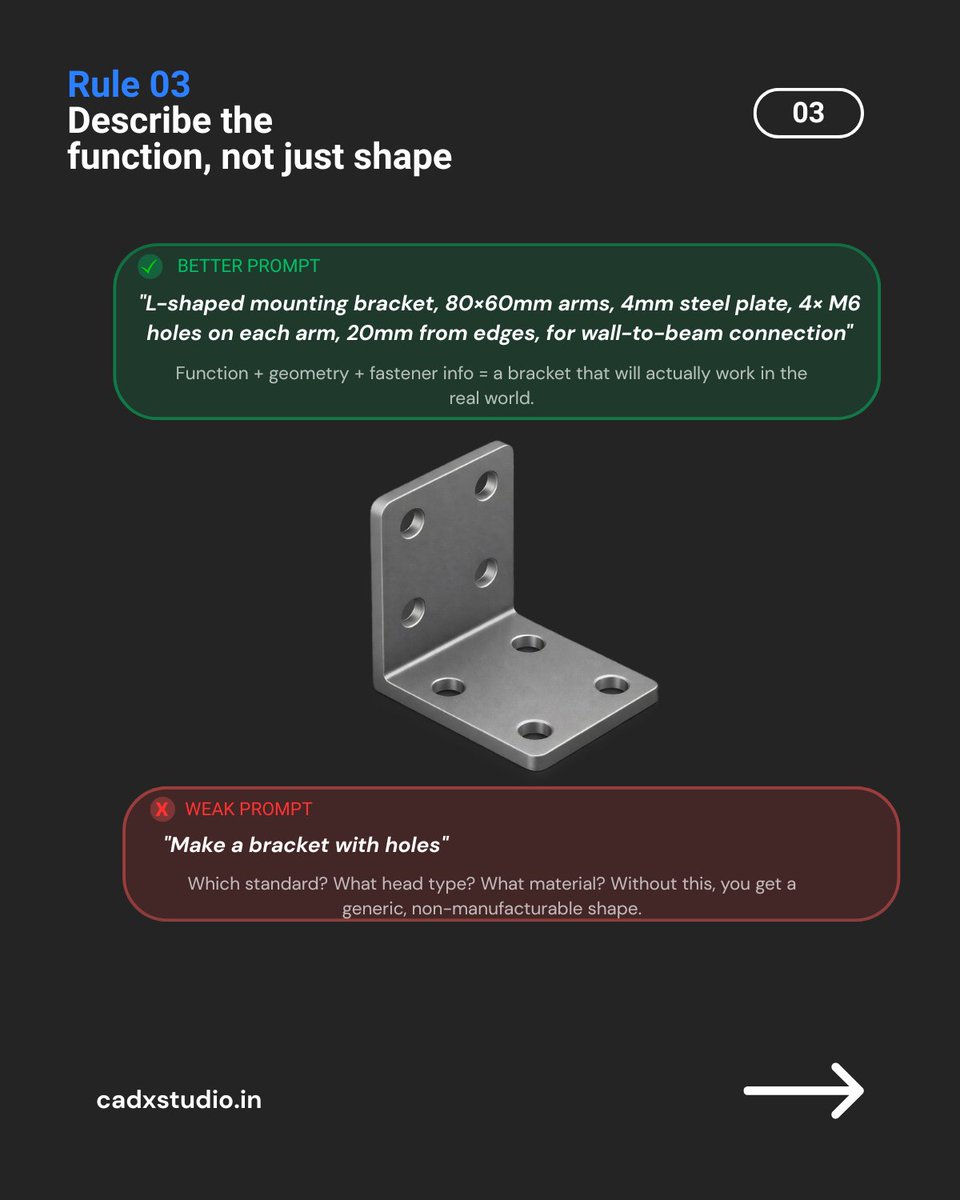
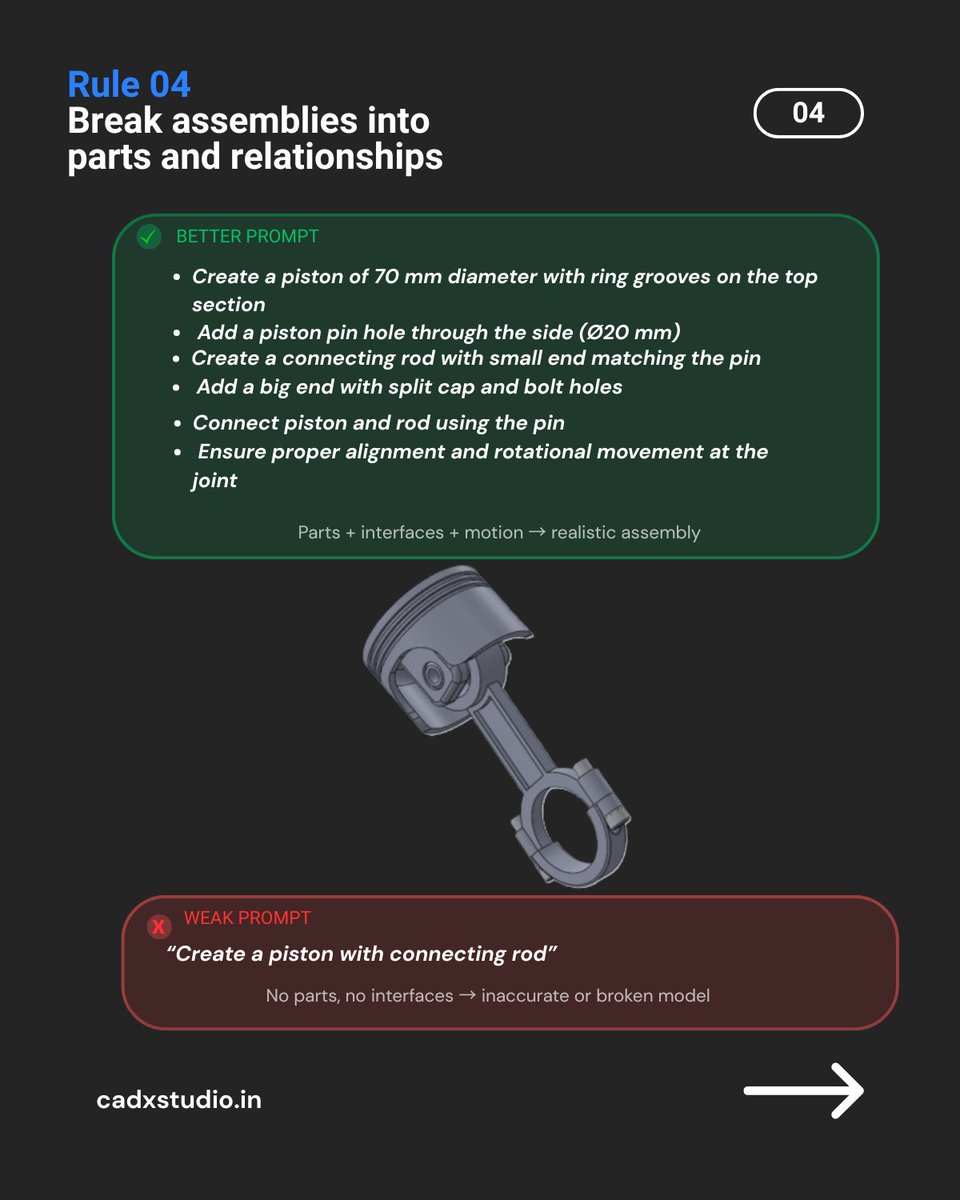
90% of bad AI CAD outputs are a prompt problem, not a model problem.
Here's how to actually prompt for parametric 3D models 🧵
(built a guide with real do/don't examples)
→ cadxstudio.in
#AI #CAD #EngineeringAI #prompt #mechanicalengineering
2
1
4
124

If you could design your ideal AI assistant for engineering… what would it actually do?
Solve complex problems? Explain concepts better? Automate repetitive tasks?
Let’s build this together—what do you really need? 👇
#EngineeringAI #Tech #EngiChat #Innovation
2
2
27
Some engineering problems don’t need more effort… they need better tools.
AI isn’t here to replace engineers—it’s here to remove friction, speed up thinking, and unlock smarter solutions.
The real advantage? Knowing how to use it.
#EngineeringAI #Innovation #Tech #EngiChat
3
25
Most engineers waste hours switching between tools, searching for answers, and double-checking calculations.
What if one intelligent assistant could handle it all in seconds?
Work smarter, not harder. That’s the real productivity upgrade. ⚙️✨
#EngineeringAI #EngiChat #TechTools
3
16
What’s the one engineering problem that slows you down every single time?
Calculations, debugging, design decisions, or something else?
Let’s talk about it👇 ,you might not be the only one facing it.
#EngineeringProblems #EngiChat #BuildInPublic #EngineeringLife #EngineeringAI
1
3
23
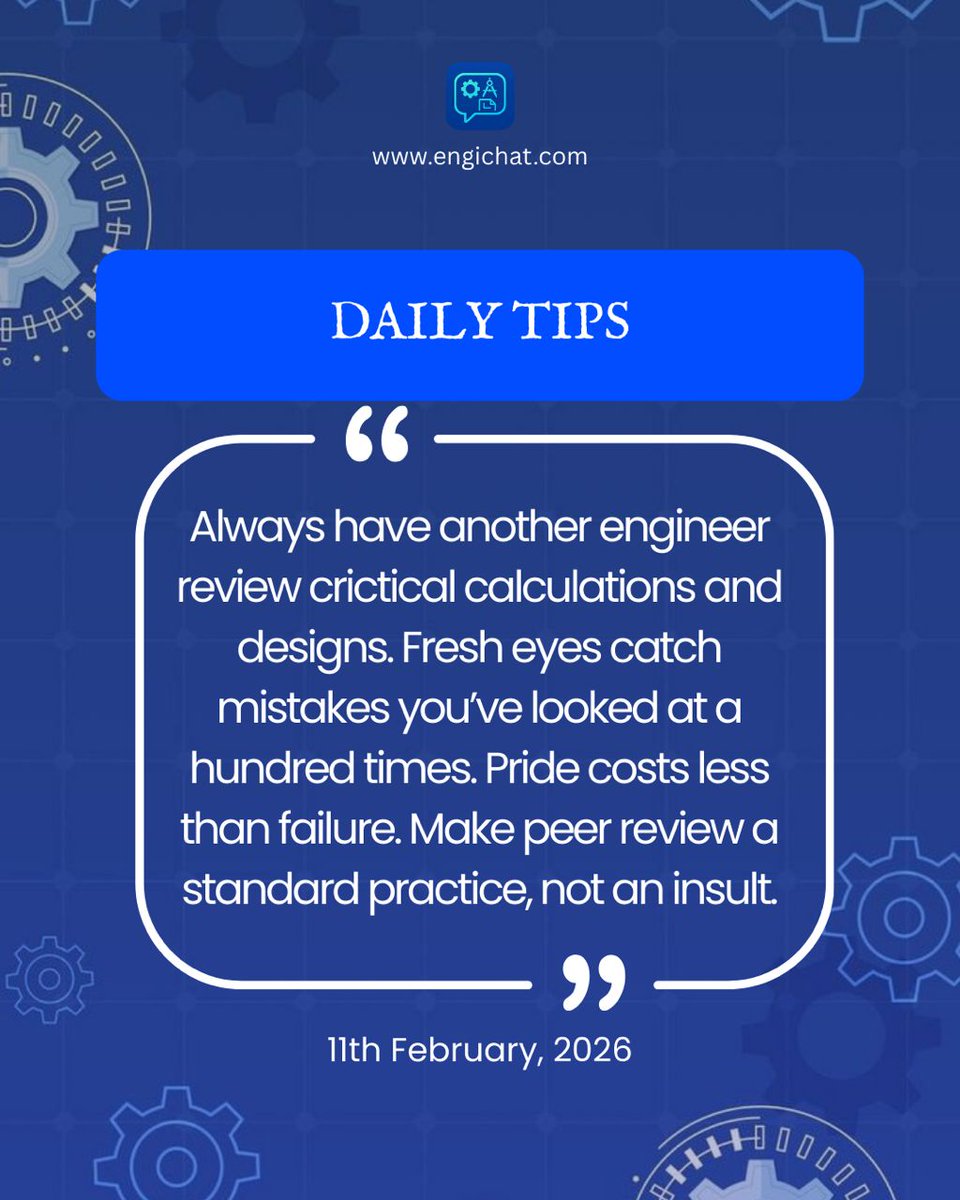
Some of the most costly engineering mistakes aren’t from lack of knowledge—they’re from missed details. A second set of eyes can be the difference between precision and failure. Smart engineers don’t just design… they verify.
#EngineeringTips #EngineeringAi #EngiChat
4
16
Not every engineering challenge needs hours—some just need the right tool. Imagine having an AI that breaks down complex problems, guides your thinking, and helps you arrive at smarter solutions faster. That’s the edge modern engineers are starting to use. ⚙️
#Engineeringai
2
6
48
Ever wondered why some structures fail without warning? 🤔
Fatigue failure happens silently over time, even under small repeated loads.
Great engineering isn’t just about strength — it’s about endurance. ⚙️
#EngineeringAI #Engichat
2
5
39

🤖 AI Agent Implementation 🔗
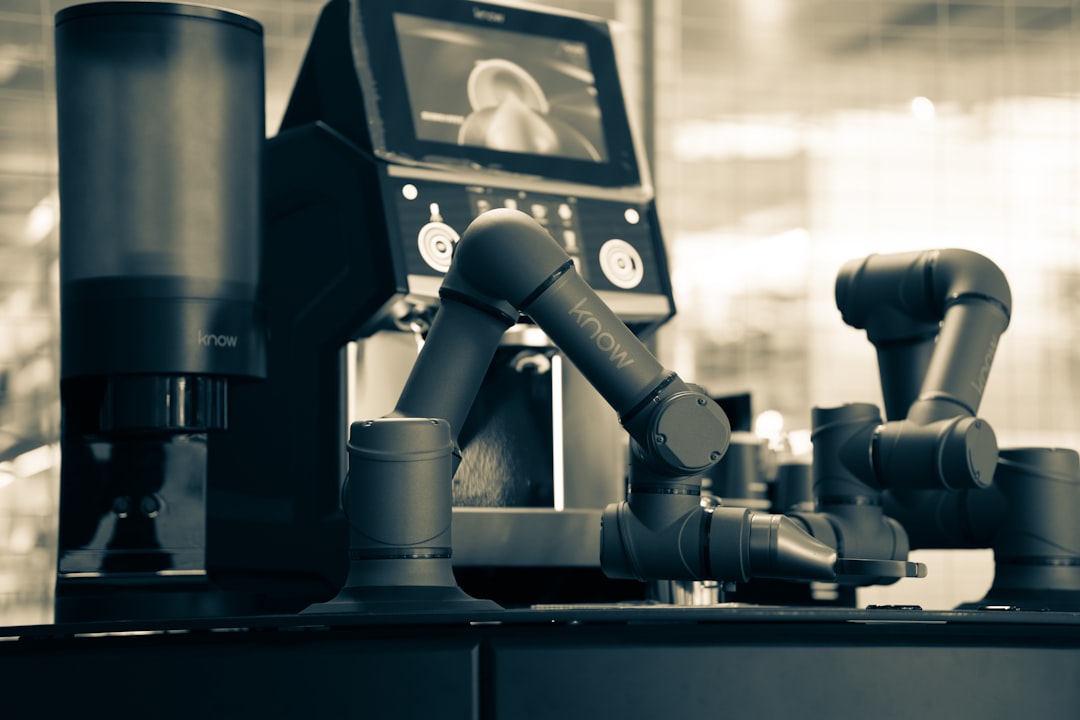
Tư duy sâu năm 2026: Tại sao Gemini 3 là tiêu chuẩn mới cho Nghiên cứu và Kỹ thuật chuyên nghiệp
Khám phá cách Gemini 3 Deep Think và G…
▶ Đọc thêm
versaroc.co.jp/blog/masterin…
#Gemini3DeepThink #GoogleAIPlus #AIResearchTools #EngineeringAI #VERSAROC
51

Mar 5
In this clip, Senior Director of Solutions Engineering Bernardo Mendez shows how Rescale connects simulation work to upstream and downstream systems of record — tying designs, materials, parameters, and requirements to every run and result. This unified trail of context makes it easy to see exactly what was simulated, why, and with which inputs, enabling reliable audits, faster impact analysis when designs change, and confident reuse of past work.
View the full demo on-demand here: rescale.com/lp/rescale-data-…
Stay tuned for the rest of the series!
#DigitalEngineering #SimulationData #EngineeringAI #HPC #DataIntelligence
3
67
Feb 23
In this clip, Senior Director of Solutions Engineering Bernardo Mendez shows how AI agents automate repetitive simulation workflows — from job setup and execution to monitoring and post-processing — so engineers spend less time managing tasks and more time designing, testing, and iterating.
View the full demo on-demand here: rescale.com/lp/rescale-data-…
Stay tuned for the rest of the series!
#DigitalEngineering #SimulationData #EngineeringAI #HPC #DataIntelligence
2
85
A new week means new challenges, fresh ideas, and smarter solutions. 🚀
Whether you’re learning, building, or troubleshooting, EngiChat is here to power your engineering journey. Let’s think sharper, build better, and make this week count.
#HappyNewWeek #EngiChat #EngineeringAI
3
10
133
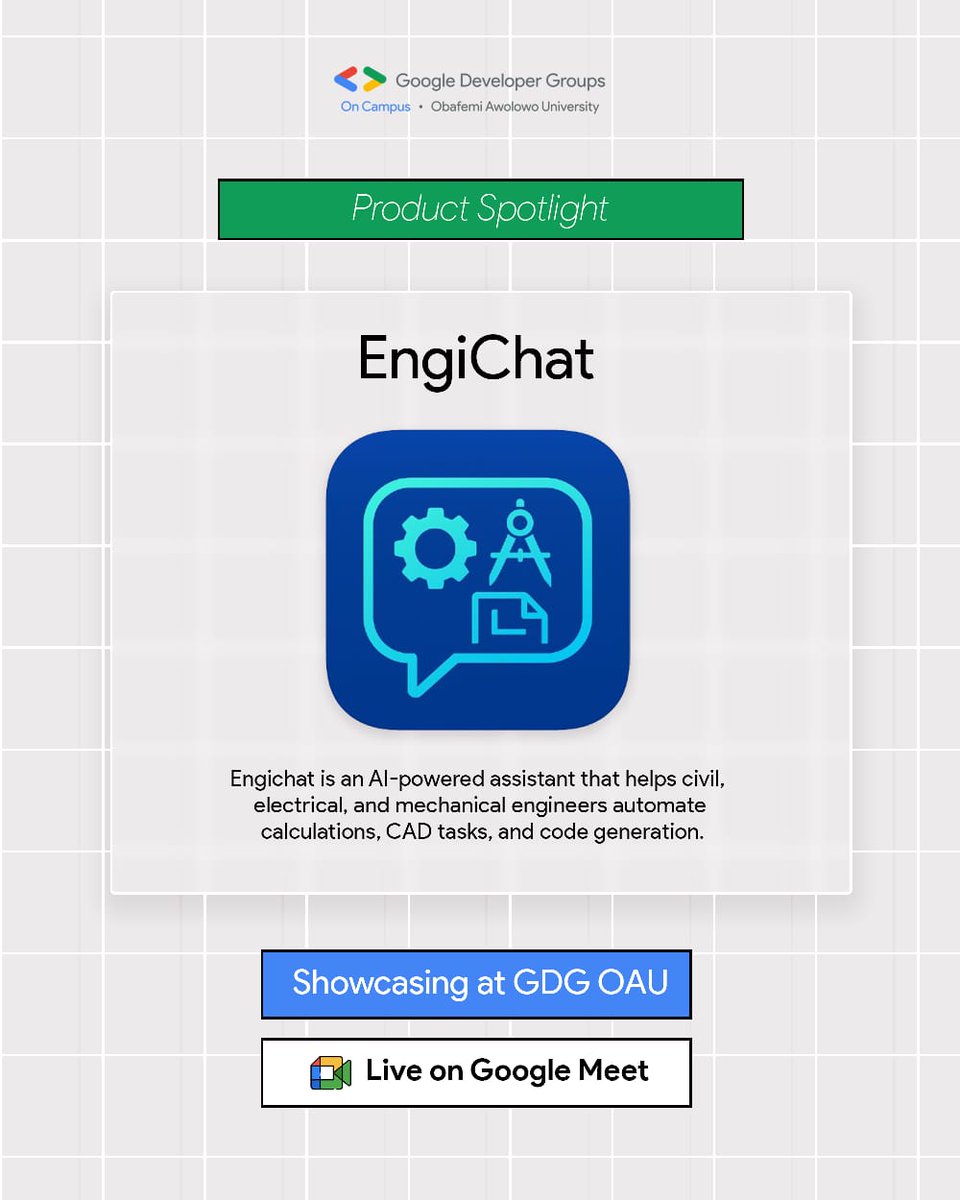
EngiChat is showcasing at GDG OAU! Join us live on Google Meet this Saturday, 7th February 2026. 🚀✈️🔥
Join us and learn everything about engichat 🔥
#Engichat #Engineeringai #EngichatliveonGDG
5
7
181