
May 2
𝖶𝗁𝖺𝗍 𝖾𝗋𝗋𝗈𝗋𝗌 𝖽𝗈 𝗌𝗎𝗋𝗏𝖾𝗒𝗈𝗋𝗌 𝖾𝗇𝖼𝗈𝗎𝗇𝗍𝖾𝗋 𝖽𝗎𝗋𝗂𝗇𝗀 𝖼𝗈𝗇𝗍𝗋𝗈𝗅 𝗍𝗋𝖺𝗇𝗌𝖿𝖾𝗋 𝗂𝗇 𝗆𝗂𝗇𝗂𝗇𝗀 𝖾𝗇𝗏𝗂𝗋𝗈𝗇𝗆𝖾𝗇𝗍𝗌?
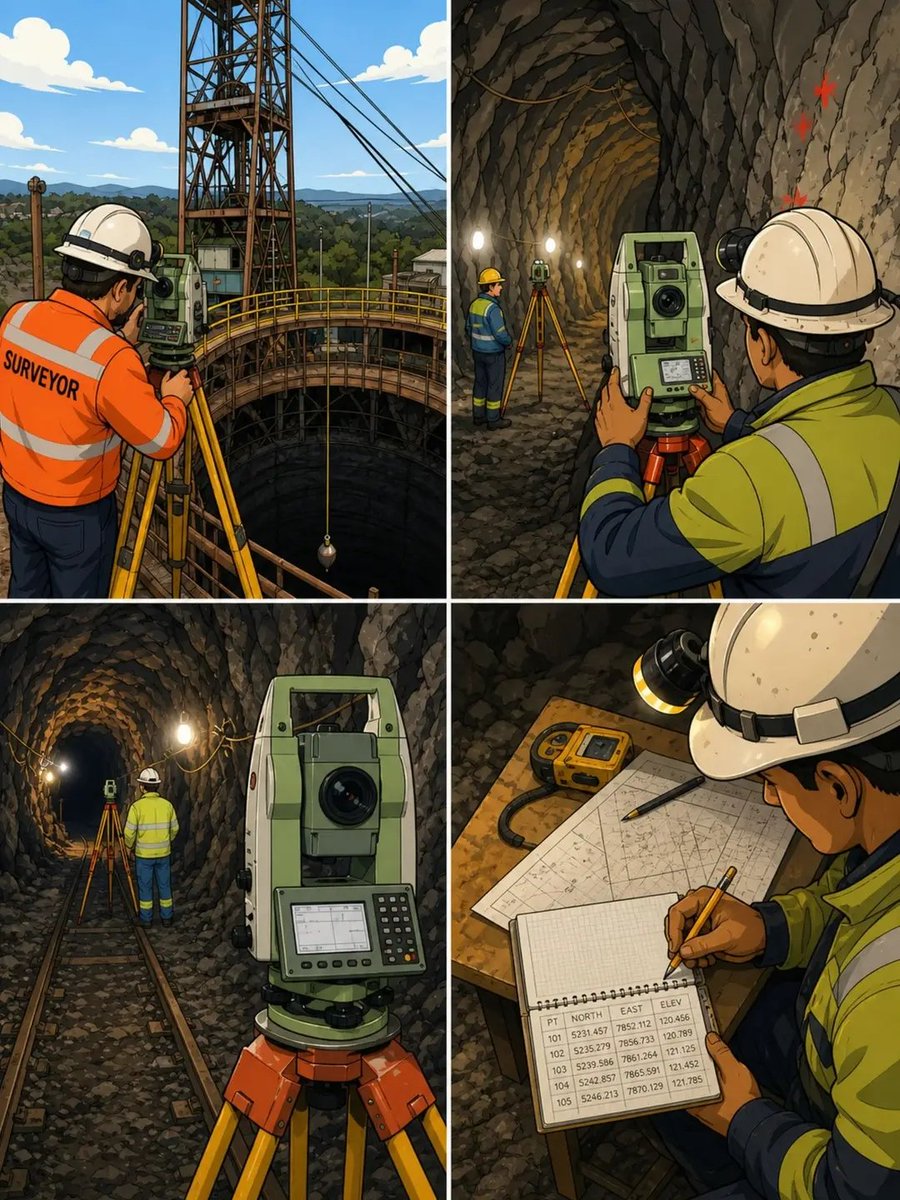
Control transfer in mining is one of the most sensitive stages of the entire operation.
It is where surface truth is carried into a more complex, restricted environment.
And because of that, even small errors at this stage do not remain small; they grow with distance, depth, and development.
One common source of error is plumbing instability.
When control is transferred through shafts using plumb lines or wires, air movement, vibration, and shaft depth can cause slight shifts.
These movements may seem minor, but they affect the exact position being transferred.
Another issue is instrument setup error.
Underground conditions are not always ideal.
Limited space, uneven ground, and poor visibility can affect centering and leveling.
If the setup is slightly off, every measurement from that point carries the error forward.
Orientation errors are also critical.
If the directional reference (azimuth) is not accurately transferred,
the entire underground network begins to rotate away from true alignment.
At first, the difference may be small; but over long distances, it becomes significant.
There is also the problem of distance measurement distortion.
Temperature, humidity, and confined environments can influence measurements.
Inconsistent conditions between surface and underground can introduce subtle differences.
Human factors play a role as well.
Rushing the transfer process, skipping verification, or assuming previous data is correct can introduce errors that go unnoticed at the early stage.
Another major challenge is lack of redundancy.
Relying on a single transfer method or a single set of observations increases risk.
Without cross-checks, there is no way to confirm if the transfer is truly accurate.
Then comes progressive error accumulation.
Even if initial errors are small, they grow as the control network extends deeper into the mine.
What started as a minor misalignment becomes a major positional problem over time.
The deeper truth is this:
Control transfer is not just about moving coordinates; it is about preserving accuracy under more difficult conditions.
Mining environments do not forgive small mistakes.
They amplify them.
That is why control transfer must be treated with patience, repetition, and strict verification.
Because once underground development advances, correcting these errors becomes complex and costly.
In the end, the quality of the entire mining operation depends on how well this stage is handled.
So the real question is:
During control transfer, are we truly confirming every detail, or are we allowing small uncertainties to pass, knowing they may grow into bigger problems later?
#Surveying #MiningSurvey #ControlTransfer #UndergroundSurvey #EngineeringAccuracy
4
9
323
Apr 23
𝖶𝗁𝖺𝗍 𝖼𝖺𝗇 𝖻𝖾 𝖽𝗈𝗇𝖾 𝗍𝗈 𝗋𝖾𝖽𝗎𝖼𝖾 𝗁𝗎𝗆𝖺𝗇 𝖾𝗋𝗋𝗈𝗋 𝗂𝗇 𝗌𝗎𝗋𝗏𝖾𝗒𝗂𝗇𝗀 𝗈𝗉𝖾𝗋𝖺𝗍𝗂𝗈𝗇𝗌?
Human error remains one of the most underestimated risks in surveying.
Not because professionals lack competence; but because the field environment is dynamic, demanding, and often unforgiving.
Long hours. Repetitive tasks. Tight deadlines.
And in the middle of it all, decisions are still made by people.
So the goal is not to eliminate human error entirely; that's unrealistic.
The goal is to build systems that make errors difficult to occur, and easy to detect.
Because most mistakes in surveying are not dramatic failures.
They are subtle:
A skipped check.
A misread value.
A misplaced point.
A moment of distraction.
And once they pass unnoticed, they don't remain isolated; they spread through the workflow.
So how do we reduce them effectively?
It begins with discipline and structure:
– Standardized workflows that guide every task from setup to data recording
– Checklists that remove reliance on memory, especially under pressure
– Deliberate verification of critical points, even when results appear correct
– Clear communication to prevent misinterpretation between team members
– Proper data management to avoid errors during recording and transfer
– Continuous training to strengthen both technical skill and decision-making
– Fatigue awareness; because tired minds make avoidable mistakes
– Understanding instruments, not just operating them
Because the truth is simple:
Most errors don't come from what we don't know, they come from what we assume.
The most reliable surveyors don't work on autopilot.
They stay intentional.
They question results.
They confirm before they proceed.
And over time, that mindset builds consistency; the kind that projects depend on.
So here's a question worth reflecting on:
In your own field experience, what has been the most common source of human error?
And what system or habit has helped you reduce it the most?
Let's learn from real experiences
#SurveyingLife #HumanError #FieldDiscipline #EngineeringAccuracy #SurveyorMindset

5
13
656
Apr 17
𝖶𝗁𝖺𝗍 𝗁𝖺𝗉𝗉𝖾𝗇𝗌 𝗐𝗁𝖾𝗇 𝗌𝗎𝗋𝗏𝖾𝗒 𝗂𝗇𝗉𝗎𝗍 𝗂𝗌 𝖽𝖾𝗅𝖺𝗒𝖾𝖽, 𝖺𝗇𝖽 𝗁𝗈𝗐 𝖽𝗈𝖾𝗌 𝗂𝗍 𝖺𝖿𝖿𝖾𝖼𝗍 𝗌𝗂𝗍𝖾 𝗉𝗋𝗈𝗀𝗋𝖾𝗌𝗌?
At first, it may seem like a small issue.
Work continues, teams stay active, and decisions are made to “keep things moving.” But beneath that momentum, something critical is missing; verified positioning and control.
And that's where the real problems begin.
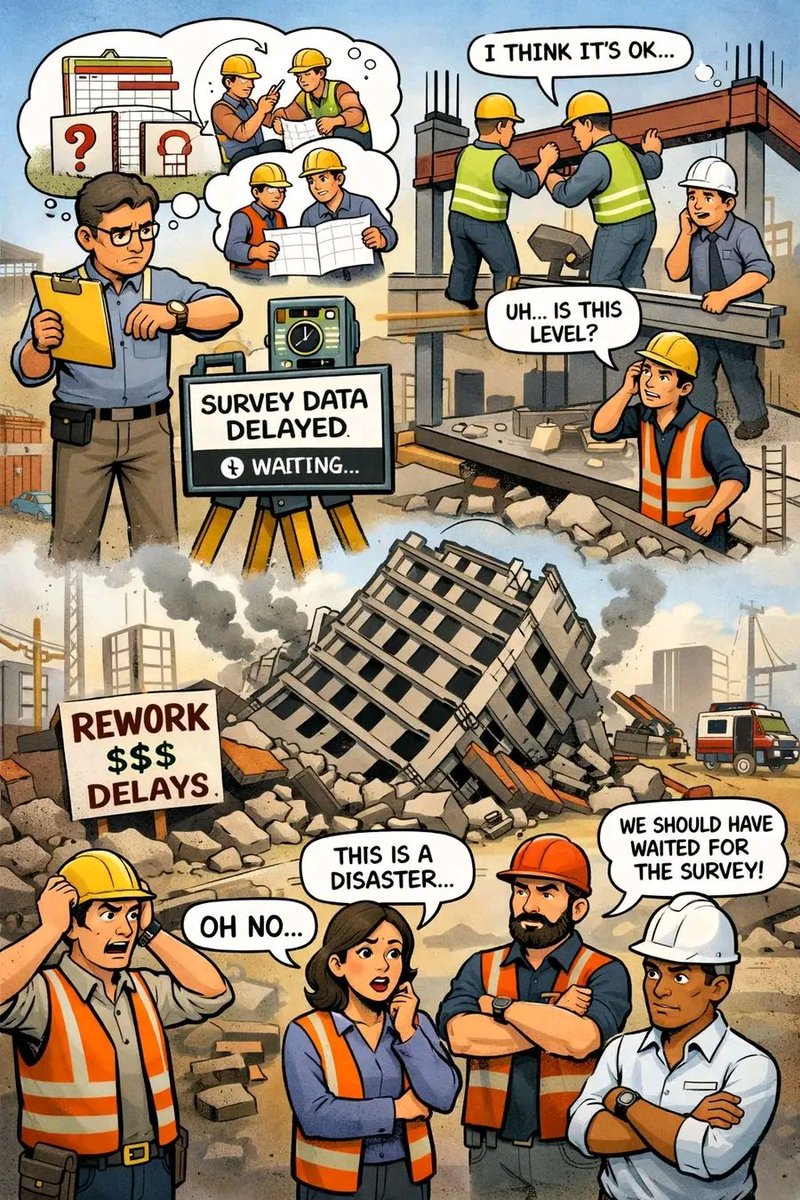
When survey input is delayed, construction often shifts from precision to assumption.
Without confirmed coordinates, levels, and alignments, teams may rely on estimates or previous references. What looks like progress on the surface can quickly turn into misalignment, incorrect placement, or uneven levels; issues that are not always visible immediately, but become costly over time.
Delays in survey work also disrupt coordination.
Different teams depend on accurate set-out points to carry out their tasks. When those points are unavailable or late, workflows become fragmented. Some teams pause, others proceed with uncertainty, and the entire sequence of operations begins to lose rhythm.
Then comes the impact on time and cost.
What could have been done right the first time may need to be adjusted, corrected, or even redone. Rework not only slows progress but also consumes resources that were never planned for.
There is also a hidden effect; loss of confidence.
When survey input is inconsistent or delayed, trust in the data begins to weaken. Teams may start bypassing proper checks just to maintain pace, which increases the risk of compounded errors across the project.
But beyond all this, the biggest consequence is risk.
Construction without timely survey input is construction without full control. And without control, quality, safety, and long-term performance are all at stake.
Because in reality, progress is not just about speed; it's about accuracy.
Fast work built on the wrong position is not progress. It’s a problem waiting to surface.
So the real question is:
Is your site moving forward with verified data, or just moving fast without it?
Let's discuss... Have you experienced delays caused by late survey input, and how did it affect your project?
#SurveyingPractice #ConstructionDelays #SiteCoordination #ProjectExecution #EngineeringAccuracy
1
9
394

CNC Turning converts those specifications into exact, repeatable components with zero guesswork.
Your design, manufactured with precision.
Learn more 👉 rpworld.com/en/service/cnc-m…
#CNCTurning #DesignForManufacturing #EngineeringAccuracy
2
72

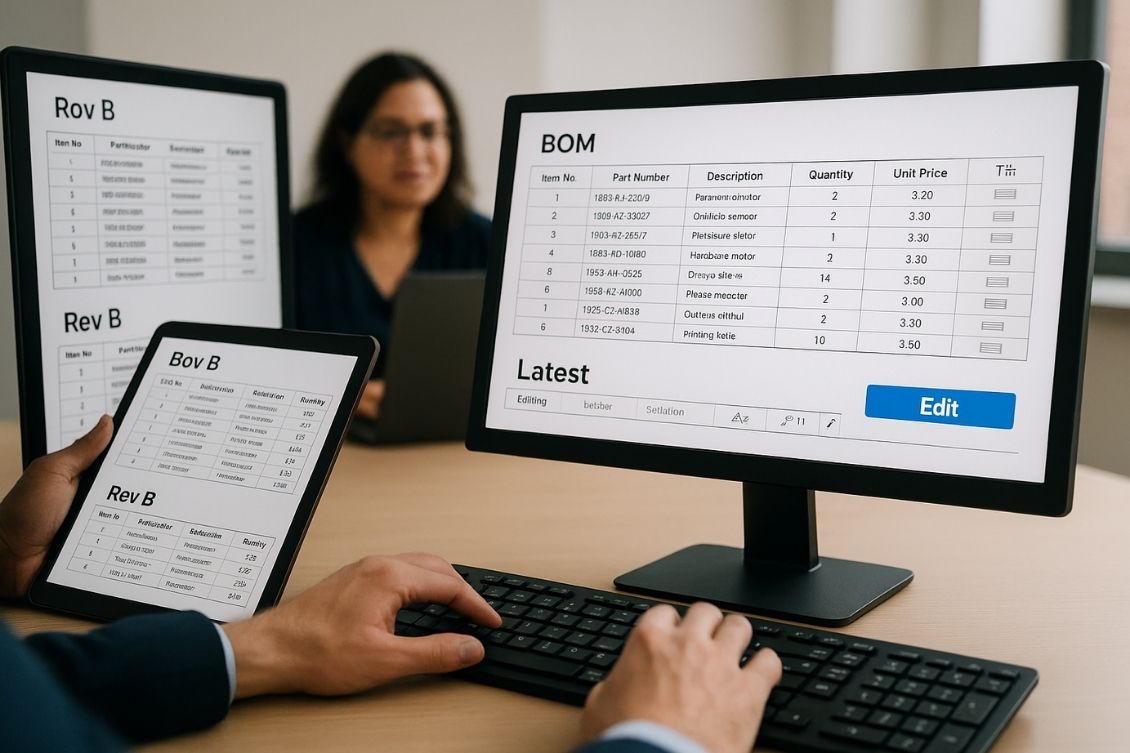
🆕 Never get stuck with outdated BOM data again. OpenBOM now opens the latest revision by default. ✅📄
#BOMRevisions #ProductUpdates #EngineeringAccuracy #ManufacturingTools #OpenBOM
bit.ly/4mJcGd2
3
27

18 Feb 2015
#Netflix BBC's Generation Earth is fabulous #MenMadeWondersAndWillToCreate #EngineeringAccuracy #NiceFilmEffect #AllOverTheWorld
2