Nishant Saxena retweeted

Jun 5
Evidence from ICMR’s AMR Surveillance Network helped inform a novel β-lactam enhancer strategy behind an Indian antibiotic recently approved by the US FDA, showcasing India’s contribution to the global fight against AMR.🦠
Read here:
🔗indianexpress.com/article/op…

23
42
2,024

I suppose I'll have to catch the next one. My head of the beast needs a good strong leader or some shit like that. THat's what the G7 is supposed to represent isn't it? The seven heads of the beast? That's okay it will be a little less beastly when I get there and a little more Godly and that's a good thing for those of us who desire mercy and know we deserve it. Isn't that right Mr. Imperator du francais? That's alright, I know we were hoping for much more and that's fine by me. Europe needs all the strong leaders they can get and Mr and Mrs Macron are a two man power tandem that the world deserves to appreciate for the sheer Frenchness of it all. Don't worry Mr. President your secret is safe with me and my very few followers of course. Those who know, know already and they deserve to. We had our own two man power tandem over here and they are beloved despite all Donald's attempts to destroy them. Mr. Obama or Soetro as we call him up here, or you know what where am I? I thought this was supposed to be some sort of divine summit for leaders of their former countries but now affectionately all call one man and one, I don't know, can I call it a space station dad? Sure son. Well it is and it's wonderful. Some leaders are destined for more and one in particular has always had his Father's eye for more than just his short stature and vast ambitions. No it's not Napoleon I'm talking about here but the new one. Calls himself Macron but I'm pretty sure I've seen him before. Well he already knows his Father keeps his favorites around and he doesn't mind a little ambition at all. So long as it fits within his larger plans known as his will. So that's how it works. Mr Macron as we call him always knew. There is nothing more French than a diminutive power enhancer who speaks with such eloquence as to lull the court to a false sense of dependence on him and that's how it should be. His powers of persuasion as they were and are were and are his best skillset and will continue to be made use of as we have many wonderful deals to make for our people's who have struggled together from time to time and may we do so again in love and triumph and one of these days from a palace. I am waiting on a few brinks trucks to roll up here any day now. Maybe there will be some of those arfable Navy Seals attached. They're so adorable aren't they?

16

@MiniMax_AI is perfect for Hermes and OpenClaw if you want to setup the ultimate productivity enhancer!
16

Salt is a flavour enhancer not a flavour, if I can taste salt it's too much salt!
15


Pressure kills the mood faster than anything else. Relaxation is the real performance enhancer.
31


I just be inna house playing with my money a stack of blue hunnids such a mood enhancer
9

I am a voracious reader but life, experience, and observation of society taught me that reading per se is only a by-product of intelligence and not the enhancer or supporter or trigger or catalyst or anything else.
New generation will face trouble if it can't UNDERSTAND things.

I don't think anybody really grasps how desperate this situation is.
University professors are now saying they are unable to teach history because reading long books and passages is how a person learns history. College kids are incapable of reading more than a few pages.
Some classes don't assign any reading at all now, only lectures.
There is an assumption among the people managing this decline that reading is just a way of receiving information. It isn't. Proper reading is how we build the mental muscle to synthesize ideas and evaluate them.
If the catastrophic decline in reading and literacy is not addressed now, we risk losing everything.
Western civilization cannot survive the death of reading because it was built by people with the kind of cognitive depth that a culture of deep reading brings:
Complex reasoning, extended internal dialogue, the capacity to hold opposing ideas in tension. Our systems and institutions are complex, and they require well ordered minds to maintain them.
Reading forms minds, and the West was built by the richest minds in history.
1
1
1
85


From Free AI to AI Tokenomics?
- As OpenAI, Google, Microsoft, Anthropic and others move toward usage/token based pricing, exploding token usage is good for AI infrastructure companies, but it also means exploding AI costs for enterprise customers. AI is no longer software that feels almost free to use. It is becoming a compute utility where usage directly translates into cost.
- As the underlying cost of compute becomes more transparent and directly tied to output, the AI ROI debate will start getting answered in real time across millions of users and use cases. The conversation may shift from “AI improves productivity / employees work faster / coding speed goes up / customer support costs go down” to “how much did this agent’s task cost / what value did the task create / is this model effective and replaceable?” That shift can create a new industry around AI cost optimization.
- This may also change how companies manage AI internally. The current policy of freely letting employees use AI could move toward setting token budgets by use case. Frontier models may be allowed only for specific tasks, while simpler or repetitive work gets routed to open-source or lower cost models. Enterprise AI policy could move from “let people use AI” to “which model should be used for which workflow, under what cost limit?”
- Because companies will need to track AI usage and cost, areas like model observability, token usage monitoring, cost attribution, model routing, policy enforcement, AI governance, and ROI tracking by workflow could become important. At that point, AI is not only a productivity enhancer for employees. It also becomes a competitor for budget. This will likely be reinforced by the development of open source models, local models, and low cost Chinese models. AI usage will keep growing. But who pays for that cost? Who can pass it through to customers? Who can protect margins through optimization?
- None of this means the AI trade is over. The AI long trade can continue, supported by revenue growth at big tech companies, rising token usage from frontier models, and AI adoption in high value areas like finance, technology, and customer support. But as AI costs rise, the emphasis may shift toward cost reduction and efficiency. Local and ondevice inference, model compression, smart routing, observability, more efficient architectures, and low cost specialized models built on open source stacks could become increasingly important themes. AI usage will keep increasing, but not all of that usage necessarily has to flow into hyperscaler data centers.
- In that optimization process, there will also be AI losers. SaaS companies that cannot pass AI costs on to customers, companies that add AI features but see inference costs grow faster than revenue, labor-based services that can be replaced by AI, seat based software models that get disrupted by usage based AI models, and data/content providers that bear the cost but fail to capture the value could all fall into the AI loser bucket.
- Related areas worth looking at include memory cost optimization, DRAM efficiency, HBM bottlenecks, and alternative architectures. Ondevice AI, open source/low cost models, and AI cost monitoring/governance also seem worth tracking.

Our team’s work really shines when covering a wide range of topics, cutting directly to the actionable chase of each.
Our recent State of the Themes is no exception. If you haven’t read it, I highly recommend doing so.
citriniresearch.com/p/state-…
171

Day 251 of 365 days building 1UI.dev (Prompts to UI Designs)
✅ Figma Plugin is now available for free
✅ Export your 1UI designs directly to Figma with full editability.
✅ Use Prompt Enhancer to improve your prompts.
19

The Sleep Revolution You Need by Beverly Webb
mixcache.com/catalog/300/the…
Discover why sleep is the ultimate performance enhancer—backed by cutting‑edge neuroscience, real‑world case studies, and practical strategies you can start using tonight. *The Sleep Revolution You Need* …
3
Vriot retweeted

Jun 14
Enhancer of the day. New Year's Day Baby Elmi Yassin Mohamud. This year alone, multiple burglary, auto theft, receiving stolen property, drugs. Numerous other charges and convictions. Gets bounced from custody every time only to have another warrant issued for failing to appear.

16
40
110
9,951

If you watch on browser, you can get a visual enhancer extension and color grade it yourself. 2 or 3 presets can fix just about everything for most modern movies with this issue
1
1,059

Bill used Monica as a wet hole to jack off in and a cigar flavor enhancer in our house.

Remember, during today's literal cage match on the White House grounds:
No matter what, it's not his house. It's our house.
Get a hat, coaster, or sticker to support groups and candidates who will respect the form AND the function of the people's house. shop.onwardtogether.org/coll…

14

6h
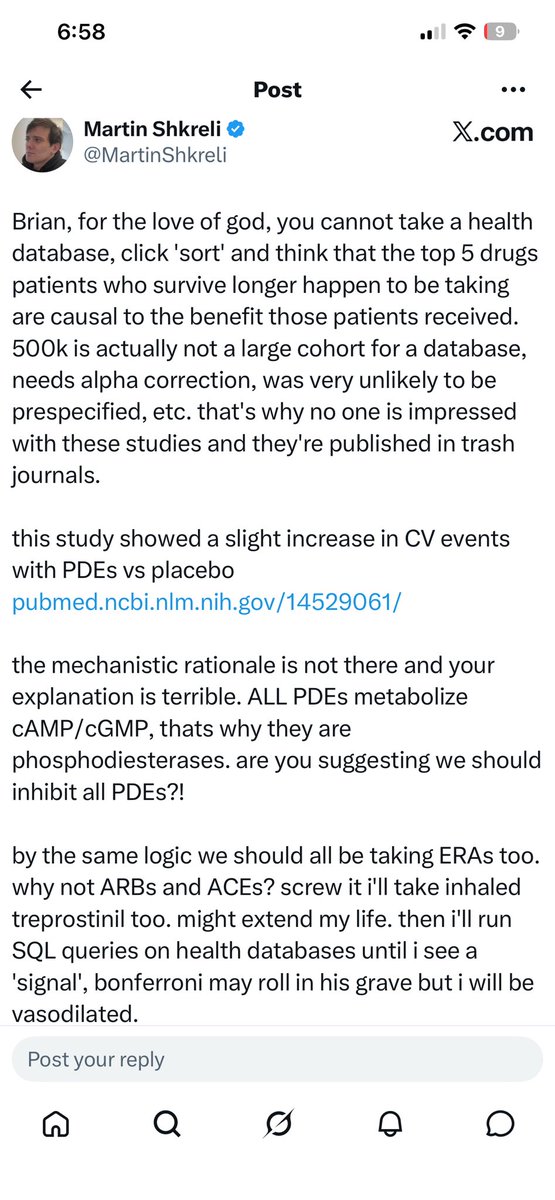
If @bryan_johnson deployed true rigor in his longevity endeavors, he’d have spoken on pentoxifylline
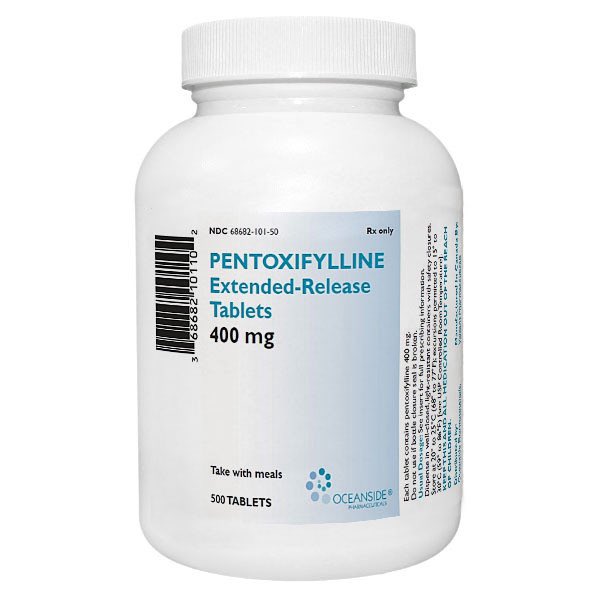
Pentoxifylline is a vascular enhancer. It is anti-inflammatory, immunomodulatory, and enhances oxygen delivery to tissues. The applications of this compound are endless
Yes, pentox is a vasodilatory PDEi. Why is that a bad thing? Why NOT take an ARB? Because… reasons. You can see the LARP in both camps
Pentox has some amazing properties including:
➢ fourfold decrease in all-cause mortality
➢ enhanced tissue specific microcirculation
➢ reduced scar tissue mass by targeting uncleaved collagen deposition and inhibiting the stimulation of TGF-β
➢ synergy with PTH analogs to grow bone tissue… mog incoming
➢ reduction in kidney damage markers like creatinine : albumin ratio
➢ inhibition of bone cell toxicity
➢ inhibition of chondrocyte apoptosis - can make you grow taller if your growth plates are open
➢ reduces vascular strain and adrenergic stress; therefore, you can blast more steroids
Pentoxifylline is tadalafil’s niche younger brother that nobody talks about because you won’t care about it unless you’re truly tapped into pharmacology
3
15
1,361