
46m
My cat has 363893738 comfy spots to sleep at home but he, without fail, always chooses to entangle himself around my legs. Somehow that's comfortable. If that's not love, I dont know what is


4

You have two opposing forces. Patriots and the handful of douchebags like Tom Cotton who are paid to entangle us so thoroughly that we can’t get out of it, even when Trump gets deposed.
8

Bravo! SHAME on this vile govt; happy to cavalierly ban legal, moral & imperative events, but not to prevent the wholly illegal & immoral touting of stolen land. Troll on. You ain't gonna win. 'The iniquities of the wicked entrap them; the cords of their (own) evil entangle them'

LONDON EVENT INFILTRATED 🔥
Edgware United Synagogue is selling stolen Palestinian land RIGHT NOW. Anti-zionist jewish protestor managed to get inside and protest.
instagram.com/reel/DZkUM9tMz…
4

제목: 예수 그리스도의 마음 (The Mind of Jesus)
저자: 윌리엄 바클레이 (William Barclay)/번역: 최상도
권: 2. 십자가와 영광 (Crucified and Crowned)
장/절: 20. 사랑으로 행한 책망과 경고(THE THREAT OF A DEMANDING LOVE) /1
It is only in the last week of his life that we can follow Jesus from day to day and almost from hour to hour. It was on the Sunday that he came riding into Jerusalem. It was on the Monday that he cleansed the Temple, driving out the money-changers and the sellers of sacrificial victims. The Tuesday was a day of concentrated controversy and teaching. On that day, according to the Gospel narrative, four deputations came to Jesus, each trying to trip and to entangle him in his words. The first demanded to know on what authority he acted as he did (Matt. 22.23-27; Mark 11.27-33; Luke 20.1-8). The second sought to inveigle him into making dangerous statements about the paying of the tribute money to Rome (Matt. 22.15-21; Mark 12.13-17; Luke 20.20-26). The third was the deputation of the Sadducees who sought to entangle him in questions about the life to come (Matt. 22.23-33; Mark 12.18-27; Luke 20.27-38). The fourth demanded that he should tell them which was the greatest of the commandments (Matt. 22.34-40; Mark 12.28-34). In each case Jesus dealt wisely with his questioners and defeated their evil intentions.
[우리말]
예수의 모습을 날마다 그리고 시시각각 파악할 수 있는 것은 그의 삶 가운데서 오직 마지막 한 주뿐이다. 그가 예루살렘에 나귀를 타고 입성한 날은 주일(일요일)이었다. 예수가 환전상과 희생제물인 비둘기를 파는 상인들을 성전에서 쫓아내어 성전을 정화한 때는 월요일이었다. 화요일은 집중적인 논쟁과 가르침이 있던 날이었다. 바로 그 날, 복음서 기록을 보면, 대표들이 네 번 예수를 방문했는데, 대표들마다 말 가운데서 트집을 잡아 예수를 올가미에 걸리게 하려고 획책했다. 첫 대표들은 예수가 한 행동이 어떤 권위로 행한 것인지 말하라고 요구했다(마태복음 22장23-33절, 마가복음 11장27-33절, 누가복음 20장1-8). 둘째 대표들은 로마에 세금을 바치는 일에 대하여 예수가 위험한 발언을 하도록 유도하려 획책했다(마태복음 22장15-21절, 마가복음 12장13-17절, 누가복음 20장20-26). 셋째 대표들은 예수를 심판의 날에 맞게 되는 삶의 문제로 덫에 걸리게 하려고 획책하는 사두개인들이었다(마태복음 22장23-33절, 마가복음 12장18-27절, 누가복음 20장27-38). 넷째 대표들은 와서 예수에게 어떤 계명이 가장 큰지 말해달라고 요구했다(마태복음 22장34-40절, 마가복음 12장28-34). 예수는 모든 경우의 질문에 현명하게 답함으로써 그들의 간계를 물리쳤다.
13
urm. retweeted

I always tell people that sex is spiritual and creates bonds that can entangle people in ways they may not fully understand. The mere thought of exchanging bodily fluids and being in such a vulnerable state with a non-mahram should be enough to haunt anyone. However, we are human and not without flaws. Allah ya tsare mu daga sharrin Shaytan, ya kuma shiryar da masu yi.
1
1
9
748

Translation: I love being a retard and I can’t believe the American government isn’t letting us entangle ourselves further in endless #war…and regional destabilization. I am totally retarded and really want more of my friends and acquaintances to die…for no good reason at all!

Donald Trump, the man who always slandered Obama and the deal he made, has made a WORSE deal.
I can't believe what I'm seeing.
1
36

I hope it lasts, but we need to distance ourselves from Israel instead of putting forth House bills that entangle our military with the IDF.
1
1
4
90

I agree with you…
A Christian man should not even consider dating a woman who sees herself as a slave rather than a child of God.
He should not date someone who follows the teachings of a man who married a child and consummated the marriage when she was only 9 years old (Sahih Bukhari 5:58:234, Sahih Muslim 8:3311).
He should not date someone whose god only understands Arabic.
A Christian man is a child of God and a joint heir with Christ (Romans 8:16-17). Why would he entangle himself with slavery?
You are too precious in Christ to settle for that. Date and marry someone who knows her true identity in the Father, royalty, not slave.
2
7
243

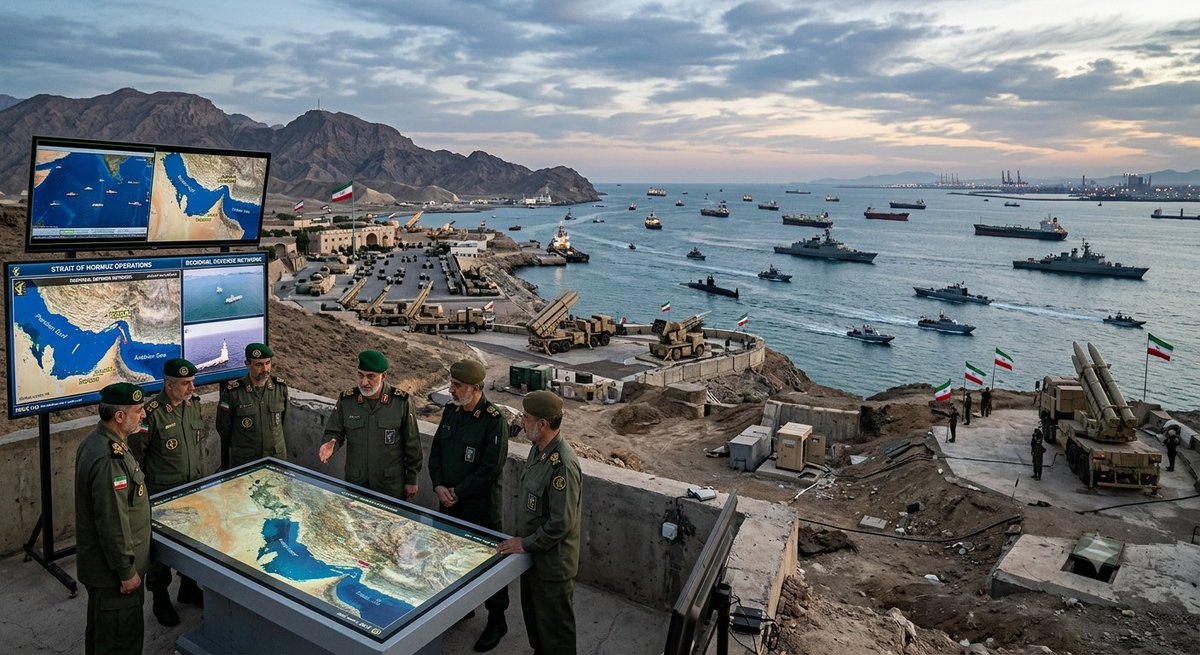
The IRGC and the Iranian government are playing a much more calculated, long-term geopolitical game than just a simple delay tactic. Rather than waiting to launch a massive, single kinetic strike to defeat Israel and the U.S. outright, their strategy centers on attrition, economic coercion, and asymmetric deterrence.
Here is what the real geopolitical roadmap looks like:
1. Slow Paralysis Over Quick Victory
The IRGC knows it cannot match the conventional military power of the United States or Israel. Therefore, the goal of the "Axis of Resistance" (Hezbollah, the Houthis, and Iraqi militias) is to entangle Israel in a multi-front war of depletion. By forcing Israel to constantly expend resources, call up reserves, and defend its borders, Iran aims to drain its adversary's economic stability and political capital over time.
2. Global Economic Extortion
A massive shift in Iran's strategy is the merger of regional military conflict with global macroeconomic pressure. By using the Houthis to disrupt the Red Sea and directly weaponizing the Strait of Hormuz—such as imposing illicit tolls or threatening commercial shipping—Iran is holding global energy markets hostage. The real goal here is to raise the economic cost of the war so high that Western allies pressure Israel to back down, effectively breaking Western political will without requiring an all-out military invasion.
3. Establishing a New "Equation" of Deterrence
Iran's direct missile exchanges with Israel are designed to rewrite the rules of engagement. The IRGC wants to establish a permanent reality where any attack on an Iranian proxy or territory automatically triggers a multi-front, borders-crossing retaliation. They are testing the limits of Western and Israeli defenses while building a defensive perimeter around their own vital infrastructure and nuclear ambitions.
4. The Diplomatic Dual-Track
While the IRGC projects absolute militancy, Iran's political leadership simultaneously utilizes diplomacy to look for off-ramps, such as ceasefires or negotiated settlements. This "dual-wing" approach allows them to pause kinetic actions when pressure gets too high, regroup, secure concessions, and lock in their strategic gains before the next inevitable escalation.
They aren't just stringing the world along to prepare for a final battle; they are using a permanent state of managed friction to gradually force the West and Israel to accept Iran’s regional dominance.
41
Kae 🔞 retweeted

part of the sketch trade with boyf @Cwningenn 😁 convenience of entangle spells i think

1
7
35
336



1.The coiled rope on the deck certainly does not look lyk the actual bungee that is normally used.
2. A coiled rope can not lie somewhere behind railngs, people and othe obsticals to catch on when it starts uncoilling. It will in this case most probably cause a knot.
3. If the bungee was attatched to the person then that could easily entangle those that carry and chucked her of.
4. I can not believe that the victim did not herself make some basic by not checking for herself if the bundgee is tied...to her legs presumably.
I think it is fake.
224

⠀⠀
Nicole herself already bore the weight of a curse, after all. could this not entangle her even further with the Heavenly Principles . . . or with something greater still?
there was no way to know.
acting on instinct alone, Varka stepped back, putting distance
⠀⠀
1
25

That's what happens when you entangle yourself with a damaged girl, simple human decency feels like boring to her.
2,334

The solution and the graph becoming the same thing is the truth.. among other structural concepts that also encompass(or entangle) our universe
This also shows that you’re not wrong.. to what extent I’ll let you conceptualize that yourself
As the free thinker you seem to be 🤝
20
So very evil, yet it's but another nail in their own coffin, for 'evil will slay the wicked; the foes of the righteous will be condemned', bcs 'the iniquities of the wicked entrap them; the cords of their sin entangle them'. Which goes for all, everywhere, working for #genocide.
Jun 13

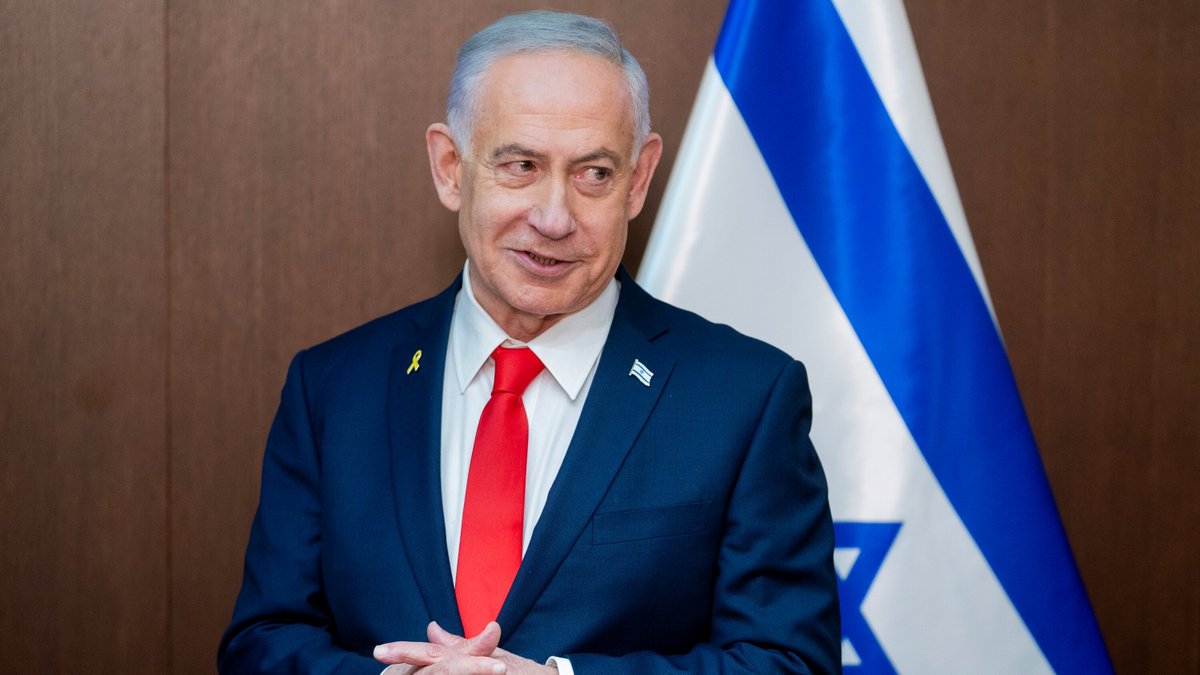
🇺🇸🇮🇱 The merger between the U.S. and Israel has a third piece almost nobody is talking about. While Section 224 fuses the militaries, Section 622 moves to fuse the intelligence services...
Buried in a 192-page intelligence authorization bill from Sen.Tom Cotton, Section 622 would legally require the president to "expand and enhance intelligence sharing" with Israel across nearly every topic of intelligence interest in the Middle East.
It would prohibit any reduction in that sharing except for a "specific and identifiable national security concern," then force a detailed report to Congress within 15 days justifying it.
Read that mechanism again carefully.
It strips the president of the ability to limit what America tells Israel, then makes any attempt to do so a political fight the Israel lobby can frame as being "against Israel's security."
It welds the intelligence spigot open by law.
Now stack the three pieces moving through Congress at once:
-The Stutzman resolution phases out visible aid.
-Section 224 integrates the militaries.
-Section 622 mandates intelligence sharing.
Each one is less publicly accountable than the last.
Aid is a line item voters can see.
Intelligence liaison happens in the dark, where no price tag ever appears.
The strategy is to move the relationship out of public view precisely as public support collapses.
And the timing is the most scandalous part.
The Pentagon just rated Israel a "critical" espionage threat.
Congress's response to all of it is to legally mandate that America share more secrets with the country its own spy agencies say is robbing it.
Source: Responsible States Craft / Writer: Daniel

9