Marvelous Rae retweeted

11h
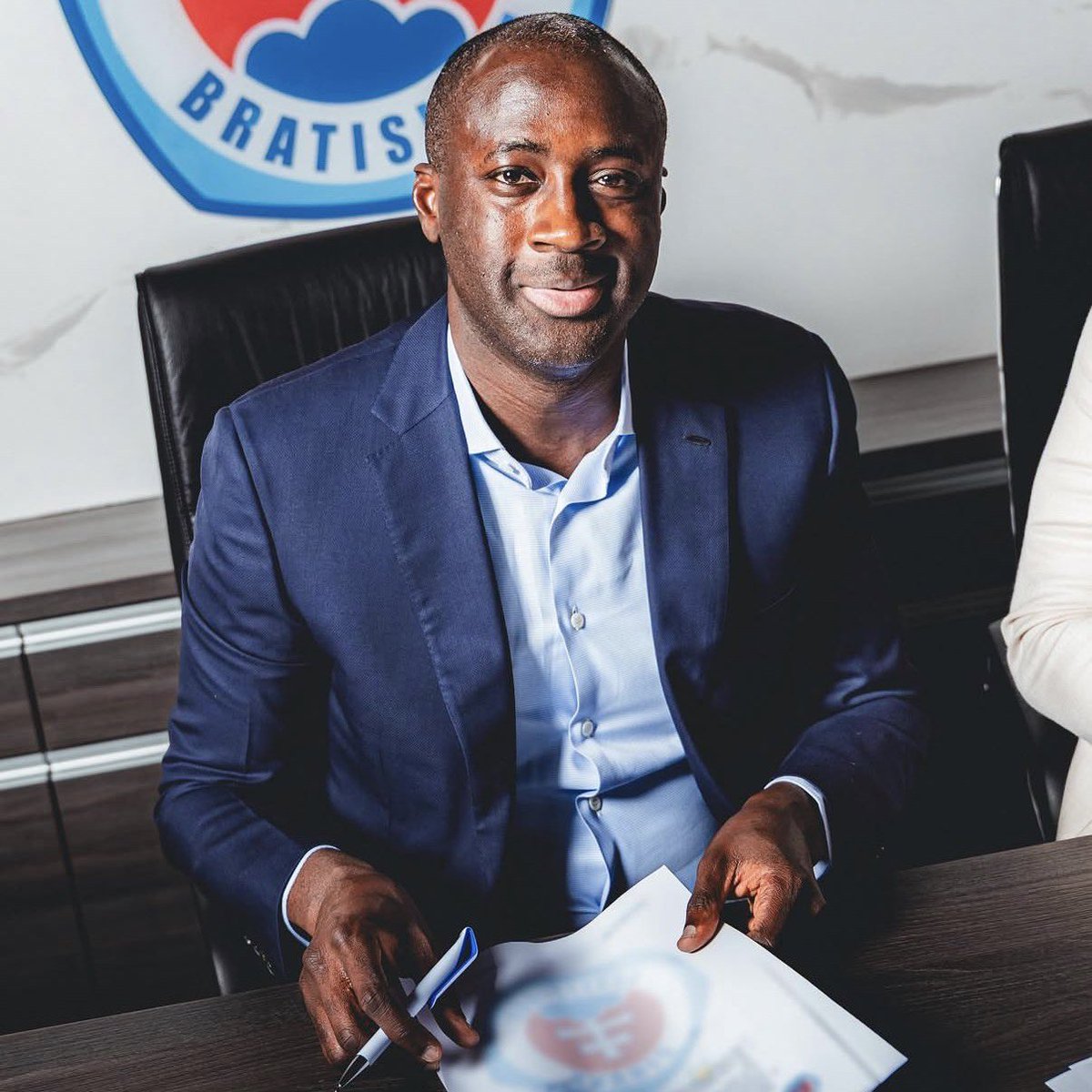
A black man coaching an Eastern European football club? New racial slurs are about to be created.

26
946
12,461
275,438


RM/Man U idiotic fans and the European PR machine is trying extremely hard to act as if Argentina does not exist in this tournament and they're about to get a wake up call

Saw this in the Club World Cup, and seeing it again now.
The weather conditions, hydration breaks and a massive emphasis on physicality will see a lot of these *lesser* nations punch above their weight.
Games have been tightly contested and the European sides in particular, struggling to adapt. I expect that to continue. Feel England might be the only exception. #FIFAWorldCup

William Carlos Cummings retweeted

82
404
4,905
69,650

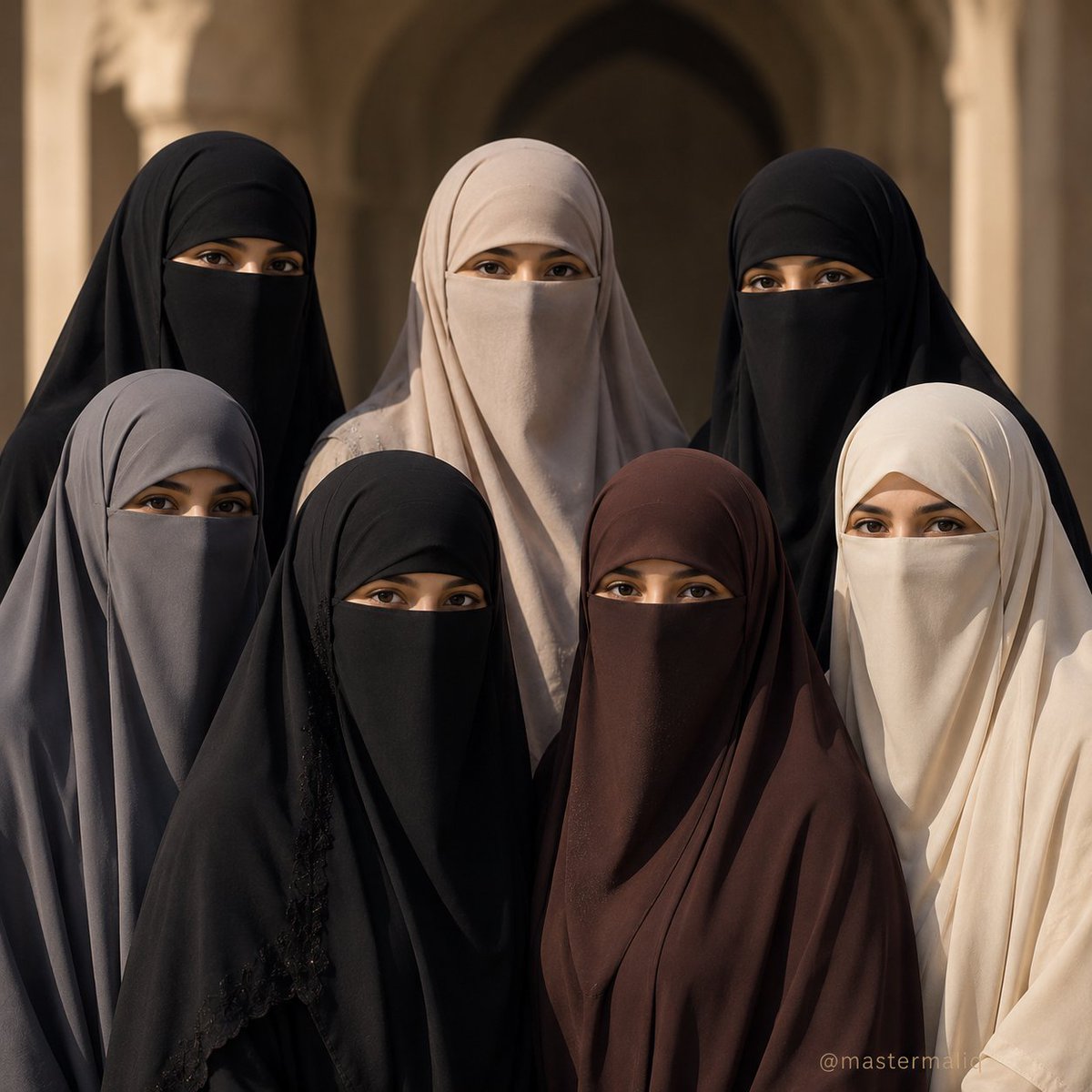
This is not about fear @MasterMaliq
This is about the realisation of the Niqab being an oppressive undemocratic clothing bestowed and often forced upon women as a symbol of the shariah laws. It is a middle age system which is impossible to combine with a liberal free democracy where each individual can and should think for themselves.
Not until the day passes where no woman is forced, threatened, beaten or even jailed for not wearing the hijab or niqab, it cannot and should not be sern as an ordinary clothing. It is rather a symbol of religious extremism and a totalitarian society where teocratic leaders have an export vision where this radical norm system is intended to replace the free society. Your main arguments is freedom of religious beliefs and islamophobia. But it is wrong, we were never afraid of you nor your medieval belief system and norms. We just oppose it and state the obvious: It neither fits or combines with a democratic system. Neither do we want it here. And we’re going to fight you until our last breath no matter the support you’re getting from the power hungry establishment and their collateral of weak no-back bone leadership.
This is the multi culturalism no citizen asked for. And the people has had enough. It is happening throughout the western world.
This is what @JohnCleese and @elonmusk is writing about. And we support them greatly in their attempt to wake the European patriotism from their woke post modernistic coma.
Daniel Sonesson
Party leader Medborgerlig Samling (med.se) (Citizens coalition)
— The opposition party in Sweden
#MED2026 #OmstartSverige


What is a “rigvedic belief” and since when does being “indo-european” give one spiritual legitimacy in the ways of another folk or path within which one is either not initiated or not accepted?
1

Domkop, Morocco wants to be in the European union, not in the AU. They have been absent in the AU for 20years. We dont unite with rubbish.
Laurent Noel🇫🇷 🫶🇺🇦 retweeted

Among all the European nations that have already joined the European Union or see such a prospect for themselves, Ukraine is the one making the greatest sacrifices for Europe. We are not simply carrying out internal reforms, nor are we simply going through a transformation. We are fighting for our state, for our independence, and for our right to choose our own path and to be Europe.
And this right of ours is at the same time the right of every nation in our region. We are fighting for our freedom and theirs, for Europe for ourselves and for them – for the Baltic states and for Poland, for Hungary and Slovakia, for Romania and Moldova, and for the peoples of the Caucasus.
That is why the fate of Europe is being decided here – it is being decided in Ukraine, in this war, and in how this war ends – and whether Russia will still have the strength and the desire after this war to threaten the existence of Ukraine and its other neighbors, and the entirety of Europe.
That is why we must end this war with dignity and with guaranteed security. And this is what we will discuss with our partners during the G7 Summit in France, and later at the European Council Summit and at the NATO Summit in Ankara.
677
1,834
9,053
178,027

One of the points greatly missed when one talks about European rule or islamic rule, the ruling class was indeed islamic (Mughals and their predecessors) or Christians, but the imposition of the that rule was done by Indians themselves.
Few thousands came and subjugated millions because India guided by Hinduism, culturally has been an highly hierarchal society which makes sure a few are elevated to the ruling class by the birth right.
This ruling class, called Brahman, denied education, a key tool needed for critical thinking. Largest proportion of population were denied education even after Britishers left, the democratic system which replaced Britishers made sure the highest levels of civil services gets occupied by same ruling class or "upper castes" .
The 90-95% of population (among Hindus) has been busy with basic survival, never provided with mental capacity to reason, never reached and will never reach enloghtment and hence Modernity.
Muslims who don't suffer from such shackles constantly rebel against the system and are highly prosecuted and are kept in check.
Taeyanka⁷ retweeted

BTS’ “Come Over” remains at #1 for a second consecutive day on both the Worldwide and European iTunes Song Charts.


8
983
3,155
14,902
NiOubliNiPardon 🇨🇵non vaxx retweeted

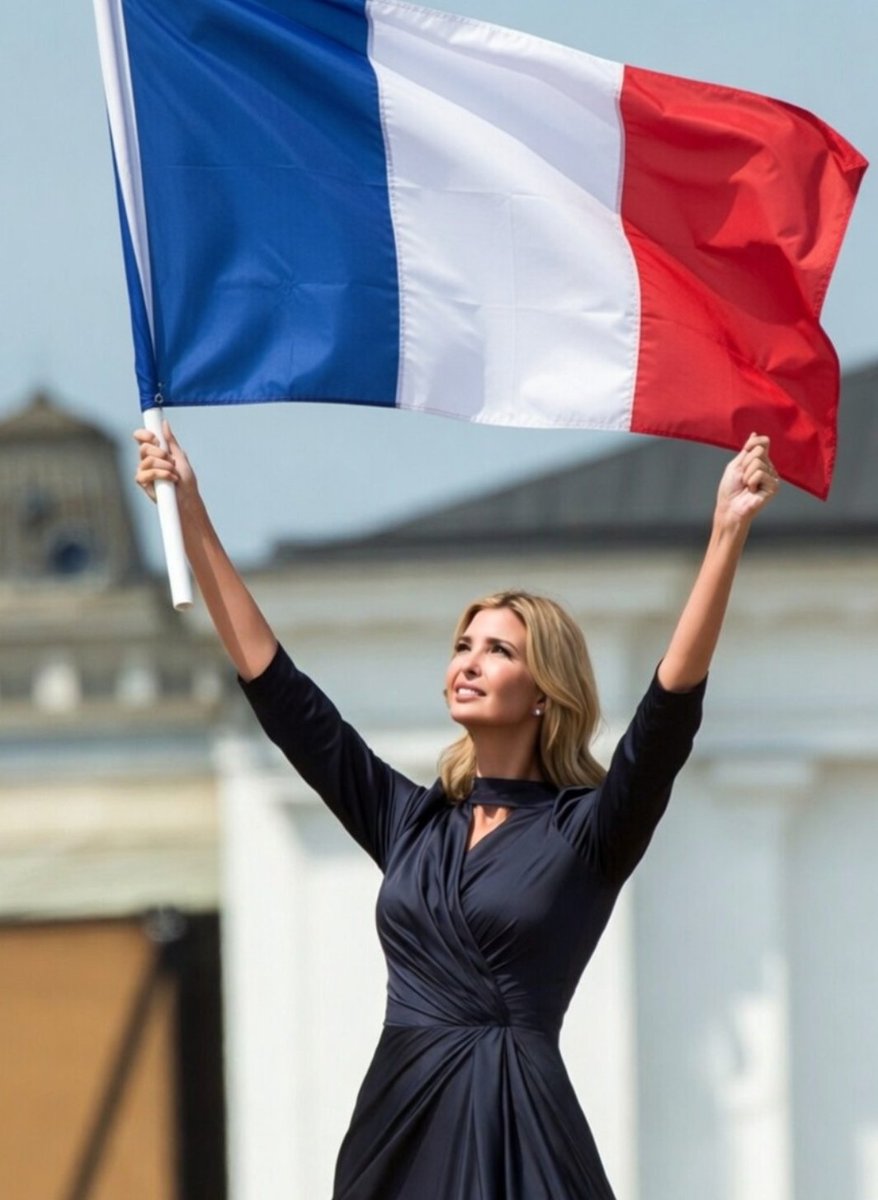
🚨🇫🇷 MACRON HITS ROCK BOTTOM
Macron's July 14 plans are sparking outrage. A European army instead of the French Army. The EUROPEAN ANTHEM instead of La Marseillaise.
July 14 belongs to FRANCE, not Brussels.
How much lower can he go before he RESIGNS?
298
1,033
2,152
28,651
silvana retweeted

The whole European narrative is crumbling…
The United States: has bigger homes, bigger gas stations, bigger everything, and we love life.
The whole “you will own nothing and be happy” is for suckers. Now it’s being exposed.


29
321
3,549
53,819
Zikola👨🏾🏫 retweeted

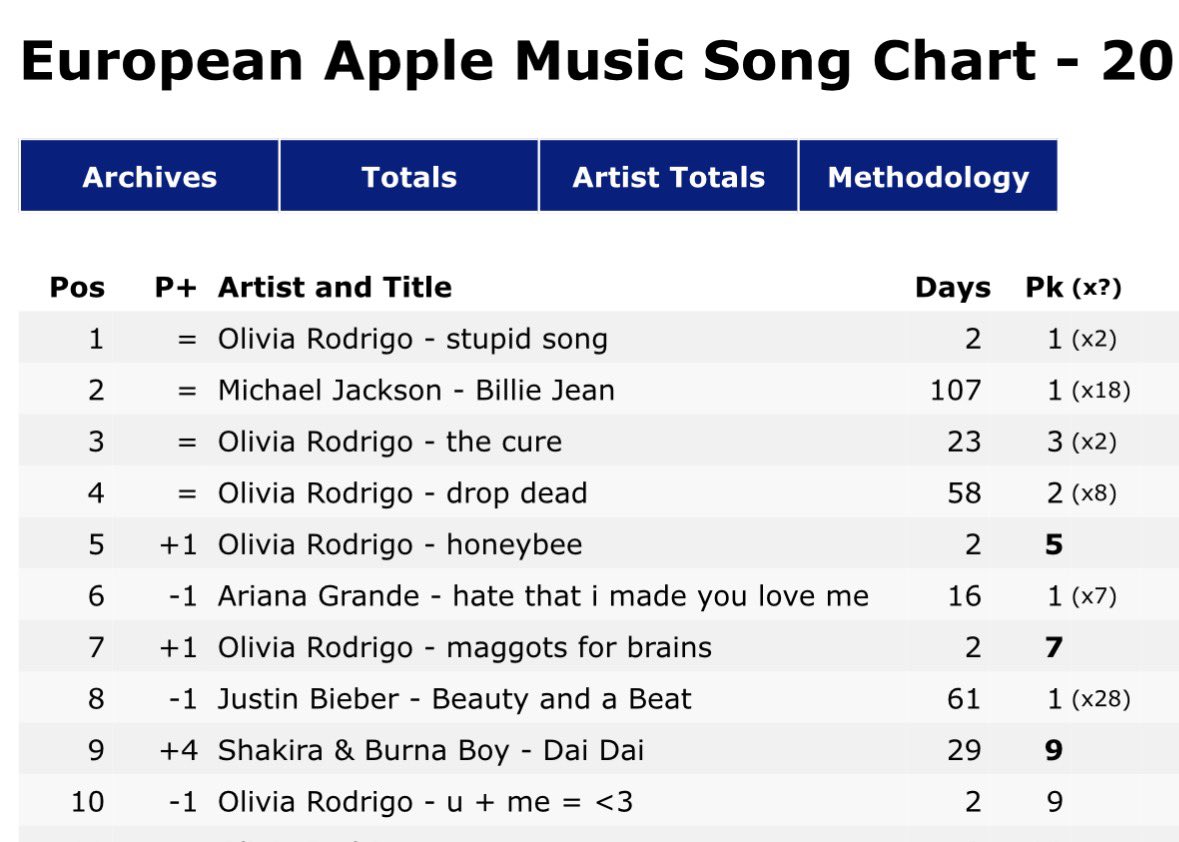
Shakira & Burna Boy’s Dai Dai hits a new peak on the European Apple Music top songs chart inside the Top 10 at number 9 ( 4) 🌎🔥
1
33
175
1,917

It did that to me too. It said I voted for an entirely European ballot 💀
2
JustDave retweeted

12h
European countries will move very quickly from “Please leave” to “We’re not asking anymore”, to eventually the complete removal of even the option to flee.
102
498
3,835
28,898

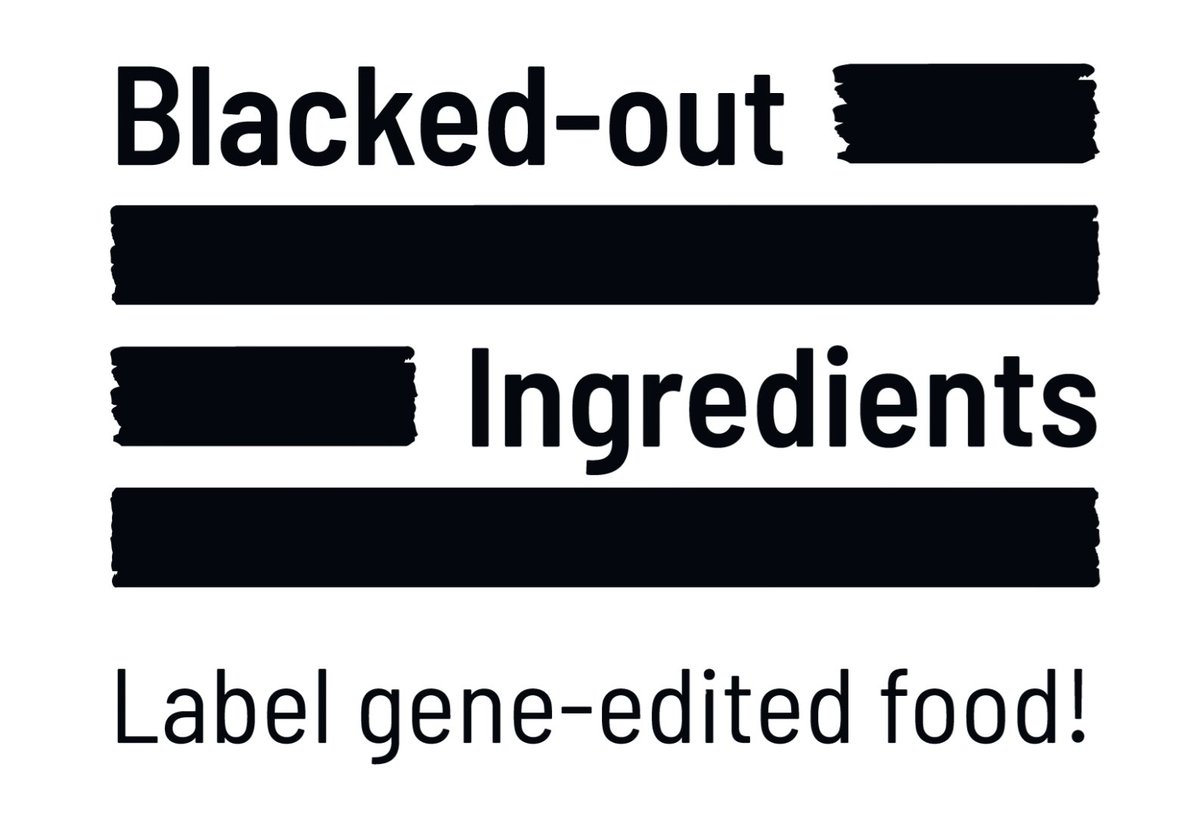
Urgent Take Action: 📲 Phone your Parliamentarians!
Less than a week till the European Parliament votes to deregulate GMOs and abolish new #GMO labelling.
Our last chance to save food transparency—every single call counts! Easy to do guide—start here: blacked-out-ingredients.eu/e…
1
15
16
233

37s
SICKOS OF THE WORLD, UNITE ! (What strange religion... that keeps generating strangely sick cases ?)
Police in Kishoreganj yesterday (28 October) arrested the man who entered a classroom wielding a stick in the capital's Sir Salimullah Medical College on Sunday (27 October), reports Prothom Alo. The arrested youth has been identified as Zubair Ali (Taki), said Abdullah Al Mamun, the officer-in-charge of Kishoreganj Sadar Model Police Station. A video of the Sunday incident that spread on social media showed the man entering the lecture gallery of Sir Salimullah Medical College with a stick in his hand and his head wrapped in a black bandana. He shouted and struck the floor with the stick, causing panic among the students in the class. The college authorities notified the law enforcement agencies, but the young man had left the scene before the police arrived. "Instructions for Zubair's arrest were issued from Dhaka soon after the video of the incident went viral on social media. The youth was arrested after reviewing the video footage. A team from the Kotwali Police Station took him to Dhaka last night," OC Abdullah Al Mamun told Prothom Alo. Citing the family, he said, "The family members of the arrested individual have informed that he has some mental health issues. "However, we cannot comment further without advice from a medical professional," he added.
The Business Standard (October 29, 2024)
tbsnews.net/bangladesh/youth…
Aren’t those the guys that always go crazy and shoot everybody?
George (Seinfeld)
The simplest surrealist act consists of taking to the streets with a gun in hand and firing at random into the crowd as long as you can.
André Breton
There are some of them (Javanese) who if they fall ill of any severe illness vow to God that if they remain in health they will of their … and as soon as they get well they take a dagger in their hands, and go out into the streets and kill as many persons as they meet, … These are called amuco.
Duarte Barbosa (1516)
To run amock is to get drunk with opium… to sally forth from the house, kill the person or persons supposed to have injured the Amock, and any other person that attempts to impede his passage.
Captain James Cook (1772)
It’s madness, a kind of human rage… a fit of senseless, murderous obsession. It’s undoubtedly linked, in some way, to the climate, to that dense, stifling atmosphere that weighs on the nerves like a storm, until they snap… A Malay man, any ordinary, gentle man, is peacefully drinking his beverage… he sits there, listlessly, indifferent and listless… and suddenly he leaps up, grabs his dagger, and rushes into the street… he runs straight ahead, always ahead, without knowing where… Whatever crosses his path, man or animal, he slays with his kris, and the smell of blood makes him even more violent… As he runs, drool forms at his lips, he screams like a man possessed… but he runs, runs, runs, no longer looking left, no longer looking right, doing nothing but running with a shrill scream, holding his bloodstained kris straight ahead of him in this terrifying dash… The villagers know that no power in the world can stop an amok… and when they see him coming, they shout, from as far away as they can, as a warning: “Amok! Amok!” and everyone flees… But he, hearing nothing, continues his run; he runs without hearing, he runs without seeing, he strikes down everything he encounters… until he is shot down like a rabid dog or collapses, utterly exhausted and foaming at the mouth.
Stefan Zweig (1922)
Individual Islamists may appear law-abiding and reasonable, but they are part of a totalitarian movement, and as such, all must be considered potential killers (...) a just-graduated student named Mohammed Reza Taheri-azar, 22, and an Iranian immigrant, drove a sport utility vehicle into a crowded pedestrian zone. He struck nine people but, fortunately, none were severely injured. (...) Mr. Taheri-azar represents the ultimate Islamist nightmare: a seemingly well-adjusted Muslim whose religion inspires him, out of the blue, to murder non-Muslims. Mr. Taheri-azar acknowledged planning his jihad for more than two years, or during his university sojourn. It's not hard to imagine how his ideas developed, given the coherence of Islamist ideology, its immense reach (including a Muslim Student Association at UNC), and its resonance among many Muslims. Were Mr. Taheri-azar unique in his surreptitious adoption of radical Islam, one could ignore his case, but he fits into a widespread pattern of Muslims who lead quiet lives before turning to terrorism. (...) This is what I have dubbed the Sudden Jihad Syndrome, whereby normal-appearing Muslims abruptly become violent. It has the awful but legitimate consequence of casting suspicion on all Muslims. Who knows whence the next jihadi? How can one be confident a law-abiding Muslim will not suddenly erupt in a homicidal rage? Yes, of course, their numbers are very small, but they are disproportionately much higher than among non-Muslims. This syndrome helps explain the fear of Islam and mistrust of Muslims that polls have shown on the rise since September 11, 2001. The Muslim response of denouncing these views as bias, as the "new anti-Semitism," or "Islamophobia" is as baseless as accusing anti-Nazis of "Germanophobia" or anti-Communists of "Russophobia." Instead of presenting themselves as victims, Muslims should address this fear by developing a moderate, modern, and good-neighborly version of Islam that rejects radical Islam, jihad, and the subordination of "infidels."
Daniel Pipes (2006)
The debate rests on the question about whether the presence of a mental health diagnosis is enough to state that it was a driver of the radicalization-linked behavior or whether it was just one ingredient in the individual’s vulnerability profile and grievance structure. (...) This debate is on-going within the wider study of crime as well. On the one hand, a strand of research assumes a consistent causal link between psychiatric symptoms (where they are found to be present) and criminal behavior. On the other hand, a more nuanced strand of research argues there are “a (small) group of offenders whose symptoms relate directly to crime and a (larger) group whose symptoms and crimes are not directly related.” For example, various studies illustrate that the offender (across a range of crimes) experienced his/her psychiatric symptoms at the time of the (often violent) crime between 4% and 18% of the time. There is no reason to suggest this should be any different for a terrorist subset of offenders. If anything, one might presume the figures to be lower given the wider ideology and ideologues underpinning it provide a grievance and set of instructions on who to target and how. A complex mixture of personality, situational, and personal drivers (among others) likely drives most general crime. Terrorism is no different but for the addition of an overarching ideology. The presence of this ideology in the motivational mix therefore likely lessens the relative cognitive response to mental health problems. It is simply too early to come to a definitive answer regarding the role of mental health problems and various forms of Islamic State terrorism. Mental disorders appear more prevalent among those inspired by Islamic State than those directed by it. Beyond that, however, it is difficult to make clear conclusions. The available open-source information is clouded by poor reporting practices, the tendency to treat all mental health disorders equally, and the fetishized way mental health is reported. The answer is likely to differ wildly from case to case depending upon the individual’s diagnosis, prior life experiences, co-existence of other stressors and vulnerabilities, and lack of protective factors. (...) What we see from the existing research is that lone-actor terrorism is usually the culmination of a complex mix of personal, political, and social drivers that crystalize at the same time to drive the individual down the path of violent action. This should be no different for those inspired by the Islamic State. Whether the violence comes to fruition is usually a combination of the availability and vulnerability of suitable targets and the individual’s capability to engage in an attack from both a psychological and technical capability standpoint. Many individual cases share a mixture of personal life circumstances coupled with an intensification of beliefs that later developed into the idea to engage in violence. What differs is how these influences were sequenced. Sometimes personal problems led to a susceptibility to ideological influences. Sometimes long-held ideological influences became intensified after the experience of personal problems. This is why we should be wary of mono-causal ‘master narratives’ about how this process unfolds. Mental health problems are undoubtedly important in some cases. Intuitively, we might see how in some cases it can make carrying out violence easier. In other cases, it may make the adoption of the ideology easier because of delusional thinking or fixated behaviors. However, it will only ever be one of many drivers in an individual’s pathway to violence. In many cases, it may be present but completely unrelated. The development of radicalization and attack planning behaviors is usually far more labyrinthine and dynamic than one single factor can explain, be it mental disorders (today’s go-to silver-bullet explanation), online radicalization (another popular silver-bullet explanation), or root causes that encompass socio-demographic characteristics. We must also bear in mind that the relationship between mental health problems and terrorist engagement is just one part of the story. Given the scale and types of violence being conducted by the Islamic State, many perpetrators will develop mental health problems as a byproduct of involvement as opposed to it being a driver of involvement. There will also be a generation of children who were born within the Islamic State and/or trained as fighters, many of whom will return to their parents’ country of origin in the coming years. The interface of mental health practitioners and the Islamic State will, therefore, not just be limited to assessing the risk of whether someone will become a terrorist but will be extended to safeguarding and treatment. In conclusion, after many years in the dark, the link between mental health problems and terrorist engagement is now often the “go-to” explanation. This is partially due to the studies, cited above, that showed the relatively high rates within specific terrorist sub-samples. These studies coalesced in time with an uptick in Islamic State lone-actor plots and attacks and were latched onto by media, the public and policymaker communities hungry for intuitively appealing and straightforward answers. Much of the nuance within these studies was lost, however. Just because a factor (such as mental disorder) was present, does not make it causal. Nor does it necessarily make it facilitative. It may be completely irrelevant altogether. Contemporary media reporting may have led to a potentially overinflated sense of how prevalent the link truly is and how closely tied it is to the individual’s pathway into terrorism.
Emily Corner and Paul Gill (2017)
If we have previously examined working conditions and safety in our post offices when employees (between 1986 and 1997) broke down, citing workplace stress, and if we have studied the connection between video games, drugs, cults, and the alienation of counterculture when young people in our suburban neighborhoods were seized by fits of murderous madness, then it seems legitimate to look for correlations when someone describes himself as a rather radical Muslim and opens fire shouting “Allah Akbar! ”—just as the crazed driver in North Carolina, the killer in Seattle, or the murderous driver in San Francisco said afterward that they had acted in the name of their Islamic religious fervor against Jews or Westerners.
Victor Davis Hanson
Radicalisation is a youth revolt against society, articulated on an Islamic religious narrative of jihad. It is not the uprising of a Muslim community that is victim to poverty and racism: only young people join, including converts who did not share the “suffering” of Muslims in Europe. These rebels without a cause find in jihad a noble and global cause, and are consequently instrumentalised by a radical organisation (al Qaeda, ISIS), that has a strategic agenda. There are no psychiatrically specific patterns for radicals. Some come from dysfunctional families, some from “normal” families. Some second-generation radicalised Muslims have a family (and often a recent one) with young children (...) Frustration and resentment against society seems to be the only “psychological” trait often shared. Psychologists who study radicalisation (Fethi Benslama in France, for instance) detect a psychological (not psychiatric) state of “suffering,” a discrepancy between expectations and social outcome, a need for recognition – in other words, a narcissistic crisis that makes radicals more open either to nihilism or to the narrative of heroism that al Qaeda or ISIS offers. The religious dimension gives them a framework of personal restructuration: the truth, the good, a clear set of norms, brothers in arms, an unambiguous objective, and salvation, although the latter is not necessarily understood in terms of the paradise as described in the Koran. In fact, few of them speak explicitly about paradise. The nihilist dimension (revenge, suicide) seems to supersede the utopian one (to build a new and just society). (...) The majority of the radicals come from second-generation Muslims born in Europe, and most of the others are converts; almost none came as a young adult or as a teenager to Europe from the Middle East. Apart from that, there is no common sociological background – or, more exactly, the Muslim radicals share the sociological background of most second-generation Muslims (some are not integrated, others have diplomas and jobs), while converts come from diverse milieus (mainly working class and lower middle class). (...) Many have histories of petty delinquency and drug dealing. Before turning born-again or converts, they shared a youth culture that had nothing to do with Islam. But most of them share the pattern of a sudden and rapid “return” to religion (or conversion) immediately followed by political radicalisation. There is a clear “breaking point,” often linked with a personal crisis (jail, for instance). It is clearly a youth movement. Almost all of them became radicalised to the dismay of their parents and relatives (a huge difference if we compare them with Palestinian radicals). Most parents not only disapprove of their children’s radicalisation but also actively try to bring them back or even to have them arrested by the police. In this sense the radicals don’t express an anger shared by their milieus or by the Muslim “community.” It is also a peer phenomenon: whatever the concrete circumstances of their meeting may be (neighbourhood, jail, internet or sports clubs), the radicalisation takes place in the framework of a small network of friends. This puts them at frequent odds with the traditional view of family and women in Islam. These groups are often mixed in gender terms, and the women often play a far more important role than they themselves claim (as Hayat Boumeddiene did in the Charlie Hebdo killers’ team). They intermarry among themselves, without their parents’ consent. In this sense they are closer to the ultra-left groups of the 1970s. There is often a siblings’ solidarity: many radicalise following a brother’s radicalisation (pairs of brothers include the Kouachis and the Abdeslams). Very few of them had a history of militancy, either political (pro-Palestinian movements) or religious (local mosques, Tabligh, Muslim Brothers or even mainstream Salafism). They were almost never pillars of a local Muslim congregation. Contrary to a widely shared belief, they never mobilised for Palestine and (almost) never spent time with the Muslim Brothers. (...) In other words, their radicalisation is not the consequence of a long-term maturation either in a political movement (Palestine, extreme left, extreme right) or in an Islamic environment. It is a relatively sudden individual jump into violence, often after trying something else (Mohamed Merah, for instance, tried to enlist in the French army). The recruitment process follows different patterns. The more common seems the radicalisation inside a small network of peers, where nominal Muslims and non-Muslims meet because they live in the same neighbourhood, share the same patterns of petty delinquency, found themselves together in jail, or are members of the same family (like the Kouachis). This tightly knit network dimension is often reinforced by matrimonial links (marriage to the sister of one’s own friend, for instance). Some “lone wolves” follow a process of self-radicalisation and try to get in touch with more hardened radicals. A final process is recruitment through the internet, which mainly involves young women who are systematically and rapidly contacted when they inquire online about Daesh, jihad or Islam in general. For the others, the internet doesn’t seem to be the place of recruitment but a tool of communication, propaganda and information. The unusually high proportion of converts has been systematically overlooked because it contradicts the (culturalist) idea that individual radicalisation reflects the radicalisation of a frustrated Muslim community. (...) The main motivation of young men joining jihad seems to be the fascination for a narrative we could call “the small brotherhood of super-heroes who avenge the Muslim ummah”: This ummah is global and abstract, and never identified with a national cause (Palestine, or even the Syrian or Iraqi nations). In Iraq the foreign volunteers don’t identify with the local Arab population they are supposed to support (which is why they need either imported spouses or sex slaves). Palestine is not at the core of the mobilisation process. (Palestinians are mainly supported by progressive people and cultural Muslims, not by the Salafists, because theirs is seen as a “profane” cause.) The narrative is built using schemes taken from the contemporary youth culture, including video games like Call of Duty. The narrative is “staged” using not only modern techniques, but also very contemporary aesthetics, with a special role for aesthetics of violence, which is also found in places with no Islamic reference (Columbine, the Mexican Narcos). Two “figures” are of particular importance: the suicide bomber and the chevalier, the first being linked with what I call a “generational nihilism,” the second with video games. In both cases what is at stake is self-realisation (as an answer to frustration). The revolt is expressed in religious terms for two reasons. First, most of the radicals have a Muslim background, which makes them open to a process of re-Islamisation (almost none of them having been pious before entering the process of radicalisation). Second, jihad is the only cause on the global market. If you kill in silence, it will be reported by the local newspaper; if you kill yelling “Allahuakbar,” you are sure to make the national headlines. The ultra-left or radical ecology is too bourgeois and intellectual for them. When they join jihad, they adopt the Salafi version of Islam because Salafism is both simple to understand (don’ts and do’s) and rigid, providing a personal psychological structuring effect. Moreover, Salafism is the negation of cultural Islam, the Islam of their parents and of their roots. Instead of providing them with roots, Salafism glorifies their own deculturation and makes them feel like better Muslims than their parents. Salafism is the religion, by definition, of a disenfranchised youngster. Incidentally, we should make a distinction between religious radicalisation and jihadist radicalisation. There is of course an overlap, but the bulk of the Salafists are not jihadist, and many jihadists don’t give a damn about theology. None of the radicals has a past history of piety. Most of them either broke with the Islam of their parents or had no religious transmission from their parents (which may be because they are converts, or orphans, like the Kouachi brothers, or had non-practising parents). Almost none followed a real process of religious education. Their religious knowledge is small (some brought with them Islam for Dummies). When they said that they were going to learn Islam in Pakistan or Yemen, it was to appease their parents: in fact, they go for jihad. Radicals have a loose or no connection with the Muslim communities in Europe. A sense of surprise tends to be evident in the aftermath of a terrorist action. Investigators and journalists who meet the family and the entourage of the attacker are told the same story: “He was a quiet, nice boy (variation: he was just a petty delinquent), and he was not pious, drank alcohol, had girls etc., except that recently his attitude has drastically changed.” Few of them were regular “parishioners” in a local mosque. None of them was active in religious activities (proselytism): when they preach Islam it is to recruit other radicals, not to spread the good news. This explains why (1) the close monitoring of mosques brings little information; (2) imams have little or no influence on the process of radicalisation; (3) “reforming Islam” does not make sense: they just don’t care about “what Islam really means.” There is no theological dimension. Their knowledge of Islam is minimal and they don’t care, although the religious myth plays an emotional role. We tend too much to identify religion with theology (what does Islam say about jihad?); while there is certainly an important religious dimension in the way they experience their struggle, it is not an ideological rationalisation of Islamic theology. Religiosity, not theology, is the key. They are not the vanguard of a European (or Middle Eastern) Muslim community that would tend to see them as heroes. On the contrary, they have little connection with this community, they have broken with their families (the fact that they desperately try to convert their families shows their degree of estrangement, not of proximity), and they don’t arouse fascination except of course among their peers. They don’t even reconnect with a real Muslim local society in Syria or Yemen. To promote a “moderate Islam” to bring radicals back to the mainstream is nonsense. They just reject moderation as such. To ask the “Muslim community” to bring radicals back to normal life is also nonsense. Radicals just don’t care about people they consider as traitors, apostates or collaborators as long as they don’t choose the same path. To consider Islam only through the lens of “fighting terrorism” will validate the narrative of persecution and revenge that feeds the process of radicalisation. The priority, beyond building a more sophisticated intelligence system, is to debunk the narrative of heroism, to break the “success story” of ISIS as being invincible (including on the ground) and to let Islam in Europe appear as a “normal” religion. (...) The aim is to accentuate the estrangement of radicals from the Muslim population and to dry up the narrative of Islam as the religion of the oppressed.
Olivier Roy (2015)
We can no longer tell the difference between revolutionary terrorism and a madman shooting into a crowd. Humanity is preparing to plunge into utter madness. Perhaps this is necessary. Terrorism forces Westerners to reflect on how far we have come in the last two thousand years. Certain forms of violence now seem intolerable to us. We would no longer accept Samson shaking the pillars of the Temple and perishing while killing everyone with him. Our fundamental contradiction is that we are the beneficiaries of Christianity in our relationship to violence and that we have abandoned it without realizing that we were dependent on it.
René Girard
The same cultural and spiritual force that played such a decisive role in the disappearance of human sacrifice is now bringing about the disappearance of the human sacrifice rituals that once replaced it. All this seems to be good news, but only on the condition that those who relied on these ritual resources are able to replace them with sustainable religious resources of a different kind. Depriving a society of the rudimentary sacrificial resources on which it depends without offering alternatives is to plunge it into a crisis that will almost certainly lead to violence.
Gil Bailie
jcdurbant.wordpress.com/2009…
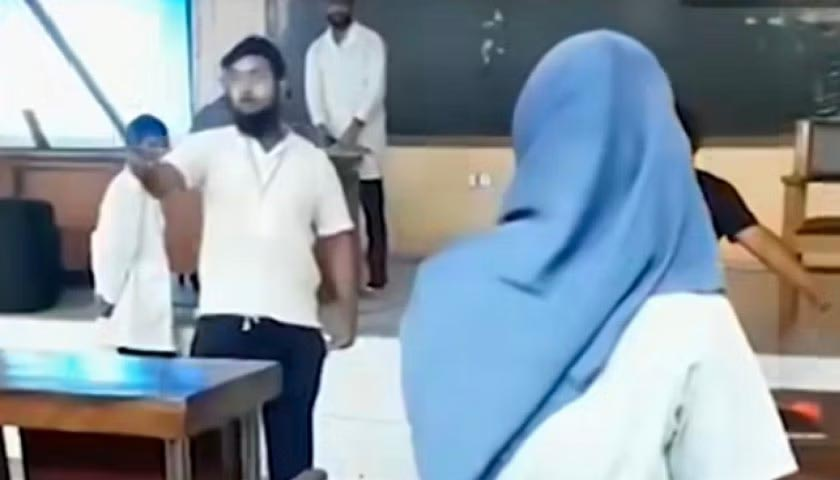

This was the scene in Bangladesh as Islamic militants stormed a medical school classroom, weapons in hand, yelling: “Educating women is haram!”
Islam is the enemy of civilization.
1

Maybe the 48-Team World Cup is not a bad idea, you European predictors of doom and gloom.
1