
22 Dec 2025
EvenNumbers here takes his modern conveniences for granted. One of the AI-infected mush-brains who could not function without his phone.
3
29

8 Dec 2025
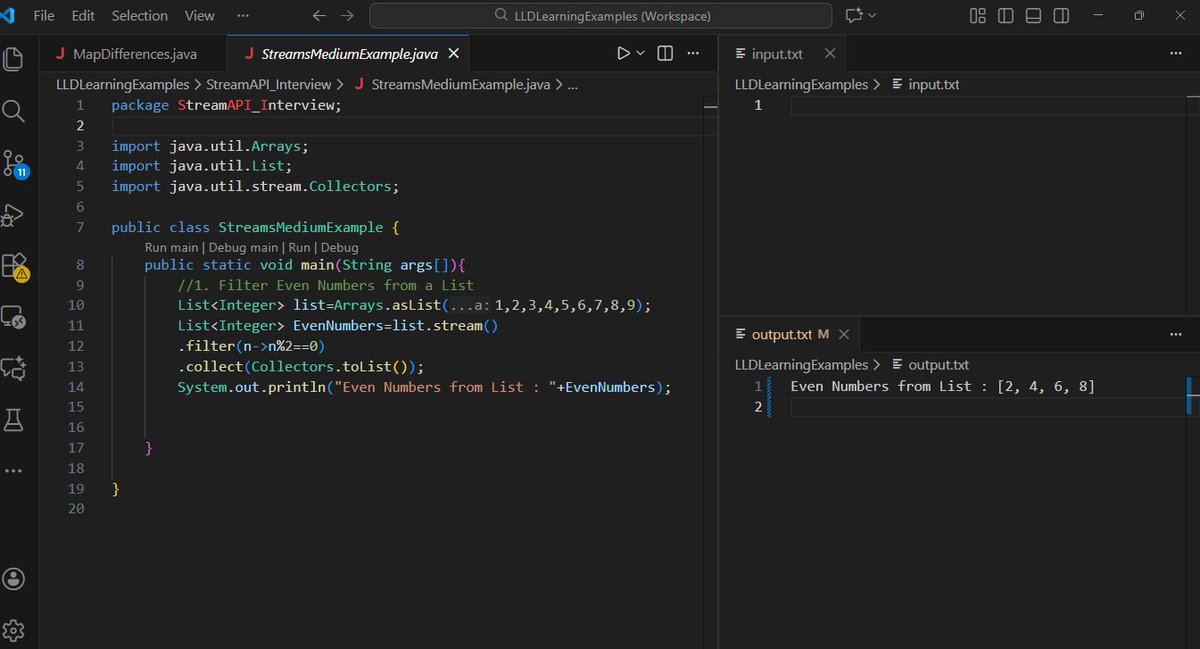
Java Streams from Beginning to all the way to advance topics
Filter EvenNumbers in a given List.
Note:All codes on Github and Link is in Bio
#Java #Java8 #Streams #100DaysOfCode #Coding #Interview #Programming #DSA #Backend #SDE
1
1
37

26 Nov 2025
【実務で結構使うJavaScript Tips】
・在庫がある商品だけを表示したい
・特定カテゴリーの記事だけを一覧に出したい
・チェックが付いた項目だけを送信したい
そんな「絞り込む」っていう処理、
どう書けばいいか悩んじゃいますよね・・
そんなときはJSのfilterがかなり便利!
const numbers = [1, 2, 3, 4, 5];
const evenNumbers = numbers.filter((num) => {
return num % 2 === 0;
});
→ [2, 4]
元の配列はそのままで、
「条件に合ったものだけ」を
新しい配列として返してくれるイメージ
「こいつ絞り込みたいな」って思ったら
まずは filter を思い出せばOKです👍️
4
362

18 Sep 2025
Day 39 of #100DaysOfCode
Today I learned about the filter() method in JavaScript, an incredibly versatile tool for working with arrays.
🔹 What it does
The filter() method creates a new array with all elements that pass a test defined in a callback function.
If the callback returns true, the element is kept.
If it returns false, the element is excluded.
If no elements pass, it returns an empty array.
🔹 Example 1 – Filter Even Numbers
const numbers = [1, 2, 3, 4, 5, 6, 7, 8, 9, 10];
const evenNumbers = numbers.filter(num => num % 2 === 0);
console.log(evenNumbers);
// [2, 4, 6, 8, 10]
🔹 Example 2 – No Matches
const numbers = [2, 4, 6, 8].filter(num => num > 10);
console.log(numbers);
// []
🔹 Example 3 – Filter Objects by Property
const developers = [
{ name: "Alice", age: 25 },
{ name: "Bob", age: 30 },
{ name: "Charlie", age: 35 },
{ name: "David", age: 25 }
];
const youngPeople = developers.filter(person => person.age < 30);
console.log(youngPeople);
// [{ name: "Alice", age: 25 }, { name: "David", age: 25 }]
✨ Takeaway:
The filter() method is powerful for selecting data based on conditions. Whether filtering numbers, cleaning up arrays, or narrowing down objects, it keeps code clean, efficient, and declarative. Alongside map() and reduce(), it’s a core tool every JavaScript developer should master.
17 Sep 2025

🚀 Day 38 of #100DaysOfCode
Today I dug deeper into callback functions and higher-order functions, two powerful concepts that shape how JavaScript handles logic and flexibility.
🔹 Callback Functions
A callback is simply a function passed as an argument to another function.
They allow code to be executed after another operation has finished.
Example with forEach:
let numbers = [1, 2, 3, 4, 5];
numbers.forEach(num => console.log(num * 2));
// Output: 2, 4, 6, 8, 10
The callback here (num => console.log(num * 2)) is run once for each element.
forEach can pass element, index, and array into the callback.
🔹 Higher-Order Functions
A higher-order function (HOF) either:
✅ Takes one or more functions as arguments
✅ Returns a function
✅ Or both
Example:
function operateOnArray(arr, operation) {
let result = [];
for (let i = 0; i < arr.length; i ) {
result.push(operation(arr[i]));
}
return result;
}
function double(x) { return x * 2; }
console.log(operateOnArray([1,2,3], double));
// [2, 4, 6]
HOFs make code reusable and modular.
Built-in examples: map(), filter(), reduce().
✨ Takeaway:
Callbacks give us fine control over execution, while higher-order functions unlock flexibility by letting us treat functions as data. This combination is the backbone of functional programming in JavaScript.
1
2
10
334

17 Sep 2025
The correct answer is C) filter().
Explanation: The filter() method in JavaScript creates a new array containing all elements from the original array that satisfy the condition defined in the provided callback function. It does not modify the original array.
For example:
const numbers = [1, 2, 3, 4, 5];
const evenNumbers = numbers.filter(num => num % 2 === 0);
console.log(evenNumbers); // Output: [2, 4]
In this example, filter() tests each element to check if it's even and returns a new array with the even numbers [2, 4].
map() transforms each element but returns all of them.
reduce() reduces the array to a single value.
forEach() executes a function on each element without returning a new array.
Hence, filter() is the method used to create a new array with elements that pass a test function.
1
2
33
1,071

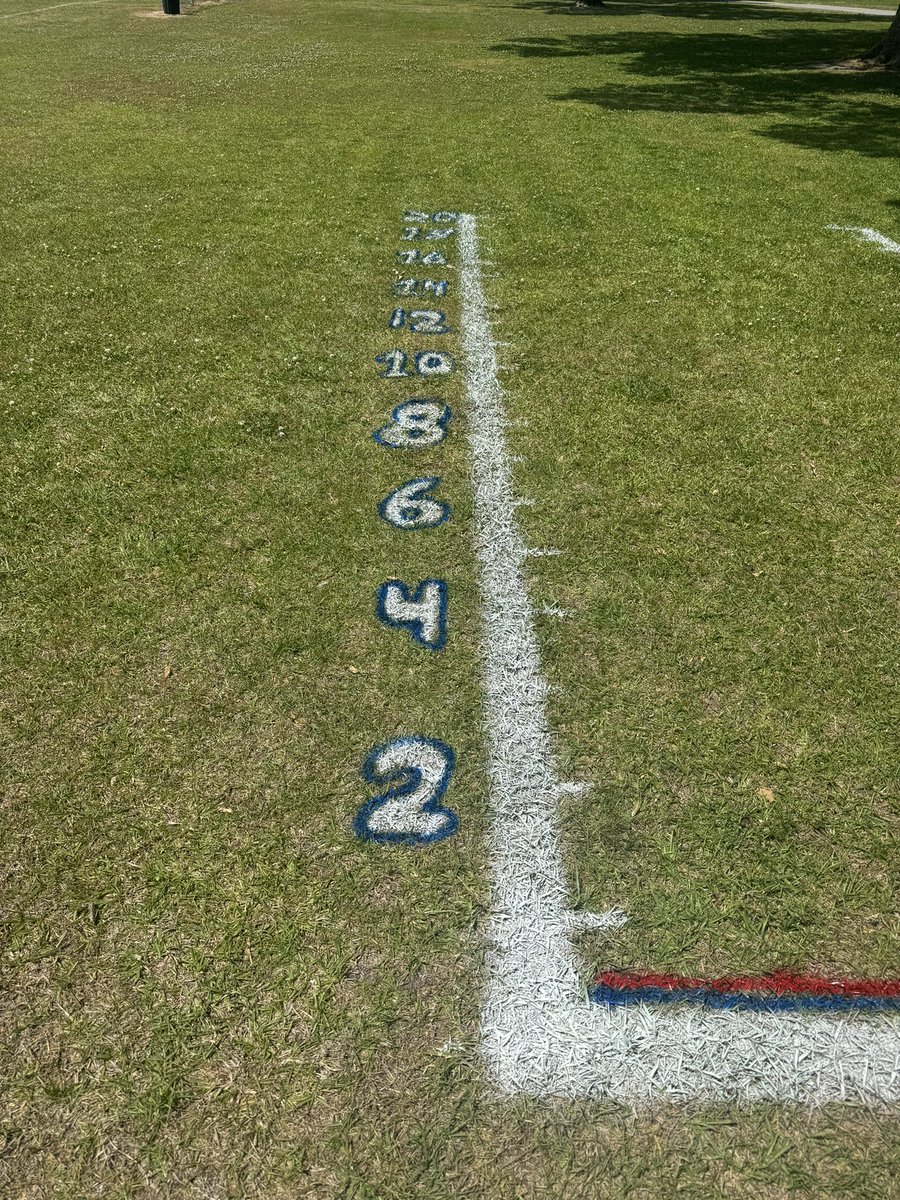
Q: How does a @PCS_NC PE teacher integrate math into their #FieldDay ?
A: Measure the distance in feet. #OddNumbers on the right and #EvenNumbers on the left.
#ElmhurstElementaryFieldDay2025
#StrongerTogether #ElmhurstElementary


2
72

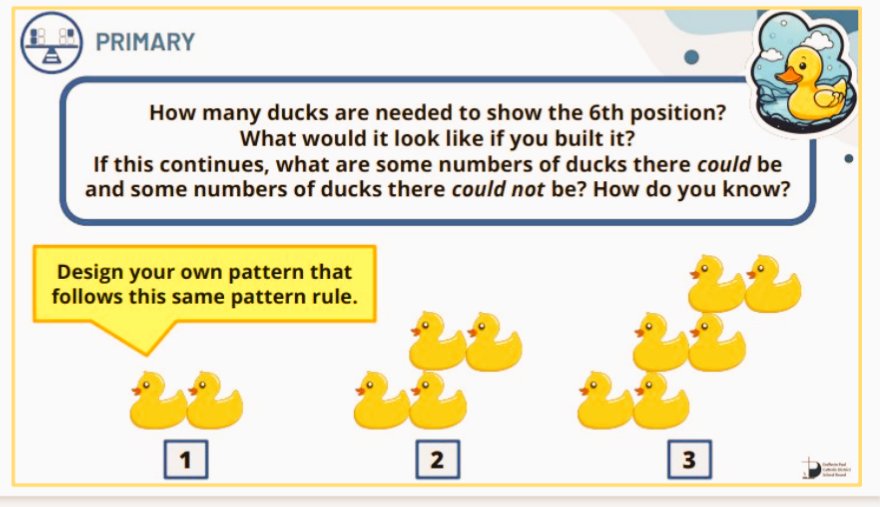
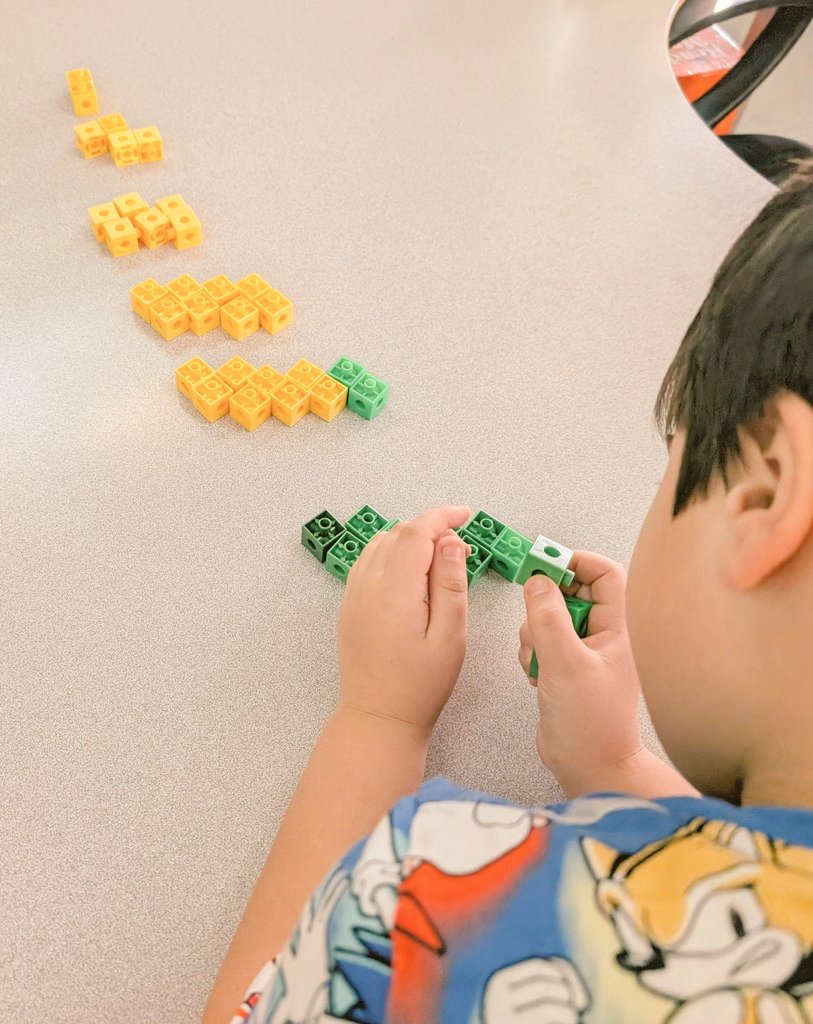
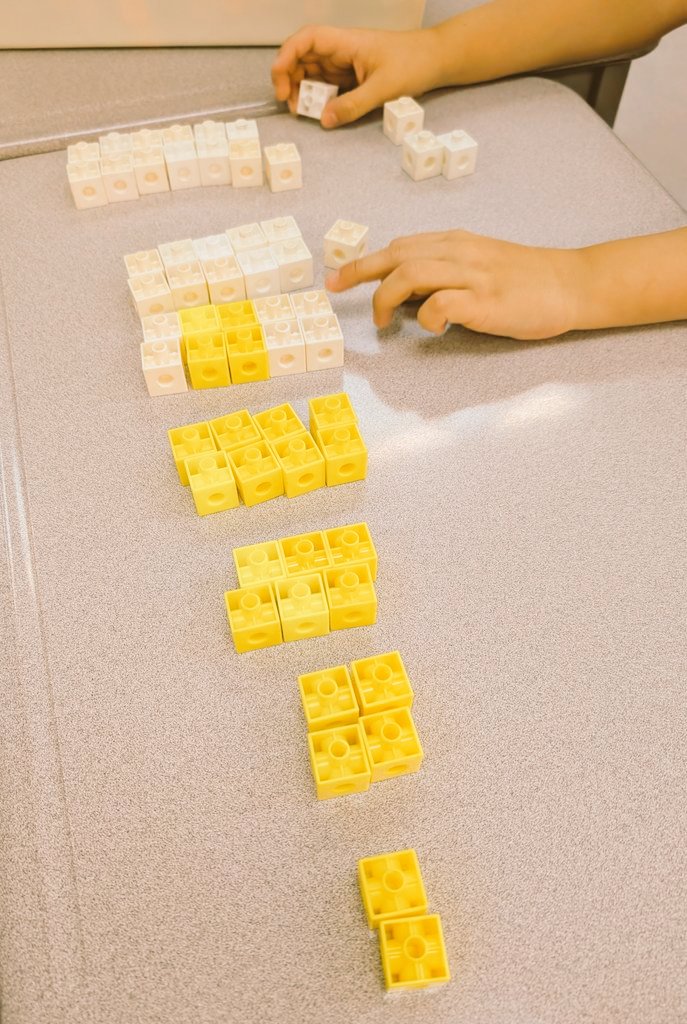
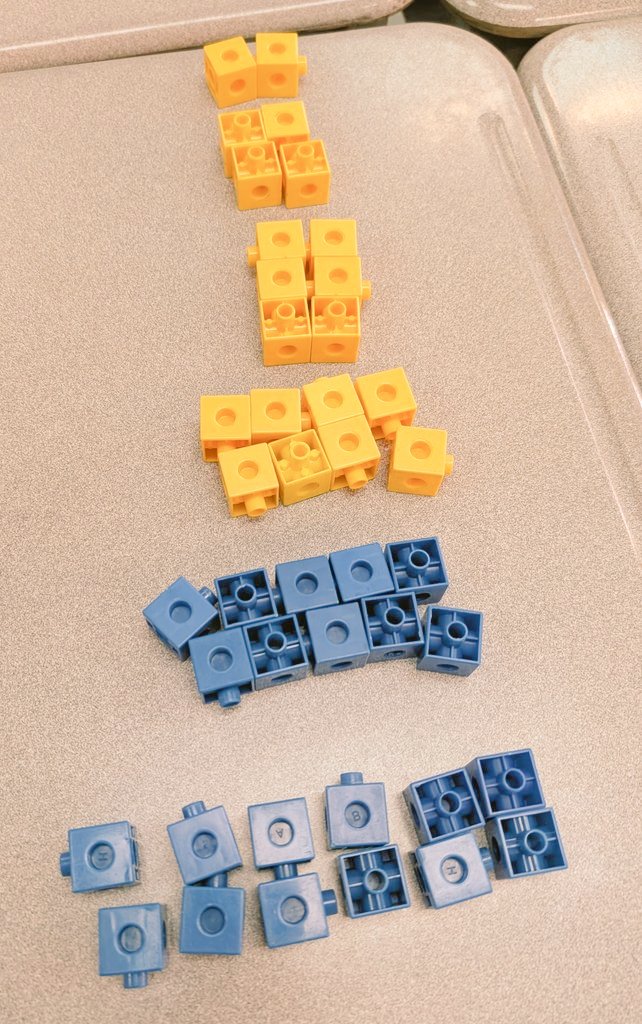
We tackled #dpmath's POTW this morning & all students were successful ~ we understood that only #EvenNumbers could be a possibility in extending the pattern & that #OddNumbers just wouldn't work #DPRubberDuckyDay 😉
1
1
8
413

JavaScript Array Methods: Your New Best Friends in Coding
🚀 Say goodbye to boring loops! JavaScript’s array methods are here to make your code cleaner, smarter, and more fun to write. Let’s break it down:
🌟 The Core Seven
1. map() – The Overachiever
✨ Transforms every element in a flash!
const numbers = [1, 2, 3];
const doubled = numbers.map(num => num * 2); // [2, 4, 6]
You map out the new plan, and voilà—transformation complete!
2. filter() – The Gatekeeper
🕵️ Keeps only the cool kids (or numbers, or whatever).
const numbers = [1, 2, 3, 4, 5];
const evenNumbers = numbers.filter(num => num % 2 === 0); // [2, 4]
If it doesn’t pass the vibe check, it doesn’t get in.
3. find() – The Treasure Hunter
🪙 Finds the first hidden gem and stops.
const firstEven = numbers.find(num => num % 2 === 0); // 2
Perfect for when you’re like, “Just gimme the first one!”
4. findIndex() – The Detective
🕵️♀️ Finds the location of the first suspect.
const firstEvenIndex = numbers.findIndex(num => num % 2 === 0); // 1
Great for pinpointing culprits in the lineup.
5. fill() – The Artist
🎨 Replaces everything with your chosen color—or value.
const array = [1, 2, 3, 4];
array.fill(0); // [0, 0, 0, 0]
It’s like painting your array with a single brushstroke.
6. some() – The Optimist
🤞 Checks if at least ONE element passes the test.
const hasEven = numbers.some(num => num % 2 === 0); // true
Just one “yes” and it’s a win!
7. every() – The Perfectionist
✅ Tests if EVERYTHING is up to standard.
const allEven = numbers.every(num => num % 2 === 0); // true
Perfect for the all-or-nothing crowd.
---
✨ Why These Methods Rock:
Readable: Say goodbye to nested loops.
Safe: Less chance of breaking things.
Chainable: Build complex operations with ease.
Immutable: Some methods won’t mess with your original array!
---
🔥 Pro Tips for Super Devs
Use map() to transform arrays like a pro.
Use filter() to keep only what you need.
Use find() to snag that one golden item.
Chain these bad boys to make your code unstoppable.
Got a favorite array method? Share it below! 👇
Follow @sytelix for more JavaScript tips and tricks.
Image Credit: RammCodes
1
2
121

7 Oct 2024
Since I’m a math and number geek… all 5’s 😜🥳 This is huge as a rural player that can’t catch 1k-4k as many others daily 😅😂 Had to do a rocket for the last one and don’t do rockets really 🙈 Long walk to 1B… 😅 #evennumbers #highfive #pokemongo

9
102
2,702

3 Sep 2024
Code сонирхогчдод зориулсан цуврал зөвлөмж: JavaScript-ийн array-н method, filter гэдэг нь array-н элементүүдээс тодорхой шалгалт хангасан элементүүдийг шүүж, шинэ array үйлдэгч функц юм. filter нь array-н бүх элемент дээр өгөгдсөн функцийг дууддаг бөгөөд тухайн функцийн буцаах утга үнэн (true) болох элементүүдийг шинэ array-д хамруулдаг.
0 үлдэгдэлтэй тоо буюу тэгш тоо сонгох array жишээ:
let numbers = [1, 2, 3, 4, 5, 6, 7, 8, 9, 10];
let evenNumbers = numbers.filter(function(number) {
return number % 2 === 0;
});
console.log(evenNumbers);
Үр Дүн:
[2, 4, 6, 8, 10]
Эндээс харахад, filter нь numbers array-н дотроос тэгш тоонуудыг шүүж, шинэ array, evenNumbers-г үйлдэж байна.
21
11
773

3 Jan 2024
1 - Filter :
- بينشئ array جديدة فيها العناصر اللي اجتازت الشرط اللي أنت حددته
- بيتستخدم لما تحتاج تجيب مجموعة من الحاجات اللي تمشي مع شرط معين
مثلا :
const numbers = [1, 2, 3, 4, 5];
const evenNumbers =
numbers.filter( num => num % 2 === 0 );
// evenNumbers هتكون فيها [2, 4]
تابع..
1
9
786

16 Dec 2023
Grade 3 learners became experts in figuring out the even and odd numbers through the differentiated activity!💡
#Math #GroupWork #Differentiate #EvenNumbers #OddNumbers #Fun
@FawziehHn @MakAishaSchool
4
7
304

19 Nov 2023
Filter() Method of Array in Javscript. #bandocoin
The filter() method of array in JavaScript is a useful way to create a new array with only the elements that pass a certain condition.
The filter() method takes a callback function as an argument, which is executed for each element in the original array.
The callback function should return a boolean value (true or false) to indicate whether the element should be included in the new array or not. The filter() method does not change the original array, but returns a new one.
For example, if you have an array of numbers and you want to filter out the odd ones, you can use the filter() method like this:
const numbers = [1, 2, 3, 4, 5, 6, 7, 8, 9, 10];
const evenNumbers = numbers.filter(function(number)
{ return number % 2 === 0; // return true if the number is even });
console.log(evenNumbers); // [2, 4, 6, 8, 10]
``` The filter() method can also take a second argument, which is the value of this inside the callback function.
This can be useful if you want to access some properties or methods of an object inside the callback function.
#method
2
222

20 Oct 2023
The record for being the #fastest to write even numbers between 1 and 100 was set by Rithvik Ram Prasath of #Trichy, #TamilNadu (currently residing in Qatar). He wrote all the #evennumbers between 1 and 100 in a notebook.
Read At: indiabookofrecords.in/fastes…

2
2
73

13 Oct 2023
function isEven(int $number): bool
{
$numberString = (string)$number;
$lastDigitInString = (int)mb_substr($numberString,-1);
$evenNumbers =[0,2,4,6,8];
if (in_array($lastDigitInString, $evenNumbers)){
return true;
} else{
return false;
}
}
2
195

@NatbyNature I think you would be a great host to balance out the @WWETheBump. Matt, Megan and Ryan all do a great job. You would add the wrestler mind behind guest questions and strong camera presence to not take crap from the occasional heel guest. 💪🏻 #evennumbers
16

24 Aug 2023
Dartわかる人おしえてほしい。
『任意のint型のリストnumbersから偶数の要素だけを取りだした新しいリストevenNumbersを作成せよ』
リストからリストを作成ってmap~じゃないの~?誰か教えて、、😭
#プログラミング初心者 #プログラミング学習 #プログラミング初心者と繋がりたい
1
9
648

19 Jul 2023
Some numbers may seem a little 'odd', but a few tips and tricks will make them 'even' easier to understand! ⭐
Explore everything you need to know about odd and even numbers in our handy guide ✨doodlelearning.com/maths/ski…
#Numbers #PrimaryMaths #OddNumbers #EvenNumbers #MathsGuide
1
312

21 Jun 2023
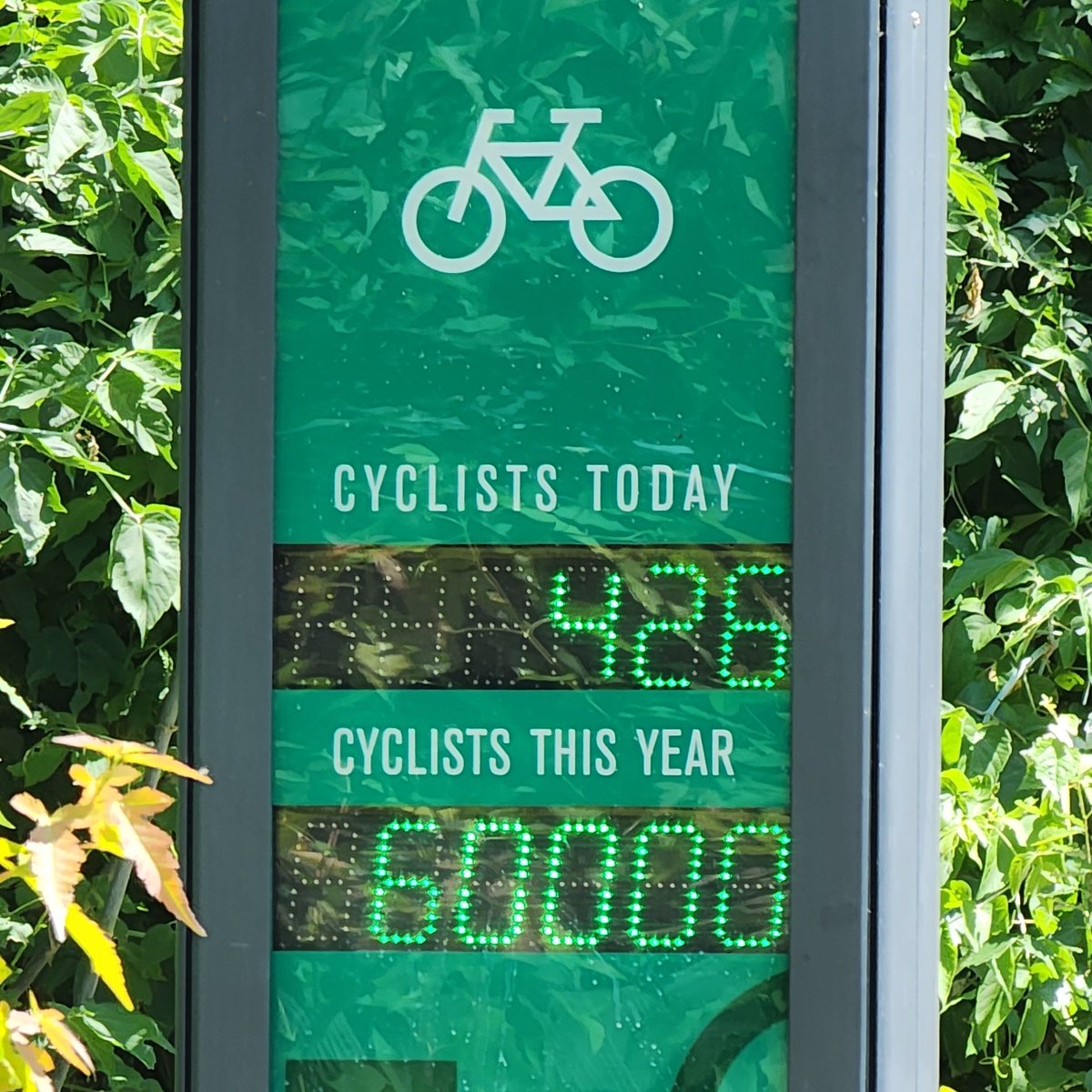
This happened as I passed the cycle counter at The Forks yesterday, and my inner OCD let out a shriek of joy! #cycling #Winnipeg #EvenNumbers
1
15
724

20 Jun 2023
Yin and Yang
Prints on steel #yinandyang #yin #earth #femininity #evennumbers #tiger #orange #brokenline #Yang #heaven #masculinity #light #activity #forces #equalandoppositeforces #China #Chinese #interconnected #SanFransisco #HongKong #Tokyo #Singapore displate.com/displate/532242…
1
3
92