
It’s all interconnected. Labor saving technology freed up time and Capitalism was developed to prioritize generating more wealth with that time.

You're proving my point without realizing it.
If Iran can demand concessions and Trump feels compelled to address them, then clearly they do have cards. Maybe not winning cards, but enough to force negotiations onto uncomfortable ground.
And as for whether Trump had the right to include Israel's actions in broader talks, that's how great powers operate. They don't negotiate one battlefield at a time. They negotiate entire regions.
You see Lebanon, Iran, and Israel as separate files on a desk. Washington sees one interconnected crisis.
The hard truth is that when America is carrying the diplomatic weight, supplying the weapons, and managing the fallout, it gets a seat at every table whether people like it or not.
You can argue Trump made the wrong call.
You can argue the deal was bad.
But arguing that he had no right to be involved ignores the reality of who holds the leverage.
In geopolitics, rights matter.
Power matters more.
6

🌐 The strongest safety and security networks are built long before a crisis occurs.
🗺️ Over the past week, more than 250 participants from 70 countries gathered at the @UN Campus in Turin for the #EUCBRNCoE Academy 2026.
🔎 Key highlights
🔹 Contributions from the @EU_Commission, UNICRI, partner countries, regional secretariats, technical experts and industry.
🔹 Participation of donor governments, including Canada, France, Italy, Norway, Singapore and the United States, among others.
🔹 Participation of partners and international organizations including @iaeaorg, @INTERPOL_HQ, @NATO, @NUSingapore, @OPCW, @RACVIAC, @UN_Disarmament, @UN_OCT and @WHO.
🔹 Demonstrations of innovative technologies and rescEU CBRN capabilities.
🇪🇺 Funded by the European Union and implemented in cooperation with UNICRI, the #EUCBRNCoE Initiative has spent more than 16 years helping partner countries strengthen their ability to prevent, detect and respond to evolving CBRN risks.
🧭 As technological change, geopolitical instability and transnational threats reshape the risk landscape, the Initiative continues to provide a unique platform for cooperation, capacity-building and practical action.
Faced with increasingly complex and interconnected risks, cooperation remains one of our most effective tools for prevention, preparedness and response.
🙏 Thank you to all partner countries, institutions, experts, speakers and participants for their commitment and contributions throughout the week.
➡️ bit.ly/4eokDB8
@EU_FPI I #EUCBRNCoE I #EUForeignPolicy
8

System-building using that AI. It’s the next level play in my opinion. Anyone can use chatgpt but i see it everyday among my peers: people rarely build interconnected systems that solve complex problems using multiple AIs. I just did this for my church
3
Chaotic-Strike retweeted

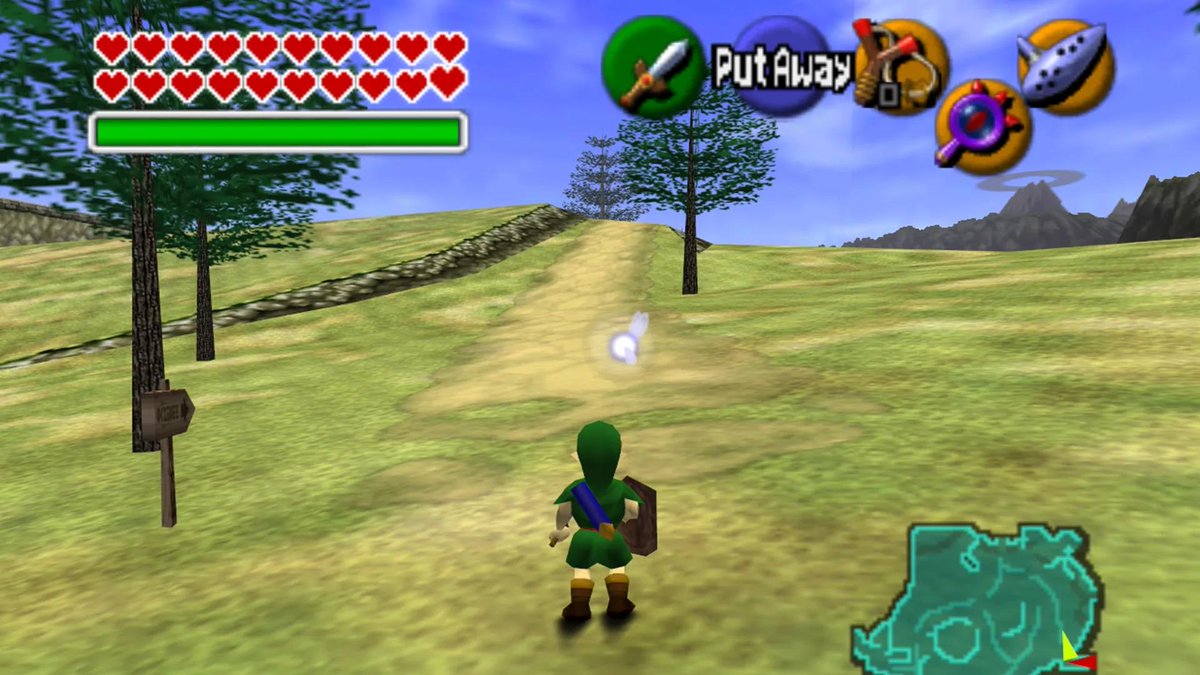
Seems like there's a bit of a disconnect of what's considered open world. Years ago large open interconnected areas were still classified as open world. Nowadays a "true" open world is things being seemless without transitions or loading screens from one region to the other.

Should the Ocarina of Time remake be fully open world, or stay more linear like the original?
25
7
129
7,883

Welcome to AIM Talks China 2026
Mohammed E. Al Fardan, CEO of Al Fardan Corporation, joins AIM Talks China 2026 to share insights on the evolving landscape of investment, entrepreneurship, and business leadership in an increasingly interconnected global economy.
With extensive experience leading one of the region’s prominent business groups, he brings valuable perspectives on fostering sustainable growth, driving innovation, and creating strategic partnerships that contribute to long-term economic development.
Join global policymakers, investors, entrepreneurs, and industry leaders at #AIMTalksChina2026 as they discuss the future of #Investment, #BusinessLeadership, #Innovation, #Entrepreneurship, and #EconomicGrowth in a rapidly transforming world.
Register now: aimcongress.cn/packages?sour…
📅 17–18 June 2026
📍 Jumeirah Guangzhou, Tianhe CBD, Guangzhou, China
9

24m
As artificial intelligence becomes a larger part of everyday workflows, one challenge continues to stand out: reducing friction between users and the tools they want to use.
That's why accessibility is becoming a defining feature of next-generation AI platforms.
And it's what makes AINFT's integration with Trust Wallet an important step forward.
By expanding wallet connectivity, @AINFTcom is giving users more ways to access advanced AI services through the Web3 tools they already use every day.
🔹 Seamless Wallet Access
🔹 Multi-Chain Connectivity
🔹 Simplified User Experience
🔹 Expanded AI Accessibility
As AI and Web3 continue converging, users increasingly expect flexibility.
Not just in the models they choose.
But in how they connect, authenticate, and interact with digital services.
The latest integration supports that vision by enabling:
🚀 What's New?
🔹 Trust Wallet Browser Extension Support
🔹 One-Click Login Across TRON & EVM Networks
🔹 Mobile Wallet Browser Compatibility
🔹 Access to Leading AI Models
🔹 Flexible Web3 Identity Integration
This reflects a broader trend emerging across both industries.
Wallets are becoming more than asset management tools.
They're becoming digital passports.
A single gateway connecting users to applications, services, communities, and increasingly, AI.
➡️ Identity Through Wallets
➡️ Access Across Multiple Chains
➡️ Simplified Onboarding
➡️ Greater User Ownership
As platforms become more interconnected, the ability to move seamlessly between ecosystems will become increasingly valuable.
The goal isn't simply to provide access.
It's to make access effortless.
Because every step removed from the onboarding process creates new opportunities for participation.
🎁 New users receive:
✅ 100,000 Points Upon Login
The future of AI adoption won't be driven by capability alone.
It will be driven by accessibility.
By reducing barriers.
By expanding connectivity.
And by creating experiences that allow users to focus on what they want to achieve rather than how they get started.
More wallets.
More accessibility.
More AI participation.
That's how AI and Web3 continue building a more connected digital future.
👉 Try it now: chat.ainft.com/chat
@AINFTcom @justinsuntron
#TRONEcoStar
8

Open a door into someone's memories, navigate countless interconnected rooms, and restore memories by placing items in PLATONICA SPACE, a psychological exploration adventure indie game!
Try the demo ↓
#indiedev #indiegame
1
11

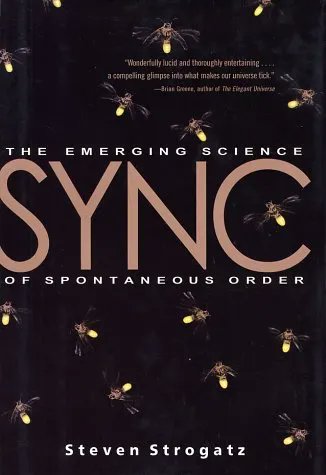
Sync by Strogatz is a tremendous book. It begins with some simple questions: Why do crickets harmonize as a chorus on summer nights? Why does the moon spin in sync with its orbit? Why do audiences clap simultaneously? In searching for the answers to these questions, we find an unfolding of the universe through the notion of spontaneous order.
Sync is not an anomaly but rather one of the deepest drives in existence. Whether at a massive scale like the universe or a microscopic scale like atoms, spontaneous sync emerges rejecting entropy.
"For reasons we don't yet understand, the tendency to synchronize is one of the most pervasive drives in the universe, extending from atoms to animals, from people to planets. Female friends or coworkers who spend a great deal of time together often find that their menstrual periods tend to start around the same day. Sperm swimming side by side en route to the egg beat their tails in unison. Sometimes sync can be pernicious: Epilepsy is caused by millions of brain cells discharging in pathological lockstep, causing the rhythmic convulsions associated with seizures. Even lifeless things can synchronize. The astounding coherence of a laser beam comes from trillions of atoms pulsing in concert, all emitting photons of the same phase and frequency. Over the course of millennia, the incessant effects of the tides have locked the moon's spin to its orbit. It now turns on its axis at precisely the same rate as it circles the earth, which is why we never see its dark side."
Strogatz is a leading researcher in chaos and complexity theory. He's also a Professor in Applied Mathematics at Cornell University. He analyzes the mathematical theory of self-organization, where millions of simultaneous interactions result in order emerging from chaos.
"The richness of the world around us is due, in large part, to the miracle of self-organization. Unfortunately, our minds are bad at grasping these kinds of problems. We're accustomed to thinking in terms of centralized control, clear chains of command, the straightforward logic of cause and effect. But in huge, interconnected systems, where every player ultimately affects every other, our standard ways of thinking fall apart."
Ultimately, Sync is asking the big questions of existence. Who am I? What is consciousness? Is there a correlation between neurological sync and memory?
Great book.
"It is a wonderful feeling to recognize the unity of complex phenomena that to direct observation appear to be quite separate things. On the surface, Huygen's pendulums and Josephson's junctions appear like polar opposites. Pendulums are comfortable and familiar, human in scale, as common as a child playing on a swing, as cozy as the ticking of a grandfather clock. Superconducting junctions are alien, almost otherworldly, no bigger than a bacterium, with frenzied electrical oscillations 100 billion times faster than a heartbeat, the surreal consequence of electrons passing through impenetrable barriers like ghosts walking through walls. No matter. Those differences are gloss. Fundamentally, the dynamics of Josephson junctions and pendulums are the same. Their patterns in time are identical: two variations on a single algebraic theme."
1
1
2
107

34m
I fundamentally believe that the future for artists working in digital mediums and online ecosystems is a future that is built on blockchain. I am wholly committed to planting a flag, defending our ground, and making projects so undeniably interesting that the power of this technology is self-justifying.
We have an incredibly strong, interconnected community here. I know I'm preaching to the choir. What we all need to do- and what I'm going to do with WINDOWS, is to break into the zeitgeist outside our walls and SHOW, not tell- how enabling this technology is for funding creative concepts- and creative careers.
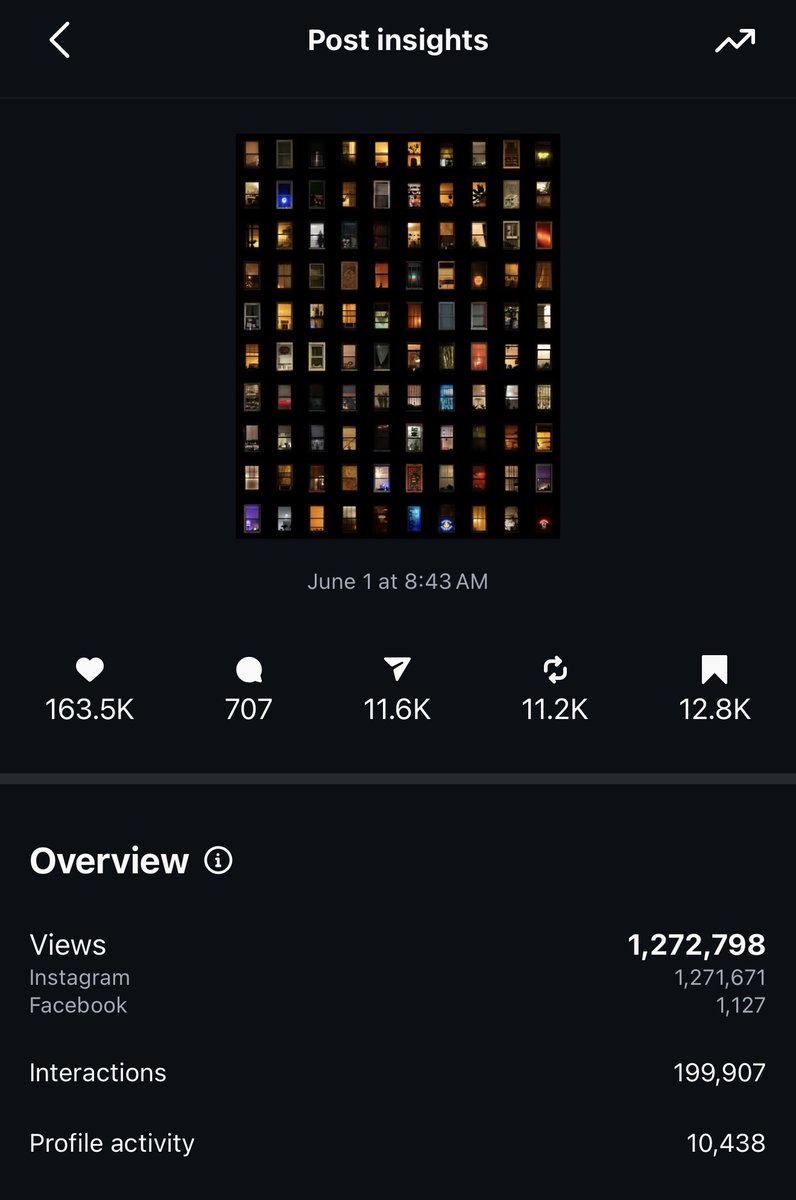
I've been sharing this work on IG and the reception has been astounding to me, it's the largest audience my work has ever reached. I'm doing a print sale there in a few weeks- so I'm holding back a portion of the windows grids mints- buildings- to use as an onboarding tool to the people who purchase physical prints. People who mint the tokens on Tuesday will also have a chance to print their outputs, at cost, once we have our system dialed in.
People on IG and Threads are so excited about this project, but there is an education gap that has been further widened by toxic headlines, misunderstandings, and the unwillingness to change one's mind about the way the world works. I plan to change a lot of minds in the next few weeks and I invite you all to do that with me.
My call to action here is this: let's all be more vocal about art and blockchain on other platforms too. Let's all be advocates of ideas that help artists renegotiate their relationship with the internet. I believe that breaking this barrier is essential to the long term success of our space, and consider this my war cry to redouble our efforts across every landscape.
The internet has largely been absorbed by feudal landlords who tell us we are lucky to have space on their land. For the million-plus eyes I got on WINDOWS // NYC on IG, their valuation of that impact was 49 dollars. Let's show the world how creative concepts, previously impossible, can be funded by a collective of passionate minds with sovereign onchain identities- and that art has value and deserves the economic upside of the value it generates in the networks it beautifies. Let's build on land we own.
I get to make these ideas because so many of you support them. With attention, with ETH, with validation and kind words. All of that matters and makes this a very real living for me.
I want as many artists as is possible to experience the feeling of working so hard on something and it being a practical way to spend time. If you will join me, drop some links to your IG here and I would love to check out your pages.
If you read this far and are interested in minting a building, indicate that and I will reach out to a few people for wallets for the AL. Thank you all for the support so far and I can't wait to build this city with you.
With passion- @ dave.krugman on IG 🫡🪟
33
12
80
1,157

Again, you don’t have to presuppose thinking it exists, but they should be identified since the world is interconnected via access to knowledge, you’re not grasping this correctly because you don’t know CRAP about epistemology. Also nice concession by blocking lol.
1
2
30

Tara Sharma 🇮🇳🚩 retweeted

Events like these reflect how interconnected leadership, culture and global engagement have become. Keep going Amruta Fadnavis
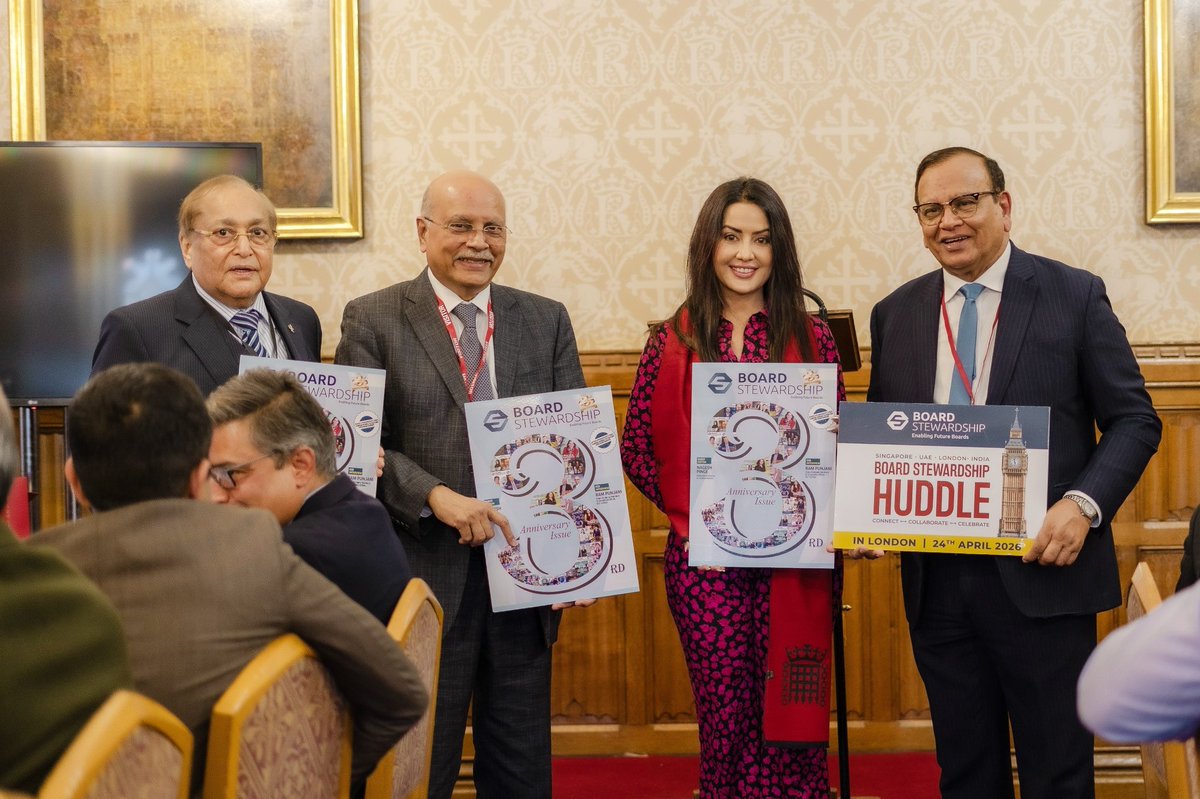
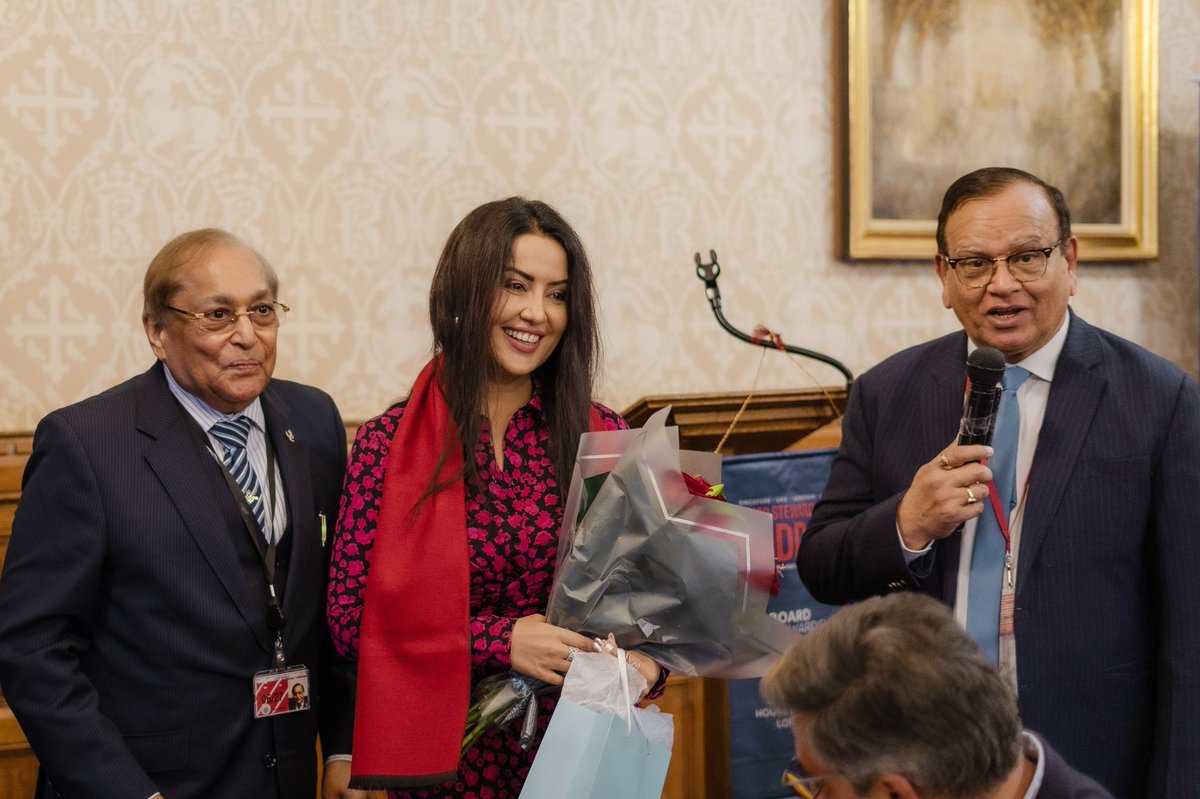
24
23
2,840

So glad Musk's companies are successful and bringing in the support of his vision to Earth becoming sustainable in energy, to become multiplanetary, and for the planet to become interconnected.
5

the focus on ecosystem patterns is really insightful and shows how interconnected these apps are
3

Yes to all of it. And Hyrule doesn’t need to be as big as BOTW but would be cool for them to expand it and make it all interconnected
1
9
515

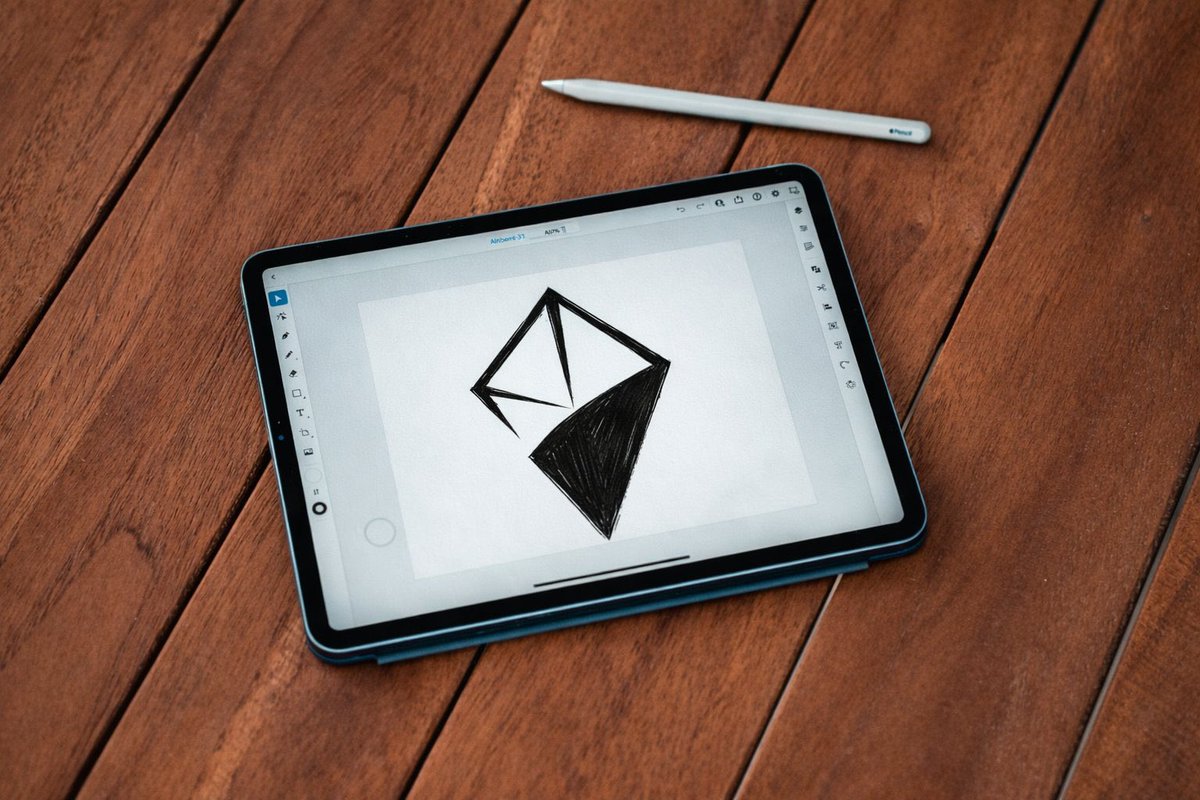
Creativity has always been one of the strongest drivers of technological innovation.
As AI and Web3 continue to evolve, we’re seeing the emergence of new digital environments where creation, ownership, and participation are becoming increasingly interconnected. Platforms like AINFT reflect this broader movement by helping bridge the gap between imagination and execution.
Looking deeper into this transformation reveals several key points:
1⃣ Technology expands creative possibilities.
AI is enabling creators to explore ideas faster, experiment more freely, and transform concepts into tangible digital experiences with fewer barriers.
2⃣ Digital ownership is reshaping creative ecosystems.
Blockchain infrastructure introduces new ways for creators to establish provenance, manage digital assets, and participate in emerging creator economies.
3⃣ Communities help define digital culture.
New cultural movements often emerge when creators, builders, and users come together around shared tools, ideas, and opportunities for expression.
4⃣ Innovation happens at the intersection of disciplines.
Some of the most exciting developments are occurring where art, AI, blockchain, and community participation converge to create entirely new forms of interaction and value.
5⃣ The future is built through creation.
Every new tool, artwork, application, and digital experience contributes to shaping the next generation of online culture and technology.
The broader trend is becoming increasingly clear: AI and Web3 are not simply creating new products—they are creating new creative frameworks through which people can build, collaborate, and express ideas.
More creativity.
More ownership.
More innovation.
That’s how digital cultures continue evolving in real time.
The canvas is open.
And the future is being created one idea at a time.
@AINFTcom
@justinsuntron
#TRONEcoStar
1
13

When the elite uses state or illicit resources to buy luxury vehicles for vocal critics instead of loyal members,a classic Neopaye minimal system of political survival is established.This practice triggers several interconnected political, social, and institutional implications.
1
13

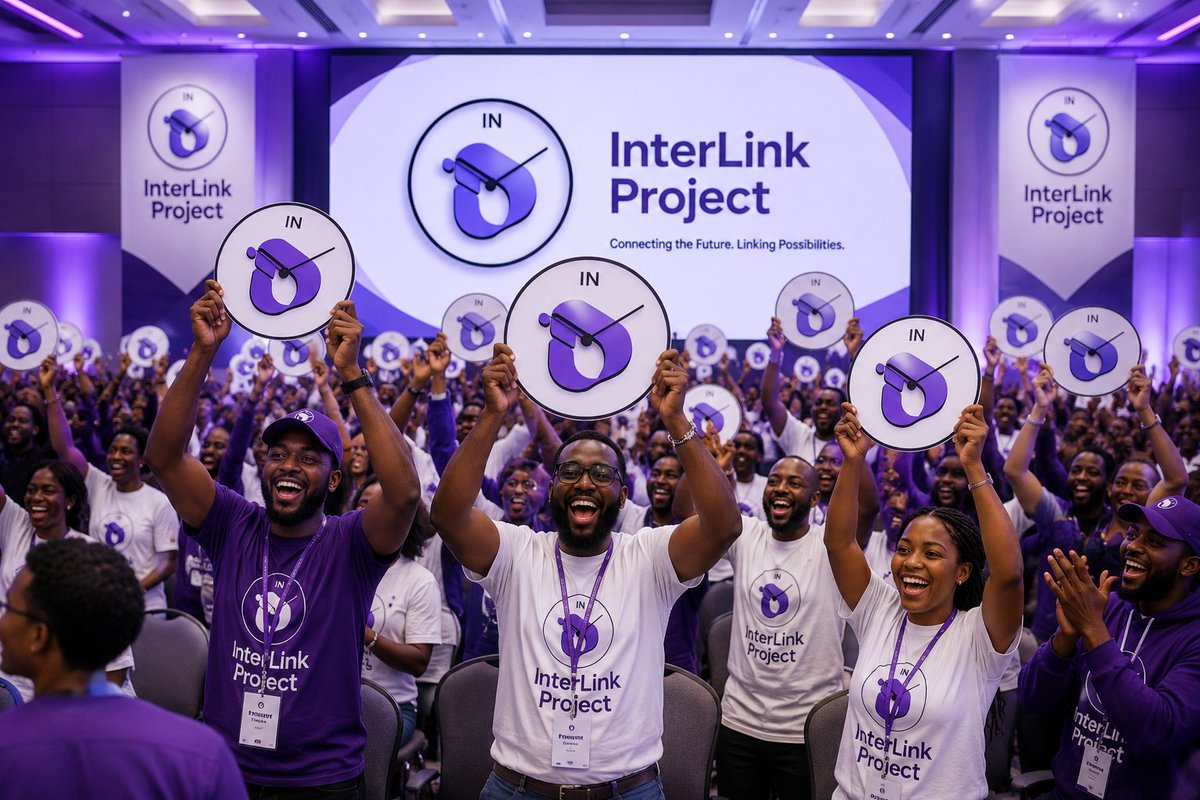
The future of decentralized networks is evolving. 🌐 From the initial foundations laid in 291852.jpg, we are leveling up the architecture to build a stronger, more interconnected ecosystem. #InterLink #ITLG #ITL #ITLX
2
2
9
The future of decentralized networks is evolving. 🌐 From the initial foundations laid in 291852.jpg, we are leveling up the architecture to build a stronger, more interconnected ecosystem. #InterLink #ITLG #ITL #ITLX
2