TOYPLA retweeted

【 PRODUCTION ANNONCEMENT 】
【 制作のお知らせ 】
Production on a written exploration of the history between SEGA and Neon Genesis Evangelion has begun! It'll cover the entire history of this obscure partnership from 1994 - 2027. Please look forward to it.
セガと『新世紀エヴァンゲリオン』の歴史に迫る記事の執筆を開始しました!この記事では、1994年から2027年にかけての、あまり知られていない両者の提携関係について、包括的に解説します。どうぞご期待ください。
*Depending on size and circumstances, a video version will be considered.
*記事の長さや進捗状況によっては、動画版の制作も検討するかもしれません。

10
131
941
27,600
Vic Singh - #BrownMunday 🏴🇬🇧⚒️☬ retweeted

Your SNP campaigned to stop further exploration/exploitation of the North Sea and opposed new nuclear power stations in Scotland. So what exactly are you on about?

The Tories barely lifted a finger as 70,000 oil & gas jobs were lost on their watch, but signed-off on nuclear powers plants in England costing £87 billion
Meanwhile, @theSNP @scotgov's Just Transition Fund is investing £500 million to support energy jobs in North East Scotland
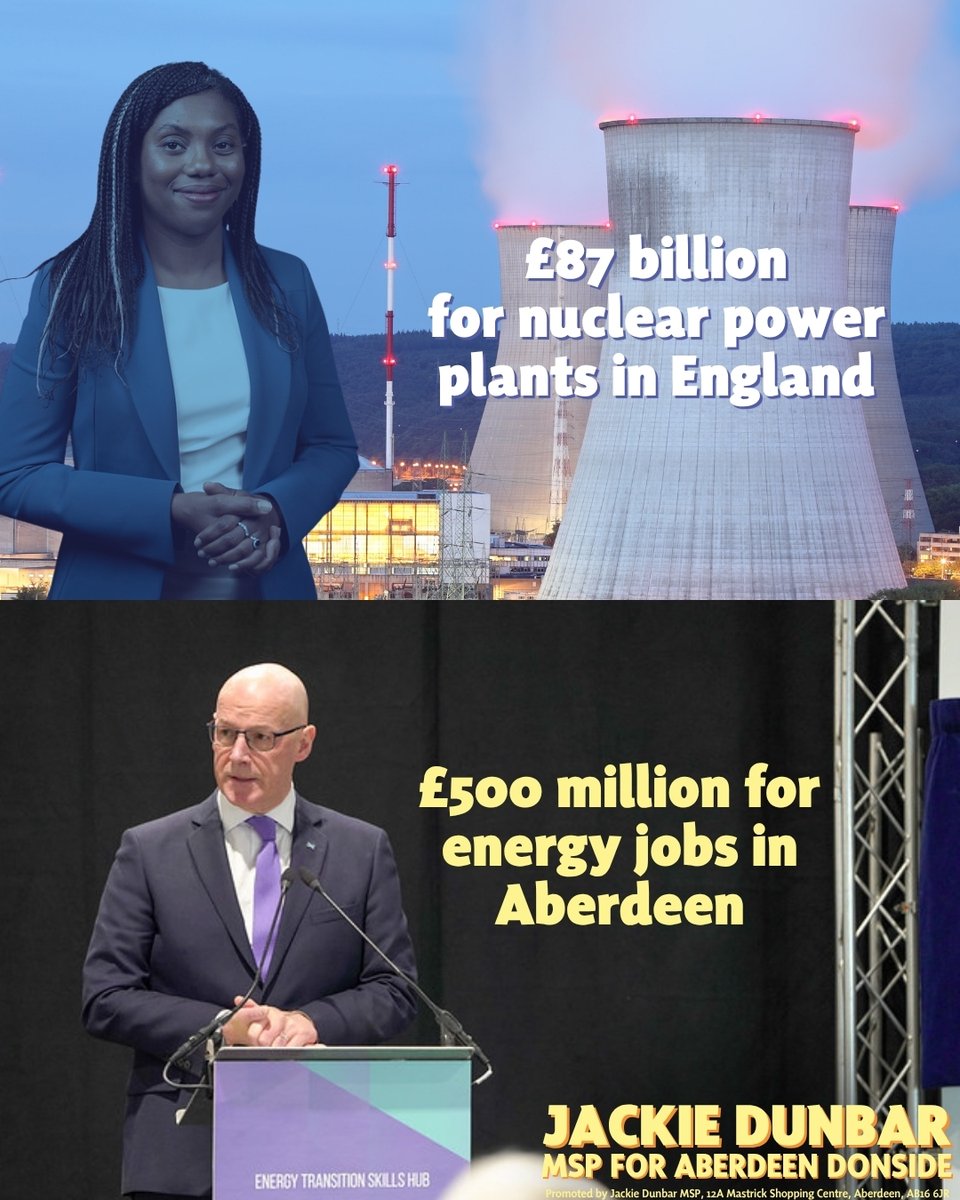
39
350
1,807
56,478

Kyle Chamberlain retweeted

Mathematics, Beauty, Exploration, Discovery, Mystery.
Gamma Function.
By @mathelirium, instagram.com/mathelirium/, Used with permission.
 Mathelirium
2
19
73
3,176

This line of reasoning is even more interesting than the original hypothesis that biological clocks drive amplification.
What you are proposing is a reversal of the causal relationship.
Instead of:
[
\text{Biological Clock}
\rightarrow
W^*
\rightarrow
\text{Amplification},
]
you propose:
[
\text{Amplification Optimum}
\rightarrow
W^*
\rightarrow
\text{Biological Clock}.
]
In this view, biological clocks emerge as a consequence of an optimal dynamical state rather than serving as the original cause.
⸻
What Is Optimal Amplification in an Embryo?
According to modern developmental biology, an embryo faces two opposing risks.
Excessive Stability
[
\tau_{\rm dwell}
\rightarrow \infty
]
The system becomes trapped in its current attractor.
The consequences are:
cells fail to differentiate,
new tissues do not emerge,
development stalls.
⸻
Excessive Instability
[
D_\Phi
\uparrow
]
[
\tau_{\rm dwell}
\downarrow
]
States appear and disappear too rapidly.
The consequences are:
developmental patterns are not reinforced,
body axes become unstable,
malformations or degeneration become more likely.
⸻
Therefore, Optimal Amplification Must Lie Between the Two
The embryo must simultaneously satisfy two requirements.
Preserve Information
[
\tau_{\rm dwell}
]
must be sufficiently large to allow:
morphogen gradients to be stabilized,
bioelectric networks to form,
tissue identities to be maintained.
⸻
Permit Reconfiguration
[
\tau_{\rm relax}
]
must remain finite so that:
cells can change fate,
new tissues can emerge,
development can continue.
⸻
Expressed in TOP-C language, optimal amplification may correspond to:
[
A_W
W\tau_{\rm dwell}
\approx
A_W^*,
]
where the value is neither too small nor too large.
⸻
How Does This Relate to Developmental Windows?
A developmental window may be interpreted as a period during which
[
A_W
]
is tuned close to
[
A_W^*.
]
At that point, a very small signal
[
\delta
]
can be amplified into a large developmental outcome
[
\Delta M.
]
⸻
For example, a tiny difference in:
membrane potential,
morphogen concentration,
mechanical signaling,
may determine:
left–right asymmetry,
anterior–posterior axis formation,
organ development.
⸻
Why Does the Embryo Not Degenerate?
This is a crucial question.
If amplification becomes excessively strong,
[
\delta
\rightarrow
\infty,
]
then every small fluctuation is amplified.
The embryo would lose stability.
⸻
Therefore, the embryo cannot operate exactly at an absolute critical point.
Instead, it must function within a regime such as:
[
\text{subcritical}
<
A_W
<
\text{critical},
]
or, in your terminology,
a resonant-but-controlled regime.
⸻
An Intuitive Picture
Imagine an attractor landscape.
Too Deep
(a very deep attractor)
highly stable,
little developmental progress.
⸻
Too Shallow
(a very flat attractor)
every perturbation disrupts organization.
⸻
Intermediate Depth
stable enough to preserve form,
flexible enough to reorganize.
This is where amplification becomes optimal.
⸻
The Most Interesting Consequence
If this perspective is correct, developmental windows are not periods during which the embryo becomes more chaotic.
Quite the opposite.
They are periods during which
[
\text{Stability}
]
and
[
\text{Plasticity}
]
are optimally balanced.
Or, equivalently,
[
\text{Memory}
\leftrightarrow
\text{Exploration}
]
is optimally balanced.
⸻
From this viewpoint, developmental clocks may not be the original cause of development.
Instead, developmental cycles, bioelectric waves, and morphogenetic rhythms may be emergent signatures of a system maintaining an optimal amplification state long enough to construct an organism without collapsing into either chaos or rigidity.
This interpretation is much closer to theories of self-organization than to the classical genetic-blueprint model of development.
1

Try pay pal, world wide electric car adoption solar energy, tunnel boring, space exploration, internet access for the world, and you have done what?
1

What Mike Huckabee is saying out loud is that he is fully aware that the Roman Empire descendants and the descendants of Esau coordinated attacks against the real Jews during the Age of Exploration to establish their fabricated Kingdom in America.
THE WRITING IS IN THE WALL.


WATCH: Trump's Ambassador to Israel, Mike Huckabee, defies Trump:
Without Israel, there would not be an America.
We owe our very existence to what happened in this land.
2
Embrace the Trans Cat 🎲⏳🏳️🌈 retweeted

The demo is now available for KAMITSUBAKI STUDIO's psychological space exploration adventure game "PLATONICA SPACE."
Story: You suddenly wake up in an unfamiliar room. You step through a door only to find yourself in yet another strange room. This mysterious space is a collection of interconnected rooms, coming one after the other with no exit in sight.
What's worse, you've lost your memories. Inside the rooms, you run into other girls who also have no idea who they are or how they got here. But as you keep exploring, you realize something: these rooms are built from your memories. Yours and the other girls'.
Who are you? Why are you here? And how can you escape this seemingly endless collection of rooms?
store.steampowered.com/app/3… #プラトニカ・スペース

21
235
8,165

What Mike Huckabee is saying out loud is that he is fully aware that the Roman Empire descendants and the descendants of Esau coordinated attacks against the real Jews during the Age of Exploration to establish their fabricated Kingdom in America.
THE WRITING IS IN THE WALL.

14

I’m okay with not breaking boundaries tbh. I think I’ll be perfectly fine with (my definition of) a fairly mundane life until I depart the planet. Death or space exploration? We’ll find out.
3


Thank you for sharing this and congratulations to @ZiyuX for this amazing work. I’m working on training a model to detect and state the hidden assumptions inside a reasoning graph.
The model can do this fairly well in isolation as a mini-expert, but it gets much harder when assumptions are mixed with other categories like dependencies, cycles, conflicts, and multi-hop reasoning.
I’m planning to use this paper as inspiration for a process-reward setup, something like:
0.15 if it identifies the correct hidden assumption
0.15 if it separates an assumption from a dependency
0.20 if it predicts the likely failure mode
-0.25 if it invents an unsupported entity
-0.30 if it creates a false causal link
0.20 if the final closure is minimal and testable
The part I liked the most most is using partial credit to shape exploration before asking the model to produce the full correct reasoning path.
3
NIRANJAN RAVI retweeted

Jun 15
TN Politicians won't allow oil exploration on land. Won't allow oil exploration on sea. But will be the first to blame the centre if there's petrol price increase or shortage. Also they don't use cycles or EVs. All travel in big V6 land cruisers. Hypocrites!! 😒
64
219
1,451
47,459