
በአማራ ስም የወጡን ሁሉ እየጠየክ ከሆነ ብዙ ትተሀል:: እነ አማራ ታጠቅ ዝመትንም ጠይቅ::🤣😂
In all seriousness, we both know that both of the accounts mentioned aren’t run by Fanos on the ground እና እነ መአዛን ብጠይቅ ይቀላል::


Jun 16
Je ne discute pas avec les fanos mais avec les personnes en capacité de raisonner. M Brys était un Belge à la retraite on lui a proposé un poste bien rémunéré et n’a pas devoir de conscience envers le Cmr Cela a été possible à cause de la gestion de la FCF par Eto'o à son arrivée
1
21

Jun 16
Those graceful fanos who fought for Ethiopia came from every ethnic group not from single one. They paid the ultimate price for Ethiopia. The current self-claimed fighters are simple thugs running to capture state power& are trying to make a fortune.
1
1
20
ʙᴀᴍʟᴀᴋ retweeted

Good morning everyone!
Fanos wish you a blessed and productive week for all of you.
So much to accomplish
Looking optimistic

2
1
6
44
Nebz……….#Stop Amhara Genocide in Ethiopia!!!!! retweeted

13 May 2025
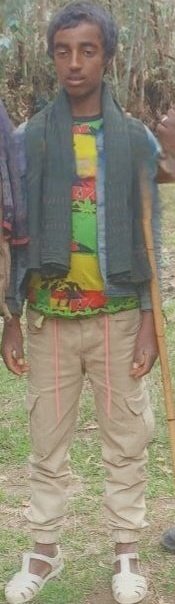
14 yrs old child Tamiru Kassaw, 6th grader who escaped from @AbiyAhmedAli regime army to Z safety of Fanos, clear war crime, Convention on z Rights of the Child (CRC)
Article 38(3) of z CRC which prohibits z recruitment & use of children under the age of 15 #AmharaGenocide
206
11
1,969








#GPE_News
Breaking News
May 31, 2026.
Addis Ababa Ethiopia.
Amhara political prisoners and prisoners of conscience have launched a hunger strike in protest against what they describe as a sham election.
We, the Amhara political prisoners and prisoners of conscience, have been subjected to severe human rights violations for the past three years and more. Hundreds of our fellow citizens have been detained by the Prosperity Party-led government and have disappeared without their whereabouts being known. Many have been killed during investigations, subjected to abuse, and suffered physical injuries. Simply being Amhara has been treated as a crime, and we continue to languish in the regime's prisons. Despite our own suffering, we remain deeply concerned about the hardship being inflicted upon our people.
Although we are being held under what we consider unjust imprisonment by the Prosperity Party government, we are also witnessing what we describe as state-sponsored and systematic violence against the Amhara people. At a time when our people face what we believe to be an existential threat, and amid allegations of war crimes and other grave abuses, we strongly condemn the election that the government plans to conduct, which we regard as illegitimate. To express our opposition, we have declared Ginbot 24, 2018 E.C. (June 1, 2026) a day of mourning and are observing it through a hunger strike.
Victory to our people!
Peace to our country!
_________________________
End #AmharaGenocide
#NoBallotsWhileBulletsFly
GPE note: Amharas, human rights defenders and journalists have been illegally detained in large numbers throughout the last 3 years. Although, ethnic based targeting has been going on in Ethiopia for over three decades, the severity and frequency of targeting has exponentially intensified in recent years.
Please check these GPE reports related to detainees, abductees and victims of concentration camps.
1. A call to save lives of Amhara detainees1 that are tortured and denied medical treatment by the regime in Ethiopia
drive.google.com/file/d/1oj5…
2. Second round of mass abduction of ethnic Amharas across major cities inEthiopia drive.google.com/file/d/1mfU…
3. SEVERE HUMANITARIAN CRISIS:WAR ON AMHARA AND AMAHRA GENOCIDE IN ETHIOPIA
drive.google.com/file/d/1mfU…
4. Continued mass incarcerations of Fanos in Amhara Region & beyond
drive.google.com/file/d/1PIV…
___________________
Follow us on:
_______________________
For more updates follow us on:
➡️ Facebook: facebook.com/gpethiopia
➡️ X: X.com/gpethiopia
➡️ Instagram: instagram.com/gpethiopia
➡️ TikTok: tiktok.com/@gpethiopia
➡️ Telegram: t.me/gpe_central
➡️ WhatsAPP: whatsapp.com/channel/0029VaA…

1
24
26
579

May 31
Breaking News: AFNM marksmen shot down the regime’s armed drone! The drone which was targeting Fanos in Golesha village in Raya Kobo district, was brought down and exploded on the ground. No one was hurt. #WarOnAmhara continues to escalate. Source: t.me/abcdefghijklmnopqrstuvw… @war_noir @PopularFront_
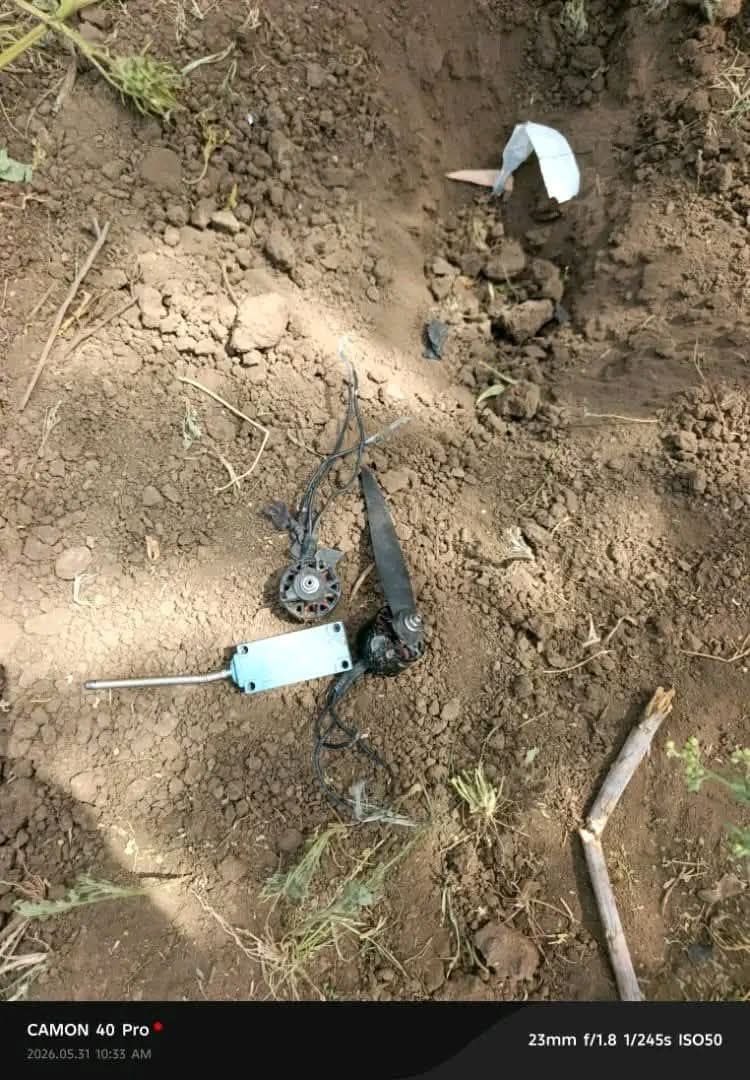
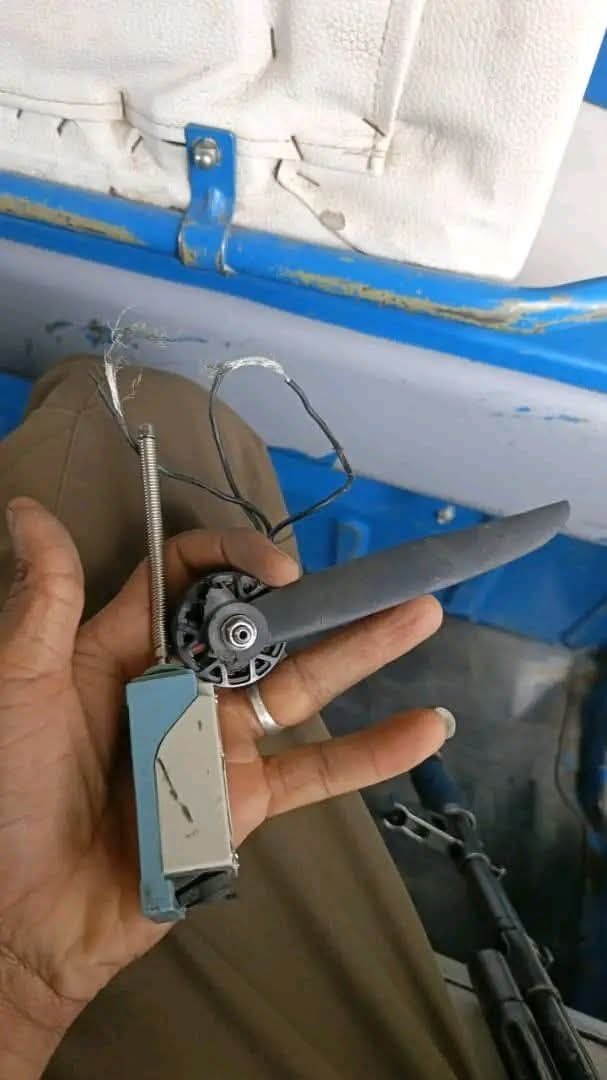
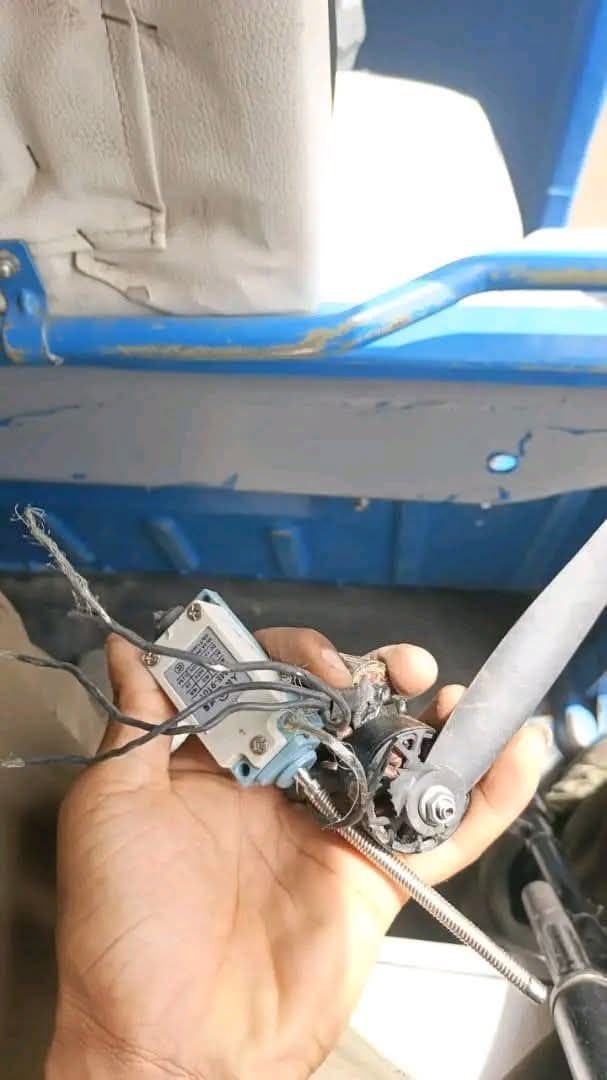

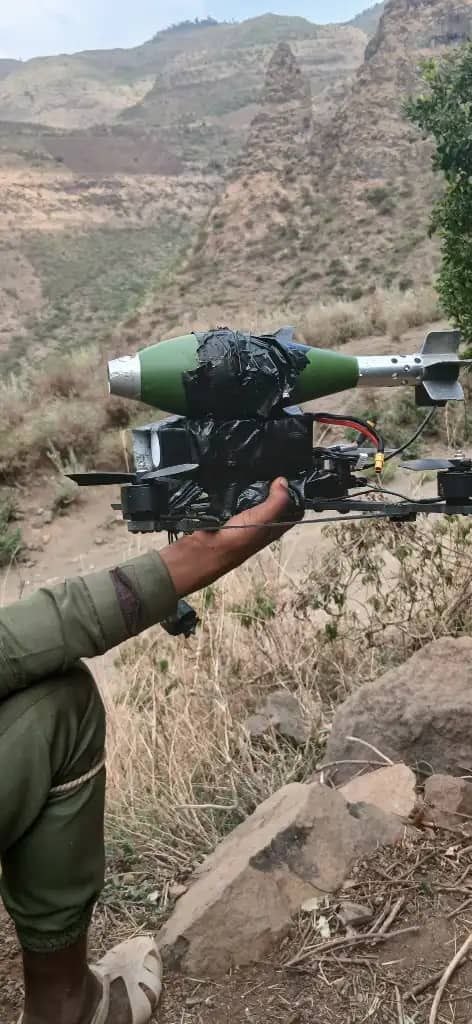
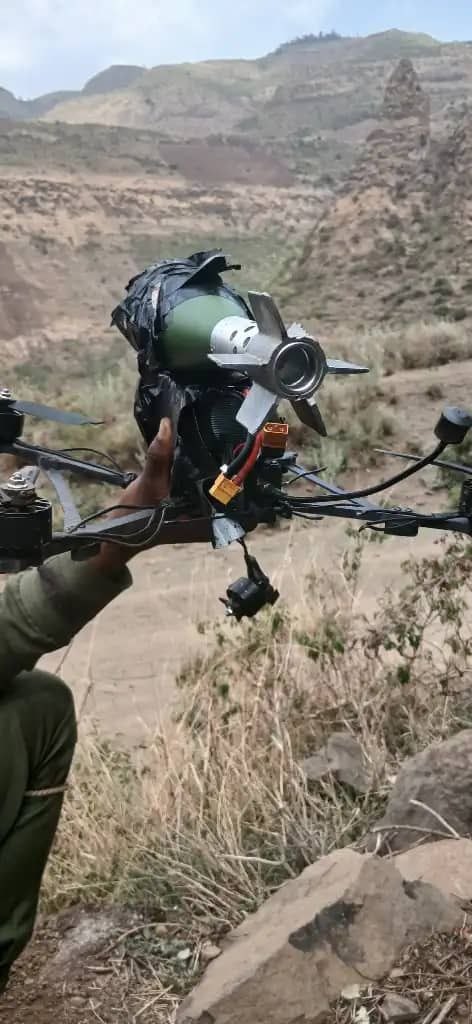
🚨 𝐅𝐚𝐧𝐨 𝐜𝐚𝐩𝐭𝐮𝐫𝐞𝐬 𝐅𝐏𝐕 𝐝𝐫𝐨𝐧𝐞 𝐮𝐬𝐞𝐝 𝐛𝐲 𝐄𝐍𝐃𝐅 𝐝𝐮𝐫𝐢𝐧𝐠 𝐜𝐥𝐚𝐬𝐡𝐞𝐬 𝐨𝐧 𝐭𝐡𝐞 𝐃𝐚𝐛𝐚𝐭–𝐀𝐣𝐢𝐫𝐞 𝐟𝐫𝐨𝐧𝐭 𝐢𝐧 𝐍𝐨𝐫𝐭𝐡 𝐆𝐨𝐧𝐝𝐞𝐫 𝐚𝐟𝐭𝐞𝐫 𝐨𝐧𝐞 𝐝𝐫𝐨𝐧𝐞 𝐟𝐚𝐢𝐥𝐞𝐝 𝐭𝐨 𝐝𝐞𝐭𝐨𝐧𝐚𝐭𝐞 𝐝𝐮𝐫𝐢𝐧𝐠 𝐚𝐧 𝐚𝐭𝐭𝐞𝐦𝐩𝐭𝐞𝐝 𝐬𝐭𝐫𝐢𝐤𝐞.
Reports indicate that regime forces fighting on the Northern Gonder front, along the route from Dabat to Ajire, have been using FPV suicide drones in combat operations, and that one of the drones was reportedly captured intact.
According to the report, forces operating under the Amhara Fano National Movement (@afnm_official) Gonder command’s 208th Corps, specifically Regiment 1 of the former Ayalew Birru Division, had previously announced that regime forces were heavily defeated for four consecutive days on the Sara-Midir Gemes Kebele front in Debark Woreda before retreating back toward Debark carrying their dead and wounded.
The report further states that during the fighting, regime forces attempted to use two FPV drones to carry out attacks. AFNM accused the government of committing acts of terror against civilians through the drone operation.
According to the report, one of the drones exploded without causing any casualties, while the second reportedly failed to detonate and was captured intact by Fano fighters without causing damage.
Ayalew Birru Division of AFNM also issued a warning message to other Fano forces, stating that the government has begun employing new military tactics and urging fighters to remain vigilant.
1
9
29
2,889

The African Union Must Not Legitimize a Sham Election Held Amid War and Repression
The African Union (AU) was established to promote democracy, human rights, peace, and good
governance across Africa. Yet its decision to deploy an election observation mission to Ethiopia
lending legitimacy to a sham electoral process taking place Amid war in the Amhara region,
widespread atrocities, and repression of journalists is calling into question African Union’s
commitment to human rights and Democratic standard.
Regrettably recent actions by the African Union serve only to shield the Ethiopian regime from
accountability by endorsing the regime's obscene political theatre, a phantom "peace" deal with
Fanos is fresh in our mind and this feels like the continuation of that grave error which betrays
the victims of the regime of Abiy Ahmed.
The central question is not whether ballot boxes will be open. The question is whether an
election can be considered credible when millions of citizens live outside regime-controlled
areas, enduring the horrors of the Abiy Ahmed war and living in constant fear of the next
indiscriminate drone strike.
Today conflict has cut off vast portion of Ethiopia from regime control. In the Amhara region
following the 2023 declaration of war by the regime of Abiy Ahmed, life has become a living
hell. The three-year war toll is catastrophic: countless civilian casualties, thousands displaced,
over five million students deprived of education for three years, and alarming hidden hunger
crisis. Most horrifyingly BBC investigative report documenting rape being used as a weapon by
the Ethiopian defense force, against girls as young as eight. Under such dire circumstances, the
notion of a free and fair election is insult to humanity.
International human rights organizations have repeatedly raised alarms about the deteriorating
political environment in Ethiopia. The international Federation for Human Rights (FIDH)
recently stated, "An election process cannot be considered credible, free or fair in a country
where human rights defenders face systematic targeting." FIDH further warned that violations "
reminiscent of pre-2018 repression have returned with greater intensity", documented cases of
torture, enforced disappearances, exile of journalists and human rights defenders, and the re-
emergence of secret detention facilities like Awash Arba military camps as a site of secret
detention and torture.
The shrinking civic space is equally alarming. Since late 2024, major Ethiopian human rights
organizations have been closed for good by the regime including the Ethiopian Human Rights
Defender Center, the center for Advancement of Rights and Democracy, the association of
Human Rights in Ethiopia, and Lawyers for Human Rights.
Ethiopia ranked 145 out of 180 countries in the 2025 Press Freedom Index published by
Reporters without Borders. Press freedom is non-existent in the country even though few brave
journalists continue to challenge the regime until it throws them behind bars, and subjects them
to torture, just like their colleagues who are languishing in secret detention centers. Amnesty
International has documented arbitrary arrests, enforced disappearances, unlawful surveillance of
journalists, revocation of accreditations, and the closure of independent media outlets.
At the same time, on May 15, 2026, the Lemkin Institute for Genocide Prevention released its
serious report concerning ongoing atrocities in Ethiopia documenting the suffering of the
Amhara people for the past eight years and calling it as genocide. The report exposed " The
tightly knit genocidal structure that the regime of Prime Minister Abiy Ahmed has created to
'exterminate' Amhara identity all over Ethiopia".
3
5
6
450