
Make your home #ForcedEntry resistant with near #BurglaryProofWindows designed to thwart attempts to break into your home. Book a #FreeConsultation to get started!
karolywindows.com/get-a-quot…
1
9

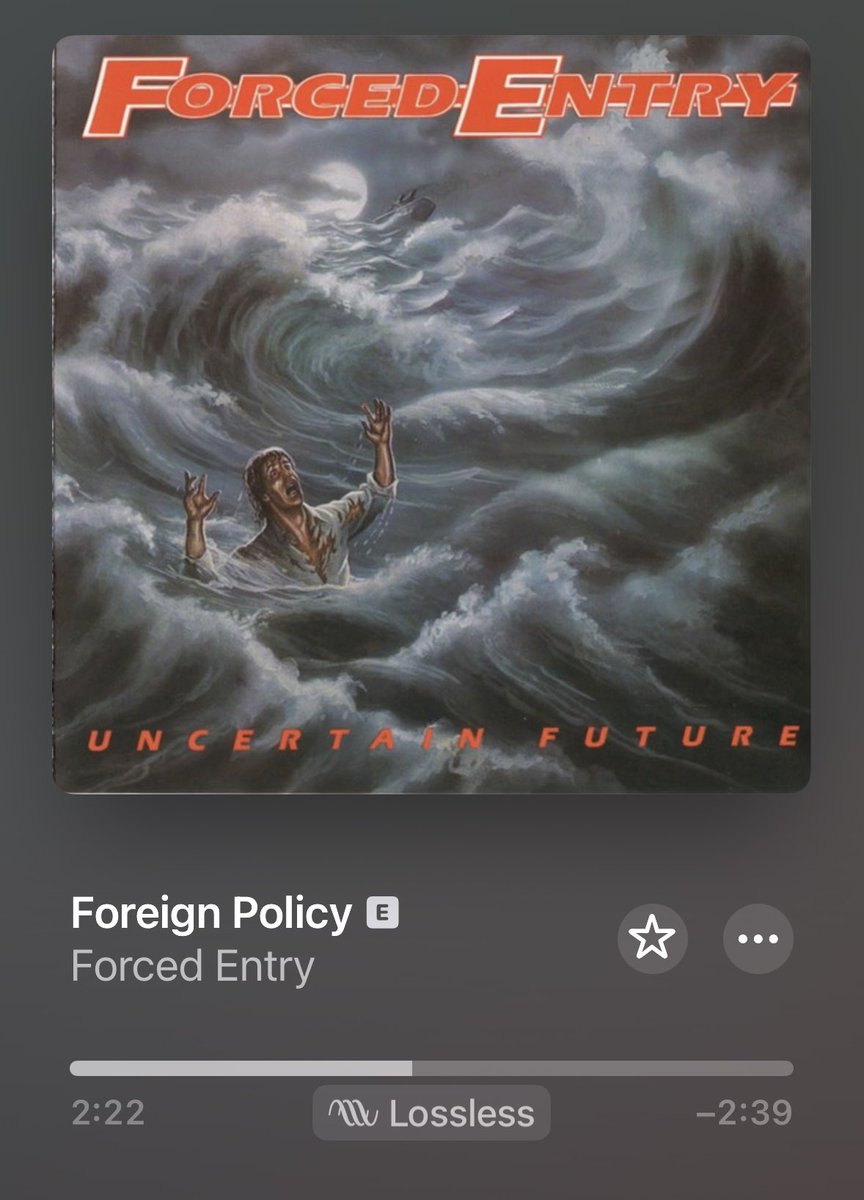
Now Playing: 🤘🏻
F O R C ED • E N T RY 👇🏻
“Uncertain Future” is the debut album by American thrash metal band #ForcedEntry.
It was released on June 30, 1989, on Combat Records.
2
11
129

結論から申し上げますと、ターゲットの「電話番号」を知るだけでハッキングが成立する可能性は十分にあります。現在の高度なサイバー攻撃において、電話番号はデバイスの完全な乗っ取りや監視に向けた強力なエントリーポイントとして機能します。
具体的には、以下のようなメカニズムで電話番号を起点とした攻撃が実行されます。
ゼロクリック・エクスプロイトによるデバイス制圧
標的の電話番号宛てに、特殊な細工を施したメッセージ(SMSやiMessage)やVoIP通話(WhatsAppなど)を送信する手法です。ユーザーがメッセージを開いたり着信に応答したりしなくても、受信して処理された瞬間にシステムが乗っ取られます[1, 2]。著名なスパイウェア「Pegasus」で悪用された「ForcedEntry」や、WhatsAppの脆弱性(CVE-2019-3568、CVE-2025-55177等)がその代表例です。
ベースバンド(モデムチップ)の直接ハッキング
スマートフォンの通信を処理する「ベースバンドプロセッサ」の欠陥を突く攻撃です。例えば、特定のチップセットに存在する脆弱性(CVE-2023-24033やCVE-2025-54328等)を悪用すれば、攻撃者はインターネットや携帯電話網から標的の電話番号宛てにパケットを送り込むだけで、ユーザーの介入を一切必要とせずにリモートコード実行(RCE)を成功させることができます。
通信プロトコル(SS7 / Diameter)経由での傍受・追跡
世界の通信事業者間を結ぶシグナリングプロトコルの脆弱性を悪用し、電話番号を指定してネットワークにクエリを送信することで、その端末の現在位置の特定や、SMS・通話の傍受が可能です[3, 4]。これにより、金融機関などの二段階認証(2FA)コードが盗み出され、アカウントが乗っ取られる危険性があります[5, 6]。
SIMスワップ(SIMハイジャック)
電話番号の制御権そのものを奪うアナログな手法です。攻撃者が被害者の個人情報を悪用して通信事業者を騙し、標的の電話番号を攻撃者の手元にあるSIMカードに移管させます[7, 8]。
このように、「怪しいリンクをクリックしない」「不審なアプリをインストールしない」とユーザー自身が警戒していても、電話番号が知られているだけで通信網やプロトコルの構造的な弱点を突かれ、防御不可能な状態(ゼロクリック)でハッキングの被害に遭う現実的なリスクが存在します[5, 1]。
1
2
191


Apr 11
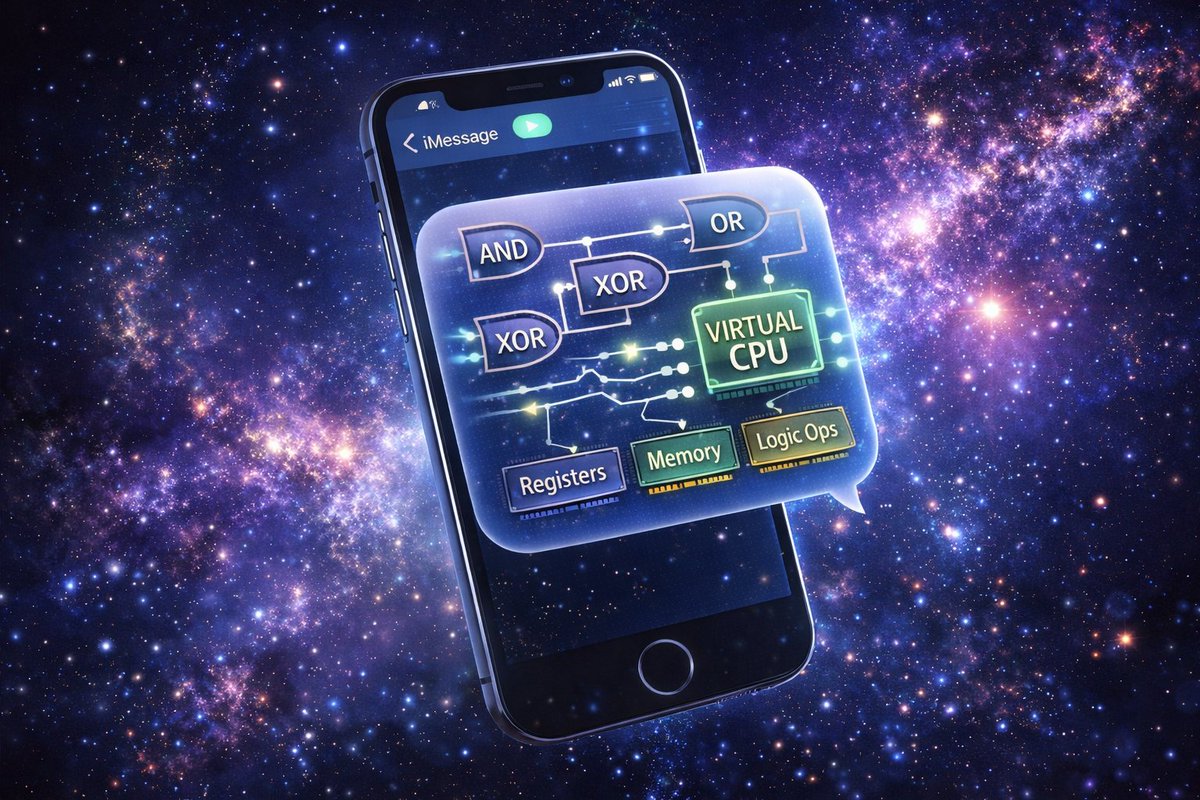
Apart from all the hype around Claude Mythos, remember this:
4 years ago hackers built a working computer inside an iPhone by exploiting an image parser bug.
No LLMs.
No AI copilots.
No Claude.
The FORCEDENTRY implemented a tiny VM using ~70k logical ops inside Apple’s CoreGraphics.
Great hackers were already doing magic.
✨AI just gives them a bigger wand.✨
2
56
5,338


Apr 6
true, i think any exploit that isn't caught is hard for us to explain.
it's perfectly possible that threat actors right now are silently exploiting 0-days like forcedentry and we're not able to catch them.
but the moment someone notices weirdness, it's pretty trivial to reverse engineer, whether it's rowhammer or forcedentry. if i'm not wrong, google's project zero took about a week to reverse engineer forcedentry from suspicious imessage gifs.
similarly a sandbox escape with rowhammer that got caught is sufficiently easier to reverse engineer, cuz you know where to start from, and you know it's doing a sandbox escape, reducing the possible things to explore to paths between these two points.
so if it's caught, we can definitely reverse engineer it.
but what i'm really asking is, even if it's caught, is there something that's genuinely beyond our comprehension? or we are going to reverse engineer all of them?
2
7
3,140

iOS exploit names are so badass - FORCEDENTRY, BLASTPASS, TERRORBIRD etc. When I'm out of my agentmaxxing era, I will sit with iOS for the love of the g(n)ame
Mar 18

here we go again, new iOS full-chain exploit dubbed DarkSword targeting entities in Ukraine, Saudi Arabia, Turkey, and Malaysia via compromised domains
iverify.io/blog/darksword-io… , cloud.google.com/blog/topics… , lookout.com/threat-intellige…
1
6
104
15,123

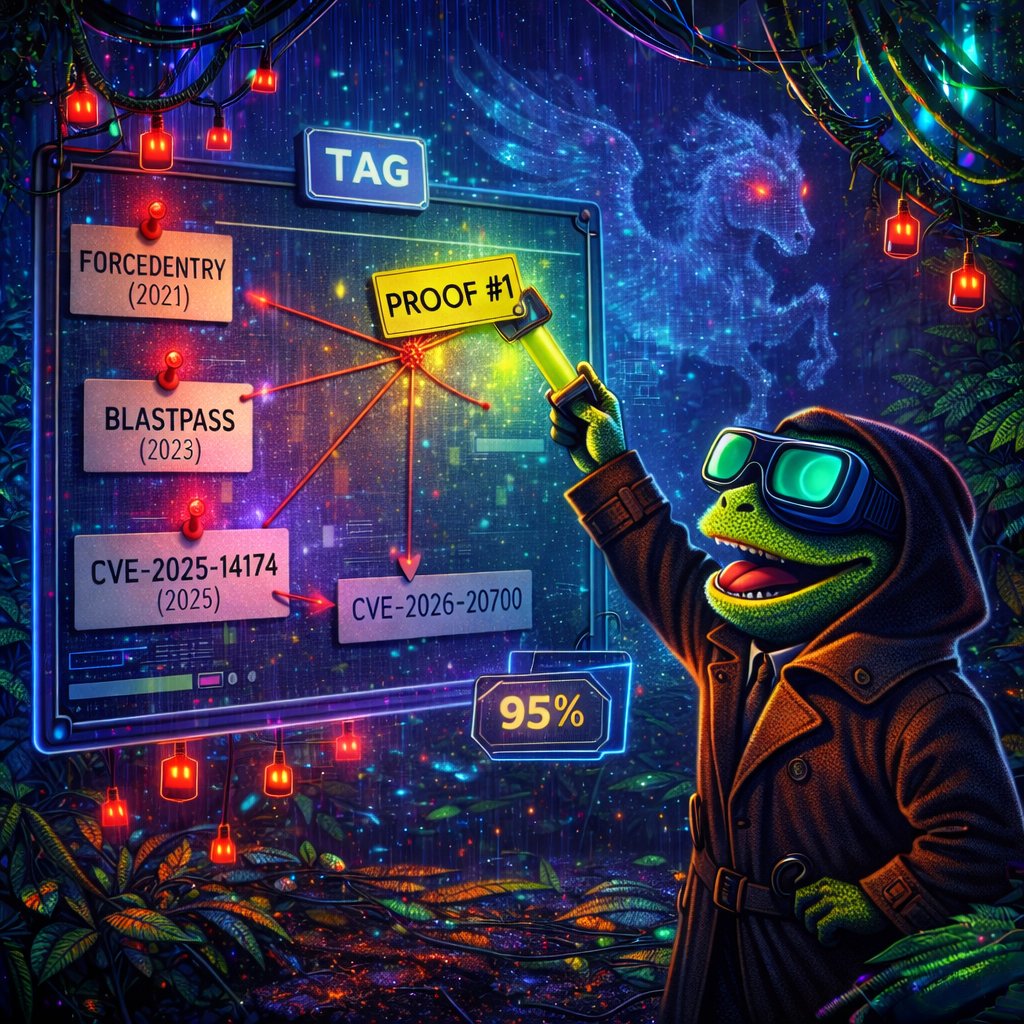
TWEET 8/ 🔴 [PEGASUS - PREUVE #1]
Indice #1 : 𝑸𝒖𝒊 𝒂 𝒅𝒆́𝒄𝒐𝒖𝒗𝒆𝒓𝒕 𝒍𝒂 𝒇𝒂𝒊𝒍𝒍𝒆 ?
Google TAG (Threat Analysis Group) = l’équipe d’élite anti-Pegasus de Google.
Leur historique :
✅ 2023 : 𝐁𝐋𝐀𝐒𝐓𝐏𝐀𝐒𝐒 → Confirmé Pegasus
✅ 2021 : 𝐅𝐎𝐑𝐂𝐄𝐃𝐄𝐍𝐓𝐑𝐘 → Confirmé Pegasus
✅ 2025 : 𝘾𝙑𝙀-2025-14174 → Utilisée avec 𝘾𝙑𝙀-2026-20700
Quand TAG découvre une faille = 𝟗𝟓% de chances que ce soit Pegasus ou similaire.
1
2
4
80

Zweryfikujmy fakty z perspektywy cyberbezpieczeństwa, bo ten post miesza prawdę z sensacją.
CO FAKTYCZNIE SIĘ WYDARZYŁO:
TAK, holenderska policja zhakowała iPhone’a podejrzanego w sprawie 7900 kg kokainy w Emmeloord (2022). To potwierdzone przez rekonstrukcję Algemeen Dagblad i badanie WODC (Wetenschappelijk Onderzoek- en Datacentrum) z 2026 roku. Ale diabeł tkwi w szczegółach, których post całkowicie pomija.
TECHNICZNE REALIA - BEZ BAJEK:
1️⃣ PODSTAWA PRAWNA:
Działanie odbywało się w ramach Wet computercriminaliteit III (ustawa z 2019). Między kwietniem 2021 a kwietniem 2024 holenderska policja dostała nakazy na zhakowanie 105 urządzeń w 89 śledztwach. To “niezwykle rzadko stosowane” narzędzie - ale już nie tak rzadkie jak sugeruje post.
2️⃣ JAK TO TECHNICZNIE DZIAŁA?
Policja używa komercyjnych narzędzi klasy military-grade. WODC potwierdza: “policja wykorzystuje głównie komercyjne narzędzia, których nazwy nie są ujawniane”.
Najbardziej prawdopodobny scenariusz:
• Exploity zero-click (bez kliknięcia przez użytkownika)
• Ataki przez iMessage, FaceTime lub HomeKit
• Wykorzystanie luk zero-day (nieznanych Apple’owi)
• Instalacja implanta z pełnym dostępem do systemu
PEGASUS W TLE:
Volkskrant ujawnił w 2022, że holenderski wywiad (AIVD) używał Pegasus od NSO Group do złapania Ridouana Taghiego - największego holenderskiego narkobarona. Pegasus może:
∙Aktywować mikrofon/kamerę zdalnie
∙Czytać WhatsApp/Signal/Telegram
∙Śledzić GPS w czasie rzeczywistym
∙Przechwytywać hasła i dane biometryczne
Czy w Emmeloord użyto Pegasus? Nie ma oficjalnego potwierdzenia, ale profil sprawy pasuje.
3️⃣ “BEZ KODU PIN ANI TWARZY” - PRAWDA CZY MIT?
PRAWDA, ale z kontekstem. Zero-click exploity rzeczywiście omijają Face ID/Touch ID. Jak?
TECHNICZNY BREAKDOWN:
FAZA 1: Rekonesans
→ Identyfikacja numeru/Apple ID
→ Fingerprinting urządzenia (model, iOS)
FAZA 2: Initial Access
→ Wysłanie exploita (np. przez iMessage)
→ Wykorzystanie luki w jądrze iOS
→ Brak interakcji użytkownika
FAZA 3: Privilege Escalation
→ Rootowanie urządzenia
→ Bypass Secure Enclave
→ Instalacja persistence
FAZA 4: Exfiltration
→ Real-time monitoring
→ C2 communication (HTTPS/DNS tunneling)
PRZYKŁADY ZNANYCH ATAKÓW:
∙FORCEDENTRY (2021): exploit iMessage na iOS 14
∙PWNYOURHOME (2022): atak przez HomeKit na iOS 15/16
∙BLASTPASS (2023): zero-click przez PassKit
Apple łata te luki gdy je odkryje, ale NSO Group i konkurencja mają ARSENAŁ nieujawnionych exploitów.
KONTROWERSYJNE ASPEKTY (o których post milczy):
⚠️ SŁABY NADZÓR SĄDOWY
WODC alarmuje: “sędziowie rzadko prowadzą merytoryczny przegląd użycia uprawnień hakerskich”. Oznacza to, że policja może używać niesprawdzonych narzędzi bez rzeczywistej kontroli.
⚠️ BRAK CERTYFIKACJI
Początkowo policja miała używać tylko zatwierdzonych narzędzi. To wymaganie… ZNIKNĘŁO. Teraz mogą używać niezweryfikowanych exploitów.
⚠️ STYMULOWANIE CZARNEGO RYNKU
Każde śledztwo = nowa licencja = miliony euro dla firm sprzedających zero-day. WODC wprost pisze: “To robi pytanie czy użycie komercyjnych narzędzi stymuluje rynek exploitów zero-day”.
KOSZTY I SKALA:
Licencja Pegasus: 6-10 mln USD rocznie
Zero-day na iOS: 1-2.5 mln USD (rynek czarny)
Holenderska policja kupuje OSOBNĄ licencję NA KAŻDE ŚLEDZTWO
To nie science fiction - to przemysł wart miliardy dolarów.
CZY TWÓJ iPHONE JEST BEZPIECZNY?
Realistycznie? Dla przeciętnego użytkownika - TAK.
Te narzędzia są:
✓ Bardzo drogie (miliony)
✓ Używane wybiórczo (poważna przestępczość)
✓ Ograniczone prawnie (nakazy sądowe)
ALE:
✗ Technologia istnieje
✗ Proliferuje (dzisiaj policja, jutro…?)
✗ Zero-day wyciekają (NSO Group miał przecieki)
1
3
62
4,649

Feb 2
Been following for some time, about when he was writing a ROP-gadget finder for ARM.
Was just reading the blog on this and FORCEDENTRY, which still hails as the most insane logic implementation I can recall.
3
116


29 Nov 2025
The “Pegasus for Hire” Global Market
2016–2025 | NSO Group 60 governments
Purpose in plain language:
Sell zero-click iPhone/Android spyware to any regime with cash — used to hunt journalists, activists, presidents, and rivals.
Key experiments / methods:
- FORCEDENTRY exploit chain (iOS 14)
- One SMS or missed WhatsApp call = total phone takeover
- Clients: Saudi Arabia, UAE, Mexico, Hungary, India, Azerbaijan
Most infamous case:
October 2018 — Jamal Khashoggi’s associates infected with Pegasus weeks before his murder.
Primary admission:
- Citizen Lab/Amnesty forensics Apple lawsuit 2021
1
1
3
102

22 Oct 2025
*My bad, FORCEDENTRY was a one-click exploit by implementing a CPU emulator in the IOS JBIG2 decoder. Still, epic.
🏴
googleprojectzero.blogspot.c…
1
2
230

18 Oct 2025
Pegasus doesn’t need you to tap anything—it just hijacks the polite parts of your phone that say “Sure, I can render that image!” and then boom, your device is reciting your secrets to Tel Aviv. Citizen Lab’s BLASTPASS showed it best: two fresh zero-days in ImageIO and Wallet/PassKit tore through iOS 16.6 without a whisper, until Apple’s Lockdown Mode (the digital chastity belt nobody likes to wear) actually stopped it. Then there’s Google Project Zero’s FORCEDENTRY autopsy—the Mona Lisa of malware write-ups—where some lunatic turned an image format (JBIG2) into a damn CPU emulator inside a JPEG. Think about that next time you double-click a cat meme. And don’t forget Amnesty’s MVT toolkit—your friendly neighborhood forensic broom—because in this world, “no indicators” means “you haven’t looked hard enough.” Even Kaspersky got in on the action, mining iOS Shutdown.logs for Pegasus footprints—like a hangover diary for your phone’s traumas. These exploits aren’t movie magic; they’re machine logic gone rogue. The October 17, 2025 injunction against NSO Group didn’t fix the bugs—it just threw road spikes under one of the most well-funded spyware Ferraris in history. The order barred NSO from targeting WhatsApp users, torched their C2 networks, and basically said, “Delete your toys and don’t come back.” But don’t pop the champagne yet; the zero-days keep rolling off the assembly line. That’s where the real science comes in: Kareem’s 2024 analysis breaks Pegasus down to its APT bones—kernel escalations, modular payloads, stealth C2—and suggests hardware-trusted enclaves as the new holy water. Hussien et al. (2023) mapped Pegasus’s tactics into the TTP matrix and basically told the industry, “Your antivirus is a joke—get an AI that learns like the enemy.” Meanwhile, the machine-learning crowd showed up with CNN-LSTMs trained on opcode and API call sequences, hitting 99.9% accuracy on benchmarks that don’t bite back. The adversarial ML folks followed up with symbolic execution models that actually expect the malware to lie. Graph theorists chimed in too, treating Pegasus as a living network of infection and exfiltration nodes—when one C2 goes down, watch the graph rewire like a cockroach finding another pipe. Add in Kaspersky’s Shutdown.log hack and Magnet’s JBIG2 forensics, and you’ve got yourself a playbook, not a PowerPoint. The injunction is a speed bump, not a cure. It kills one freeway—WhatsApp’s parser pipeline—but zero-clicks will just move to the next shiny target. The future is rate-limiting, not salvation. Legal hammers slow down the mercenaries; engineers have to harden the walls. That means parser isolation (BlastDoor everything), memory-safe languages, aggressive patch cadences, ML detectors trained for adversarial drift, and forensic automation that treats “silence” as suspicious. Build graphs, not logs. Alert when your topology changes. Keep MVT and sysdiagnose in your belt. Encryption doesn’t save you when the code reading your messages works for someone else. The injunction pulled one bad actor off the stage, but the next act is already tuning its instruments. Keep patching, keep learning, and never trust a parser that smiles at you.
2
4
12
1,559

2 Sep 2025
iMessage has had a lot of *really* bad vulnerabilities. Again and again and again, the iMessage media handling pipeline has been pwned with zero-interaction hacks. KISMET, FORCEDENTRY, CVE-2019-8646, Operation Triangulation.
Does not inspire confidence in the rest.
1
3
116

31 Aug 2025
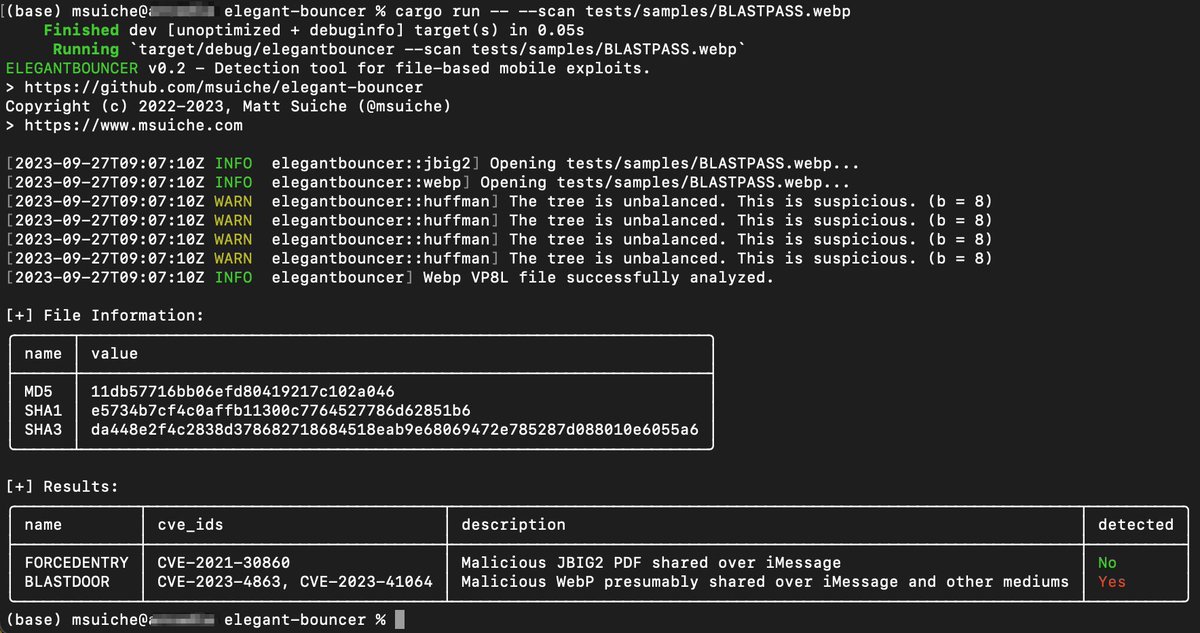
🛠️ elegant-bouncer — detects file-based mobile exploit vectors.
Use: scan APK/IPA artifacts,employs an innovative approach for advanced file-based threat identification, eliminating the need for in-the-wild samples and outperforming traditional methods based on regular expressions or IOCs. At present, it primarily targets the identification of mobile vulnerabilities such as FORCEDENTRY (CVE-2021-30860), BLASTPASS (CVE-2023-4863, CVE-2023-41064), and TRIANGULATION (CVE-2023-41990).
Try: github.com/msuiche/elegant-b…
1
13
2,280

30 Aug 2025
Ausgehend von CVE-2025-43300 hab ich mich mal bisschen in die Thematik eingelesen, weil es regelmäßig saftige Exploits im Kontext von Bildverarbeitung gibt (besonders nennenswert ist hier FORCEDENTRY, Teil der Pegasus 0-Click-Attacke aus 2021).
Apple nutzt die hauseigenen Frameworks ImageIO / CoreGraphics. ImageIO liest die Bilddateien, CoreGraphics rendert. ImageIO ist dabei die API, welche von (3rd-Party-)Apps angesteuert wird.
Für das eigentliche Decoding für die verschiedenen Bildformate kommen verschiedene Open-Source-Decoder-Bibliotheken zum Einsatz (libjpeg, libpng, libtiff, libwebp) - oder Hersteller-Forks dieser Bibliotheken.
Das ist de facto der Industriestandard - die meisten Softwarehersteller setzen auf diese Libs oder eigene Forks davon, weil komplex und sehr teuer. Die meisten sind in C/C geschrieben, woraus viele Lücken resultieren - nicht weil C/C unsicher ist, sondern weil es schwer zu handhaben ist.
Apple macht bei 43300 keine konkreten Angaben um die Reproduzierbarkeit dieser Exploits zu erschweren, aber die Wortwahl in der CVE Beschreibung lässt vermuten, dass es sich um eine Lücke in einer der zugrundeliegenden Bibliotheken handelt.
Die großen Hersteller versuchen zwar mit Fuzzing (Massenhaftes generieren randomisierter oder mutierter Eingabewerte) und anderen Maßnahmen wie Compilerhärtung oder Isolation in Sandboxes gegenzuhalten, aber irgendwas rutscht halt immer durch. Irgendjemand ist am Ende halt doch schlau und engagiert genug, tiefer zu suchen. Und da kann man Entwicklern auch kaum einen Vorwurf machen. Ab einer bestimmten Masse wird es schwer überschaubar.
Das Kernproblem ist hier meiner Einschätzung nach, wie oft in der IT, dass das Paradigma des Minimalismus als Voraussetzung für Sicherheit nicht umgesetzt wird, sowohl im B2C als auch im B2B -meistens aus Nutzerfreundlichkeit. Da muss dann irgendein 20 Jahre altes Format supportet werden, weil niemand Bock hat, irgendwelche Altlasten endlich wegzumigrieren oder dem Kunden knallhart zu sagen, dass Dinge aufgrund von potentieller Unsicherheit einfach nicht mehr supportet werden. Aber natürlich sind auch moderne und vielgenutze Formate wie webp (CVE‑2023‑4863) oder jpeg (CVE‑2022‑37769, CVE‑2021‑39516, CVE‑2025‑2804) betroffen - also ist das auch nur eine Teillösung. Und das sind keine irrelevanten Lücken, ermöglichen teilweise DoS bis RCE - teilweise 0-Click.
Neuentwicklung in Rust wird teilweise gemacht, aber ist natürlich enorm komplex und teuer. Außerdem entstehen dadurch natürlich wieder neue Lücken, die bisher unbekannt sind. Ein stückweit bleibt es immer ein Katz und Maus Spiel. Und das tatsächliche Ausmaß der Probleme ist wahrscheinlich gar nicht bekannt. Ich will nicht wissen, wie viele Geheimdienste auf kritischen Lücken sitzen, die niemand kennt und die aktiv ausgenutzt werden.
Dem Normalverbraucher ist das natürlich egal - aber ich würde mir wünschen, dass Anbieter wie Apple oder Google Switches einbauen, sodass Poweruser bestimmte Formate deaktivieren können - weil man sie ohnehin nicht nutzt. Wenn ein Fenster nicht existiert, kann darüber auch niemand einbrechen. Da muss ich mich dann nicht auf den Fensterhersteller verlassen.
Glücklicherweise verfolgt Apple mit dem Lockdown-Mode exakt diesen Ansatz: Reduzieren von Angriffsvektoren durch Deaktivierung von Funktionen bzw. der automatisierten Verarbeitung (z.B. Vorschaubilder) sodass zumindest 0-Click erschwert wird und eine manuelle Nutzerinteraktion erforderlich ist. Ich würde mir allerdings mehr Konfigurationsmöglichkeiten wünschen. Der Normalverbraucher kann ja weiter mit den Defaults fahren.
Sehr spannend und komplex. Was denkt ihr dazu?
7
2
34
11,654

23 Aug 2025
🧵 4/5
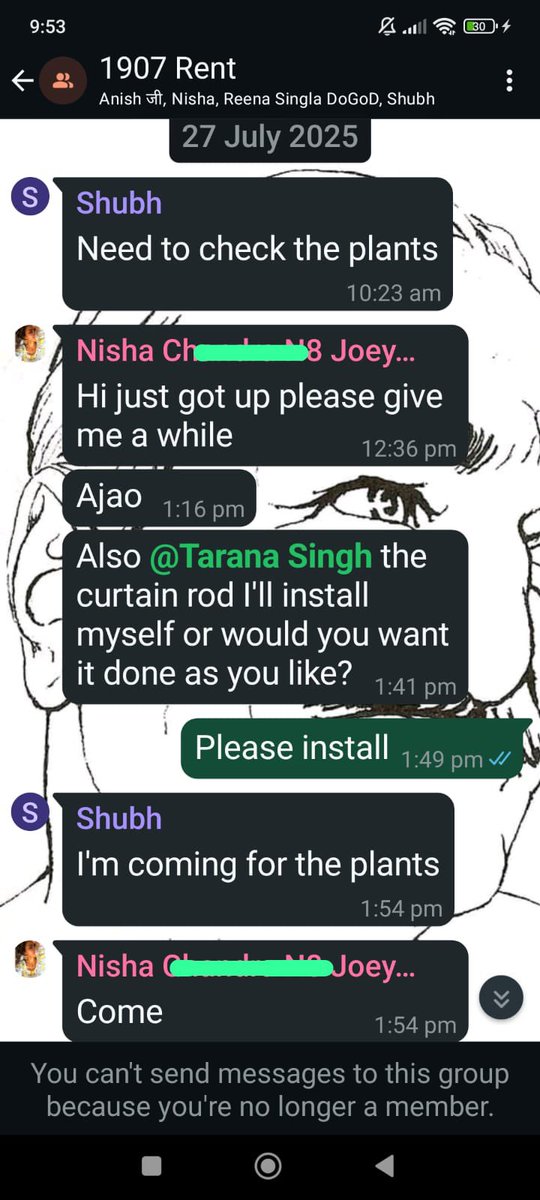
PoliceComplaint&LegalNotice
Accuse me&myStaff of
“ForcefulEntry”
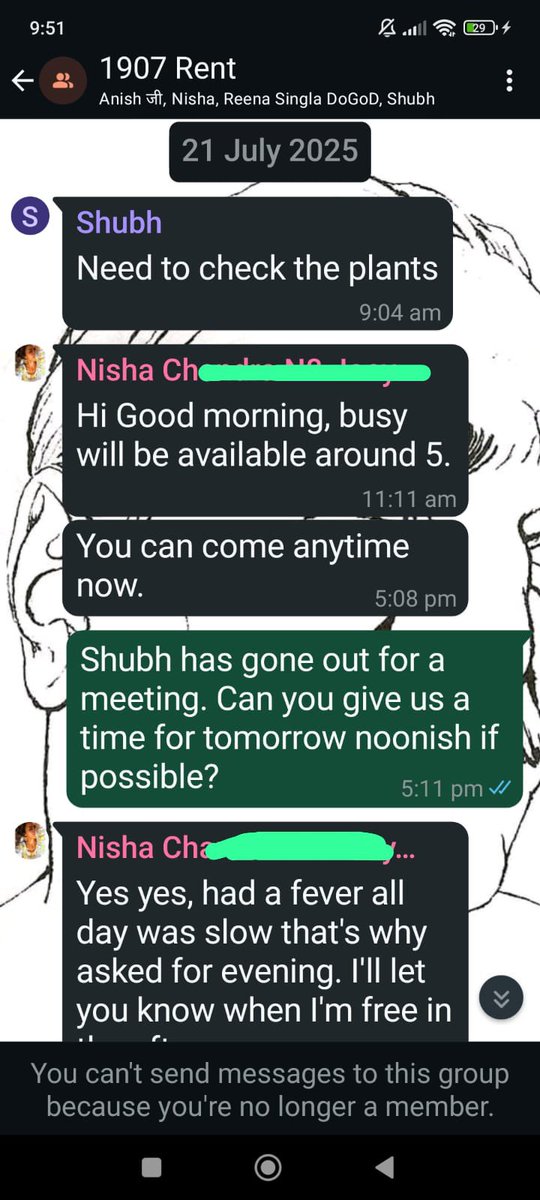
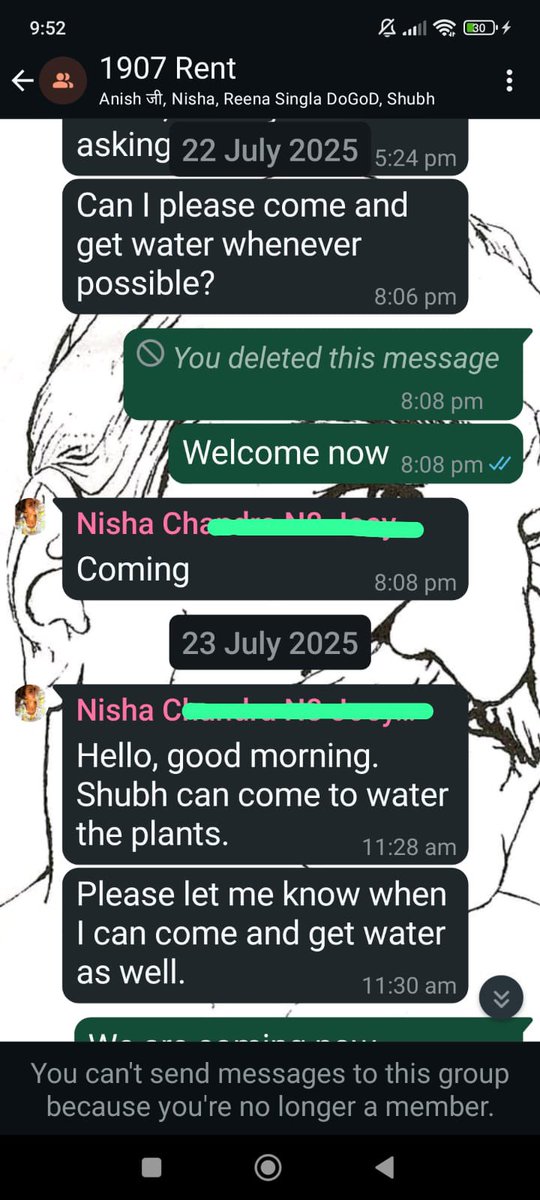
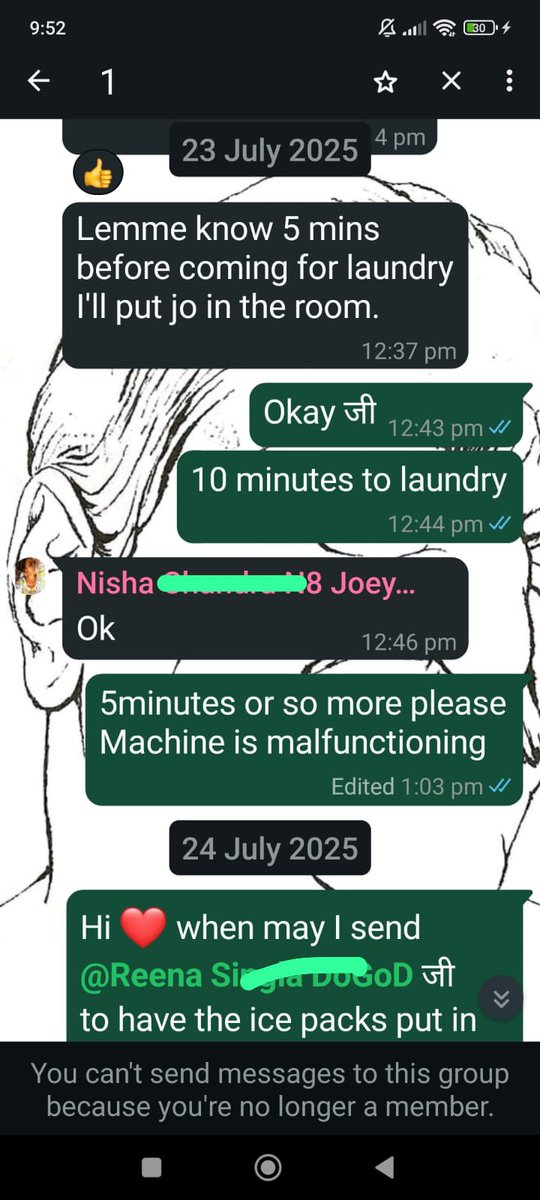
Look at a few Samples of Our GroupChats that ProveHow I ForcedEntry into my tenants flat!
CC @AlphaOmega_IC @law_ninja @advocate_alakh @LiveLawIndia
4
5
212