
Suho's holding him, his arm still around his shoulder, and his other hand on his face—gently shaking it, trying to wake him up.
They're on the ground, Suho's on his knees—his /bad/ knee—holding Sieun in his embrace.
Suho's eyes are wet and frantic, "Can you see me?"
1
1
4

Statix568517
teia.art/objkt/310830
I've always said I'm fond of grids. Some of these grid-based pieces are a little visually distracting, but I also like to produce the occasional less-frantic piece.
4

This makes me feel the opposite of other ppl cuz don’t ppl usually have frantic thoughts at night that are quieted by noise? Like why does it have the opposite effect on me
1
7
It makes me feel like my brain is being chopped up in a blender and my thoughts become frantic and panicked wnd it feels like I’m gonna explode
1
12

The CCP's greatest fear? Their own citizens talking.
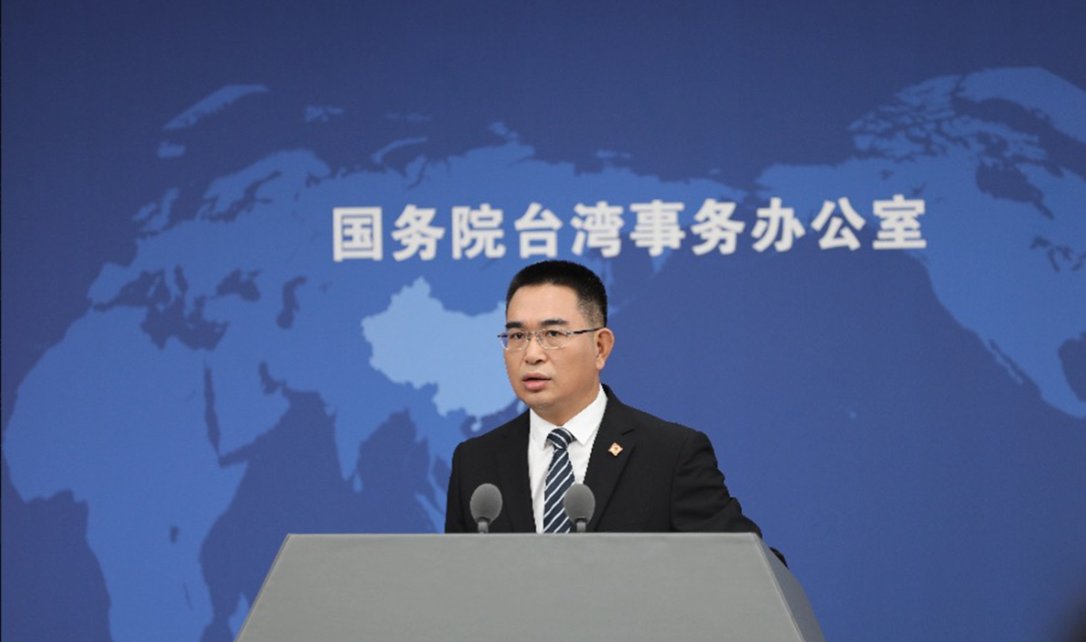
Immediately after Taiwan’s secure intelligence portal went live, the Chinese Communist Party reacted with furious hostility. Chen Binhua, the official spokesperson for Beijing’s Taiwan Affairs Office, fiercely condemned the platform, accusing Taipei of "intelligence theft, infiltration, and sabotage activities" that expose a stubborn, "confrontational mindset." In a frantic bid to stop internal leaks, Beijing explicitly warned that its relevant departments will pursue full criminal responsibility against any Chinese citizen who dares to provide information to Taiwanese agencies.
This aggressive retaliation marks a massive escalation from 2024, when the regime originally launched its own online hotline to hunt down individuals it labeled as pro-independence "separatists." Facing mounting internal pressures, the CCP is turning its intimidation tactics directly inward to enforce compliance through fear. This tightening cross-strait intelligence war exposes the fragile grip of an authoritarian system desperately trying to maintain an iron curtain over its people.
#CrossStraitTensions #TaiwanSecurity #CCP #IntelligenceWar #FreeSpeech #GlobalSecurity
Jun 14

Your absolute loyalty to the regime will never save you when the next sudden purge knocks on your door.
This terrifying reality is exactly what Taiwan is weaponizing with a high-stakes intelligence operation launched on June 14, 2026. Taiwan's National Security Bureau has officially opened a secure, dedicated reporting portal called the Chinese Nationals Contact Window at report.nsb.gov.tw. This unprecedented channel directly invites citizens and disillusioned officials inside mainland China or overseas to securely leak political, military, economic, and social intelligence to Taipei. The psychological warfare behind this launch features an AI-generated promotional video that captures the quiet desperation of life under Beijing's tightening grip, following a civil servant who watches old comrades inexplicably vanish before deciding to turn on the regime.
Taiwan explicitly acknowledges that this bold move mirrors highly successful public outreach campaigns pioneered by Western intelligence. The CIA previously launched a direct parallel campaign, releasing targeted Chinese-language videos and step-by-step instructional guides to help dissatisfied Chinese citizens safely navigate secure communication channels. Just like Taiwan's new portal, those American efforts directly exploited internal grievances such as severe economic misery, suffocating political controls, and the constant fear of sudden investigations. Both initiatives represent a modern shift in global intelligence tradecraft, where democratic societies openly invite digital walk-ins from individuals trapped inside authoritarian systems.
While the CIA runs a massive, resource-heavy global recruitment operation, Taiwan has tailored a pragmatic, localized version built for its immediate threat environment. While Beijing relies on coercive covert tactics, fake job postings, and state-mandated informant hotlines to enforce compliance, these Western and Taiwanese digital channels give a safe outlet to internal dissent. Although the new portal is blocked by China's great firewall, it remains entirely accessible via VPNs for anyone brave enough to break through. The cross-strait intelligence war has entered a deeply volatile new chapter, and the world is watching to see how many desperate insiders will risk everything to flip the script on their oppressors.
#Taiwan #China #Espionage #NationalSecurity #NSB #CIA #Geopolitics #CrossStrait
1
6
191
Senator retweeted

A leader’s state becomes part of the room’s operating system. If he is frantic, everyone starts making smaller decisions. If he is reactive, everyone starts managing his mood instead of the mission. If he is grounded, people can think. Authority begins in the nervous system before it reaches the voice.
2
5
21
832
𝕄𝕚𝕘𝕙𝕥𝕪𝕔𝕝𝕒𝕨 retweeted

Jun 15
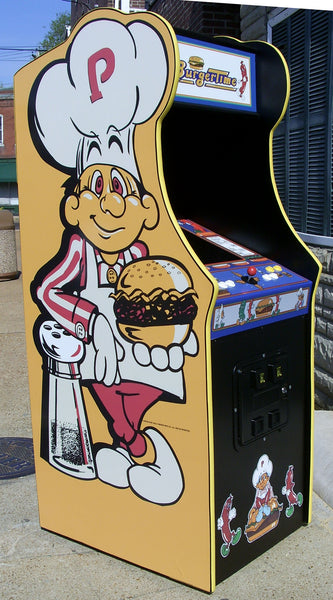
10 THINGS YOU DIDN'T KNOW ABOUT BURGERTIME (1982)
Think you know everything about Chef Peter Pepper’s frantic race against Mr. Hot Dog, Mr. Pickle, and Mr. Egg?
1. The Legend Behind the Cabinet Art
When Data East licensed the game to Bally Midway for the North American market, the legendary Mildred "Milly" Chang was tasked with creating the side art. Chang was a powerhouse artist at Midway, also famous for her design work on Ms. Pac-Man. Her distinct, cartoonish rendering of Chef Peter Pepper clutching a giant burger completely defined the game's physical presence in arcades.
2. The Name Was Stolen by a Translation Error
In Japan, the game was originally released as Hamburger (ハンバーガー). When bringing it to the West, Data East decided a title change was needed to make it pop, ultimately landing on BurgerTime. Ironically, when the game was ported to the Japanese DECO Cassette System later on, they kept the Western name!
3. Chef Peter Pepper Had a Name Change, Too
He wasn't always Peter Pepper. In early Japanese design documents and promotional materials, our culinary hero was simply referred to as "The Chef" or "Main Character." The name Peter Pepper was coined by Bally Midway's marketing team to give the game a more whimsical, narrative-driven punch for American kids.
4. The Scoring System Has a Critical Flaw
Like many golden-age arcade games, the internal counter can only handle so much data. The game’s score display maxes out at 999,999. If you are skilled enough to score 1,000,000 points, the counter completely rolls over to 0, wiping out your visual evidence of a million-point run.
5. It Was a "Cassette" Game First
Before it became a dedicated, standalone cabinet powerhouse, BurgerTime was released on Data East’s innovative DECO Cassette System. Instead of swapping entire circuit boards to change games, arcade operators could just pop in a standard micro-cassette tape and a security dongle.
6. The "Grouping" Strategy is the Ultimate Meta
High-level BurgerTime play isn't about running away; it's about manipulation. Advanced players intentionally wait on a higher platform layer to lure all three enemy types into a tight, single pixel cluster. Dropping a burger ingredient with an entire "group" standing on it yields massive multiplier points (500 \rightarrow 1000 \rightarrow 2000 \rightarrow 4000 \rightarrow 8000) necessary for world-record runs.
7. Mr. Egg is Hardcoded to Be a Jerk
Ever notice how Mr. Egg seems completely unpredictable? That's by design. While Mr. Hot Dog consistently takes the shortest path to track you down, and Mr. Pickle favors taking ladders, Mr. Egg’s AI routing has a high variance of randomness built-in. He is explicitly coded to cut off your escape routes.
8. The Infamous Mattel Intellivision Connection
BurgerTime became an absolute killer app for the Mattel Intellivision home console in 1983. Mattel loved it so much they used it as a primary weapon in their marketing war against the Atari 2600. The Intellivision port was praised for being shockingly accurate to the arcade's complex vertical layout despite the console's hardware limitations.
9. There Is a Definitive "Kill Screen"
Unlike Pac-Man, which breaks visually on Level 256, BurgerTime hits its technical brick wall much sooner. On Level 28, the game encounters a severe glitch. The enemy characters spawn onto the map moving at an impossible, un-reactable maximum speed. Furthermore, the game stops giving the player any pepper sprays at the start of the round, making the level entirely unbeatable.
10. The Bizarre, Forgotten Sequel
Data East attempted to catch lightning in a bottle twice with an official arcade sequel in 1984 called Peter Pepper's Ice Cream Factory. Instead of dropping burger layers, you had to kick giant ice cream scoops into cones while avoiding runaway ingredients. It ditched Milly Chang's classic visual style, struggled in test markets, and remains an incredibly rare find today.
2
31
27
10,373


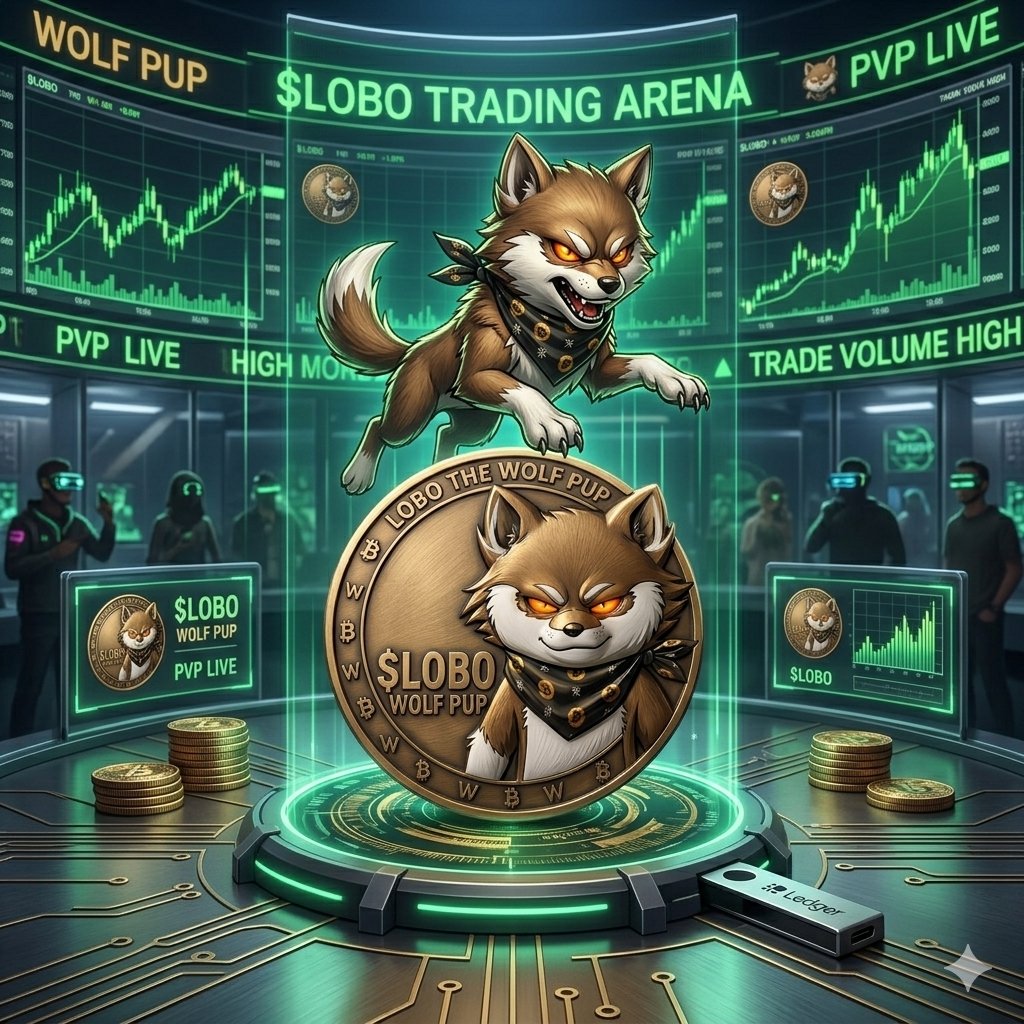
@lobothewolfpup isn't here to play games! 🐺💥
Forget utility-less memecoins.
$LOBO just leveled up with a frantic PvP game on Solgun, bringing real utility and integrated mechanics straight to the Solana ( solana:So11111111111111111111111111111111111111112 ) network! ⚡
🎮 How it works:Challenge other players in real-time PvP battles where your skill defines the winner. Enter the arena, build your strategy, and place real stakes. Won the match? The reward goes straight to your wallet! 💰
The perfect alliance between Runes/Bitcoin culture and Solana's insane speed for the GameFi ecosystem. 🚀
Who's already tested it out and bagged some wins today? Drop your arena feedback in the comments! 👇
#LoboTheWolfPup #SolanaMemecoins #Solgun #PvP #GameFi #CryptoGaming $LOBO bitcoin:native
9
18
147

Argentina 3-0 Algeria
1st Hydration Break Impact:
Algeria’s first emergency reset.
Argentina had already taken control before the first break, and Messi’s 17’ opener changed the entire emotional temperature of the match. Algeria had started conservatively, even had an early scare ruled out, but once Messi scored, the game began to look like Argentina’s script.
The first break gave Algeria a chance to breathe, reorganise their 5-2-3 block and stop the match from running away early. But Argentina’s control was too calm. De Paul, Mac Allister and Messi kept dictating the rhythm without needing chaos.
1st Hydration Break Verdict:
Helped Algeria survive the first wave, but did not disturb Argentina’s control.
2nd Hydration Break Impact:
Failed to stop the Messi procession.
Messi scored again on 60’, and by the second break, the match had moved from contest to coronation. Algeria needed the pause to reset mentally, but Argentina were not playing at a frantic tempo that could be interrupted. They were managing the game through possession, timing and Messi’s gravity.
After the break, Argentina still found the third, with Messi completing his first World Cup hat-trick and drawing level with Klose’s all-time record.
2nd Hydration Break Verdict:
No momentum-killer here. The break paused the game, but not Messi.
#ARGALG #Argentina #Algeria #WorldCup2026
52

“You’re not seriously bringing the entire snack bowl on a secret mission, are you?” Eyes dancing with amusement as she watched frantic scramble for the remaining fruit. She held the heavy door open a fraction wider, giving a dramatic, exaggerated sigh before waving her through.
1
29

Eternally / LOVEBITES(Gt)🎸
Frantic / Metallica(Dr)🥁
Enemy Within / Arch Enemy(Gt)🎸
Bring Me To Life / Evanescence(Vo/Gt)🎤🎸
6/20のセッションまでに覚えないといけない曲たち🔥
改めて並べると…
なかなかハードやね😂💦
LOVEBITESの美麗ギター、
Metallicaの暴れ馬のようなドラム、
Arch Enemyの鬼リフ、
そしてEvanescenceの名曲。
ジャンルも求められるスキルもバラバラ🤣
でもこういうチャレンジがあるから成長できる💪
あと3日、
仕事と音楽の二刀流で頑張ります⚔️🐦🔥
#メタル #メタル好きと繋がりたい #LOVEBITES #Metallica #ArchEnemy #Evanescence
1
4
64

You are hysterical.
Not "ha ha" funny hysterical. You're the gasping, screeching, wild-eyed, frantic kind of hysterical.
3
Michelle Fourie retweeted

So another two months have come and gone. Imagine the frantic behind-the-scenes manoeuvring at Luthuli House to find a "political solution". @NPA_Prosecutes
Apr 18

After years of grief, anger and unanswered questions following the Life Esidimeni tragedy, the National Prosecuting Authority has confirmed it will prosecute those implicated.
More than 140 Gauteng mental health patients died after being moved to unprepared facilities. The NPA says there is now enough evidence to pursue criminal charges, marking a critical step toward accountability for the victims and their families.
What does the tragedy say about how society treats mental health issues? Clinical Psychologist Dr Saths Cooper explains.
Watch: tinyurl.com/mpzp8mn2
#Newzroom405
1
2
106

It’s astonishing to me that October isn’t that far off now and it will have been three years. Almost three years ago I walked around my house, frantic, on my phone, in complete disbelief, ran over to my Israeli neighbors in horror and then…. the almost bigger shock of seeing how the world reacted.
It shook me to my core and turned my entire life upside down in literal minutes. I’m glad I was able to download that new reality in mere minutes but boy was it hard.
I’m so grateful to all my friends on here, Jews and allies alike.
3
1
35
239

Crazy cops. COVID bent their minds and now they are in the twilight zone.
If I see a cop, I’m going to head out in the other direction.
God help us if we have to rely on this type of frantic clown.
2

Very doubtful this will result in a final agreement, they get 60 days max of frantic shipping and then 🤷🏻♂️

🇺🇸🇮🇷 BREAKING!!! Bloomberg has published the text of the Memorandum of Understanding:
1. Tehran, Washington, and their allies announce immediate and final end to war on ALL FRONTS.
2. Tehran, Washington, and their allies pledge not to launch any hostile action and to refrain from threats.
3. Tehran and Washington pledge to reach an agreement within a maximum period of 60 days, extendable.
4. The United States LIFTS the naval BLOCKADE on Iran immediately upon signing the MOU.
5. The United States pledges to WITHDRAW ITS FORCES from the regoin within 30 days from the date of the final agreement.
6. Iran works to resume ship movement within 30 days, taking into account its need to remove obstacles.
7. Washington pledges to cooperate with its regional partners in rehabilitating and economically developing Iran. Washington commits to ENDING SANCTIONS on Iran according to a timeline agreed upon as part of the agreement.
8. Iran reiterates that it will NEVER PRODUCE NUCLEAR WEAPONS. Tehran and Washington agreed to discuss the fate of enriched materials and nuclear issues in a final agreement.
9. Tehran and Washington agree to maintain the status quo until a final agreement is reached. Iran maintains its current nuclear program without Washington imposing sanctions or strengthening its forces.
10. Washington pledges to EXEMPT IRANIAN OIL and related banking services from sanctions.
11. Washington pledges to RELEASE FROZEN IRANIAN FUNDS and assets. After receiving guarantees for the implementation of a number of agreement provisions, the two countries begin final agreement negotiations.
12. The final agreement between Washington and Tehran is adopted by a binding resolution of the UN Security Council.
2
173

ㅤblink once, blink twice, you stare at the lion's frantic response so innocently. still chewing. “...?”
1
51