
Where game theory thrives in 2026
Game theory's relevance has exploded with digital and AI systems.
Business & economics pricing in oligopolies, spectrum/ ad auctions (Google, FCC), bargaining, supply-chain coordination
Cryptocurrency & blockchains Proof-of-Stake staking games, MEV (miner extractable value) extraction, 51% attack deterrence, stablecoin incentives, DeFi protocol design. Emerging 2025–2026 trends include game-theoretic models for delayed risk contagion in exchanges and sector-specific mechanisms (e.g., solar farm incentives via token rewards).
Artificial intelligence & multi-agent systems Training competing/cooperating AI agents (multi-agent reinforcement learning), alignment challenges, agent negotiation in large language model ecosystems. Recent frameworks incorporate dynamic coalitions, sabotage risks, language-based utilities, and Bayesian updates for adversarial detection. Applications now span autonomous vehicles (strategic traffic navigation), financial trading bots, cybersecurity attacker-defender loops, and even AI-driven scientific discovery where agents negotiate hypotheses and resources.
Geopolitics & security deterrence, trade wars, alliance formation, cyber-defense games. Conferences like GameSec 2026 highlight Stackelberg games for resilient systems and evolutionary models for deception detection.
Everyday life salary negotiations, dating-app dynamics, traffic congestion, social-media virality.
1
1
14

15 Oct 2025
Διεθνές συνέδριο GameSec 2025 στο ΕΜΠ
@papastergiougr: Η κυβερνοασφάλεια αποτελεί πλέον ζήτημα εθνικής ανθεκτικότητας και κυριαρχίας
amna.gr/home/article/941072/…
229

AI Security Events | Sep–Dec 2025
📅 The International Conference on Cybersecurity and AI-Based Systems - September 1–4, 2025 | Bulgaria | cyber-ai.org/
📅 IAPP AI Governance Global (North America) - September 18–19, 2025 | Boston, MA, USA | iapp.org/conference/iapp-ai-… | @the_iapp
📅 HackAICon 2025 - September 25, 2025 | LX Factory, Lisbon | hackaicon.ethiack.com/ | @ethiack
📅 The AI Summit at Security Education Conference Toronto (SecTor) 2025 - September 30, 2025 | MTCC, Toronto, Ontario, Canada | blackhat.com/sector/2025/ai-… | @BlackHatEvents @sectorca
📅 Offensive AI Con 2025 — October 5–8, 2025 | Oceanside (San Diego), CA, USA | offensiveaicon.com/ | @OffensiveAIcon
📅 AI Village @ c0c0n - October 10–11, 2025 | Grand Hyatt, Kochi, India | c0c0n.org/AI-village c0c0n.org | @aivillage_dc @c0c0n
📅 GameSec 2025 - Game Theory & AI for Security - October 13–15, 2025 | Athens, Greece | gamesec-conf.org/ gamesec-conf.org | @GameSec_Conf
📅 AI Village @ Swiss Cyber Storm - October 28, 2025 | Kursaal Bern, Switzerland | swisscyberstorm.com/ai-villa… Swiss Cyber Storm | @aivillage_dc @swisscyberstorm
📅 IAPP Privacy. Security. Risk. 2025 - October 30–31, 2025 | San Diego, CA, USA | iapp.org/conference/iapp-pri… IAPP | @the_iapp
📅 SANS Fall Cyber Solutions Fest — AI Track - November 6, 2025 (8:00 AM–4:00 PM EST) | Virtual | sans.org/webcasts/fall-cyber… SANS Institute | @SANSInstitute
📅 AI Security Summit @ Black Hat Europe - December 9, 2025 | ExCeL London, UK | blackhat.com/eu-25/schedule.… | @BlackHatEvents
📅 AI Hacking Village @ BSidesTLV 2025 — December 11, 2025 | Tel Aviv University, Tel Aviv, Israel | bsidestlv.com/ | @BsidesTLV
#AISecurity #Cybersecurity #GenAI #AIGovernance #AITrust #LLMSecurity #AgenticAI #AdversarialML #ModelSecurity #PromptInjection #DataPoisoning #MLSecOps #SecureAI #RedTeam #AppSec #ThreatIntel #CloudSecurity #PrivacyEngineering #RiskManagement #AICompliance

6
347

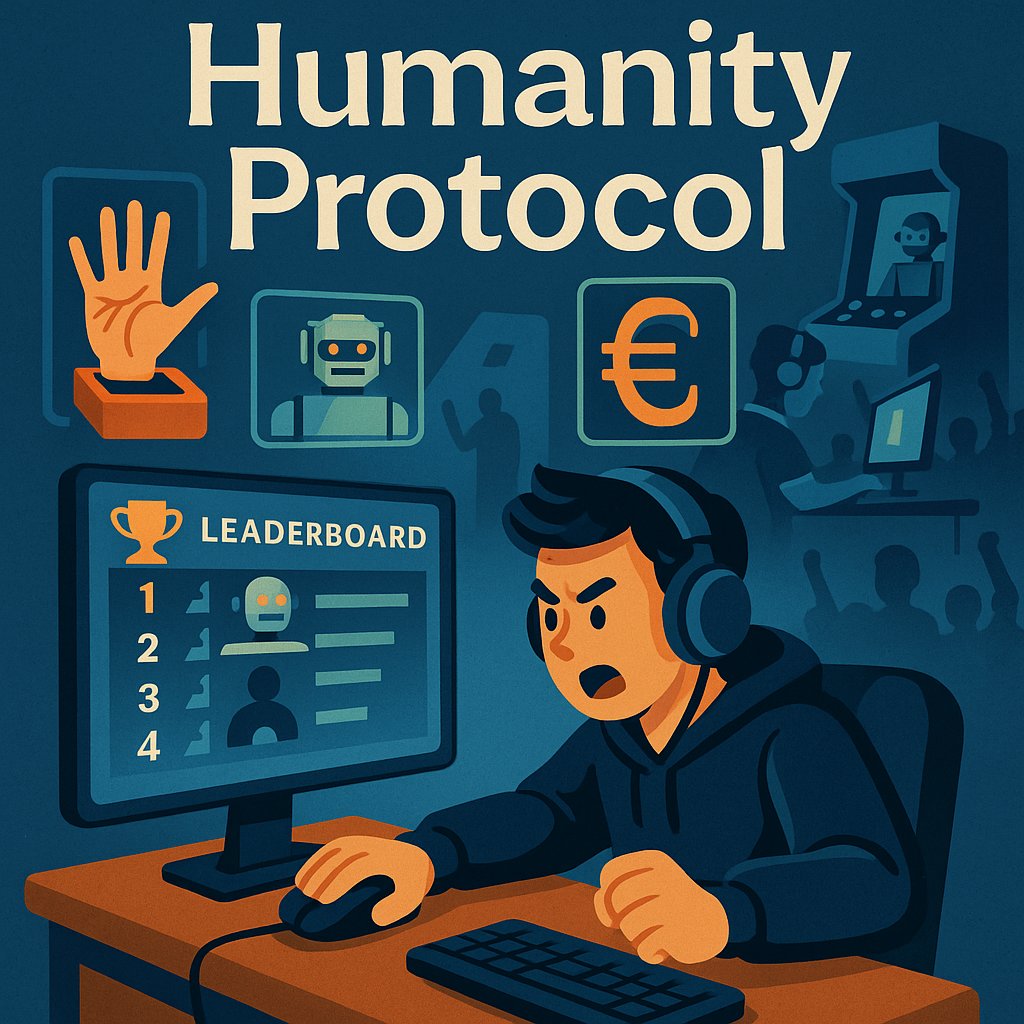
The leaderboard was a lie. The revenue was too.
Gaming’s hidden crisis and how Humanity Protocol could fix it.
In a perfect world, leaderboards in online games reflect skill. In reality? They're a hall of mirrors and distorted by bots, smurfs, and fraud. And the cost isn’t just pride. It’s profit.
🎯 The Competitive Crisis
In 2023, a joint report by Imperva and Kasada found that nearly 40% of all gaming traffic came from bots. These aren’t just cheat-code annoyances. They :
- Exploit matchmaking
- Flood tournaments
- Farm in-game currency
And the problem’s worse in free-to-play ecosystems. A Riot Games study (2022) noted that smurfing impacted 1 in 3 competitive matches in Europe. That’s not just unfair. It kills retention.
💸 How Bad Is the Financial Damage?
Let’s talk real numbers:
€5B/year: Estimated cost of fraud in the European digital gaming economy (Statista, 2023)
$3.5B/year: US gaming companies lose to identity fraud, account takeovers, and fake registrations (Accenture, 2022)
On average, for every 1M new user accounts created across PC/console games, 23% are duplicates or smurf accounts (GameSec Research 2023). That skews user metrics, inflates ad spend, and destroys player trust.
🎮 Enter Humanity Protocol
What if games could verify unique human players without storing names, emails, or faces?
Humanity Protocol uses palm vein biometrics zero-knowledge proofs to verify one-person-one-account. No raw data stored. Fully compliant with GDPR, CCPA, and ePrivacy Directive.
👾 Applied to Gaming :
Fair Matchmaking: Each player is uniquely verified. Smurf accounts become impractical.
Clean Leaderboards: Bot farms can't dominate the top.
Safer Esports: Real humans = real rankings = real rewards.
🧮 Cost Efficiency?
Compare this:
Anti-fraud tools (US/EU) : $0.10–$0.50 per verified player/month (with mixed results)
Data breaches (per record) : $164 average cost (IBM, 2023)
Humanity Protocol (est.) : ~$0.03–$0.07 per unique verification (hardware amortized over 3–5 years)
Less cost. More trust.
✅ Conclusion:
The integrity of online gaming is under siege. Not by better players but by fake ones. And it's draining billions.
The fix isn’t a stricter CAPTCHA.
It’s trust, rebuilt at the identity layer. Humanity Protocol isn’t about gaming more. It’s about gaming fair. Because when the leaderboard lies, everyone loses.
18
2
20
545


5 Aug 2024
Thrilled to share that our paper "Effective Anonymous Messaging: the Role of Altruism" (by Frank, Pejo, and Biczok) was accepted at GameSec'24! We use game theory to show the need for altruistic users in privacy protocols.
#Privacy #CyberSecurity #GameTheory
🎉🔍📚
1
3
234


2 Apr 2024
Call for papers GameSec 2024
gamesec-conf.org/cfp.php
with special focus on on "Applications of large foundation models in AI, including LLMs, to security and privacy problems"
Deadline: June 17, 2024
Conference: Oct 16-18, 2024
1
2
288

18 Oct 2023
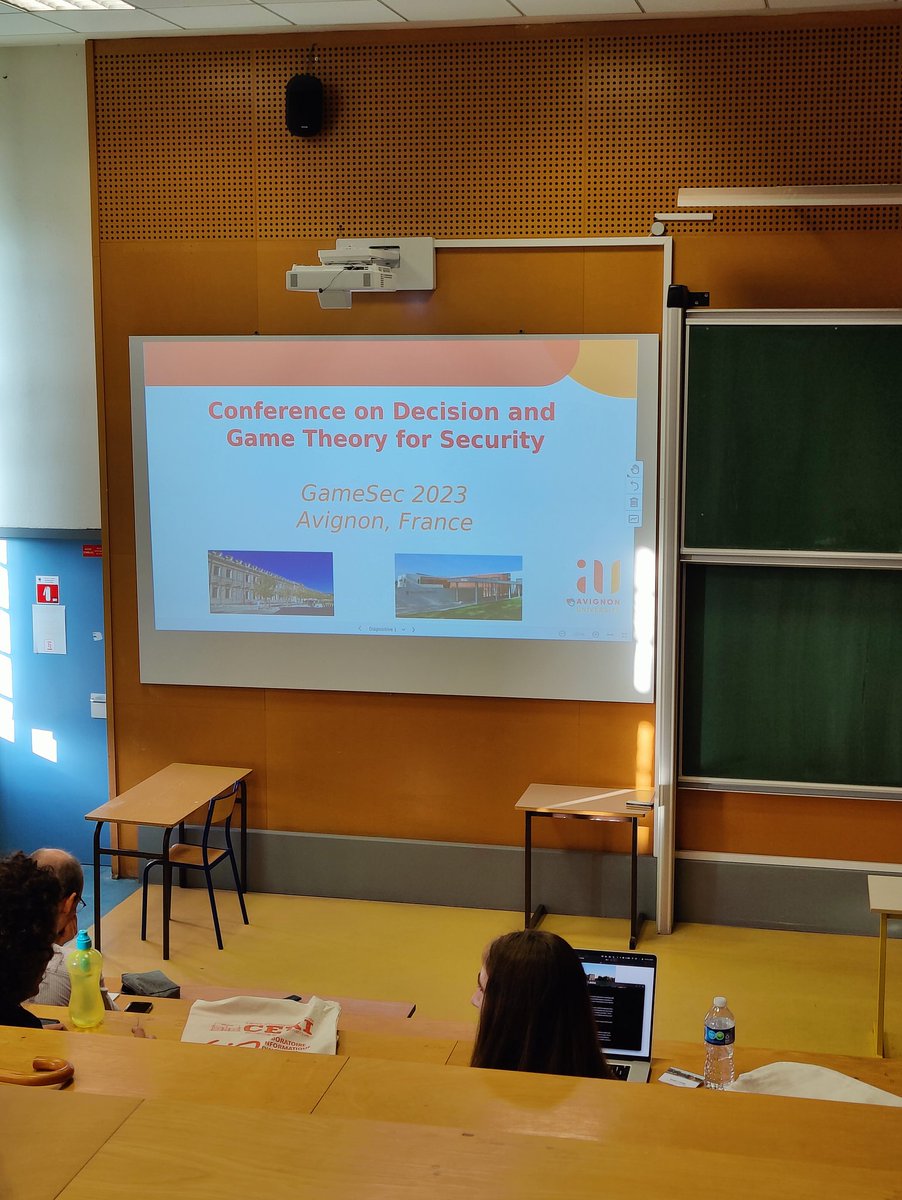
Attending Gamesec in Avignon, a PDF version of our paper is available here: gamesec-conf.org/20.pdf
116


27 Feb 2023
Eu era conhecido por algumas pessoas aqui como Gamesec antes de trocar meu nick e minha conta pra Edwiges, inspiração óbvia de Harry Potter
Citando Harry Potter, já vou falando, eu sou fã da obra mas sou completamente CONTRA o que a J. K Rowling pensa

1
2
87

1 Jan 2023
Edwiges.xn--6iia Para todos aqui, aqueles que já me conheciam antes de entrar no RP como Gamesec, os que me conhecem agora como Edwiges, muito obrigado por acompanhar minha jornada no meu primeiro ano de RP e eu espero que tenha mais alguns
2
2
2
235

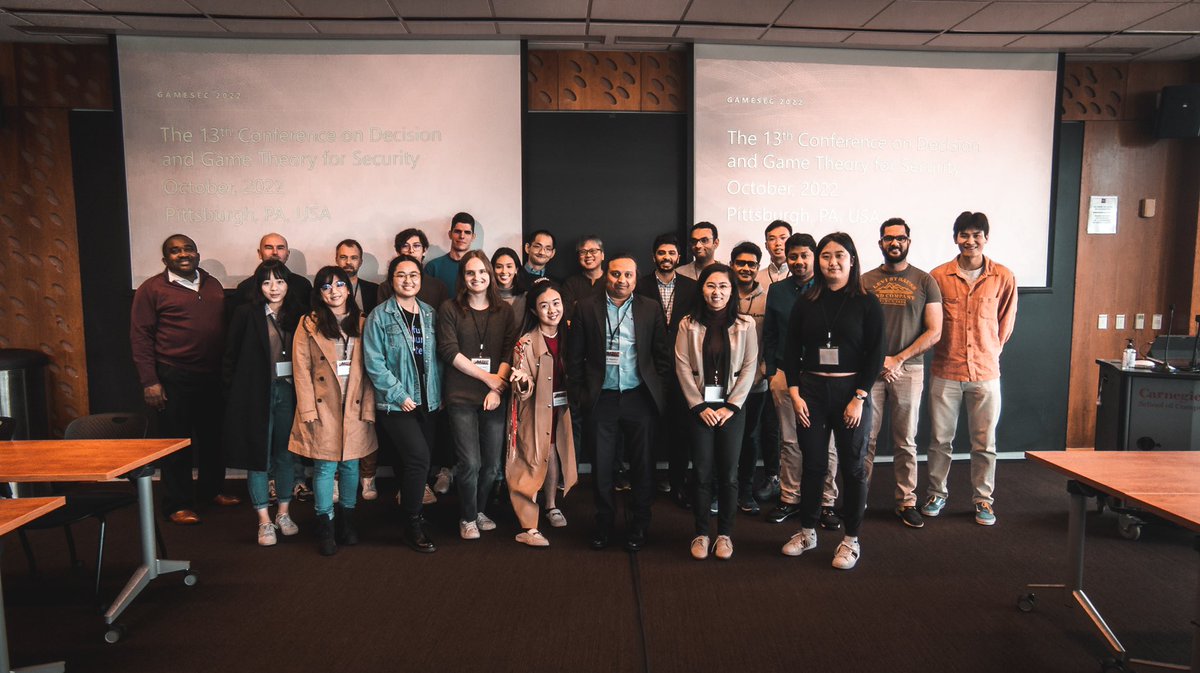
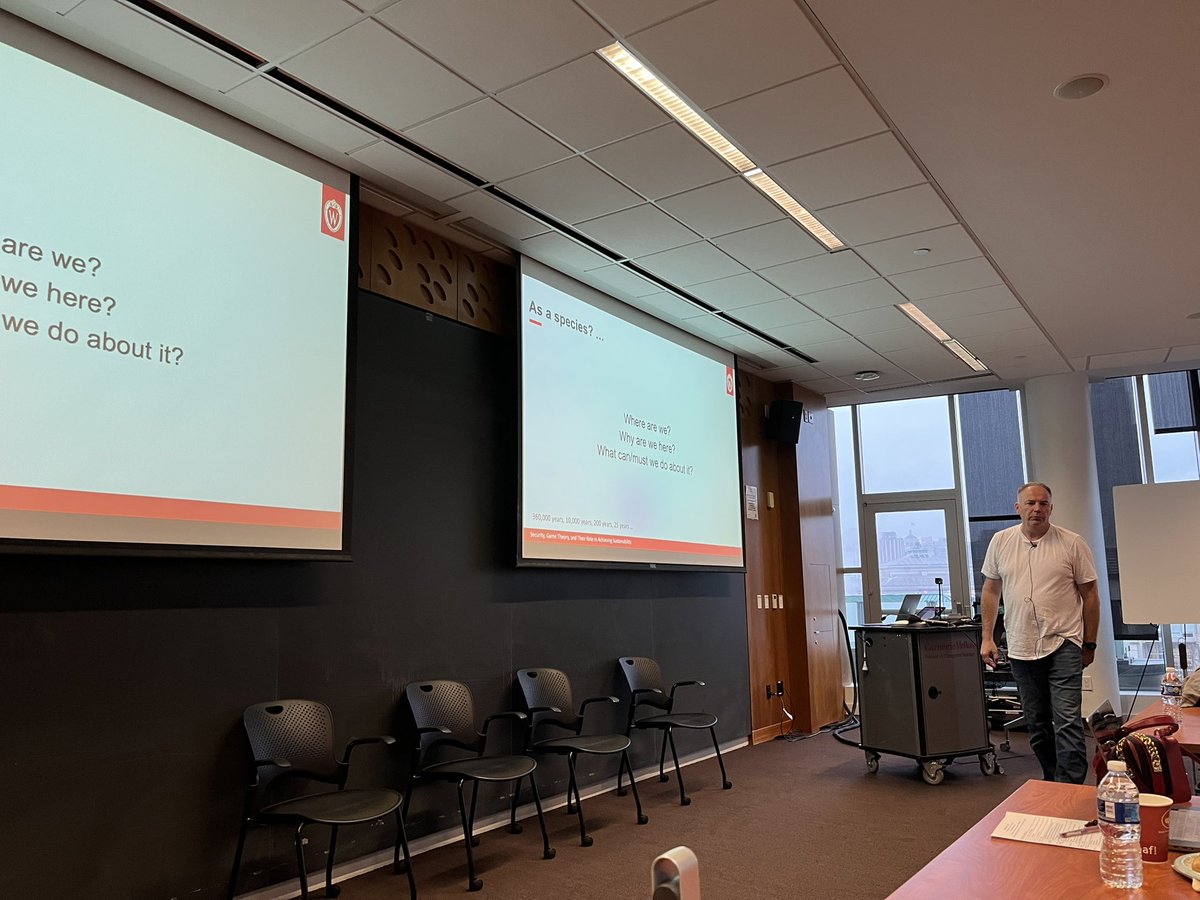
GameSec 2022 starts today at GHC 6115 at CMU! Now having our first keynote from Patrick McDaniel! Full conference program here: gamesec-conf.org/index.php
2
3
13

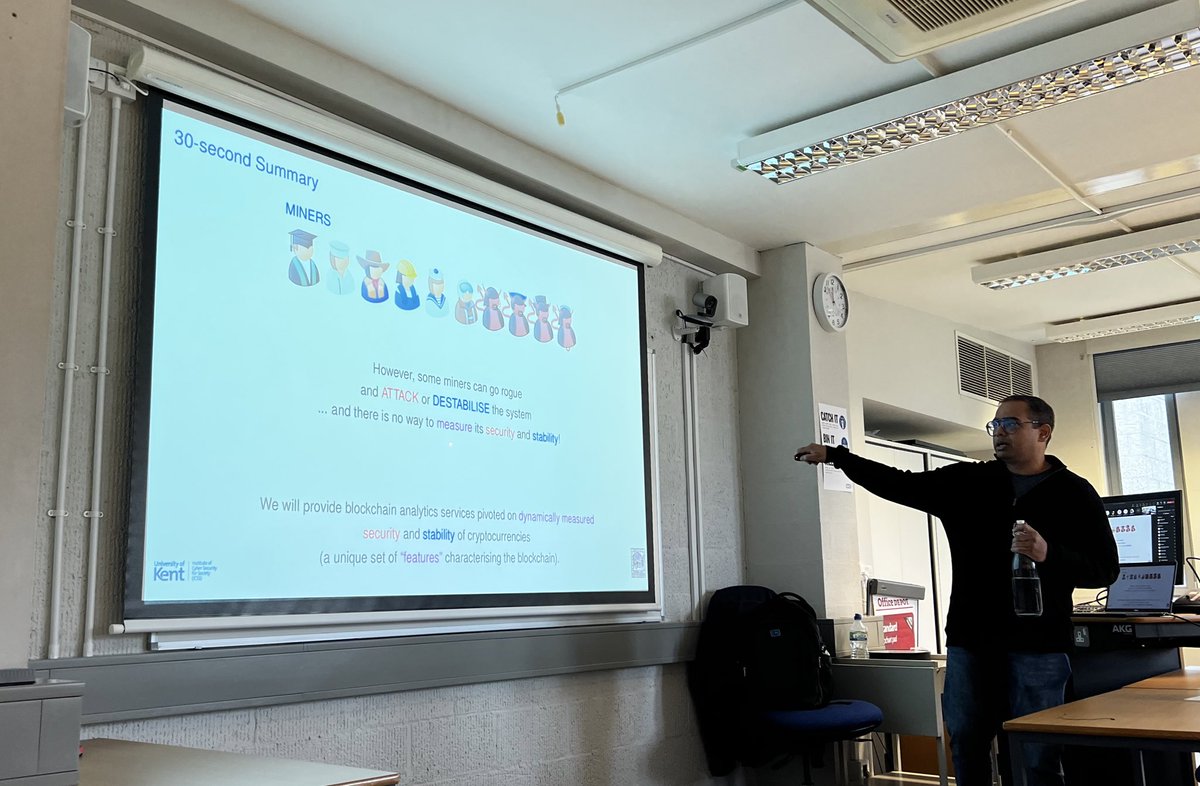
Great seminar talk today on Voting Games to Model Protocol Stability and Security of Proof-of-Work Cryptocurrencies by our very own Sanjay Bhattacherjee!
The work will also be presented at GameSec-22 is available at kar.kent.ac.uk/96909/ !
#cyber #security #cryptocurrency
1
5

15 Aug 2022
shibuya-gamesec.connpass.com…
8/26(金)19:00~ 渋谷gamesec第二弾!コロナの影響で一回目からだいぶ時間を経ちましたが、やっと再開できました。ゲームセキュリティに興味ある方はぜひご参加ください!
8
23
GameSec-22’s ddl is extended to 7/27!
10 Jul 2022

GameSec's submission deadline is extended! We hear you, and we extend. New paper deadline: 7/27. Submission link: easychair.org/conferences/?c…. For more information, please check gamesec-conf.org/papers.php
1
3

28 May 2022
Sou luterano
Minha música favorita é A View from the Top of the World - Dream Theater
Meu nick no lol é Gamesec
Meu Discord é Gamesec#4271
1

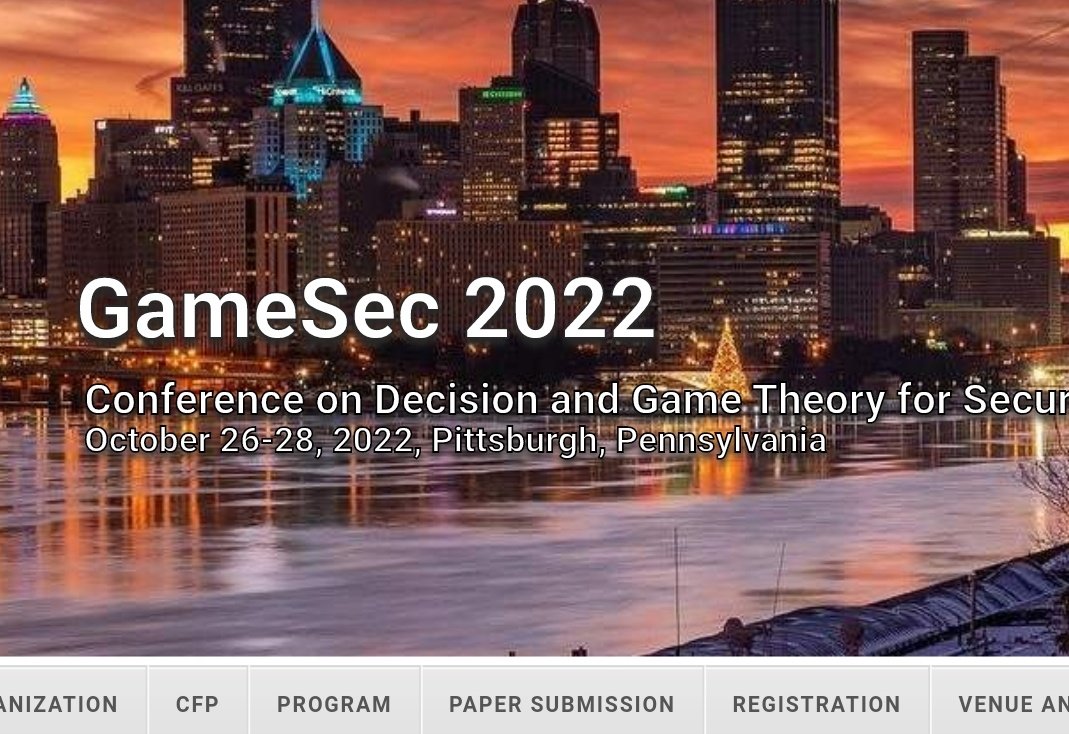
Exciting to see GameSec 2022 Call for papers ! Thx @fangf07 for chairing the conference.
14 Apr 2022
I'm so excited to announce that GameSec 2022 is calling for papers! We welcome intelligent ideas about game theory, cognitive science, and adversarial/strategic ML for security. For more information please check gamesec-conf.org/papers.php
4