Dr Y Nithiyanandam retweeted

Applications are now open for this year’s Expert Capsule Course in Geospatial Science and Technology.
Designed for working professionals and students who want to learn geospatial concepts through a flexible online format, the course brings together engaging teaching methods and experienced faculty and practitioners.
Learn more and apply:
takshashila.org.in/pages/pol…

Before we can solve a problem, we must first understand where it exists. From growing cities and changing landscapes to infrastructure and disaster management, location is often the missing piece of the puzzle.
Learn how maps, satellites, and spatial data help us see the world differently and make better decisions because of it. Join Takshashila's Expert Capsule Course on Introduction to Geospatial Science and Technology.
Early Bird Deadline: 24 June 2026
Application Deadline: 1 July 2026
3
5
357

17m
Interested in getting a short overview of the latest geospatial papers and datasets each week?
Subscribe to the Spatial Edge newsletter: spatialedge.co

54

Ceinsys Tech has secured international purchase orders worth $3.16 million (~₹30.06 crore) from T Second Inc, USA, marking a significant step in its global AI and technology expansion. The orders cover NVME drive supply, AI-powered building/road extraction and asset monitoring on the BRYCK AI platform, and Enterprise Geospatial Imagery Repository & AI Feature Extraction solutions.
📌 Timeline:
• Order received: 13 June 2026
• Execution period: Within 2 weeks
• Delivery completion target: 30 June 2026
The win strengthens Ceinsys’ overseas presence and validates its AI-led enterprise solutions strategy.
#CeinsysTech #AI #ArtificialIntelligence #GeospatialAI #EnterpriseAI #DigitalTransformation #TechStocks #SmartInfrastructure #Innovation #IndiaTech #StockMarketIndia
4

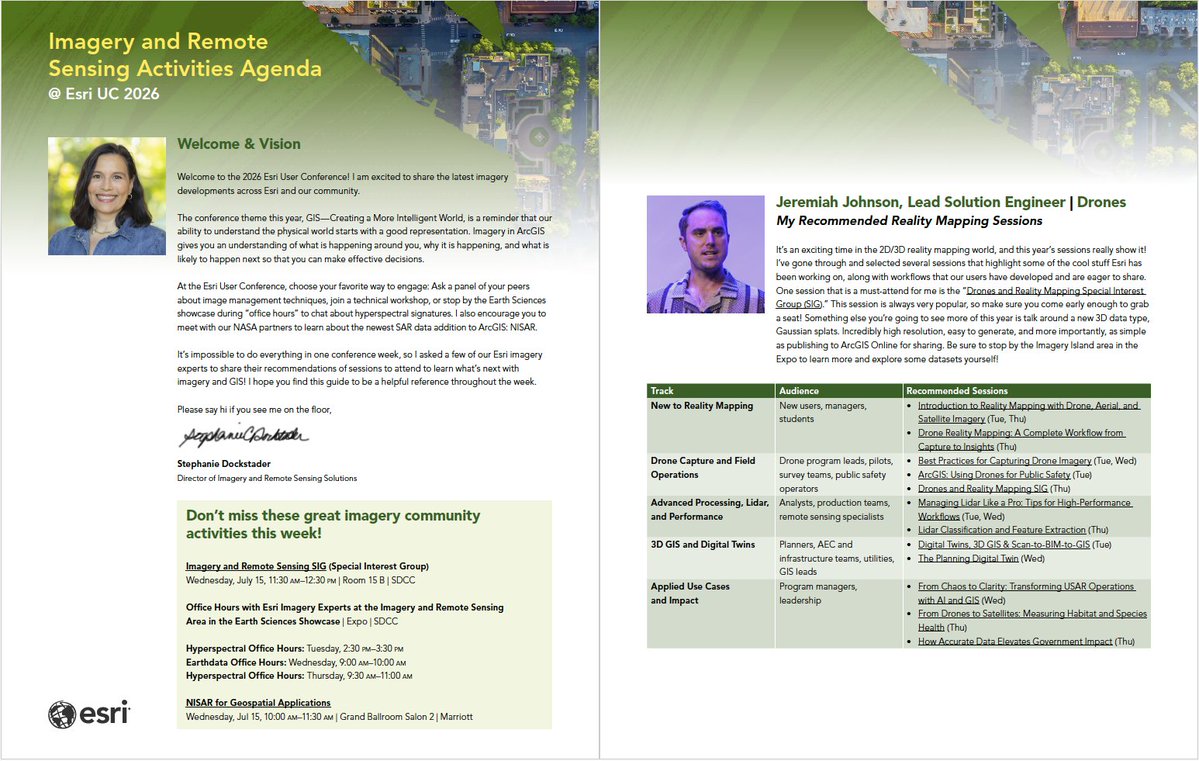
Check out this custom agenda for imagery and remote sensing activities at #EsriUC2026 with recommended learning tracks on reality mapping, image management, and geospatial AI 🤖 ow.ly/7iqZ50Zb7e0
2
38

When teams can’t easily access or integrate information, coordination slows down. At #EsriUC, NGS will highlight how modern geospatial ecosystems improve data access and integration to generate insights and drive coordinated action.
Reserve your seat: ow.ly/GL2750Z6q6V

30

Migrating desktop GIS models to SQL is not a lift-and-shift.
It is a redesign.
The old model says:
run this tool
then this overlay
then this join
then this export
The SQL pipeline asks a different question:
can this workflow become repeatable, testable, and scalable?
That means breaking the model into atomic spatial operations:
select by location
spatial join
buffer
clip
dissolve
aggregate
validate
The future of GeoAI is not just smarter models.
It is reliable spatial infrastructure behind them.
#GeoAI #GIS #SpatialSQL #Geospatial #DataEngineering
8

Complex data is becoming conversational infrastructure.
Lium raised $5.5M in Seed funding backed by @sjfventures, @Wavemaker360, and @reachfund, as Josh Knutson, Ryan Thill, and Ward Vuillemot build a platform that lets teams query geospatial, scientific, infrastructure, sensor, and industrial data through natural language.
The next data infrastructure winners will not just store technical datasets. They will make complex real-world data accessible enough for AI and humans to act on it.
1
10

2h
ISRO has been sitting on 40 years of geospatial data that global players have been eyeing
NVIDIA isn't here just to be nice - Indian industry will wake up once this goes commercial.
1
14
Wehazit B.kidane retweeted

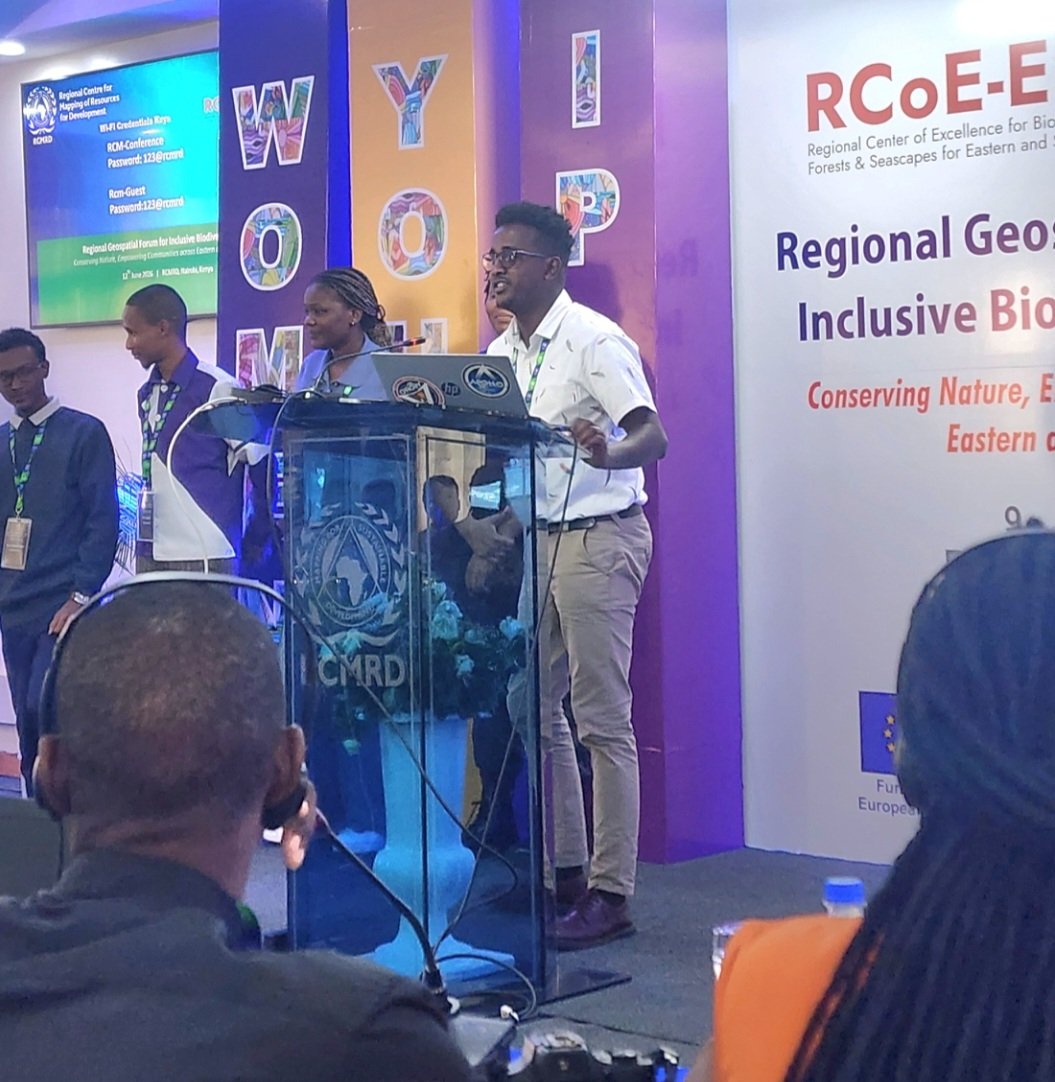
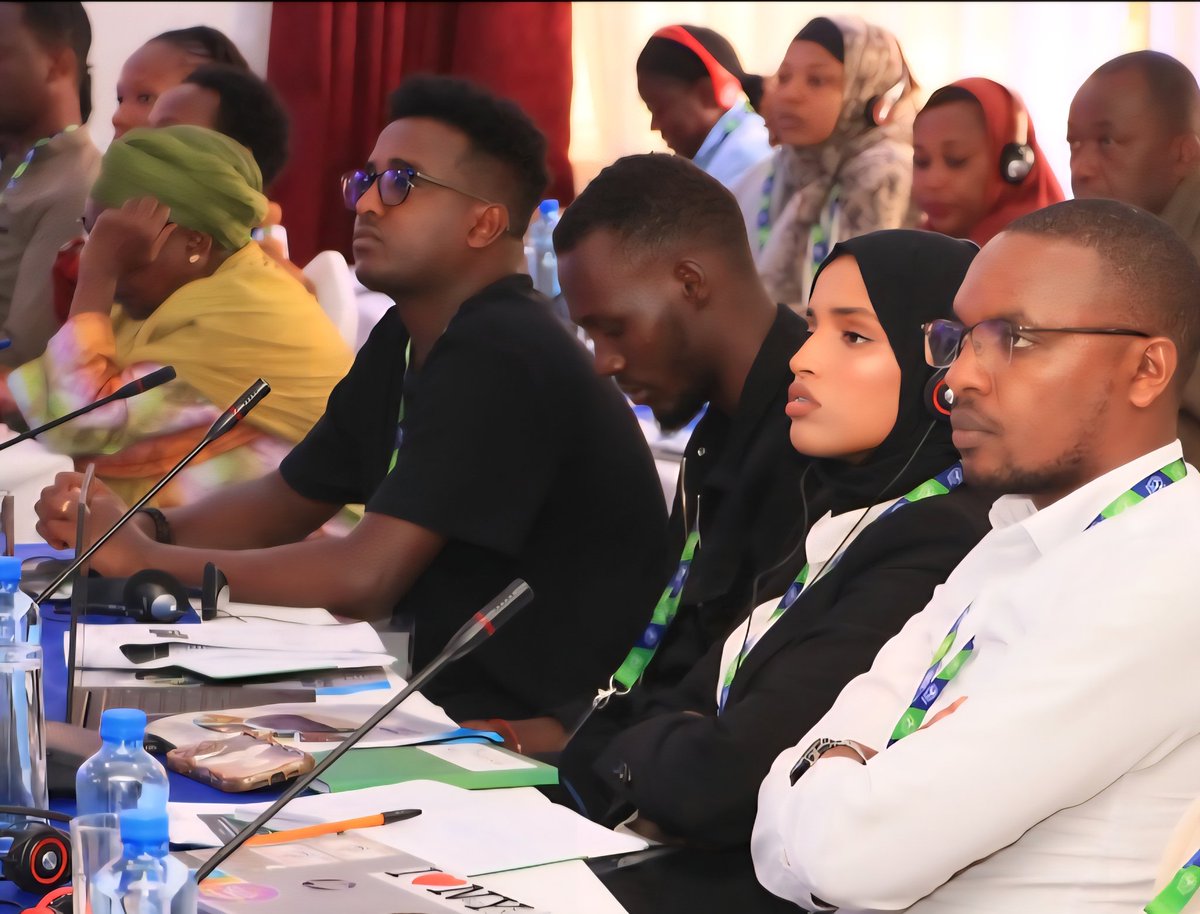
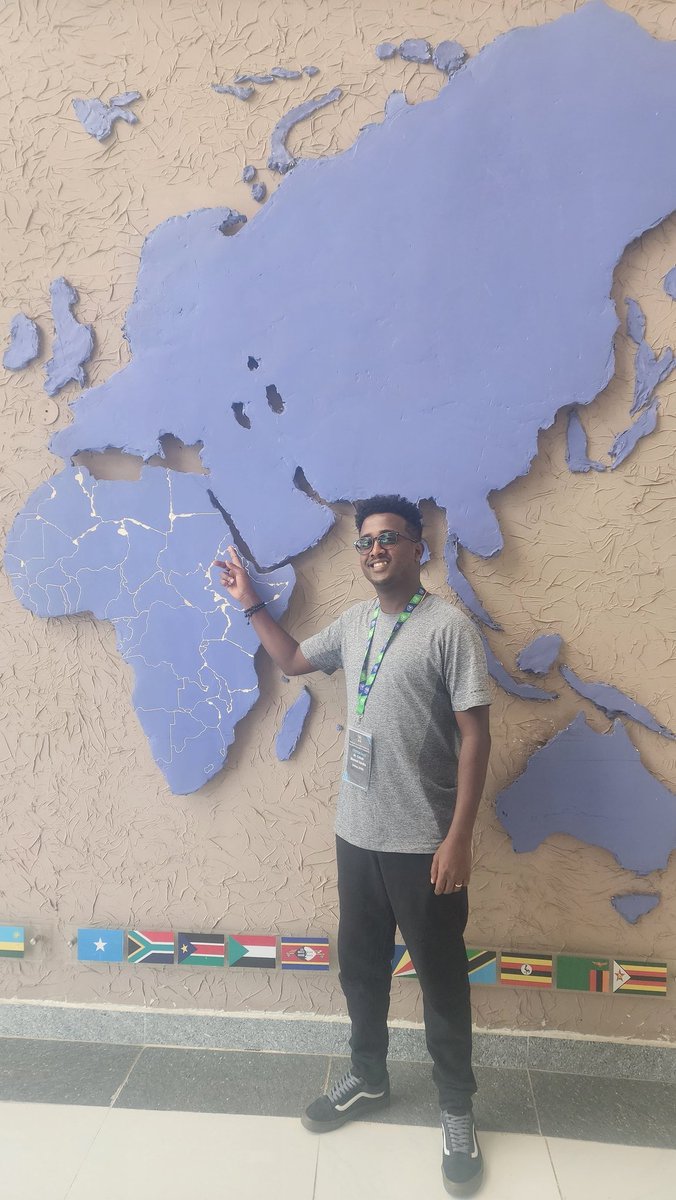
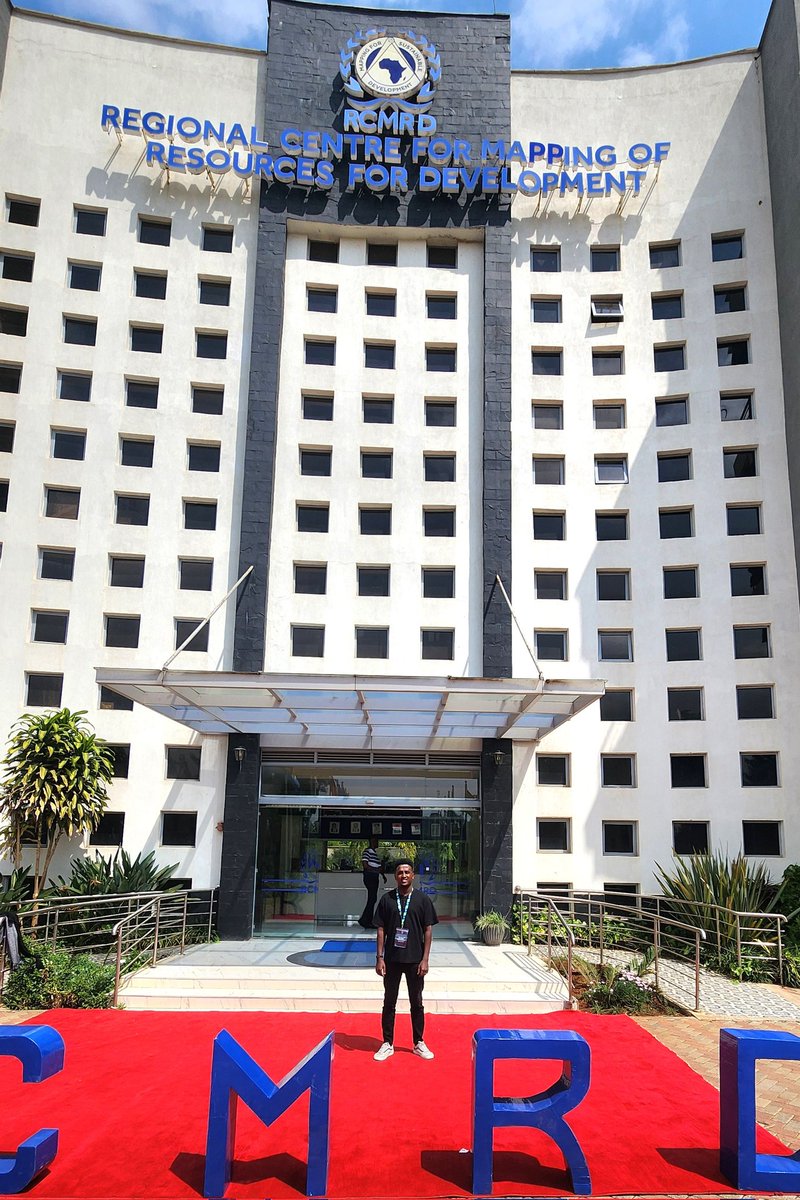
Honored to represent #Eritrea at the Regional Geospatial Forum for Inclusive Biodiversity Action in Nairobi, Kenya. Grateful for the opportunity to engage with conservation practitioners, youth, women, and Indigenous Peoples and Local Communities from across Eastern and Southern Africa to advance biodiversity conservation through innovation, collaboration, and geospatial technologies.
#Biodiversity #Conservation #Geospatial #Eritrea #RCMRD
1
3
56
Sundara Rajan retweeted

Apr 29
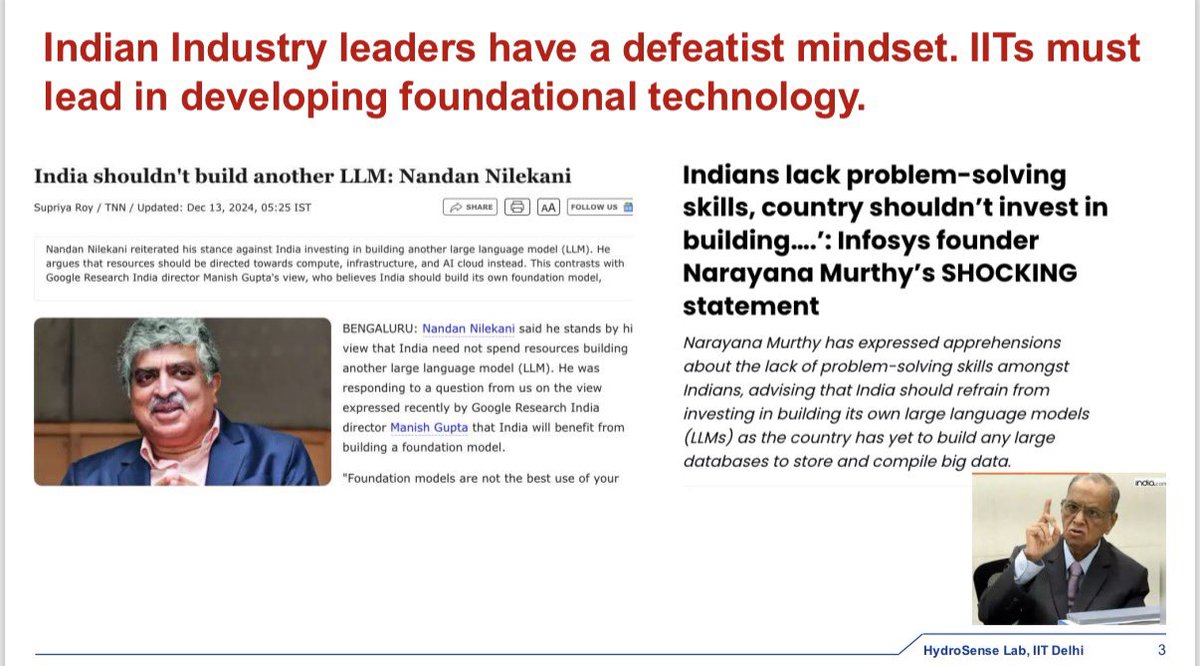
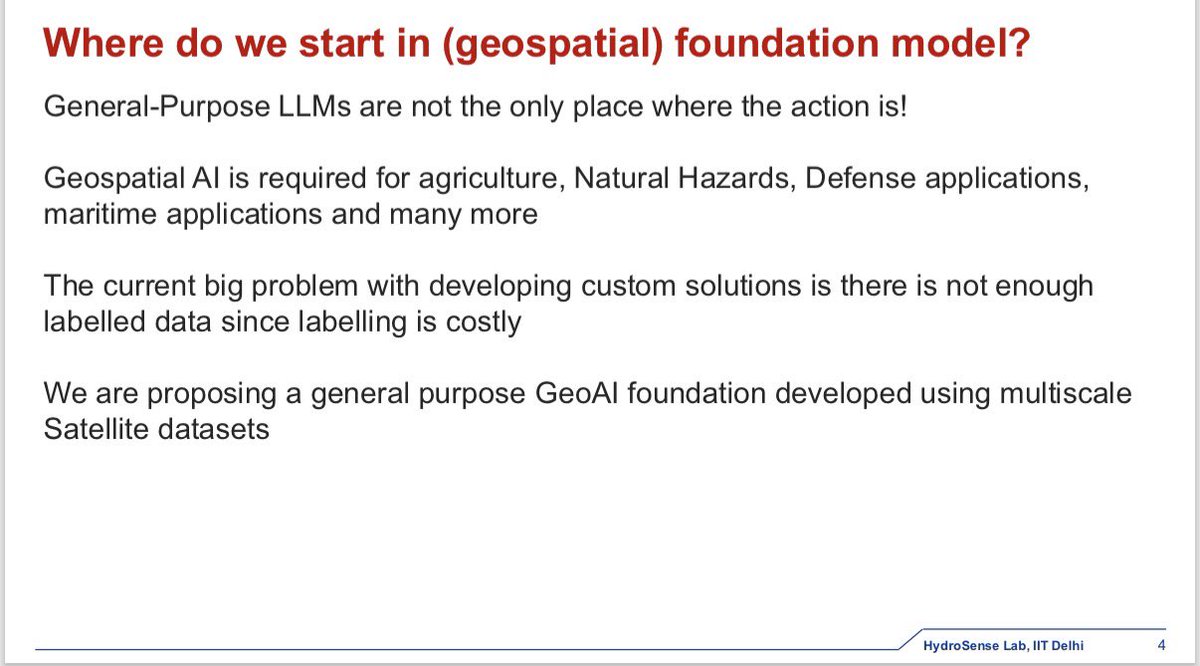
Last year, I was presenting to an internal team we had put together to develop a SOTA geospatial foundation model and this was a slide from that ppt. We have the talent and ambition, but the only entities that have helped us throughout this journey is govt IndiaAI mission and NVIDIA, who gave us priority compute after seeing our initial results. This is the kind of support that should have come from Indian IT behemoths. A country that can develop nuclear weapons and land on the moon is very well capable of developing SOTA models. But for that, we must first dream to be more than AI coolies.
Apr 29

India doesn't need to lead the world in building the most advanced AI models. But it must lead in ensuring benefits of AI are widely shared.
@rvenk and I have an op-ed in The @EconomicTimes
economictimes.indiatimes.com…
17
113
406
44,032

Saudi Arabia is investing heavily in geospatial intelligence, satellite constellations, secure communications, and strategic warning systems - By @NawafEObaid tomorrowsaffairs.com/why-sau…
#IranWar #SaudiArabia #Yemen
114
Surv. Dennis O.N. retweeted

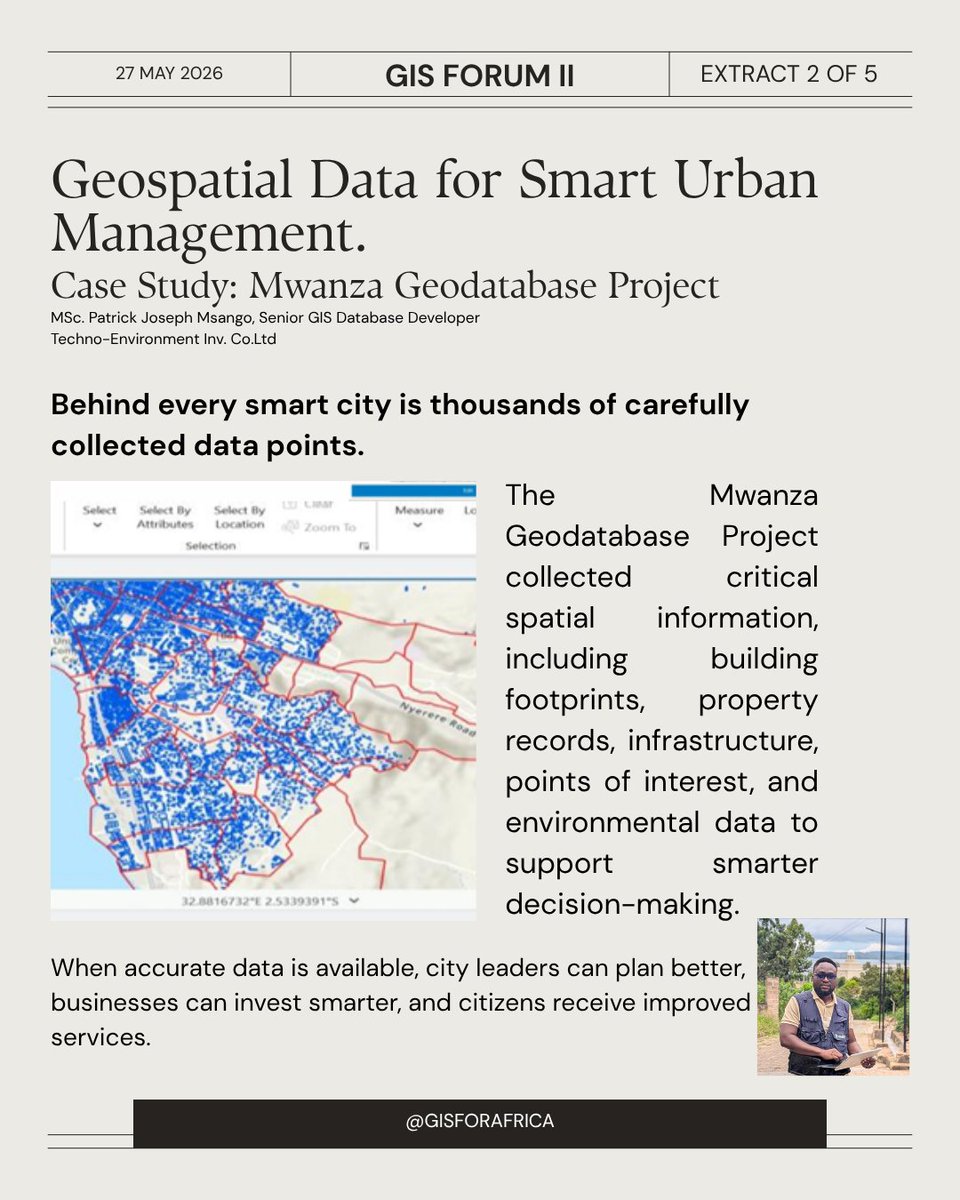
Let's follow the Geospatial Data Gathering story of MSc. Patrick Joseph Msango, Senior GIS Database Developer
Techno-Environment Inv. Co.Ltd.
Extracts from GIS Forum II.
2/5
6
19
480

Emerging Flexible Designs for Geospatial Multimodal Foundation Models
Philipe Dias, Waqwoya Abebe, Abhishek Potnis, Aristeidis Tsaris, Dan Lu, Xiao Wang, Dalton Lunga
arxiv.org/abs/2606.12595 [𝚌𝚜.𝙻𝙶 𝚌𝚜.𝙰𝙸 𝚌𝚜.𝙲𝚅]
56

The strongest way to handle that quote is: treat it as a potentially important lead, not as proof yet. The public record already confirms Grusch has made extraordinary claims under oath, including a “multi-decade UAP crash retrieval and reverse-engineering program,” that he said he interviewed more than 40 witnesses, and that he claimed locations were provided to an Inspector General. But the actual crash-retrieval photos, metadata, chain of custody, original files, material samples, biological evidence, and independent verification are still not public.Best high-integrity framing
Use this framing instead of “aliens confirmed”:
Breaking claim, not proof: David Grusch says he has seen photos connected to alleged UFO/UAP crash retrievals. This matters because Grusch previously testified under oath that he was informed of a multi-decade UAP crash retrieval and reverse-engineering program, but no public, independently verified crash-retrieval photos or physical evidence have yet been released. The next step is not belief or dismissal. The next step is provenance, chain of custody, congressional verification, and lawful declassification.That framing is powerful because it avoids the two biggest traps: breathless confirmation and lazy debunking.What is actually grounded right now
Grusch’s official House witness statement says he was a U.S. Air Force intelligence officer at the rank of Major and later worked at the National Geospatial-Intelligence Agency; he also wrote that multiple current and former officials shared “photography, official documentation, and classified oral testimony” with him.In the 2023 House hearing, he testified that he was informed, in the course of his official duties, of a multi-decade UAP crash retrieval and reverse-engineering program, but said he was denied access to the additional read-ons.He also testified that he believed the U.S. government was in possession of UAPs based on interviews with more than 40 witnesses over four years, and said exact locations had been provided to the Inspector General and, in some cases, intelligence committees.On “nonhuman biologics,” Grusch testified that “biologics came with some of these recoveries,” but when asked whether the evidence was documentary, video, photos, or eyewitness-based, he said the specifics would need to be discussed in a SCIF.The official counterweight is important: AARO’s public position remains that it has found no evidence of extraterrestrial beings or technology to date, while NASA says there is no evidence that UAPs are extraterrestrial and that the limited high-quality data around many UAP reports makes firm conclusions difficult.Missing elements that would make the quote much stronger
The most important missing element is the original source context: full video, timestamp, unedited transcript, and whether Grusch said “I personally saw original crash-retrieval photos” or whether he saw reproductions, briefings, documents containing photos, or slides prepared by other people.The second missing element is provenance. A photo is not evidence by itself. You need to know who captured it, on what device or sensor, on what date, under what program, at what location, under whose custody, and whether it was an original file or a later reproduction.The third missing element is chain of custody. For alleged crash retrieval imagery, the chain should run from field collection to classification marking to archive storage to briefing use to Inspector General or congressional handling. Any break in that chain weakens the claim.The fourth missing element is metadata. For ordinary digital images, this includes EXIF, timestamps, file hashes, device identifiers, lens data, compression history, and edit history. For military or intelligence imagery, the equivalent may include platform, sensor, calibration data, collection deck, mission ID, coordinates, classification banner, and dissemination controls.The fifth missing element is scale. A “disc” or “egg” shape in a photo means little without reference objects, range, focal length, terrain, shadows, or measurement context.The sixth missing element is environmental context. Was the object photographed in situ at a crash/landing site, inside a hangar, on a flatbed, in a lab, underwater, in desert terrain, or as part of a briefing slide? “Crash retrieval photo” could mean very different things.The seventh missing element is whether the image was paired with non-image evidence: radar tracks, satellite collection, SIGINT, HUMINT reports, recovery-team logs, medical/biological chain-of-custody documents, transport manifests, lab reports, or contractor deliverables.The eighth missing element is whether Congress has seen the same photos. Grusch’s strongest path is not public podcast disclosure; it is lawful disclosure to cleared congressional investigators, the Intelligence Community Inspector General, and committees with subpoena power.The ninth missing element is whether AARO was shown the same material. If AARO was not shown it, that matters. If AARO was shown it and rejected it, the reason matters even more.The tenth missing element is whether the photos can be sanitized. If sources and methods are the issue, a derived image product could theoretically remove sensor/platform details while preserving object morphology, context, and confidence intervals.Genius-level solutions
1. Create a “UAP evidence escrow.” A cleared, bipartisan panel of congressional staff, forensic imaging experts, aerospace engineers, records-management specialists, and judges or inspectors general reviews the classified evidence in a SCIF. They do not publicly reveal sensitive methods. They publish a narrow unclassified finding: “We reviewed X number of images, Y appeared original, Z had complete chain of custody, and N could not be explained by known U.S., foreign, or natural phenomena.”2. Use a tiered declassification model. Release evidence in layers: first a public index, then redacted captions, then low-risk still frames, then sanitized metadata, then full-resolution imagery to cleared scientists, then public release of derived analytic products. This avoids the false choice between “release everything” and “release nothing.”3. Build a forensic photo checklist before anyone argues aliens. For every alleged image, require: original file hash, collection platform, date/time, location, scale reference, classification history, edit/compression history, analyst notes, alternative explanations, and the name of the office that made the “nonhuman” or “unknown origin” assessment.4. Force the claim into nested probabilities. Don’t ask, “Is it aliens?” Ask four separate questions: Did Grusch accurately describe what he saw? Did the photos genuinely show recovered vehicles? Were those vehicles beyond known human origin? Was the evidence unlawfully hidden from Congress? Each question has a different evidence threshold.5. Audit records, not rumors. If a retrieval program existed, it likely left boring bureaucratic fingerprints: security classification guides, DD-254 contract security forms, waived SAP records, facility access logs, courier records, hazardous-material handling, crash-site cleanup, medical/lab documentation, inventory controls, funding anomalies, and contractor deliverables.6. Use NARA Record Group 615 as a pressure point. The National Archives has established a UAP Records Collection under the 2024 NDAA and says agencies will add records on a rolling basis as they are received. That creates a concrete public-records path for journalists, researchers, and congressional offices.7. Demand a “negative finding” if evidence is withheld. If an agency says the photos cannot be released, it should still answer: do the images exist, who controls them, are they original, were they reviewed by AARO/ICIG/Congress, and are they being withheld for source-method reasons or because the claim is unsupported?8. Separate air-safety UAP from crash-retrieval UAP. These are different categories. Pilot sightings, sensor anomalies, and crash-retrieval claims should not be mixed into one rhetorical bucket. The standards of proof for a dangerous unknown object in airspace are much lower than the standards for recovered nonhuman technology.9. Require independent materials science for any alleged debris. AARO already points to ORNL-style analysis of alleged metallic specimens in its public records section; that is the correct template. The public needs blind testing, isotope ratios, microstructure, manufacturing marks, contamination controls, and replication across labs.10. Make “nonhuman” origin the last hypothesis, not the first. NASA’s UAP study emphasized that extraterrestrial origin should be treated as a hypothesis of last resort after other explanations are ruled out, and that eyewitness reports alone are usually not enough for definitive conclusions.Obscure thought inputs worth adding
One under-discussed possibility is classification contamination: people inside classified spaces may have seen real secret aerospace, sensor, or recovery programs and interpreted them through a UAP framework without seeing the whole picture.Another is legend migration: a rumor can move from contractor to official to investigator to whistleblower and feel independently corroborated even when multiple witnesses are repeating the same root story.Another is program-access illusion: being denied access can mean “they’re hiding alien craft,” but it can also mean the program was unrelated, compartmented for ordinary national-security reasons, or inaccessible because the requester lacked a specific need-to-know.Another is photo-caption authority bias: if an image appears in a classified briefing slide labeled “recovered vehicle,” the label itself can become the evidence, even if the underlying image was never independently validated.Another is morphology inflation. “Discs, eggs, and every other morphology” sounds dramatic, but it also raises a hard analytic question: are these many actual craft types, many witness descriptions, many artifacts of angle/sensor distortion, or a mixed collection of unrelated objects?Another is contractor custody ambiguity. If alleged artifacts were moved into private aerospace or defense-contractor environments, the key question becomes federal property accountability: who owns it, who funds it, what contract vehicle covers it, and what legal authority prevents Congress from inspecting it?Another is the “no aliens, still scandal” scenario. Even if no nonhuman craft exists, there could still be a major oversight scandal if officials misled Congress, abused classification, retaliated against whistleblowers, or hid ordinary but sensitive programs behind UAP mythology.Questions that would instantly sharpen the story
Ask Grusch or the interviewer:Did you see original image files, printed photos, briefing slides, or secondhand reproductions?
Were the photos marked with classification banners, collection dates, coordinates, program names, or sensor/platform identifiers?
Were the objects photographed at crash sites, landing sites, storage facilities, laboratories, or inside contractor facilities?
How many separate alleged retrieval events did the photos represent?
Did any image include humans, vehicles, terrain, hangars, cranes, straps, tarps, measuring tools, or other scale references?
Were any photos accompanied by chain-of-custody forms, recovery logs, biological reports, or materials-analysis reports?
Did the people who showed you the photos claim firsthand involvement, or were they also relying on inherited records?
Were these exact photos provided to the ICIG, congressional committees, or AARO?
Can a sanitized still frame be released without exposing sources and methods?
What would falsify your interpretation of the photos?
Red flags to watch
“Breaking” language can be misleading if the clip is from an older interview or reuploaded without context. The Joe Rogan interview with Grusch is from 2023, while social pages can make old material feel new. Verify the timestamp before calling it “just now.”“Seen photos” is weaker than “handled material,” “visited site,” or “saw original sensor data.” It is still significant, but it is not the same as firsthand physical access.“Nonhuman” is more careful than “alien.” Grusch himself has used “nonhuman” rather than committing publicly to extraterrestrial origin in the congressional setting.A lack of public photos is not proof the claim is false, but it keeps the claim below the threshold of public scientific proof.Official denials are not automatically decisive, but they are part of the evidentiary landscape. AARO and NASA’s public positions remain that they have not found evidence establishing extraterrestrial technology or life.Better viral post version
David Grusch has reportedly said he saw photos connected to alleged UFO/UAP crash retrievals.This is not “aliens confirmed.”
This is a serious claim that now needs serious evidence: original files, provenance, chain of custody, metadata, congressional review, and lawful declassification.The real question is no longer “Do you believe?”
The real question is: Who has the records, who has seen them, and why can’t Congress and the public get a verified evidentiary summary?Bottom line
The quote is useful as a pressure point, not as a conclusion. The smartest move is to shift the conversation from belief to verification architecture: original images, provenance, chain of custody, SCIF review, NARA record transfer, independent technical analysis, and a public unclassified confidence assessment. That is how this moves from viral claim to historically meaningful evidence.

Breaking: 🚨‼️ NEW - Whistleblower Major David C. Grusch just now said live on air that "I have seen photos of UFO Crash Retrievals" 🛸👽📷
"I did access to crash retrieval photos and everything. I’ve seen recovered vehicles…
Everything..
This is the most earth shattering thing that changed my world view.
They were everything from flying discs to egg shape craft & every other morphology
They landed or crashed on the surface of the earth" - David Grusch
2
176
Taro Matsuzawa aka. 組長 retweeted

Jun 12
We've released the @geotessera v1.1 geospatial foundation model, with wider coastal coverage, improved sparse observation accuracy and greater year-on-year temporal stability. anil.recoil.org/notes/tesser…
2
13
68
5,411

**📈 7 Lesser-Known Stocks Worth Tracking Closely**
AI & digital infra boom is creating opportunities beyond the big names:
1. **Dynacons Systems** – Cloud & IT Infrastructure
2. **Orient Technologies** – Data Centres & Managed Services
3. **Aurionpro Solutions** – Enterprise Digital Platforms
4. **Genesys International** – 3D Mapping & Geospatial Data
5. **eMudhra** – Digital Identity Infrastructure
6. **DC Infotech** – Networking & Cybersecurity
7. **Datamatics Global Services** – Automation & Digital Engineering
Plus: Meta eyeing Reliance AI data centres Adani’s massive $100B commitment.
Which of these are you watching? Drop your thoughts 👇

2
21

Ceinsys Tech Ltd - wins international orders worth Rs 30.06 Cr from T Second Inc., USA for NVME drives, AI-powered asset monitoring, and geospatial AI solutions; execution by June 30, strengthening its global AI footprint
bseindia.com/xml-data/corpfi…
113

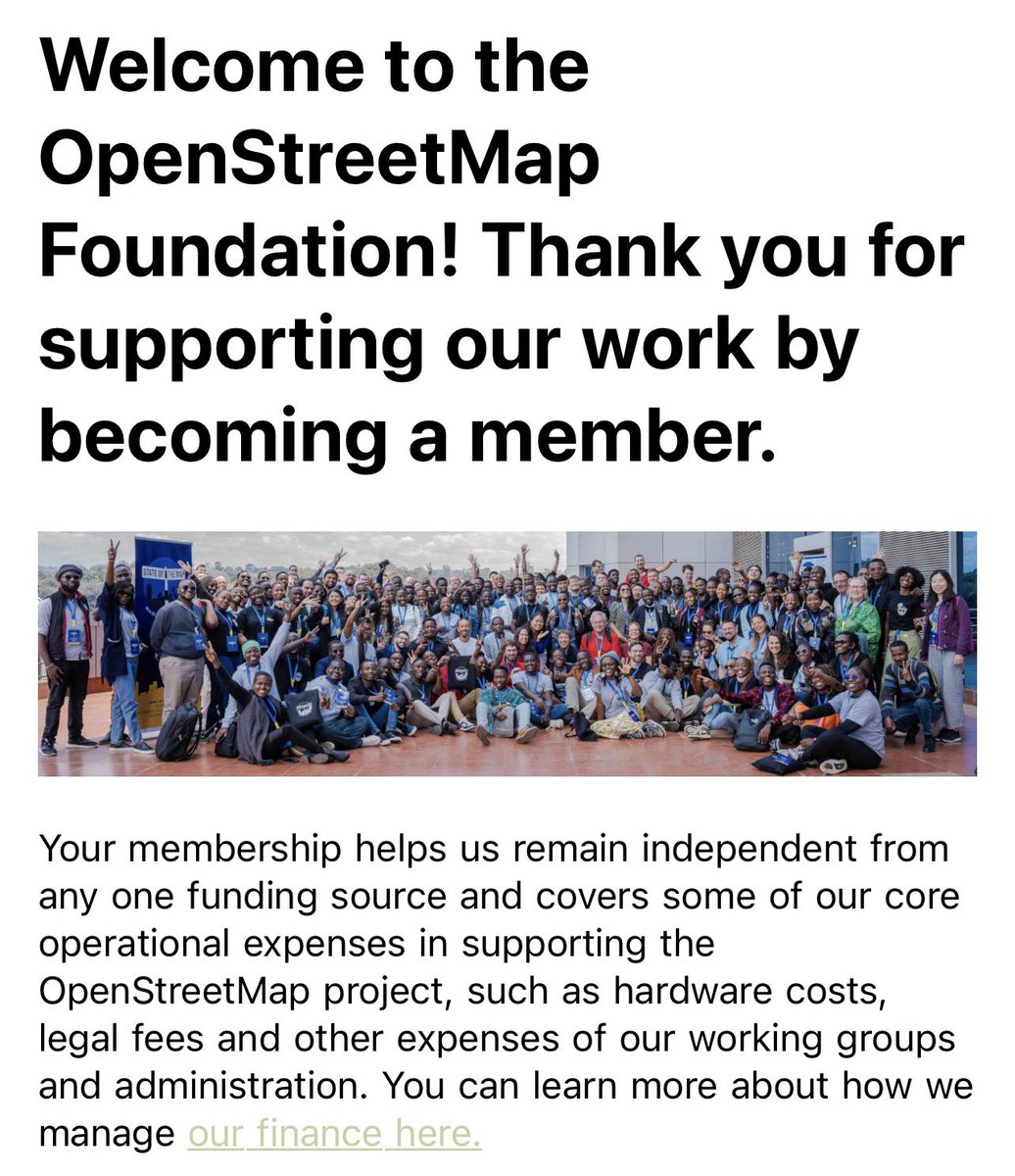
I just renewed my active contributor membership with the OpenStreetMap Foundation!
Mapping is only half the journey. Joining the OSMF gives us a seat at the table to vote, influence policy, and shape the future of open geospatial data.
Want to get involved?
1. Active Volunteers: Fee is waived if you have 42 mapping days or contribute via community organizing & training.
2. Supporters: You can join as a Normal or Associate member for only £15.
Let’s make sure local communities lead the decision-making!
Apply or renew here: supporting.openstreetmap.org…
#OSM #OpenStreetMap #GIS #OpenData #Mapping
2
24