

18 Mar 2025
NHL legend Duncan Keith sits down with John Kot at Derrick’s Steakhouse to talk life after hockey, coaching, and the bonds that last beyond the game—all over a great meal. #DuncanKeith #NHL #Kelowna #GetLocal #HockeyLife #FineDining #DerricksSteakhouse
kelownanow.com/watercooler/n…
3
341

17 Sep 2024
getlocal.ie with Siri. Open any product image on your iPhone and ask Siri ( Hey Siri - GetLocal) to find it locally from local online shops (Ireland)
Link to Shortcut : icloud.com/shortcuts/4375871…
2
186
17 Sep 2024
getlocal.ie chrome extension ( Desktop Chrome & Edge) - right-click on any product image online and find it from a local Irish shop. #getlocal #shoplocal
chromewebstore.google.com/de…
3
3
104


Que round 2 of the global Bolchevik #WEFpuppets pravda campaign against @RobSchneider
Hint, #RobSchneider doesn't care and will be on the side of #liberty and our #BillofRights in our #ConstitutionalRepublic for whatever comes next.
#GetLocal
29 May 2024

Actor Rob Schneider calls out Trump-hating Robert De Niro for his hypocritical comments about Donald Trump:
"For him to say today that he's never going to leave, I mean he left once, so the evidence is he did leave."
2
50

Get over to SAT123.com so that you will at least be able to call a local PD or Sheriff when they finally pull the plug.
That is if you even have LE that is not owned by the corporation.
#Survival #getlocal
18 Apr 2024

While 911 is failing tremendously across the U.S. — I encourage everyone to see my pinned tweet from 23 months ago… 💯
3
14
28
6,536

25 Mar 2024
Let’s get 100.000,000 votes for Trump in 2024. #getlocal @DanSchultz2 #getinvolved
#SaveAmerica #AmericaFirst #makeyourselfgreatagain
#Trump2024
@realDonaldTrump
#MAGA
#voteouttherhinos
#localactionnationalresults
@GenFlynn
#TeamTrump
@Amerifuture
2
2
94

22 Mar 2024
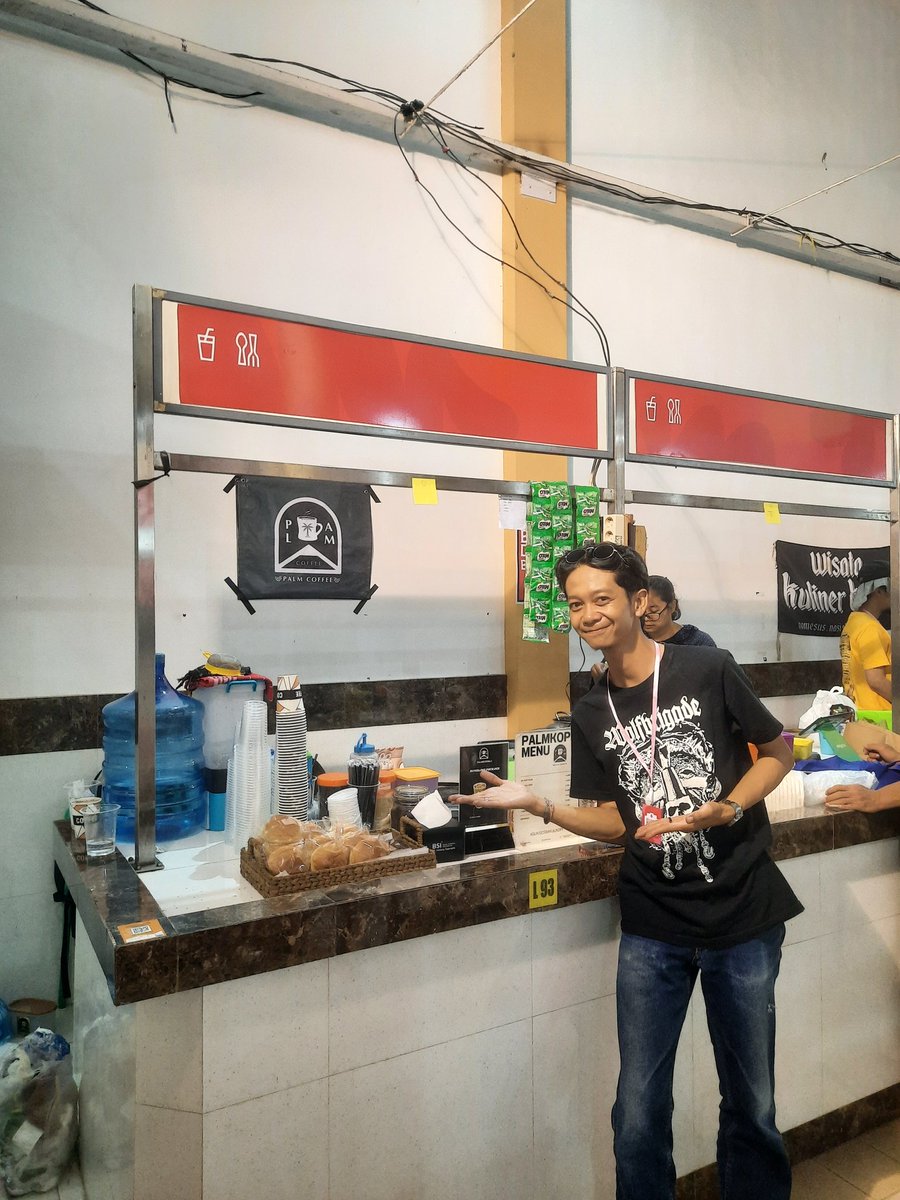
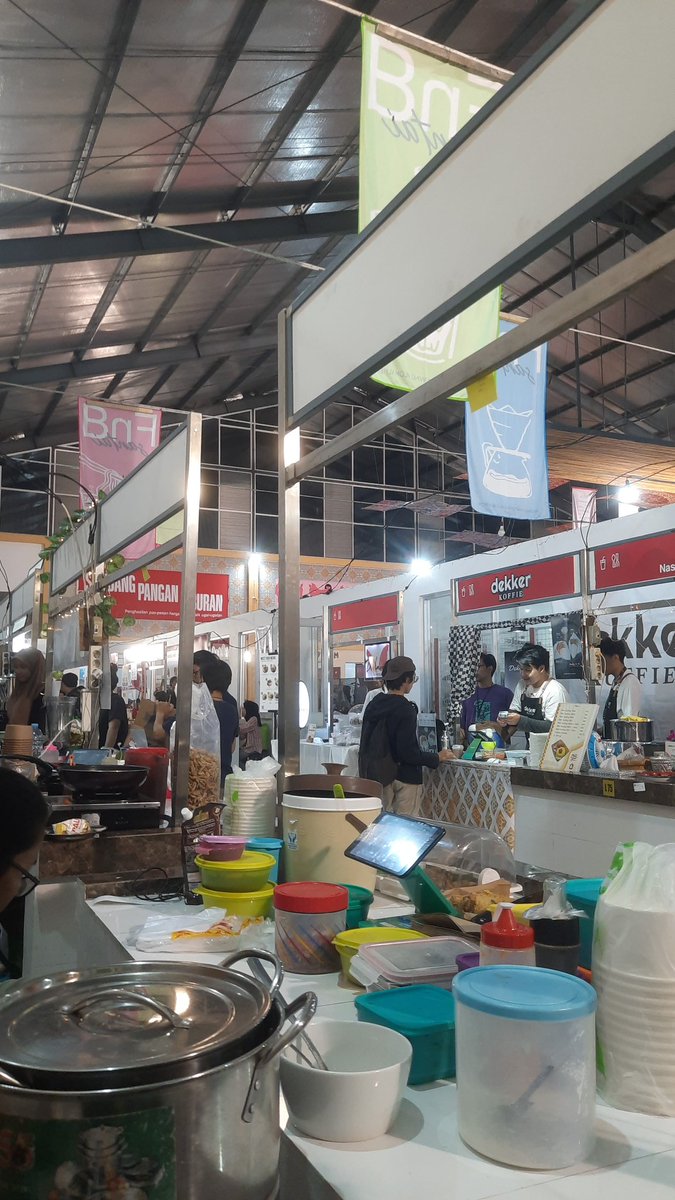
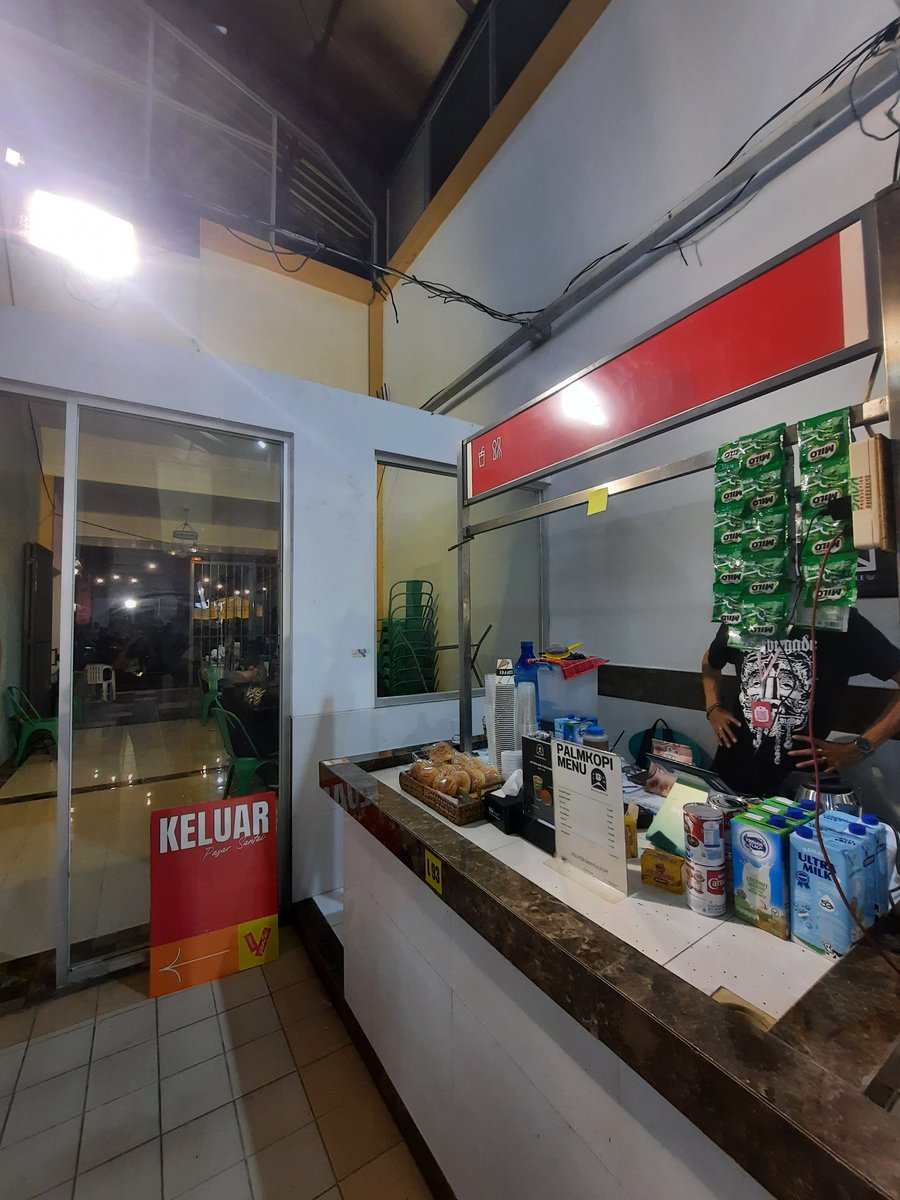
wingi mampir @pasarsantaimlg 6 sing @OBARAMA_ lali password akune.
bersama @voodiesmalang
#LokalGet #GetLocal
1
2
1,513

21 Mar 2024
1
3
5
419
21 Mar 2024
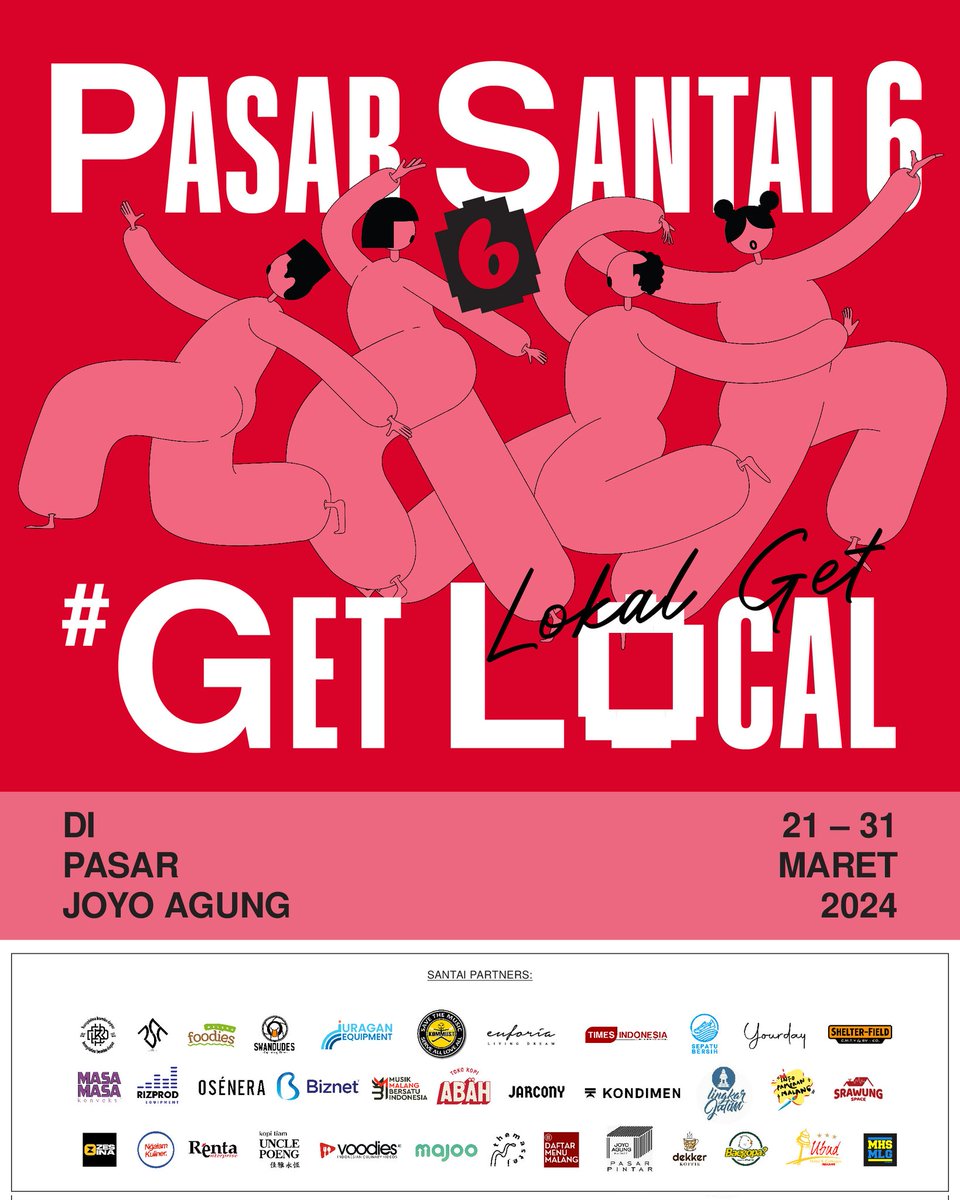
Sore ini bersama @voodiesmalang akan ngabuburit & buka puasa di Pasar Santai 6, kuy kolem ker!
#LocalGet | @pasarsantaimlg
#MoreLowcalGrowing #MLG #PasarSantai6 l #PasarSantaiMLG #Getlocal #lokalget #bazarkuliner #bazarfashion #festivalkuliner

1
2
1
729



4 Nov 2023
It’s a beautiful day!! Walking the trails today with someone pretty special and will be a major part in my life.🍃🍂
#GetLocal

3
3
51
1,247
Tacticalcivics.com to take back our local government and remove the feds from our lives forever.
#local #getlocal #localactionhasanationalimpact
3 Sep 2023

He wasn’t on any ballot I ever saw
1
3
18
4,252

About to launch another new feature next week. Stopping to think about all we've done. BoiseDev, Project Tracker, Idaho First, Boise Book, Intersection Event, podcast, Inside Idaho, GetLocal, You Asked... etc.
All local ideas from a locally-owned news outlet.
#JustKeepBuilding
1
27
1,833

16 Aug 2023
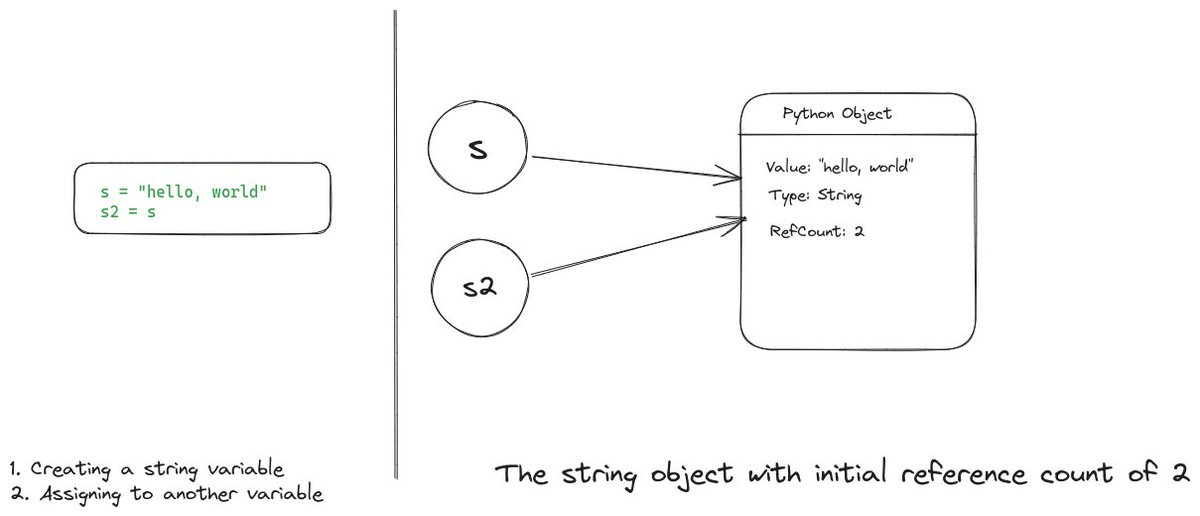
Time for another deep dive into CPython internals to learn how it implements memory management. CPython primarily uses reference counting (RC) for memory management.
RC is a light-weight technique for managing memory. Each object internally maintains a count of references pointing to it. On instantiation, an object starts with a ref count of one and as on each assignment to a new variable, its ref count gets incremented by one. Similarly, as each variable goes out of scope, the object's ref count goes down by one. When the object's ref count reaches 0, it gets freed because it is no longer used.
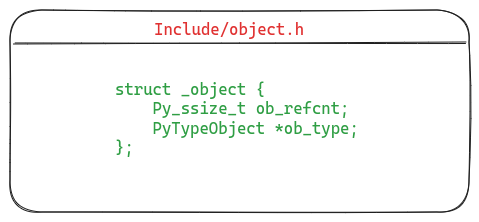
Now coming to the implementation details, in CPython, every object has a header called PyObject. This header contains the ref count of the object and the object's type details. It is defined in the file Includes/object.h as the struct _object.
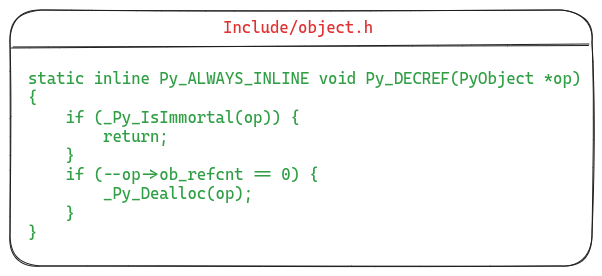
Next, how these references are updated. Does every one directly updated the ob_refcnt field or is there a better way? Well, there are functions provided to do this and everyone should call them instead of doing it themselves. These are called Py_INCREF and Py_DECREF, defined in Includes/object.h.
The definition of Py_INCREF and Py_DECREF is very similar. The main difference being that Py_DECREF also deallocates the object if its ref count reaches 0 after the decrement operation.
But, where and when exactly does CPython call these functions to update the ref counts? Well, the ref counts are updated in many places, however, the most central place which directly corresponds to the user level Python code is the bytecode VM. If you write a simple Python function to add two variables, its bytecode looks as shown below.
>>> def add(a, b):
... return a b
...
>>> import dis
>>> dis.dis(add)
1 0 RESUME 0
2 2 LOAD_FAST 0 (a)
4 LOAD_FAST 1 (b)
6 BINARY_OP 0 ( )
10 RETURN_VALUE
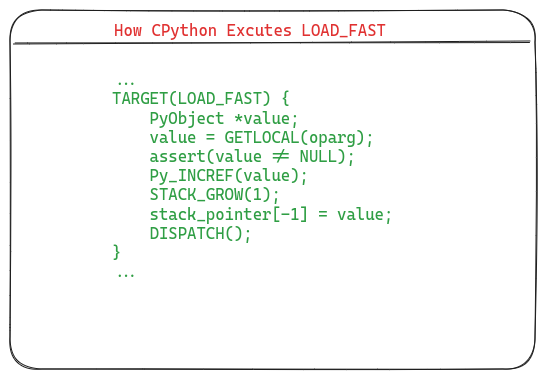
Here, LOAD_FAST instruction is used to push the parameters a and b onto the stack and BINARY_OP is used to perform the operation on them. Let's take a look at how LOAD_FAST is implemented in CPython:
Let's break it down:
- GETLOCAL(oparg) looks up the object referred to by the parameter from the locals array.
- Next, the object's reference count is incremented by calling Py_INCREF because it is now being referred by the function parameter.
- STACK_GROW(1) grows the stack to hold the object
stack_pointer[-1] = value pushes the object onto the stack.
In summary, the LOAD_FAST instructions load the two objects passed to the function as parameters onto the stack and increments their reference counts. And, the BINARY_OP instruction, pops those objects off the stack and adds them. After the BINARY_OP instruction is done with the objects, it calls Py_DECREF to decrement their ref counts. At this point, if those objects are not referred by anything else, they will get freed.
This was a very curtailed tour of how ref counting is implemented in CPython. Note that, it does not work when objects have cyclic references between them. For such cases, CPython also uses a garbage collector.
Due to space and limitations on how many images I can put here,I have excluded many details and explanations. If you are interested in a deeper and full coverage, check out my article on this topic:
open.techwriters.info/codeco…
1
40
193
19,414

13 Aug 2023
I know SOME locals don't like rich people, tourists or "Haoles". I lived there for years, I have family there, my wife grew up there, her family still lives there. This view does nothing to help anyone that has been devastated by this fire, do not feed into it, use your energy in a way to help those small businesses getlocal shops back up and running. Any also, MANY locals do not have this view or feel this way. I never had one issue at any time with any local people. Use energy wisely instead of propagating this nonsense.
1
1
26
1,739



30 Jun 2023
🔊 Calling all Oxfordshire businesses, landlords, and charities! 📢 Get Radio's Get Local is your chance to shine a light on your events on air for FREE!
Fill in the form at getradio.co.uk!
#GetLocal #OxfordshireBusiness #CommunitySupport

1
2
61