
Boomerang 🪃 What goes around...comes around
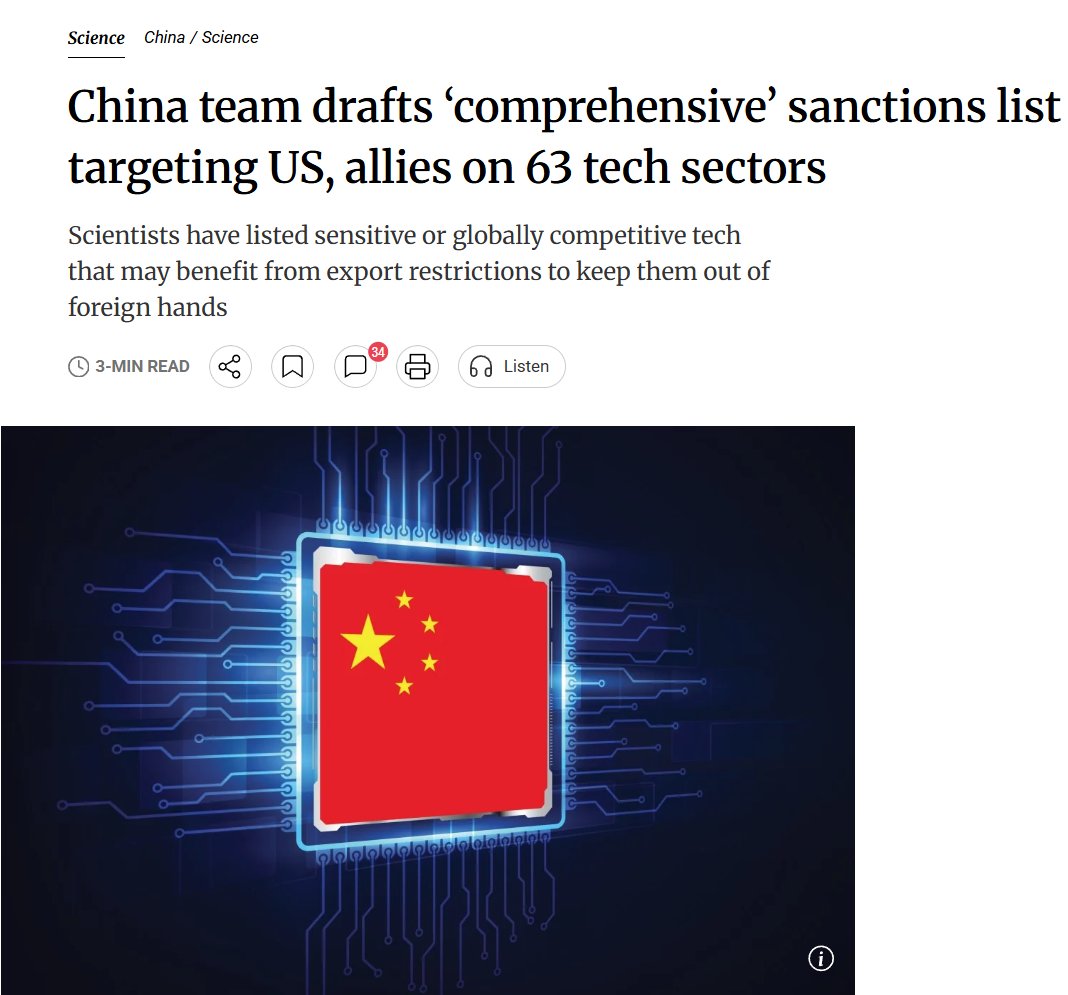
China team drafts sanctions list on 63 key sectors to preserve technology leads, to keep them out of foreign hands
Since US President Donald Trump launched a tariff war against China during his first term in office, Washington has steadily expanded restrictions on Chinese access to advanced technologies, targeting semiconductors, artificial intelligence (AI), quantum computing, aerospace systems, supercomputers and a broad range of dual-use technologies.
But Beijing’s rapid progress in a number of strategic sectors has forced a dramatic shift: China is no longer merely a target of technology restrictions – it now needs its own system to restrict the outflow of critical technologies in areas where it has achieved global advantages.
The technologies span sectors ranging from advanced materials and quantum communications to AI hardware, energy systems, biotechnology and aerospace engineering.
Among the technologies identified were satellite quantum encrypted communications, electromagnetic catapult systems, space robotics, free-space optical communications, quantum device manufacturing and miniaturised AI edge computing systems.
Others included deep ultraviolet LEDs, perovskite solar cells, autonomous positioning technologies for the Beidou-3 inter-satellite network, graphyne materials and “lifelike robots”
scmp.com/news/china/science/…
4
37
145
6,580

Jun 3
China’s counter-response to U.S. bullying tactics is entering a critical phase, marked by the establishment of a comprehensive, systematic "toolbox"—a strategy modeled, notably, after U.S. practices.
Since the trade war launched against China during the first term of the Trump administration, the United States—in concert with its Western allies—has continuously tightened restrictions on China’s access to high-end technologies. These restrictions focus on semiconductors, artificial intelligence (AI), quantum computing, aerospace, supercomputing, and various dual-use technologies (civilian-military applications), with the aim of curbing China’s development in high-end manufacturing and frontier technologies.
However, over the past decade, as China has achieved leapfrog breakthroughs in numerous strategic technological fields, the original dynamic has fundamentally shifted. China is no longer merely a passive recipient of international technological restrictions; it now urgently needs to establish its own autonomous and controllable system for managing technology outflows—particularly regarding core technologies in which it has already secured a global leading edge.
On June 1, Hong Kong’s *South China Morning Post* reported that Chinese research teams have drafted a "comprehensive" export control list targeting the United States and its allies, covering 63 distinct technological fields. Researchers have identified technologies deemed strategically sensitive or globally competitive, with the objective of preventing their outflow abroad through export restrictions.
This pioneering study, titled *Framework for Selecting Technologies for Export Restriction: An Empirical Study*, was first published on March 19 in the *Bulletin of the Chinese Academy of Sciences*. The paper delves deeply into "a fundamental strategic issue that has rarely been publicly discussed in China in recent years." It proposes China’s first relatively comprehensive framework for identifying technologies subject to export controls, ultimately selecting 63 specific technologies characterized by strategic sensitivity or global competitiveness. These technologies span fields such as advanced materials, quantum communication, AI hardware, energy systems, biotechnology, and aerospace engineering.
According to the study’s assessment, the technologies designated as "Tier 1" restricted exports include: satellite-based quantum-encrypted communication, electromagnetic launch technology, solar cell-related technologies, general-purpose miniaturized AI edge computing devices, metal recovery technologies for rare earth waste residues and tailings, and advanced high-strength steel production technologies for the automotive industry, among others. Other technologies include graphyne material preparation, deep-ultraviolet crystal fabrication, ultra-large-scale offshore wind turbines, space robotics, high-performance carbon electrode fabrication for perovskite solar cells, autonomous orbit determination via inter-satellite links for the BeiDou-3 navigation system, and free-space optical communication.
In their paper, the research team notes that this framework draws partly upon the export control mechanisms that the United States has long had in place. Through decades of evolution, the U.S. Department of Commerce has established a methodology that combines expert technical reviews with public consultations to identify specific technological domains and parameters subject to export bans or restrictions. The paper points out that, historically, U.S. export controls have focused not only on military or dual-use technologies but have also closely targeted two specific categories of critical technologies: first, fields where latecomer nations—exemplified by my country—are rapidly rising and, while not yet technological leaders, show the potential to challenge U.S. monopolies (e.g., integrated circuits, supercomputing, and civil nuclear power); and second, cutting-edge foundational technologies poised to shape the future landscape of science, technology, and industry (e.g., 3D printing, brain-computer interfaces, and artificial intelligence).
Evidently, the Chinese research team has sought to construct an assessment methodology tailored to China’s specific stage of development and industrial structure. Their screening process draws comprehensively upon existing domestic and international technology lists, the International Patent Classification (IPC) system, technology gap models, and patent co-occurrence network analysis; furthermore, it has undergone multiple rounds of expert review involving stakeholders from industry, academia, and government agencies. The study also relies heavily on patent databases to identify technological domains in which China possesses a comparative advantage. Taking the field of advanced materials as an example, the research team analyzed over 215,000 international patent records, employing machine learning clustering models and network analysis to pinpoint key technological nodes.
The significance of this research extends far beyond export policy alone. In the past, my country’s science and technology development strategy centered primarily on technology acquisition and addressing industrial deficiencies. However, as Chinese enterprises and research institutions increasingly join the global "first tier" across numerous cutting-edge sectors, issues such as technological sovereignty, technological security, and the protection of critical strategic technologies have now become subjects of routine discourse and policy deliberation within China.
The study also observes that my country’s institutional framework for ensuring the security of technology trade currently lags behind those of developed nations such as the United States, the United Kingdom, France, Germany, and Japan—countries that, through decades of development, have successfully established comprehensive systems for technology export control. Based on this study, it is recommended that relevant competent authorities, grounded in top-level design, effectively undertake three key tasks: monitoring and anticipating trends in foreign technology export restrictions while strengthening preventive measures; refining the selection processes and methodologies for my country's own restricted export technologies; and advancing the practical implementation of control measures for these technologies.
9
83
195
22,134

19 Sep 2025
Beyond Graphene: A Review of Graphene's Lesser-Known Yne Relatives and their Energy Applications
グラフェンのあまり知られていない類似物質のレビュー
グラフィン(graphyne)とかね
pubs.rsc.org/en/Content/Arti…
3
271

29 Jul 2025
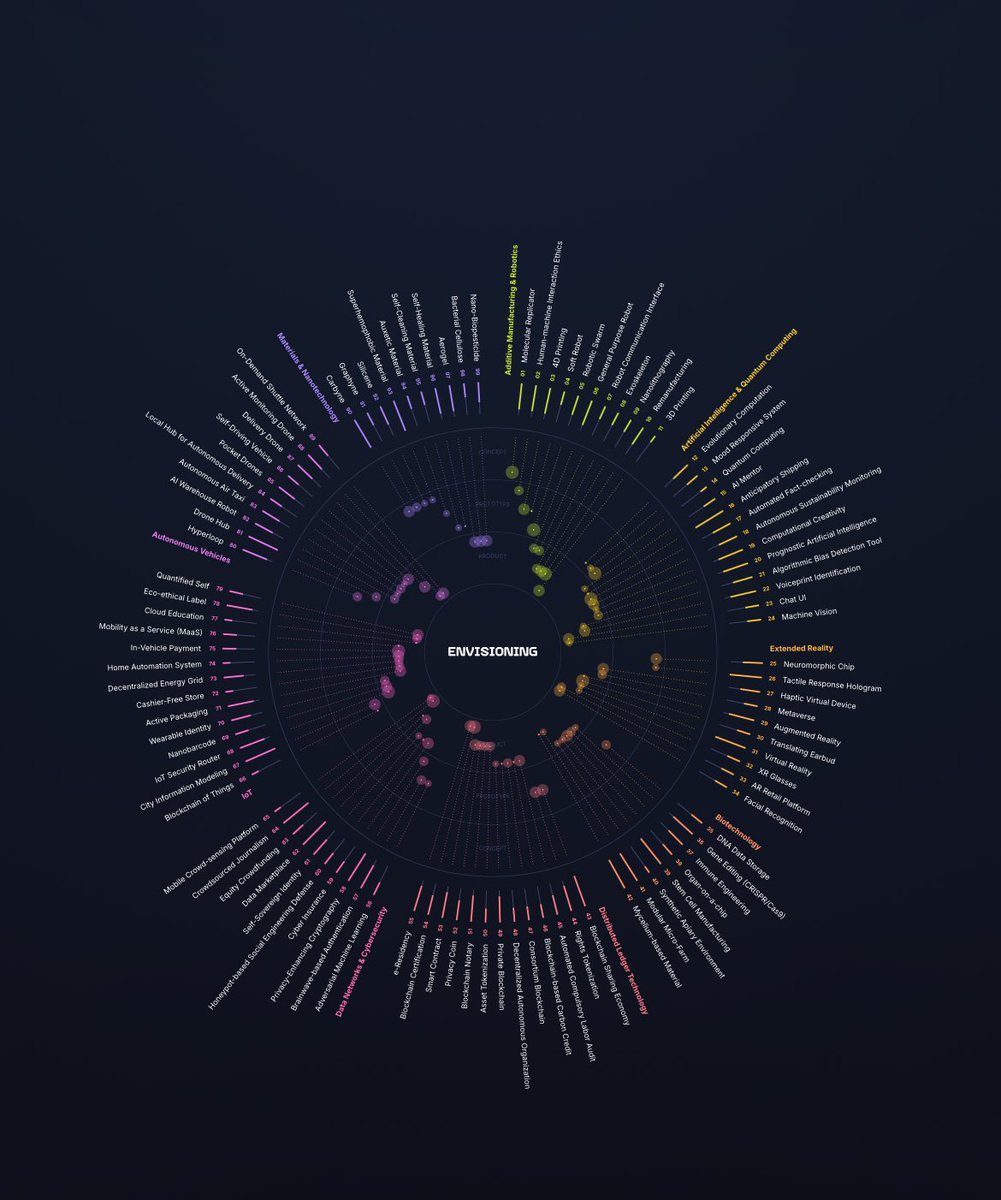
These include developments in Additive Manufacturing & Robotics, Artificial Intelligence & Quantum Computing, Extended Reality, Biotechnology, Distributed Ledger Technology, Data Networks & Cybersecurity, loT,
Autonomous Vehicles and Materials & Nanotechnology. We have also determined their level of readiness and identified hundreds of related startups and academic institutions to help you see the emerging future more clearly.
Self- cleaning material
Self -Healing material
Aerogel
Bacteria cellulose
Nano Biopesticlde
tepeen one
Superhemophobic Material
Graphyne
Carbyne oo
Materials & Nanotechnology
On-Demand Shuttle Network
Active Monitoring Drone
Silicene
Delivery Drone
Self-Driving Vehicle
Pocket Drones
Local Hub for Autonomous Delivery
Autonomous Air Taxi
Al Warehouse Robot
Drone Hub
Hypertoop
Autonomous Vehicles
Quantified Self
Eco-ethical Label
Cloud Education
Mobility as a Service (MaaS)
In-Vehicle Payment
Home Automation System
Decentralized Energy Grid
Cashier-Free Store
Active Packaging
Wearable Identity
Nanobarcode
loT Security Router
City Information Modeling
Blockchain of Things
Mobile Crowd-sensing Platform
Crowdsourced Journalism
Equity Growdfunding
Data Marketplace
Self-Sovereign Identity
Honeypot-based Social Engineering Defense
Cyber Insurance
Privacy-Enhancing Cryptography
Brainwave-based Authentication
Adversarial Machine Learning
Data Networks & Cybersecurity
Kouspisey-o
ENVISIONING
Additive Manufacturing & Robotics
Molecular Replicator
Human-machine Interaction Ethics
4D Printing
Soft Robot
Robotic Swarm
General Purpose Robot
Robot Communication Interface
Exoskeleton
Nanoithography
Remanufacturing
3D Printing
Artificial Intelligence & Quantum Computing
Evolutionary Computation
Mood Responsive System
Quantum Computing
Al Mentor
Anticipatory Shipping
Automated Fact-checking
Autonomous Sustainability Monitoring
Computational Creativity
Prognostic Artificial Intelligence
Algorithmic Bias Detection Tool
Voiceprint Identification
Chat Ut
Machine Vision
Extended Reality
Neuromorphic Chip
Tactile Response Hologram
Haptic Virtual Device
Metaverse
Augmented Reality
Translating Earbud
Virtual Reality
XR Glasses
AR Retail Platform
Facial Recognition
Private Blockchain
Biotechnology
DNA Data Storage
Immune Engineering
Gene Eding (CRISPR/Cas9)
Organ-on-a-chip
Stem Cell Manufacturing
Decentralized Autonomous Organization
Consortium Blockchain
Blockchain Sharing Economy
Rights Tokenization
Automated Compulsory Labor Audit
Blockchain-based Carbon Credit
Modular Micro-Farm
Mycelium-based Material
Distributed Ledger Technology
Sharing Ecor
Synthetic Apiary Environment
radar.envisioning.io/?pg=hom…
3
5
10
443

19 Jul 2025
Unraveling the Mechanism of Oxygen Electrocatalysis on Transition Metal‐Free Single‐Atom‐Doped Holey Graphyne chemistry-europe.onlinelibra…
1
5
299

26 Jun 2025
1 - Graphyne ( Free to Tryout )
↗️behance.net/gallery/18599146…
2 - Dx Grafik - ( Free to Tryout )
↗️behance.net/gallery/19139050…
3 - Sideboard
↗️behance.net/gallery/19294740…
4 - Devils Cut
↗️behance.net/gallery/18599183…




1
4
2,088

17 Jun 2025
Holey Graphyne Anode for Metal-Ion Batteries: Suitability for Potassium-Ion Batteries pubs.rsc.org/en/Content/Arti…
2
39

16 Jun 2025
Holey Graphyne Anode for Metal-Ion Batteries: Suitability for Potassium-Ion Batteries pubs.rsc.org/en/Content/Arti…
2
4
274
13 Jun 2025
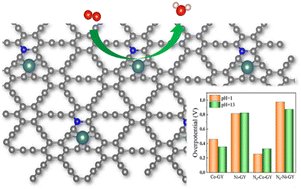
Graphyne-based single atom catalysts for the oxygen reduction reaction: a constant-potential first-principles study pubs.rsc.org/en/Content/Arti…
2
298


21 May 2025
The second contribution today from @DIMOCAT_iqcc was delivered by @miquelsola on Gamma-Graphyne as a Promising Electron Acceptor for Organic Photovoltaics.

3
18
731
18 May 2025
.@DIMOCAT_iqcc will be present at the 247th ECS meeting taking place in Montréal, Canada. Talks delivered by @alarru on 21/5 (contorted helicenes) and @miquelsola on 20/5 (electric fields and charge transfer processes) and on 21/5 (gamma-graphyne). electrochem.org/247
2
4
476

4 May 2025
石墨炔(Graphyne)是一種由碳原子組成的新型二維材料,結構類似石墨烯,但在六角碳環之間加入了乙炔鏈(–C≡C–),使其同時具有剛性與彈性。理論研究顯示,某些形式的石墨炔在特定方向上的硬度甚至可能超越鑽石,被視為世界最硬材料之一。
8
778

12 Apr 2025
A Novel Graphyne-Like Carbon Allotrope: 2D Dewar-Anthracyne. arxiv.org/abs/2504.07924
2
261
31 Mar 2025
Petal-Graphyne: A Novel 2D Carbon Allotrope for High-Performance Li and Na Ion Storage arxiv.org/abs/2503.21962
1
3
8
409

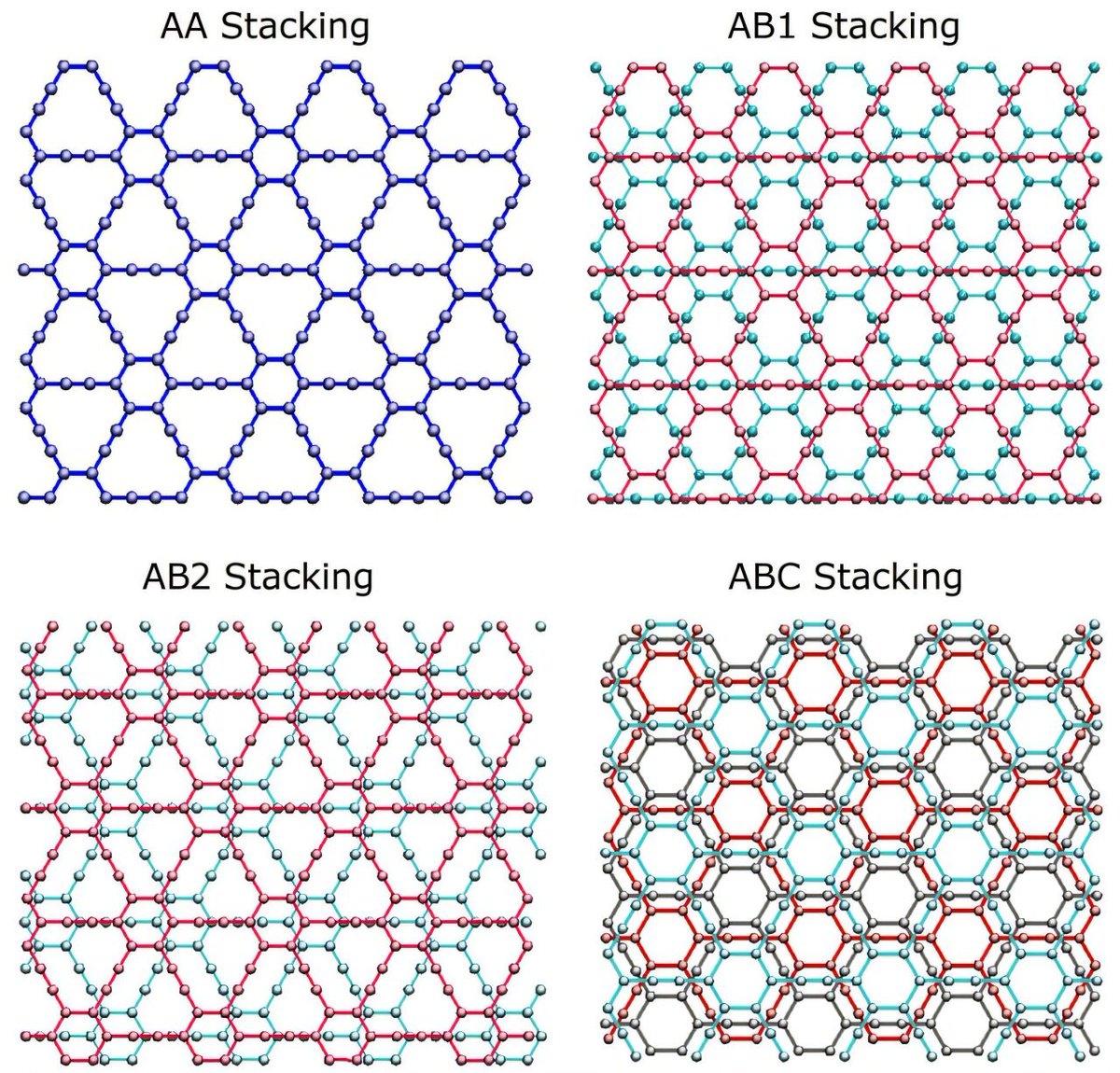
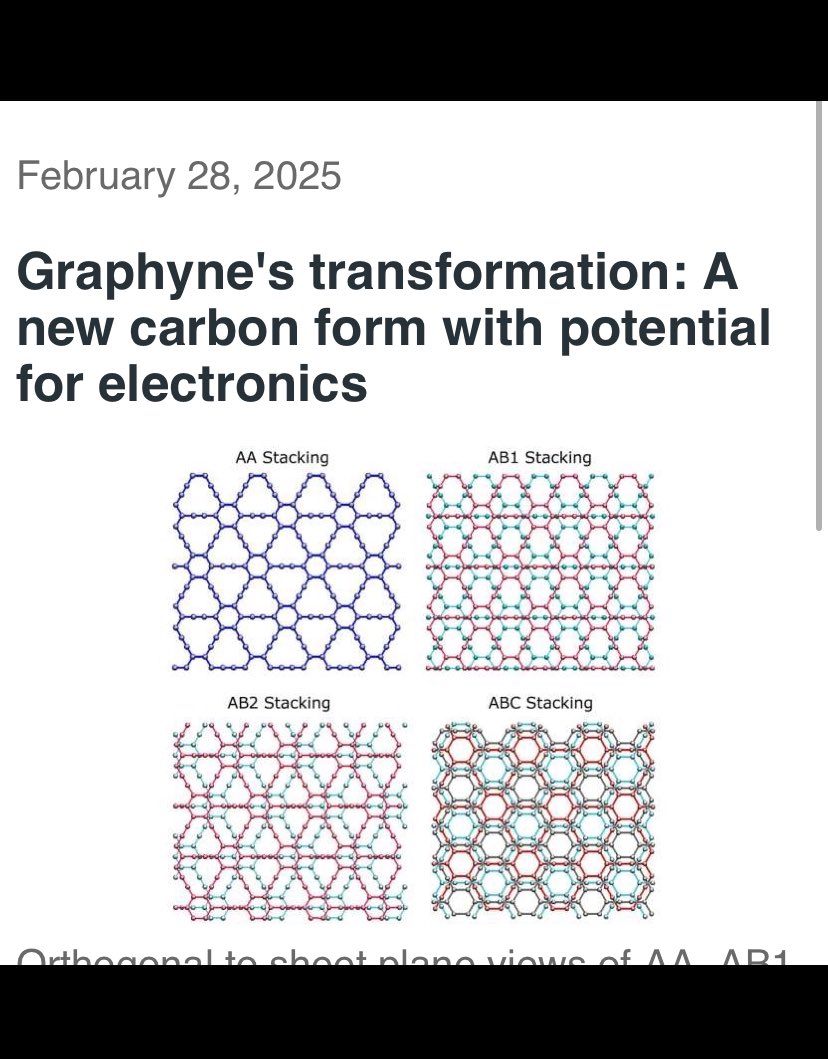
#Graphyne's #transformation: A #new #carbon #form with potential for #electronics
Graphyne, a unique crystalline carbon form, combines 2- & 3-coordinate atoms, offering exceptional electronic, mechanical, and optical properties... scitechupdates.com/graphynes…
1
3
6
225

Synthesis and Properties of Acetylenic Scaffolds Modeling Segments of 6,6,12-Graphyne (Mogens Brøndsted Nielsen @mogens_br and co-workers @ChemKUniversity) #openaccess 🔓 onlinelibrary.wiley.com/doi/…
1
10
1,478

28 Feb 2025
Diamonds kicked to the curb, move out of the way Graphite, Graphene isn’t the only player in town now, here comes the brand new kid, Graphyne
1
14
792