
Mar 20
🔥🔥APR/RAST v.3 & UCRM research papers were just released!🔥🔥
💡Highlights👇
🔗page38news.com/anthropogenic…
🔗page38news.com/unified-class…
1⃣APR/RAST v.3 (Anthropogenic Plasmoid Research Resonant AgI Swarm Theory)
• Prospective validation of AgI-nucleated orb swarms during geomagnetic storms
• Refined nonlinear models multispectral data Skywatcher AI “summoning” protocols
• Hybrid natural engineered forecasting now live in StormMode Forecaster v9.1
• Turns mysterious UAP orbs into predictable, repeatable atmospheric physics.
2⃣UCRM (Unified Classical Resonance Model) — The MC-BE-CIRE Hypothesis
• Fully classical Znidarsic Z-velocity resonance framework (no quantum hand-waves)
• Introduces the Sixth Oscillator for Bio-ELFPsionics & enhanced anomalous cognition
• Links resonant plasmoids directly to remote viewing/ESP, gravity control & zero-point energy rectification
• Opens the door to engineerable tech: clean energy, propulsion, cognitive enhancement & Plasmoid Busters for aviation safety
🌌This is a genuine paradigm shift — from chasing anomalies to building, measuring, and harnessing them.
📰Full papers now live on Page38News ResearchGate. Serious collaborators, engineers, funders, or researchers: DMs open.
🏗️Let’s build.
What implication excites you most — ZPE energy, gravity tech, Sixth Oscillator cognition, or Plasmoid defense?
#UCRM #RAST #APR #MCBECIRE #ResonantPlasmoids #ZeroPointEnergy #GravityControl #StormMode #BreakthroughPhysics
@Tobie27261294 @disclosureorg @thesentinelnet @drxwilhelm @ufo_uap_news
1
1
4
261

10 Sep 2025
Gravitational Control:
Exploring Gravity as an Emergent Electromagnetic Phenomenon
Abstract
This article proposes a paradigm shift in understanding gravity, positing it not as a fundamental force but as an emergent result of interactions between lectromagnetic fields of massive bodies. Drawing on recent experimental claims by plasma physicist Dr. John Brandenburg and historical efforts in unified field theories, we explore theoretical foundations, potential mechanisms for gravitational manipulation, experimental challenges, and implications for future technologies. By integrating insights from gravitoelectromagnetism, quantum field theories, and resonant frequency interactions, this framework challenges traditional relativistic models and invites empirical validation. We aim to stimulate interdisciplinary discussion on platforms like X, where real-time scientific discourse can accelerate paradigm shifts.
Introduction
Gravity remains one of physics' most enigmatic phenomena, described by Einstein's General Relativity as spacetime curvature induced by mass-energy. However, anomalies in cosmological observations such as those surrounding black holes, the Big Bang singularity, and dark matter suggest limitations in this framework. Alternative theories propose gravity as emergent, potentially linked to electromagnetism, a force 10^36 times stronger yet sharing inverse-square law characteristics.
Recent claims by Dr. John Brandenburg, a plasma physicist formerly affiliated with Orbital Technologies and Kepler Aerospace, highlight laboratory demonstrations of gravity modification via electromagnetic fields (researchgate.net/publication…). His Gravity-Electro-Magnetism (GEM) Unified Field Theory integrates gravity with electromagnetism, reporting a 150 mg weight reduction in a suspended coil under electromagnetic influence. This aligns with historical pursuits, including Einstein's unfinished unified field theory and DARPA's explorations of gravity modification through unified models.
This article revises and expands the original proposal, incorporating researched additions for robustness. We emphasize resonant frequency interactions as a pathway to manipulate "gravitational" effects, drawing parallels to superconductor experiments and quantum gravity theories. While speculative, this approach mirrors breakthroughs in quantum mechanics that reformulated classical "laws."
Theoretical Framework: Gravity as Electromagnetic Interaction
1. Gravity as a Manifestation of Electromagnetic Fields
Bodies with mass, composed of charged particles (protons, electrons), generate composite electromagnetic fields influenced by molecular density and cohesion. In this model, gravitational attraction arises from interactions between these fields, akin to how Earth's geomagnetic field interacts with objects.
- Density and Interaction Intensity:
Less dense materials (e.g., water vapor) exhibit weaker interactions, explaining buoyancy without invoking separate gravitational forces. This extends to cosmic scales, where galactic rotations might be explained by electromagnetic plasma dynamics rather than dark matter.
- Addition: Alignment with Gravitoelectromagnetism (GEM):
Analogous to Maxwell's equations for electromagnetism, GEM describes gravity with "gravitomagnetic" fields induced by rotating masses. Brandenburg's theory builds on this, treating gravity as a Poynting vector effect in electromagnetic fields (youtu.be/XAdjDrAmkTA?si=MdqY…).
Comment: This resolves intensity disparities; electromagnetic forces dominate locally, but gravity emerges macroscopically from coherent field alignments.
2. Manipulation via Electromagnetic Resonance
Analogous to magnets, where polarity adjustments yield attraction, repulsion, or neutrality, gravitational effects could be tuned by altering an object's electromagnetic phase, intensity, or frequency.
- Resonant Frequency Approach: Materials like stainless steel or lithium batteries have fundamental resonant frequencies (mechanical, magnetic, acoustic). External devices could induce resonance, modulating field interactions. Brandenburg's coil experiment demonstrates this: applying 3-phase power created a field reducing apparent mass by 150 mg.
- Addition Experimental Parallels: The Meissner effect in superconductors expels magnetic fields, potentially altering gravitational behavior. Podkletnov's disputed experiments claimed gravity shielding via rotating superconductors. Observation: Varying coil parameters (e.g.,frequency, amplitude) in Brandenburg's setup could yield scalable effects, bypassing high-energy requirements.
3. Challenges and Scientific Considerations
- Intensity Discrepancy: Electromagnetism vastly outscales gravity, yet unification requires reconciling this. Resonant approaches focus on coherence rather than brute force, as in Brandenburg's low-power demonstrations.
- Relativistic Independence: General Relativity posits gravity as geometry, independent of charge. However, quantum gravity theories (e.g., loop quantum gravity) and Kaluza-Klein models embed electromagnetism in higher dimensions. Comment: Singularities in black holes/Big Bang expose relativity's limits; emergent gravity theories (e.g., Verlinde's entropic gravity) treat it as thermodynamic, potentially electromagnetic in origin.
- Addition Nature of Fields: Gravity's universal attraction contrasts electromagnetism's bipolarity, but scalar electromagnetics (zero-vector potentials) could produce unidirectional effects, as per Bearden's work. Observation: DARPA's interest in quantized inertia and unified theories suggests military applications, like propellantless propulsion.
4. Experimental Possibilities and Alternative Theories
- Proposed Experiments: Tune external fields to material resonances (e.g., RMN frequencies in MHz-GHz range) and measure mass variations. Extend Brandenburg's coil to metals, monitoring Poynting vectors.
- Alternatives: Emergent gravity (Schlatter-Kastner) links it to electromagnetism via entropy. Quantum vacuum fluctuations could be manipulated for anti-gravity, per Alzofon's scaleinvariant coherence. X discussions highlight UAP propulsion as potential evidence.
- Addition Metallurgical Insights: Magnetic alignment reduces internal stresses in ferromagnets, enhancing stability. Resonant electromagnetic treatments could extend this to gravitational modulation.
Comment: Acoustic and microwave resonances offer non-invasive testing avenues.
- Advances and Future Implications
Successful models could enable levitation, artificial gravity, and FTL-like propulsion. Brandenburg's GEM theory predicts radiation-pressure gravity, manipulable via zero-point energy. Implications: Revolutionize aerospace, energy, and materials science.
- Addition Broader Context: X threads discuss soft disclosure of anti-gravity tech, linking to UAPs. Observation: Ethical concerns arise; free energy from gravity control could disrupt economies but reduce resource conflicts.
Conclusion
This electromagnetic view of gravity challenges paradigms yet aligns with emerging theories and experiments. While lacking mainstream evidence, it demands rigorous testing replicating Brandenburg's work and exploring resonances. We invite discussion on X: Could gravity control redefine physics? Share experiments, critiques, or extensions. #GravityControl #UnifiedTheory
References
- Brandenburg, J. (2024). Gravity Modification Experiment Description and Results.
- Nawfal, M. (2024). X Post on Brandenburg's Breakthrough.
- DARPA (2021). Gravity Modification from Unified Field Theory Document.
4
1
10
1,122

8 Sep 2025
🚀 Breaking Barriers in Gravity Control: Dr. Eugene Podkletnov’s 33-Year Journey, Validated by ECE UFT Physics
Fellow innovators, physicists, and space enthusiasts—have you ever wondered if anti-gravity propulsion is more than sci-fi? Dive into this eye-opening interview with Dr. Eugene Podkletnov, a pioneer in experimental gravity modification. From his groundbreaking 1990s work on YBCO superconductors achieving weight reductions, to impulse gravity beams via Marx generators, and now asymmetric toroidal solenoids generating sustained levitation through rotating magnetic fields at terahertz frequencies—Podkletnov’s research is reshaping our understanding of ether/physical vacuum and torsion fields.
But here’s the rigor: Analyzing this through the Einstein-Cartan-Evans (ECE) Unified Field Theory (UFT) Engineering Model (atomicprecision.com/document…), we follow the math to confirm feasibility. ECE unifies electromagnetism and gravity via Cartan geometry (study it here: ncatlab.org/nlab/show/Cartan…), incorporating torsion (T^a) alongside curvature (R^{ab}). Key equations like effective gravity (g_{\text{eff}} = g - \frac{c k E_0 \sin(\omega t) \times v}{\Phi}) and lift-off condition (|c k E_0 \sin(\omega t) \times v| > |g \Phi|) directly map to Podkletnov’s setups: asymmetric rotations induce torsional distortions, extracting energy from spacetime resonance (\frac{\partial T}{\partial t} c R = 0).
Take-aways:
•Physics Insights: Podkletnov’s “gravitational wells” align with ECE’s torsion-EM coupling (F^a = A^{(0)} T^a), enabling vacuum polarization for fuel-less lift—mirroring Tesla’s ether resonances.
•Practical Applications: Scalable to interstellar propulsion; gravito-magnetic fields (h) via (\frac{1}{4\pi G} \frac{\partial h}{\partial t} - \nabla \times g = J_m) promise silent, pollution-free vehicles.
•Validation Path: Builds on UFT papers (atomicprecision.com/3-Scient…), urging replications to bridge theory and experiment.
Watch the full transcript/video for Podkletnov’s insights on collaborations with NASA, Ning Li, and Giovanni Modanese. Let’s discuss: Could this accelerate humanity’s space ambitions? Share your thoughts below!
#GravityControl #ECEUFT #AntiGravity #QuantumPhysics #SpaceTech #Innovation #TeslaInspired
(AI derived)
1
2
14
13,620

21 Jul 2025
In our “The Origin of Mass and the Nature of Gravity,” we present a bold model showing that mass, gravity, and nuclear forces arise from electromagnetic quantum vacuum fluctuations—with energy densities comparable to black holes.
Watch the full presentation here - bit.ly/44Z8IoG
#ISF #NassimHaramein #ZeroPointEnergy #FutureOfEnergy #GravityControl #UnifiedPhysics #QuantumVacuum #SpaceTechnology
16
41
152
4,581
18 Jul 2025
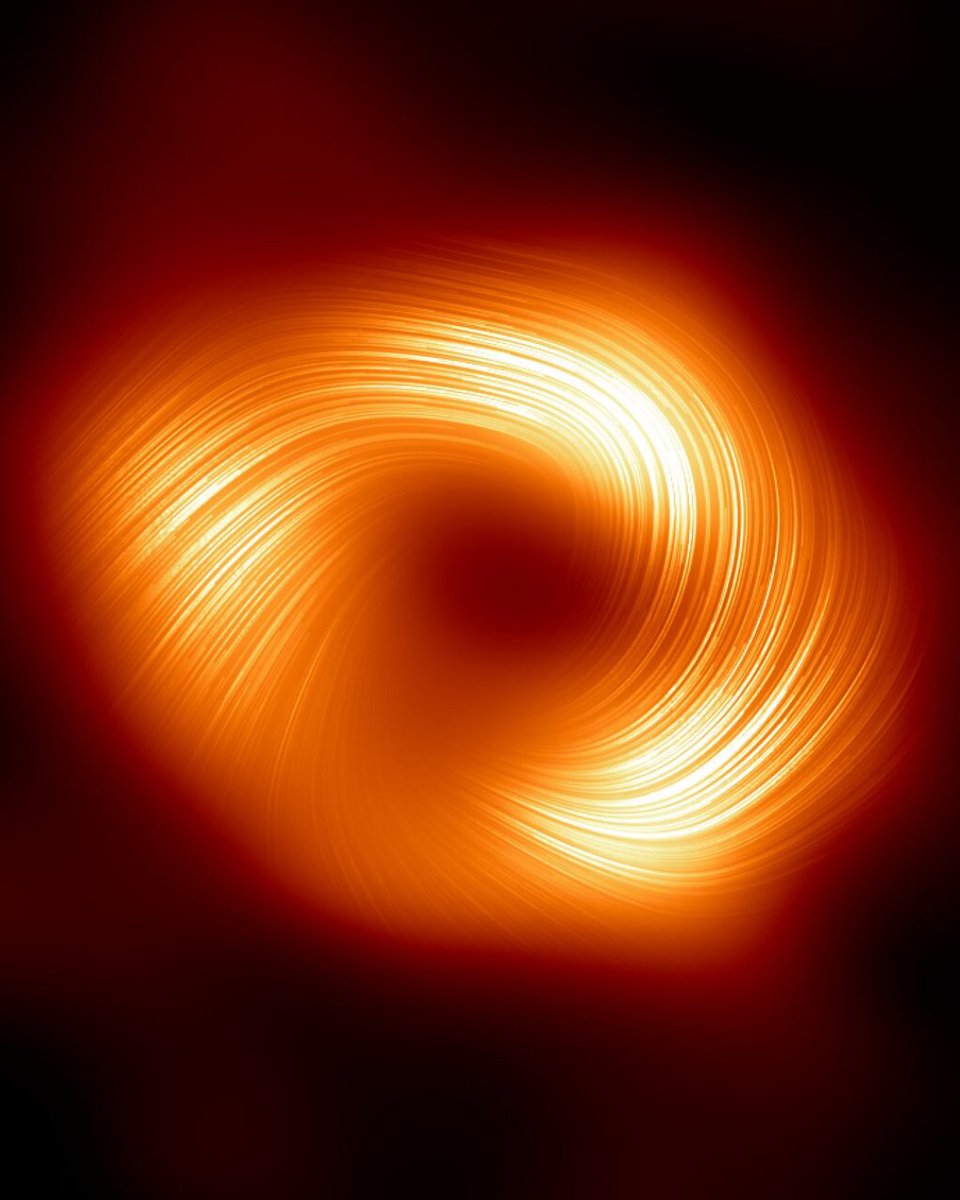
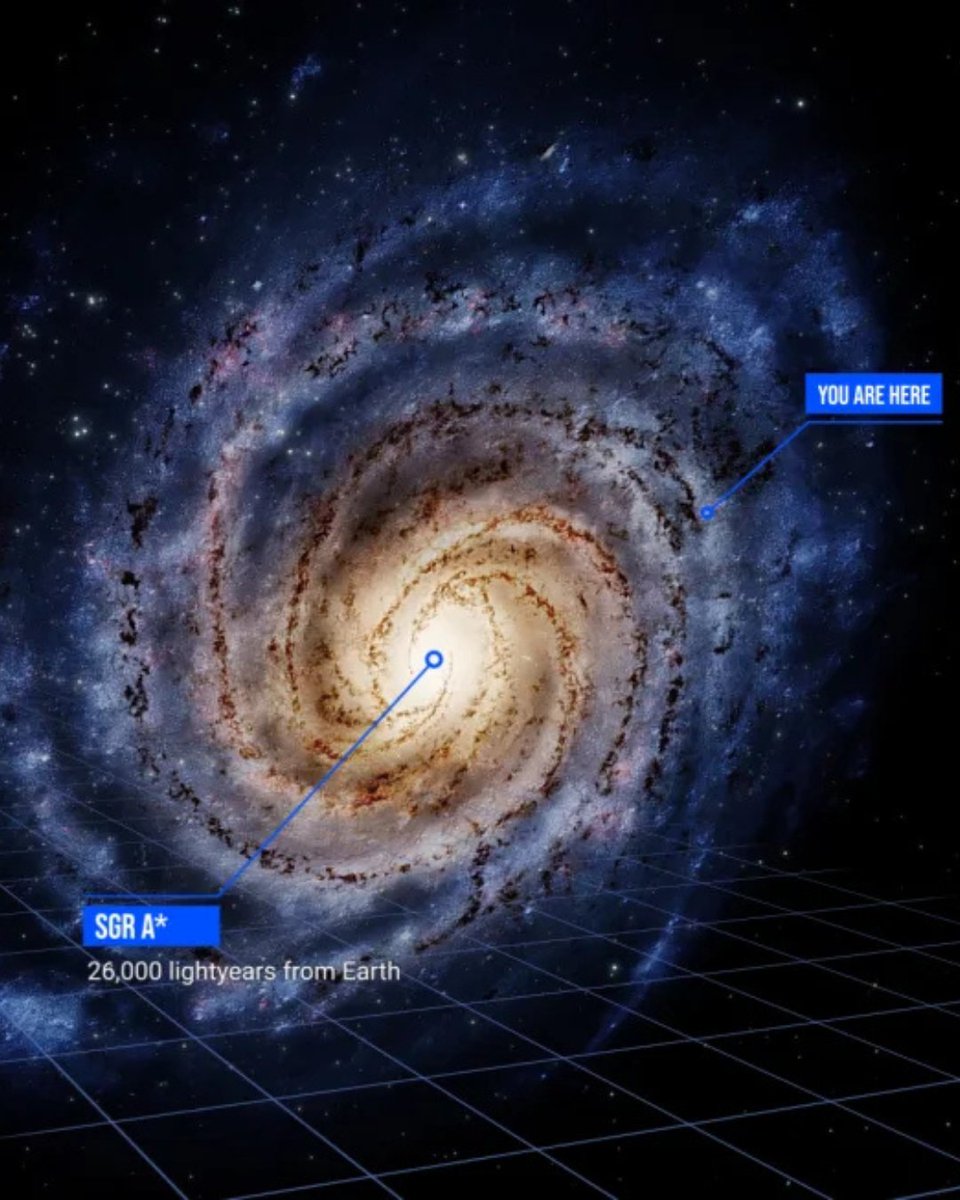
A new image of Sagittarius A* from the Event Horizon Telescope shows shockingly ordered magnetic structures near the black hole—defying expectations.
Our study suggests black holes emerge from coherent vortex dynamics in Planck-scale plasma, not just collapsing matter.
It's time to rethink gravity. 🌌
Image: EHT Collaboration / Polarized view of Sgr A*
#ISFscience #Spaceexploration #Science #Internationalspacefederation #GravityControl #UnifiedPhysics #SpaceTechnology
23
62
240
9,333

9 Jul 2025
We’re not just imagining the future — we’re building it.
At ISF, we unify physics, power innovation with zero-point energy, and cultivate a truly sustainable, inclusive space economy.
#ISF #ZeroPointEnergy #FutureOfEnergy #GravityControl #UnifiedPhysics #QuantumVacuum
2
11
486
9 Jul 2025
We’re not just imagining the future — we’re building it.
At ISF, we unify physics, power innovation with zero-point energy, and cultivate a truly sustainable, inclusive space economy.
#ISF #NassimHaramein #ZeroPointEnergy #FutureOfEnergy #GravityControl #UnifiedPhysics #QuantumVacuum #SpaceTechnology
7
22
123
2,766
4 Jul 2025
A calculation shows that Hawking radiation from a black hole core inside the proton—emitted at the charge radius over the quantum time scale—yields energy (ε) equivalent to the proton mass (m_pc²).
Using Stefan-Boltzmann law at the Compton radius, the result links quantum vacuum fluctuations to rest mass via E = mc².
#ISFscience #Spaceexploration #Science #Mass #Internationalspacefederation #GravityControl #UnifiedPhysics #SpaceTechnology
9
28
132
4,387
30 Jun 2025
Do quantum wormholes form the very fabric of the universe? 🌀
Every proton may be composed of tiny wormholes—connecting us to the entire universe.
A cosmic web of superluminal connection, entanglement, and flow.
Learn more here - bit.ly/46koSv2
#ISFscience #Spaceexploration #Science #Internationalspacefederation #GravityControl #UnifiedPhysics #SpaceTechnology
8
21
112
2,983
18 Jun 2025
What if the universe is inside a black hole?
Not destruction—but creation.
A fractal structure where every atom holds infinite potential.
The event horizon? Just the edge of what we can perceive.
Beyond it—other universes. Other you’s.
Find out more on our website - bit.ly/448pDVC
#ISFscience #Spaceexploration #Science #Internationalspacefederation #ZeroPointEnergy #FutureOfEnergy #GravityControl #UnifiedPhysics #QuantumVacuum #SpaceTechnology
15
31
158
4,585
16 Jun 2025
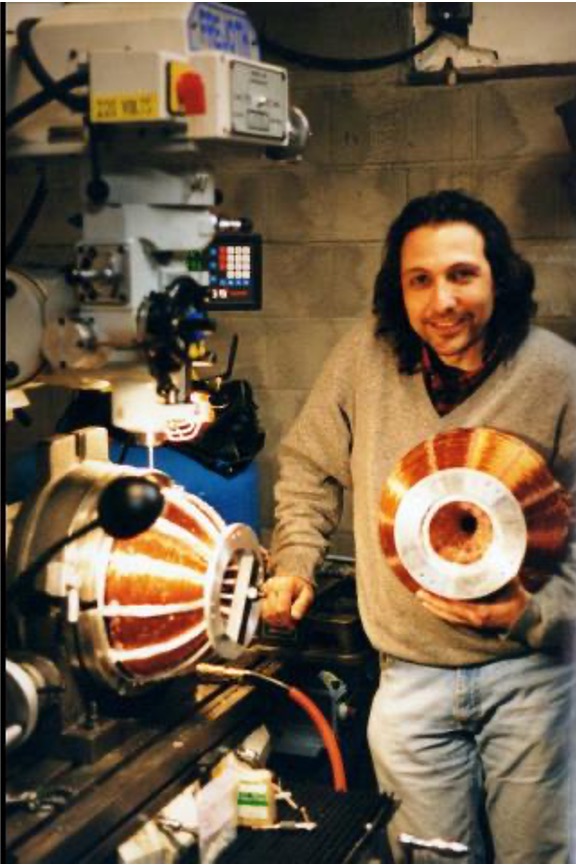
Almost 30 years ago, I began building a vision. Today, it’s a reality.
Clean, Unlimited, Transformative.
The future isn’t far off—it’s already happening.
Read more about us here - bit.ly/4iyHVV8
#ZeroPointEnergy #ZPE #FutureOfEnergy #ISFtechnology #Cleanenergy #QuantumPhysics #GravityControl #UnifiedScience #ISF #NassimHaramein
44
100
732
26,975
11 Jun 2025
Clean. Decentralized. Limitless.
Our Flux Resonator uses unified physics to harness quantum vacuum energy.
Discover how in The Origin of Mass and the Nature of Gravity 👉 bit.ly/44bDECU
#ISFtechnology #Gravitycontrol #Energyinnovation #Cleanenergy #Zeropointenergy #Quantumphysics #Unifiedphysics
27
83
333
12,569
10 Jun 2025
People often think of space as empty. But after decades of research, I can tell you — it’s anything but.
The vacuum is not a void. It’s a dynamic, energetic structure — the very source of mass, gravity, and even the organizational dynamics that give rise to life and consciousness.
You're not separate from the universe.
You are the universe, becoming aware of itself.
Explore more here - bit.ly/4jKBG0S
#ISFscience #Spaceexploration #Science #Internationalspacefederation #ZeroPointEnergy #FutureOfEnergy #GravityControl #UnifiedPhysics #QuantumVacuum #SpaceTechnology
30
83
305
9,121
6 Jun 2025
The International Space Federation is advancing unified physics to unlock zero-point energy and build a scalable space economy. Here’s how:
✅ Energy Without Limits — Unlocking abundant, clean energy through Zero Point Energy
✅ Science with Purpose — Turning breakthrough research into real solutions
✅ Access to the Final Frontier — Building a sustainable, inclusive space economy
ISF’s mission: energy without limits, science with purpose, and access to the final frontier.
🔗 Learn more: bit.ly/4iyHVV8
#ISF #NassimHaramein #ZeroPointEnergy #FutureOfEnergy #GravityControl #UnifiedPhysics #QuantumVacuum #SpaceTechnology
7
27
119
2,940
4 Jun 2025
Redefining what’s possible with gravity.
Our unified field theory connects gravity to the quantum vacuum—laying the groundwork for:
- Propulsion with no fuel
- Gravity-defying systems
- Energy from spacetime itself
We’re building tomorrow’s tech—today.
#GravityControl #QuantumVacuum #UnifiedPhysics #ISF #NassimHaramein #FutureOfEnergy #SpaceTechnology #ZeroPointEnergy
16
34
156
3,525

23 Nov 2024
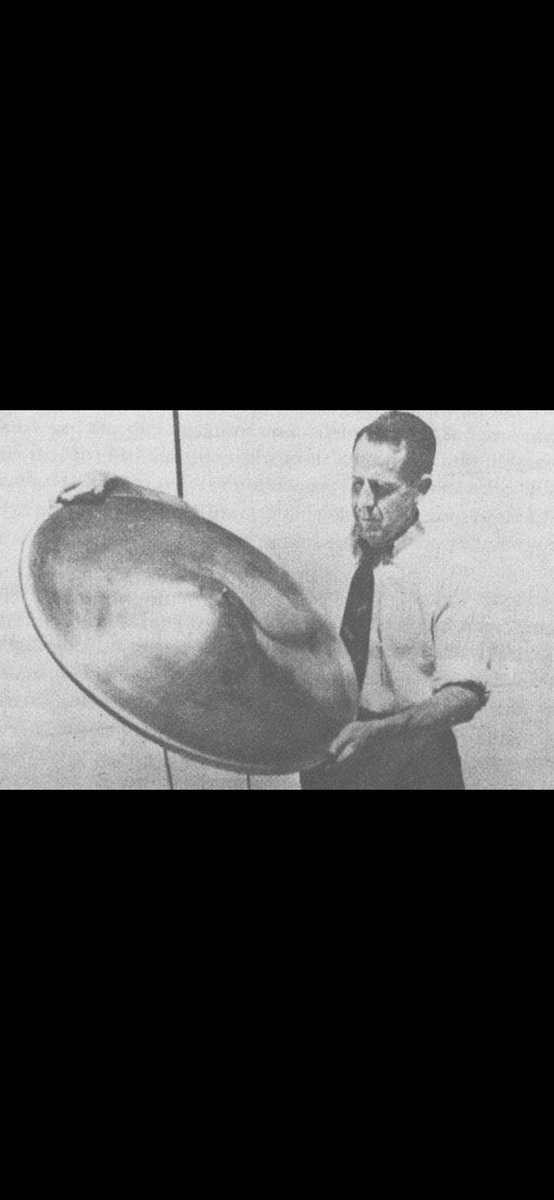
Apparently we "Cracked" GravityControl in 1954, if that were true then we, modern humans in modern human society,are going about our livesblissfully unaware that Anti-Gravity Vehicles are being deployed toexplorebeyond our Solar System, leaving the rest of us behind.
#ufotwitter
5
8
604

5 May 2024
Early Access for Patreons! Listen Today at
patreon.com/theswervepodcast 🎙🛸
#AntiGravity #Gravity #Technology #Electrogravitics #TownsendBrown #electromagnetism #BiefieldBrownEffect #IonicWind #GravityControl #AdvancedPropulsion #PhysicsResearch #physics #Science #podcast #Swerve
1
2
58

5 Apr 2024
Ep 28 Philo Farnsworth: The Inventor Behind Television with @driver49 Thanks for another great Episode.
#PhiloFarnsworth #InventorOfTelevision #AmericanAlchemy #GreekIndependenceDay #ProjectManCave #CosmicSummit #ControlledNuclearFusion #GravityControl #FusionEnergyFuture #QuantumMechanicsInsight #EinsteinAndFarnsworth #DIYFusionReactor #HistoricalInventions #TechPioneers #AdvancedTechnologies
7
6
11
1,137
19 Mar 2024
Revolutionary Technologies: The Future of Energy and Economy
#FutureEnergy #RevolutionaryTechnologies #SustainableEconomy #GravityControl #NuclearFusion
#IndustrialInterests #CleanEnergy #EnergyTransition #DisruptiveTechnology #RenewableEnergy
Paul Schatzkin
@driver49 Episode d
2
3
5
152

22 Feb 2024
#みんなでオキニのシューティングを貼ろう
Gravitycontrol Rapid acceleration Mobility break Cross shoot
重力加速制御応用の急加速突撃並びに攻撃対象との交差射撃による空間戦術。
未知のUFOエンジンが可能とした
"自弾に追い付いた自機による包囲射撃"
マニューバーGraMxs(グランエクス)!

3
4
566