
Wakefield high-security prison has abandoned its ‘offence-neutral’ policy, which housed men convicted of sexual offences alongside other prisoners, after two high-profile deaths.
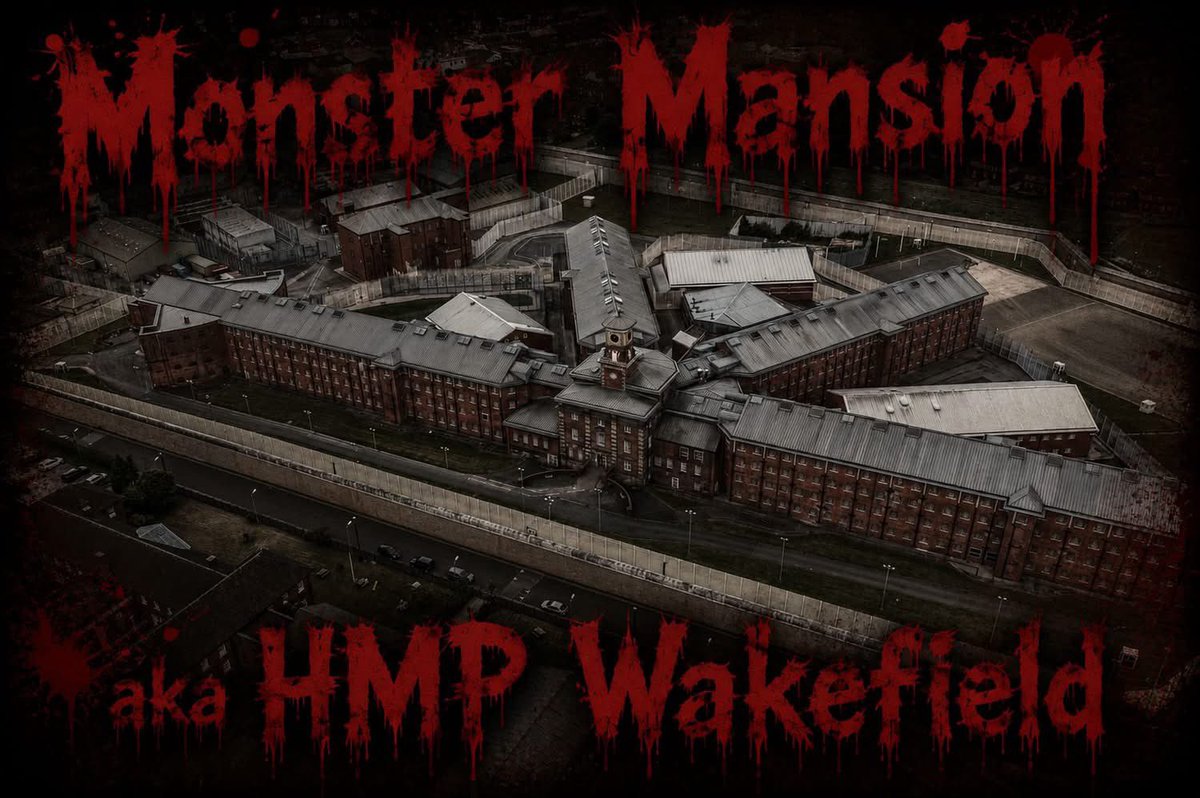
HMP Wakefield is a Category A high-security men’s prison located in West Yorkshire, England.
Often nicknamed the "Monster Mansion" or the "British Alcatraz," it is the largest high-security prison in the United Kingdom and Western Europe, primarily holding long-term, high-risk offenders, including serial killers and sexual offenders.
Paedophile Ian Watkins and child murderer Kyle Bevan were fatally attacked at HMP Wakefield in October and November last year.
Their deaths came weeks after HM Inspectorate of Prisons (HMIP) reported that violence had increased sharply at the prison, prisoners felt unsafe and infrastructure was deteriorating.
In their September 2025 report, inspectors had observed that an influx of younger men serving sentences for violent non-sexual crimes was threatening the stability of Wakefield, leading to older men convicted of sexual offences living in fear.
As a Category A facility, it holds individuals considered the most threatening to the public. It has a capacity of around 750 adult males, with a significant portion serving life sentences.
Now the findings of a follow-up inspection, published by HMIP on 8 June, reveal that the policy has changed, with sex offenders housed in separate units for their own protection – as happens in most other prisons.
HMIP said last week that out of eight areas they had identified as being of concern last September, good progress has only been made in two, while the others showed insufficient progress or no meaningful progress at all.
As well as the two alleged murders, Wakefield had seen two suicides and a death yet to be classified.
Prior to the two fatal attacks, prisoners convicted of sexual offences had been accommodated within the prison alongside others convicted of other serious offences. However, the report stated that since the killings, “a considerable number of prisoners had moved out of the prison to be replaced by others considered more suitable”.
It said that a new safety analyst was in post and there had been a prisoner safety survey to increase understanding of the causes of the violence. HMIP added that leaders had commissioned work, including a prisoner survey, to improve understanding of the underlying drivers for violence.
Inspectors also said that there had been insufficient progress on the infrastructure since last September, and, far from improving, “living conditions had deteriorated.
Wings were shabby, showers were in very poor condition, water boilers and washing machines were subject to regular breakdowns, and electrical issues sometimes affected emergency cell call bells.”
However, prison leaders had a “clear understanding” of the work required and had forwarded this to the Prison Service.
A Ministry of Justice spokesperson said: “Inspectors recognised early signs of improvement at HMP Wakefield, including reduced levels of violence.
But the prison continues to operate under immense pressure after this Government inherited a system at the peak of its crisis, and we are continuing work to drive forward improvements in key areas like healthcare and infrastructure.”
27



apply-for-public-appointment…
I will be leaving HMIP when my second term of office expires later this year. See advert for new Chief Inspector of Prisons - It is a brilliant job working with an outstanding team.
9
10
28
8,094

Now the MOJ are merging the IMB with the HMIP any independence they MAY of had will be gone,
Myself and other long termers viewed them with suspicion this merger will make people even more unlikely to speak to them
2
115
They definitely don't,
And now the MOJ are merging the IMB with the HMIP any independence they MAY of had will be gone,
Myself and other long termers viewed them with suspicion this merger will make people even more unlikely to speak to them
2
3
126
The Independent Monitoring Board for Prisons is made up of UNPAID volunteers,
The MOJ are merging them with the HM Inspectorate of Prisons (HMIP) who are full time and paid,
The excuse is to save money
In reality it will mean that issues in Prison will now probably get covered up
1
3
6
615


Feb 25
They say your first project is your most honest.
Here’s mine:
💔 I wrote about that naive, teenage love I thought was everything (“OAU Fine Girl”).
🌅 Then I realized I was everything, that life is bigger (“Aye Santorini”)
🎉 I celebrated that freedom, living with no apologies (“FLENJO”).
✈️ Then I found love anyway and I’m optimistic again(“HMIP”).
🔥 I got lost in the moment, very sensual (“Parago”).
🖤 Till I sat with my unspoken thoughts (“Mystery Rider”).
🙏🏽 And finally, I made peace with not knowing (“Safer”)
This is my debut EP. This is me. ❤️
#LYRXX, your Mystery Rider


4
22
35
739

Feb 19
A new joint report by Ofsted, the CQC, HMICFRS and HMIP warns that children affected by domestic
abuse are still too often overlooked and not consistently recognised as victims (despite the law being clear that they should be): safelives.org.uk/news-views/…
2
42

Feb 14
The only org that analyses morale regularly are HMIP who survey staff at every inspection. It's not scientific but mainly (with some exceptions) it's a very bleak view into organisational sickness. I'm not surprised HMPPS avoid this. Like so many other ways they ignore bad news.
1
2
98

Feb 8
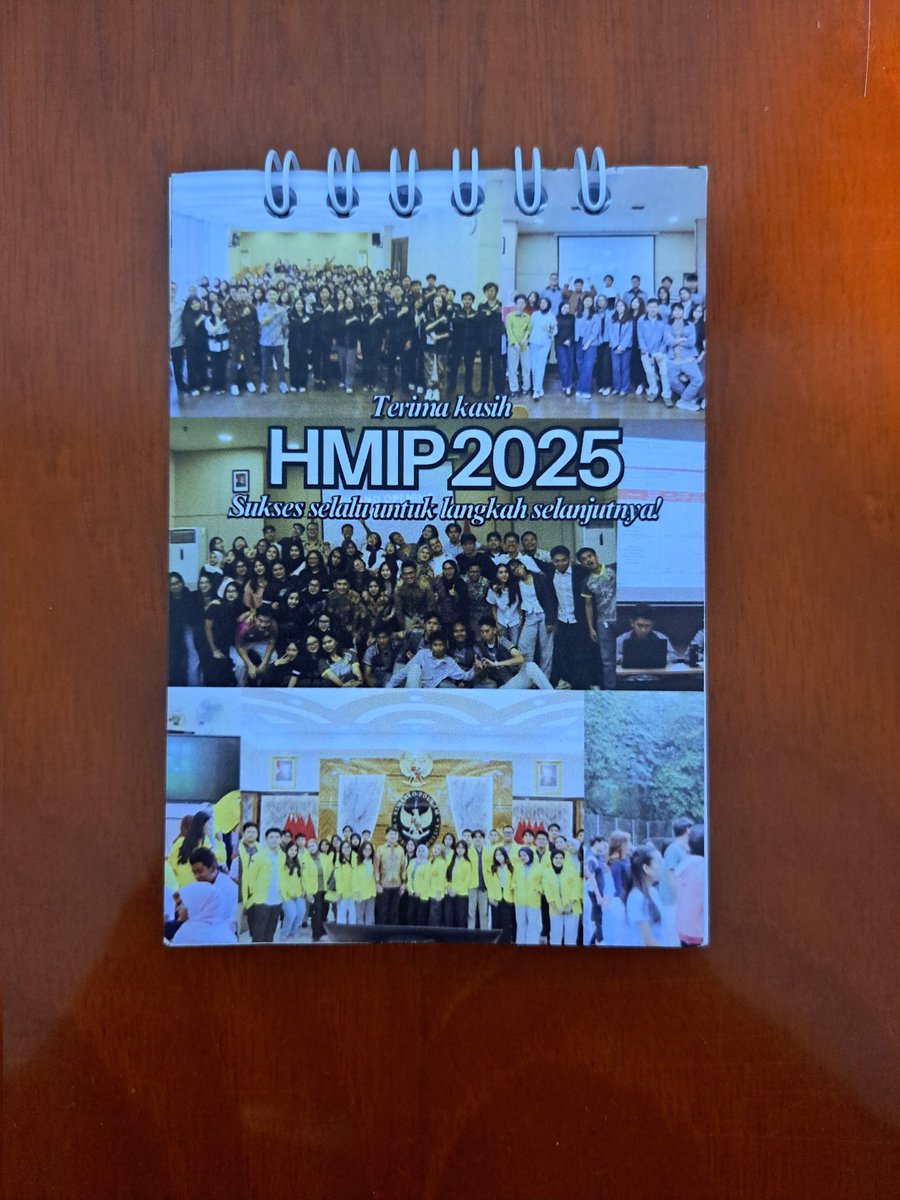
pulang dari jjak hmip dapet kenang2an ini. ukurannya kecil tapi kenangannya besar. filled with handwritten massage from each of your fungsionaris full of their memory of you selama 1 tahun kepengurusan. thank youuu, love you all @hmipui
shoutout untuk ide cerdasnya psdm!

1
8
553

Staffing levels are set according to risk. Criticism of inflexible staffing is on par to asking staff to be more lenient with the protection of their health and safety in the workplace. With HMIP comments influencing future planning, the comments are irresponsible and dangerous.

Morning Star - POA slams chief inspector over HMP Whitemoor ‘inflexible’ staffing comments
morningstaronline.co.uk/arti…
The Chief Inspector of Prisons was accused of “playing fast and loose with staff and prisoner safety” today following an unannounced inspection at HMP Whitemoor.
1
1
6
136

Has a dive been done into HMIP reports on English male prisons known to hold transgender male prisoners? Haven't looked for ages, but imo Isle of Wight, Rye Hill etc have come up before and limited issues in terms of Safety I think? @LucyHunterB @HotchkissRhona

Most male prisoners who identify as women are kept in the men’s estate. As are other types of vulnerable male prisoner.
6
626

Feb 2
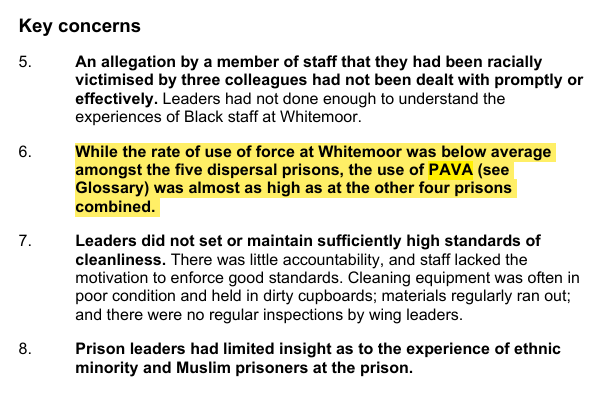
I didn't think much of this from HMIP... 👇
PAVA is the least injurious option available - and restoring control and order was always going to require some use of force.
It's almost like they're sewing the seeds for the next Governor to turn up and undo the progress...
1
2
49

Feb 1
What is most frustrating about announced inspections is how management behaviour changes drastically when one is imminent. Higher management suddenly appear on the frontline, touring wings and units, scrutinising paperwork, and insisting that records be brought up to date — paperwork that had often been allowed to fall behind for weeks or months beforehand. There would be a flurry of activity to “catch up,” not because standards had suddenly improved, but because scrutiny was imminent.
Even outside of announced inspections, there was a clear awareness among staff of which higher management would be visiting a unit. Staff would arrive and jokingly announce to each other, “Today it’s [Name] doing the unit check — we must be up to date with our paperwork!” — referring to things like food temperature records, risk documentation, and other essential administrative tasks. This was recognition that certain managers were highly professional and insisted that standards be maintained consistently. Yet, outside of these visits, paperwork and other administrative duties often fell behind. This wasn’t necessarily due to negligence — the focus of frontline staff is overwhelmingly on maintaining safety and control, keeping prisoners secure, and responding to urgent incidents. Accurate paperwork is vital for safety and fairness, but in a busy, high-pressure environment, administrative tasks can understandably slip. The problem arises when such slippage becomes normalised, and when professional management visits are seen as theatrical rather than a genuine attempt to embed consistent standards.
When announced inspections trigger visibility, urgency, and professionalism that are otherwise absent, they lose their value entirely. They measure how well an establishment can prepare for scrutiny — not how safely, ethically, or consistently it actually operates. This problem is compounded by inspection and investigation reports — whether from His Majesty’s Inspectorate of Prisons (HMIP), internal investigations, or other oversight bodies — routinely containing the same repetitive action points year after year. Violence, self-harm, staff shortages, poor purposeful activity, and leadership failures are highlighted repeatedly, yet the systemic problems remain. Over twenty years of largely the same concerns being raised, acted on, and then raised again should have been enough evidence of systemic failure. Some paperwork backlogs and inconsistencies were even deliberately manipulated, either due to misunderstanding of systems or to ensure targets were reached — yet these failures, whether accidental or deliberate, corroded trust in internal processes over decades.
More recently, I reported concerns about the treatment of prisoners on a particular hospital wing. A few changes were made in response to earlier issues, but these adjustments have not fully addressed the underlying problems. This situation serves as a clear example of how systemic issues persist even when isolated fixes are implemented: those raising concerns are often sidelined or marginalised, while some of the staff responsible for wrongdoing remain in post. My concerns appear to have received no meaningful acknowledgement, except that I was told, “those staff you mention have left now.”It is deeply frustrating that, in practice, it is those acting correctly who end up disadvantaged, while those guilty of misconduct or wrongdoing frequently remain unchallenged.
This is not just theoretical. In a completely different context, the Medomsley Detention Centre scandal shows just how catastrophic systemic failure can be when serious issues are ignored or dismissed over decades. Medomsley was a youth detention centre in County Durham that operated from 1961 until the late 1980s. An independent investigation by the Prisons and Probation Ombudsman found that detainees were subjected to widespread physical and sexual abuse for years, with the culture of violence going “unchallenged” throughout its entire period of operation. The ombudsman concluded that staff knew or should have known about the abuse, yet collusion, incompetence, or a lack of professional curiosity allowed it to continue. (itv.com)
The abuse included extreme violence, humiliation, and sexual assault — part of a regime paid for and run by the state — and despite repeated allegations, external oversight bodies failed to intervene for decades. Thousands of former detainees have now come forward, and the government has formally issued an apology for these historical abuses. (gov.uk)
If such systemic failure could occur over more than two decades in one institution — with oversight bodies aware, and with evidence repeatedly being ignored or dismissed — why should we be surprised when serious issues in today’s prisons go unchallenged until they become part of the historical record?
The core lesson is simple: inspections, reports, and oversight are only as effective as the leadership that acts on them. Brief spikes of professionalism around inspections or the visits of highly professional managers are not a substitute for sustained leadership, accountability, and a culture that genuinely listens, learns, and protects people — both prisoners and staff alike.
During my career, I observed how operating reactively rather than proactively meant higher management were constantly dealing with the consequences of previous failures — including tragic outcomes such as the murder of Zahid Mubarek — leaving little time or focus to embed meaningful training. Many sessions were cancelled due to staff shortages, and training was often squeezed into limited slots when units remained fully operational, meaning professional development was episodic rather than consistent. I would highly recommend that, in future, units be periodically shut down to allow full, uninterrupted training for staff. The lack of proactive leadership also allowed misconduct and falsification of risk assessments to go unchecked, creating unsafe conditions for prisoners and staff alike. Experienced staff who tried to raise concerns were often sidelined or marginalised, while those guilty of misconduct or wrongdoing frequently remained unchallenged in their posts. This culture — reactive, egotistical, and protective of reputation over safety — has persisted for decades and continues to have catastrophic consequences for morale, prisoner welfare, and the integrity of the service.
There is also a broader systemic concern about how staff implicated in serious misconduct are dealt with. In many workplaces, including the public sector, disputes are sometimes resolved through settlement agreements (formerly compromise agreements), which can include confidentiality clauses. These agreements can prevent disclosure of facts or even the existence of the agreement itself. Legally, a confidentiality clause cannot stop someone from making a protected disclosure, but in practice, these agreements can obscure wrongdoing and protect reputations while leaving systemic issues unresolved. (acas.org.uk, nao.org.uk)
What grabs my attention in this area is how my own situation — being effectively pushed out, seeing my career damaged after raising concerns, and observing others treated similarly — unfolded. This should have been an area of genuine concern for government, regulators, and oversight bodies, as someone had to be astute enough to understand the difference between legitimate confidentiality and what should not be kept quiet — especially when public safety or misconduct is involved. Money and compensation should never dictate whether the truth is told. This is why I have pushed for easier, externally managed whistleblowing routes: internal reporting too often fails, causes harm, and leaves the door open for corruption rather than accountability. (acas.org.uk)
Feb 1

Absolutely! Regular searches, everyone gets checked, not just before a security auditors come in, like in my old jail 🙄
2
201

#Hounslow’s Youth Justice Service (YJS) has been rated as ‘Requires improvement’ following an inspection of work with children and victims by His Majesty’s Inspectorate of Probation (HMIP).
While inspectors praised the service’s ‘passionate and committed’ work with victims, they highlighted serious concerns regarding the assessment of risks to children and the community hounslowherald.com/hounslow-…
2
52

Jan 24
“Children who are affected by domestic abuse are not being consistently recognised as victims despite this being set out in law, according to a new joint report by Ofsted, the CQC, HMICFRS, and HMIP” gov.uk/government/news/child…
2
9
2,353

17 Nov 2025
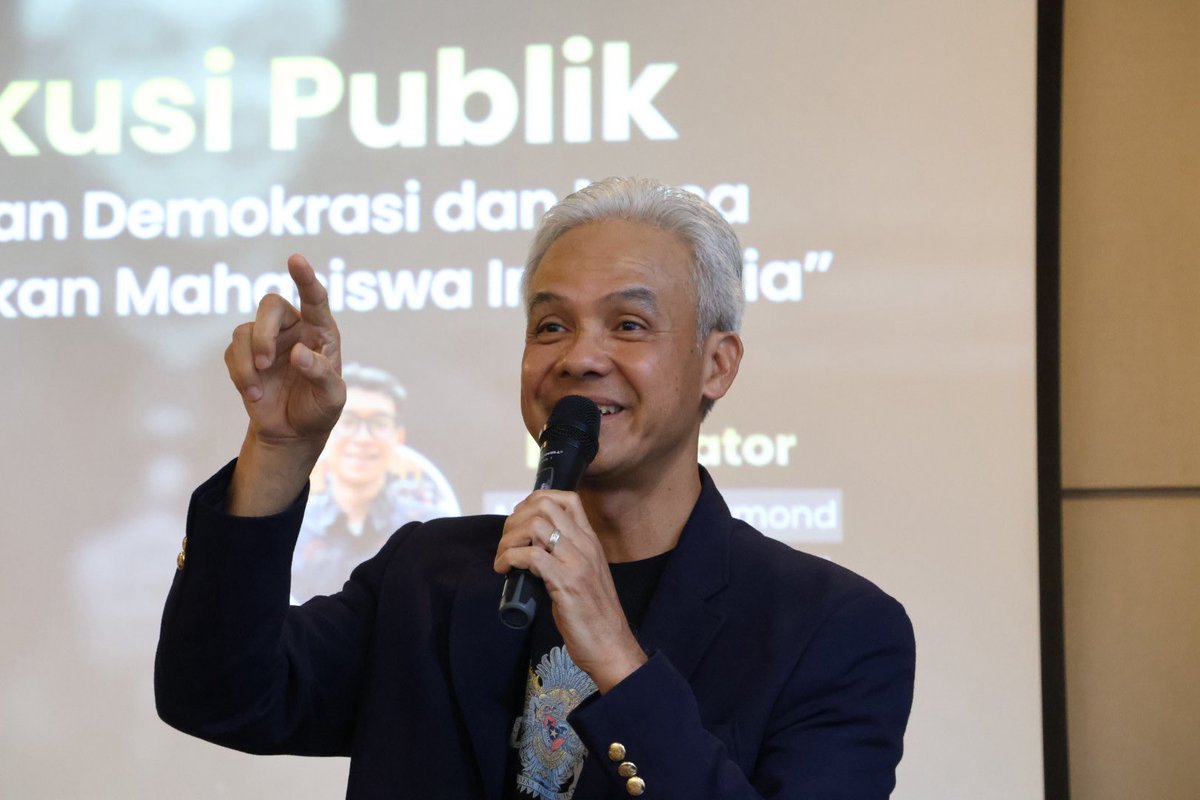
Anyway here’s my favorite shots that I’ve taken today from Diskusi Publik Ganjar Pranowo mengenai Tantangan Demokrasi dan Masa Depan Gerakan Mahasiswa Indonesia bersama HMIP UI tercinta<3 such an honor, Pak!

3
37
2,745

13 Nov 2025
@HMIPrisonsnews An inquiry into the effectiveness of PIPE units within prisons is recommended for HMIP.
2
2
5
159