
9 Feb 2025
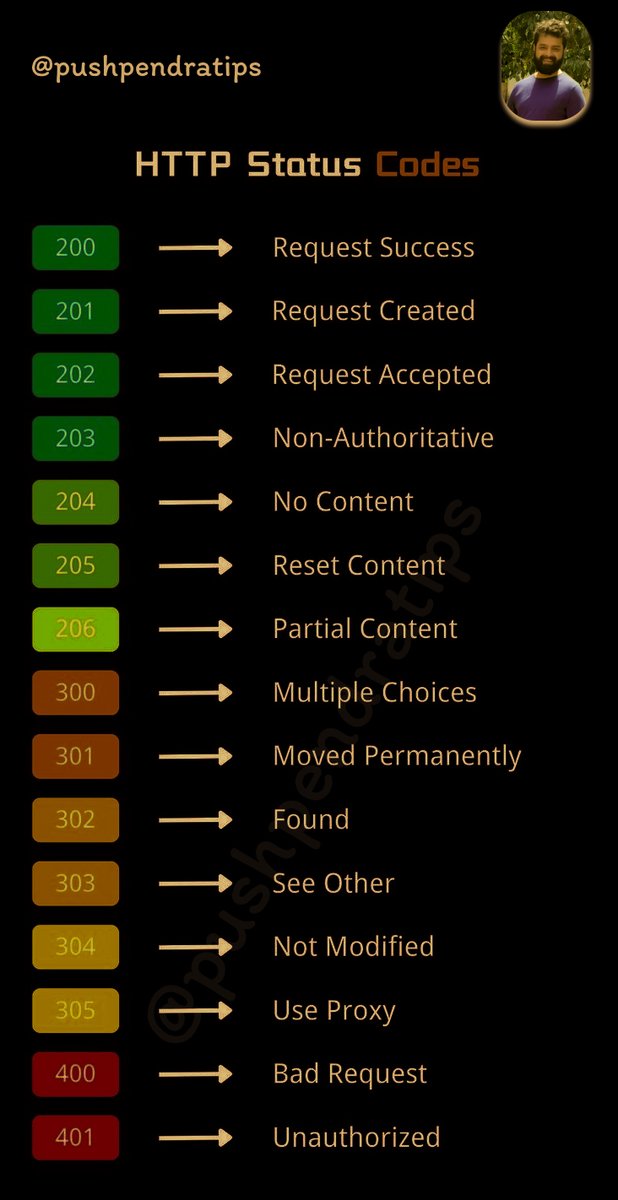
HTTP (HyperText Transfer Protocol) status codes are three-digit numbers returned by a server to indicate the result of a client's request. They are categorized into five main types:
🔵 1xx: Informational (Request received, continuing process)
100 Continue – Server received request headers; client should continue sending the body.
101 Switching Protocols – Server switching protocols as requested.
102 Processing – Server received the request and is processing it.
🟢 2xx: Success (Request successfully received, understood, and accepted)
200 OK – Request was successful.
201 Created – New resource created successfully.
202 Accepted – Request accepted but processing is not complete.
204 No Content – Request successful, but no content is returned.
🟡 3xx: Redirection (Further action needed to complete the request)
301 Moved Permanently – Resource moved to a new URL permanently.
302 Found – Resource temporarily moved to a different URL.
304 Not Modified – Resource not changed; use cached version.
🔴 4xx: Client Errors (Client-side issues)
400 Bad Request – Invalid syntax in request.
401 Unauthorized – Authentication required.
403 Forbidden – Server understood but refuses to authorize.
404 Not Found – Requested resource not found.
405 Method Not Allowed – HTTP method not supported.
429 Too Many Requests – Client has sent too many requests in a short time.
⚫ 5xx: Server Errors (Server-side issues)
500 Internal Server Error – Generic error message for server failure.
502 Bad Gateway – Server received an invalid response from upstream.
503 Service Unavailable – Server is temporarily unavailable.
504 Gateway Timeout – Server acting as a gateway did not get a response in time.
#HTTP #HTTPStatus #HTTPStatusCodes #javascript
#WebDevelopment #WebDev #APIs #fullstack #node
#Networking #BackendDevelopment #webdeveloper
#HTTP200 #HTTP201 #HTTP204 #CodingChallenge
#SuccessResponse #HTTP301 #coder #coding
#HTTP302 #HTTP304 #Redirect #HTTP400
#HTTP401 #HTTP403 #HTTP404 #ClientError
#HTTP500 #HTTP502 #HTTP503 #ServerError
28
4
29
1,470

30 Aug 2023
GoogleのGary氏が、HTTP304は誤った影響を与える可能性があることについて言及。
何らかの問題で間違ったコンテンツを提供した後に、コンテンツの更新がないことをクローラーに伝えるHTTP304が返されると、再クロールが試行されず、悪い方に働く可能性があると述べました。
seroundtable.com/google-http…
3
209

31 Mar 2022
主に環境構築をメインで学びました!Linuxの環境構築は出来ましたが、ターミナルとDockerの動きが理解出来ませんでした。
Docker内でイメージは作成しましたが、コンテナが指定したポートで作成されなく、かつhttp304エラー苦戦。頑張ります。
#独学エンジニア
#駆け出しエンジニアと繋がりたい
11

