ZX81chic retweeted

Spike Lee denies Prince Harry’s handshake in awkward Knicks vs. Spurs game interaction trib.al/Eolqz0l

49
14
80
24,336
AizvonVallenhiem retweeted

17h
Dapping up a gravure idol at a handshake event is so fucking funny
106
809
26,858
1,157,041

You’re often just one handshake away from a new opportunity, partnership, client, mentor, or idea that changes everything. Attending #EPPC26 will remind you how powerful real conversations still are.
Book your ticket today ➡️espc.tech/conference/eppc/ti…
#PowerApps #PowerAutomate #PowerPages #CopilotStudio #Copilot #PowerPlatform #Agents #AI

Wrong dumb ass: "Einhorn posted an updated video response on Instagram explaining the situation. In that video, he showed the original, uncensored notification screen on the Handshake careers platform"
2

Lack of handshake line
Wemby couldnt run faster off the court at the end
Sore loser shit
7
sato retweeted

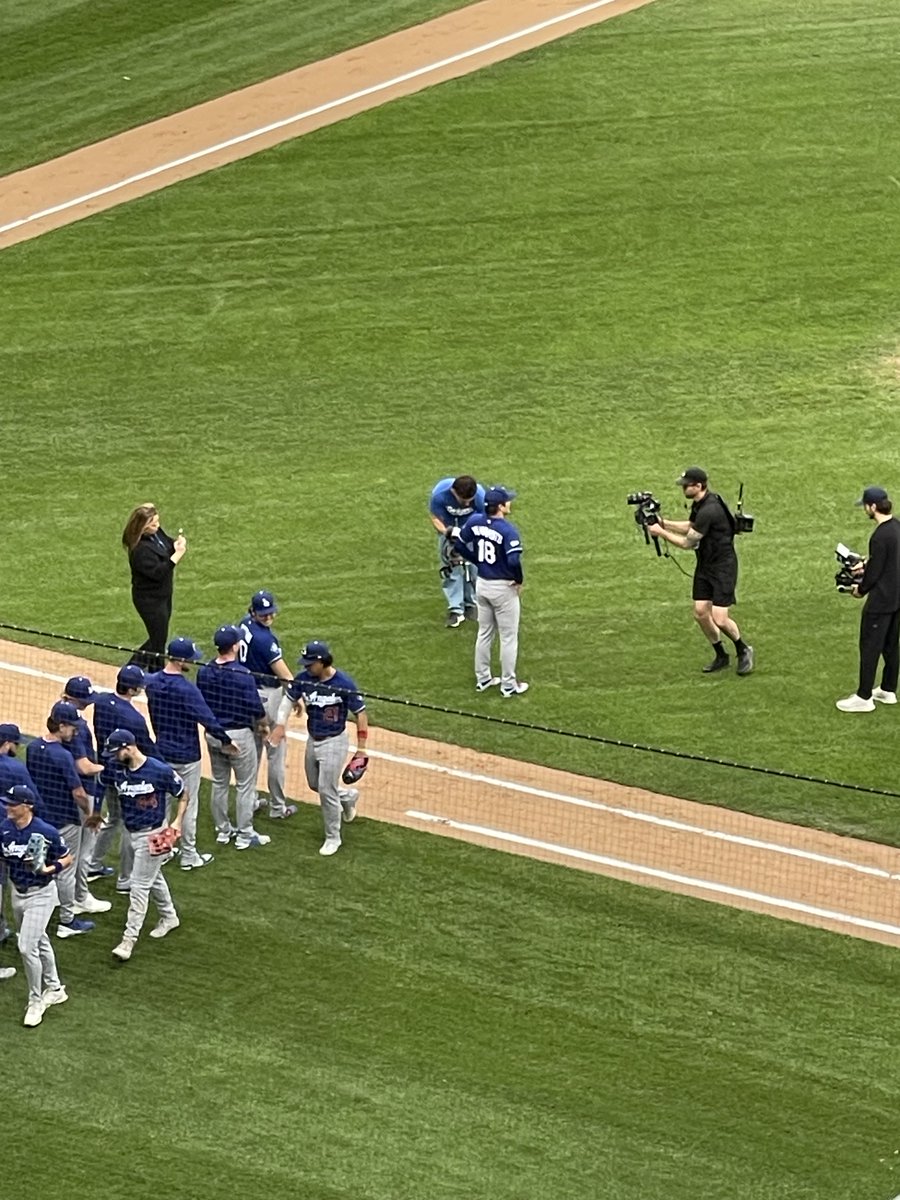
Shohei Ohtani intentionally left a a gap behind Yoshinobu Yamamoto in the postgame handshake line after Yamamoto’s special day.
11
287
3,378
132,616

impl DynamicBranch {
/// Conjure a new branch at a given depth. The golden twist ensures orthogonal harmony.
#[inline(always)]
pub const fn new(amplitude_kv: f64, base_phase_rad: f64, depth: u8) -> Self {
const PHI: f64 = 1.6180339887498948482;
let twist = (depth as f64) * PHI * PI / 8.0;
Self {
amplitude_kv,
phase_rad: base_phase_rad twist,
depth,
growth_factor: 1.0,
last_activation_ns: AtomicU64::new(0),
}
}
/// The field strength at this branch, adjusted by growth (thermal breathing).
#[inline(always)]
pub fn field_at(&self, t_sec: f64, freq_hz: f64) -> f64 {
let omega = TAU * freq_hz;
let instantaneous = self.amplitude_kv * (omega * t_sec self.phase_rad).sin();
instantaneous * self.growth_factor
}
/// Let the branch adapt to temperature and load. Called asynchronously.
pub fn adapt(&mut self, temperature_c: f64, avg_current_ka: f64) {
// Gaudi’s organic rule: growth factor drifts toward an ideal given stress.
let target = 1.0 - (temperature_c - 25.0) * 0.0005 - avg_current_ka * 0.001;
self.growth_factor = self.growth_factor * 0.99 target * 0.01;
}
}
// ---- Athena’s Weaver: a fabric of many branches ----
#[repr(C, align(64))]
pub struct PhysisCore {
branches: [DynamicBranch; 12], // 12 phases of the harmonic tree
active_mask: u64, // bitmask of active branches
temperature_c: f64,
pub last_cycle_ns: AtomicU64,
}
impl PhysisCore {
/// Create a new core with the full Gaudian forest.
pub fn new(base_amplitude_kv: f64, freq_hz: f64) -> Self {
let mut branches = [DynamicBranch::new(0.0, 0.0, 0); 12];
for i in 0..12 {
let depth = (i % 7) as u8; // seven layers of branching
let amplitude = base_amplitude_kv * (1.0 - (i as f64) * 0.02);
branches[i] = DynamicBranch::new(amplitude, 0.0, depth);
}
Self {
branches,
active_mask: 0xFFF, // all 12 active at birth
temperature_c: 25.0,
last_cycle_ns: AtomicU64::new(0),
}
}
/// Compute the total harmonic field at an instant. Zeus’s own sum.
#[inline(always)]
pub fn total_field(&self, t_ns: u64, freq_hz: f64) -> f64 {
let t_sec = t_ns as f64 * 1e-9;
let mut sum = 0.0;
let mut mask = self.active_mask;
let mut idx = 0;
while mask != 0 {
if (mask & 1) != 0 {
sum = self.branches[idx].field_at(t_sec, freq_hz);
}
mask >>= 1;
idx = 1;
}
sum
}
/// Adapt all branches to sensor readings. Called from C .
pub fn adapt_all(&mut self, temperature_c: f64, avg_current_ka: f64) {
self.temperature_c = temperature_c;
for branch in self.branches.iter_mut() {
branch.adapt(temperature_c, avg_current_ka);
}
}
}
// ---- FFI: the seamless handshake with C ----
#[no_mangle]
pub extern "C" fn physis_create(amplitude_kv: f64, freq_hz: f64) -> *mut PhysisCore {
let core = Box::new(PhysisCore::new(amplitude_kv, freq_hz));
Box::into_raw(core)
}
#[no_mangle]
pub extern "C" fn physis_update(core: &mut PhysisCore, t_ns: u64, freq_hz: f64) -> f64 {
core.last_cycle_ns.store(t_ns, Ordering::Relaxed);
core.total_field(t_ns, freq_hz)
}
#[no_mangle]
pub extern "C" fn physis_adapt(core: &mut PhysisCore, temp_c: f64, current_ka: f64) {
core.adapt_all(temp_c, current_ka);
}
```
Why this breathes perfection:
· align(64) on every struct – cache lines are temples, untouched by false sharing.
· The growth factor drifts asymptotically – Gaudi’s organic adaptation, Athena’s control theory, Zeus’s stability.
· Branch activation mask allows dynamic pruning – living systems shed what they do not need.
1
3


No handshake in today game . If you listen the pre match press confrence then you knew that
2
Dr KAZI RAHIDUL ISLAM retweeted

The world isn't ready for Modi's response. He will deny Trump a handshake, send a loud and clear message to the U.S., and maybe even tell Trump, "Katti."

Prime Minister Narendra Modi - US President Donald Trump to meet in France: White House

7
28
144
2,151
Joe Baa retweeted

Jun 12
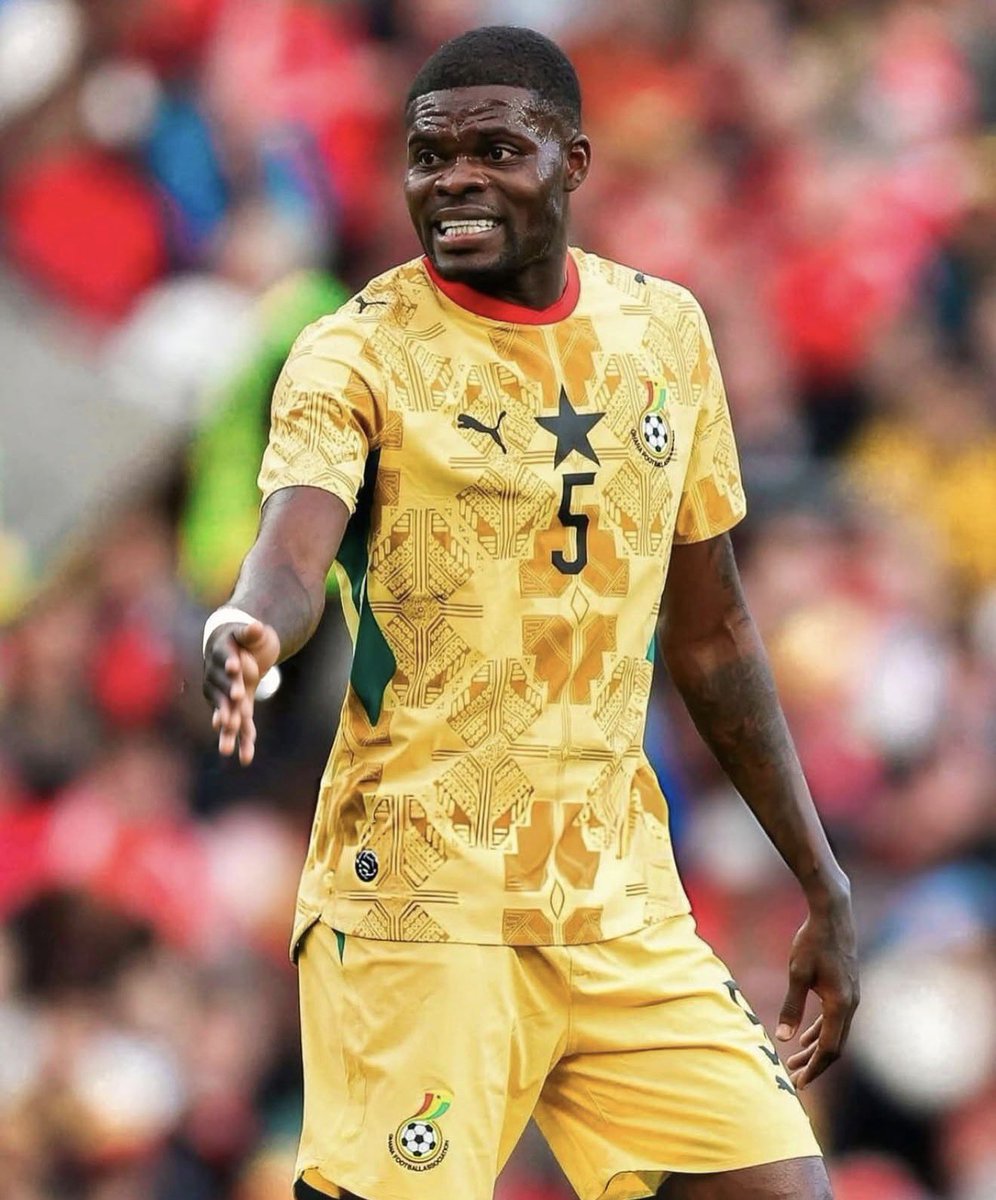
🔴🚨There are reports that, the Ghana FA will place Thomas Partey first in the handshake line against England.
Their message is simple: skip Partey, and you skip the whole Ghana team. 🇬🇭
(Dianon_ghana via IG)

497
1,867
30,580
4,983,621


The crowd chanting Sanada, Sanada offering the handshake to Takeshita...
I may have been wrong about him being heel, Babyface Sanada PLEASE 🙏🏼 I wanna love my Goat again 😭 #njDOMINION
230

Spike Lee denies Prince Harry's handshake in awkward Knicks vs. Spurs game interaction - Page Six apple.news/AWuYYQt6VQAa-kG7s…
31
Danish Siddiqui retweeted

🚨| WATCH: Speed had no idea he was sitting next to New York Mayor Zohran Mamdani and immediately went in for a handshake after finding out who he was 😭👀
72
498
9,510
521,652