
May 22
Simuler le Jeu de la Vie de Conway à l'infini avec l'algorithme HashLife et du C 23 moderne — un projet construit de zéro par quelqu'un qui ne connaissait pas le C il y a huit mois. ⬇️
news.humancoders.com/t/cpp/i…
7
506

Apr 24
Moving from the BHO league to professional hash? Prepare for a price hike. Quality costs, and this is the big leagues. Watch now. #HashLife #Concentrates #CannabisCommunity #Terps
1
4
142

Apr 11
Most rosin brands have one tier. They call it premium. You call it a guess.
We built four tiers so you always know exactly what you are reaching for before you open the jar.
Select Wash is your everyday standard. Clean inputs, consistent quality, reliable effect. Not entry-level, but the right level for the right session.
Craft Wash is where most brands would stop and call it their top tier. We call it the middle. Tighter inputs, better terpene retention, more expressive on the palate.
Reserve Wash is small-batch, single-cultivar, sourced from growers we have worked with long enough to know what they are capable of. Open this one when the moment matters.
Ultra Reserve is the ceiling. Best inputs, lowest yield, most complex expression. Not produced to meet demand, but produced when the inputs earn it. Limited every time.
Not sure which tier is right for your next session?
Drop a comment or DM us. We will tell you straight. No upsell, just the right call.
Link in bio to shop all four.
#solventless #thca #knowyourflow #hash #hashlife




3
3
8
584

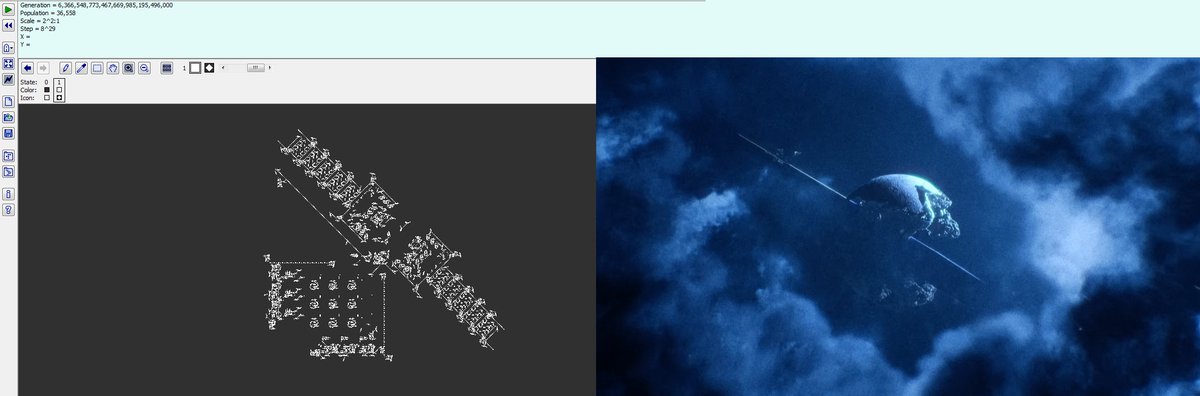
The ship also looks like this hashlife computation found on the game of life's wiki
9
346
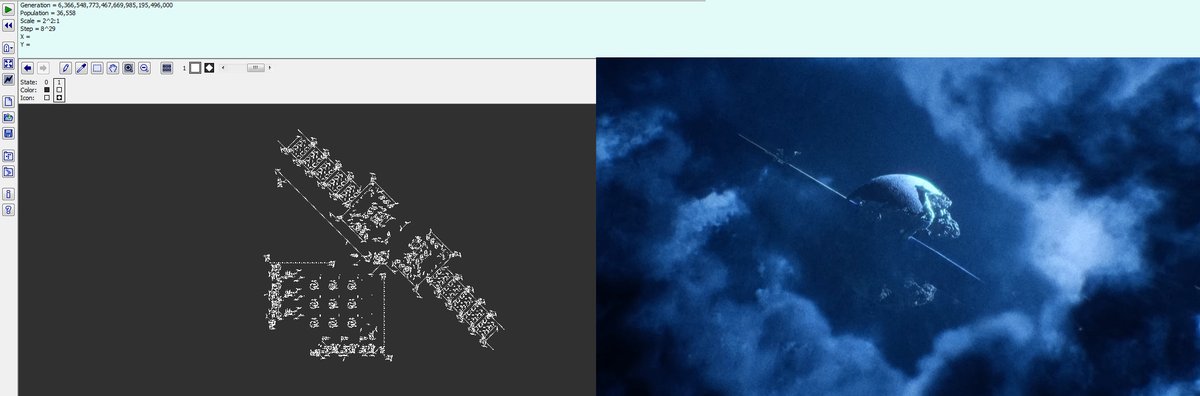
Thought this was fairly neat too. The marathon ship looks like a hashlife computation. Reverse searched the green scroll at the end which led to Conway's Game Of Life. Then I found this image on the wiki page.
18
6,262

in retrospect we shoulda updated far more from hashlife
Jan 13

in retrospect all of us should have updated much more from alphago
2
174

Some more stuff I would add:
Tier 4:
Consistent histories
Quantum Darwinism
Anthropic decision theory (@Trotztd)
Tier 5:
Youngness paradox
Mangled worlds (@strataforma)
Centered worlds (@Trotztd)
Ekpyrosis/brane cosmology
The crazy train
Past hypothesis
Tier 6:
Top-down cosmology
Boltzmann babies
Platonic-formal objective collapse
Hartle-Hawking state
Law without law
Dust theory
Cosmic host (@Trotztd)
Multiverse-wide cooperation
Physical hypercomputation (@niplav)
Tier 7:
Different preferred bases/momentum-space aliens
Fourier-worlds
Digital mind hashlife algorithms (@Trotztd...?)
Garden-of-Eden theorems
Computational complexity of experience
Anthropic superselection rules
Mutual anthropic capture
Exploratory ancestor sims (@Trotztd)
Ultimate neartermism
Tier 8:
Arithmetical levels of CTD violations
---
There is a lot of stuff related to quantum cosmology, active inference, and probably evolutionary dynamics/facilitated variation/complex systems theory that I woud like to look into as well, but am not realistically going to. So I'll just post a few resources instead
arxiv.org/abs/1712.01826 (namesake of the Law without law idea; very rich in ideas)
scispace.com/pdf/a-complete-… (same line of thought)
arxiv.org/abs/quant-ph/00111… (of course, Schmidhuber came up with all of this first -- but it is a weirdly good and broad paper)
arxiv.org/abs/1608.05377 (every paper by Jess Riedel, really)
longtermrisk.org/files/Multi…
sci-hub.st/10.1103/PhysRevD.…
n.cohomology.group/wallace-t…
arxiv.org/abs/1409.2506 and assorted other weird practical constraints to life
finmoorhouse.com/writing/sim…
iopscience.iop.org/article/1…
arxiv.org/abs/0906.0042
jetpress.org/volume12/Cosmol…
ned.ipac.caltech.edu/level5/…
3
1
14
754


5 Nov 2025
CS theorizes at least somewhat about becoming (computational complexity and so on)
The idea is that even if we had the "block universe" specification there would still be some "further fact".
Like, if you took snapshots of the CA states of a Game of Life simulator, there would be "further facts" about the algorithm, like HashLife
Theories of being seem like they're "lenses" in that they snapshot some data that is "recordable" or "sits still", that sort of thing
I guess it is not *entirely* obvious that there is one process giving rise to all observable models of being-theories but it seems like a parsimonious monistic theory
1
4
131

5 Nov 2025
hmmm, I see. so the philosopher could notice "in addition to the constraints of the GoL rules, there seems to be an additional constraint where the states are in a subset such that hashlife could efficiently compute them"
2
2
82
5 Nov 2025
Say there is a lifeform philosopher in Conway's Game of Life. Theory of being should include things like "values of cells in GOL block universe", and logical constraints (CA rules).
However, there are things the philosopher doesn't know. Like, "how is the grid computed?" (possibly confused question, but a pointer). For example the grid might be proximately computed by ordinary cellular automaton, or it might be computed by HashLife.
This makes a difference somehow, because at the very least, resource bounds imply facts about which being-theories can be "filled in" (by models of the theory) more cheaply / often.
"Becoming" as a concept gestures at processes including computational processes subject to resource bounds
2
3
129
27 Oct 2025
Generally agree; here's a minor complication though.
Regarding physicalism, what is meant by "cause"? An example to disambiguate two senses of "cause":
Suppose some life exists in Conway's Game of Life. But the engine running the grid is using HashLife. It computes the grid as a normal simulation would, but the directly represented entities are different. Now, is it still the case that past cell states "cause" future cell states?
Causality notion 1: Causality is about connection in something like "the ultimate computer of reality", hence the answer is no; past cell states don't cause future ones in the ultimate computer.
Causality notion 2: Causality is about necessary connection: past states taking on certain values necessitate future states doing so. In this case the answer is yes; HashLife still preserves the necessary connections.
Now this leads to two notions of physicalism according to the sense in which physics is closed, physicalism_1 and physicalism_2. Generally, the methodology of physics can only really tell us about physicalism_2 being likely (Humean limitations on knowing about causation). However, physicalist philosophers sometimes seem to be assuming physicalism_1. It might be reasonable to default to this (if no HashLife-like candidate reality theory has been proposed), however the evidence from the methodology of physics for physicalism_1 is pretty limited.
2
10
495
22 Oct 2025
Briefly from looking at the Chalmers paper:
- I agree that "how do we get macro experiences from micro entities" is an unsolved problem.
- I agree that, if physicalism is strictly true, then looking for macro entities in physics (wave function or something) is a promising candidate for getting macro experiences.
- However I think assuming physicalism is strictly true is somewhat dogmatic, *especially* if we are accepting macro experiences as real and something to explain. This is because physics has a "tunnel vision" of seeking to describe shared, discrete observations with universal laws, generally tending towards the microscopic.
- A somewhat less dogmatic setup: assume there is a reality r : R, physics p : P, mind m : M. Mappings f : R -> P, g : R -> M, showing physics and mind supervene on reality. Natural supervenience (there *mathematically exists* some h : P -> M commuting, h * f = g). Now we accept that reality may contain more than physics, e.g. reality may contain high-level entities. HashLife is an inspirational analogy: the physics of HashLife is the low-level of Conway's Game of Life, yet there is more to the reality of the HashLife program than this procession of states. Now the primary phenomenal binding problem appears in the mapping g : R -> M. We need to maintain consistency with physics, yet we aren't assuming "physics is all there is". This still doesn't say how specifically reality gives rise to high-level entities; it is rather presenting a skeptical alternative to "physicalism is strictly true, so macro-mind is emergent from physics, so macro-mind depends on macro entities in physics".
1
2
152

17 Sep 2025
BTS 📸- I can confirm the taste of each hit and the plumage The Lasso creates is out of this world 🌎🤯
#Hashlife #rosinoverresin #totalherbalcare
1
2
4
93

15 Sep 2025
So, might be really short theory of everything is a little baby stuff, and our universe runs on 20m lines of code that do the same thing but better. Naïve CGOL vs Hashlife or whatever.
1
4
142

11 Sep 2025
🚨 KH3 RUN #2340
📍 Old Timers, Ntinda | 🗓 15th Sept
Team Kimeeza bringing spicy trails, ka chai cocktails, a mega beerstop & vibes till late! 👣🍻💃🕺
#KH3Run #HashLife #TrailMadness #BeerstopVibes #OnOn

3
10
469

30 Jul 2025
Gak Melon 90u. 🍈 Curing time ⏳
Melon terps to the max ! 🚀😋
#gakmelon #dyingbreedseed #hashlife #terps #terpanese #smokeweed #hightimes #spannabis #trichome
1
4
201

Stephen Wolfram is proof that not all intelligent life is computationally irreducible since an external observer can hashlife 99% of his contributions to the literature to a pretty simple circuit between "me", "myself", and "mathematica". That's what they'll call his documentary.
1
12
822

4 Jul 2025
🎧 Heart Shaped World by Chris Isaak on @PandoraMusic pandora.app.link/MpARPnktIUb
@PulsarVaporizer
Discount Code: SMOKEOUT
#hashlife

3
1,567
2 Jul 2025
Nectar Fusion - Fifth week of flowering 😮💨🚀🥷
#legalizeit #smokeweed #hashlife #hightimes #flowers #pulsegrow




1
3
5
307