

Building a home shouldn't be a headache. With 22 years of experience, we manage every detail. Visit our showroom at 10691 US Highway 441 N. Give us a call at 863-357-8670 or visit okeechobeeconstruction.com to book a quote now. #HomeBuild #Construction

1

Construction Loans for the Self-Employed. #contstructionloan, #constructionmortgage, #buildahouse, #homebuild, Barclay Butler Financial Inc.
1
13

X Post: Barn Conversion Update! 🏡 From Day 1 foundations to a standing structure! Still lots of interior work & patio doors next. Another update coming later today! #BarnConversion #MGBuildingMaintenance #Renovation #HomeBuild #Progress
2
243



Man back when those things were fresh, imagine the thrill a user must have had getting it back from the shop with an upgraded 150 in it.
It's like when I bumped my homebuild in 94 or so from 486 SX25 to DX40 (AMD). Thought I'd died and gone to heaven.
2
39

May 24
If you have a drill press, you can do it yourself with some (3mm endmill I think it is) bits. Just punch them out, set back about halfway and realign, drill new holes. (It's how I populated my homebuild)
1
4
1,228

Avoid building drama and trust wahalla with your building projects 🏡
📍 With gps requirement &
🌆 Pictorial requirement to make sure no one is fooling around 🚜🔧👷🏾
Download the HomeBuild naija app from your App Store or Play store and begin to have full control plus day to day knowledge of activities on-going on site 🔧🚜👷🏾
HomeBuild Naija 🏡
~ where construction comes with comfort 🏡👷🏾
Play store - play.google.com/store/apps/d…
App Store - apps.apple.com/app/homebuild…
1
2
6
79

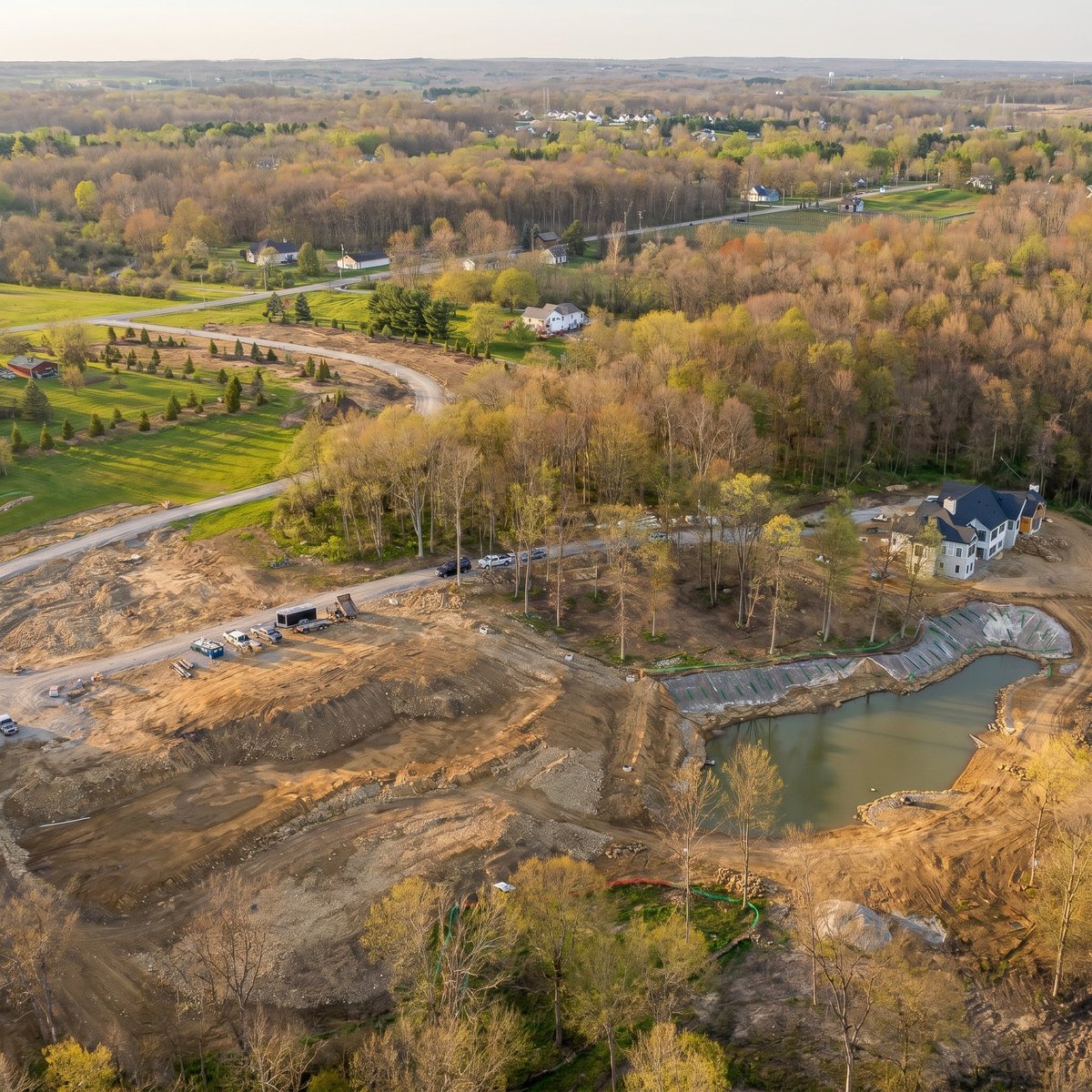
This is what it looks like before the magic happens. Save this...you’ll want to watch it unfold. Bare earth. Machinery. Mud on boots and vision that most couldn’t see. This is Eagle Ridge!
Featuring
@AndersenWindows
@typar
@ThermaTru
@BairdBrothers
#homebuild #newhome #home



3
38
5 days ago we started talking about the headaches of building back home from Abroad 🌍✈️
🇺🇸🇨🇦🏴🇦🇷🇸🇦🇨🇳🇬🇧
Hundreds of you already know the struggle.
Now thousands more are discovering the fix:
🌳 HomeBuild Naija 🏡
Real Nigerians in the diaspora are already using it to track projects, pay securely, and sleep easy.
Your next move?
1. Download the app
2. Start your project the stress-free way
Link in bio below 👇🏽
App Store 🌳
apps.apple.com/app/homebuild…
Google play store 🌳
play.google.com/store/apps/d…
Tag a Nigerian in diaspora who needs this 🌍✈️
Let’s build better together 🏠🇳🇬
#HomeBuildNaija #NigeriansInAmerica #diaspora #Nigeriansindiaspora


1
5
42
The #1 reason most people abandon projects back home? 🇳🇬🏡
Trust issues.
HomeBuild Naija solves it completely:
- Only verified contractors and professionals 🌳
- Secure payments released only when milestones are proven 🌳
- Every update is documented and time-stamped 🌳
You stay in control even while you’re grinding in the US, Canada or anywhere you are on the planet 🌍 ✈️
Stop letting “village people” or fake contractors stress you out. 🛖
Your dream home deserves better.
Tap the link and start today 👇🏽
apps.apple.com/app/homebuild…
play.google.com/store/apps/d…
#NigerianDiaspora #RealEstateNaija #buildingtechnology

1
3
5
80
The “Bird’s Eye View” 🏡 👁️
🇺🇸 Living in America/ Canada 🇨🇦 or anywhere else on the continent 🌎 but want to see your foundation being poured in Lagos or your roofing in Enugu? 🇳🇬
🏡HomeBuild Naija gives you a literal bird’s-eye view of your construction site — every single day📆
No more guessing. No more trusting bare words like
“Oga said it’s fine.”
You supervise every level, every stage, from anywhere in the world 👁️
This is how diaspora Nigerians are finally building without the headache. 🇺🇸🇨🇦🏴🇳🇱🇿🇦 🌎
Have you tried building back home before? Reply with your biggest struggle 👇
Download the app that fixes it:
[ apps.apple.com/ng/app/homebu… ] [play.google.com/store/apps/d…]
#NigeriansInUSA #BuildInNigeria #buildinghomes #ConstructionLife
1
1
5
46

Modular stair system for your homebuild! Bringing elegance, high quality, improved construction time and safety!
#homebuilders #contractor #buildsmart

2
8
Yesterday we talked about the stress of building back home from the US.
Today’s good news: HomeBuild Naija is built for YOU.
✅ Track every stage of your project in real-time
✅ Get verified daily updates (no more “stories”)
✅ Work only with trusted, vetted professionals
✅ Make secure payments you actually control
All from your phone in New York, Houston, or wherever you are.
No more wahalla. Just peace of mind. 🏡
Download now 👇
Play store ▶️
[play.google.com/store/apps/d… ]
🔼 App store
[ apps.apple.com/app/homebuild… ]
#NigerianDiaspora #HomeBuildNaija #NaijaAbroad

1
3
6
110

"It also doesn’t play into the recurring fantasy where every third founder (still!) thinks they’re Steve Jobs incarnate (but not Jobs from when he started, selling homebuild computers — forty years of experience Jobs introducing the iPhone)"
🔥

I can’t even with this
have the children never heard of headless computing? servers? embedded systems? how do they think data centres work? do they think people click into every single virtual machine and check and move things around manually?
even your personal device does so much on its own, and it’s only grown over the years (who else remembers having to defragment their hard drive?). I use this analogy *a lot* in my day-to-day work but — agents are just more sophisticated daemons. Background processes that execute a task using other resources on the computer, as specified by a controller. It just happens to be one level of abstraction higher than in the past.
The hardware is already being redesigned for neural networks, as it has been since deep learning first emerged, only more so. As with all things, it happens gradually. Apple, who keep touting neural chips in everything and have been for years, even just gave their head of hardware engineering the top job because maintaining momentum here matters, so it’s not like people aren’t thinking about this.
There remains a gap in new interfaces, but that shit’s hard to do, harder to monetize, and most people just aren’t that creative about it. It also doesn’t play into the recurring fantasy where every third founder (still!) thinks they’re Steve Jobs incarnate (but not Jobs from when he started, selling homebuild computers — forty years of experience Jobs introducing the iPhone)
2
87

I can’t even with this
have the children never heard of headless computing? servers? embedded systems? how do they think data centres work? do they think people click into every single virtual machine and check and move things around manually?
even your personal device does so much on its own, and it’s only grown over the years (who else remembers having to defragment their hard drive?). I use this analogy *a lot* in my day-to-day work but — agents are just more sophisticated daemons. Background processes that execute a task using other resources on the computer, as specified by a controller. It just happens to be one level of abstraction higher than in the past.
The hardware is already being redesigned for neural networks, as it has been since deep learning first emerged, only more so. As with all things, it happens gradually. Apple, who keep touting neural chips in everything and have been for years, even just gave their head of hardware engineering the top job because maintaining momentum here matters, so it’s not like people aren’t thinking about this.
There remains a gap in new interfaces, but that shit’s hard to do, harder to monetize, and most people just aren’t that creative about it. It also doesn’t play into the recurring fantasy where every third founder (still!) thinks they’re Steve Jobs incarnate (but not Jobs from when he started, selling homebuild computers — forty years of experience Jobs introducing the iPhone)

the craziest part now is that the modern computer probably has to be entirely reinvented, from scratch. pretty much like how jobs & co brought apple ii to market.
like not improved. not given a chatbot sidebar or something but really from the ground up like the iphone redefined what it meant to be a pocket computer.
the current paradigm for computers was built around a human staring at a screen, moving a cursor, opening apps, managing windows, naming files, remembering where things live, & manually translating intent into interface actions.
that made sense when the human was the runtime. but in an ai native world, it starts to look kinda ridiculous.
you can see this ridiculousness when you use computer use agents… they are useful sure, but they’re also obviously transitional. they’re teaching ai to operate machines designed for humans, which is clever, but also kind of absurd. it’s like making a robot hand so it can use a doorknob instead of asking why the door needs a knob at all. yes i know humans also need to use a door knob, but maybe in the future humans don’t need to use a computer, or at least what we think of a computer today at all.
this all leads to some interesting questions:
- what is a file when the system understands context?
- what is an app when intent can route itself?
- what is a desktop when work can be decomposed, executed, monitored, & summarized by agents?
- what is a browser when the agent can retrieve, compare, transact, & remember?
- what is an operating system when the primary user is no longer just a person, but a person plus a swarm of delegated intelligences? or no person at all.
the old computer assumed navigation.
the new computer has to assume a new kind of intention. the old computer organized information. the new computer has to try to organize agency.
we’re still in the hacky middle stage at the moment with sidebars, copilots, agents clicking through legacy ui, & automation layers sitting on top of 40 year old metaphors.
the new computer is likely one where memory, context, identity, permissions, tools, agents, & interfaces are native primitives. this means desktop, mobile, browser, apps, files, folders deserves another first principles look.
9
8
151
22,792
Have you ever tried building back home and felt left in the dark? 🇳🇬🏡
Endless delays… unclear updates… and stories that don’t quite add up?
🏠HomeBuild Naija is here to change that.
Track your project with verified updates, work with trusted professionals, and make secure payments — all in one place, from anywhere in the world.
No stress.
No stories.
Just clarity and control🤝
🌐 Get started: thehomebuildapp.com
1
4
9
178
Google, Microsoft, and Meta, like Alibaba, Tencent, Baidu, Bytedance, and High-Flyer, are still going to do LLMs even in the very unlikely event the upstart labs completely fail. And even should such a failure happen, the idea that the IP, talent, and assets miraculously *won’t* be acquired by another business with an established revenue engine who will continue R&D and commercial application (just with greater engineering and financial discipline) is downright silly. The underlying technology is useful for a significant range of tasks, there are no easy substitutes for problems like ‘context-aware natural language search’ or ‘synthetic text generation’, and they will continue to exist and be used (like earlier generations of neural networks) for as long as the need exists and no better solutions are present. It may just turn out long-term to be a cost centre under engineering rather than a core revenue engine, and, in the bearmost case, something only homebuild hackers, HNWs who pay corporate rates for personal access, and people in enterprise get regular access to.
But this idea still kicking around that a bubble will pop and everything will just go back to the way it was? More than a little ridiculous.
3
10
1,720

I did, on a major cross-country camping trip in 2024.
Hell, I changed here at home, switching from a 9mm I built to one which I bought from an FFL, not because the homebuild was illegal, but because it would still be used against me in court if I ever needed to draw it in self-defense.
Though NOW VA wants to make my carry pistol, a nice but otherwise unremarkable standard 9mm handgun, illegal for me to carry. Not because of anything I've done. Just because they don't like it.
2
93

Mar 13
The secret to cheaper building? Economies of scale! Bulk concrete & drywall drastically cut your $/sq ft. A must-watch insight! #HomeBuild #ProTips #Money
1
12