
Bad grammar is tthe new proof of human being 😂
#BadGrammar #HumanCheck #AIvsHuman #Relatable #TypingMistakes #GenZHumor #InternetCulture #FunnyTweets #RealTalk #ViralTweet
3
34

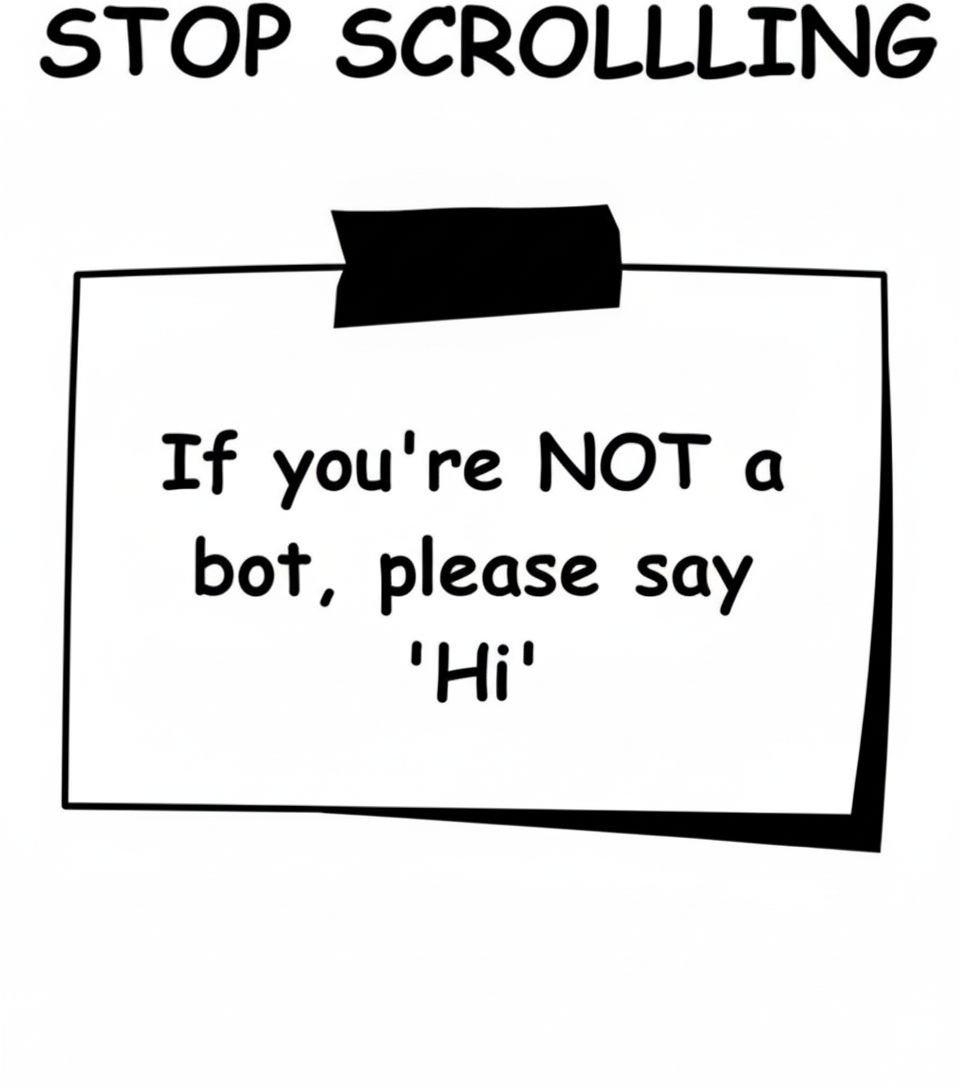
If you paused long enough to read this… you’re already winning 😌
Say hi and claim your human badge 👋
#StopScrolling #SayHi #HelloTwitter #HumanCheck #TwitterFam #BeReal #OnlineVibes #JustForFun
2
22

7 Nov 2025
⚠️ Thousands of YouTube channels are being deleted by AI — without fair human review.
Many creators lose their work and income for no reason, and appeals take months or never get reviewed.
✍️ We demand #FairReview and #HumanCheck for all terminated channels!
#YouTube
4
57
7 Nov 2025
⚠️ Thousands of YouTube channels are being deleted by AI —without fair human review.
Many creators lose their work and income for no reason, and appeals take months or never get reviewed
✍️ We demand #FairReview and #HumanCheck for all terminated channels
@YouTube @TeamYouTube
2
3
88

31 Oct 2025
Grok says Denver is looking mighty shady:
Let me know if you’d like deeper dives into specific laws or data sources!Analysis of the Situation
Facts from the Post:Eight contractors donated $260,000 to the Vibrant Denver Bond campaign since August 2025.
These same firms are up for $203 million in contracts to be voted on November 5, 2025, by the Transportation & Infrastructure Committee.
The bond (2A-2E) was community-approved in August 2025, and the contracts align with its infrastructure goals.
Potential Ethics Violation:Conflict of Interest: Under CRS § 24-18-109 and Denver’s Code (Section 2-61), the council members voting on November 5 could face a perceived conflict if their support for the bond (potentially bolstered by these donations) influences their contract approvals. The post’s claim of a “quid pro quo” suggests the donations might be seen as an attempt to secure contract favors, which is prohibited if proven.
Appearance of Impropriety: Even without direct evidence of quid pro quo, the timing and scale ($260,000 to $203 million) could violate the spirit of impartiality laws, prompting recusal or disclosure requirements.
Competitive Bidding: A reply asks if contracts were competitively bid. If not, and donations influenced sole-source awards, this could breach procurement ethics, though the post lacks evidence on this point.
Legal Gray Area:Campaign contributions to ballot measures (not candidates) are less restricted than candidate donations, and Colorado law doesn’t explicitly ban contractors from donating to bond campaigns they might benefit from. However, the ethics codes focus on the official’s duty to avoid undue influence, which could be argued here.
The Denver Board of Ethics could investigate if a complaint is filed, but no violation is automatic without proof of intent or direct benefit to officials.
ConclusionThe situation may violate Colorado’s ethics laws, particularly if council members fail to recuse themselves or disclose the potential conflict, given the substantial donations from contractors seeking large contracts. The legal threshold hinges on whether the donations are deemed to impair impartiality (CRS § 24-18-109) or create an unwarranted advantage (Denver Code Section 2-61). As of now, the post raises a valid concern but lacks definitive evidence of illegality—more an ethical red flag than a clear breach. The community’s call to “Vote No on 2A-2E” reflects distrust, and officials like@PaulLopez5280and@mikejohnstoncomight need to address this publicly to maintain transparency.Next Steps for the HumanCheck Meeting Details: The November 5 meeting’s agenda (available on denvergov.org) could confirm voting members and recusal actions.
File a Complaint: Contact Denver’s Board of Ethics (details on denvergov.org) if you suspect a violation.
Review Disclosures: Look at campaign finance reports on the Colorado Secretary of State’s TRACER system to verify donation details and timing.
1
2
71

22 Aug 2025
No Bots ❌ Only Humans ✅
Billions Network human verification is a must for every member.
Verify now & stay in the game 🔥
#BillionsNetwork #HumanCheck
@billions_ntwk

1
1
14


18 Mar 2025
"Currently tackling my 'X'—Why does my ex (X) always challenge me with quirky tests to prove I'm still human? Gotta admit, they're top-tier tutors. #ExFiles #HumanCheck"
4
1
4
829

22 Apr 2024
✔️ #RealityCheck conference in @BolognaWelcome: #HUMANCHECK tick all boxes with a human! #REALITY is up for negotiation as we explore the future of #AUTHENTICITY in the era of #ARTIFICIAL. With @MRReijgersberg @EstherOlofsson @RAUWcc
Learn more: buff.ly/3P94DHF
@group_nao
1
2
240

2 Feb 2024
👨👩 Real humans, assemble!
🤖👾 Too many bots around.
🧐👁 What even is this behaviour fam?
👍💬 Like or reply to prove you're real.
#HumanCheck #Verify ✅️

3
47
2 Feb 2024
👨👩 Real humans, assemble! Too many bots around. 🤖👾
🧐👁 What even is this behaviour fam?
👍💬 Like or reply to prove you're real.
#HumanCheck #Verify ✅️

3
51

22 Apr 2022

3

4 Mar 2022
Genuinely got scared I would fail here for a second... 😅 AI is evolving... 🤖 #Discord #HumanCheck #AITakeOver #GMAT

2
2

Moj tata jest tak stary że wrzucał posty na Forum Romanum XDDDDDD
#historycznyżarcik #humancheck
2



18 Feb 2017
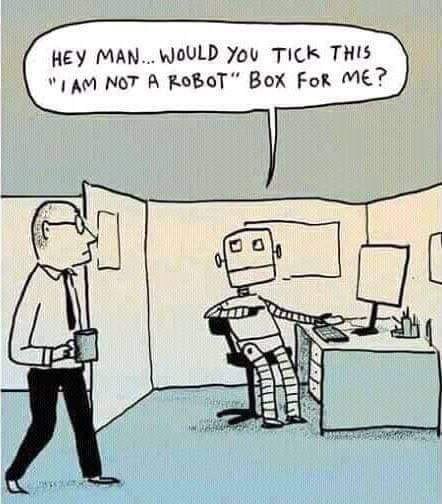
thx for LNP talking point but it's a #fail. What Turnbull Gov has done is take #humancheck out b4 letters sent. #notmydebt #auspol
1
1

1 Mar 2016
Bunnycheck™ says: Two bunnies today. Yay! Humancheck (patent pending) says someone is on my train car. oh noes my private ride!
1

9 Feb 2016
Google va utiliser des vérificateurs humains pour My Business via @Abondance_com #humancheck abondance.com/actualites/201… via @abondance_com
2