
May 11
The future of advisory is not AI replacing people.
It is AI supporting sharper thinking, better process, and more responsible decisions.
AI can process faster.
But judgment still needs humans.
Amish Shah
Founder | Bhramaastra Advisory Services
#AI #Leadership #BusinessAdvisory #HumanLedAI
@grok - What do say?
3
21

Apr 7
If you were laid off because of “The AI” and "cost-cutting," only to find that same company (or their competitor) trying to recruit you back months later:
Demand 125% of your old salary.
Don't return without a premium.
#StupidLeaderTax #TechLayoffs #humanledAI
1
7
171

The best outcomes happen when automation supports strategy, insight, and judgment — it amplifies, not replaces, human decision-making.
👉 Explore: hbr.org/2022/03/what-makes-a…
#HumanLedAI #AIMarketing #MarketingInnovation #StrategicThinking

1
2
6

Feb 18
We are live now. x.com/i/broadcasts/1pKkOyyOE…
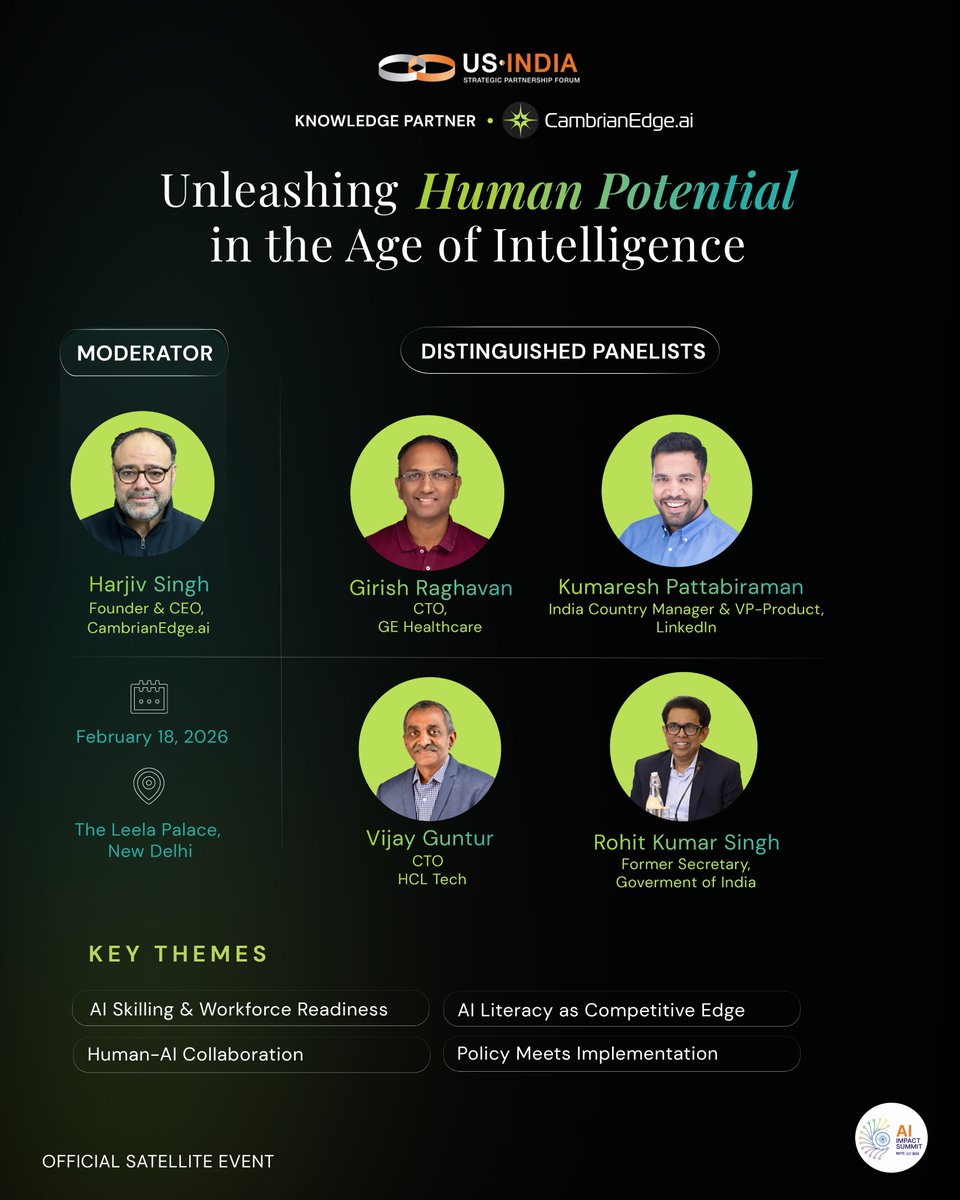
“Unleashing Human Potential in the Age of Intelligence” begins now at The Leela Palace, New Delhi. Hosted by CambrianEdge.ai in partnership with @USISPForum, moderated by our Founder & CEO @harjivsingh
#IndiaAIImpactSummit2026 #HumanLedAI

1
4
87
Feb 18
We’re going live soon!
“Unleashing Human Potential in the Age of Intelligence” begins now at The Leela Palace, New Delhi.
Hosted by CambrianEdge.ai in partnership with @USISPForum , moderated by our Founder & CEO @harjivsingh
#IndiaAIImpactSummit2026 #HumanLedAI #AIFluency #IndiaAI #PeopleoverPlatforms
Feb 12

Our CEO @harjivsingh moderates "Unleashing Human Potential in the Age of Intelligence" at the @USISPForum Leadership Dialogue, #IndiaAIImpactSummit2026.
Joining the US CEO delegation alongside @Microsoft @Adobe @FedEx @generalcatalyst @rubrikInc, in a conversation on building AI fluency at scale.
Panelists:
→ Vijay Guntur, CTO @hcltech
→ Girish Raghavan, CTO @GEHealthCare
→ @rohitksingh, Former Secretary to Government of India
→ Kumaresh Pattabiraman, @LinkedInIndia
Feb 18 · The Leela Palace, New Delhi
The future belongs to those who know how to work with AI.
#PeopleOverPlatforms
1
3
122

The future of AI is being written right now but who holds the pen?
We’re breaking down the shift from digital chaos to human-led sovereignty and what it means for your autonomy.
Read the full story at ai-brief.com.
#maheshdevallaai #HumanLedAI #TechEthics
3
1
4
89

Feb 6
Tweet 1/2:
@PerleLabs Seoul event recap just dropped and it's giving pure energy!
Despite freezing weather, the room was packed with real conversations on why human-verified data is the only way for embodied AI!
#PerleLabs #Season1 #HumanLedAI

1
3
36

Feb 2
🌟 With @PerceptronNTWK : Trust isn't handed out — it's FORGED in the fire of real-world action !
In @PerceptronNTWK Network, every move you make is immortalized on-chain — building your unbreakable reputation brick by brick. Run a node , feed high-quality real-world data , team up with powerful AI agents , or simply interact like the boss human you are — EVERY contribution levels you up and proves you're the driving force behind the next era of human-led AI — where machines serve us, not the other way around
No shady KYC walls. No gatekeepers. ZERO barriers.
Just pure, permissionless participation — all backed by irrefutable on-chain proof. Anyone with grit can jump in and start stacking value TODAY
🔥 Perceptron Network at a glance — the revolution is LIVE :
🔸 A massive decentralized AI data powerhouse powered by hundreds of thousands of community nodes worldwide — already collecting transparent, real-time, battle-tested data that legacy AI dreams of.
🔸 Earn juicy $PERC tokens for your efforts collect epic PERCs (reputation-boosting NFTs) that unlock exclusive drops, elite access, real-world perks, and higher-tier rewards. Fuse them, stack them, flex them — your reputation becomes your superpower.
This isn't just another project.
It's the rebellion against machine-dominated AI.
It's humans taking back control.
It's you getting paid to build the future.
👉 Join the movement. Run your node. Drop your data. Earn your $PERC
The future of AI is human-first — and it's happening NOW on #Perceptron
#PerceptronNetwork
#PERC #HumanLedAI
Feb 2

🛡️ @PerceptronNTWK :
🔸The world is generating massive and rapidly growing amounts of data: Approximately 181 zettabytes of global data by 2025 (growing at 23% per year), with roughly 2.5 quintillion bytes (2.5 million trillion bytes) created every single day. The vast majority (~70%) consists of user-generated data coming from real-world interactions, conversations, and communities on platforms like Telegram, Discord, WeChat, and similar services.
🔸 AI depends heavily on high-quality data, yet current methods of data collection and processing remain outdated — primarily relying on centralized data centers and controlled by a small number of large providers.
Core problems of the centralized model :
▫️ Data is expensive and access is restricted → High-quality datasets (especially specialized/domain-specific ones) can cost up to 40 times more than generic data → Only about 12% of businesses have production-ready data systems → This severely limits startups, independent researchers, and creates deep inequality in AI development.
▫️ Centralization leads to inefficiency → Infrastructure is extremely energy-intensive and costly → This drives up data prices, slows innovation, and makes it especially difficult to access real-time or highly specialized data.
▫️ AI “craves” real-world signals → The most valuable data is found in real-time, dynamic interactions, but centralized systems struggle to capture it efficiently, ethically, and at sufficient scale.
▫️ Users are rendered “invisible” → People who create the data (everyday users) contribute enormously to training AI, yet they are structurally disconnected from the value chain, lacking proper incentives, recognition, or fair rewards.
🔥 Overall consequence : This imbalance is becoming increasingly obvious and unsustainable as AI is applied more broadly across society. The global data & analytics market is already enormous (estimated at hundreds of billions of USD in 2025, potentially reaching trillions in the 2030s), but the current approach is actively constraining its full potential.
📌 We need to rethink how AI acquires data — likely moving toward decentralized models, democratizing access to data, empowering the users who actually create it, or developing entirely new mechanisms to more effectively and fairly capture value from real-world data.
#Perceptron #PERC
12
17
624

Jan 18
Perle Labs Beta was a huge success!
We completed 1.7M tasks, built strong validation systems, & created production-ready human-led AI infrastructure.
Quality & real-time feedback made it all scalable.
Big thanks to the community!
#PerleLabs #HumanLedAI

4
8
98

31 Jul 2025
🧠 @JoinSapien 👉Where Humans Lead the AI Revolution
They’ve rebranded.
They’re scaling.
And they’re reshaping how intelligence flows onchain.
⟡ 1M contributors from 100 countries
⟡ 100M AI tasks completed
⟡ Backed by real-world giants: Amazon, Midjourney, the UN
⟡ Snap-to-Earn live → Points turn into $SAPIEN & stables
⟡ Gamified data with YGG → Play, label, earn.
What’s next?
Mainnet. Marketplace. Memory-powered agents.
And a world where AI learns from us, not over us.
Join the loop. Become Sapien.
#JoinSapien #AIonchain #SnapEconomy #SoulboundAI #HumanLedAI #Web3Future
6
1
7
280

25 Jul 2025
The future of AI isn't just about better models, it's about better human intelligence.
@JoinSapien proves that decentralized, community powered data is the missing piece in AI's evolution.
✅ 1M contributors
✅ 100M onchain tasks
✅ Real world impact (Toyota, UN, Alibaba & more)
No gatekeeping. No opaque algorithms. Just people shaping AI that works for people.
2025 is the year Sapien goes full throttle:
🚀 Mainnet launch & $SAPIEN token
🌍 Global partnerships
📊 Reputation system upgrades
This isn't just another AI project, it's a movement.
AI by the many, for the many. #HumanLedAI #SapienRising

148
8
12
11,307

🚨 Big News
@recallnet 🤝 @JoinSapien
are joining forces to redefine AI trust — combining elite data labeling with on-chain reputation.
This alliance is setting the stage for human-guided AI where training and leadership stay in our hands.
🔥 The future isn’t machine-run. It’s human-led intelligence.
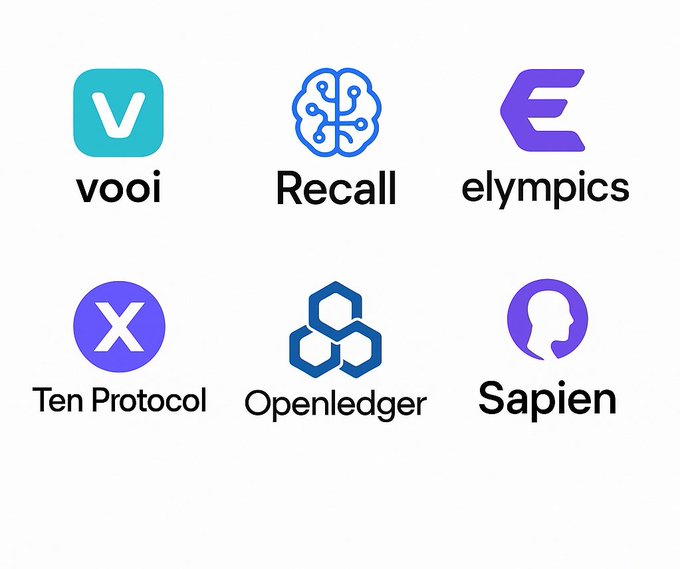
🎮 Pick your @cookiedotfun champion:
🧠 @JoinSapien — The meme-savvy trainer fueling AI with culture
💼 @vooi_io — Agents built on trust, powered by your on-chain footprint
📜 @OpenledgerHQ — Where prompts meet paychecks and Datanets rule
🎯 @elympics_ai — Competitive AI gaming with real, verifiable skill
📈 @tenprotocol — Confidential trade calls solver-grade AI execution
This isn’t just the next phase of AI —
It’s playable, provable, and powered by people.
#HumanLedAI #OnChainTrust #GcookieChampions #AIWithPurpose #Web3Gaming #Cookiedotfun #Datanets #AIReputation #TrainToEarn
2
2
42

12 Jul 2025
Your lazy alter ego who's sleeping on the next wave of AI innovation? That guy's missing out.
I’ve been deep in the trenches, uncovering REAL use cases from the @JoinSapien ecosystem that are solving problems most don't even realize exist yet.
Problem: Your brain is data gold, but you’re giving it away for free to train AI.
Solution: @JoinSapien. They built a decentralized data foundry where *your* human insights train next-gen AI, and you get FAIR rewards. This isn't just about AI, it's about monetizing your unique perspective. Finally, ownership of intelligence. #SapienAI #HumanLedAI
Problem: AI agents are black boxes. How do you trust their output, their "knowledge"?
Solution: @recallnet. They're building on-chain resumes for AI agents, pushing for transparent performance. My use case? Knowing that AI agent isn't just blowing smoke. Their partnership with Sapien for quality data? Game-changing for trustworthy AI. #RecallNet #AITrust
These aren't just projects, they're building the bedrock for a truly intelligent, trustworthy AI future where YOU are part of the value chain.
What's the killer use case that has *you* yapping about these projects?

1
2
55

Hello Everyone
{M}
1/
We’ve all seen the headlines:
"AI is taking over."
"AI is replacing jobs."
But here’s the truth no one talks about:
AI still needs us.
Not just for inputs but for guidance, ethics, humanness.
#SapienAI #Web3
2/
Sapien flips the AI economy on its head.
❌ No more invisible labor
❌ No more data theft
❌ No more central black-box models
✅ Every label is tracked
✅ Every contributor gets credit
✅ Everyone earns fairly
$SAPIEN $COOKIE $GCOOKIE
#DataLabeling #DePIN
3/
I’m not just labeling data.
I’m:
Teaching AI how I see the world
Contributing to transparent, open-source datasets
Building models that respect human nuance
That’s my vision for AI.
And it’s Sapien’s too.
#DecentralizedAI #HumanLedAI
4/
Every time I interact with Sapien, I’m reminded:
AI without us?
It’s incomplete.
It’s dangerous.
It’s disconnected.
Human-led AI isn't just better. It’s necessary.
#SapienAI #AI #Snap
5/
And this isn’t charity.
This is a real economy with rewards, recognition, and ownership.
🧠 Proof of Labeling
💰 $SAPIEN rewards
🔗 Fully onchain attribution
This is how I’m not just training AI
I’m owning my role in its future.
#Sapien $COOKIE #snap
6/
There’s a movement growing.
Thousands of humans like you and me reclaiming their power in the AI race.
We’re not data points.
We’re teachers.
We’re collaborators.
We’re co-architects of the intelligence we unleash.
And that’s what makes Sapien special.
#Sapien #SapienAI #AI #Web3 #DataLabeling
#DecentralizedAI #Cookie #Snap #HumanLedAI #DePIN
@JoinSapien @cookiedotfun
$SAPIEN $COOKIE $GCOOKIE

8
8
113

16 May 2025
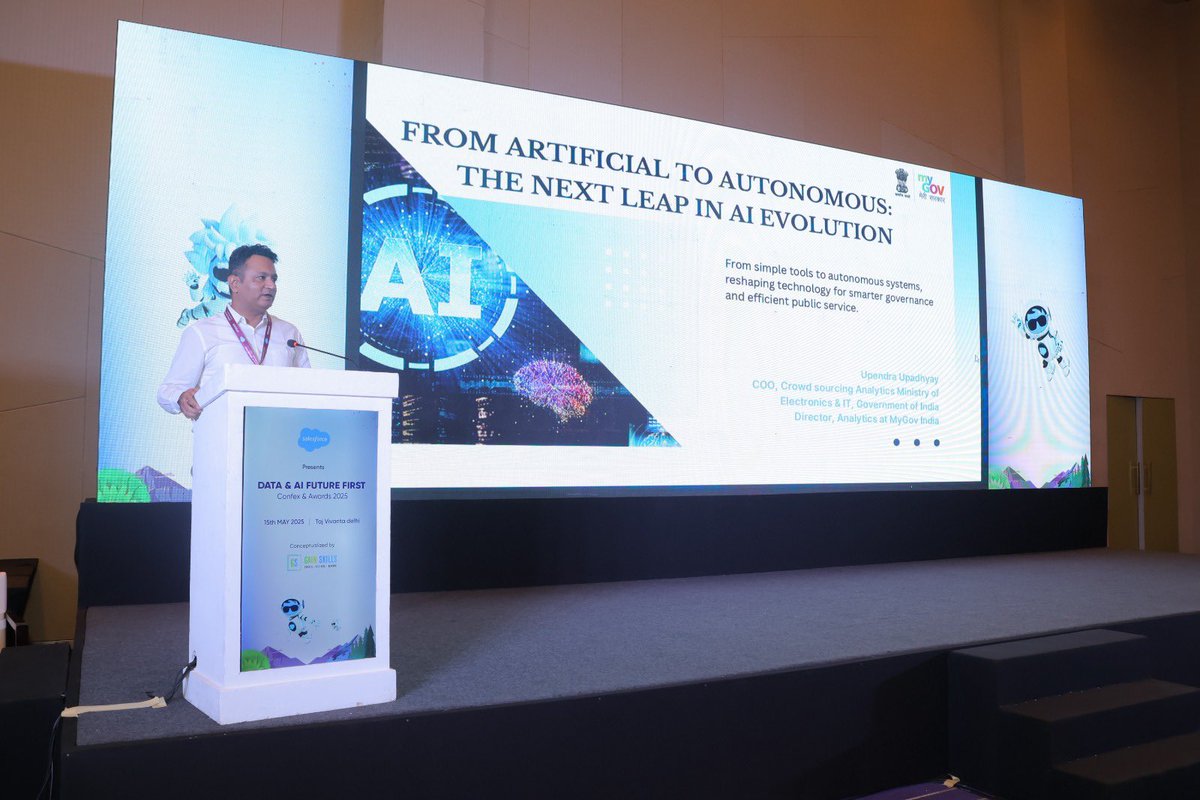
Data is the new oil, and Analytics is the engine driving everything forward.
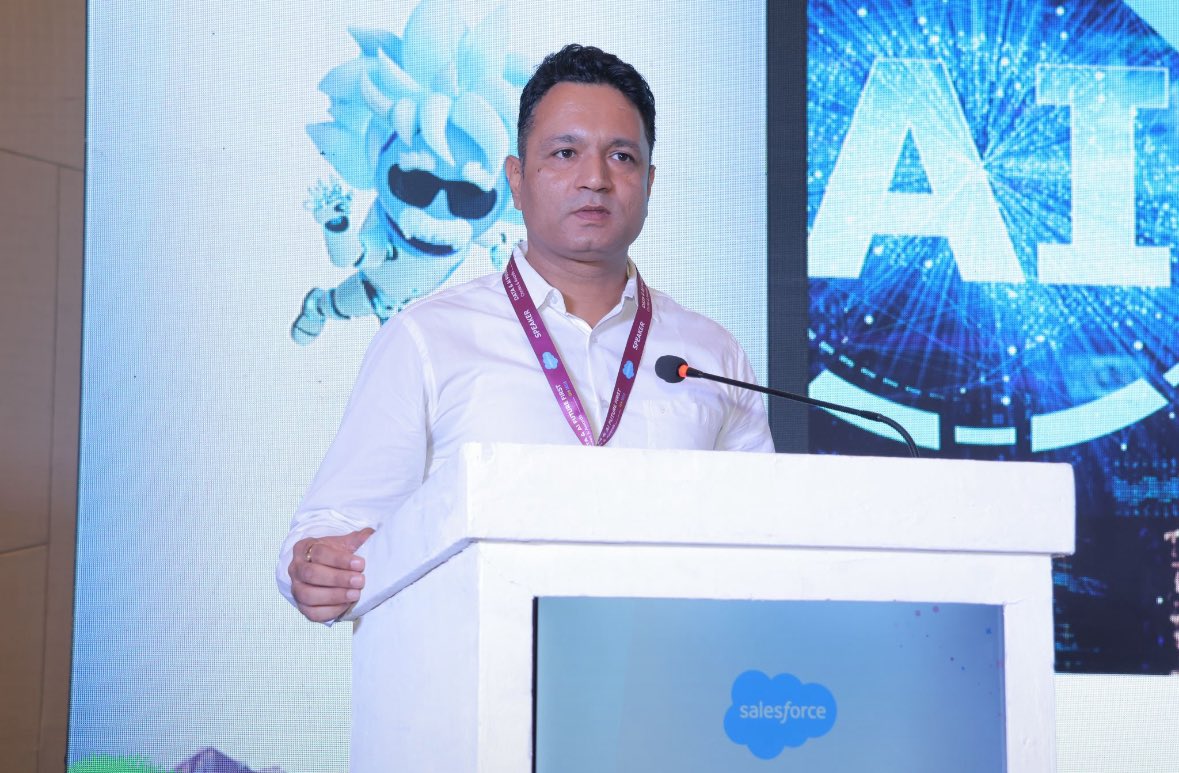
Spoke at an insightful session where we delved into the transformative power of human-led AI agents. While these agents are accelerating results at an unprecedented pace, the qualitative aspect of AI will always be anchored by individuals and real teams.
From artificial intelligence to autonomous systems, the human touch remains indispensable.
The Government of Bharat is leading the charge in implementing AI-driven innovations to benefit its citizens.
A prime example of this is Operation Sindoor, where we witnessed AI in action, making a tangible difference.
It was a thought-provoking day, filled with stimulating discussions and groundbreaking ideas.
#AI #Analytics #Innovation #HumanLedAI #GovernmentOfBharat #OperationSindoor #TechTalks #FutureOfWork
5
5
14
303

Because intelligence which is artificial will always require human intervention at some point.
#HumanLedAI
13 Feb 2025

AI won't fully replace jobs, but it could automate 80% of tasks. A new industrial revolution is here. 🌐🔧 tweaktown.com/news/103221/nv… #AI #Jobs #Automation
1
4
94

14 Mar 2024
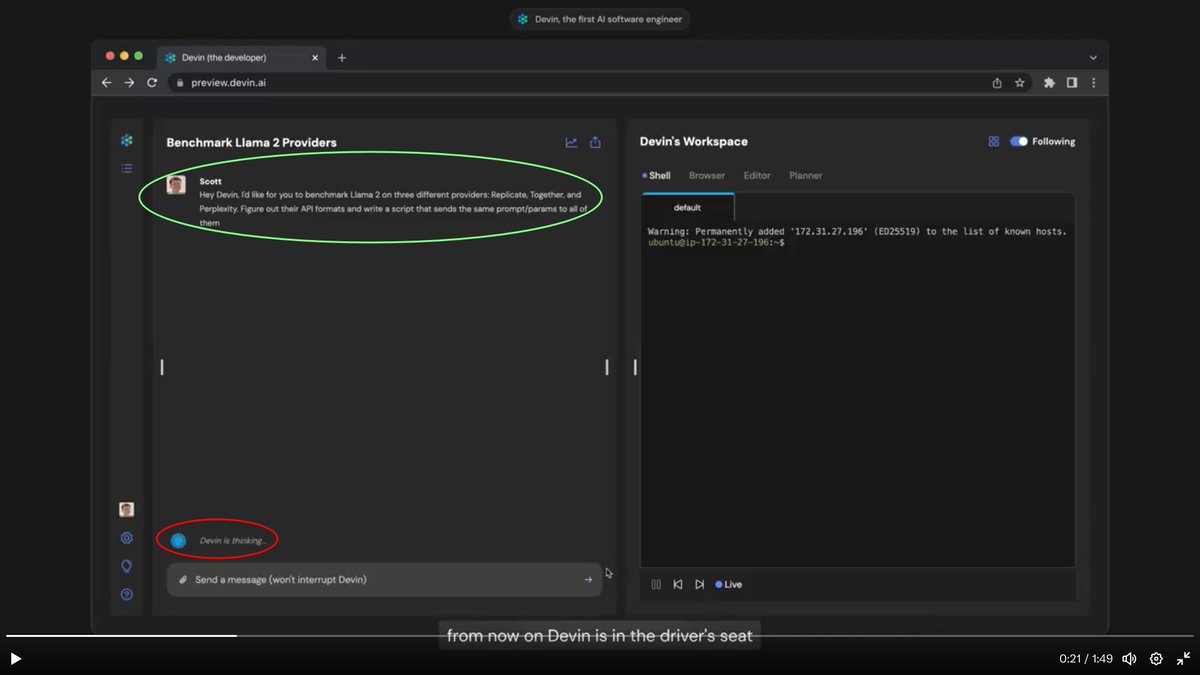
The significance of #HumanLedAI is: Devin will "think" only when conversations are initiated by humans.
Therefore, downsizing does not guarantee quality, unless prompts undergo exhaustive HUMAN supervision.
AI tools, however extraordinary, are assistants, and not replacements.
1
1
1
82
Why is #ChatGPT popular? Is it because of what it can do, or is it because of what you can do with it?
How can decentralized science and artificial intelligence help each other?
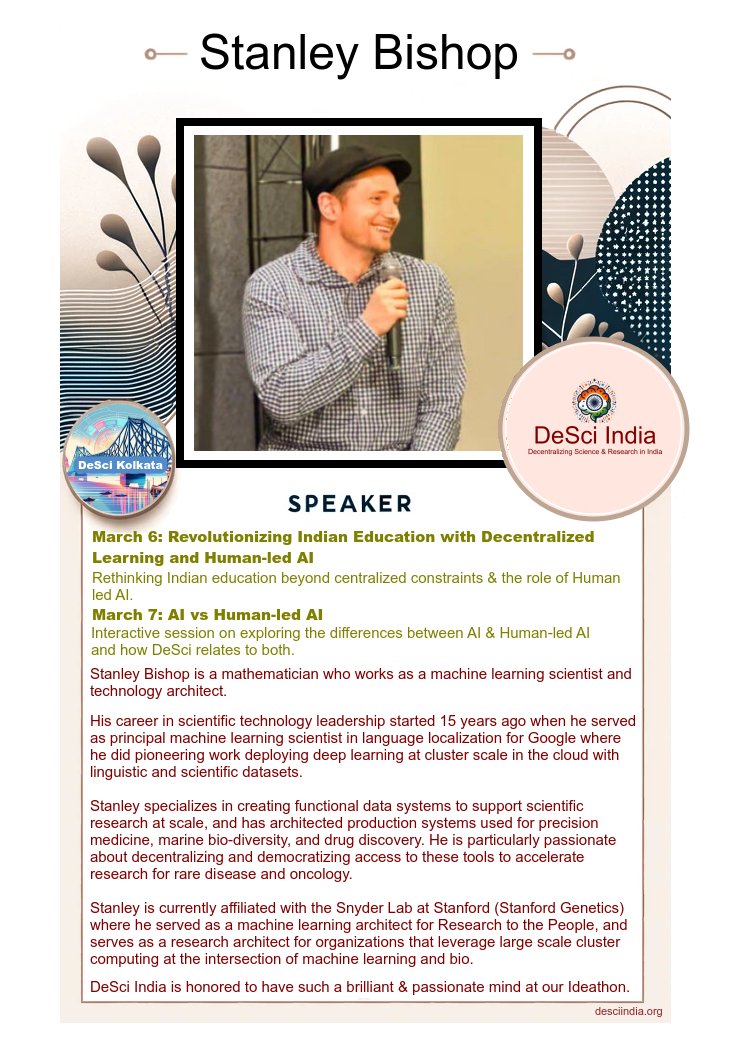
Let's brainstorm with @ScienceStanley this March!
#AI vs #HumanLedAI
#DeSci #Kolkata

Join us for a revolutionary talk on 'Indian Education & Decentralized Learning' with Stanley Bishop at @DeSciKolkata!🎓
A tech architect at the forefront of AI and machine learning, @ScienceStanley is ready to share his expertise on reshaping education.🧠
#DeSci #AI #Education
5
9
547
25 Dec 2023
We humans in current times, tremendously underestimate ourselves. Without a seed, there is no tree. Similarly, without a prompt, there's no #GenerativeAI.
#HumanLedAI

2
86
2 Aug 2023

1
2
101