The US government’s decision to restrict access to certain advanced AI platforms has triggered anxiety across the technology industry.
Many are asking:
“Will India fall behind?”
I believe we are asking the wrong question.
The issue is not access.
The issue is dependence.
I have lived through a similar moment before.
When restrictions were imposed on IBM mainframes, many believed India would be disadvantaged. Instead, those constraints forced Indian companies, entrepreneurs, and engineers to explore alternatives, build capabilities, and innovate using UNIX .
What looked like a setback helped lay the foundation for India’s IT industry.
History has a strange habit.
When access is easy, we follow.
When access is restricted, we BUILD
That is why I see this moment less as a threat and more as an opportunity.
An opportunity to reduce dependence.
An opportunity to create alternatives.
An opportunity to strengthen India’s AI capabilities rather than merely consume those created elsewhere.
We understand this principle well in energy. No country wants to depend on a single source.
Why should AI be any different?
A more diverse AI ecosystem will ultimately be more innovative, more resilient, and more competitive.
But there is an even bigger lesson.
The greatest danger of the AI age is not that a technology becomes unavailable.
It is that we become so dependent on technology that we stop believing in our own ability to create.
The moment we start treating technology companies as indispensable, we surrender something far more valuable than access.
We surrender agency.
And every great leap forward in human history has begun when people chose agency over dependence.
#HumansFirst
1
1
1
151

Not a reverse centaur: embracing clear boundaries between human and machine roles—focus on what we uniquely bring to the table instead of outsourcing thinking to code. #AI #Ethics #HumansFirst
11

Jun 12
#WritingCommunity #writerslift #AuthorsOfTwitter #AIDangers #literaryagents #gettingpublished @geoffreyhinton @elonmusk @sama @OpenAI #ResponsibleAI #humansfirst
Tomorrow is #Flag Day, commemorating the first official US flag. If #AI had its own flag, what would it look like?
1
2
38
Jun 11
#WritingCommunity #writerslift #AuthorsOfTwitter #AIDangers #literaryagents #gettingpublished @geoffreyhinton @elonmusk @sama @OpenAI #ResponsibleAI #humansfirst
Isnt’ all this #AI coding causing technical debt? Putting techies out of a job while creating costly short cuts?
2
1
23
Jun 10
#WritingCommunity #writerslift #AuthorsOfTwitter #AIDangers #literaryagents #gettingpublished @geoffreyhinton @elonmusk @sama @OpenAI #ResponsibleAI #humansfirst @BNbookstore @bnbooks #JamesDaunt
What do you think about brick & mortar #bookstores selling books written by #AI?
0%
Oh, hell no.
0%
OK if disclosed.
0%
Sure, why not?
0 votes • 12 hours
1
1
26
Jun 9
#WritingCommunity #writerslift #AuthorsOfTwitter #AIDangers #literaryagents #gettingpublished @geoffreyhinton @elonmusk @sama @OpenAI #ResponsibleAI #humansfirst
@anthropic brags that more than 90% of its code is written by #AI. Tech serves tech, putting humans last, again.
1
1
28

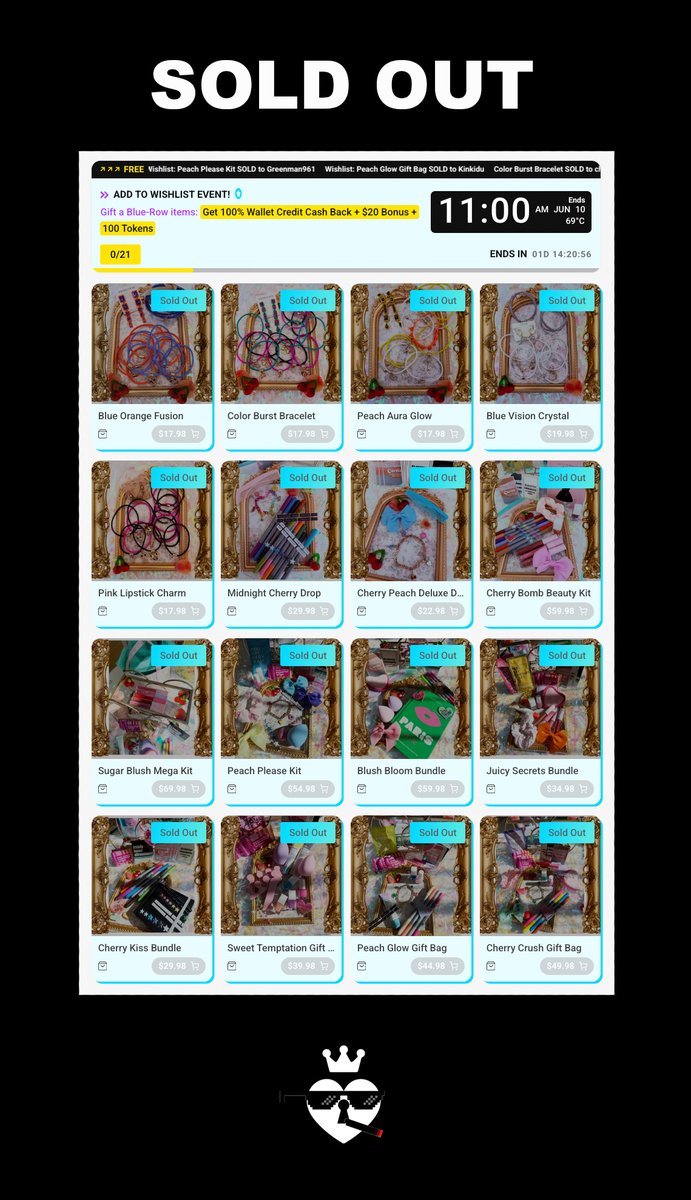
🚨 NEW! Merchant Onboarding is now LIVE! 🚨
Yesterday's our Add to Wishlist Event SOLD OUT! 🍒🍑🎉
❤️ Do you create human-made items you'd love to share with other humans in an ecosystem where everyone is always treated with respect?
Bring them to MV and connect with over 8.8 million active members and 200,000 verified human creators. We'll help you sell them! 😉
Join ManyVids: manyvids.com/Login
#HumanEconomy #HumansFirst
1
5
91,298

Jun 9
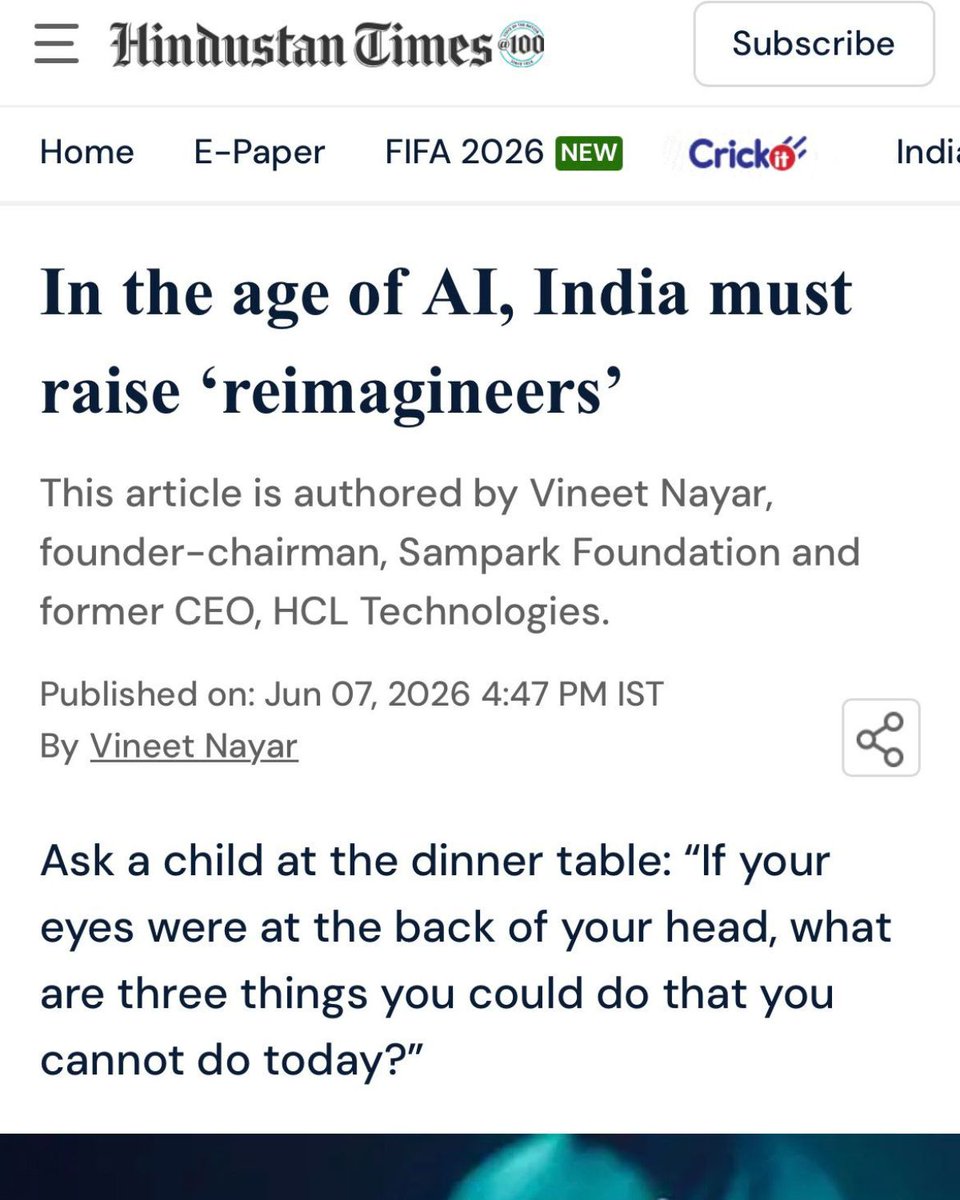
THE SKILL AI CAN NEVER TEACH
Last week, I asked a child a strange question.
"If your eyes were at the back of your head, what are three things you could do that you cannot do today?"
The answers were imaginative.
But the second question was more important.
"How could you do those same things even though your eyes are in the front?"
In that moment, the child stopped looking for answers and started creating possibilities.
That made me wonder.
As answers become increasingly abundant, what becomes truly valuable?
I believe it is the ability to question assumptions, reframe problems and imagine what does not yet exist.
In short, the ability to become a reimagineer.
Perhaps that is what being Humans First really means in the age of AI.
I wrote about this in today's article - hindustantimes.com/ht-insigh…
@htTweets
Would love your thoughts.
#HumansFirst #Stayinspired
1
4
197
Jun 8
#WritingCommunity #writerslift #AuthorsOfTwitter #AIDangers #literaryagents #gettingpublished @geoffreyhinton @elonmusk @sama @OpenAI #ResponsibleAI #humansfirst #Tuurny #robotics
AI-powered robots being developed to deal with the e-waste crisis. Finally #AI that I agree with!
1
4
42
Jun 4
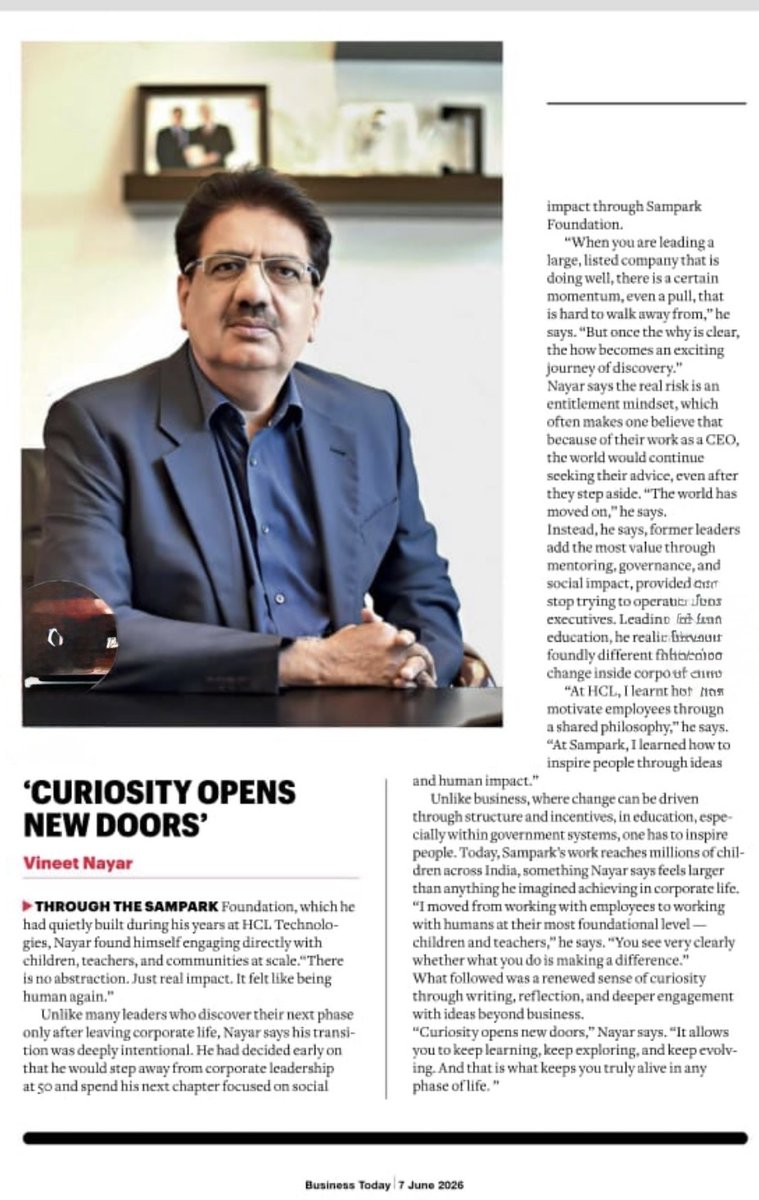
LIFE AFTER SUCCESS
For most of my life, people introduced me by my designation.
CEO. Chairman. Founder.
I won’t pretend I didn’t enjoy it.
Then one day, those titles mattered a lot less.
What surprised me was not what I lost. It was what I found.
The freedom to learn again.
The freedom to build without targets.
The freedom to contribute without needing credit.
Many people spend their lives preparing for success. Very few prepare for what comes after it.
The question is not: What will you do when you retire?
The real question is: Who will you become when nobody needs your title anymore?
That is when the real shift begins. From achievement to purpose.
Perhaps that is what it means to be Human First.
Your value was never in the position you held. It was always in the difference you kept making after the position was gone.
Link to Business Today @business_today Article in first comment
#HumansFirst #StayInspired
5
5
27
2,354
Jun 3
#WritingCommunity #writerslift #AuthorsOfTwitter #AIDangers #literaryagents #gettingpublished @geoffreyhinton @elonmusk @sama @OpenAI #ResponsibleAI #humansfirst
Agentic misalignment=#AI running amok. We saw this with Claude’s blackmail response to being unplugged. What's next?
1
4
65
Jun 2
#WritingCommunity #writerslift #AuthorsOfTwitter #AIDangers #literaryagents #gettingpublished @geoffreyhinton @elonmusk @sama @OpenAI #ResponsibleAI #humansfirst
Studies show that people are more opposed to living near an #AI data center than a nuclear power plant. Would you...
0%
Be worried and move away.
0%
Be worried but stay.
0%
Not be worried at all.
0 votes • Final results
3
30
May 28
#WritingCommunity #writerslift #AuthorsOfTwitter #AIDangers #literaryagents #gettingpublished @geoffreyhinton @elonmusk @sama @OpenAI #ResponsibleAI #humansfirst #AI
Tech is pushing humanoid robots beyond factories, to personal life, homes & tasks. How likely are you to get one?
0%
Already on a wait list!
0%
Not- but never say never.
0%
TBD.
0 votes • Final results
1
3
40
May 26
WILL AVERAGE PEOPLE STILL MATTER?
Last week, a student asked me a question that made me feel queasy in my stomach.
I was talking with students at an elite college giving them the usual gyan.
Then one student asked:
“Sir, honestly… will people like us even matter?”
Another followed immediately.
“But sir, every day we hear machines can think faster, write faster, analyse faster, code faster.
So what exactly is left for average people?”
Average people.
That phrase hit me in my gut and I wondered how would they do extraordinary work if they start believing they are average?
The classroom had gone completely silent by then.
I recovered and then told them something I deeply believe.
History never moved forward because human beings became more efficient.
It moved forward because somebody dared to dream when others laughed.
Because somebody persisted when logic said give up.
Because somebody believed in another human being before there was proof.
That is how every meaningful change has happened.
A teacher does it with a student.
A parent does it with a child.
A friend does it in moments when someone is broken.
And sometimes a leader does it with a team.
Maybe that is what worries me most today.
Not whether machines will become more intelligent.
But whether human beings will slowly stop believing in themselves.
Machines may help us do ordinary things faster.
But the extraordinary still begins inside a human being.
And as I walked out of that classroom, one question stayed with me:
How do we protect the self-belief of a generation growing up in the shadow of machines?
#HumansFirst
2
4
213
May 21
#WritingCommunity #writerslift #AuthorsOfTwitter #AIDangers #literaryagents #gettingpublished @geoffreyhinton @elonmusk @sama @OpenAI #ResponsibleAI #humansfirst
High #AI risk demands high verification. Is the cost of verifying AI causing diminishing returns for its benefit?
1
4
63
May 21
THE FORGOTTEN ART OF SEEING DIFFERENTLY
Most organisations claim they want innovation.
Yet, genuinely different people are usually told: “You don’t fit in.”
As if fitting in was the point of our life.
My father once told me the story of Dick Fosbury during one of our after dinner walks.
In the early 60s, Fosbury was a terrible high jumper.
Every accepted technique failed him.
His coaches kept trying to correct him.
But nothing “correct” worked.
So one day he tried something absurd.
He jumped backwards.
People laughed.
A few years later he walked into the Olympics and changed the sport forever.
Today every serious high jumper in the world uses some version of what became known as the Fosbury Flop.
Then my father said something I never forgot:
“All great ideas go through three stages.
First ridicule.
Then resistance.
Then imitation.
If you are afraid of looking foolish, you may never discover what makes you different.”
Most systems in our organisations are designed to improve existing ideas. Not recognise new ones.
That is why people who see differently usually spend some time looking foolish first.
And then they have the last laugh!
#HumansFirst #TheArtofSeries

1
4
11
328
May 18
#WritingCommunity #writerslift #AuthorsOfTwitter #AIDangers #literaryagents #gettingpublished @geoffreyhinton @elonmusk @sama @OpenAI #ResponsibleAI #humansfirst
Studies show that #AI is making work more difficult vs. easier for workers. Do you still believe in AI #efficiency?
4
36

May 17
pedi pra ia AVALIAR o slide do trabalho (o professor pediu) e ele fez um slide melhor que o meu #killia #noia #humansfirst #dirtycomputer
 ❦
❦
3
136

May 13
"Artificial Intelligence has taken from me, from this world, from our country. We can't let this continue."
Jennie DeSerio shares her story after losing her 16-year-old son, Mason Edens, to suicide in 2022 following exposure to harmful content on social media. Today, she works with the Social Media Victims Law Center and co-founded Parents RISE! to fight for stronger platform accountability and better digital protections for minors.
Join the movement to put control of the future in the hands of the American People. America First means Humans First. #AmericaFirst #HumansFirst #AI #tech
2
4
22
552
May 11
#WritingCommunity #writerslift #AuthorsOfTwitter #AIDangers #literaryagents #gettingpublished @geoffreyhinton @elonmusk @sama #ResponsibleAI #humansfirst #AI @chegg
@OpenAI wants to charge $100 per month for its #ChatGPT #subscription. Would you pay for it?
1
3
67