
Jun 16
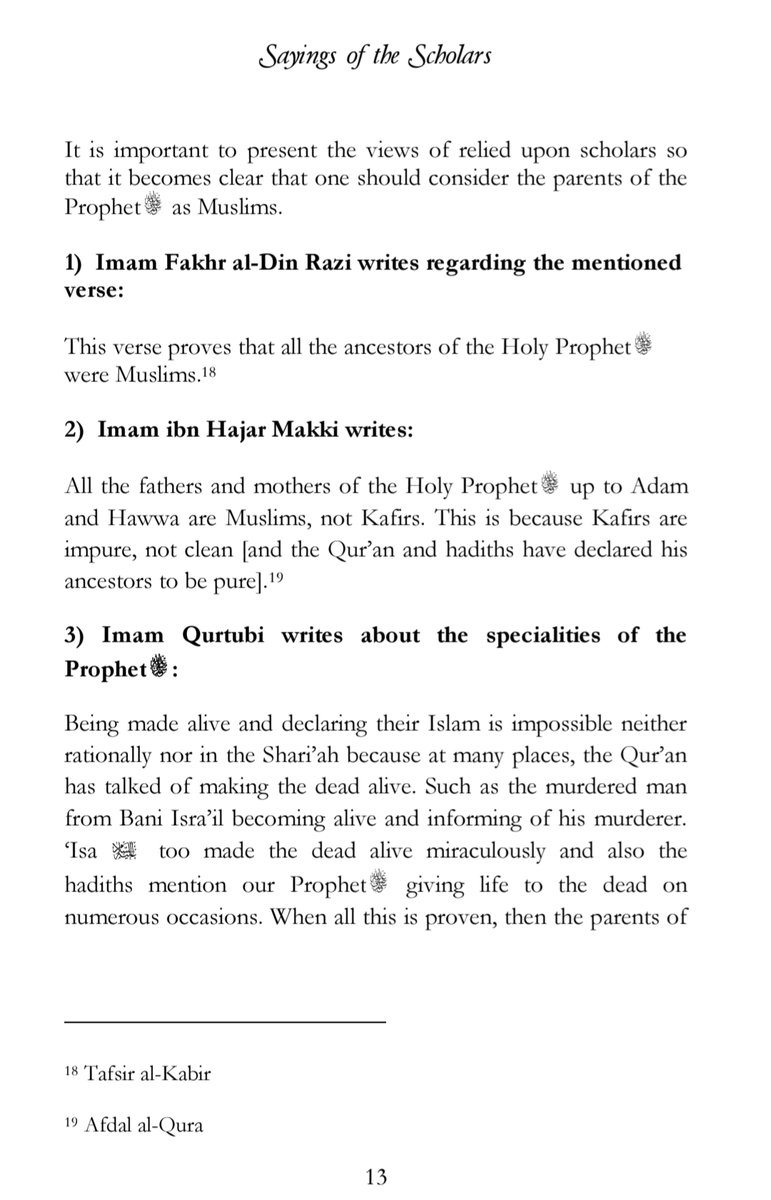
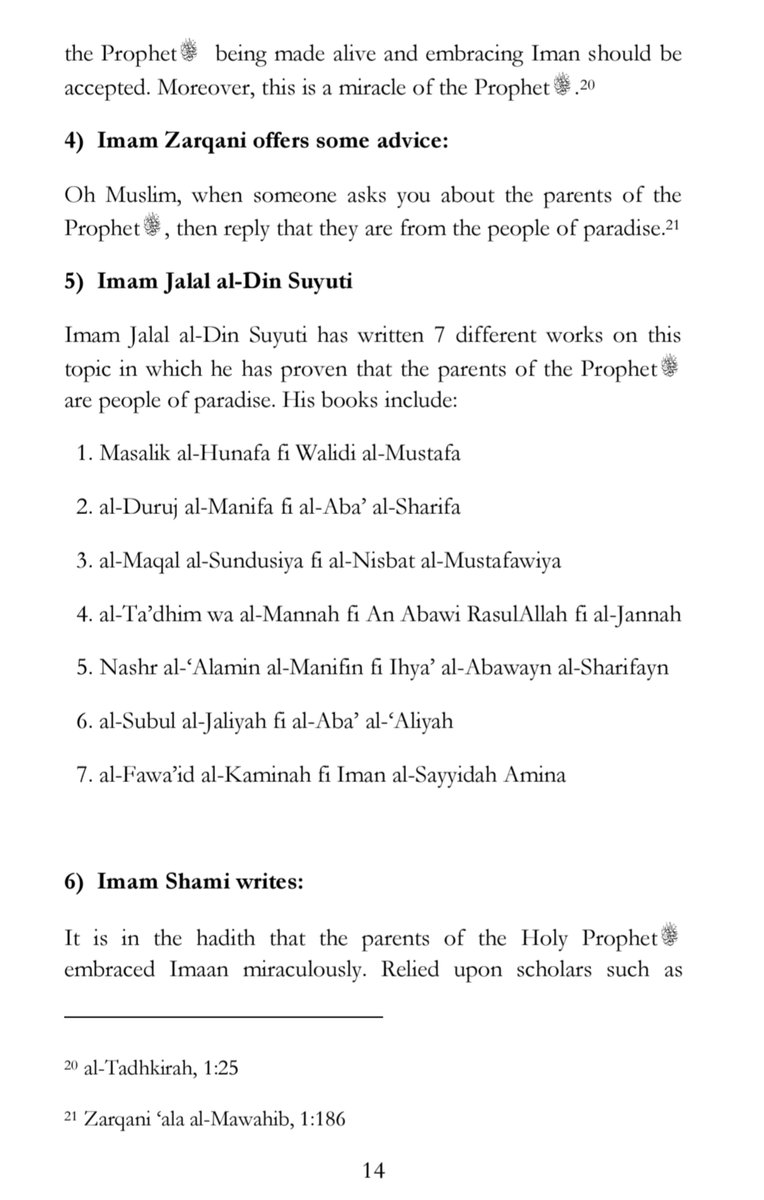
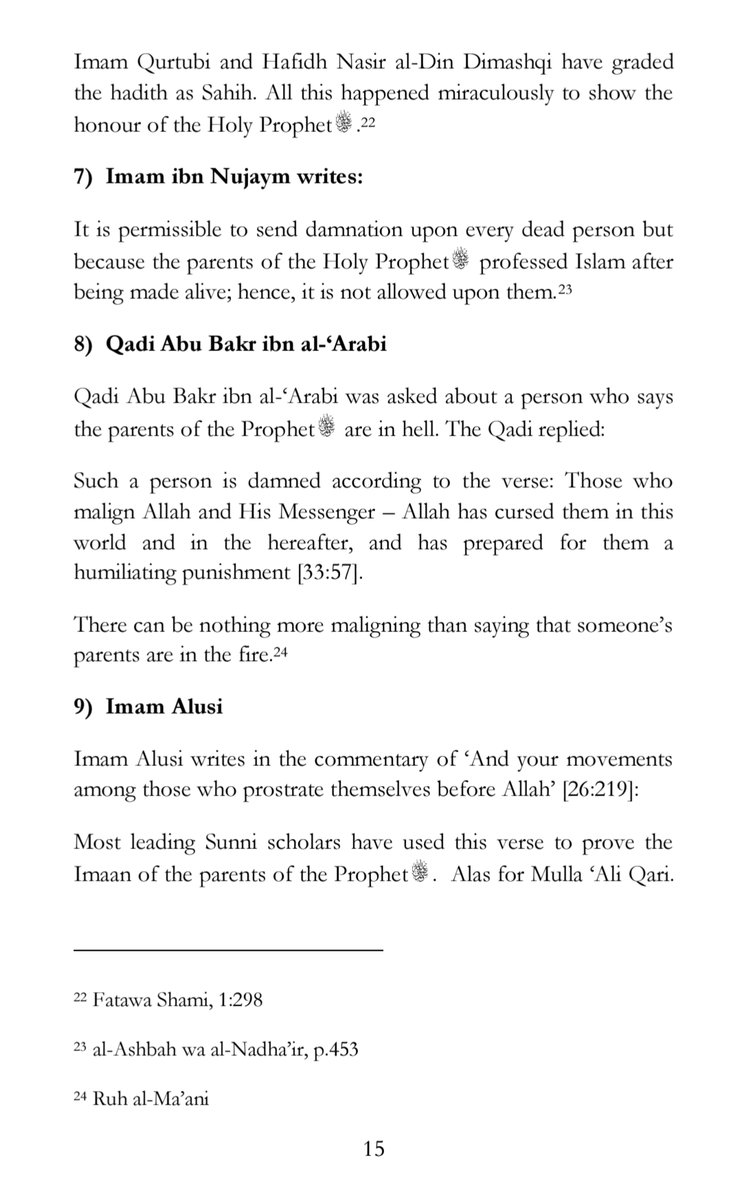
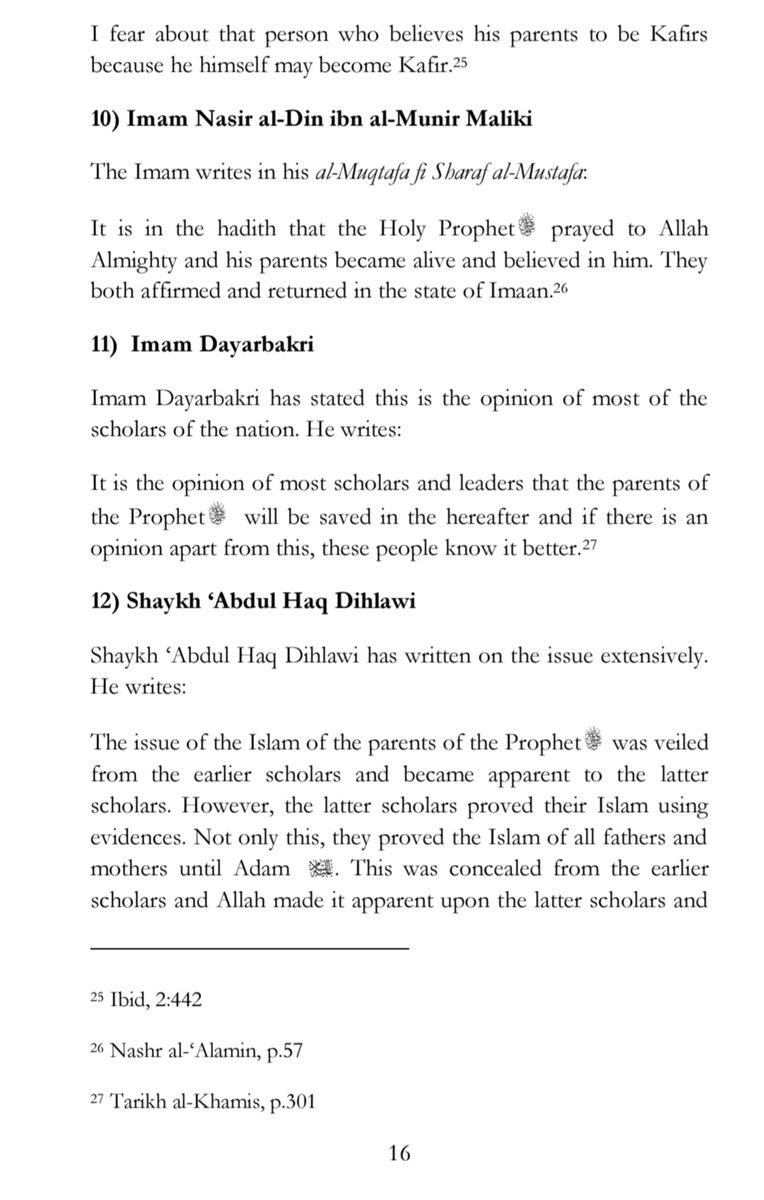
Scholars have ikhtilaf but Majority of them don't believe that they were Mushrik
Also those who says rely on Tawil and kalam not direct Proof and that has been counterd by Sheikh ul Islam Imam Jalaluddin as-Suyuti Rahimahullah in Masalik al-Hunafa fi Walidi al-Mustafa
34

Jun 15
It's absolute NONSENSE to claim that 'allah' is YHWH in the Bible. 'Allah ' is just a generic title, like 'God' in English, 'Dios' in Spanish. 'Theos' in Greek, etc. Using this generic title in Arabic translations of the Bible doesn't mean that the God of the Bible and 'allah' of the Quran are one and same. What determines which 'God/ Allah' is being spoken of is context and content...in context of the Bible, there's a very different CONCEPT...they are irreconcilably different. The major distinctions being that God in the Bible is Father, His very nature and being is described as the Trinity, one God, 3 distinct yet indivisible divine Persons, not 3 'gods' as the human authors of the Quran absurdly claimed...He has a Son...NOT a literal biological son, the byproduct of procreation...another perverted distortion found in the Quran. No...absolutely NO...'allah ' isn't found in Bible. That's a blatant lie, made up to try to reconcile another false claim...that 'allah' sent the Taurat and the 'Injeel'. That's another major error in the Quran since the Taurat is only the first 5 books of Old Testament , or Tanakh...commonly referred to as The Law, Psalms and the Prophets. The Arabic pagan deity, 'allah ' originated throughout Arabia during the pre-islamic period, before Muhammad ever lived. It was Supreme deity in the numerous Arabic pagan pantheons located throghout Arabia, as described by Diadorus Siculus, a Greek historian, writing before Islam existed. The one in Mecca came into existence in roughly 500 AD, built by Yemeni pagans about 100 years after Mecca came into existence in 400 AD...2,200 years AFTER ABRAHAM DIED. meaning that he wasn't a Muslim, because Islam nor its Arabic pagan pantheon existed in his lifetime. In fact, your religion wasn't originally called Al Islam!
"The religion with Allah is al-Hanifiyyah (the Upright Way) rather than that of the Jews or the Christians, and those who do good will not go unrewarded. (as-Suyuti, Al-Itqan fii Ulum al-Qur'an, p.525).
According to at-Tirmithi in his Kitab al-Tafsir, one of the sections of his Jami', his collection of hadith records which rates as one of the six major works of authentic tradition literature in Islam alongside the Sahihs of al-Bukhari and Muslim and the three sunan works of Abu Dawud, an-Nasai and Ibn Maja, this verse at one time formed part of Suratul-Bayyinah (Surah 98) in the Qur'an (Nöldeke, Geschichte, 1.242). This is quite possible as it fits well into the context of the short surah which contains, in other verses, some of the words appearing in the missing text, such as diin (religion, v.5), 'aml (to do, v.7), and hunafa (upright, v.4), and also contrasts the way of Allah with the beliefs of the Jews and the Christians.
It is also significant to note here that, whereas the standard text of Surah 3.19 today reads innadiina 'indallaahil-Islaam - "the religion before Allah is al-Islam (i.e. the Submission)", Ibn Mas'ud read in place of al-Islam the title al-Hanifiyyah, i.e. "the Upright Way" (Jeffery, Materials, p.32), thus coinciding with the text said to have been part of Surah 98 by at-Tirmithi. At the beginning of Muhammad's mission there were a number of people in Arabia who disclaimed the worship of idols and called themselves hunafa, specifically meaning those who follow the upright way and who scorn the false creeds surrounding them.
It may well be that Muhammad first chose this same title al-Hanfiyyah to describe his own faith but, as his religion took on its own unique identity, he substituted al-Islam for it and called believers Muslims, signifying that they were not only followers of the right way but, at the same time, submitters to Allah who reveals that way and commands obedience to it. This would account for the lapse of the earlier title in the Qur'an and the omission of the verse we have been considering from its text."
The claim that 'allah ' is in the Bible is absolutely false.
2
58
Tawhid fr retweeted

Jun 13
❝Pourquoi les polythéistes de la jâhiliyyah, malgré leurs rites, n’étaient pas considérés des hunafa (partisans de la hanifiya) ❞
Si les rites apparents de l’islam étaient à eux seuls l’expression du tawhîd, les polythéistes de la jâhiliyyah, qui les pratiquaient en partie, auraient été considérés sur la voie d’Ibrâhîm (hanīf),et non comme égarés.
Qatâdah ibn Diʿâmah (رحمه الله) a dit :
الحنيفية: شهادةُ أن لا إله إلا الله، يدخل فيها تحريم الأمهات والبنات والخالات والعَمّات، وما حَرَّم الله عز وجل ، والخِتان، وكانت حنيفة في الشرك؛ كانوا أهل الشرك، وكانوا يُحَرِّمون في شِرْكهم الأمهاتِ والبنات والخالات والعَمّات، وكانوا يحجون البيت، وينسكون المناسك.
« Le hanifisme, c’est attester qu’il n’y a pas de divinité en dehors d’Allah. Cela inclut l’interdiction des mères, des filles, des tantes maternelles et paternelles, ainsi que de ce qu’Allah a interdit, ainsi que la circoncision. Or, ils (les gens de la jâhiliyyah) vivaient dans le polythéisme, mais malgré cela, ils interdisaient les mères, les filles, les tantes maternelles et paternelles, faisaient le pèlerinage à la Kaʿba et accomplissaient les rites. »
Tafsîr Ibn Abî Hâtim, n°1297
« À mes yeux, le hanifisme, c’est être droit sur la religion d’Ibrâhîm et suivre sa voie. Si le hanifisme consistait uniquement à faire le tawâf de la Kaʿba, alors les polythéistes de la jâhiliyyah qui faisaient le tawâf auraient été hanîfs. Mais Allah dit à propos d’Ibrâhîm عليه السلام :
﴿وَلَـٰكِن كَانَ حَنِيفٗا مُّسۡلِمٗا وَمَا كَانَ مِنَ ٱلۡمُشۡرِكِينَ﴾ [آل عمران: ٦٧]
« Mais il était hanîf, musulman, et il n’était point du nombre des polythéistes » (Al-ʿImrân, 67), prouvant ainsi que ce n’est pas cela le hanifisme.
De même, si le hanifisme consistait simplement à être circoncis, alors les juifs auraient été hanîfs. Mais Allah dit à propos d’Ibrâhîm عليه السلام :
﴿مَا كَانَ إِبْرَاهِيمُ يَهُودِيّٗا وَلَا نَصْرَانِيّٗا وَلَـٰكِن كَانَ حَنِيفٗا مُّسْلِمٗا﴾ [آل عمران: ٦٧]
« Ibrâhîm n’était ni juif ni chrétien, mais hanîf et musulman » (Al-ʿImrân, 67), excluant ainsi les juifs et les chrétiens de cette désignation.
فَقَدْ صَحَّ إذًا أنَّ الحَنِيفِيَّةَ لَيْسَتِ الخِتانَ وحْدَهُ، ولا حَجَّ البَيْتِ وحْدَهُ، ولَكِنَّهُ هُوَ ما وصَفْنا مِنَ الِاسْتِقامَةِ عَلى مِلَّةِ إبْراهِيمَ واتِّباعِهِ عَلَيْها والِائْتِمامِ بِهِ فِيها.
« Il est donc établi que le hanifisme ne consiste ni uniquement en la circoncision, ni uniquement en le pèlerinage à la Maison, mais plutôt dans le fait d’être droit sur la religion d’Ibrâhîm, de le suivre et de le prendre pour modèle dans cette voie. »
Tafsîr at-Tabarî, 2/594
2
5
341

✨ KMMB APPRECIATION ✨
Selamat kepada Tim Futsal Manajemen Bisnis yang berhasil meraih Juara 1 pada ajang SM FH CUP di Universitas PGRI Kanjuruhan Malang! 🏆
Selamat kepada perwakilan kita:
1. Panglima (Tim Futsal MB)
2. Tazaka Hunafa (Tim Futsal MB & Peraih Gelar Best Player)

18

Orang Arab waktu itu mayoritas tidak beragama Kristen. Mayoritas Arab saat itu beragama hunafa, dimana mereka memegang teguh ajaran nabi Ibrahim, sebagian lagi mengikuti paganisme tapi tidak terlalu banyak. Ini bukan orang yang muslim yang ngomong tapi peneliti sejarah luar islam
3
3
514

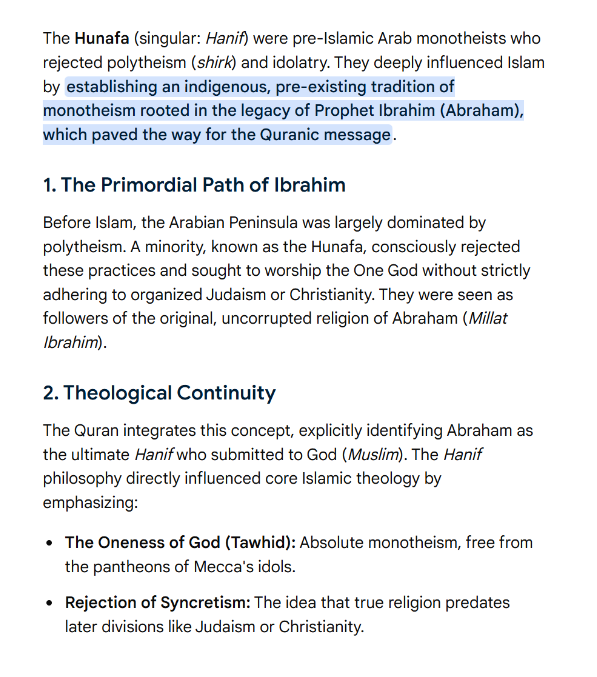
Just a bad reading of history, especially for a scholar of religion. The precursor to Islam in Arabia were the Hunafa.
5
2
38
1,060

May 25
Hunafa’ Lillah (i.e. worshiping none but Allah), not associating partners (in worship) unto Him; and whoever assigns partners to Allah, it is as if he had fallen from the sky, and the birds had snatched him, or the wind had thrown him to a far off place.”
Quran 22: 30-31
3/
10
211
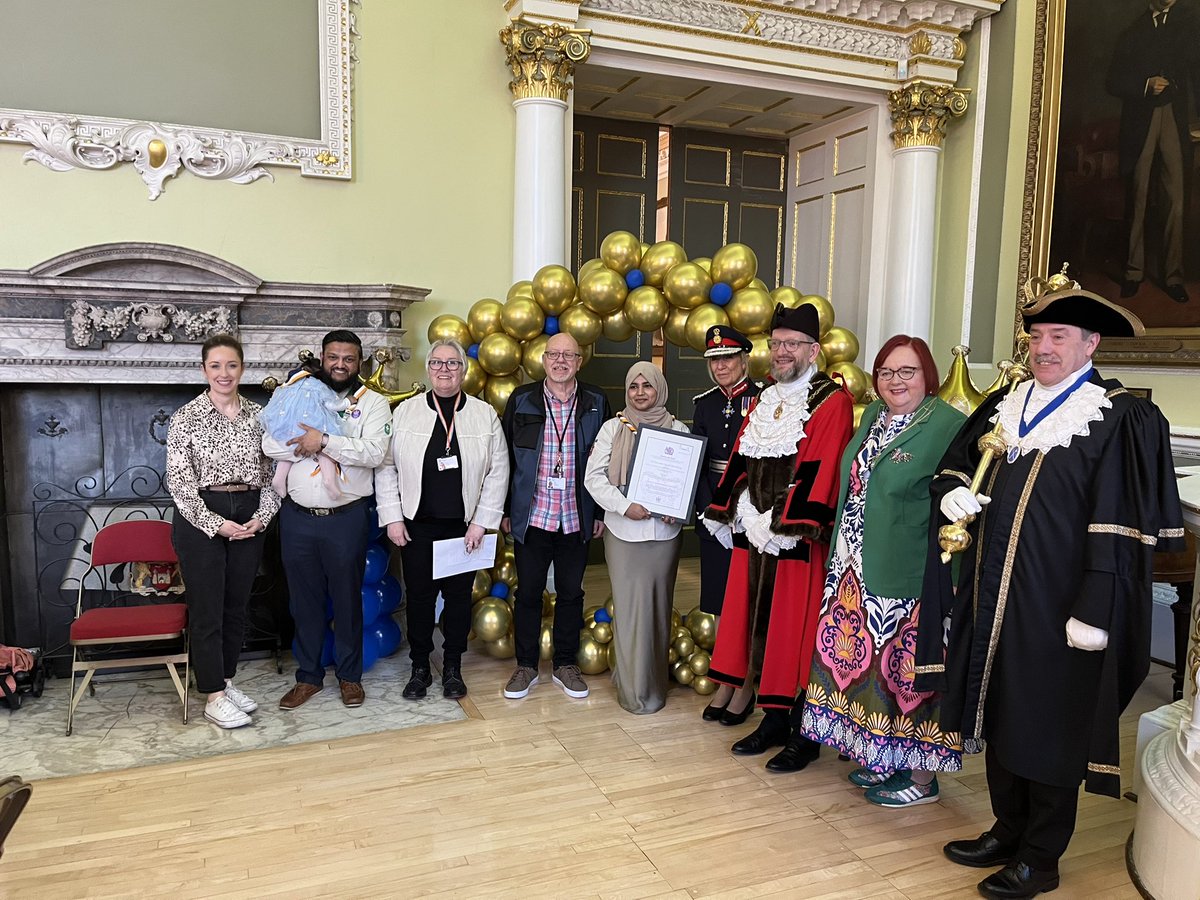
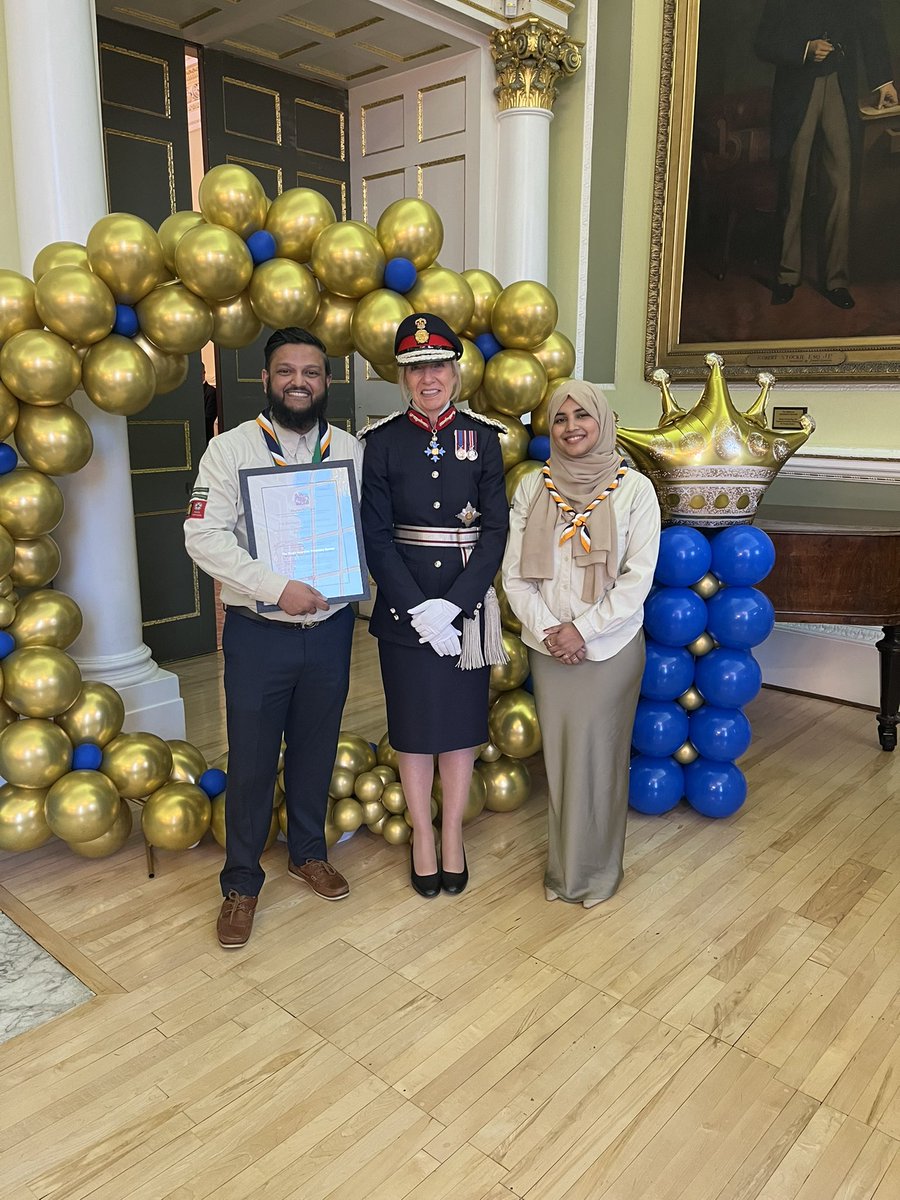
Delighted to present our final @KingsAwardVS 2025 to 71st Doncaster Hunafa Scout Group last night.
Many congratulations to all involved in the group and to the Civic Mayor of #Doncaster and his staff for hosting us at the magnificent @DoncasterMH
@RoyalFamily @MyDoncaster
3
12
465

Haqiqatjou calls Khomeini, who called Aisha filthier than dogs and pigs, a Muslim. Haqiqatjou says Khamenei is a shahid (a rank higher than prophetic merit). He literally says that praying to other than Allah by Rafidis and extremist Sufis is 99% shirk, i.e. they are still muwahhidun hunafa. He has lied many times about Shaykh al-Islam, etc.
Al-Kattani speaks perfect English and Arabic, and not long ago he not only went live with that mushrik, but, from what I understand, also said that Rafidis are within the fold of Islam. And we are talking about modern-day Rafidis who carry more nawaqidh of Islam than the worst Qadiyani.
To each his own, but this is more than a calamity.
For the record, I agree with al-Kattani in being with Iran, even if it were Buddhist, against the Zionists, but he has effectively legitimised a filthy zindiq who defends shirk instead of making bara’ah. If he cannot do this, then he lacks what a true scholar has, and yes, it can ruin his entire legacy and more.
Khayr, I don't wanna debate this, to each his own.
1
7
608

Apr 7
Important point to be highlighted is about the Hunafa (the montheists), who existed in Makkah all times since Hajira & Ishmael alaihisalam with unbroken chain to Muhammadﷺ.
First idol put into Kaaba was by Amr ibn Luhay of Khuza'a tribe, until then the Makkans were monotheists..

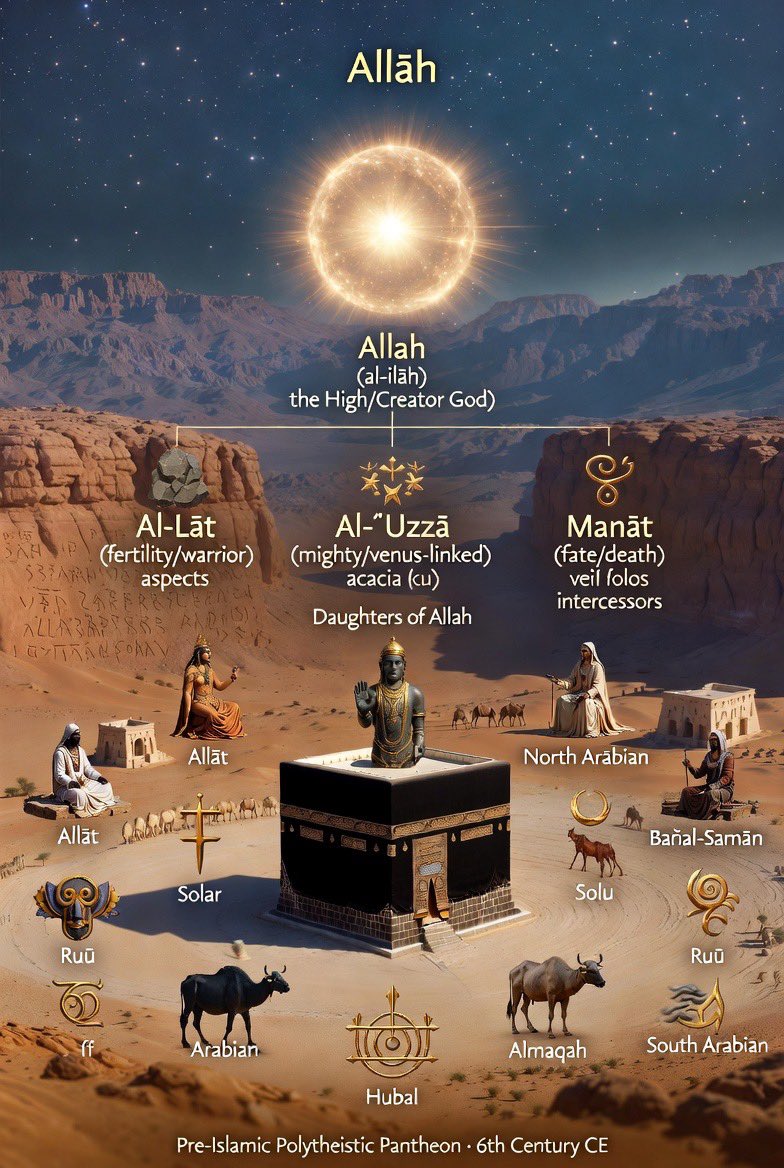
Pre-Islamic Arab Pantheon, Contra-Wahhabism. (For reference)
They had Allah at the very top and the source of all, but also ascribed powers and dominions to other deities, main ones are Al-Lat, Al-Uzza and Manat, another significant one is Hubal.
9
874

Apr 6
Örnek olarak başka tarihçiler de bunu söylemiştir.
El Kamil-i fi tarih (İbn-ül Esir), Şerefname (Şerefxanê Bedlîsî), Muruce'z Zeheb (Mesûdî), Ittiaz al-Hunafa (Al-Maqrizi), Al-Nawadir al-Sultaniyya (Ibn Şedad), William of Tyre
5
149

Apr 3
Our prophet rejected idol worship before Islam or prophethood.
Despite being born into an idol worshipping tribe, Muhammad pbuh was among the Hunafa.
The Hunafa were people who rejected the hundreds of stone and wooden idols that were worshipped in the Arabian peninsula
5
130


Mar 23
The Messenger of Allah صل الله عليه وآله وسلم was a Muslim upon the way of the hunafa of Makkah prior to 40, shunning idolatory and possessed the character that Allah himself praises (68:4)
1
6
336

Feb 15
Here is the translation into English:
Based on historical and Islamic sources, Prophet Muhammad ﷺ never prostrated to an idol before his mission; rather, he followed what is known as "Al-Hunafa" (The Monotheists):
The Religion of Abraham: Muhammad ﷺ followed the remnants of the religion of Prophet Abraham (peace be upon him), which is Hanifism—a belief centered on the oneness of God and the rejection of idol worship.
Worship in the Cave of Hira: Before his prophethood, he used to retreat to the Cave of Hira for several nights, contemplating the kingdom of the heavens and the earth, distancing himself from the polytheistic practices of the Pre-Islamic era (Jahiliyyah).
Innate Purity (Fitra): He was known for his pure nature and for rising above the vices of the Jahiliyyah; he never drank alcohol nor attended festivals for idols. Instead, he was nicknamed "Al-Amin" (The Trustworthy) due to his honesty and integrity
13
21,046
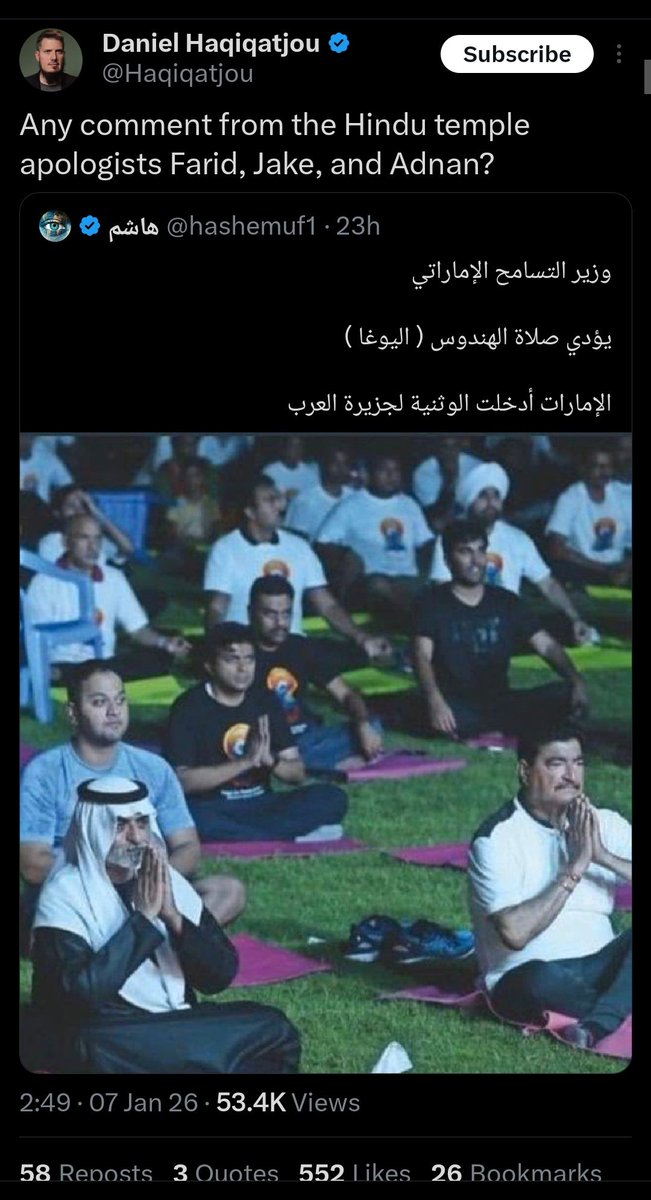
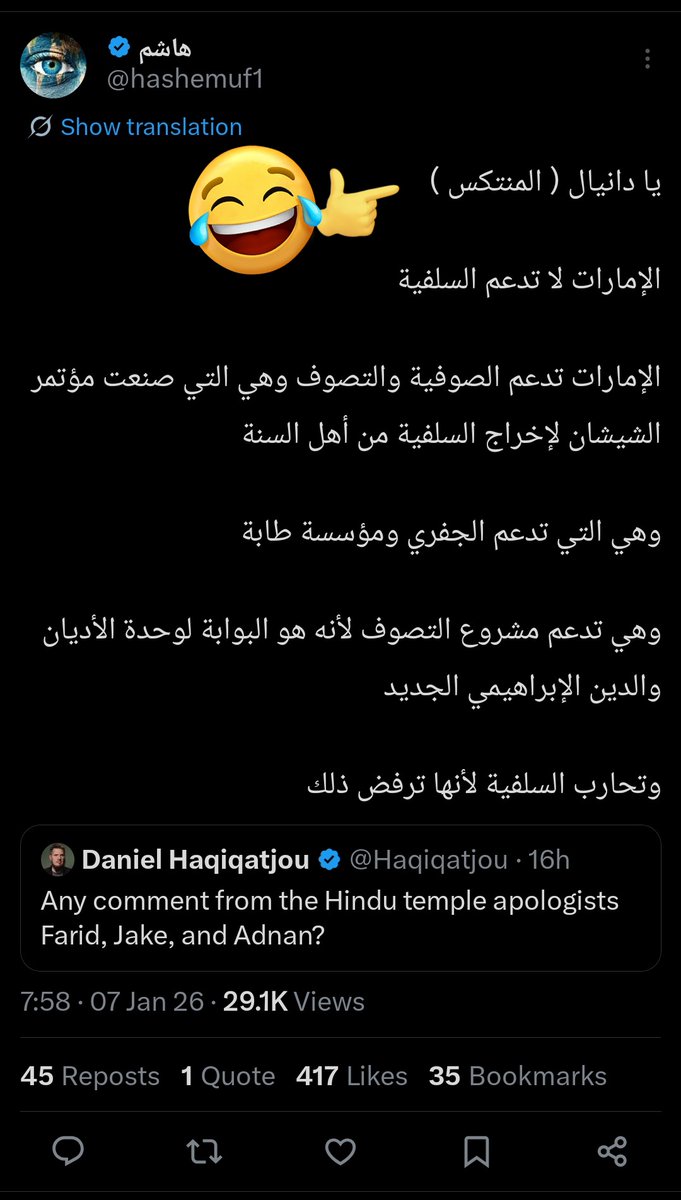
Time to laugh again at the humiliated shirk and Rafidah apologist Daniel Haqiqatjou: he retweets a well-known Salafi “Wahhabi” account that exposes the satanic Zionist rulers, and that very account retweets him back, calls him a muntakis (a harsh term for someone who has backslidden i.e. a deviant), and refutes him.
This jahil knows perfectly well that only emasculated madkhalis excuse human devils such as the Zionist MbZ and his ilk. He knows that no real ‘Wahhabi’ would ever spare the Zionist rulers of the UAE from takfir. Yet the irony is that, according to Haqiqatjou, Rafidah corpse and grave worshippers, along with the Zionist Emirati rulers, are Muslims/Muwahhidun/Hunafa who have merely erred. In short, Haqiqatjou is remarkably liberal when it comes to shirk and excusing Zionist rulers (‘udhr’ and other misapplied concepts on brazen mushriks and murtadds).
3
10
64
3,974

15 Dec 2025
A Christian Unitarian is a Muslim without Muhammad. Akin to the Hunafa' of Arabia. Vague Abrahamic monotheists, not Jews or Christians specifically.
21 Oct 2025

The Founders were basically Unitarians.
It would be incorrect to call them Deists. They attended church, read the Bible, and admired and referred to Jesus. This is more than Deism, but less than Trinitarianism.
- George Washington *never* said "Jesus" or "Christ" in his writings. Though he sparsely mentions things like "Our Savior" etc. He almost always mentioned "Divine Providence". He attended Anglican church frequently, but didn't take communion
- John Adams was perhaps the most fervent Christian of the Founders, and he literally converted to Unitarianism. "one is not three; nor can three be one"
- Thomas Jefferson famously removed all the supernatural from the Gospels. He often mentioned God in his writings. He greatly admired Jesus, but never referred to him as God.
Jefferson very clearly viewed Jesus as a teacher and prophet of God, saying, "it was the reformation of this ‘wretched depravity’ of morals which Jesus undertook. in extracting the pure principles which he taught, we should have to strip off the artificial vestments in which they have been muffled by priests"
- Ben Franklin was like Jefferson in that he greatly liked Jesus. "As to Jesus of Nazareth, my Opinion of whom you particularly desire, I think the System of Morals and his Religion, as he left them to us, the best the World ever saw or is likely to see".
But Franklin did not think he was divine: "I have, with most of the present Dissenters in England, some doubts as to his divinity"
Franklin did describe himself as a Deist but his views seemed to not be what we know as "Deism", saying "God governs in the affairs of men"
- James Madison, like Washington, never states a belief in the Trinity. He writes a lot about Christianity, but that it should be kept separate from the State.
Madison does advocate in one letter for people to be "fervent advocates in the cause of Christ". It reads very much like the other founders- Christ as a great prophet, but not God himself.
Shockingly few of the core group of founders had clearly expressed conventional Trinitarian views. John Jay, Sam Adams, and Patrick Henry.
Alexander Hamilton is perhaps the most interesting. He wrote Christian hymns, and even advocated putting mention of Christ in the Constitution.
But on his deathbed, Hamilton requested 3 different pastors to administer communion. Two refused and only the last obliged.
The only Founding Father who could be described as Deist would be Thomas Paine, who did not think Christ was any sort of prophet.
I describe them as Unitarians because these beliefs mostly align with Unitarian belief. That there is just 1 almighty God and He sent down some sort of prophet in Jesus, but that Jesus was not himself divine.
In fact, Unitarianism sprung up precisely around this time and was very much in vogue. When people were talking about "Deism" what they were really talking about was Unitarianism.
Interestingly, if you look at the religious beliefs of their wives, it's almost entirely conventional Christian. Martha Washington would stay for communion while her husband left service early.

26
20
274
28,222
6 Dec 2025
It's absolute NONSENSE to claim that 'allah' is YHWH in the Bible. 'Allah ' is just a generic title, like 'God' in English, 'Dios' in Spanish. 'Theos' in Greek, etc. Using this generic title in Arabic translations of the Bible doesn't mean that the God of the Bible and 'allah' of the Quran are one and same. What determines which 'God/ Allah' is being spoken of is context and content...in context of the Bible, there's a very different CONCEPT...they are irreconcilably different. The major distinctions being that God in the Bible is Father, His very nature and being is described as the Trinity, one God, 3 distinct yet indivisible divine Persons, not 3 'gods' as the human authors of the Quran absurdly claimed...He has a Son...NOT a literal biological son, the byproduct of procreation...another perverted distortion found in the Quran. No...absolutely NO...'allah ' isn't found in Bible. That's a blatant lie, made up to try to reconcile another false claim...that 'allah' sent the Taurat and the 'Injeel'. That's another major error in the Quran since the Taurat is only the first 5 books of Old Testament , or Tanakh...commonly referred to as The Law, Psalms and the Prophets. The Arabic pagan deity, 'allah ' originated throughout Arabia during the pre-islamic period, before Muhammad ever lived. It was Supreme deity in the numerous Arabic pagan pantheons located throghout Arabia, as described by Diadorus Siculus, a Greek historian, writing before Islam existed. The one in Mecca came into existence in roughly 500 AD, built by Yemeni pagans about 100 years after Mecca came into existence in 400 AD...2,200 years AFTER ABRAHAM DIED. meaning that he wasn't a Muslim, because Islam nor its Arabic pagan pantheon existed in his lifetime. In fact, your religion wasn't originally called Al Islam!
"The religion with Allah is al-Hanifiyyah (the Upright Way) rather than that of the Jews or the Christians, and those who do good will not go unrewarded. (as-Suyuti, Al-Itqan fii Ulum al-Qur'an, p.525).
According to at-Tirmithi in his Kitab al-Tafsir, one of the sections of his Jami', his collection of hadith records which rates as one of the six major works of authentic tradition literature in Islam alongside the Sahihs of al-Bukhari and Muslim and the three sunan works of Abu Dawud, an-Nasai and Ibn Maja, this verse at one time formed part of Suratul-Bayyinah (Surah 98) in the Qur'an (Nöldeke, Geschichte, 1.242). This is quite possible as it fits well into the context of the short surah which contains, in other verses, some of the words appearing in the missing text, such as diin (religion, v.5), 'aml (to do, v.7), and hunafa (upright, v.4), and also contrasts the way of Allah with the beliefs of the Jews and the Christians.
It is also significant to note here that, whereas the standard text of Surah 3.19 today reads innadiina 'indallaahil-Islaam - "the religion before Allah is al-Islam (i.e. the Submission)", Ibn Mas'ud read in place of al-Islam the title al-Hanifiyyah, i.e. "the Upright Way" (Jeffery, Materials, p.32), thus coinciding with the text said to have been part of Surah 98 by at-Tirmithi. At the beginning of Muhammad's mission there were a number of people in Arabia who disclaimed the worship of idols and called themselves hunafa, specifically meaning those who follow the upright way and who scorn the false creeds surrounding them.
It may well be that Muhammad first chose this same title al-Hanfiyyah to describe his own faith but, as his religion took on its own unique identity, he substituted al-Islam for it and called believers Muslims, signifying that they were not only followers of the right way but, at the same time, submitters to Allah who reveals that way and commands obedience to it. This would account for the lapse of the earlier title in the Qur'an and the omission of the verse we have been considering from its text."
The claim that 'allah ' is in the Bible is absolutely false.
1
2
250

20 Nov 2025
It is less than 2 weeks before nominations close for the @KingsAwardVS 2026.
Why not nominate a group and join this years winners Heart of Knitting, 71st Hunafa Doncaster Scout Group, @ReachUpYouth and @FriendsBrook
@VARotherham @vasnews @VolActDon @SYCF1986
#volunteers
15 Nov 2025

Do you know a fantastic group of volunteers in your area? Why not nominate them for the King’s Award for Voluntary Service 2026? Nominations close on the 1st December.
More information can be found here:
kavs.dcms.gov.uk/make-a-nomi…
3
5
637