
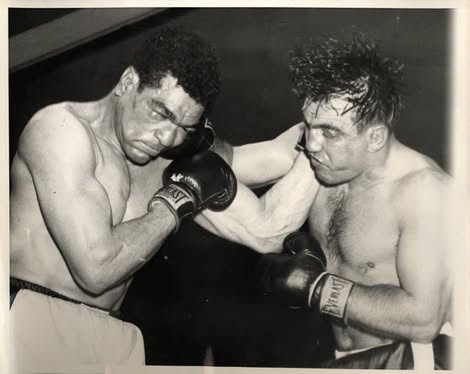
Jose Basora (left) and Robert Villemain (right) battle at the Eastern Parkway Arena in Brooklyn, New York with Frenchman winning a 10-round unanimous decision in Basora's final career bout.
United Press reported:
"Robert Villemain of France scored a unanimous 10 round decision tonight over Jose Basora of Puerto Rico before 1100 fans at Eastern Parkway Arena. Although Villemain suffered a slight cut over the left eye, which bled from the 2nd round to the finish, he was Basora's complete master throughout the fight. Villemain weighed 168 pounds, Basora 171. There were no knockdowns.
----------------------------------------------------------
Frenchman Robert Villemain, convinced he'd beaten Jake LaMotta twice in 1949 (they split two decisions that most thought that Villemain had earned both), having a win over Kid Gavilan in 1950, with two losses to Sugar Ray Robinson in 1950, would never get a shot at the Middleweight Title despite a 52-7-4 pro record.
----------------------------------------------------------
The Forgotten Jose Basora
Story By Carlos Acevedo for IBRO:
Jose Basora, one of the toughest, sharpest dressed middleweights of the 1940s, owed his extraordinary career to a dynamic bantamweight named Sixto Escobar. Along with other Puerto Rican pioneers such as Angel Cliville, Atilio Sabatino, and Pedro Montanez, Escobar, at only 5’4”, put Puerto Rico on the boxing map with fists as hard as coconuts. Little Escobar became the first Boricua to win a world title when he knocked out Baby Casanova in 1934. What is truly amazing, however, is that Escobar accomplished this feat only seven years after boxing had been legalized in Puerto Rico. Needless to say, “El Gallito” became an idol from Fajardo to San German.
One of thousands of campesinos inspired by the oversized heroics of the undersized Escobar was Jose M. Basora from Lajas. Basora, born on February 8, 1918, took up boxing as a teenager in Cabo Rojo and went on to become lightweight amateur champion of Puerto Rico. In 1938, Basora won the Gold Medal at the Pan-American Games (then known as the Central American and Caribbean Games) in Panama City and sailed, without a lick of English, for the bright lights of New York where the “Tropical Style” flourished in the late 1930s.
Basora settled in the Bronx and began his pro career under the joint tutelage of sage Whitey Bimstein and Lou Brix. His manager was a prickly Cuban expatriate and nightclub owner named Angel Lopez. Years later, Lopez would become famous for his tempestuous relationship with Kid Gavilan and infamous for being outed as an undercover front for Frankie Carbo.
Jose Basora, often billed as “Joe,” perhaps to downplay his Latin roots, made his pro debut on January 7, 1939 at the Ridgewood Grove Arena in Queens. Over the next seven years he would become a feared contender whose name–Joe or Jose, take your pick–set off warning signals in anybody who weighed over 135 pounds. He peaked at #4 in The Ring annual ratings in both 1943 and 1944. Basora also drew a solid following along the east coast with his high-pressure style and deadly right cross. “He hits harder with either hand than any man in the ring today,” Lou Brix told sportswriter Jack Cuddy. “When he hits them right they remain unconscious for half an hour or more. And he throws those punches absolutely straight—no swings or telegraphs.”
Basora went undefeated in his first 29 bouts before being overmatched against veteran contender Kid Tunero in Havana in 1941. Tunero, with over 100 fights at the time, had already fought twice for the middleweight title and had beaten, among others, Marcel Thil, Anton Christiforidis, and Ken Overlin. As late as 1942 Tunero was ranked in the top five among middleweights. He pounded out a decision over Basora, and the lanky Puerto Rican subsequently hit a rough patch, losing five of his next seven fights. During that stretch Basora lost two decisions each to veteran middleweight Coley Welch and 2008 Hall of Fame inductee Holman Williams. Welch and Williams were both rated in the top five among middleweights at the time. Add to that list rough and tumble top ten contender Antonio Fernandez, and you almost begin to feel sorry for poor Joe.
It soon became clear that Basora would have to duke it out with mismanagement as well as some of the best fighters of his era. Angel Lopez, as courageous as any manager in the history of boxing, once said, “I don’t care with whom they match my boy, so long as it is the same weight division. I’ve a young welterweight now, Jose Basora. He’s fought 77 fights, won 50 of them by knockouts and 27 by decision. When a matchmaker asks me to sign Basora for a fight, I say ‘o.k.” I don’t even ask whom he wants Basora to fight.” Lopez proved himself to be a man of his word. In four and a half years—from March 1941 to August 1945—Basora faced Jake LaMotta four times, Holman Williams five times, and Coley Welch twice. During that span he also fought Sugar Ray Robinson, Ezzard Charles, Fritzie Zivic, Kid Tunero, and Antonio Fernandez. By then, Chris Dundee was also on board as co-manager, but the avalanche of tough fights never stopped.
In between rumbling with hard case after hard case in the ring, Basora was out cutting a natty figure in swanky nightclubs and dance floors across the city. Still a few years ahead of the post-war Puerto Rican migration boom that would earn New York City the tongue-in-cheek nickname “The Big Mango,” Basora enjoyed the Cuban rhumba/charanga craze along with the Latin fusion of nascent Spanish Harlem, with its mix of Puerto Rican, Mexican, and Central American traditions. “I would rather dance than eat,” Basora said, “which I do both at the Havana-Madrid. It is much more pleasure to dance than to skip rope.” The Havana-Madrid, a Broadway hotspot owned by Angel Lopez, was where Basora did his extracurricular roadwork. Chris Dundee elaborated on this uncommon training technique to syndicated columnist Jack Cuddy: “Basora is the outstanding middleweight in the world today because of his legs,” he explained. “Where does he get those legs? He gets them by dancing the rhumba and conga every night he’s in New York at the Havana-Madrid.”
Basora may have been making his mark in the nightclubs, but in the ring he made his first real mark in 1942 with two furious bouts against Jake LaMotta. “The Bronx Bull” was undefeated in New York City when he faced Basora at the Bronx Coliseum just outside Starlight Park on May 12, 1942. After 10 spectacular rounds the bout was called a draw. It was a grueling fight. “The pair locked heads for the full three minutes in every round,” wrote Meyer Ackerman of The Ring, “and blasted one another dizzy as the crowd roared their approval.” A rematch in June was no less brutal and ended with Basora winning a decision before 7,500 spectators. “It was a savage fight all the way,” remarked Ackerman. But not nearly as savage as what would happen to Basora a few months later against Ezzard Charles in Millvale, Pennsylvania. Charles, the future all-time great, demolished Basora, dropping him six times before finally stretching him out for the count in the fifth round. It was a strange case of matchmaking, to say the least, but with most world titles frozen for the duration of World War II and big money fights as scarce as opponents willing to meet him, Basora accepted whatever came his way, even if that meant ducking through the ropes against budding light heavyweights.
In a remarkable show of durability and cojones, Basora was back in the ring a few weeks after the Charles disaster to kick-start an impressive 22-2-2-1 streak. His only losses during that time were decisions to Jake LaMotta in Detroit and Holman Williams in San Francisco.
Then, on May 14, 1945, Basora fought to a 10-round draw with the greatest prizefighter to ever walk the earth. Sugar Ray Robinson, a 7 to 1 favorite, entered the ring with only a loss to Jake LaMotta tarnishing his 54-1 record. Basora and Robinson met at Convention Hall in Philadelphia in front of over 14,600 spectators. Robinson built up an early lead against Basora with his flashy combinations, but began to wilt from a body attack that had him sagging in the fifth round. Basora pressured Robinson throughout the fight, used head movement and feints to avoid blows, and surprised the crowd with his boxing skills. The fight was up for grabs going into the final round. “A spirited 10th round rally by Robinson failed to pull the bout out of the fire,” reported the newswires. “He caught Basora with sharp lefts and rights and gained the round which save him from a defeat.” An unpopular draw was announced.
“Basora is a tough boy,” said Robinson after the bout. “Maybe not so tough as Jake LaMotta, but tough enough.” Maybe Basora was a little tougher than Sugar Ray let on. It took years for a rematch to take place between the two, and by that time Basora was already on the downside. Years of tough fights caught up with Basora; the punishment he received at the hands of Jake LaMotta during their fourth fight in 1945 and against Tommy Yarosz in 1947 particularly seemed to take a lot out of him. LaMotta, now at his destructive peak, pummeled Basora over nine one-sided rounds before the Puerto Rican sank to the canvas, limp.
There would be no quick return to the ring this time for Basora. He was out of action for five months before picking up the gloves again. Tommy Yarosz was known as a light puncher, but Basora collapsed in the ring after losing a close decision in Detroit and was taken to the hospital with a possible skull fracture.
Although doctors advised him to quit, Basora returned to the ring after a few months of rest. From that point on, Basora, who still had enough to beat a faded Holman Williams twice, was in and out, and never defeated another top-flight fighter again. He lost close decisions to tough Bert Lytell and Bee Bee Wright, fought only four times in 1949, and, when he returned to the ring in May 1950 after a layoff of 9 months, lost a decision to Jimmy Beau.
Naturally, as soon as the Puerto Rican bruiser was at the end of the line, 11 years after his pro debut and 12 years after earning a gold medal at the 1938 Central American Games, he got a “title shot” and a second chance against Sugar Ray Robinson. Billed for the “Pennsylvania State World Middleweight Title,” the rematch took place five years after their initial draw. By then the fierce slugger who had whipped Jake LaMotta and Holman Williams was little more than a whisper of himself. A decade of tough fights left Basora in no condition to defeat Robinson.
Basora might as well have entered an abattoir on August 25, 1950 instead of the Scranton Stadium in Pennsylvania. Within seconds of the opening bell, a prime Sugar Ray dropped Basora with a slashing left hook. Basora, with his eardrum now punctured, wobbled to his feet. Three more knockdowns later and the slaughter was over. Basora, along with his career, was counted out after 52 seconds. A cynical crowd booed and cat called until they realized that Basora was not about to get up. The Associated Press reported: “Basora was badly hurt. Dr. Leonard Freda of the State Athletic Commission worked over him for six or seven minutes before he was permitted to leave the ring.”
Before that awful night in Pennsylvania, Basora was a top-ranked middleweight for most of the decade, and a feared puncher who put the hurt on several contenders and, for good measure, a couple of Hall of Famers as well. In addition to defeating LaMotta, Basora took care of former welterweight champion Fritzie Zivic, Henry Chmielewski (who was good enough to beat, Lou Brouillard, Georgie Abrams, and Coley Welch), and kamikaze Philadelphia legend Young Gene Buffalo. Still, the big time seemed to elude him.
The truth of the matter is that Basora, a hard punching pressure fighter with a long jab, was ducked by some of the best boxers of his era. (An exception, of course, is Jake LaMotta, whose grim willingness to fight nearly anyone at any time bordered on pathological.) Dozens of legends have been spun around the often specious claim of being “ducked,” but in this case, some “proof,” albeit circumstantial, actually exists. Natural matchups with the likes of Rocky Graziano, Steve Belloise, and Ernie Vigh never materialized, and one contender, The Cocoa Kid, flat out refused to appear for his match with Basora. In addition, Sugar Ray Robinson pulled out of three scheduled matches with Basora before their first fight, and waited five more years to offer him a rematch despite the fact that nearly 15,000 fans attended their first match in Philadelphia. (Incredibly, Sugar Ray even delayed the second fight in 1950. He was fined $1,000 by the Pennsylvania State Athletic Commission for his vanishing act.) A rematch in Madison Square Garden would have been a natural. Imagine the angles: two New Yorkers headlining, one, Basora, with a dedicated Puerto Rican following; the other, streaking Sugar Ray Robinson, facing only the second man he was unable to subdue in 56 fights.
But it never happened. Why? Good question. From 1945 to 1950 Sugar Ray Robinson fought rematches with the following opponents: Kid Gavilan, Ossie Harris, Don Lee, Cecil Hudson, Freddie Flores, Freddie Wilson, Jake LaMotta, Tommy Bell, Bill Lee, and Henry Brimm. Somehow, oddly, Basora managed to slip through this motley dragnet. Unlike Charley Burley, who was too good but perhaps too dull to risk fighting, Basora was one of several all but forgotten drawing cards of the 1940s. His scheduled bout with mysterious welterweight contender Louis “Cocoa Kid” Hardwick, for example, drew nearly 17,000 fans in Philadelphia. Unfortunately, the Kid never bothered to show up, and Basora knocked out late substitute Al Franklin instead. That was just the kind of luck, it seemed, Basora could count on.
After his drubbing at the hands of Robinson, Jose Basora finished his career on the skids, losing five out of his last six bouts, before retiring with a record of 78-20-7 (44). His record against Hall of Fame fighters is 5-7-3.
In retirement, Basora lived in the Bronx and owned a bodega in the Huntspoint section.
His death, in 1993 in New York City, went largely unnoticed, but a baseball stadium in Lajas, Puerto Rico, bears his name as a testament to the unjustly forgotten accomplishments of one of the greatest Puerto Rican fighters of all time.
1
732

I remember living in the Bronx, Huntspoint when this came out. Had it on repeat for weeks lol

1
3
229

Jun 11
18 years ago yes they were 😂😂😂 I lived in Huntspoint for many years of my life and have roots in the city
1
14
Jun 11
Bro the city is so sweet acting like this is Huntspoint or some shit 😂😂😂
1
95


GG750 Live from New York City!
June 19th.
More info coming soon.
gg750.com 🇨🇳
hookedonwrestling.tv 🇬🇧
#gg750 #prowrestling #dojo #training #shenzhen #china #bronx #huntspoint #newyork
3
5
233

May 19
1
5
533


May 17
i left up there for good in 2011…. I used to deliver to Huntspoint every night so….yeah. place was goin down hill and i wasn’t dealing with it anymore! just the money i saved down here in taxes was almost what some make in a year salary
5
132

I blame sex and the city for liberalizing how atrocious sex tourism was/is has always been in nyc. It’s completely sanitized. But that doesn’t mean it’s not happening. The sex districts of huntspoint, 42nd street, the piers etc.. ppl still come to nyc for sexual tourism
3
1
15
880
💨 The MTA said Wednesday that millions of dollars in funds from Manhattan’s congestion pricing program have been used to reduce pollution around Hunts Point Produce Market in the Bronx.
The MTA is using $15 million in revenue from the toll on vehicles below 60th Street to replace 20 diesel-fueled refrigeration units at the massive produce market, officials said.
"Replacing just one of these units avoids the particulate matter, the emissions, of 330 truck trips per day on the Cross Bronx Expressway," MTA Chair and CEO Janno Lieber said.
He said they’ve replaced the diesel units with hybrid or clean diesel models.
The 20 units replaced equate to 6,600 trucks removed from the area per day, according to officials, who said another 75 new units are on the way this year.
The units are being replaced by the MTA as part of the air-quality mitigation the agency committed to in the federal environmental review for the tolling program.
Lieber also said drivers aren’t going to the Bronx to avoid the toll as some had feared when it launched.
“That didn't happen,” he said. “There's no more traffic and there is no more pollution than there was before congestion pricing was implemented.”
🎤 @mackrosenberg reports
📸 Ray Ramundi/MTA, Marc A. Hermann/MTA
🔊 Tune into 1010 WINS at 92.3 FM for more local news
#nyc #newyorkcity #nycnews #manhattan #thebronx #congestionpricing #environment #huntspoint
8
8
12
2,268

Mar 13
🌰 New York State Police are investigating the theft of $50,000 worth of walnuts in the Bronx.
The large shipment of shelled nuts was stolen from two 52-foot trailers in Hunts Point on March 2.
The walnuts were boxed and on pallets for commercial distribution, police said.
Investigators believe the thieves may try to sell the stolen walnuts to third-party vendors, wholesalers or distributors in the New York City area.
A pallet of walnuts can go for thousands of dollars.
Police are urging businesses, distributors, vendors, and the public to watch for anyone trying to sell large quantities of packaged walnuts, especially at unusually low prices.
Anyone with information about this theft or who has been approached to purchase walnuts believed to be associated with this incident is asked to contact the New York State Police Troop NYC at (212) 459-7800.
🎤 @LyndaLopez08 has the story
📸 New York State Police, Katsiaryna Yeudakimava via iStock/Getty Images Plus
🔊 Tune into 1010 WINS at 92.3 FM for more local news
#nyc #nycnews #newyorkcity #thebronx #walnuts #nutheist #huntspoint
2
3
4
1,600

Feb 27
SOG Huntspoint
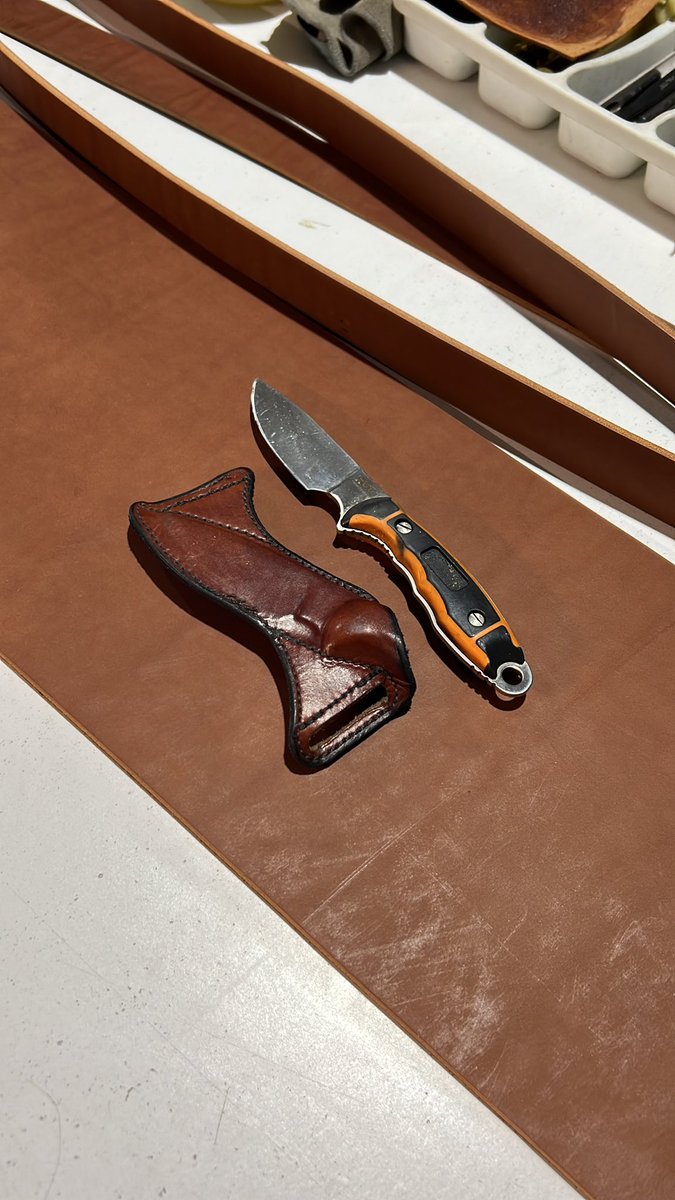
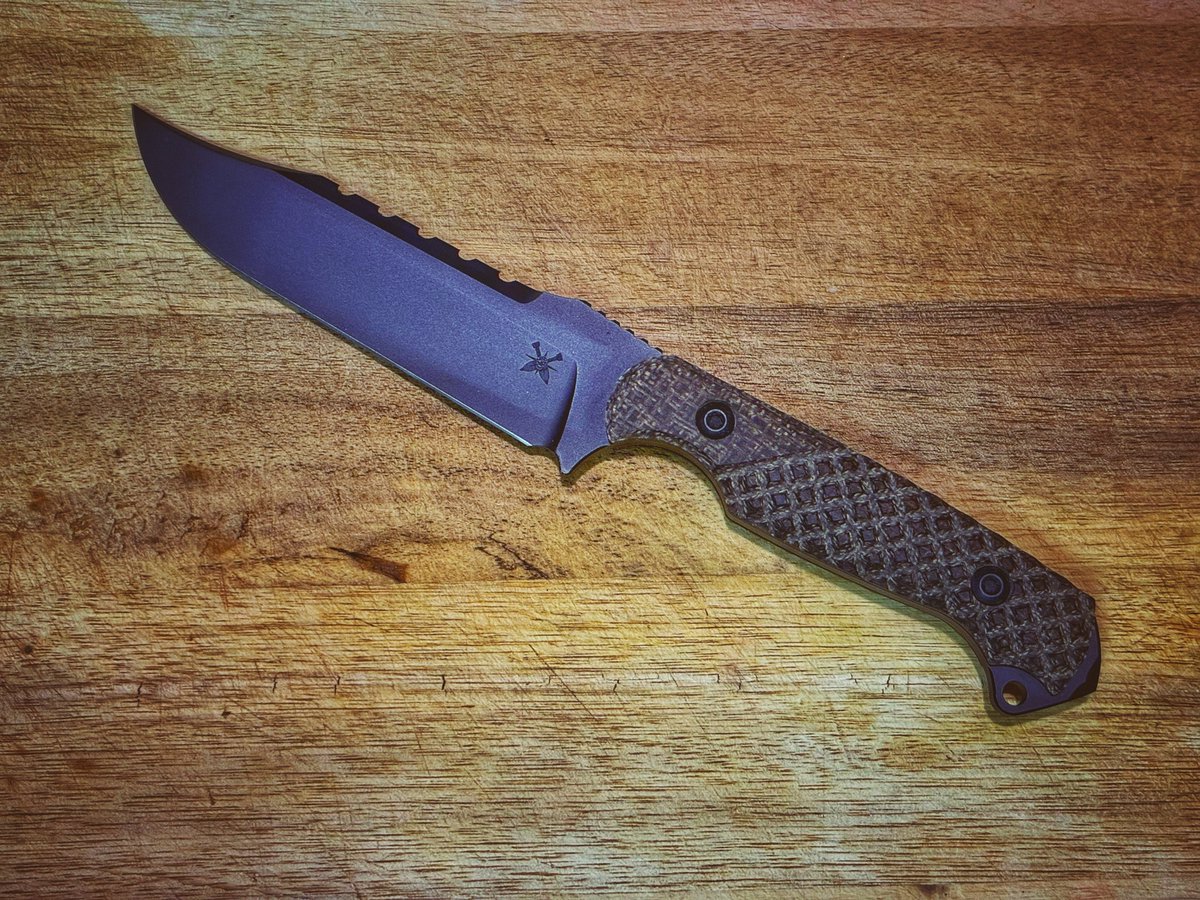
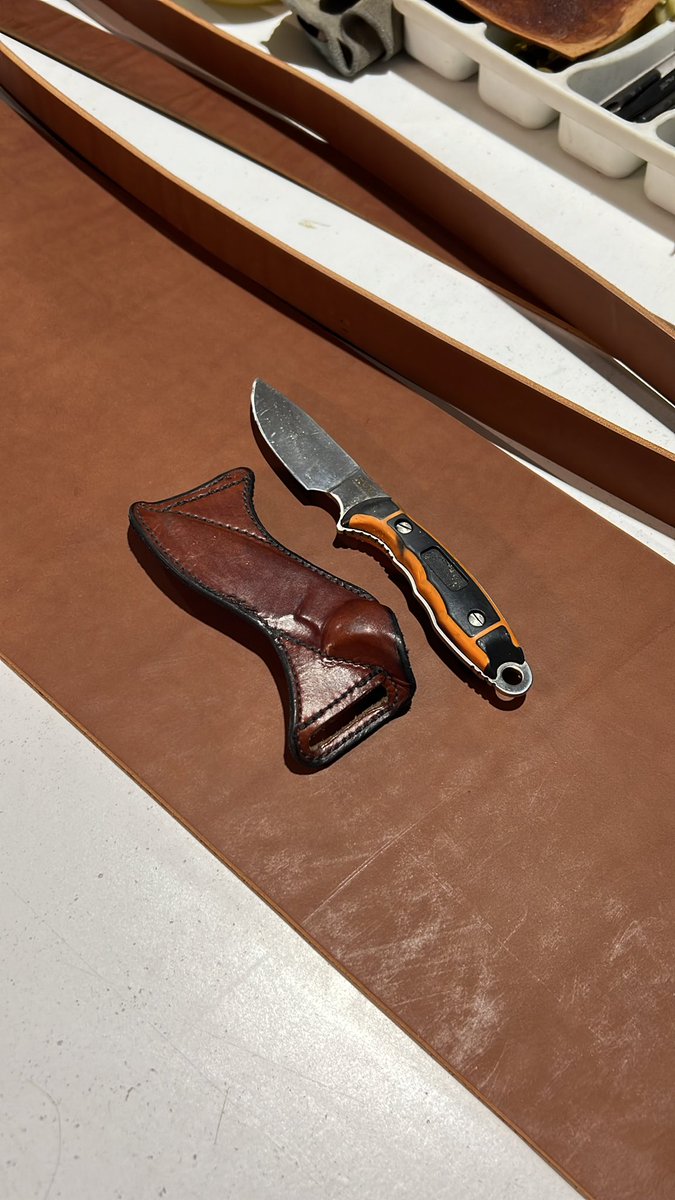
Not the fanciest knife out there but it feels good in the hand and my dad gave it to me.

3
9
210

BODEGA ASSAULT: Police are asking for the public’s help identifying three men wanted in connection with a violent assault inside a Hunts Point bodega.
#News12 #TheBronx #BodegaAssault #HuntsPoint #PoliceInvestigation #Community #CrimeAlert #LocalNews
tinyurl.com/mwz2c75v
1
3
4
727
COMMUNITY SUPPORT: The Southern Boulevard Business Improvement District is shoveling snow in Hunts Point after staff saw video of the conditions there.
READ MORE: tinyurl.com/4sc4v6ej
#News12BX #HuntsPoint
10
921

21 Dec 2025
It actually did chart very well actually. Cardi had it removed bc she’s a pussy ass dirty bitch from huntspoint.
5
1
244

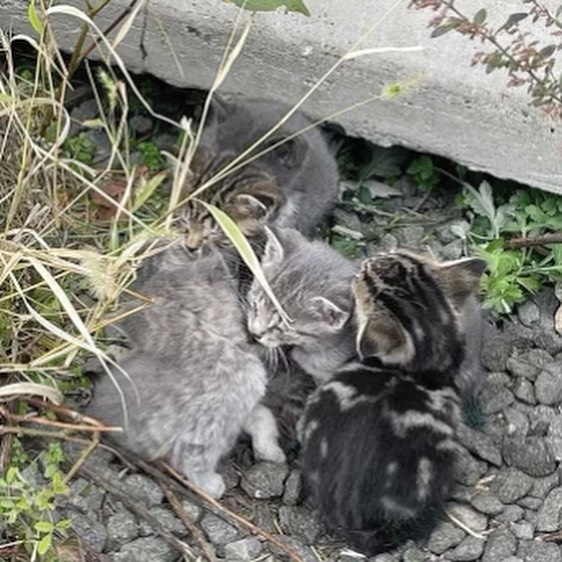
⚠️Calling all rescuers🚨 Rescue needed for four kittens in the #huntspoint section of the Bronx. Their feral mom needs TNR. Who can help! Send us a direct message if you can go.
#tnr #nyc #bronx #friyay #rescueadoptionfoster #onmyway #fosteringsaveslives #spayandneuter #nyc
7
61
130
987
