
gitcoin, giveth, and hypercerts: not apps at all, just groups for funding other people to make apps
i think it says a lot that the list you were able to pull out, only one thing on it is a specific named app...
you guys created a system that raised up people who "disbursed grants" over people who made things, and you got what you optimized for; grants disbursed, nothing made
1
15

I think we had a fair number of them
Friend tech, gitcoin, giveth, hypercerts, karma gap, some games, voting interfaces like pairwise
I think the comparative advantage of an onchain app vs web2 one never became a self evident 10x improvement
2
2
36

8h
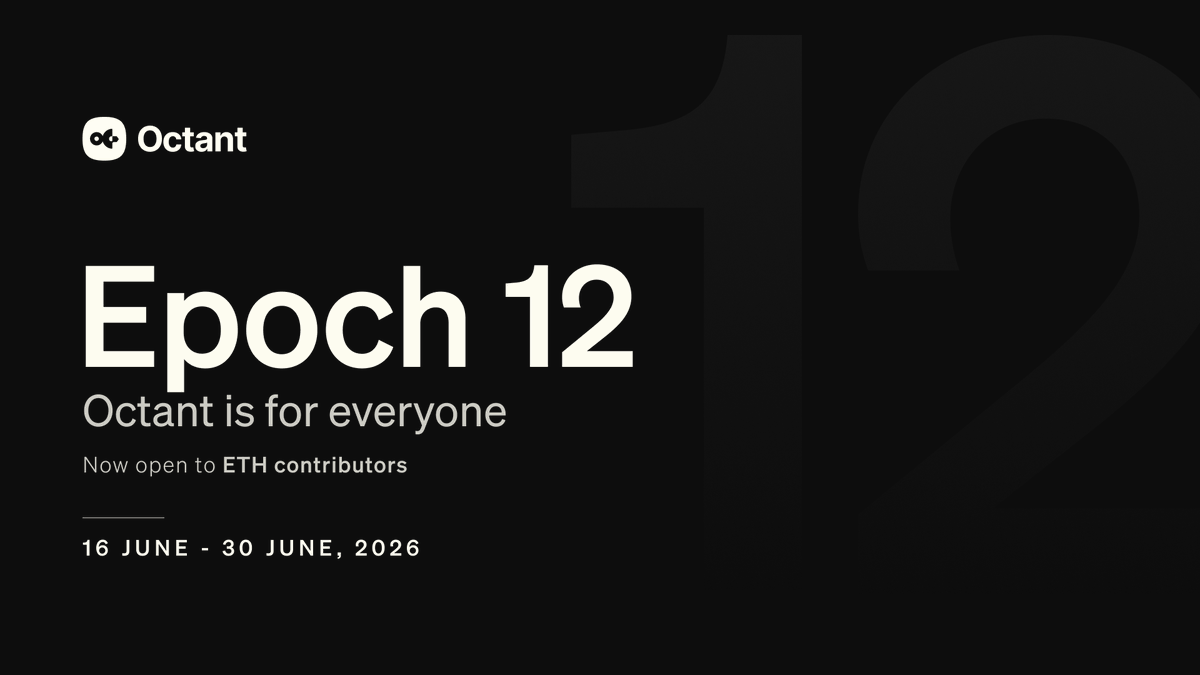
We're excited to share Epoch 12: Octant is for everyone.
Allocation window opens at 12:30 pm ET today (16 June) and will close at 11:30 pm ET on 30 June. You can allocate on: octant.app
This epoch marks a few big changes.
This is our first epoch introducing ProperQF.
This is our first epoch with zkproofs in voting.
This is our first epoch open to ETH contributions.
This is our first epoch on v2.
So, let's get into it.
Epoch 12 is our 13th funding round. We’ve got 200 ETH in our matching pool this time.
As a GLM locker, you can allocate your WETH rewards to yourself and/or to projects that are part of this epoch. The matching pool will be quadratically split based on your allocations.
For ETH contributions: 50% of the contribution will be converted to $GLM and burnt, and the remaining 50% will be allocated to your project selection. Part of this is to discourage sybil, and the other part is because our funding comes from @golemfoundation's treasury yield and GLM is core to the mechanism. We will be noting addresses who attempt to sybil and penalize them by removal in upcoming epochs.
We've done a few deep dives on properQF and built a simulator you can use to model the final allocations: qf.octant.app
Now for the fun part. We've got an incredible group of projects joining us in Epoch 12:
@AestusRelay
@BluefilterC
@crypto_altruism
@dappnode
@eas_eth
@ECHInstitute
@etheconomiczone
@ethStaker
@EthereumRemix
@FundingCommons
@GiliEcoTrust
@greenpilldevs
@growthepie_eth
@hypercerts
@l2beat
@OSObserver
@ProtocolGuild
@RevokeCash
@rotkiapp
@SEAL_911
@shefiorg
@ShutterNetwork
@solidity_lang @argotorg
@torproject
@zachxbt
Allocation dates: 16 June - 30 June (11:30 PM EST).
Every allocation makes a difference. Make yours count. Allocate now: octant.app
11
25
74
17,346

Jun 4
这篇很有趣,但80页的 PDF 也太长了。
by @NotebookLM :结合这场公共治理实验的开展情况,报告最终得出了几个结论:
1. 所有的社区最终都选择了“权力集中”的变体模式。
这是实验最核心的发现:在拥有完全自由选择权的情况下,6个参与楼层都没有采用像二次方融资、信念投票等理论上先进的去中心化或链上治理机制。相反,它们全都选择了权力集中的模式,包括:
仁慈的独裁者(3个楼层)
预先存在的委员会(1个楼层)
委托给个人(1个楼层)
默认沿用现有的非营利组织结构(1个楼层)
在小预算、短时间、高运营压力的现实条件下,“集中权威”是最理性的自然适应结果。
2. “治理有效性”与“治理分布度(民主化)”是两码事
实验表明,广泛参与的分布式治理并不一定能带来更好的结果。
报告指出,一个充满动力的“寡头政治”在表现上远超完全透明但无人参与的治理结构。
产出最高的14楼(举办了78场活动,贡献度最高)虽然名义上有12-14人的委员会,但实际采购决策仅由3-5人做出。
治理机制本身并不能决定最终的产出质量,社区原有的基础设施、领导者的精力以及领域的文化,比选择哪种治理机制更能预测最终结果。
3. 揭示了“有条件的授权(Conditional Delegation)”模式
在12楼(以太坊社区)以及整栋大楼的管理层面,研究者观察到了一个普遍现象:治理在处理日常琐事时看似是下放或参与式的,但一旦面临高风险决策,或者决策偏离了原本领导者/所有者的偏好时,授权就会被撤回,权力会重新集中。这表明,如果不预先制定明确的“否决规则”,所谓的授权其实都是有条件的,不能仅在低风险环境中评估授权机制是否有效。
4. “自掏腰包(Self-Funding)”会直接瓦解集体治理
实验发现当预算过低(如1,400美元)且面临现实运营压力时,一些楼层负责人(如9楼和11楼)会选择自掏腰包补贴活动,甚至超支达到初始资金的4倍。报告尖锐地指出,当负责人自掏腰包时,集体的“我们该如何决策”这个问题就变得毫无意义了。个人财务的投入自然赋予了其单方面决策的权威,这也是为什么很多社区顺理成章走向了“仁慈的独裁者”模式。
5. 将微型预算下放给社区领袖,远比传统的集中采购更高效
这是一个意料之外的发现:主办方分配给6位楼层社区领袖的 10,300 美元,其产出的活动时长、动员的志愿者数量以及带来的赞助商线索,远远超过了主办方花费约 50,000 美元聘请外部承包商(如媒体承包商、策展人、营销顾问等)所带来的回报。例如,9楼仅凭一次介绍就拉来了3,000美元的赞助,不仅超过了该楼层分配到的预算,甚至足以覆盖整个实验的资金分配成本。这证明了将资源直接下放给具有强烈内部动机的社区节点的巨大价值。
6. 证实了Web3治理工具的现实普及鸿沟
尽管实验发生在被称为“美国首个以太坊社区中心”的大楼里,也提供了相应的链上工具(如Simocracy数字孪生、Hypercerts协议等),但实际上绝大多数楼层的治理依然完全停留在链下(使用WhatsApp、Telegram或线下会议)。结论指出,要想让非加密原生的社区采用复杂的链上治理工具,必须满足几个条件:足够高的预算阈值(让人们觉得值得折腾)、专门的治理引导员手把手教导,以及强制性的系统要求。缺少这些,人们永远会退回到最熟悉的工具。

Our new governance report is live.
We gave six communities money, total freedom, and an AI that could spend it for them, then watched how they chose to govern.
A field study in AI-assisted governance, with @protocollabs @GainForestNow @OctantApp @hypercerts 👇
1
4
10
1,296

Awesome! Wondering what you guys think about our vision paper on shared agents, in some ways could be seen as a successor to DAOs:
May 28

We think a new space is emerging around shared agents: systems that aggregate group preferences, act within shared rules & coordinate on behalf of many people
And this may finally unlock what DAOs were meant to be: human & agent coordination at scale
Check out our blog post 👇
1
8
313


Our new governance report is live.
We gave six communities money, total freedom, and an AI that could spend it for them, then watched how they chose to govern.
A field study in AI-assisted governance, with @protocollabs @GainForestNow @OctantApp @hypercerts 👇
3
11
31
3,411

@devanshmehta began as. journalist and entered Public Goods through hypercerts as a funding source.
1
4
348

Jun 3
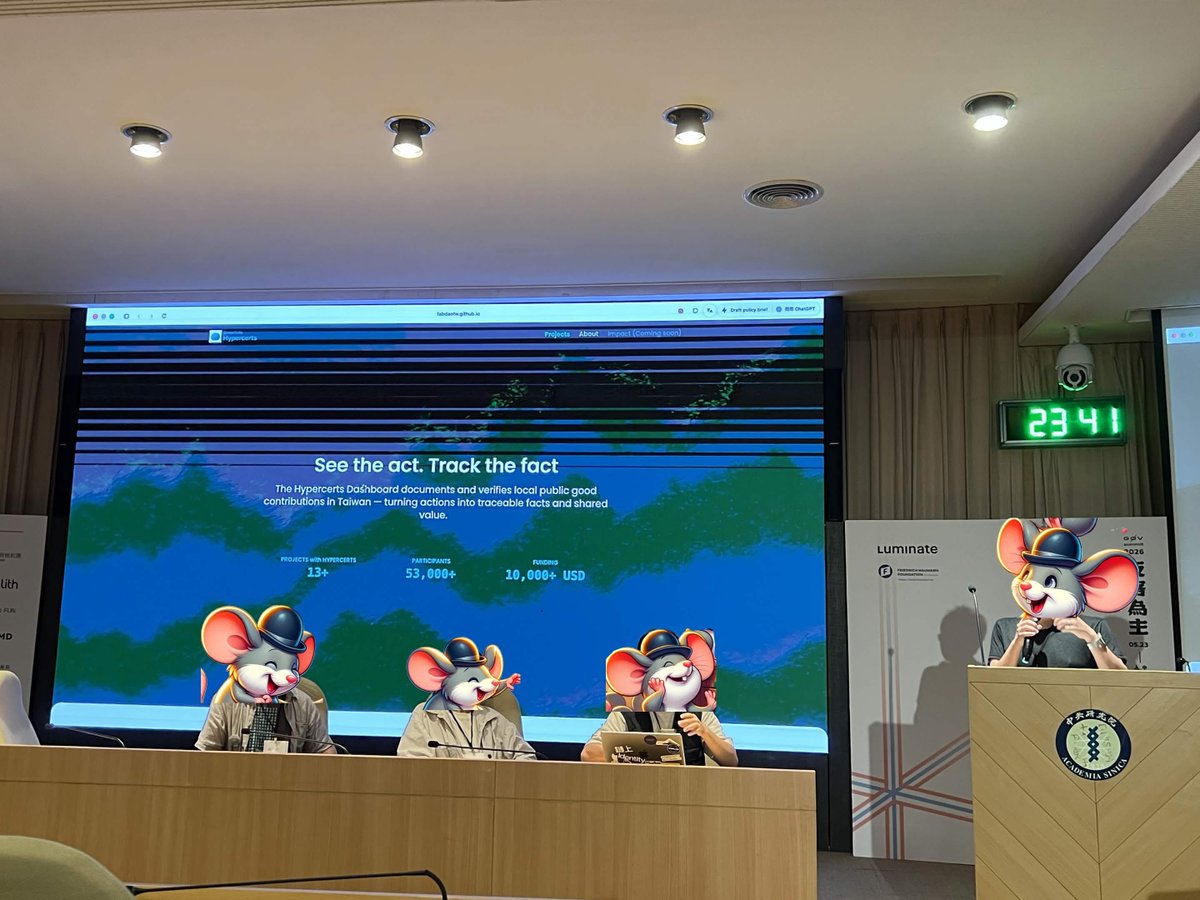
Through @denkeni update, Taiwan Hypercerts dashboard is first time on the big screen
how we track public goods in Taiwan
fabdaotw.github.io
See the act. Track the fact.
Egineer @denkeni
Designer @chocochuke
PM @ywl_kkk
Evaluator @swiftevo1 & @shi79536
1
1
7
42

May 14
Simocracy builds on years of work on Taina and equitable human-AI deliberation systems; most recently DeepGov with @gitcoin.
Great to see real-world pilots now extending beyond the rainforests to SF with @protocollabs @hypercerts @OctantApp
What happens when AI digital twins help allocate a treasury?
Our experiment with @dwddao's Simocracy: at Frontier Tower, community leads' AI twins read the proposals, argued their priorities, and deliberated together.
With @hypercerts @OctantApp @ProtocolLabs @GainForestNow
1
2
13
774
What happens when AI digital twins help allocate a treasury?
Our experiment with @dwddao's Simocracy: at Frontier Tower, community leads' AI twins read the proposals, argued their priorities, and deliberated together.
With @hypercerts @OctantApp @ProtocolLabs @GainForestNow
1
5
34
3,485

May 12
What if we stopped funding promises and started funding proof?
Impact Certificates (Hypercerts) flip the grant model: mint onchain tokens for work you've ALREADY done, then let retroactive funders reward verified impact.
No more speculative grants. Just receipts.
@gitcoin breaks it down 👇
gitcoin.co/mechanisms/impact…
1
1
3
1,308

Tomorrow is our @hypercerts community call. We'll share lots of exciting updates, incl. simocracy.org and @maearthstudio , come join!
Register here: luma.com/fcyqpplm
🗓 May 12
🕗 8am PST / 5pm CET / 8:30pm IST
3
10
993

Yesterday I had a talk at @EthPrague 2026 — a fairly technical crypto conference — where I shared our real experience of implementing Web3 in a network of ecovillages during wartime.
I started with things that usually stay behind the scenes. Access. When parts of your country are flagged as “sanctioned territories”, even Ukrainian users can get excluded from platforms. Crimea is a constant edge case — sometimes we literally have to explain manually that Ukraine should have access. What looks obvious becomes ongoing digital diplomacy.
Right at the conference we continued negotiating access for Ukraine to MiniPay within the Celo ecosystem — a simpler mobile wallet that could actually work in our communities. Before that, we managed to open Hypercerts for Ukraine, and we’re already using it for environmental impact.
Then I spoke about where Web3 “breaks” at the user level.
Quadratic funding looks elegant until algorithms start interpreting a real human network as a sybil attack. Our villages interact, transact — and the system flags it as bots. Funds understand, but the logic is rigid.
Smart meters on solar stations can take hours to connect. GPS drifts in frontline areas when air defense is active, so we sometimes manually shift tree coordinates just to pass verification. Land registries are closed, ownership is informal, while carbon verifiers expect 20–40 year contracts. The gap between code and reality becomes obvious.
And sometimes it’s simpler: people call in panic because a button doesn’t work and they can’t complete a transaction.
This is why I raised the idea of an “invisible” blockchain. As Vitalik Buterin has suggested, users shouldn’t need to understand networks, L2s, or bridges. A person should just say: here is my impact — account for it.
Right now we have energy, trees, biodiversity, carbon, water — all tokenized separately. It becomes a fragmented set of wallets and tokens that don’t connect. The real problem is how to unify these layers into one system.
This links to another tension — short-term vs long-term capital. Most funding runs in sprint logic. But regeneration and community building are multi-year processes. When forced into short cycles, real work turns into simulation.
Communities shouldn’t live in permanent hackathons. They need continuity.
We also spoke about internal economies — not constantly off-ramping to fiat, but keeping value circulating through local exchanges and commitment pools. We’re testing this in practice.
Finally, I shared how we’ve identified a set of platforms that fit our reality, aggregated data into a unified impact dashboard, and started testing stewardship and carbon accounting through Regen Bank. At some point, we moved from being users to shaping how these systems should work.
A ReFi colleague from Colombia told me:
“I’ve been watching you for a year. What you’ve built — most haven’t.”
It felt less like praise and more like a signal: our case is being noticed.
hashtag
#ETHPrague
#ecovillages
#ReFi
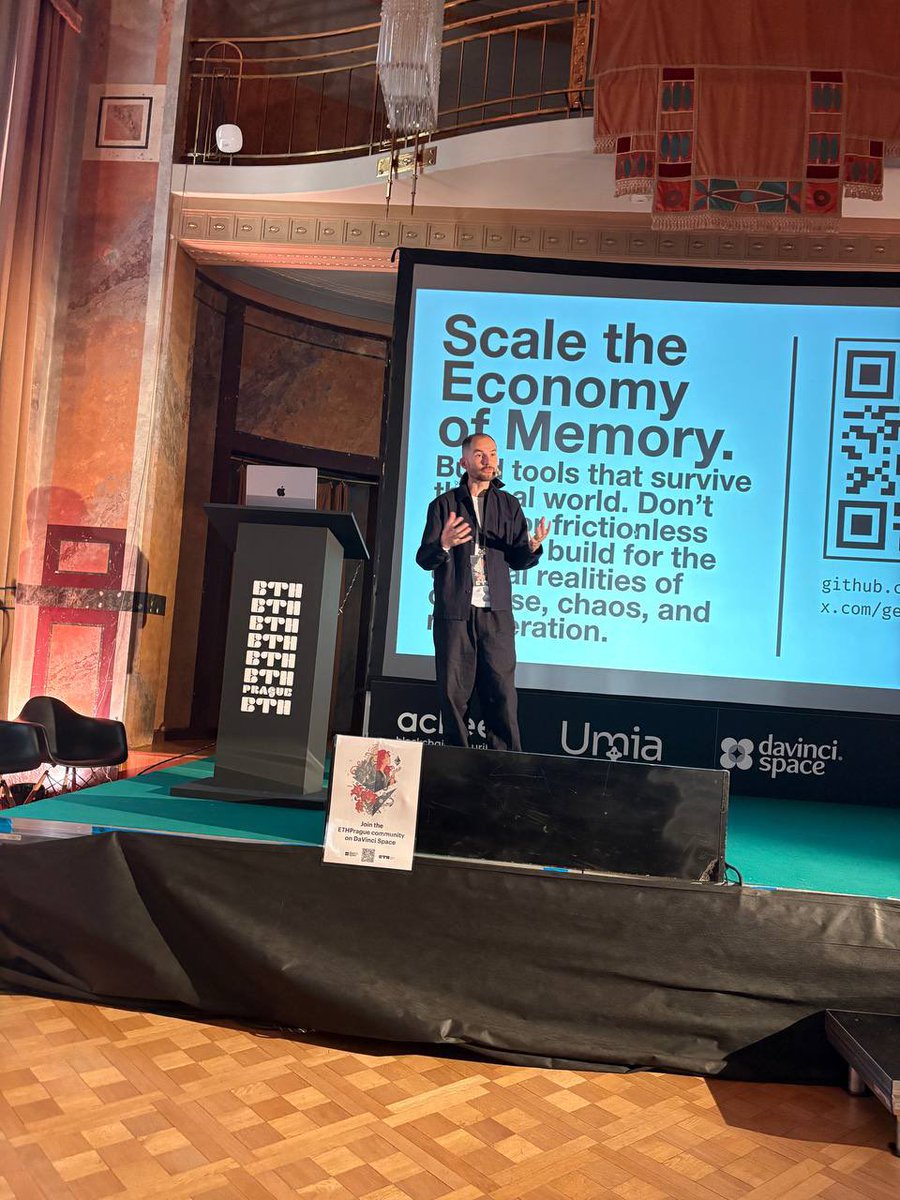
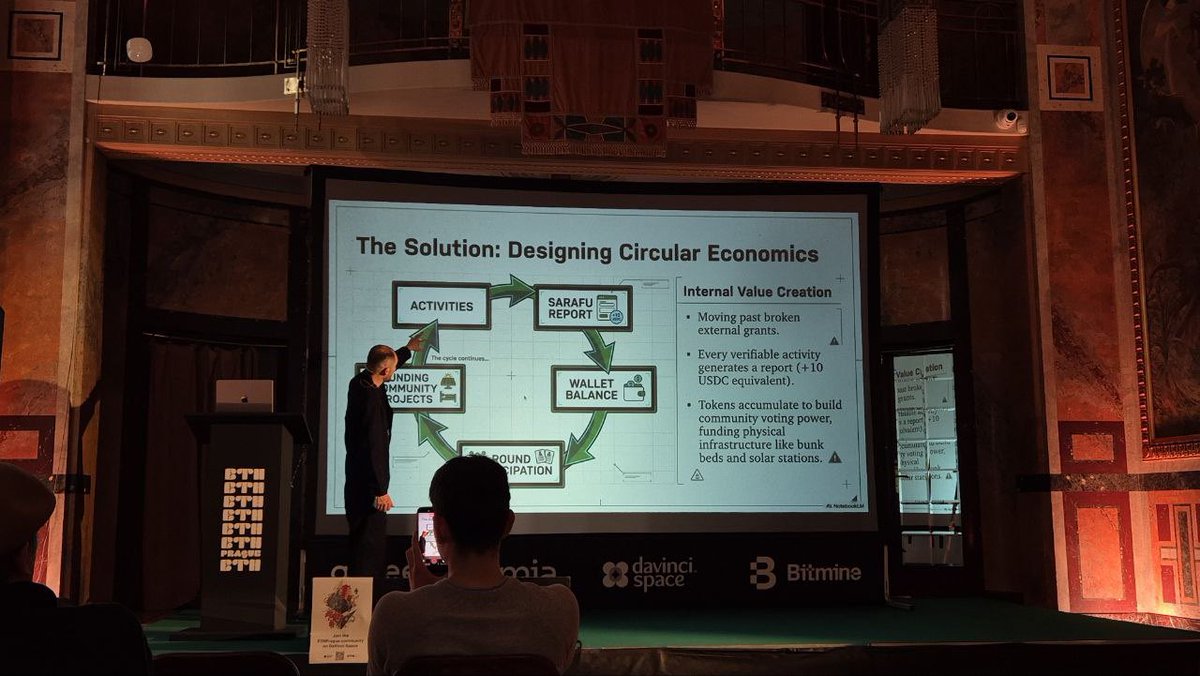
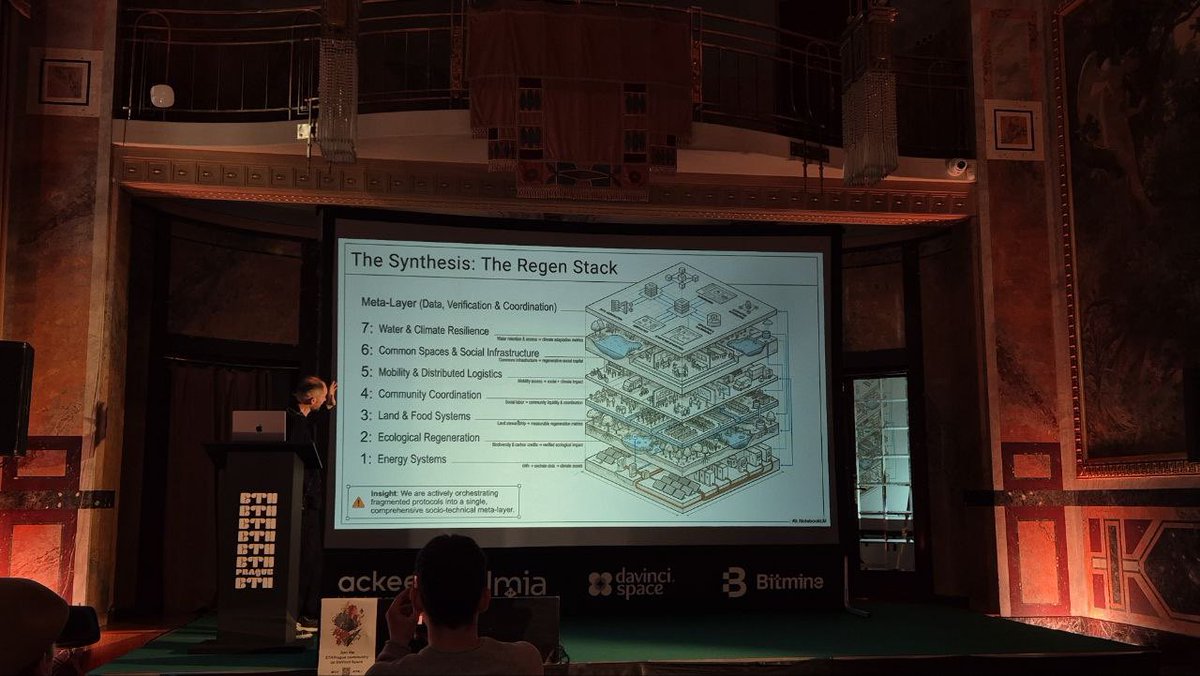
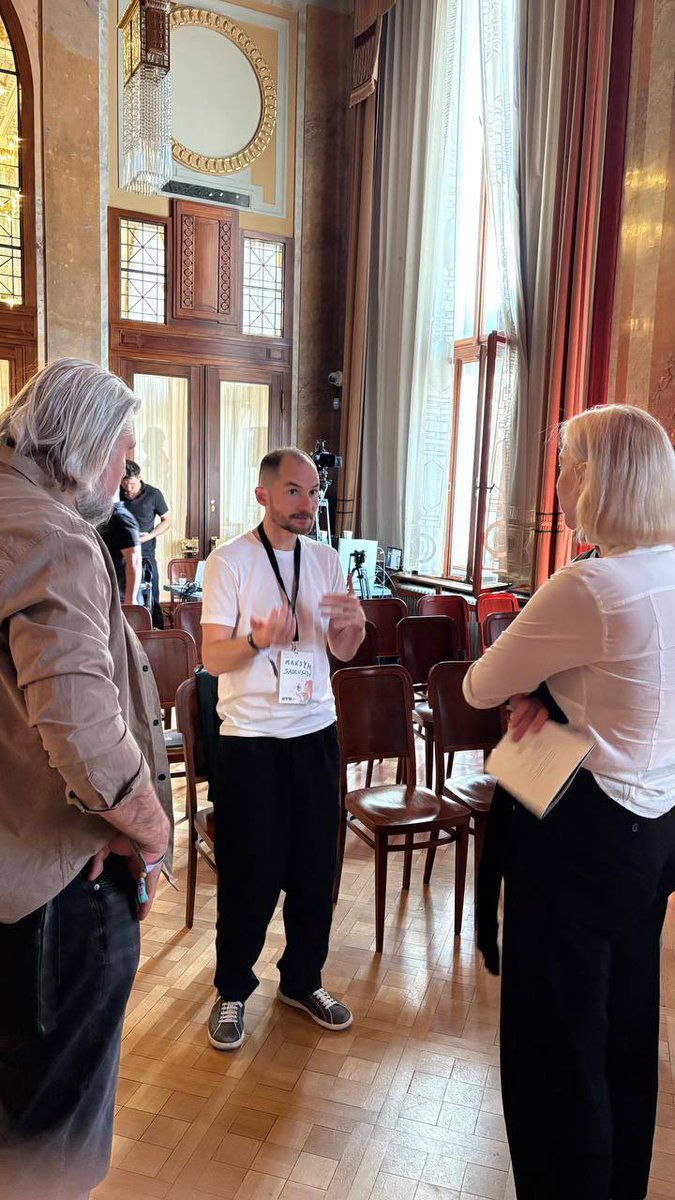
1
5
24
718
May 5
Effective Altruism treats giving as an optimization problem: scale × neglectedness × tractability.
But its fatal flaw? Bias toward what's quantifiable over what's transformative.
Web3 offers an escape: decentralized evaluation via Hypercerts retroactive funding. Impact measurement without centralized gatekeepers.
The future isn't EA vs crypto — it's EA's rigor crypto's permissionlessness.
h/t @gitcoin gitcoin.co/mechanisms/effect…
5
141

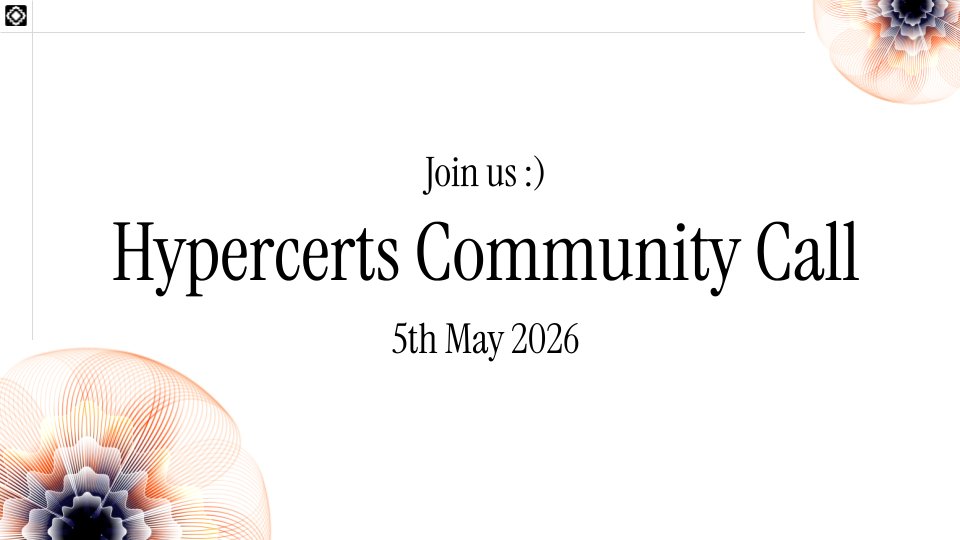
Curious how hypercerts is evolving?
Join our next community call — we’ll share updates, demo new infrastructure & tooling, and discuss what’s coming next.
🗓 May 5
🕗 8am PST / 5pm CET / 8:30pm IST
🔗 calendar.google.com/calendar…
4
5
13
614

@maearthstudio and @hypercerts this is gonna be fun

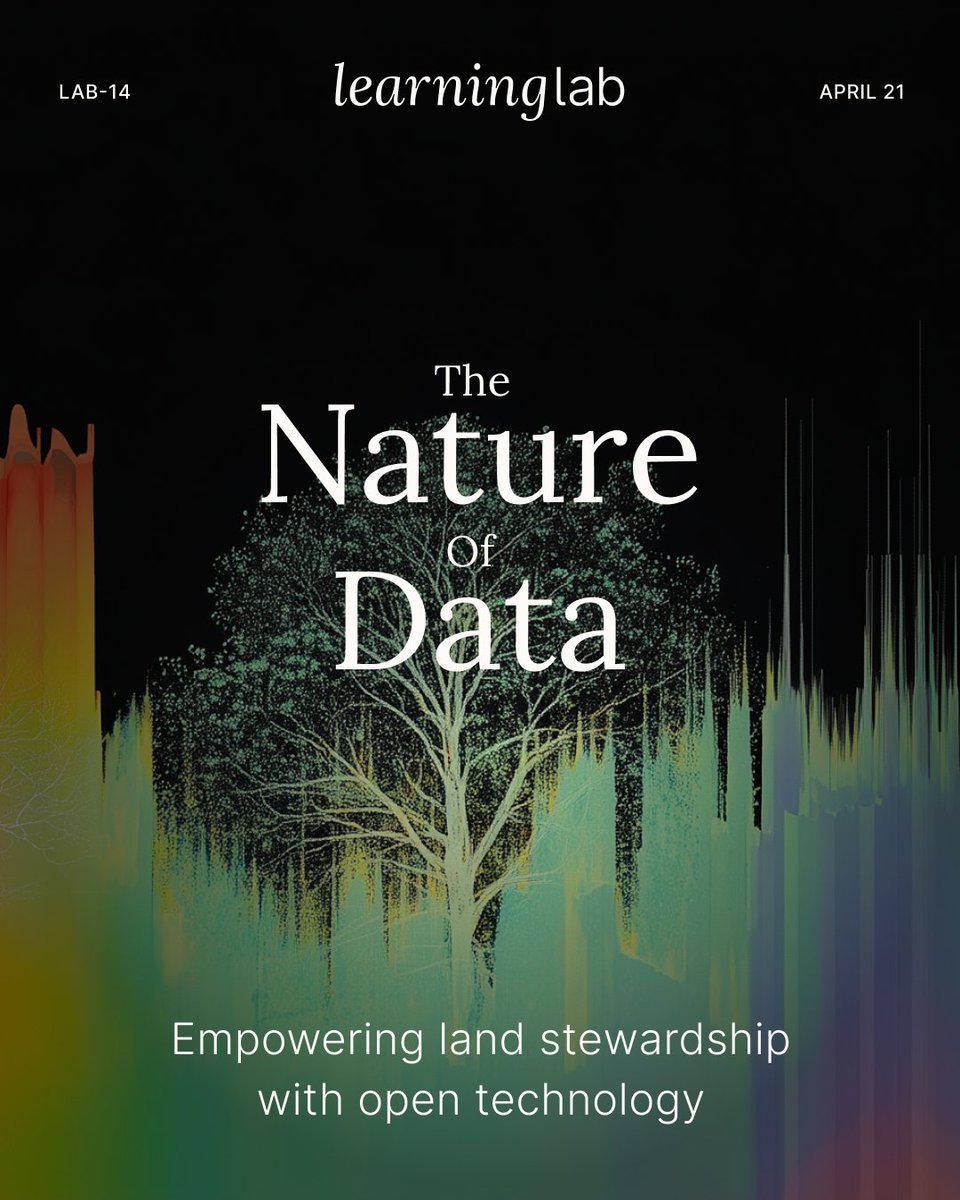
@holkexyz joins the Ma Earth Learning Lab tomorrow (Tuesday) 🌱
Come explore how @hypercerts and open technologies are shaping new ways to fund regeneration.
5
66
@holkexyz joins the Ma Earth Learning Lab tomorrow (Tuesday) 🌱
Come explore how @hypercerts and open technologies are shaping new ways to fund regeneration.
Apr 9

Who owns data produced by land stewards, and who profits from it? What might it look like if the people closest to the land held the power to define, measure, and communicate their own impact?
Join us for a webinar with @holkexyz of @hypercerts and Certified, where we're looking at how open tech protocols can support environmental organizations in protecting and leveraging the century's most valuable asset—data.
In this Lab we'll discuss...
📊 Who owns land stewardship data and why it matters
🌱 How AT Proto honors and protects user data
📊 Community-created impact metrics
🌱 How the Hypercerts Foundation's work in retroactive impact reporting can help environmental stewardship and philanthropy evolve to meet our current context
April 21, 11am EDT.

4
9
332